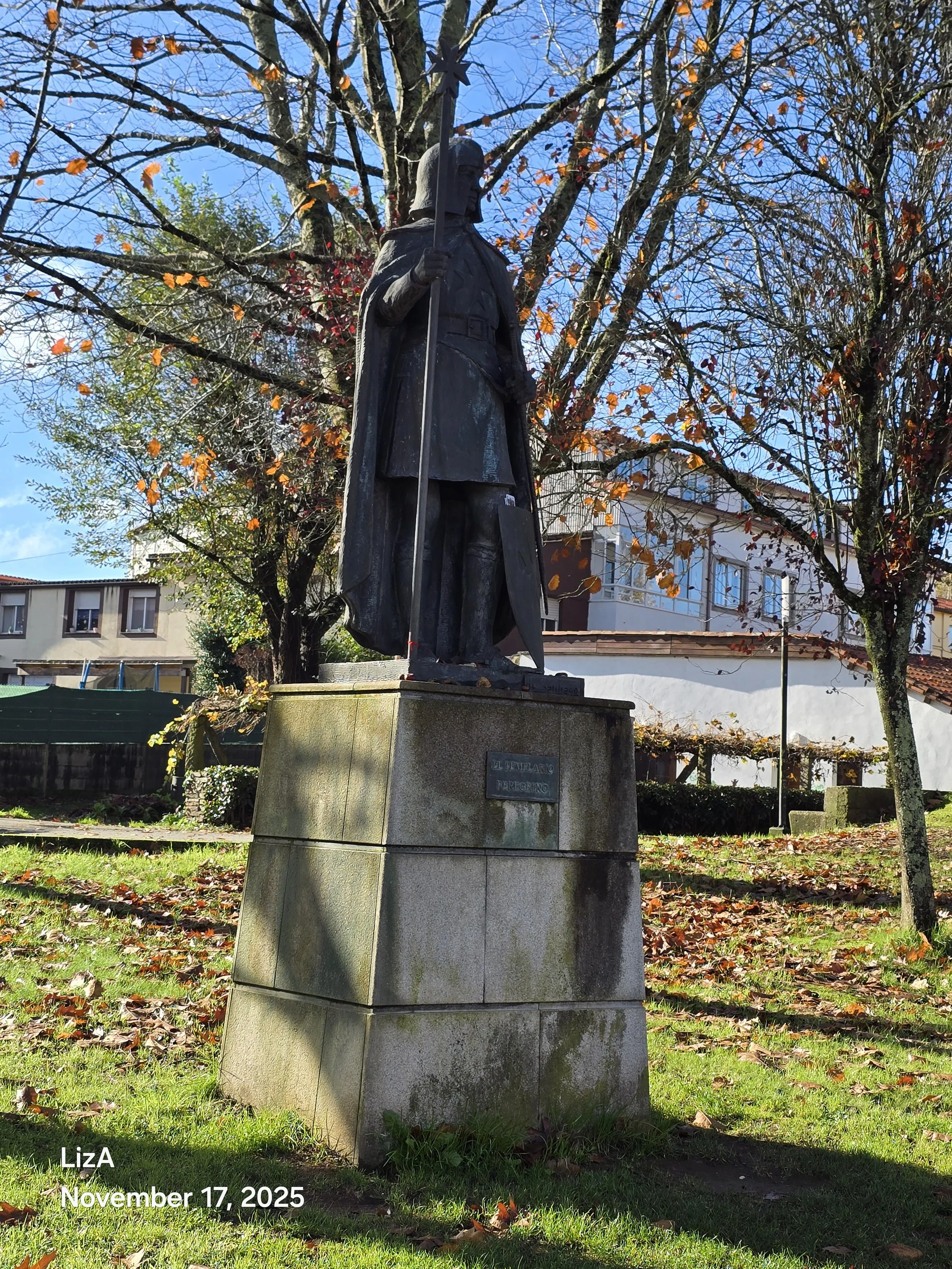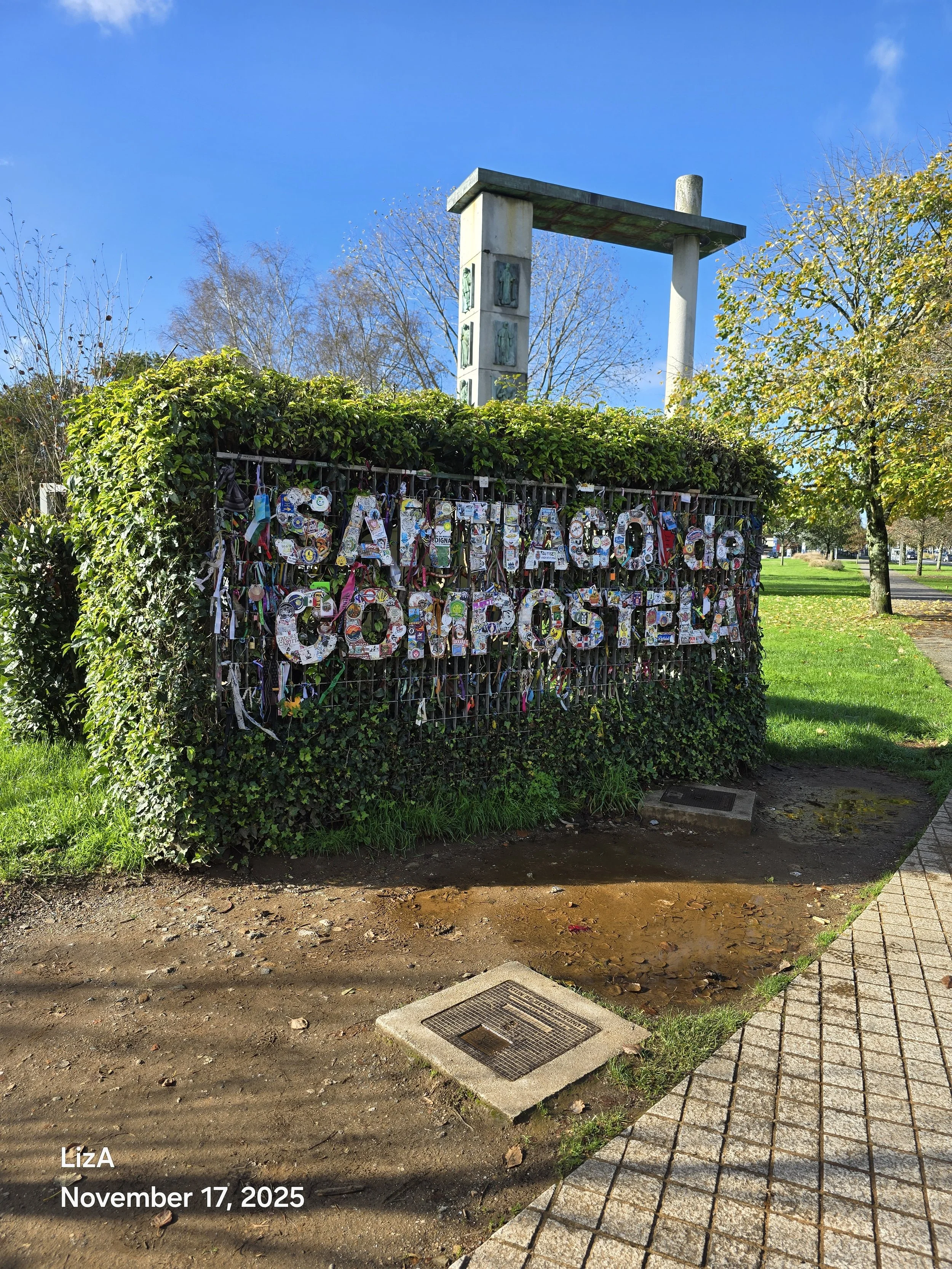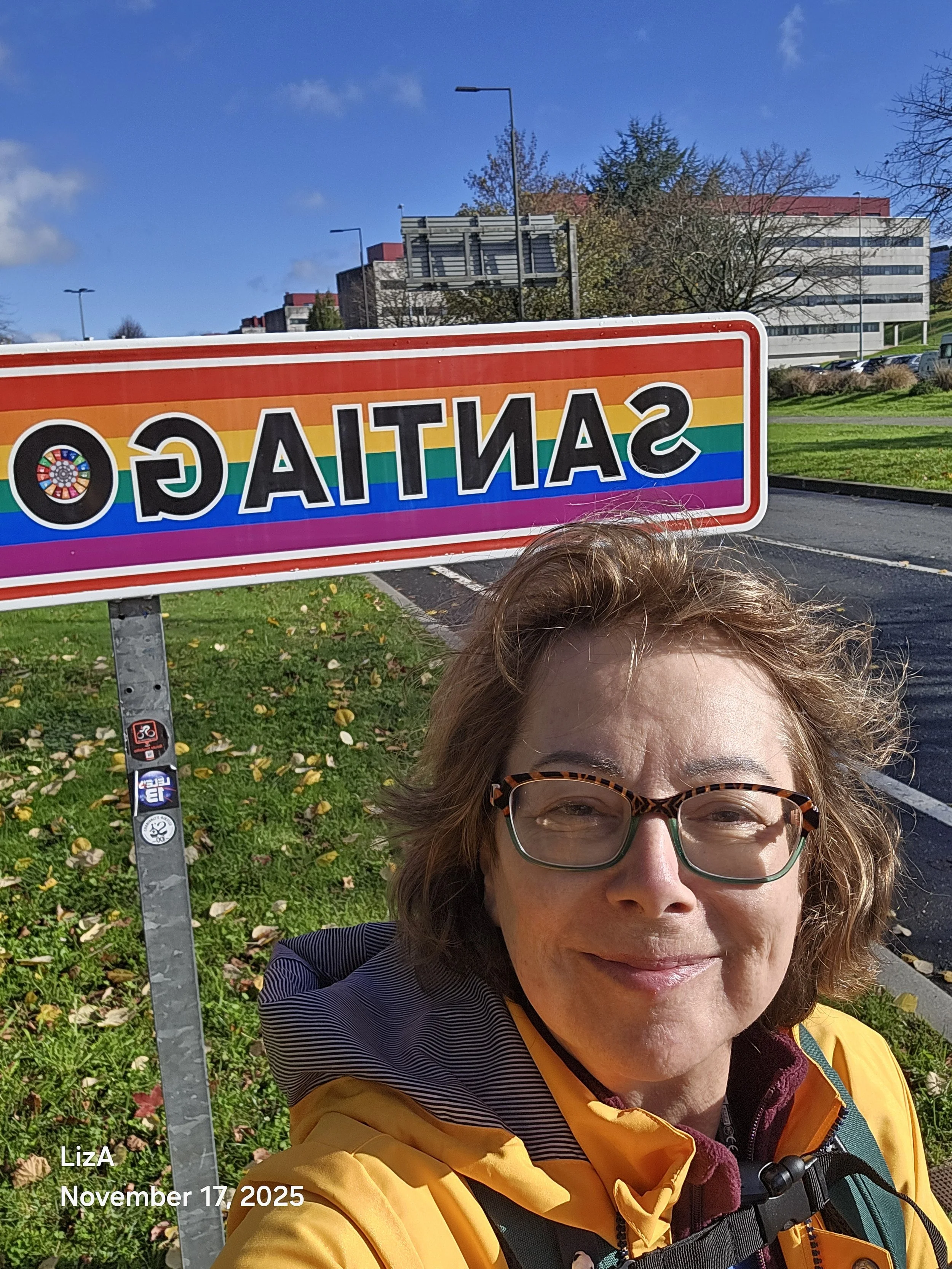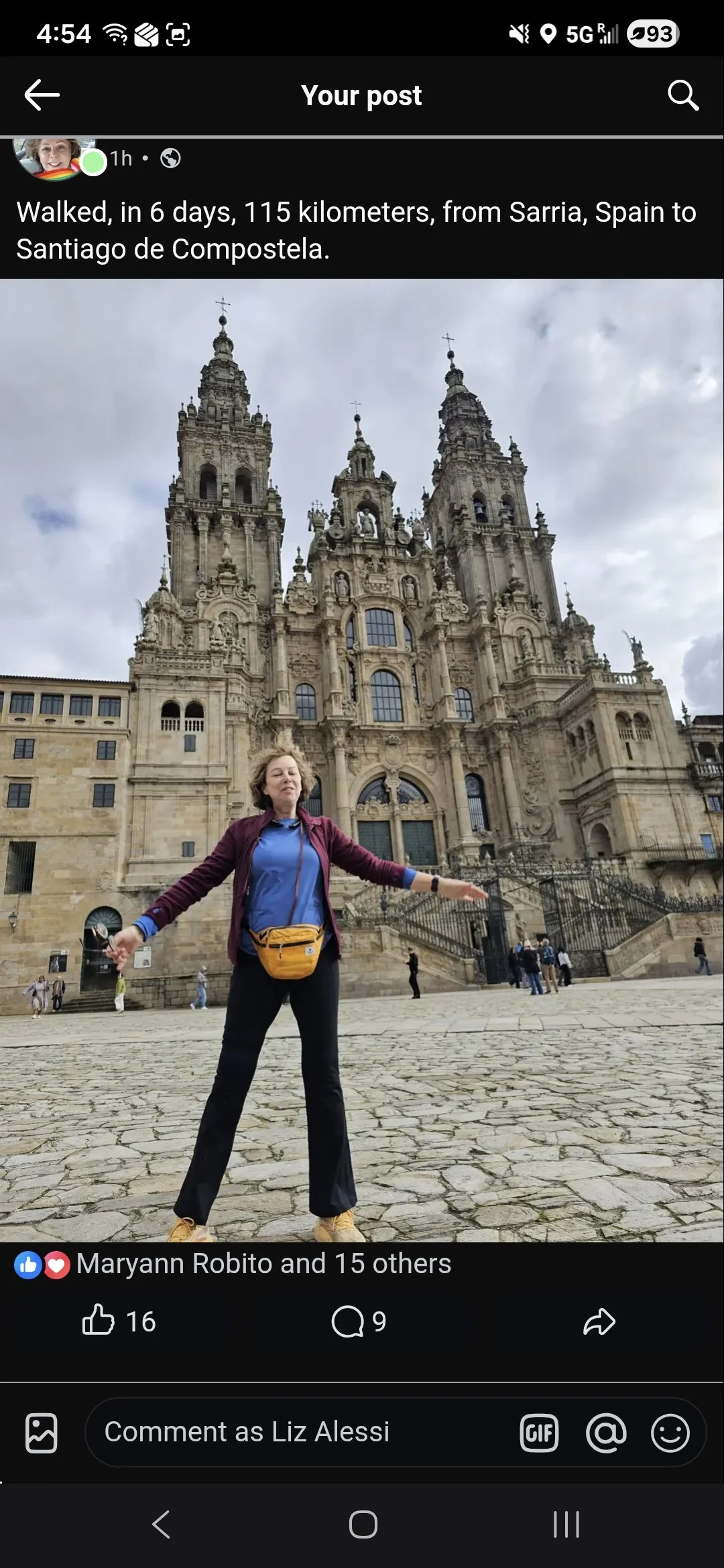
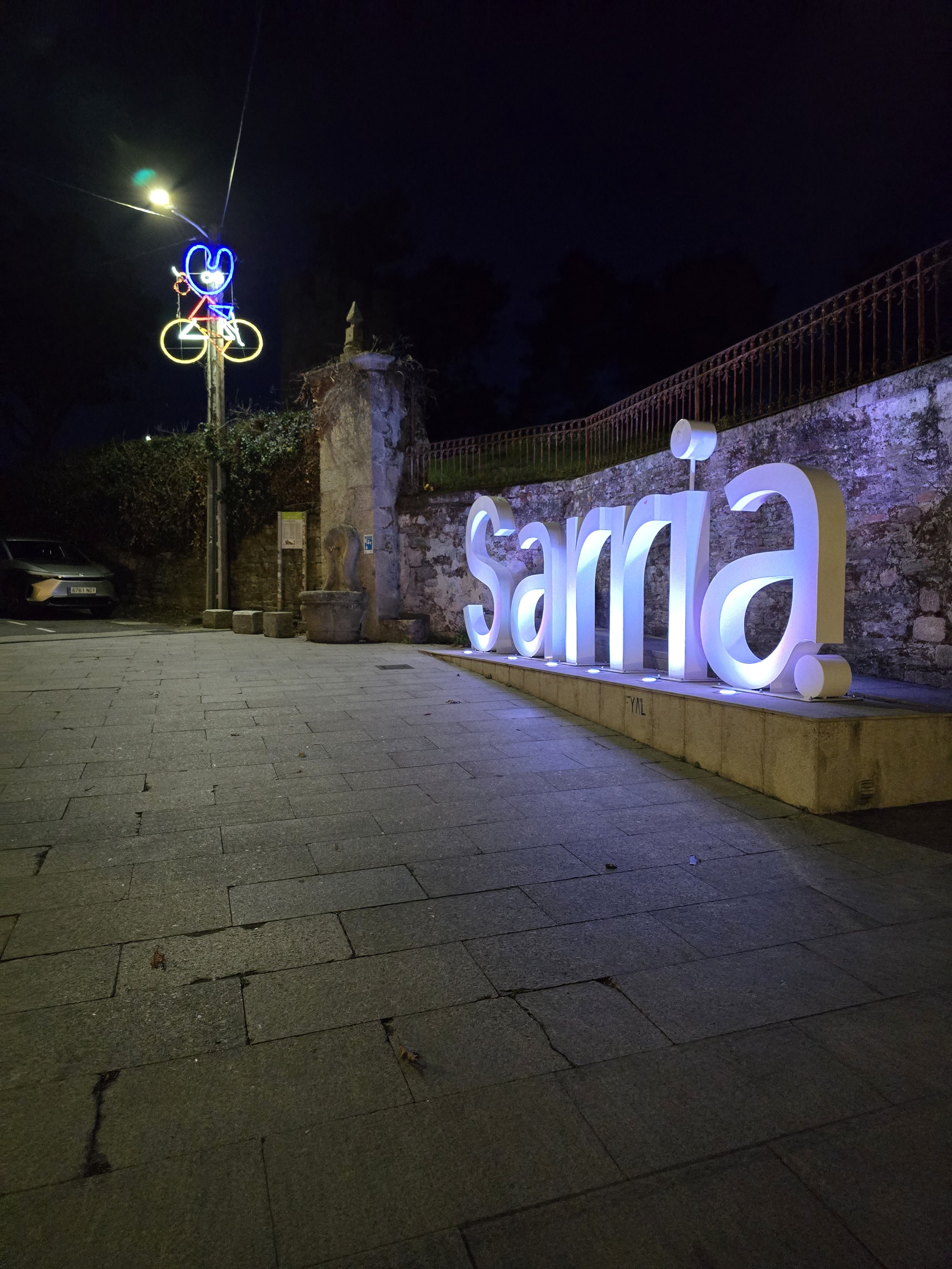
First steps to Spain
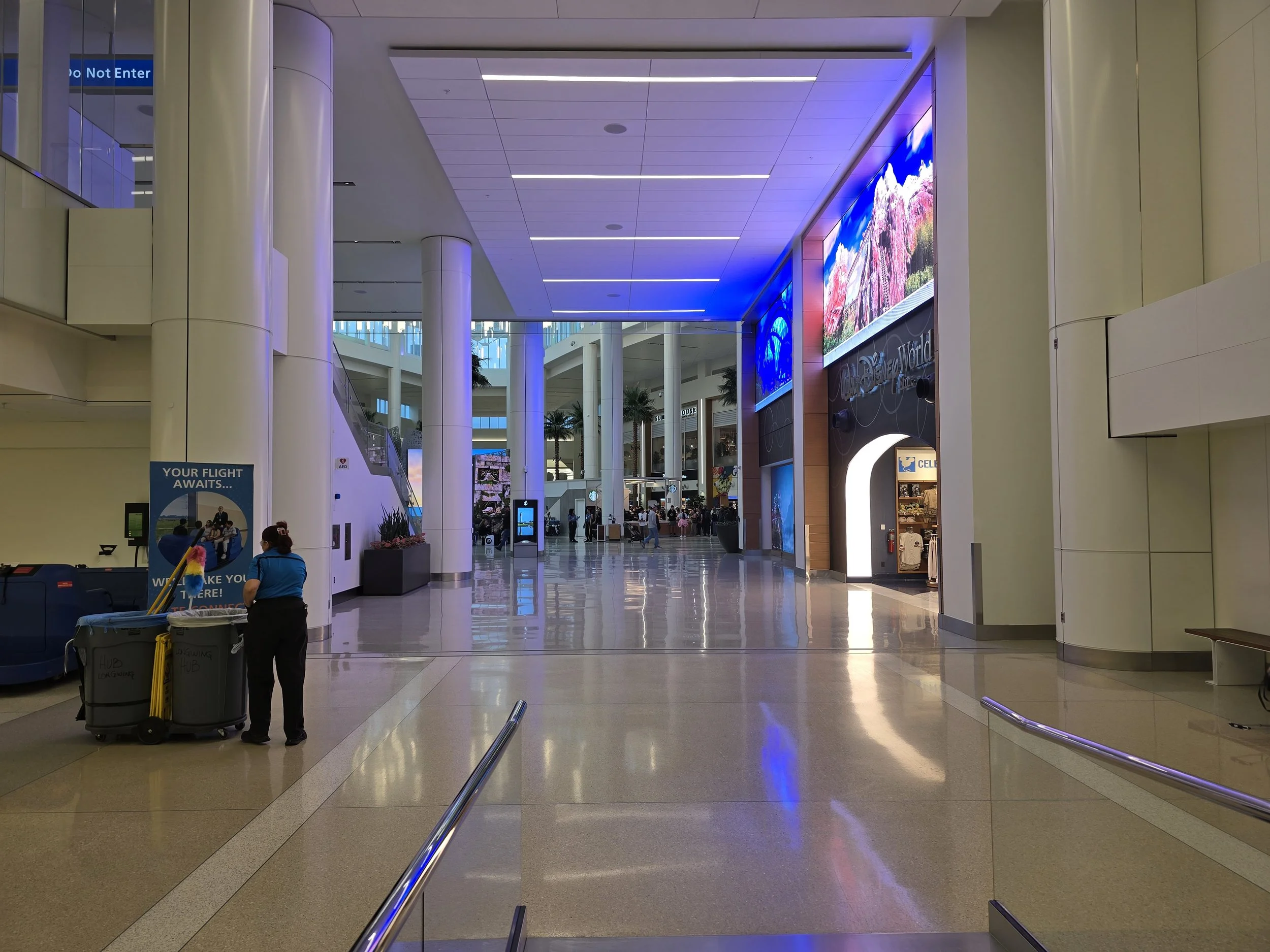
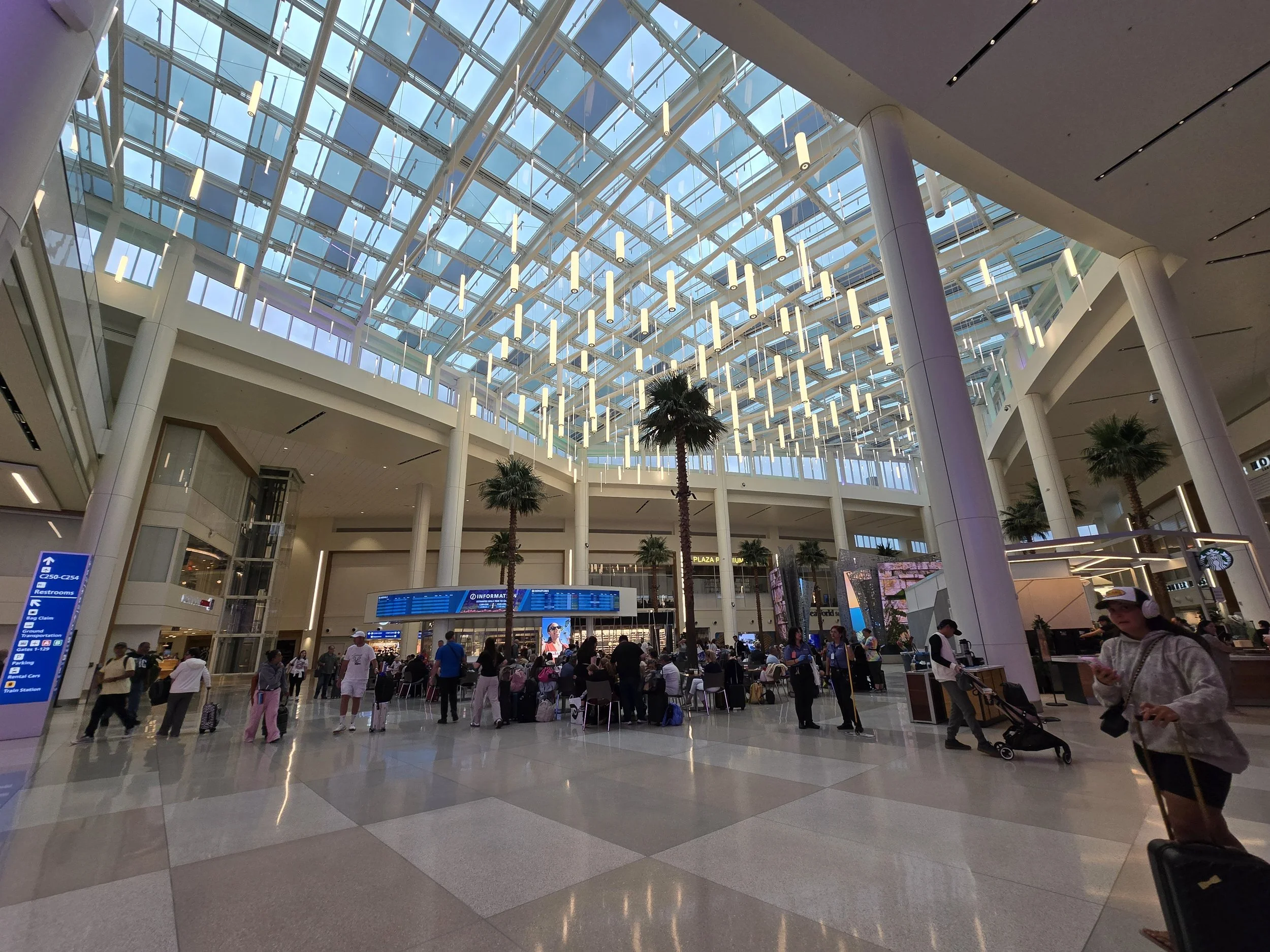
Terminal C, Orlando International Airport, direct flight to Madrid.
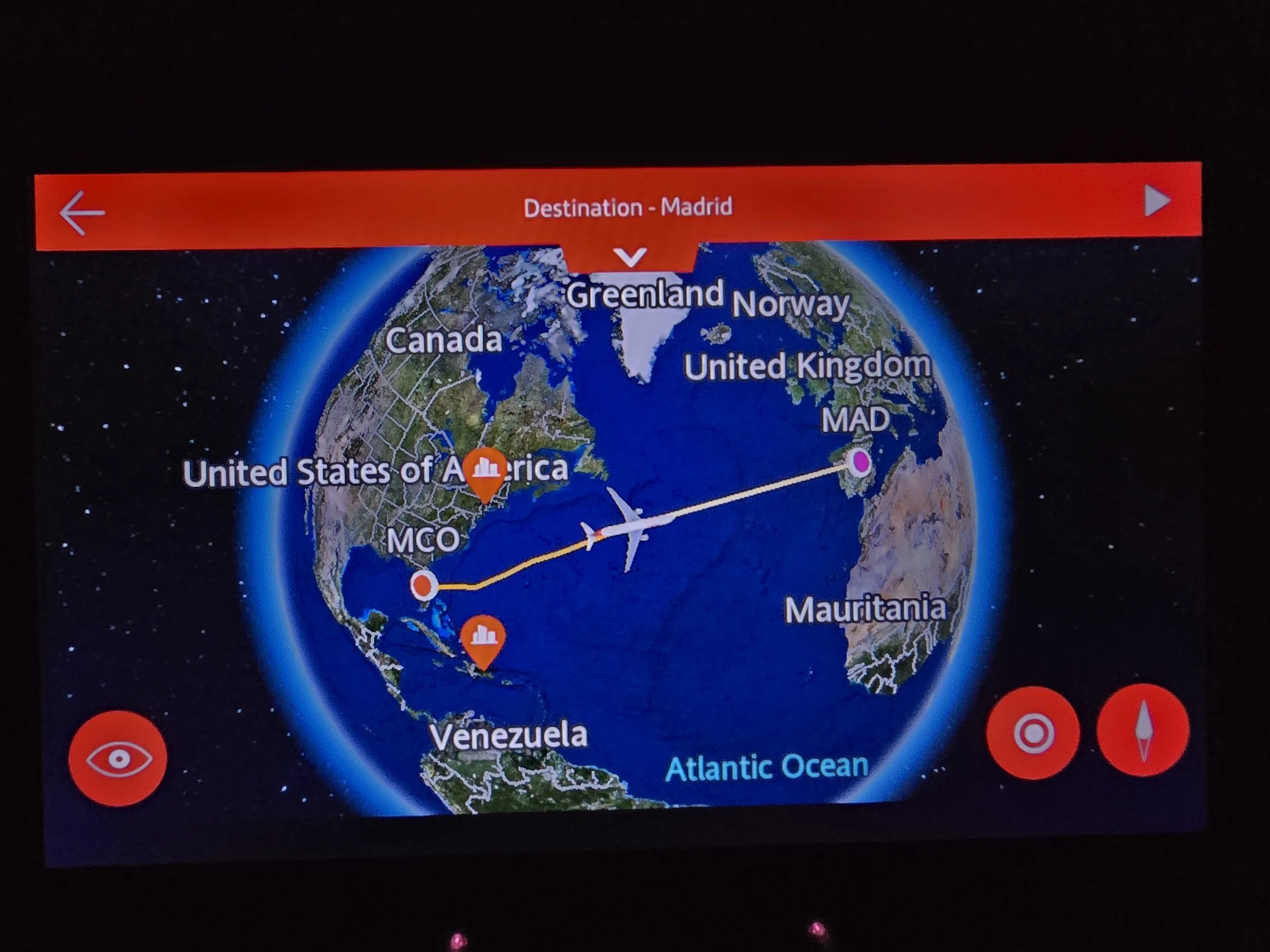
Direct flight to Madrid.
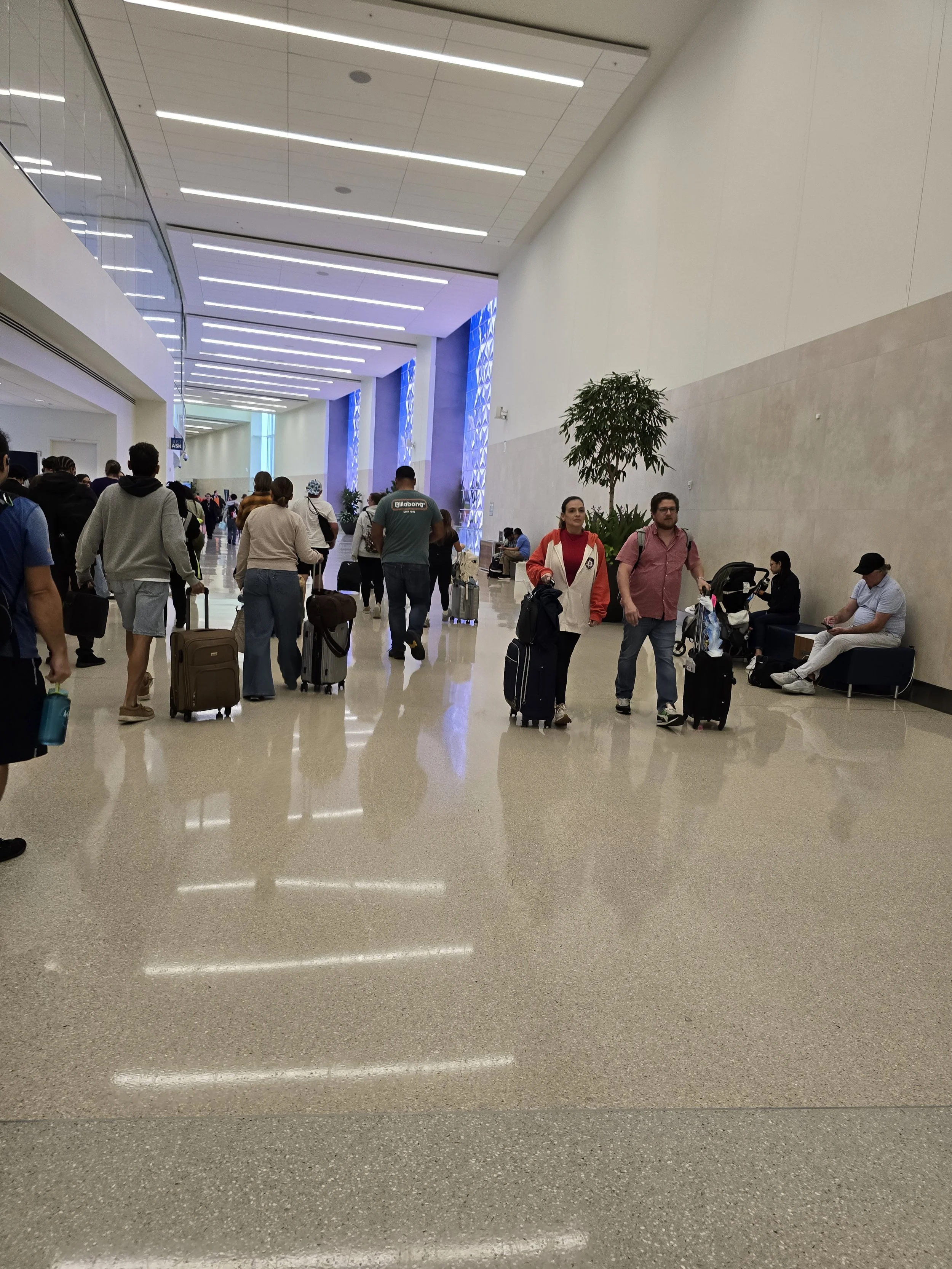

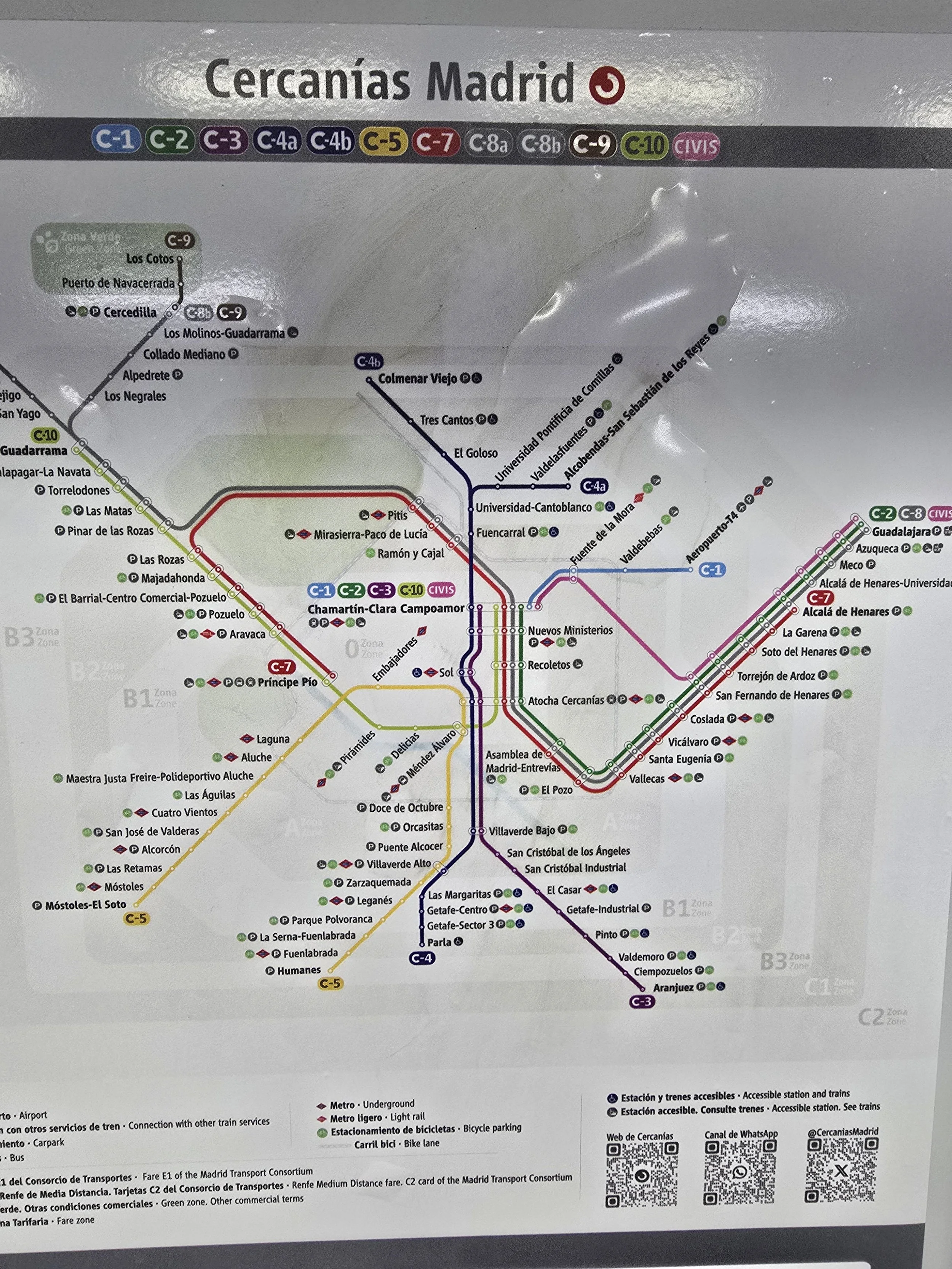
Train System in Madrid
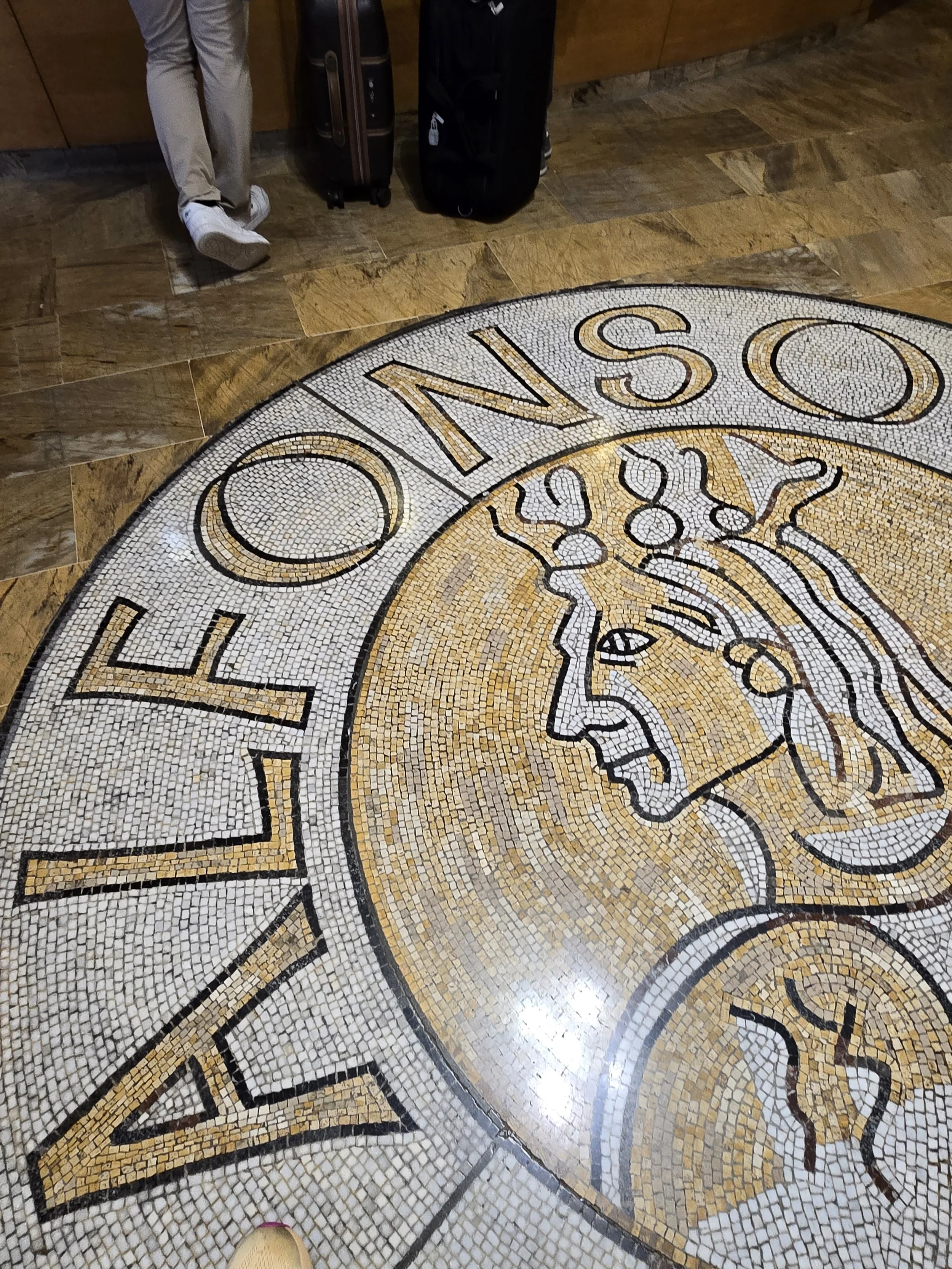
My first view of the Hotel Alfonso, IX, the nice hotel I stayed in before my grueling trek, Sarria, Spain.
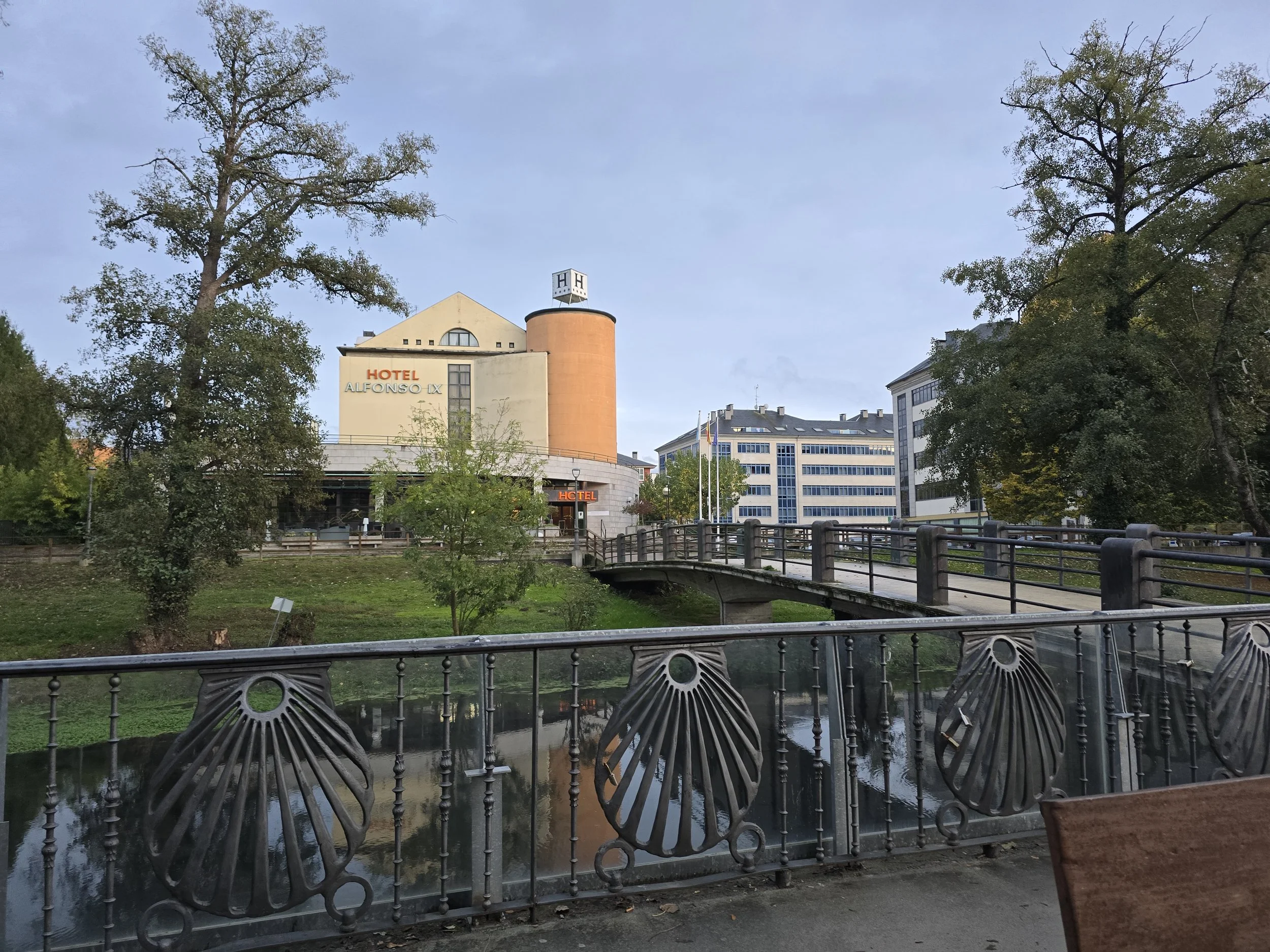
Hotel Alfonso IX, my stating place, 115 kilometers (71 miles) to Santiago.
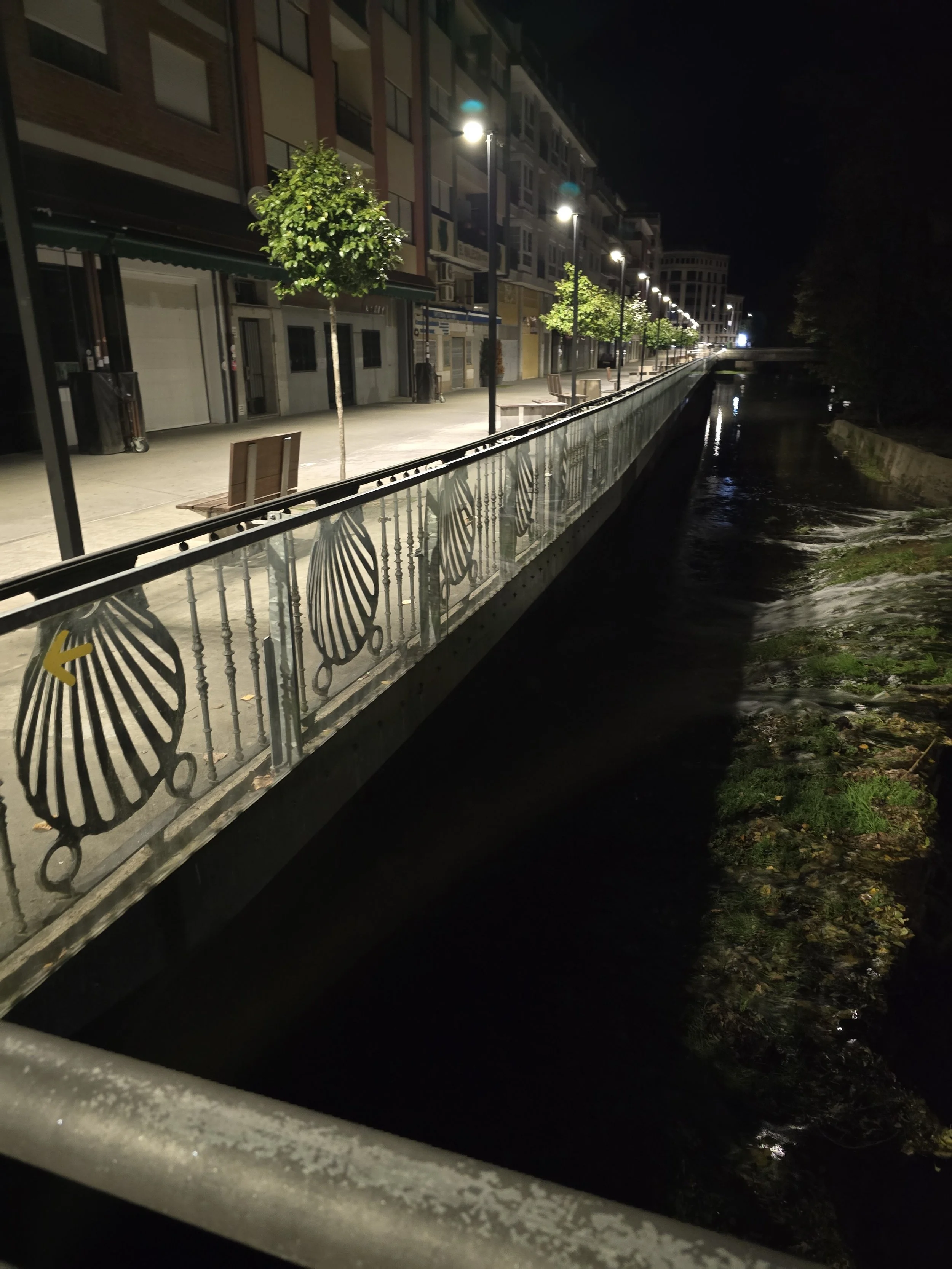
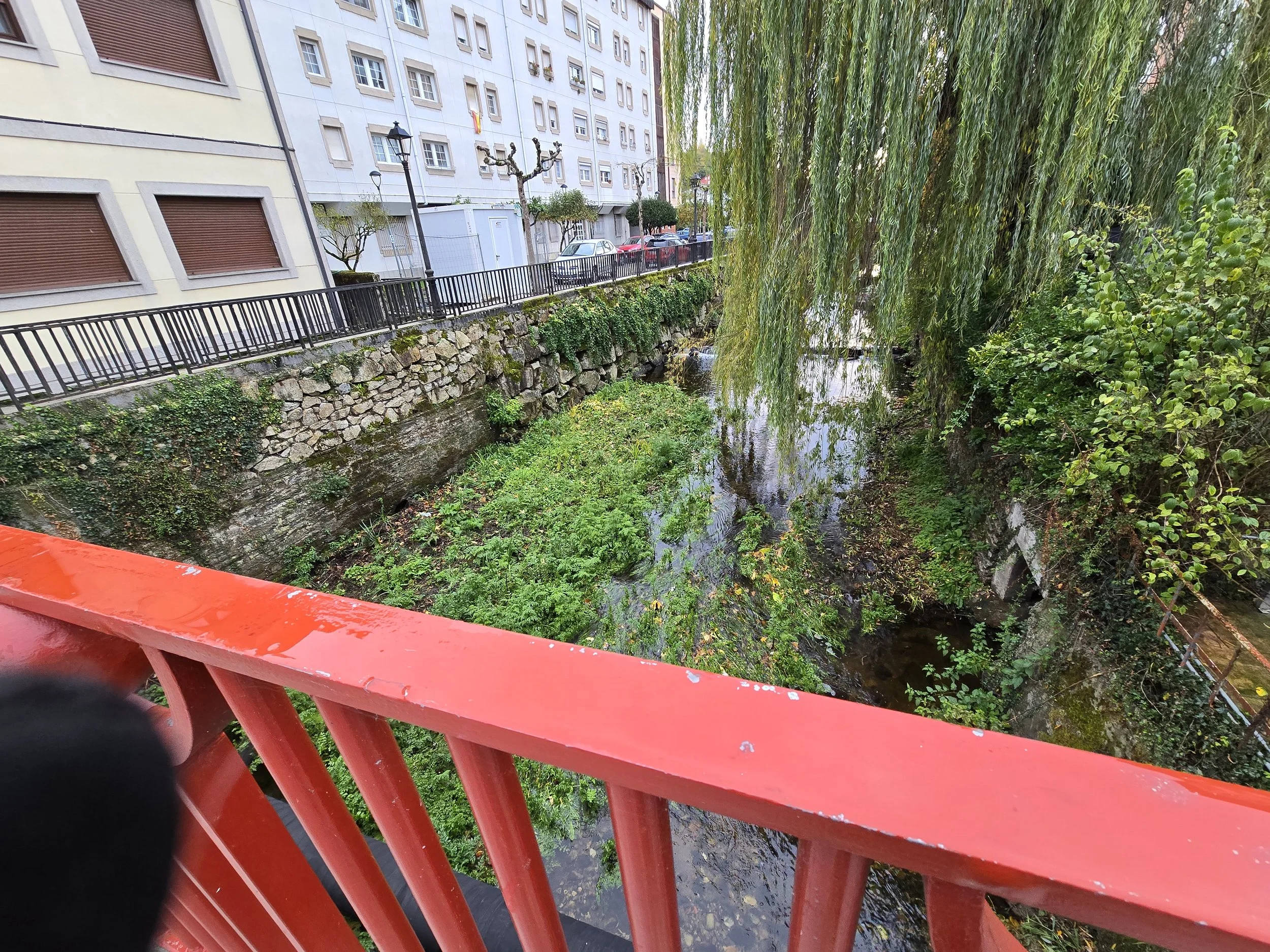

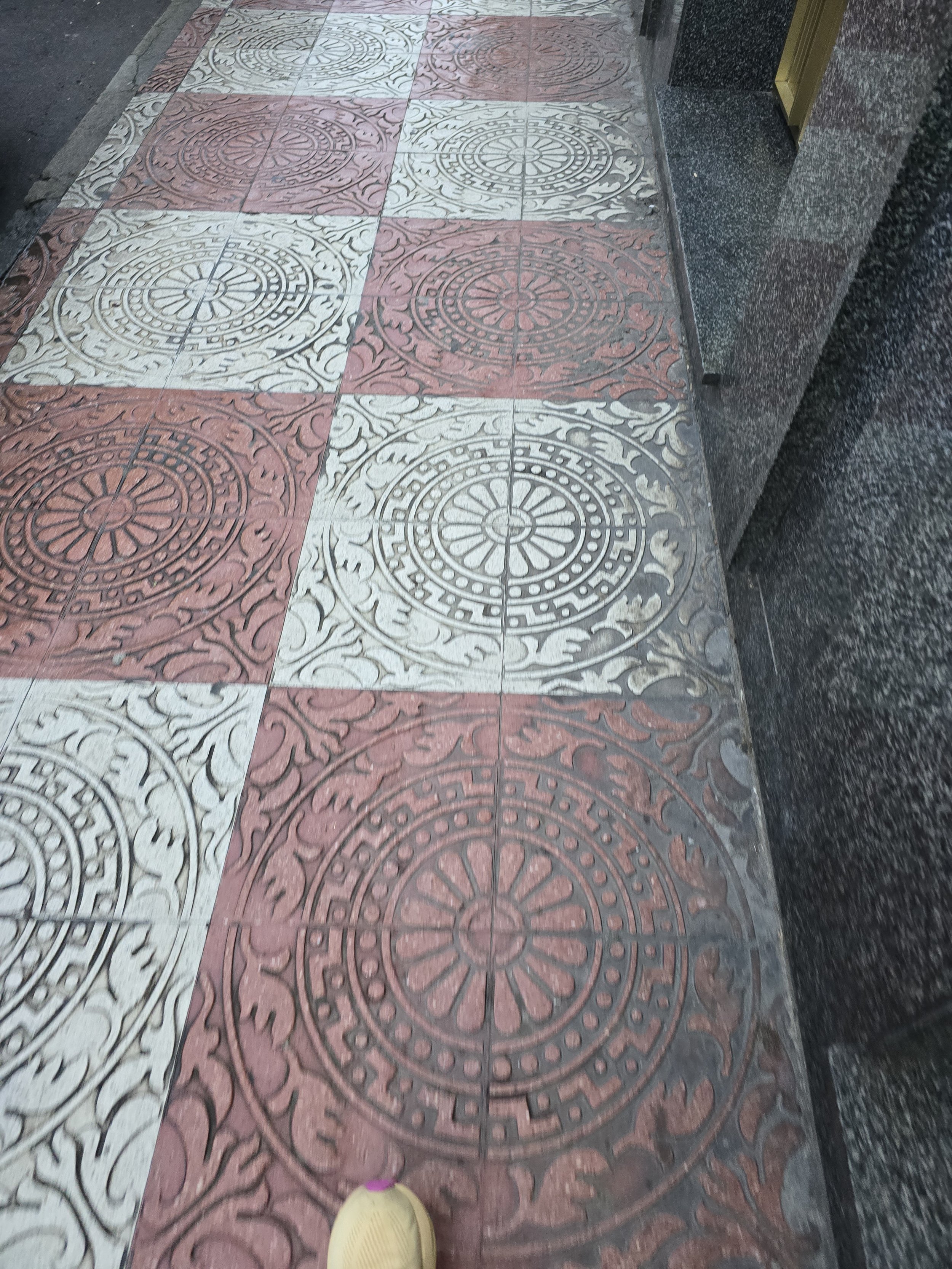
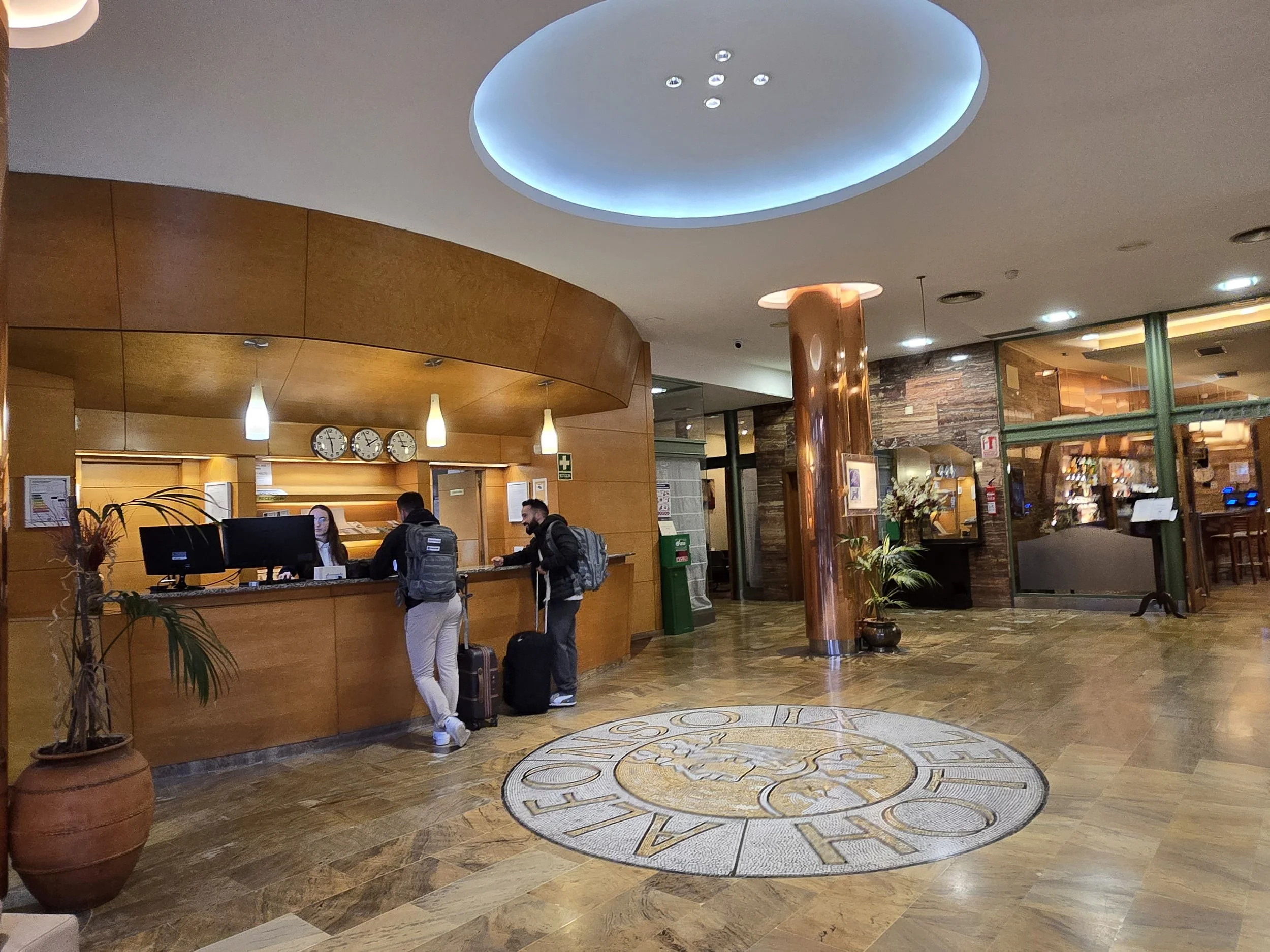
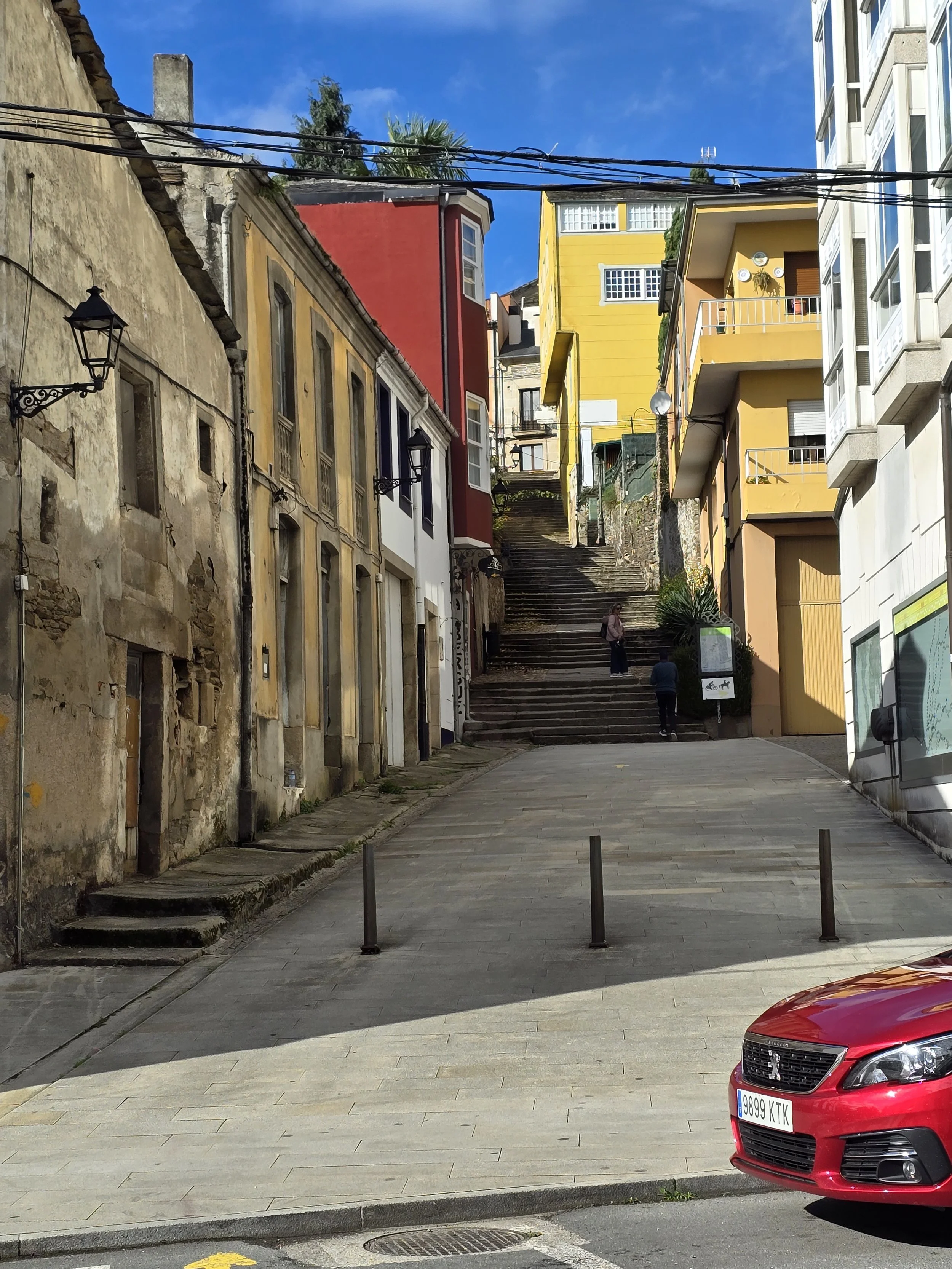
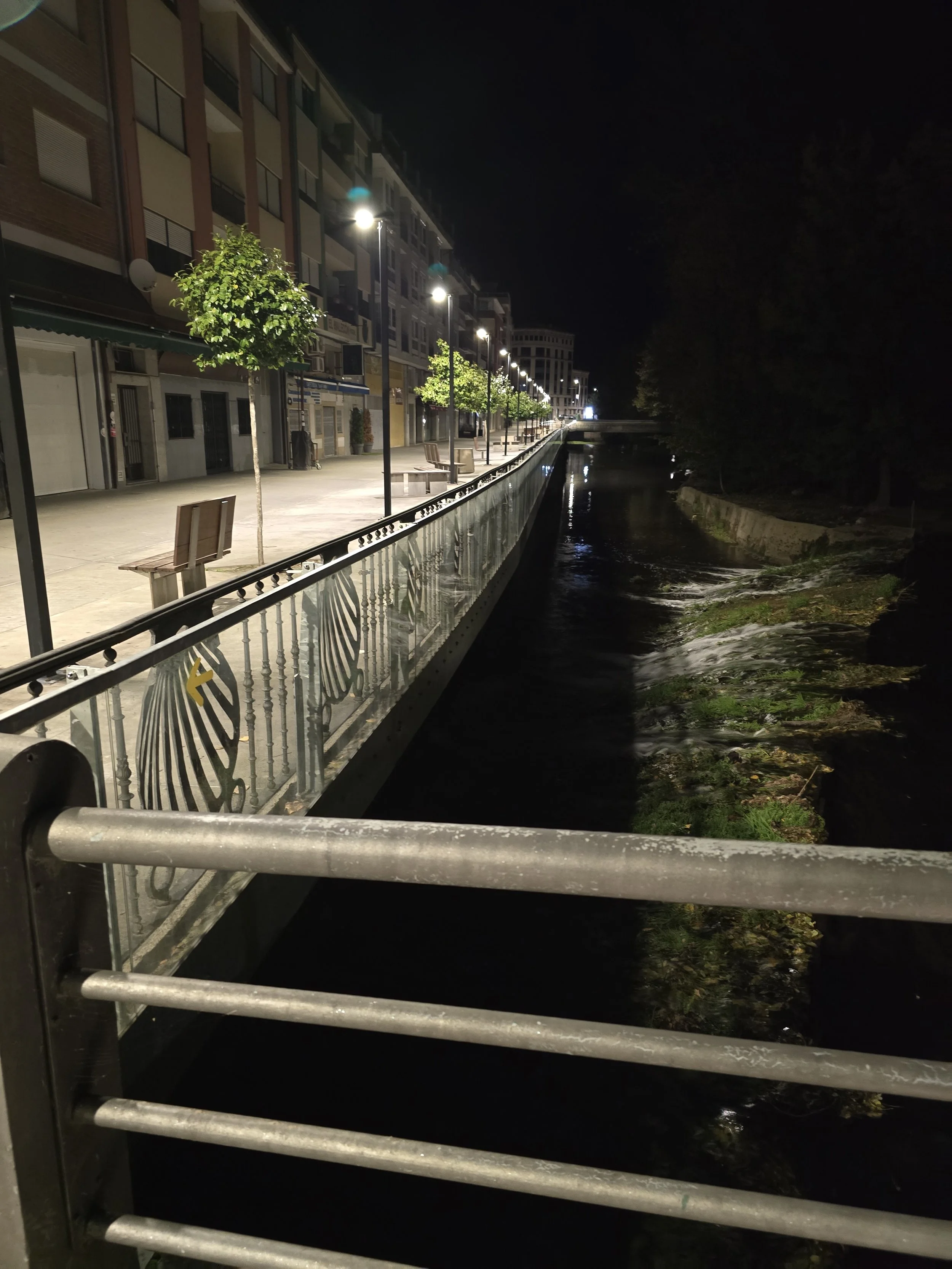
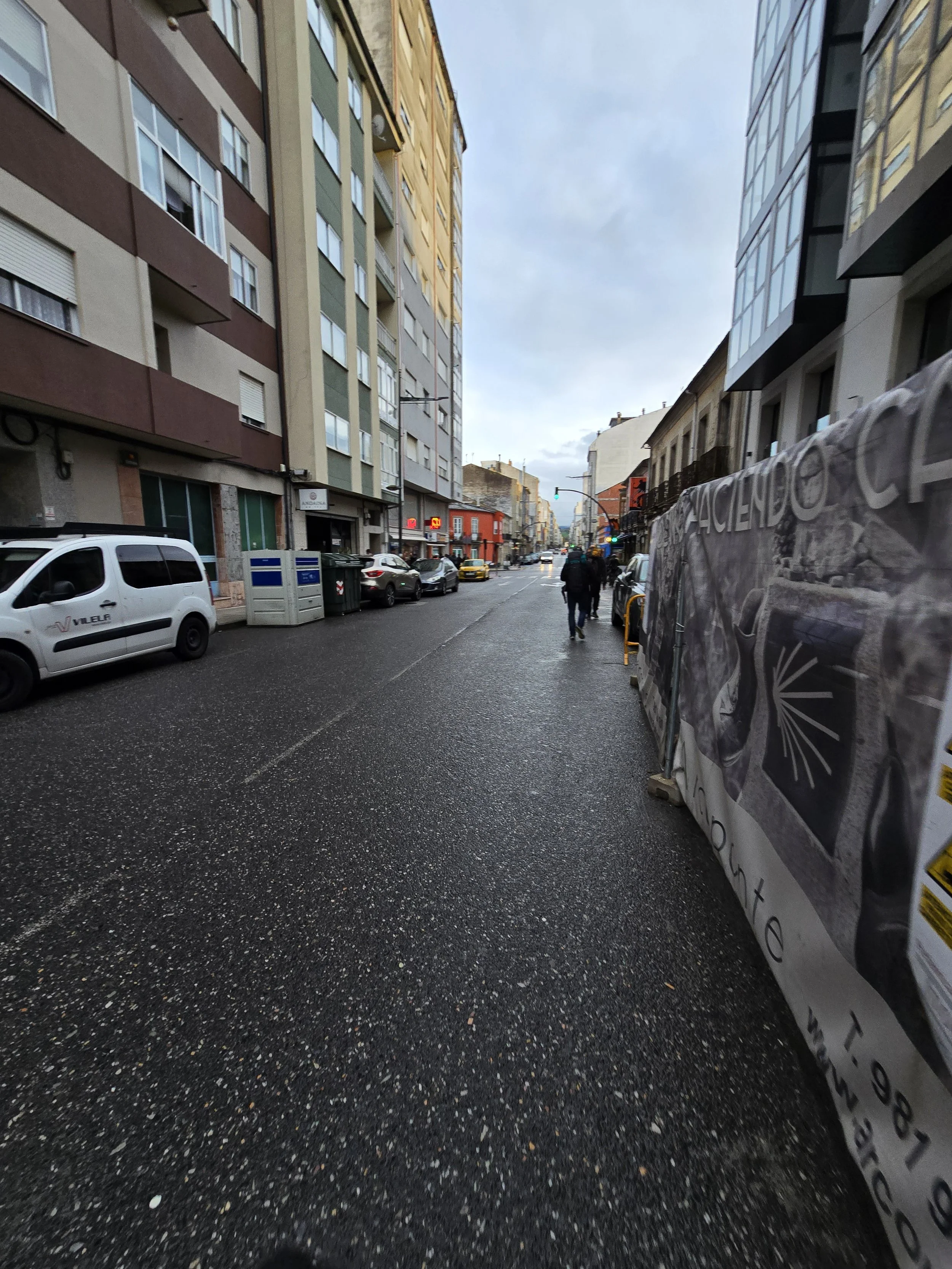
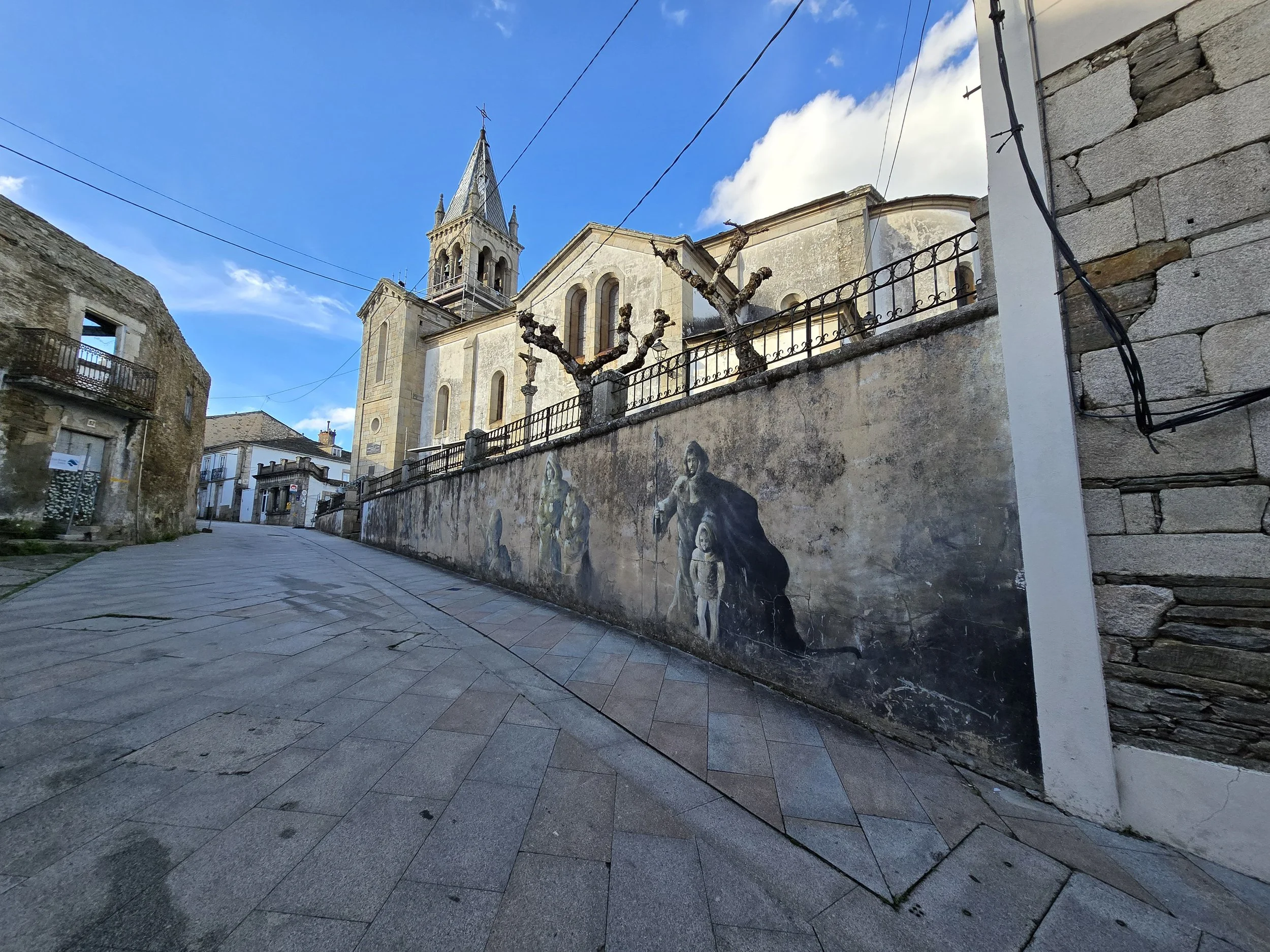
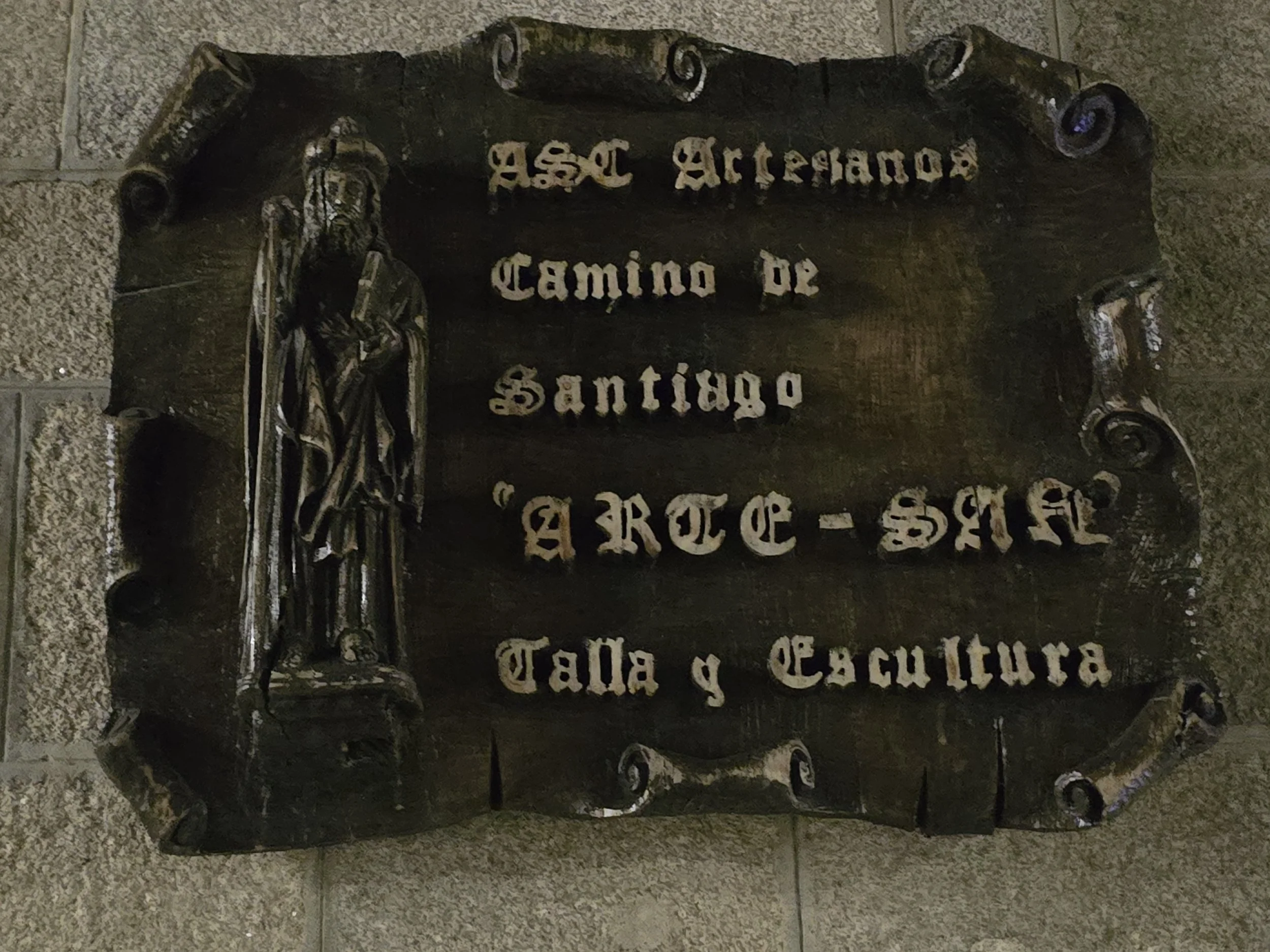
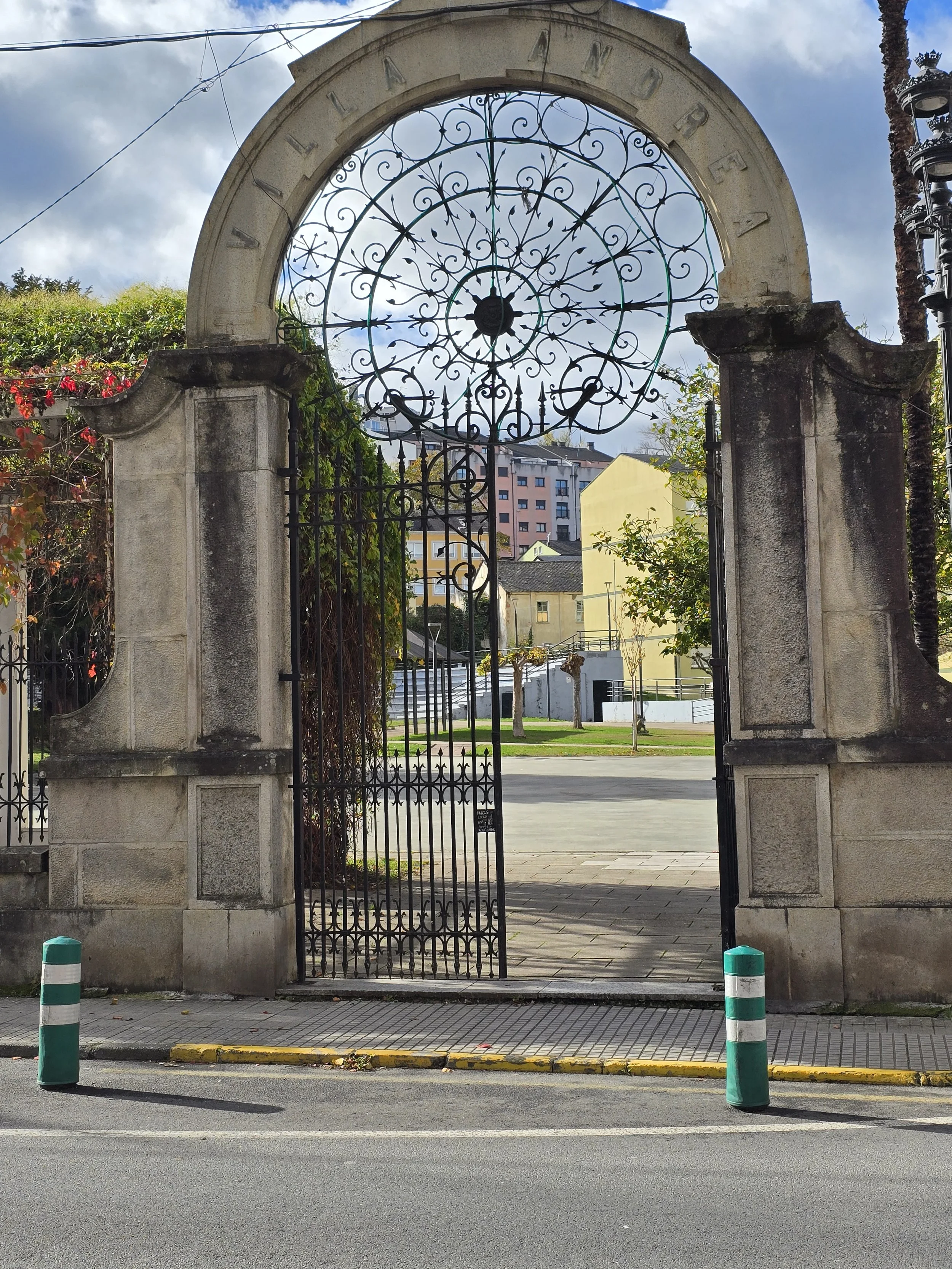
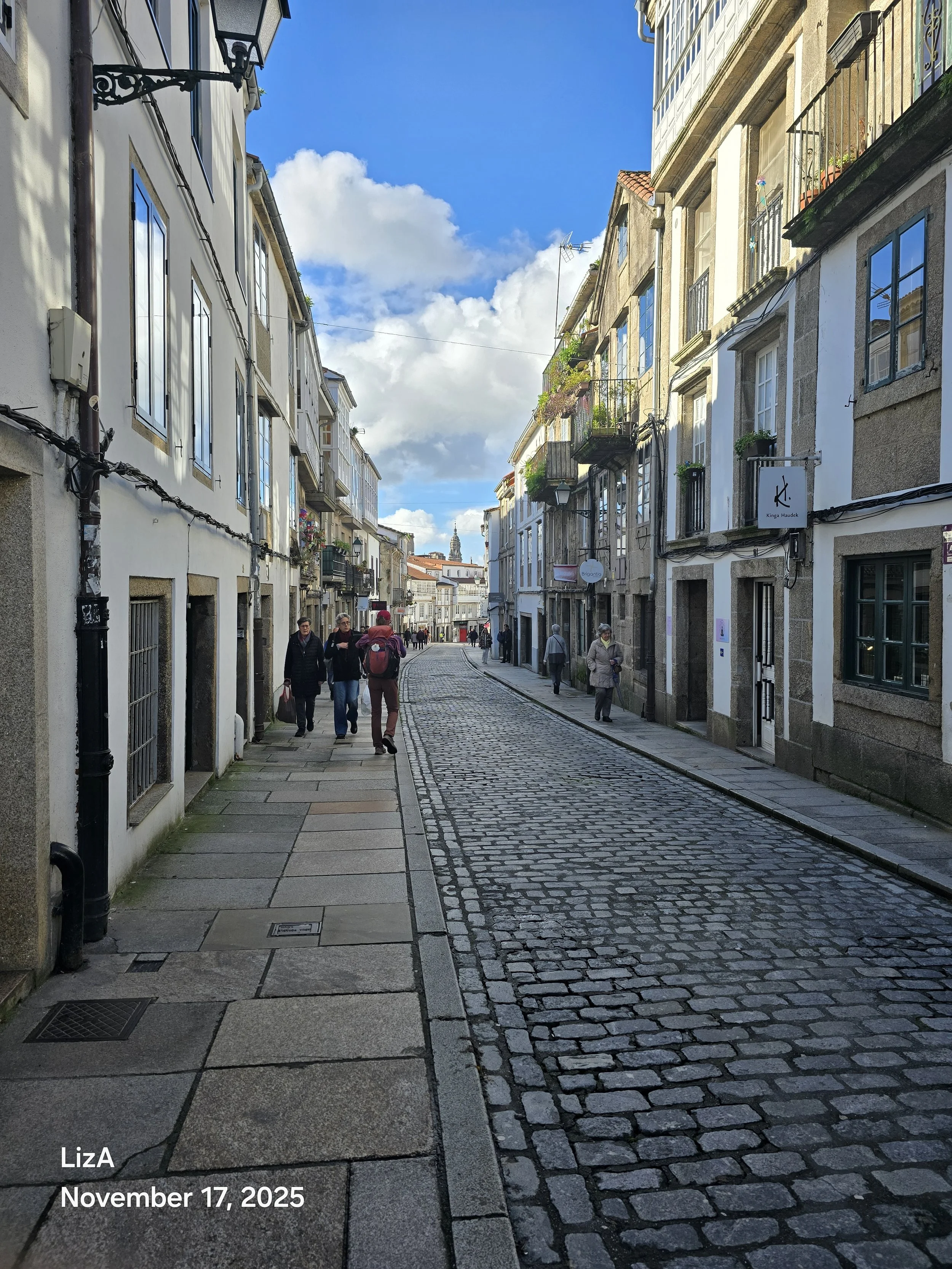
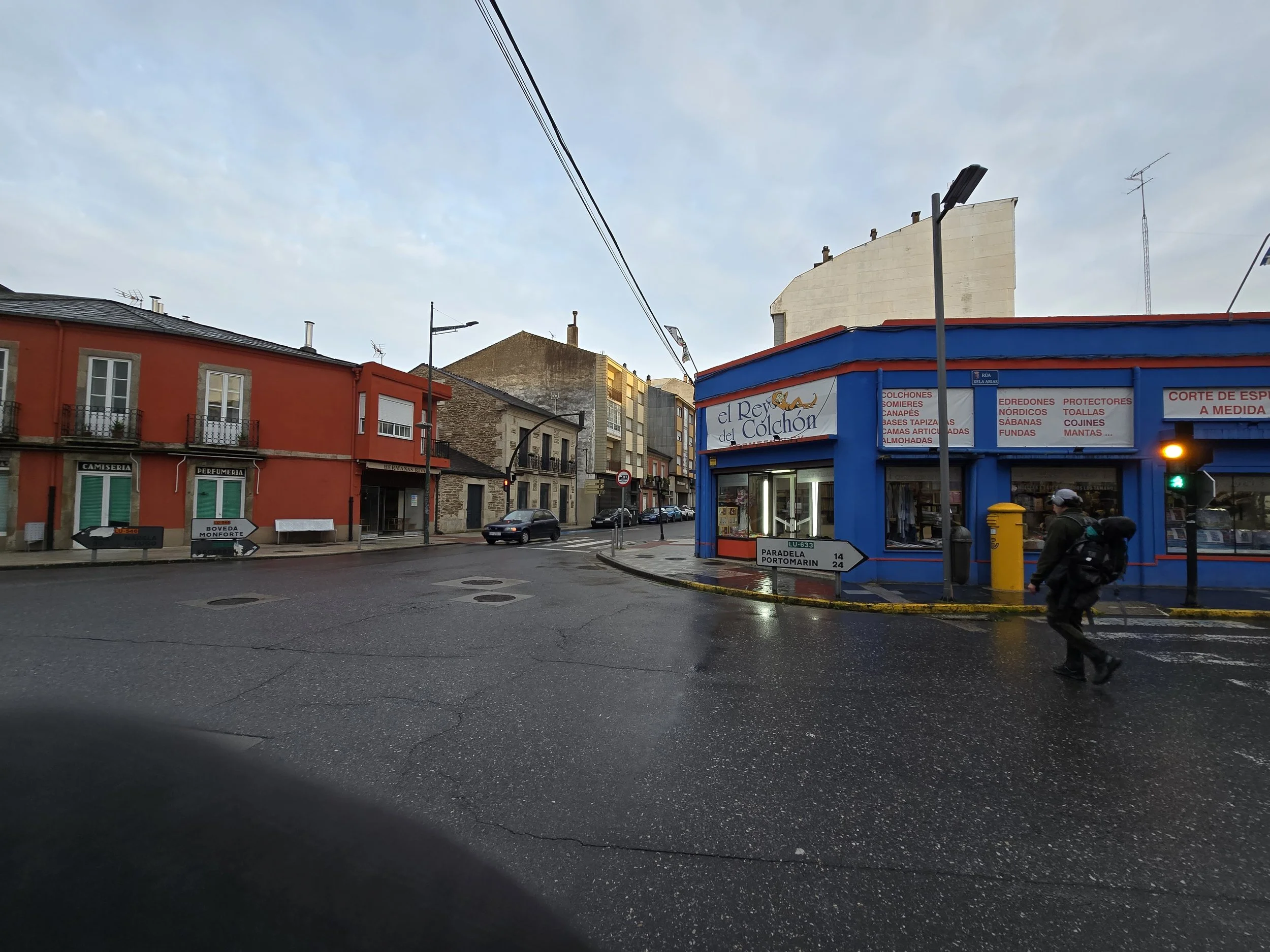
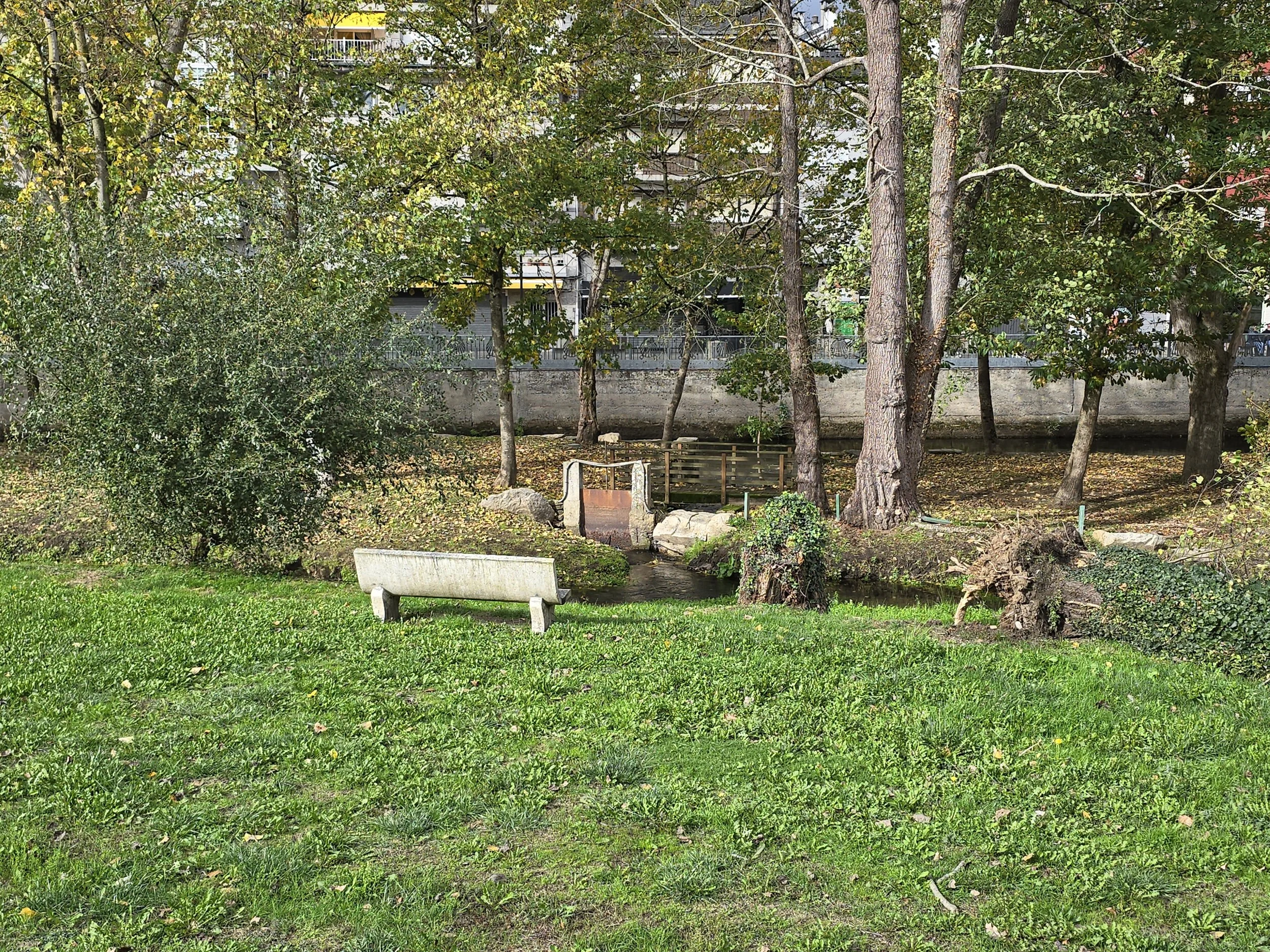
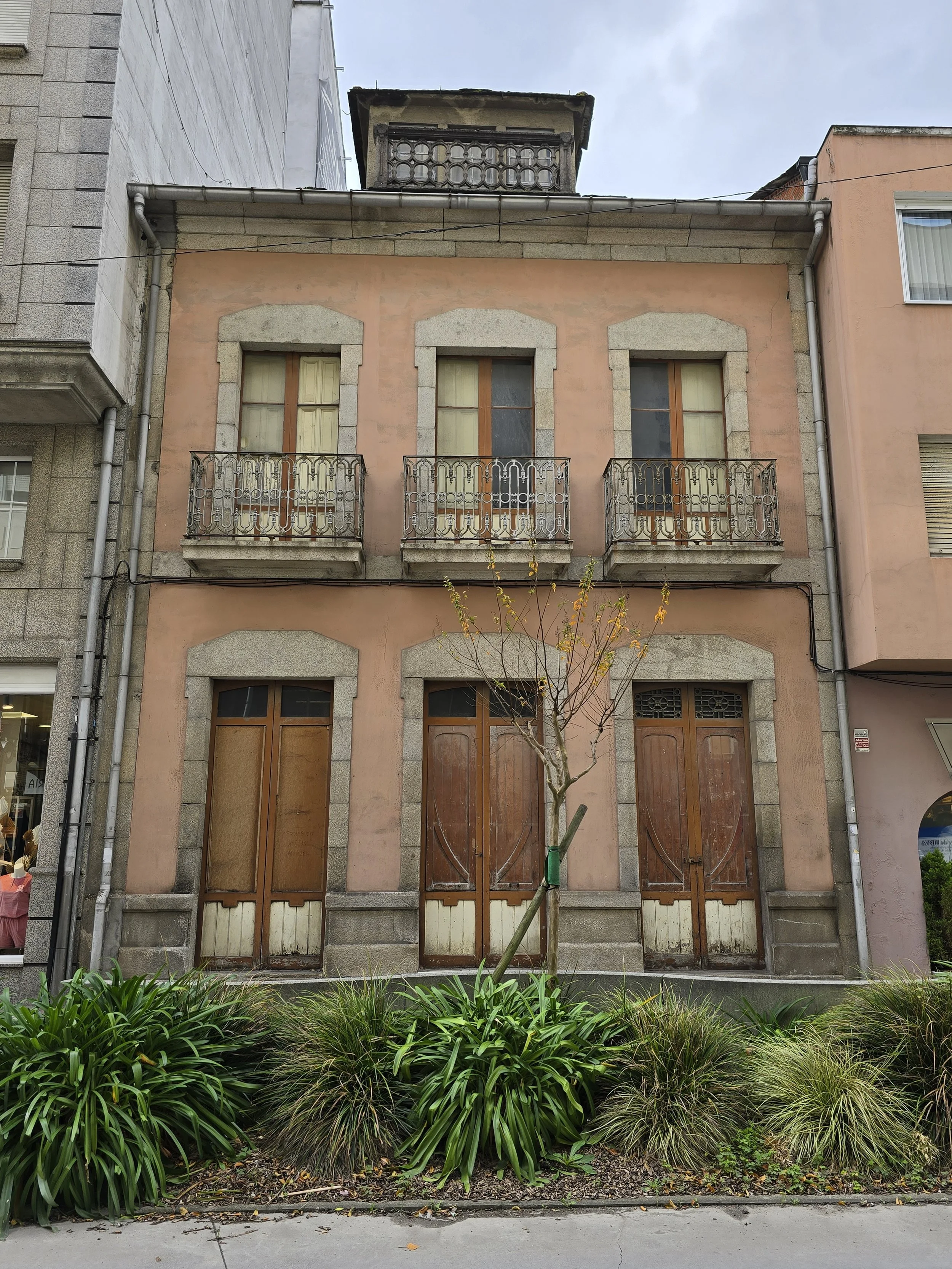
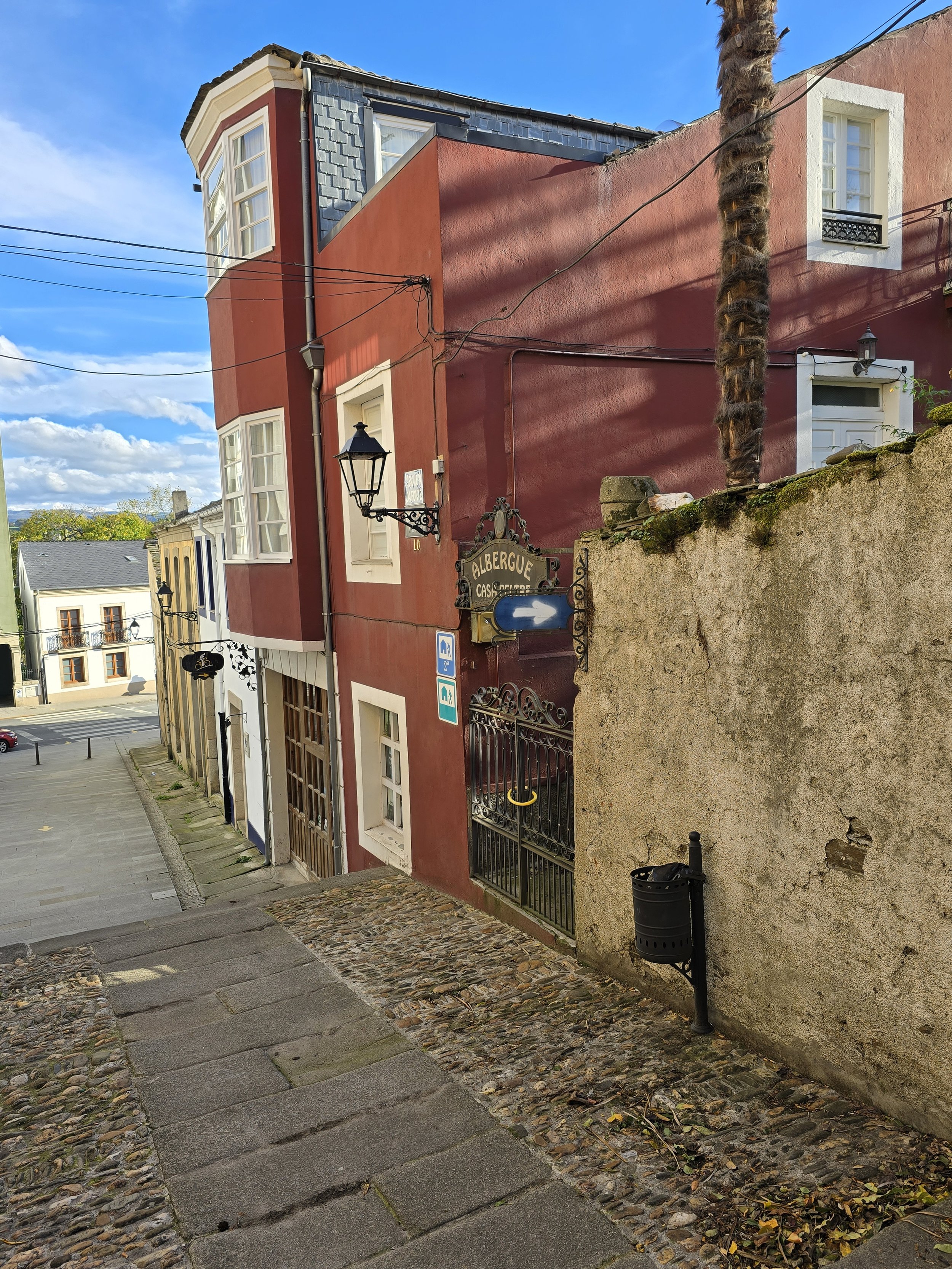
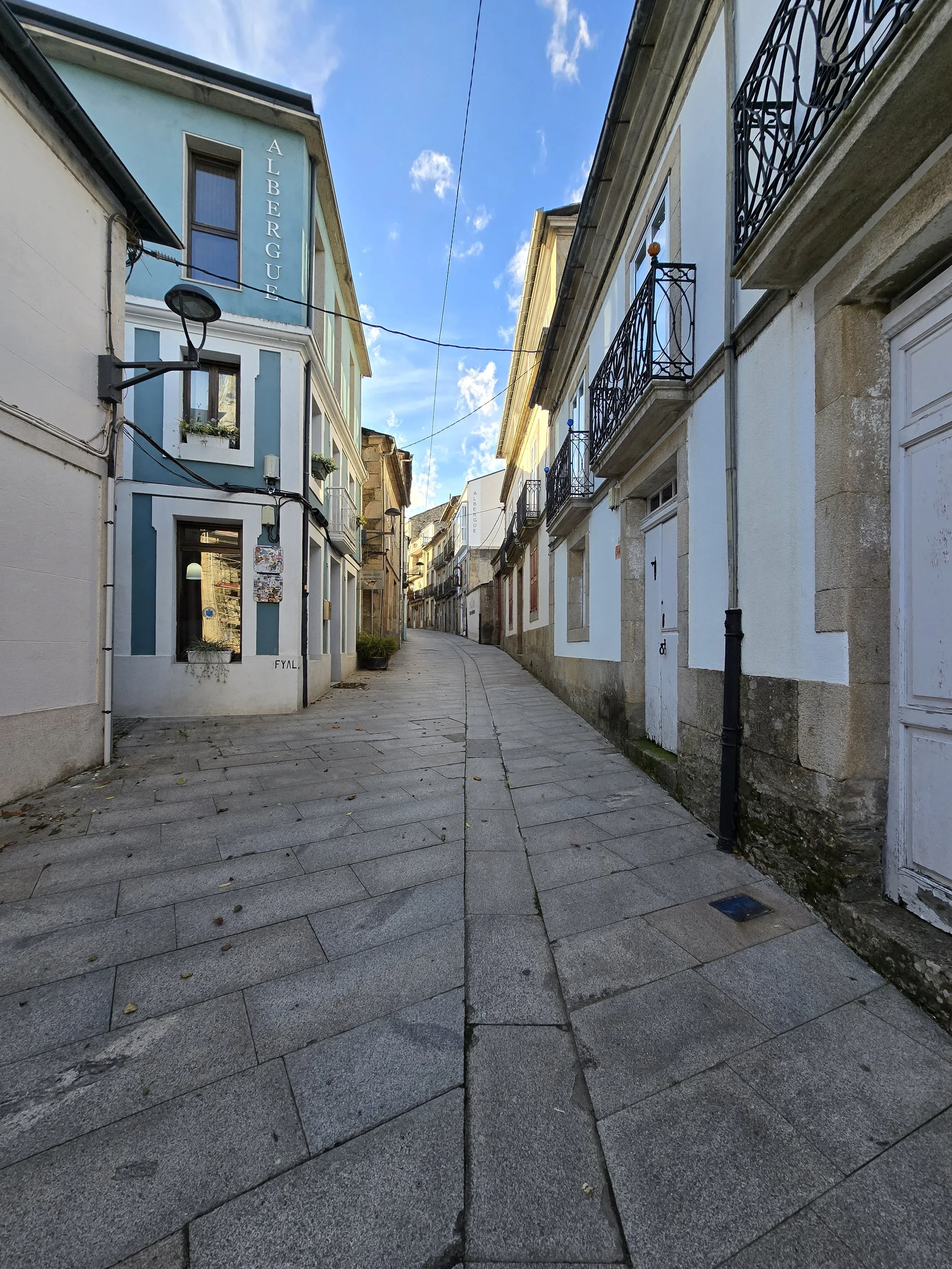
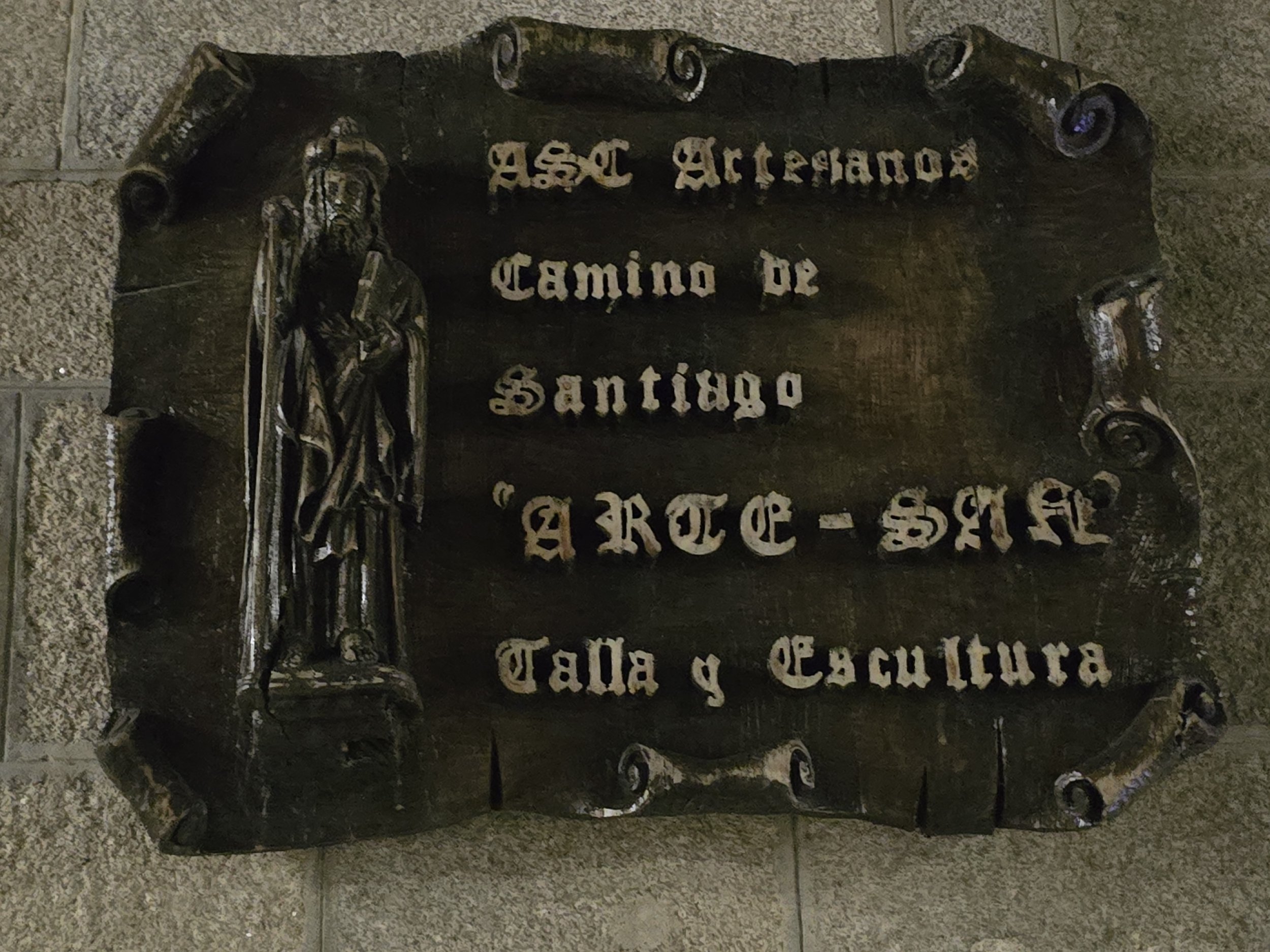
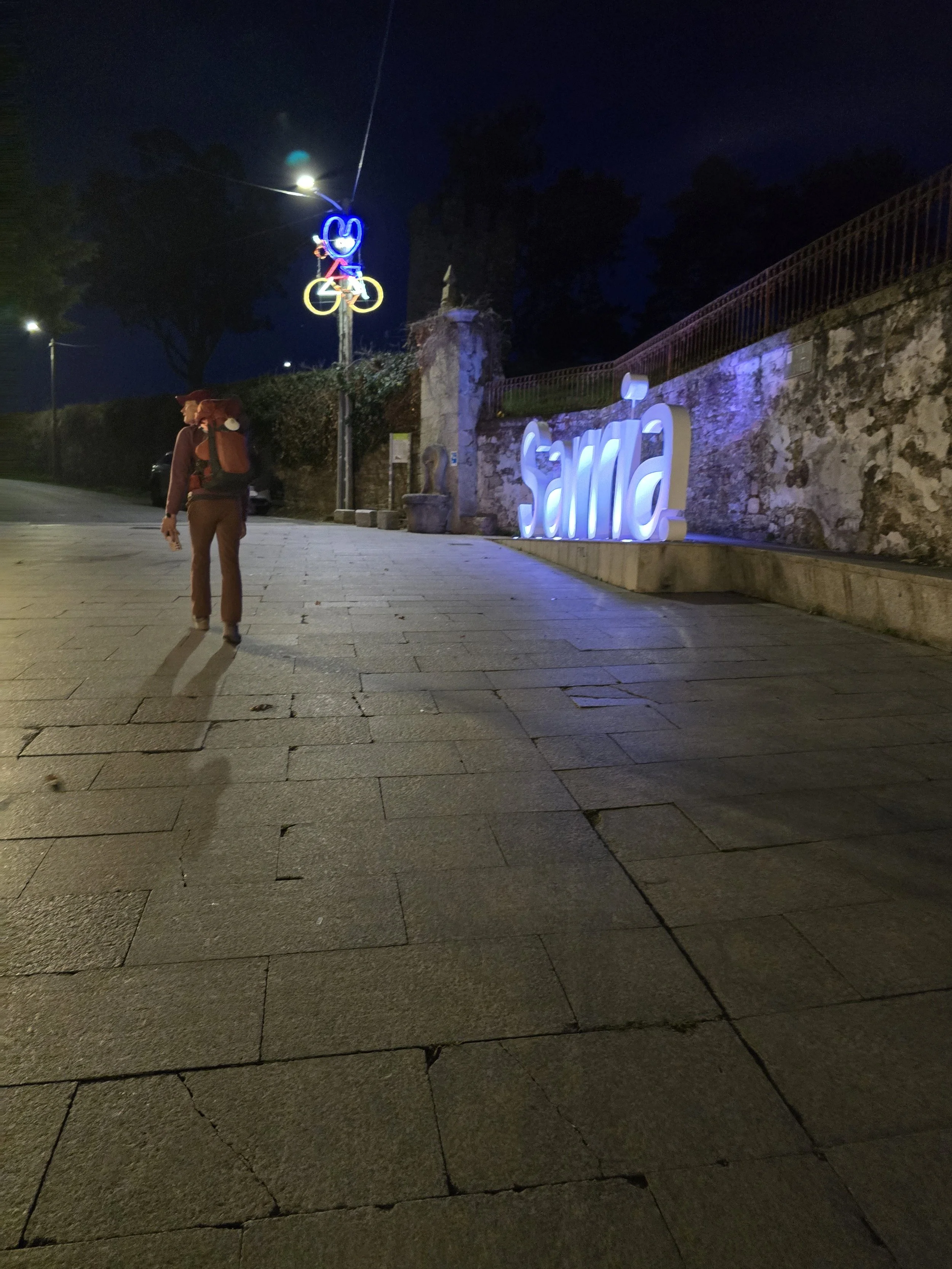
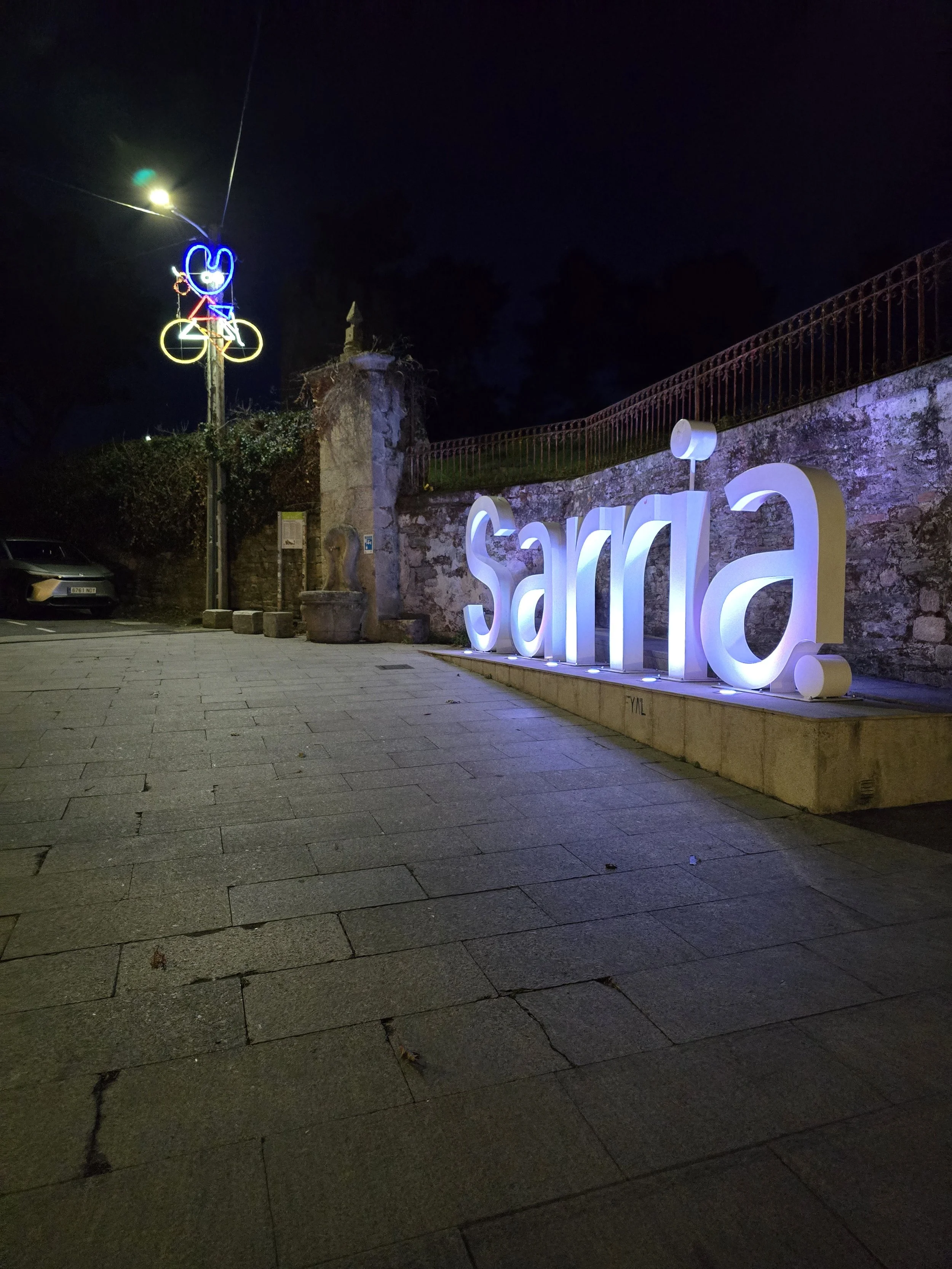
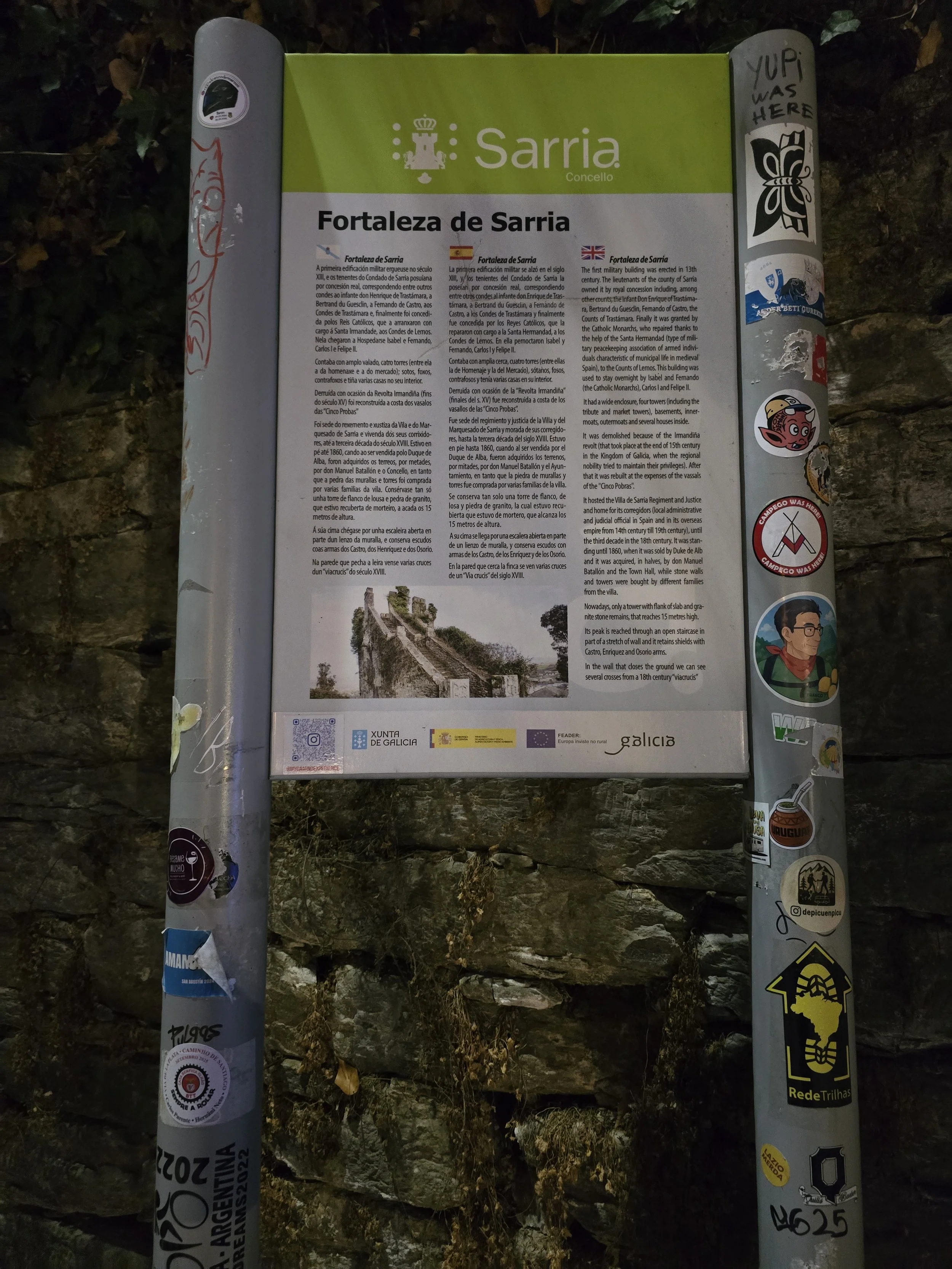
Walking around Sarria, Spain.
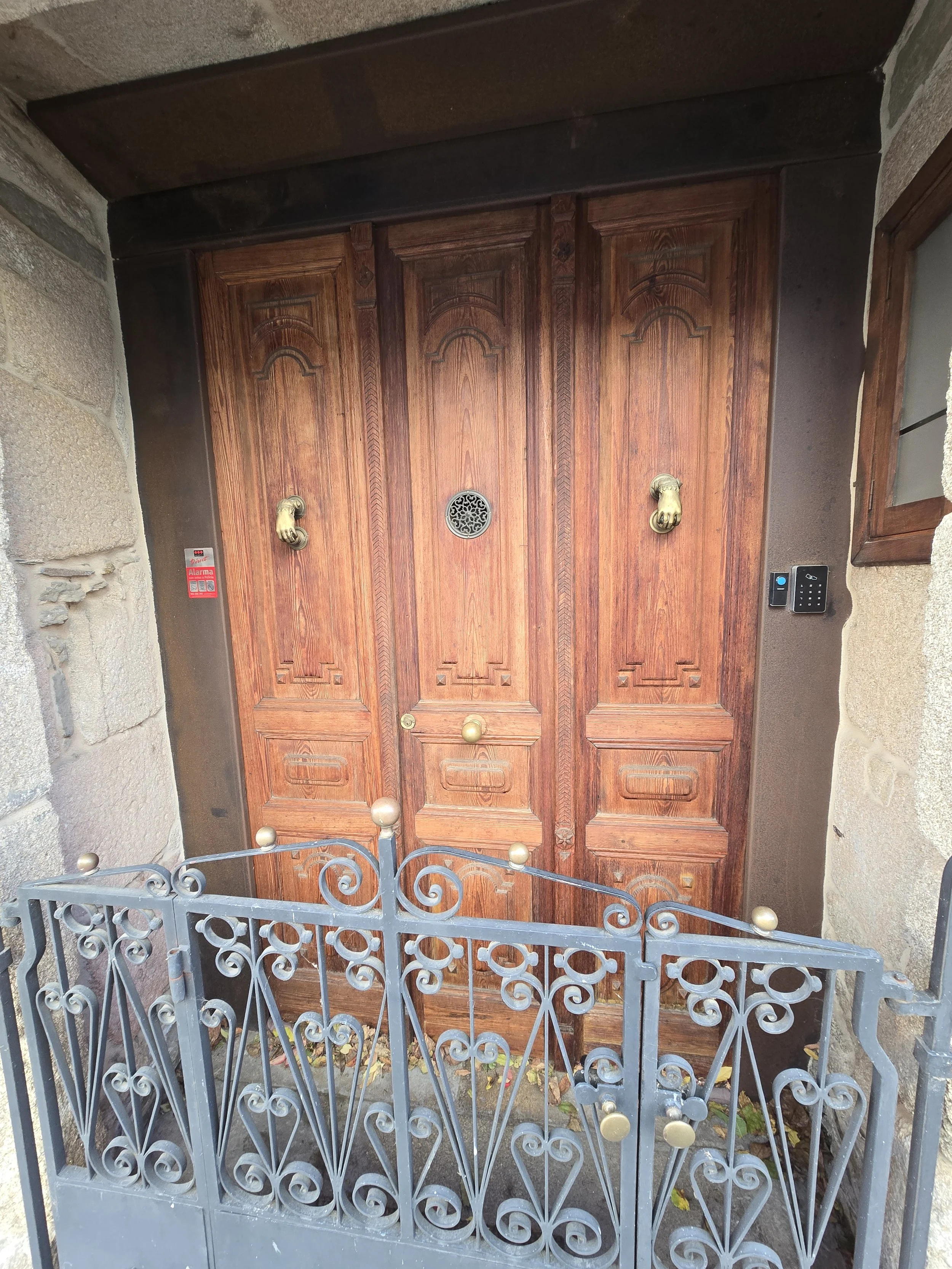
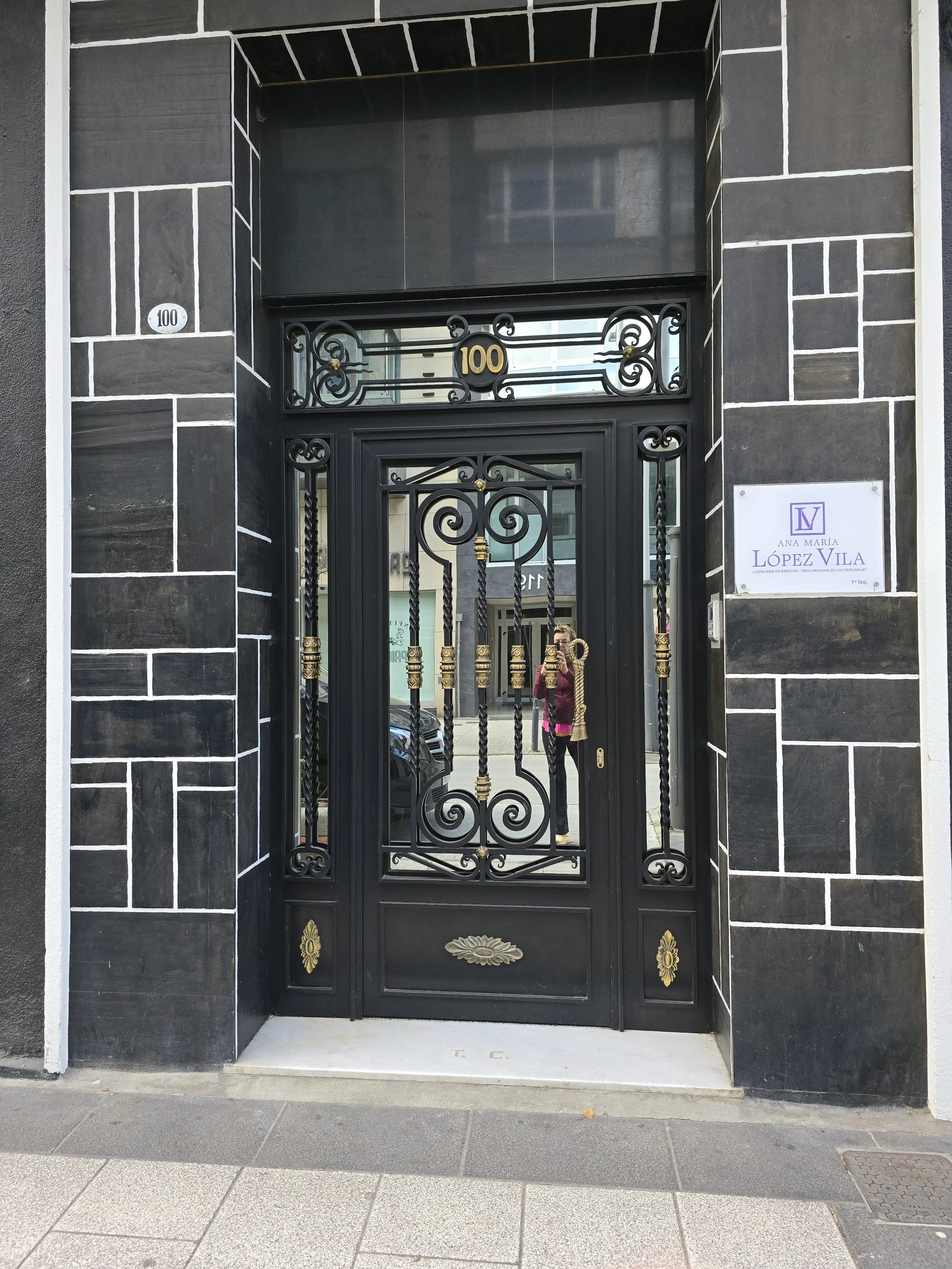
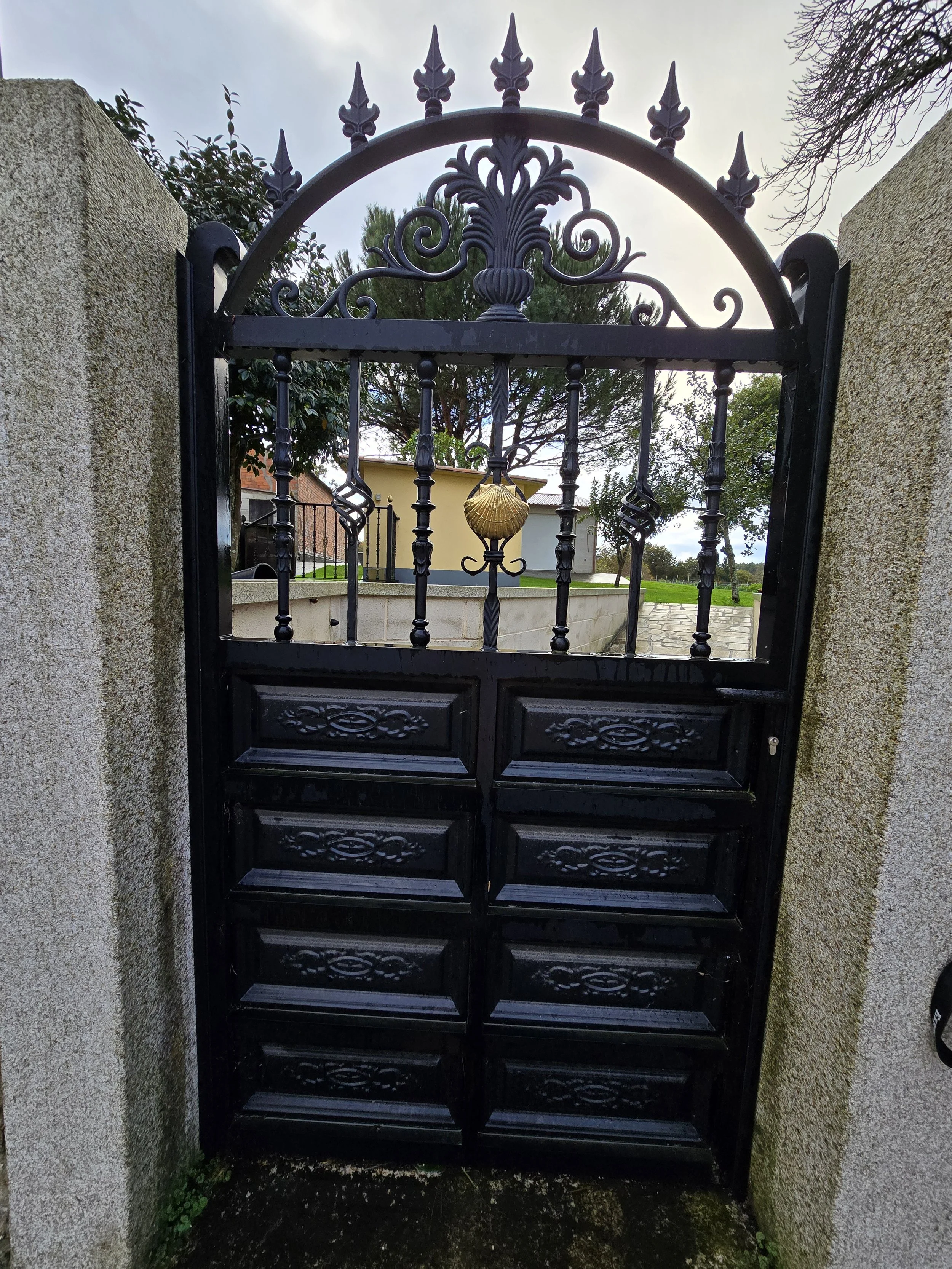
Yes, I have a fascination with doors, door handles and door knockers.
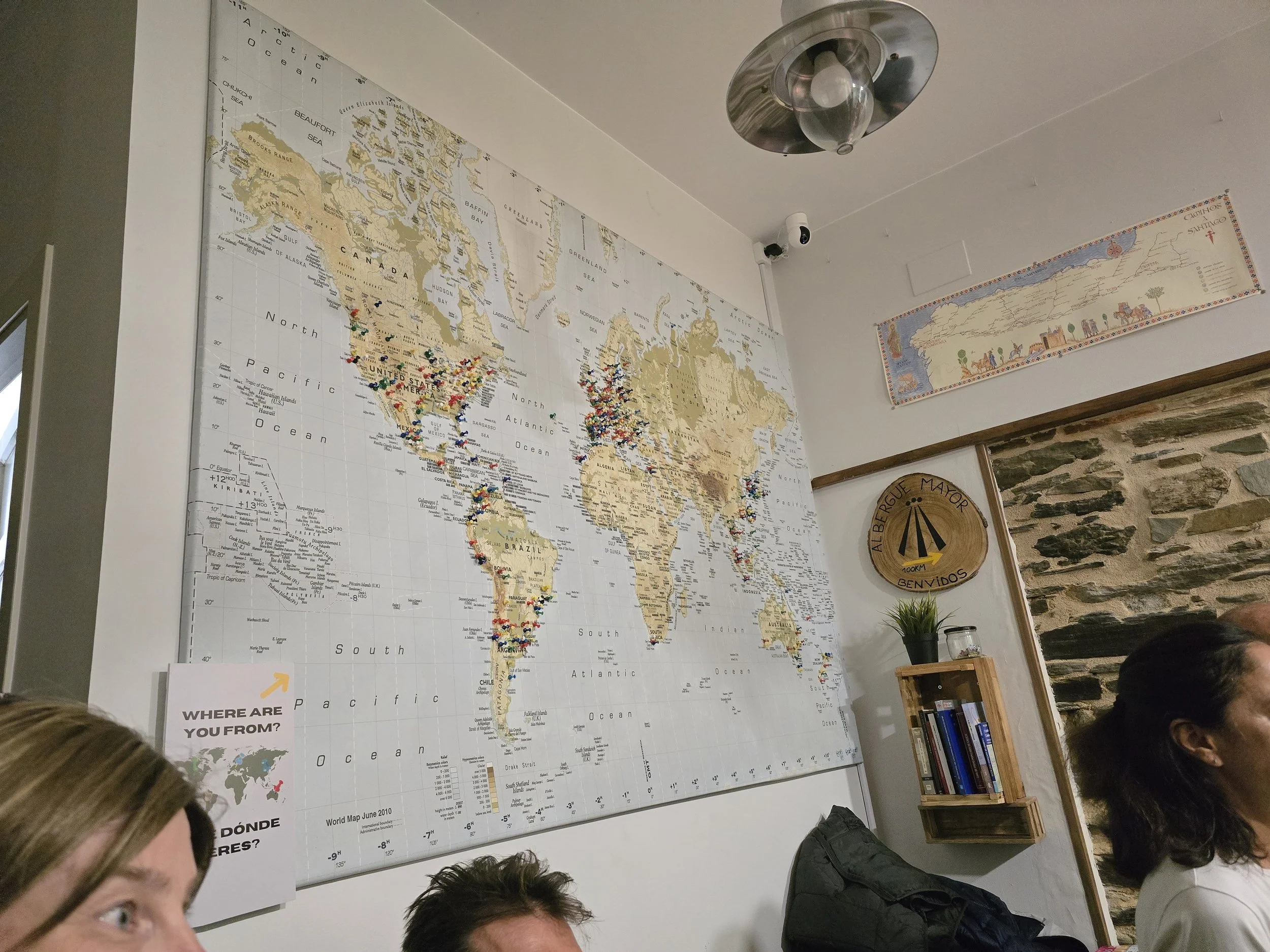
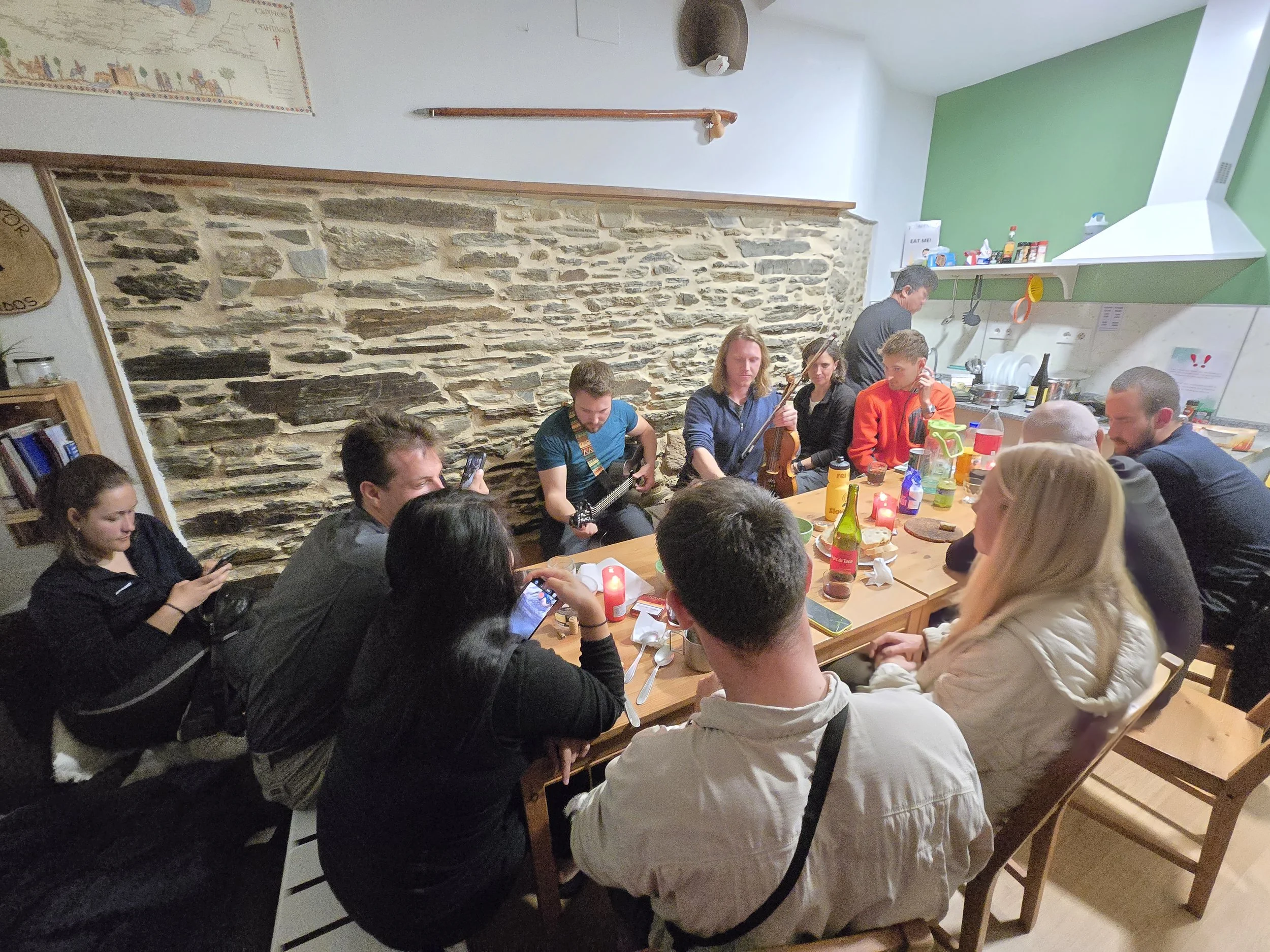
Having dinner inside and albergue, (hostel) with the group of people my friend and travel companion, Jess started walking with from (Camino Francés (French Way) in the French Basque town of Saint-Jean-Pied-de-Port) France.
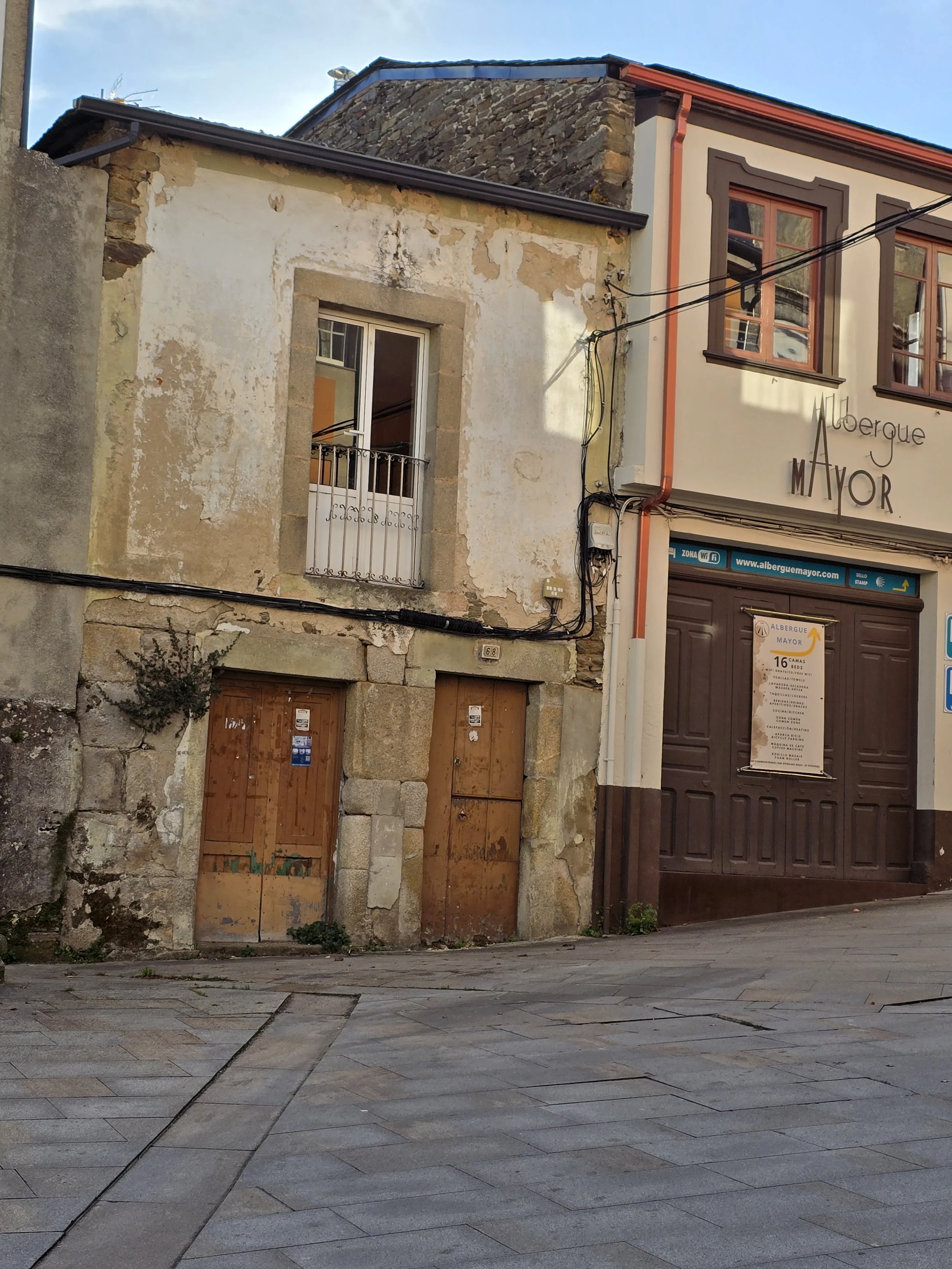
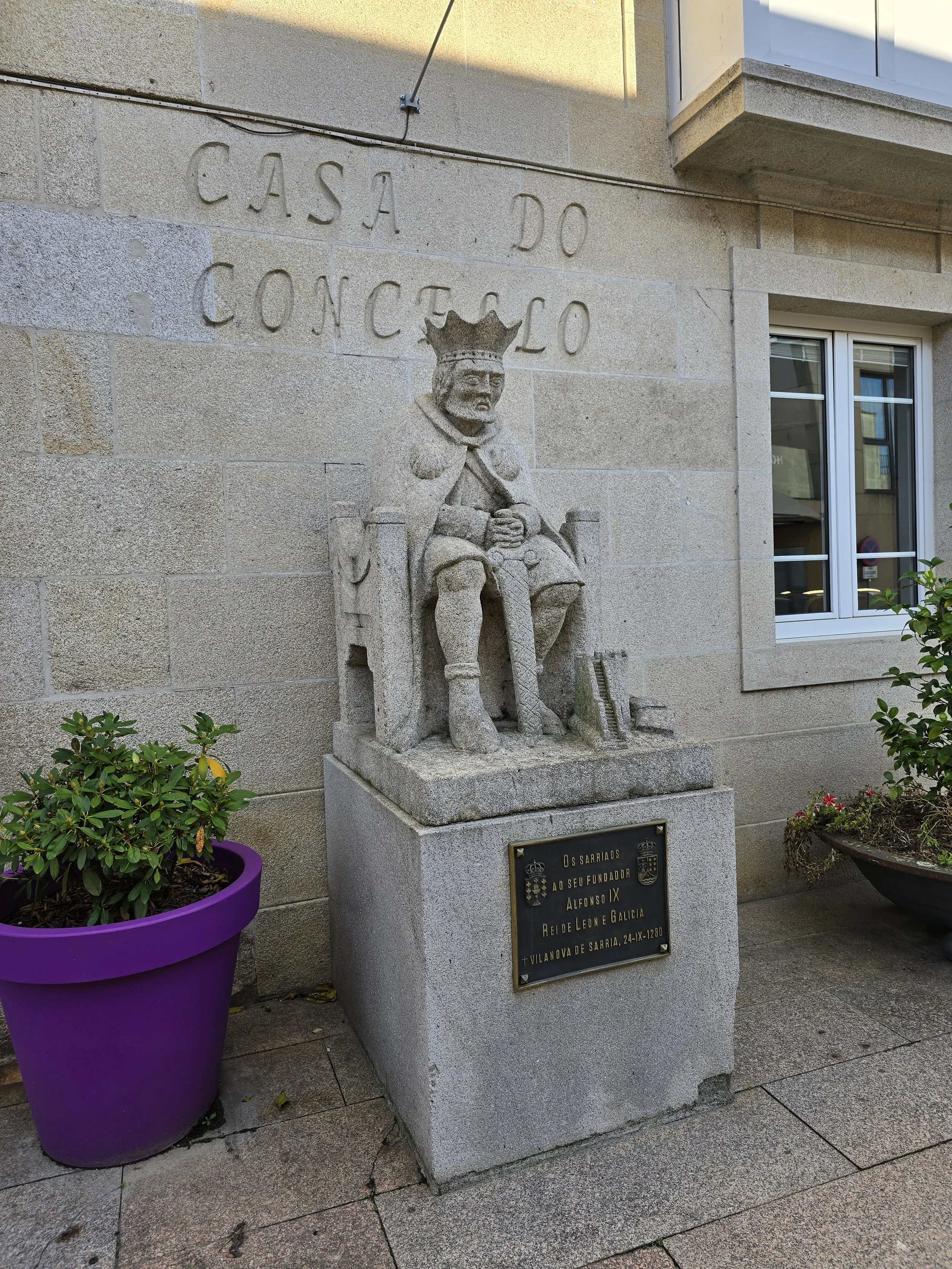
King Alfonso IX
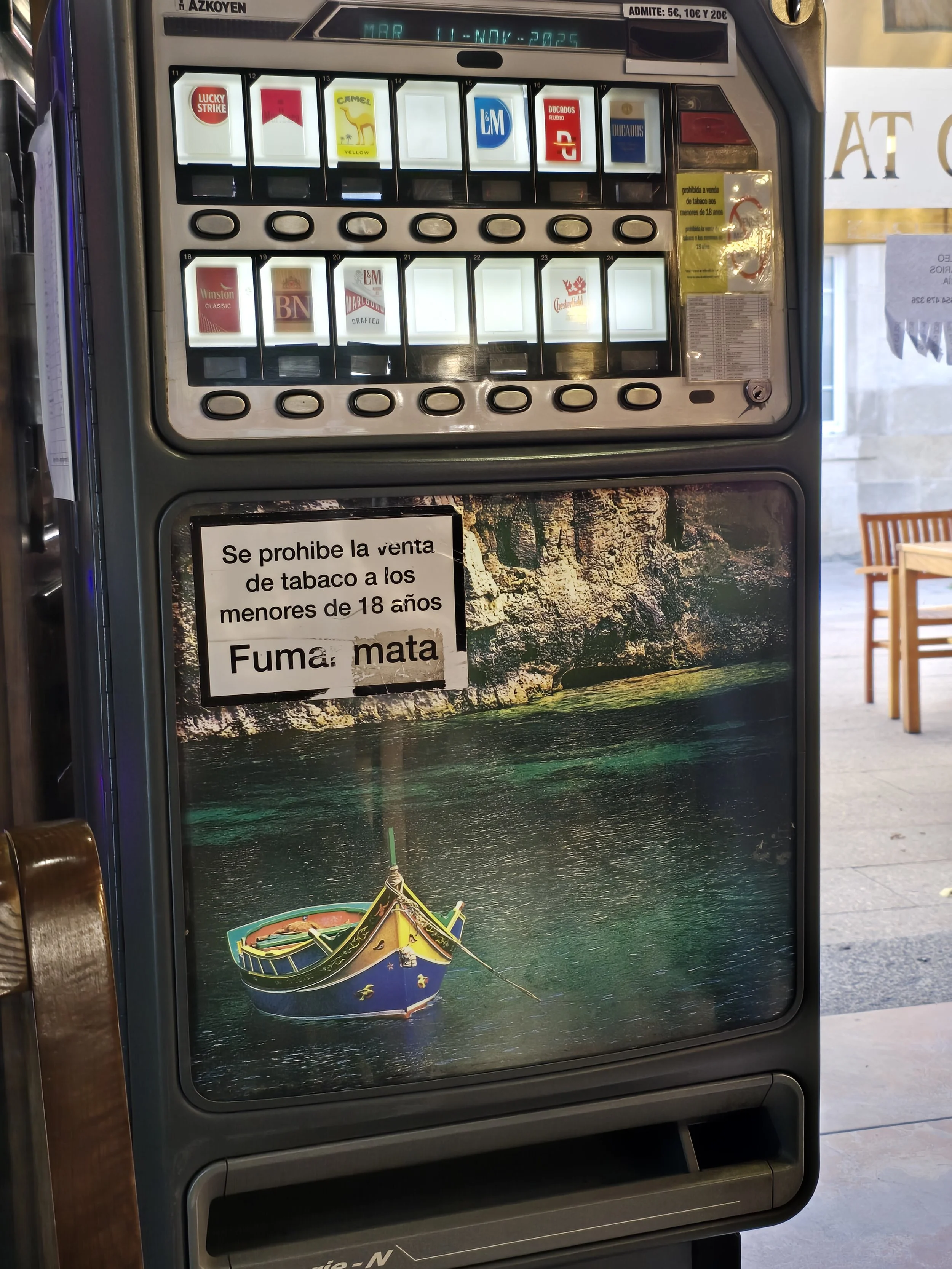
Old Fashioned Cigarette machine.

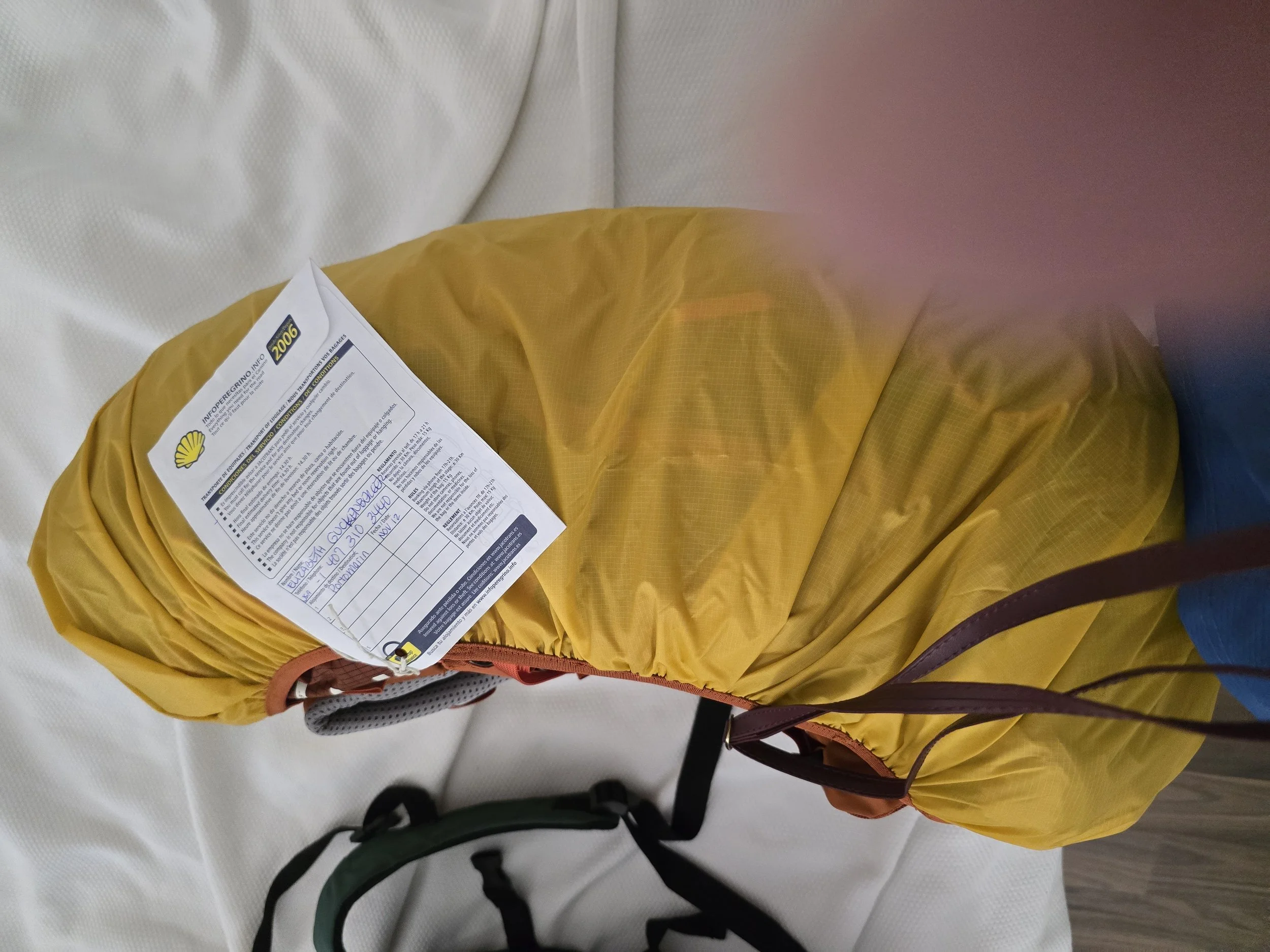
The service I used to transport my backpack place to place.
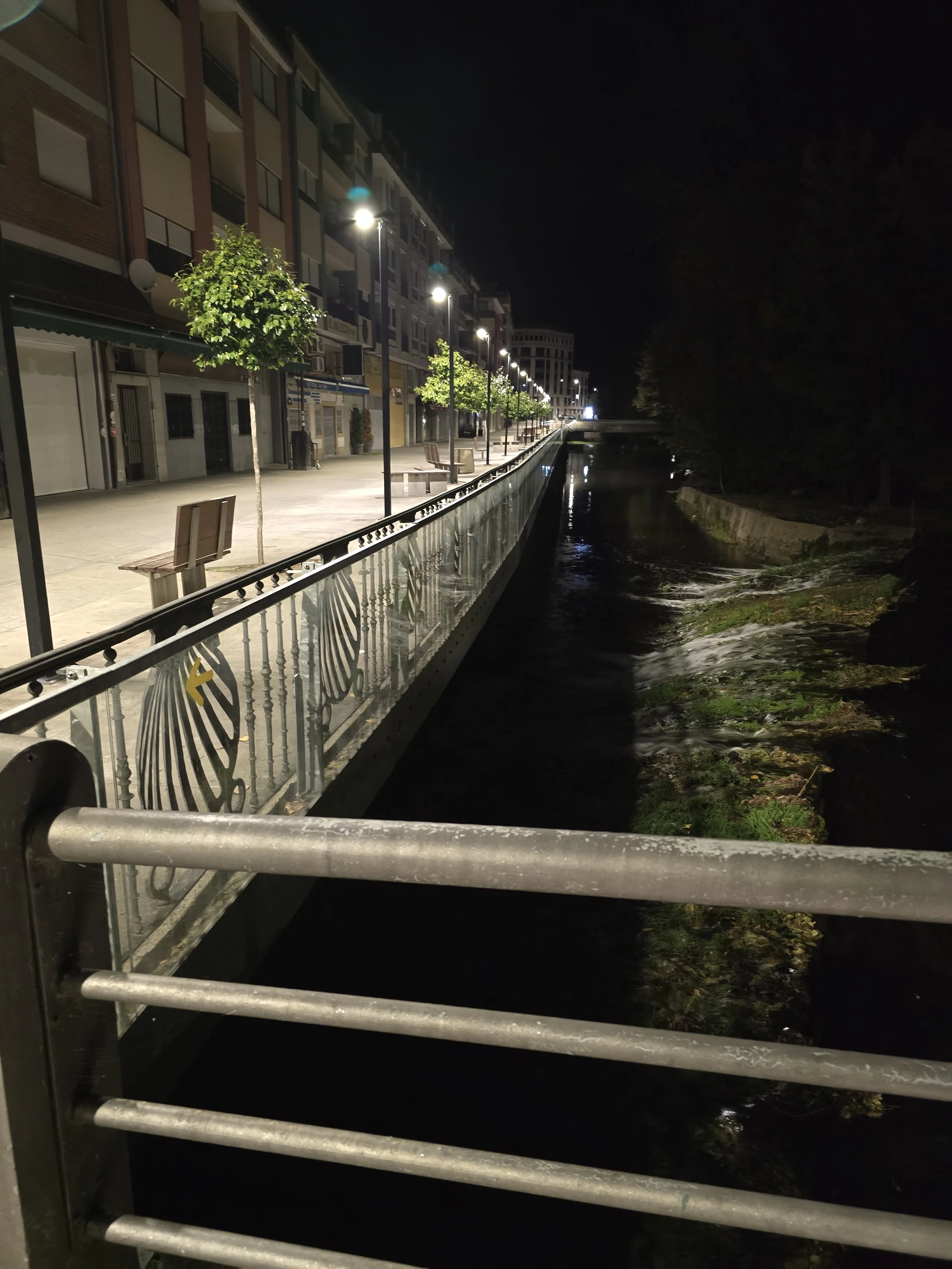
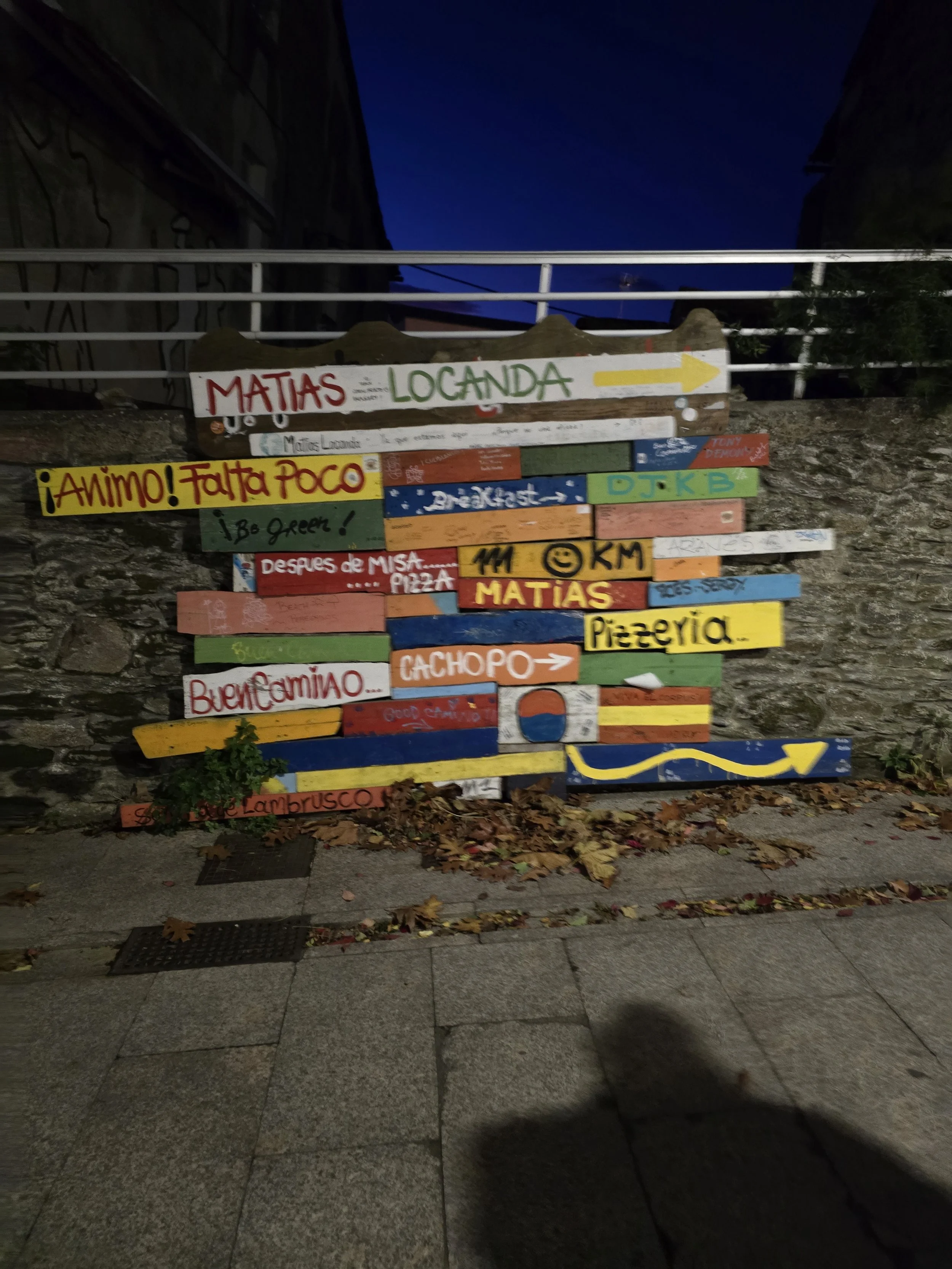
And we're off!
〰️
And we're off! 〰️
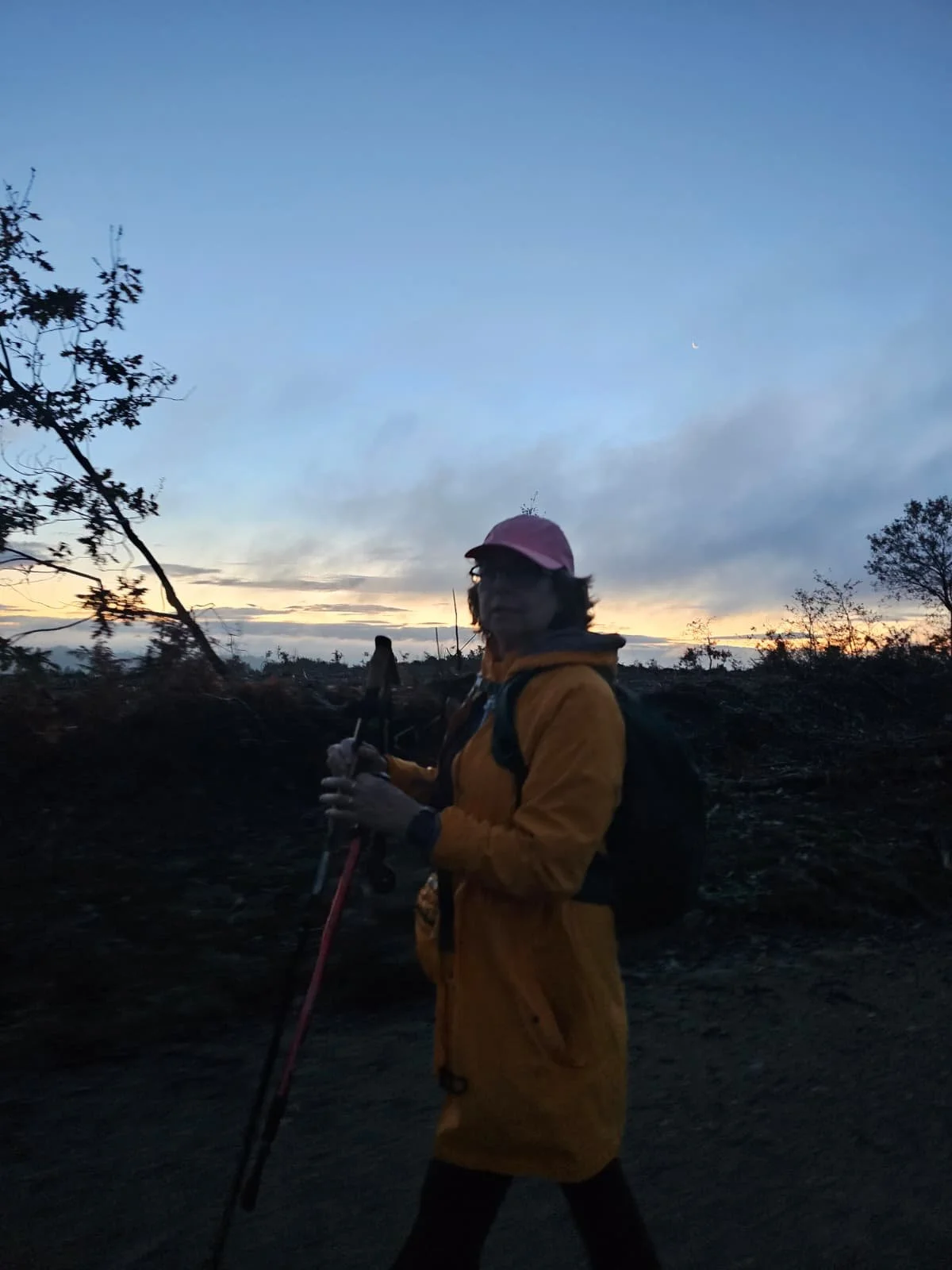
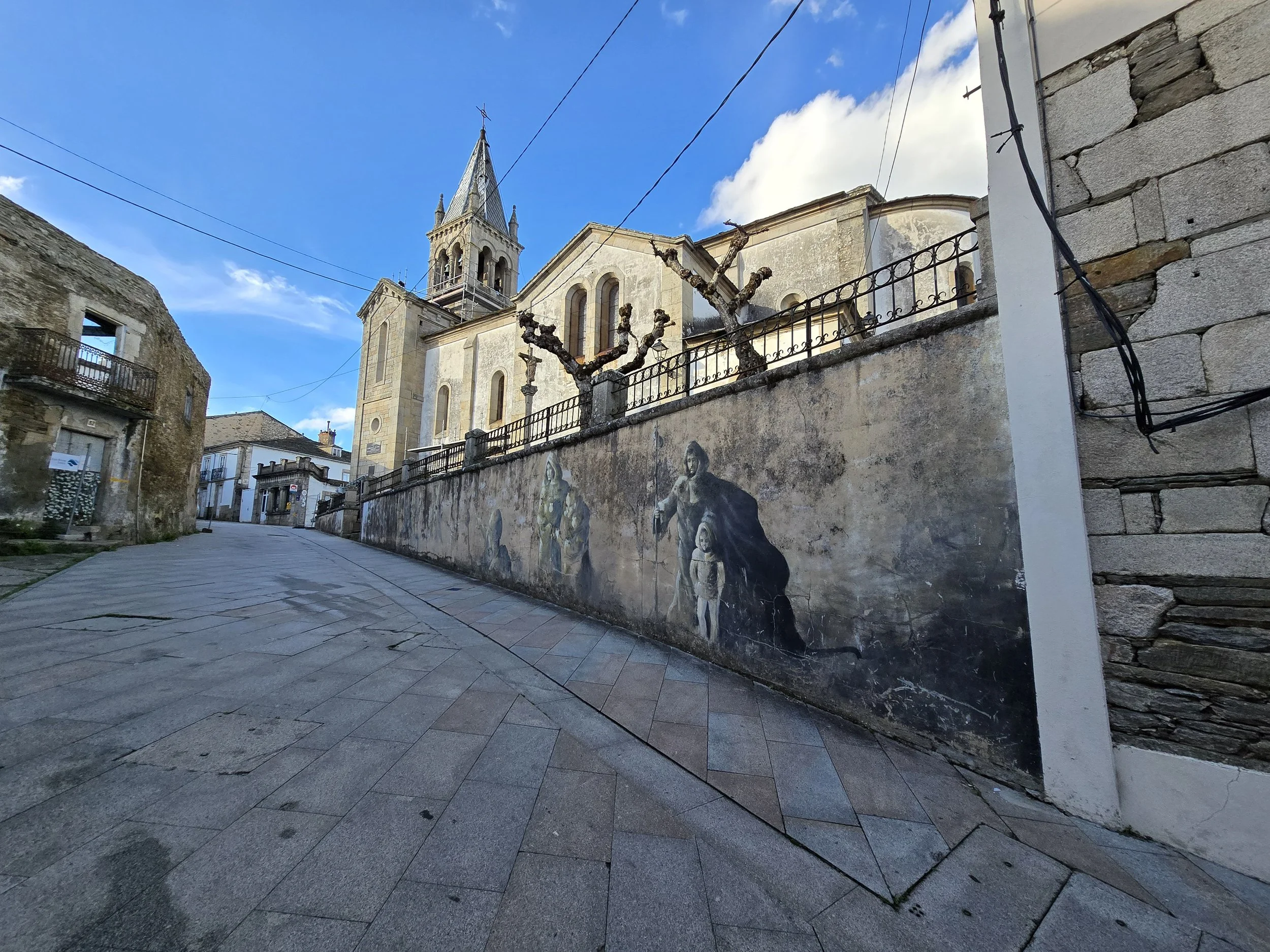
Our first day, 7 am or so, out of Sarria.
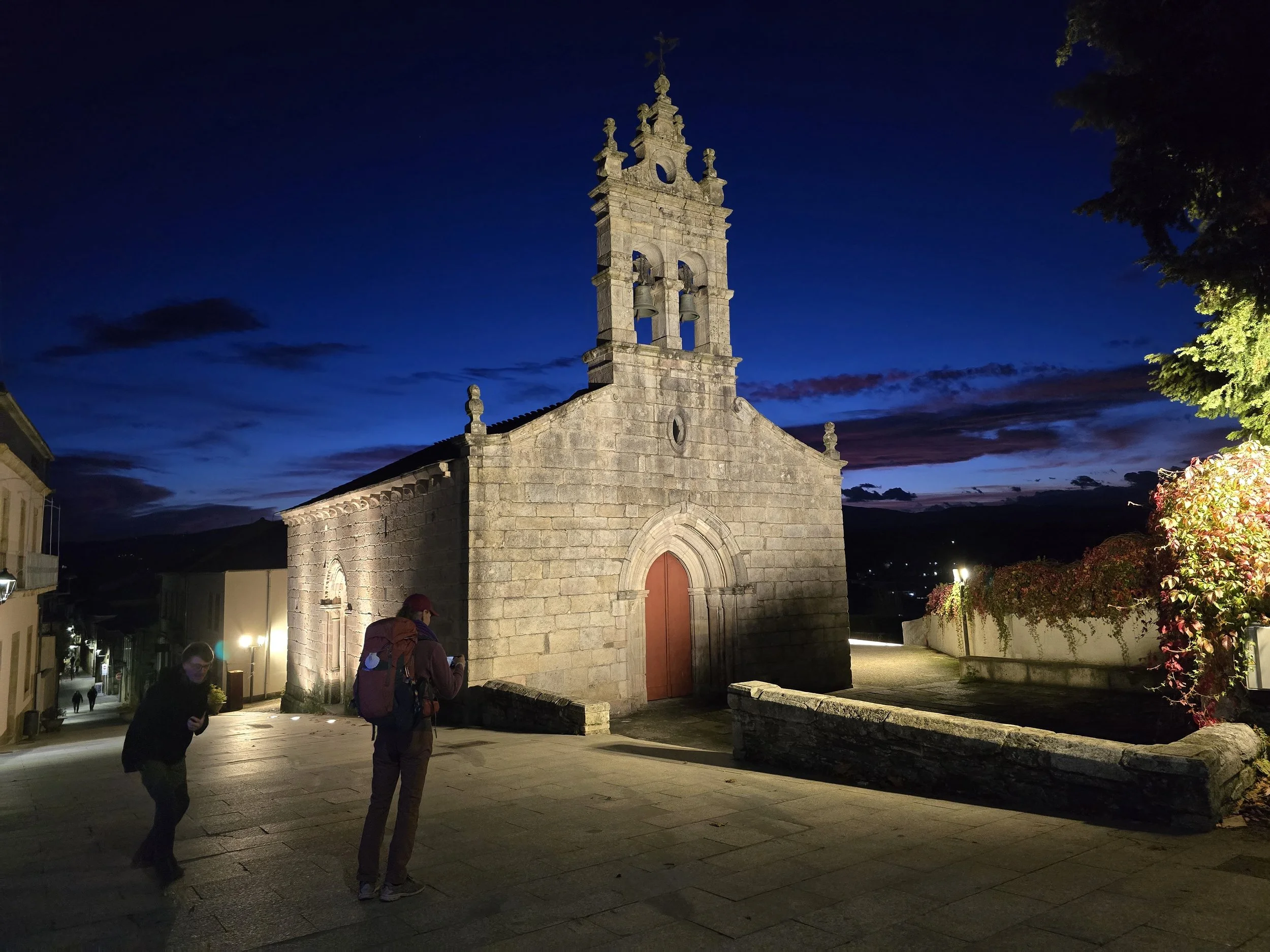
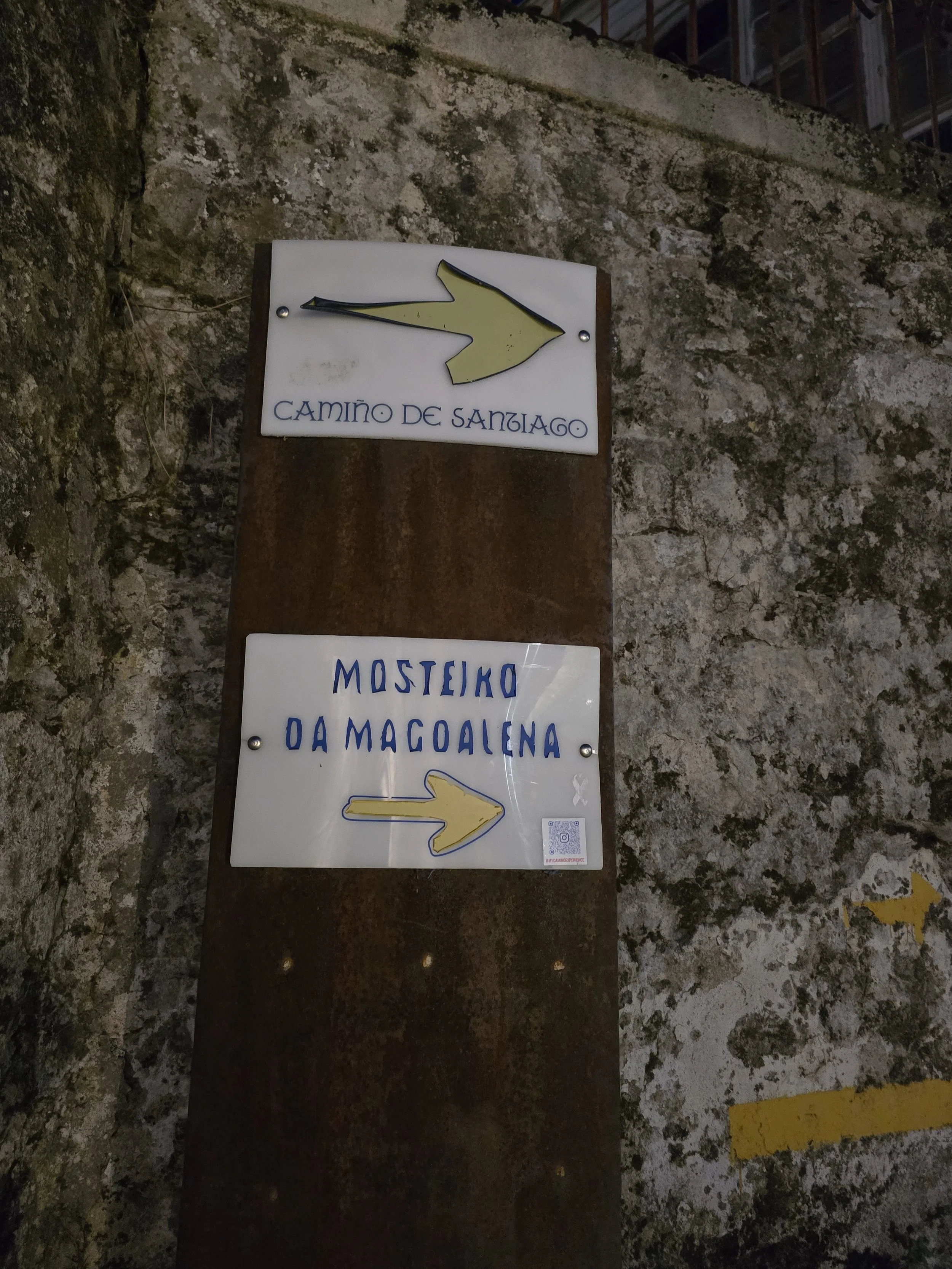
Only 70 and 1/5 miles for me to go! (113.4588 kilometers)
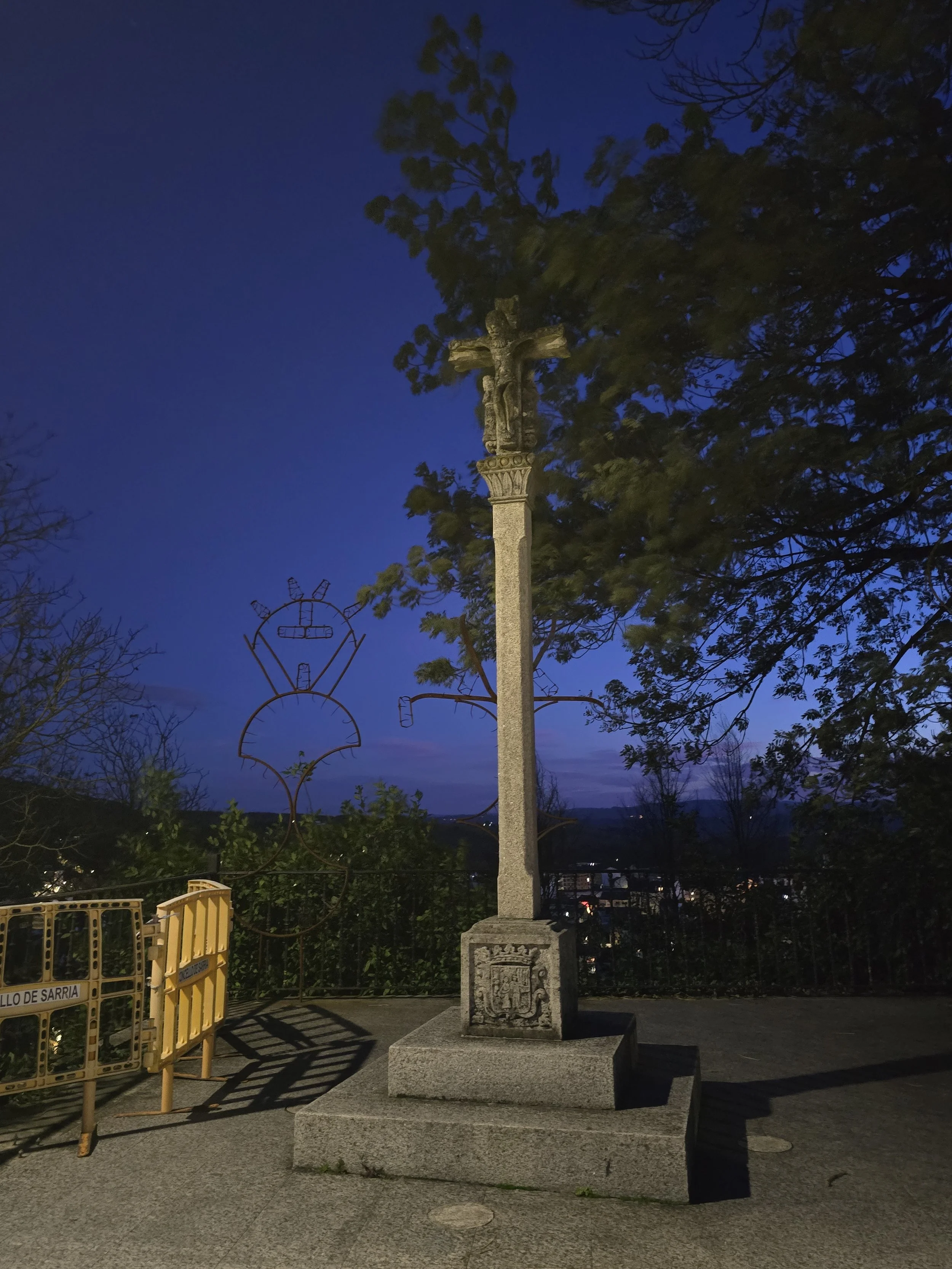
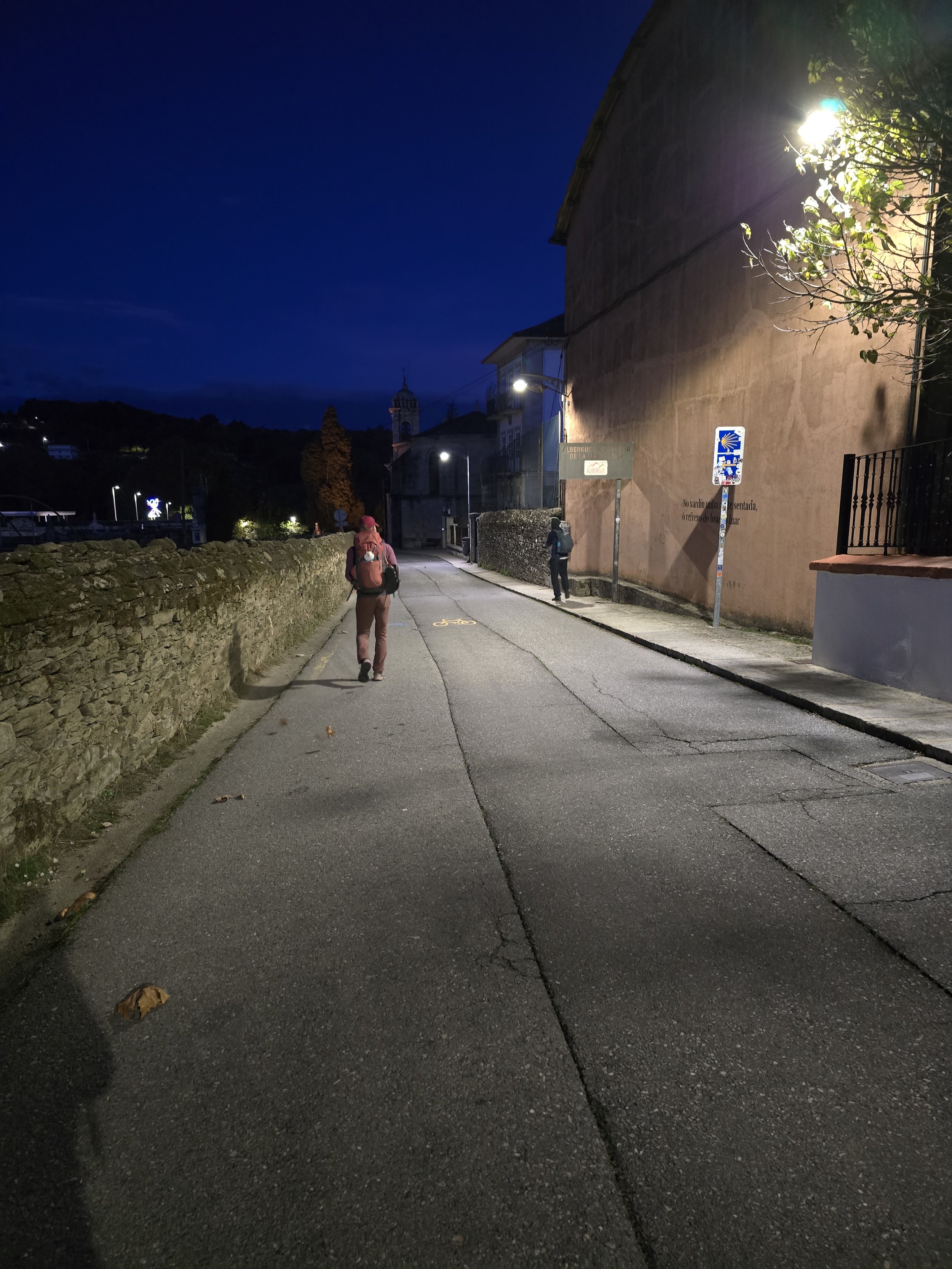
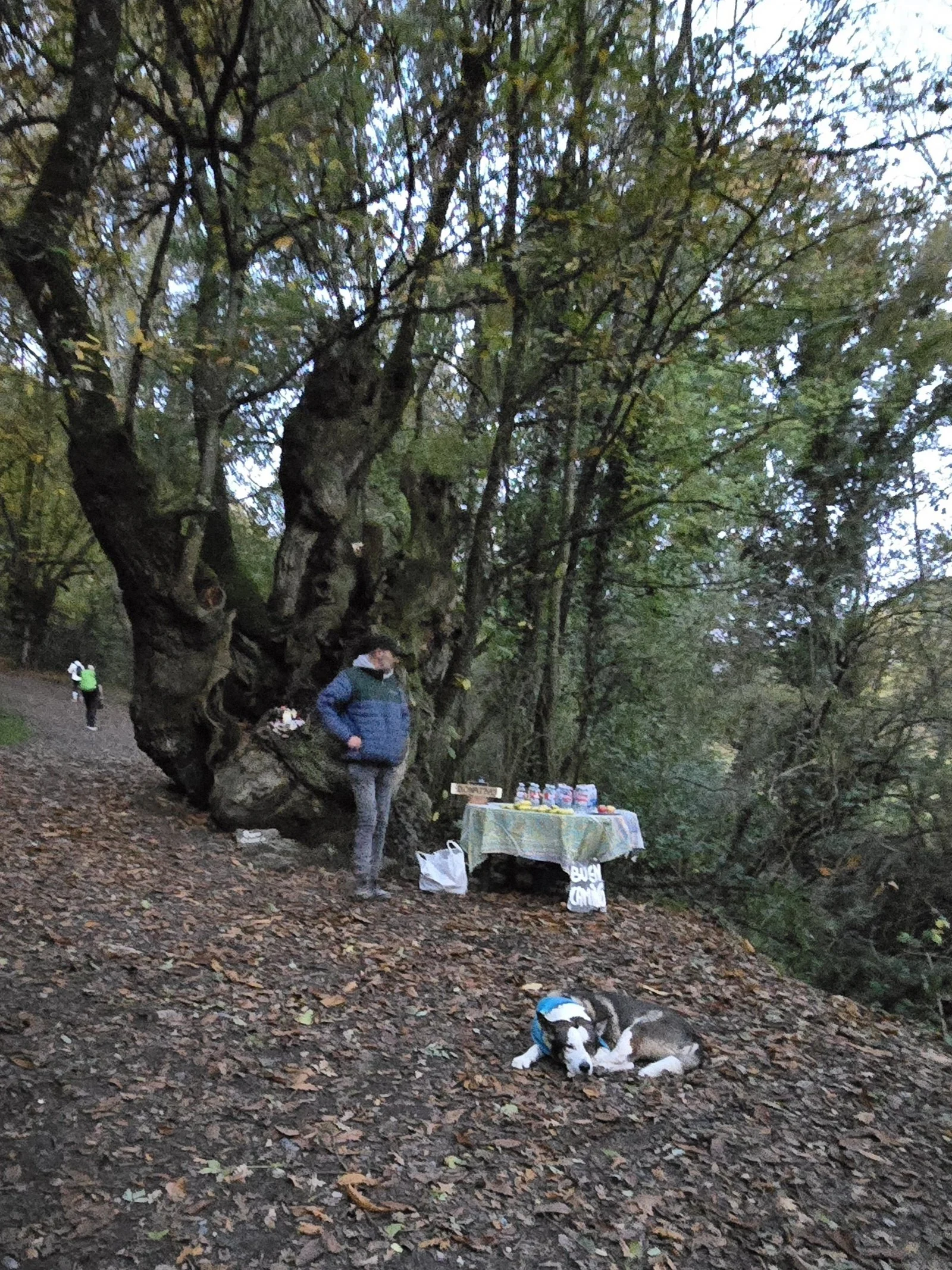
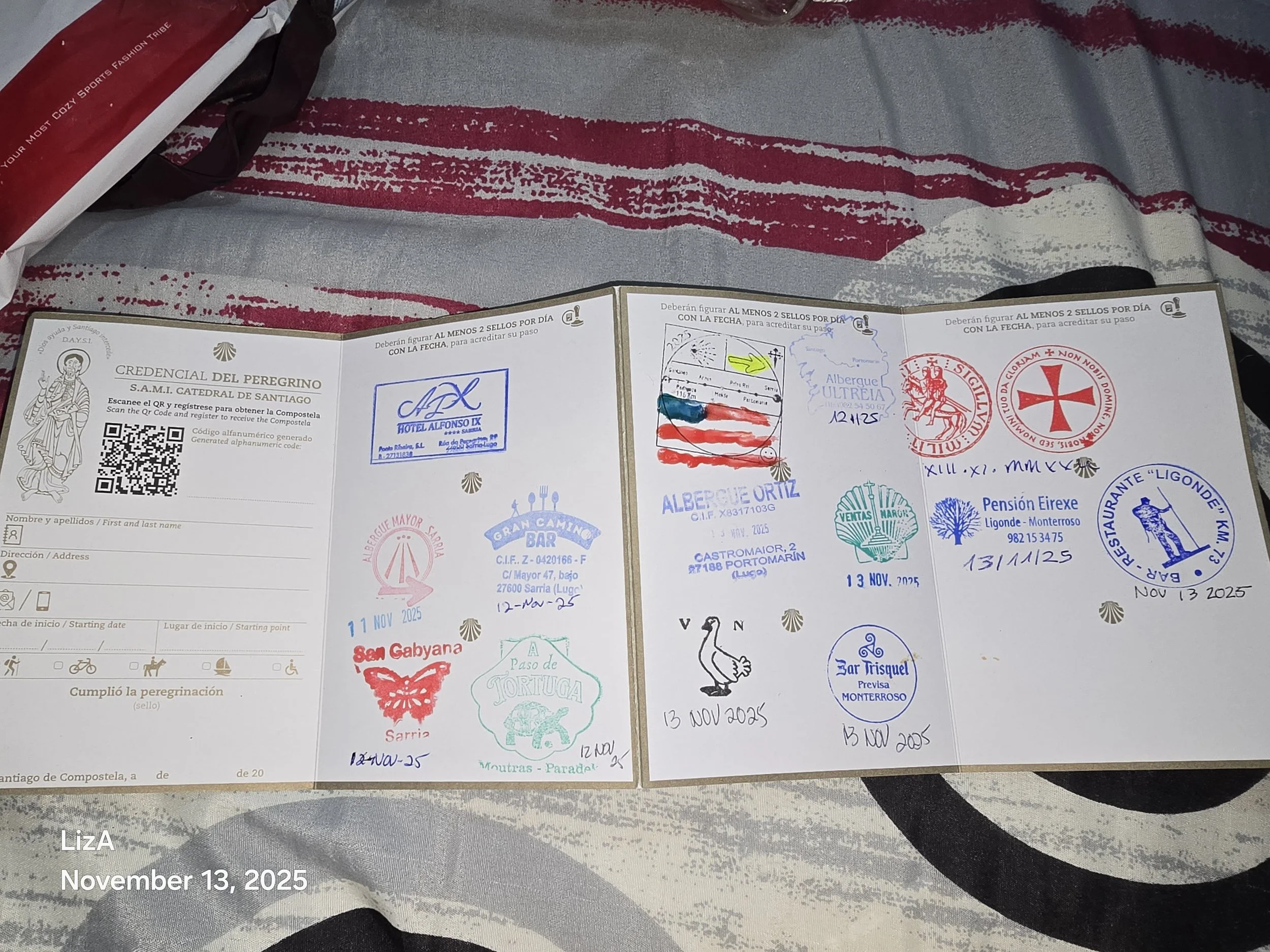
We met this guy on a huge hill, giving stamps for a small donation. There are people along the way, who give you stamps (sellos) on the Camino de Santiago. They are various local businesses and institutions, including albergue hosts, café/bar owners, church officials, and tourist office staff, who provide them as proof of your journey for your Credencial (Pilgrim Passport) to earn the final Compostela certificate, serving as a fun memory and documentation of your pilgrimage progress.
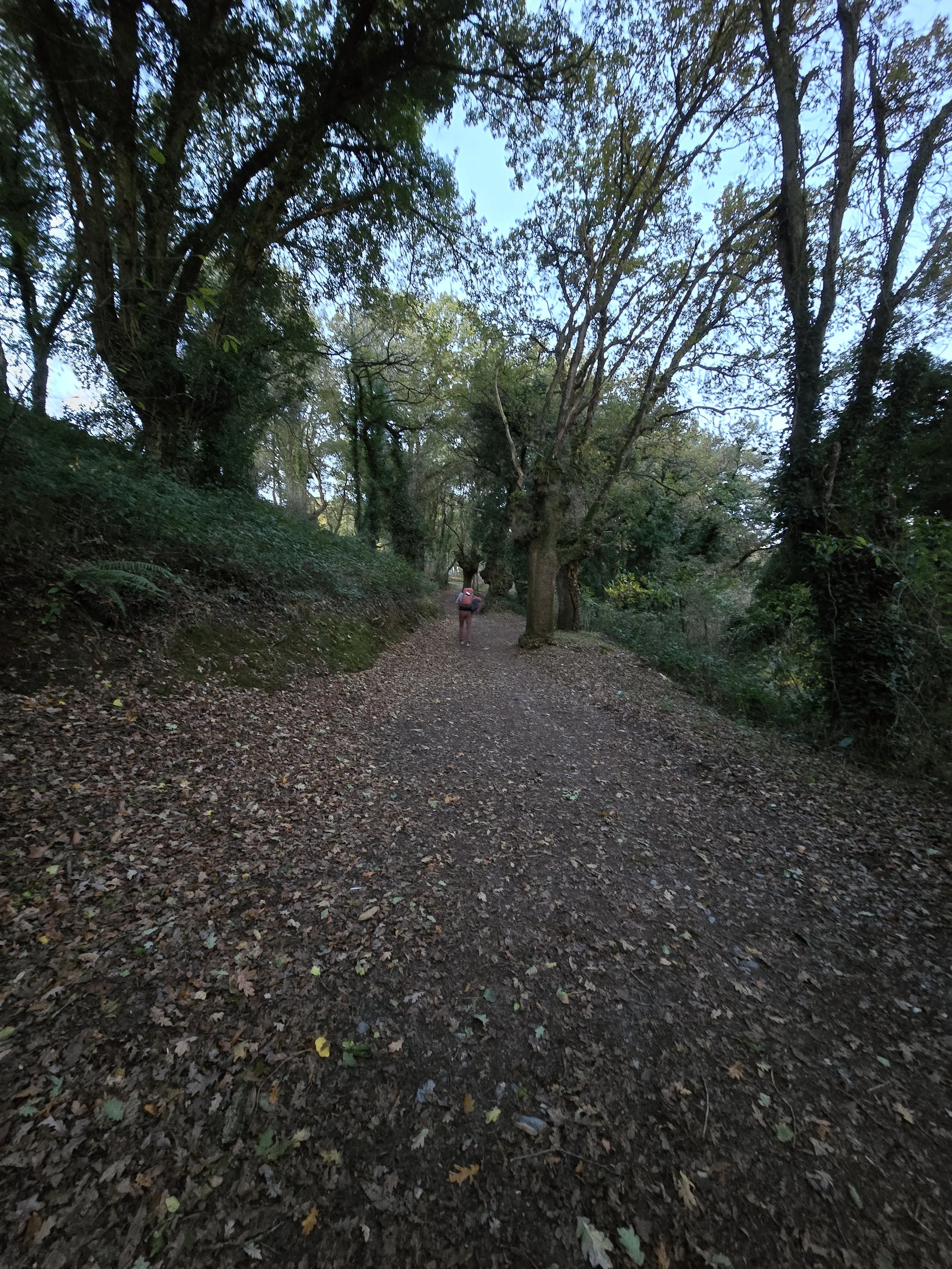
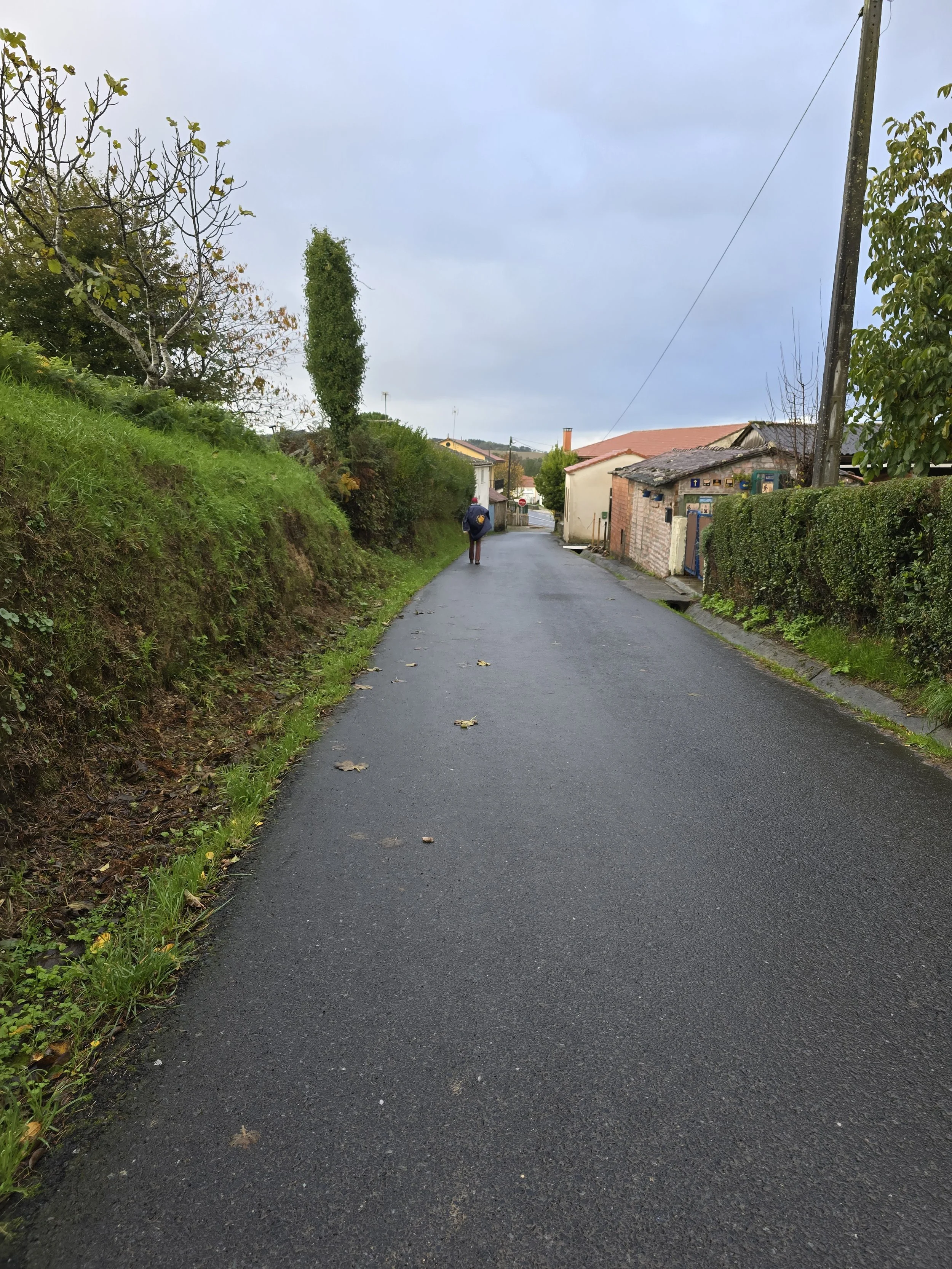
Lots of long ‘roads’ like this.
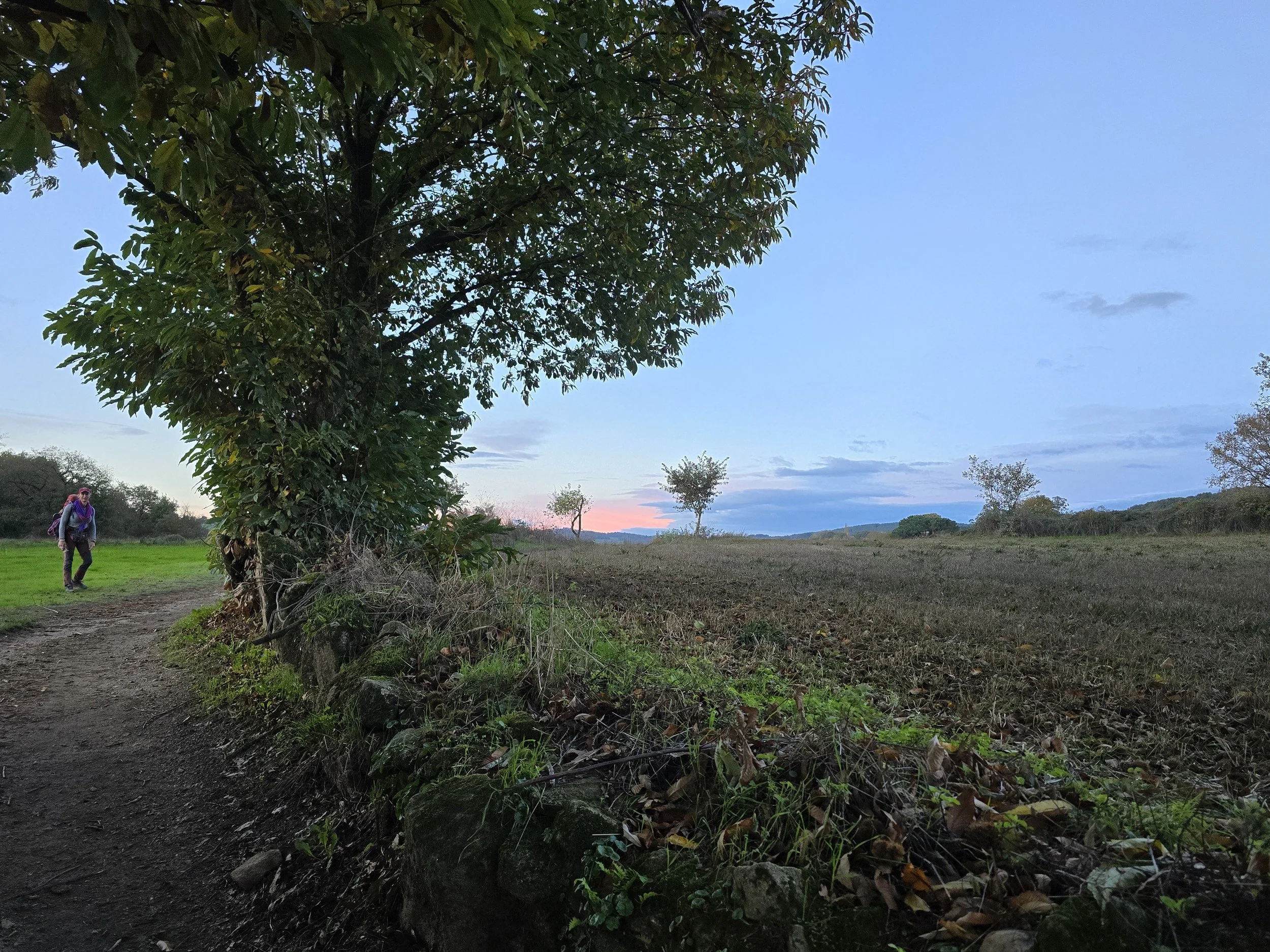
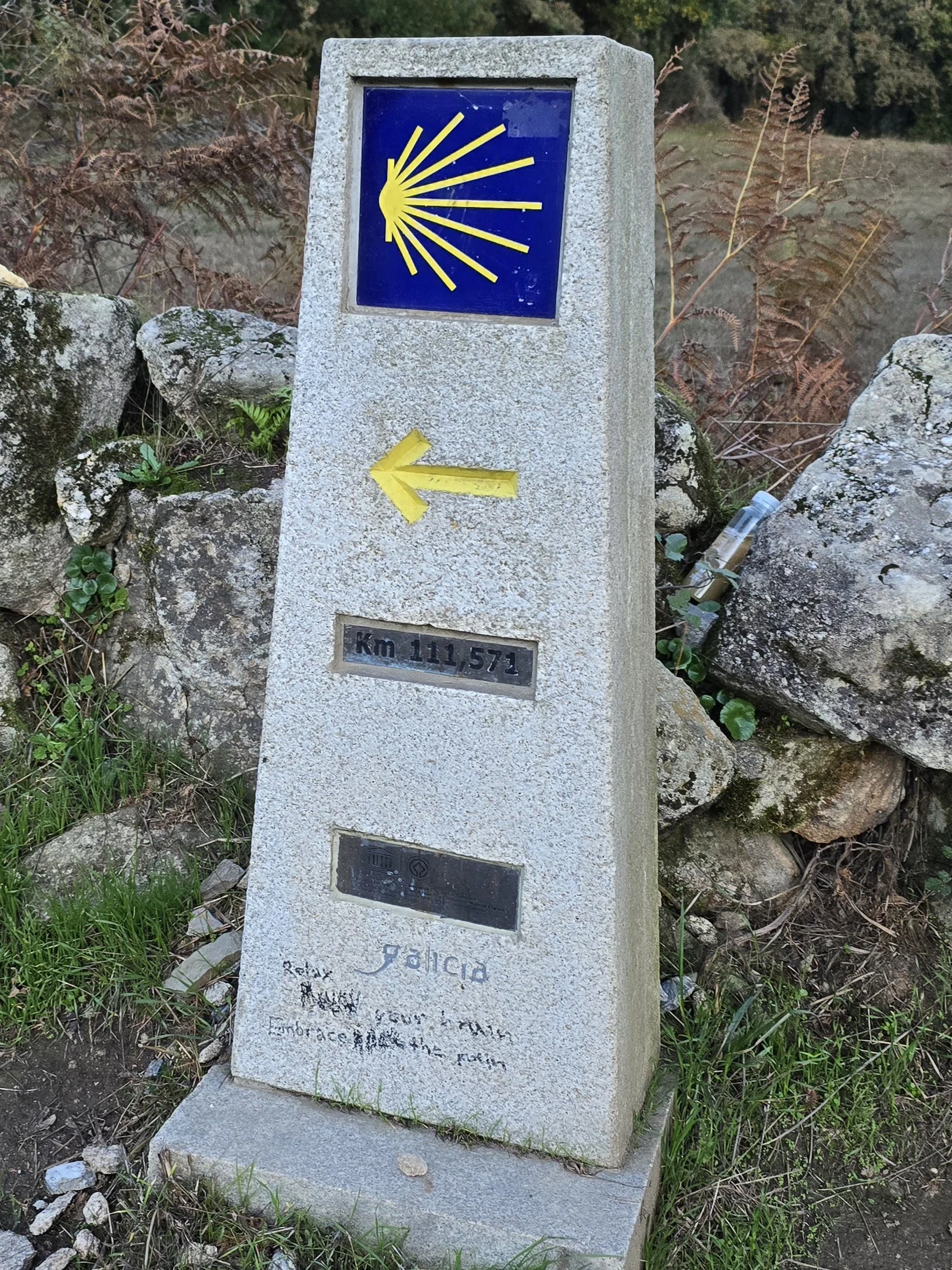
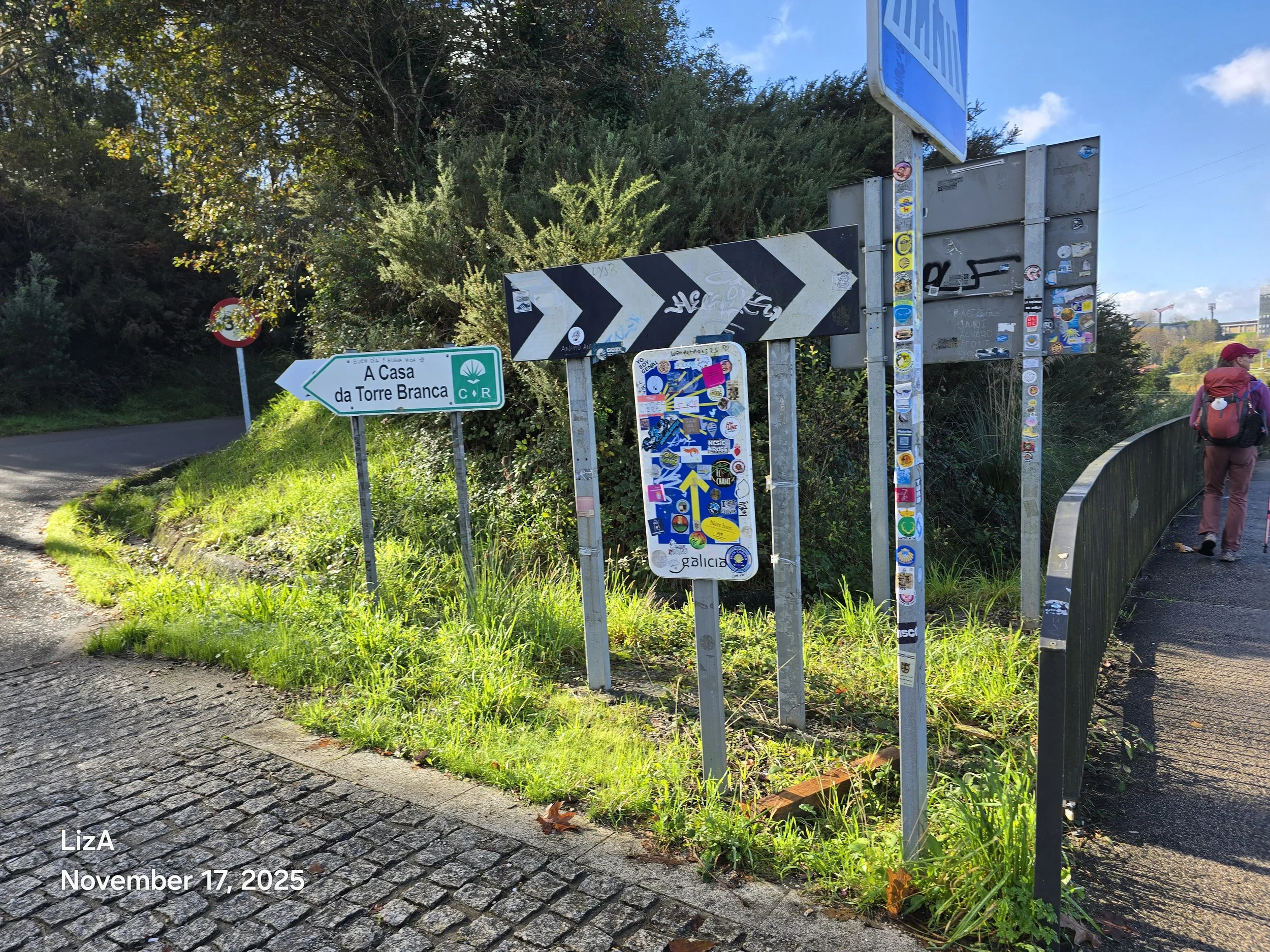
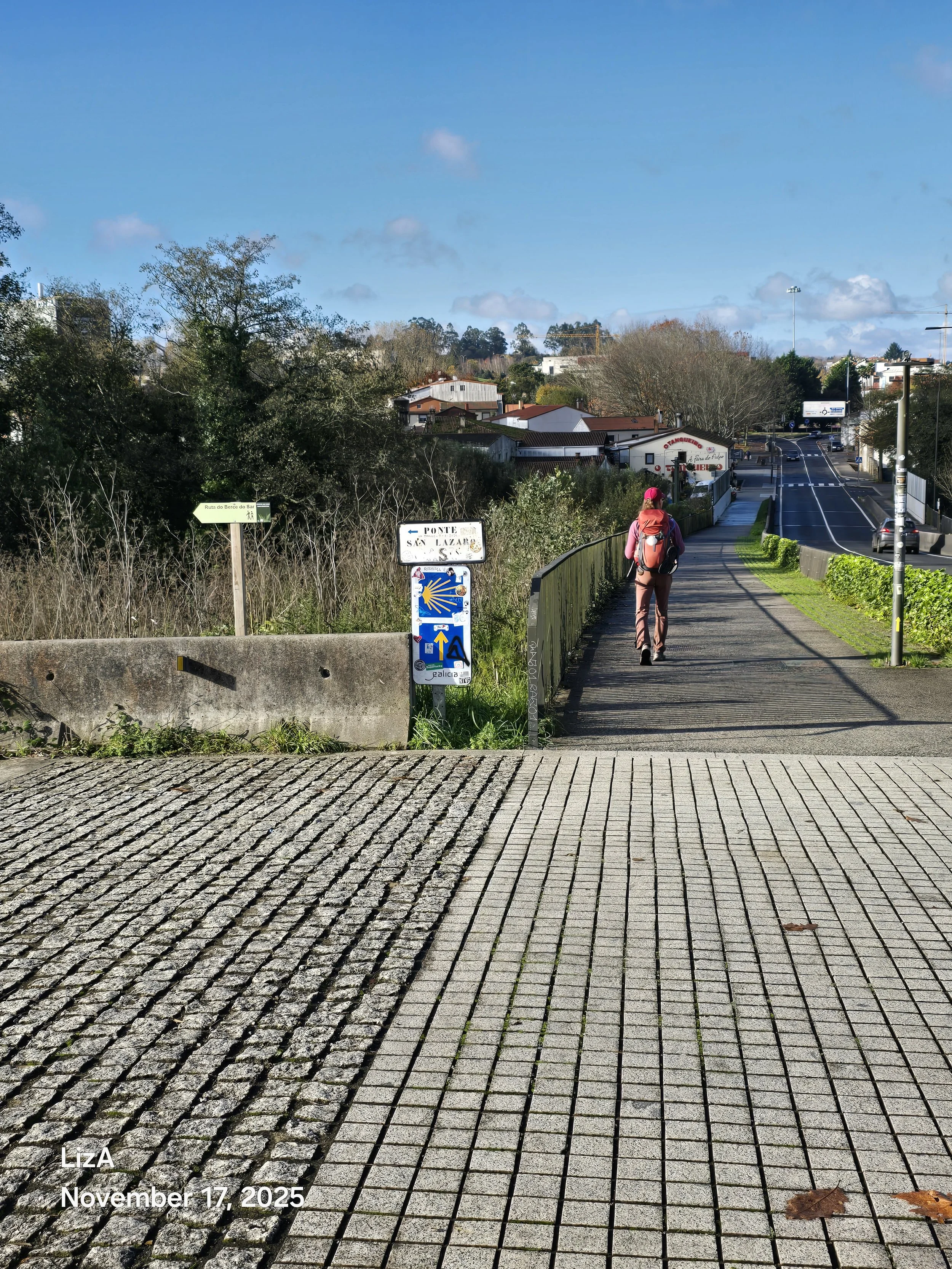
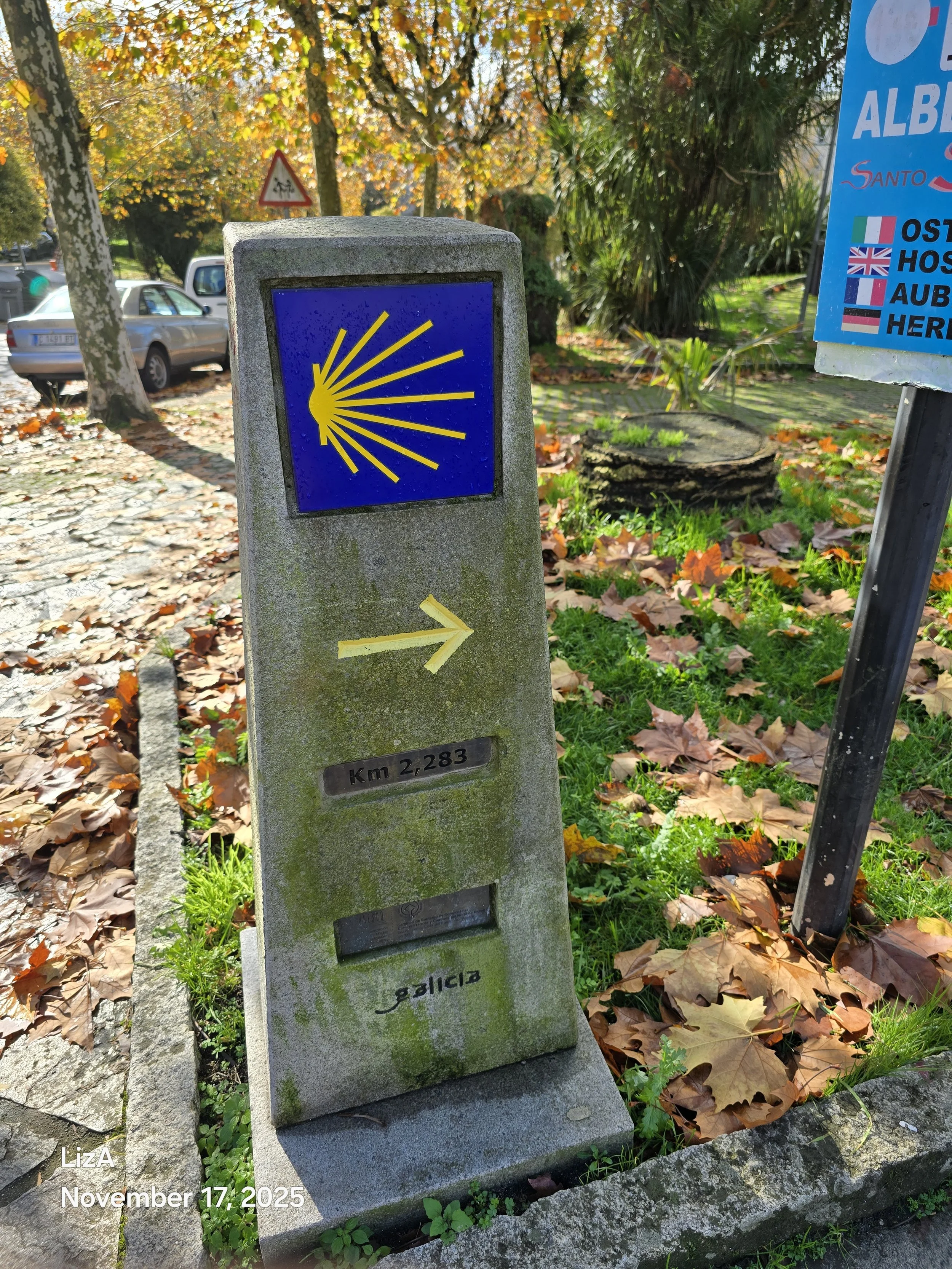
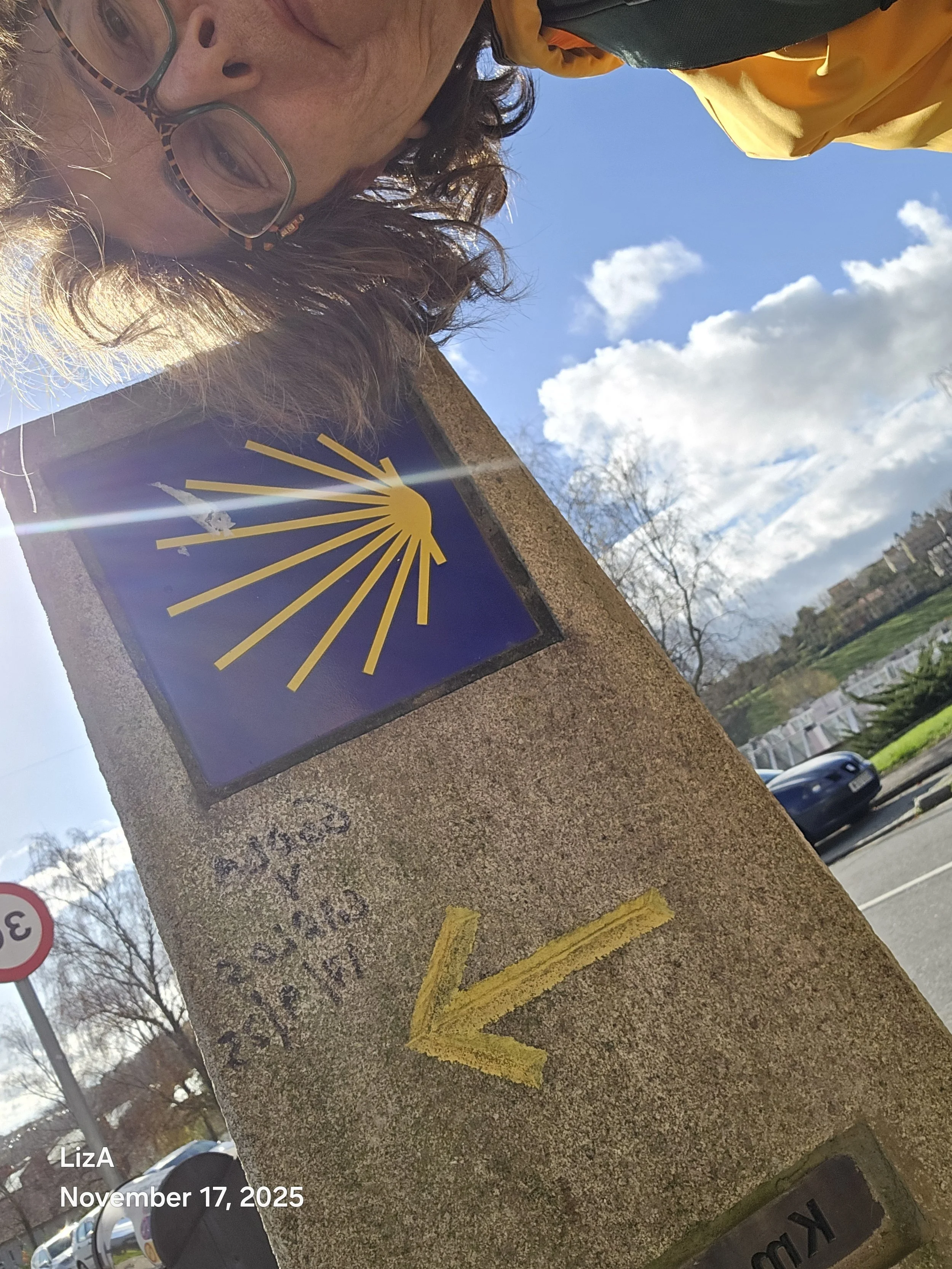
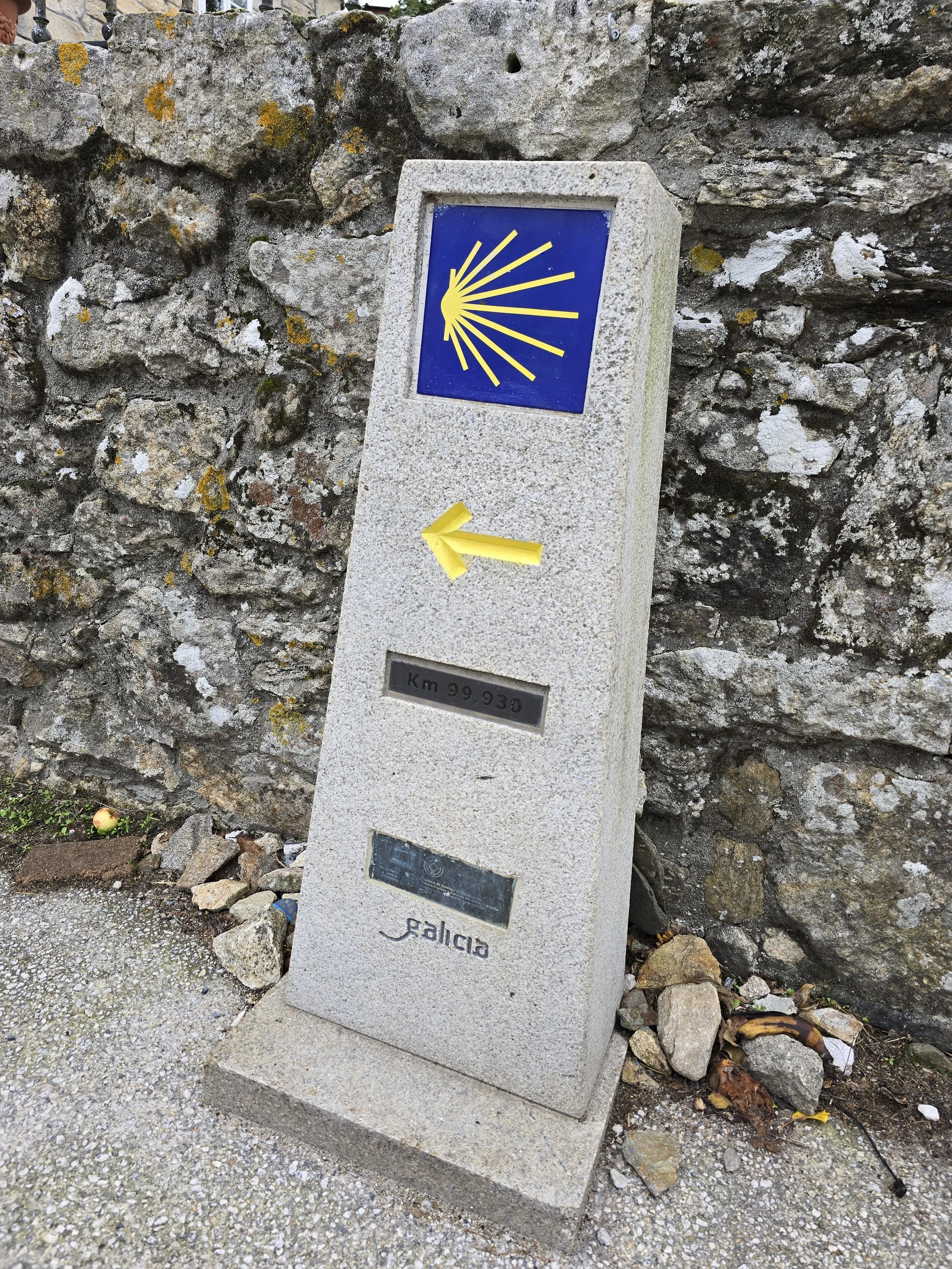
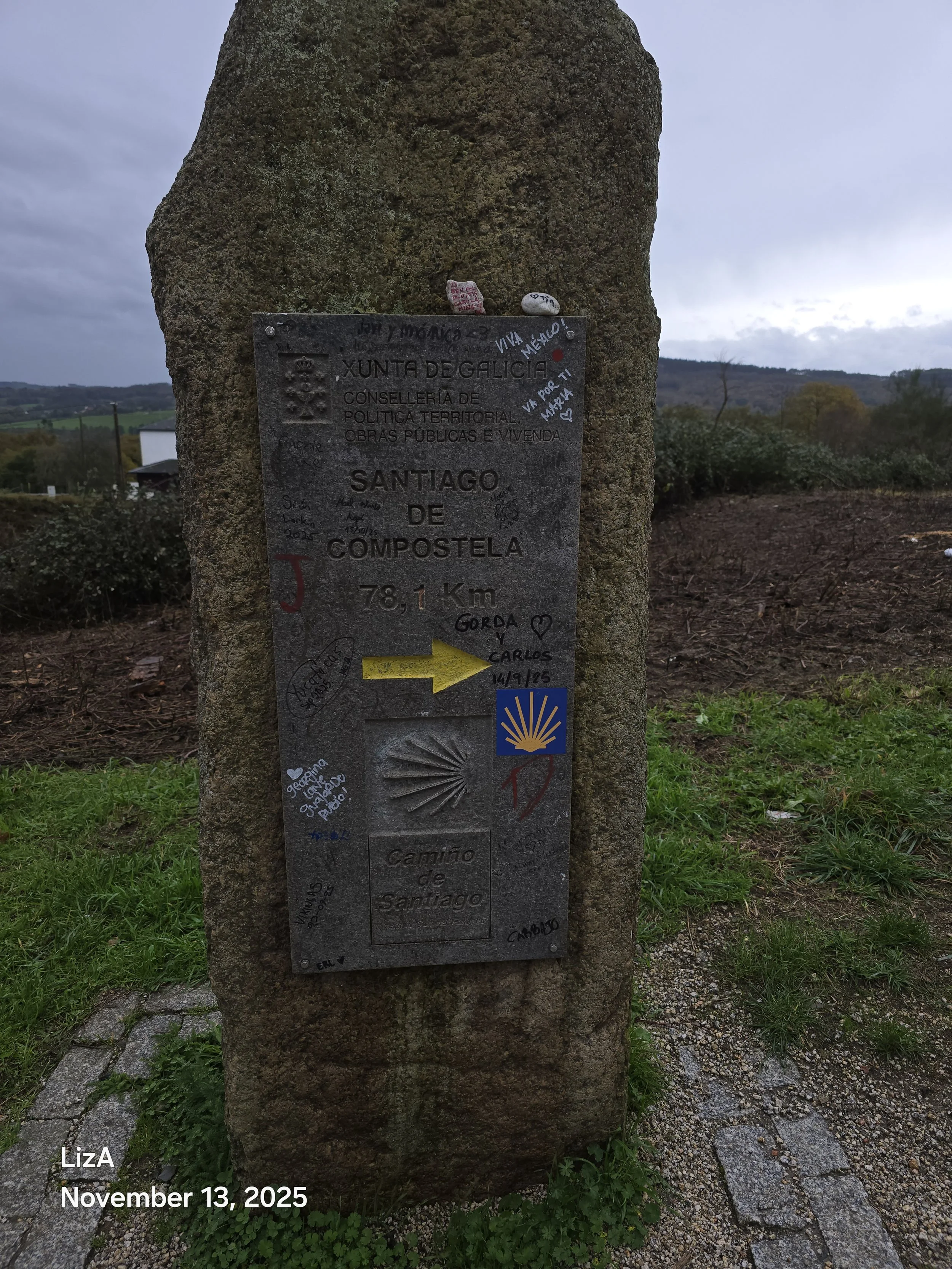
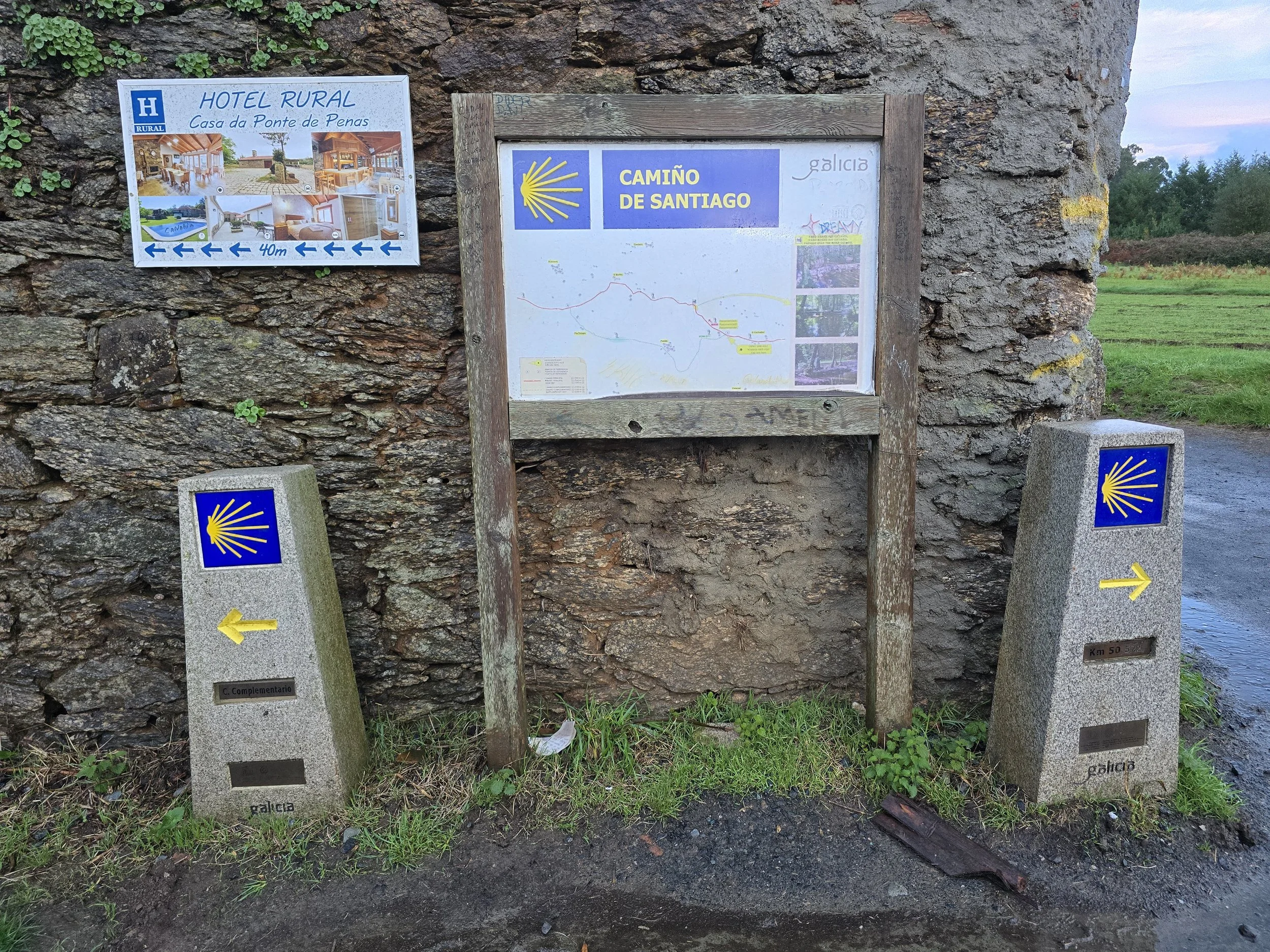
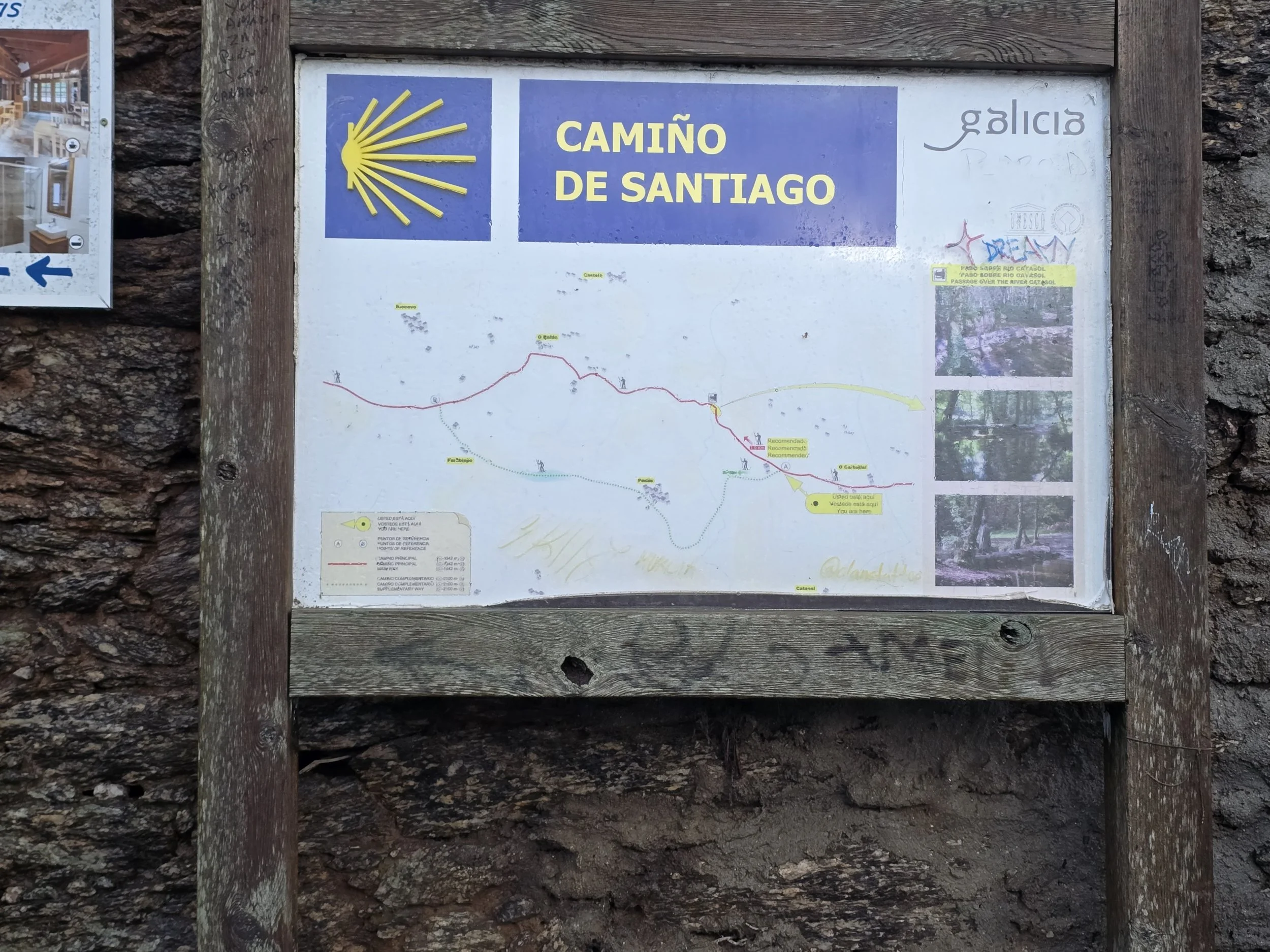
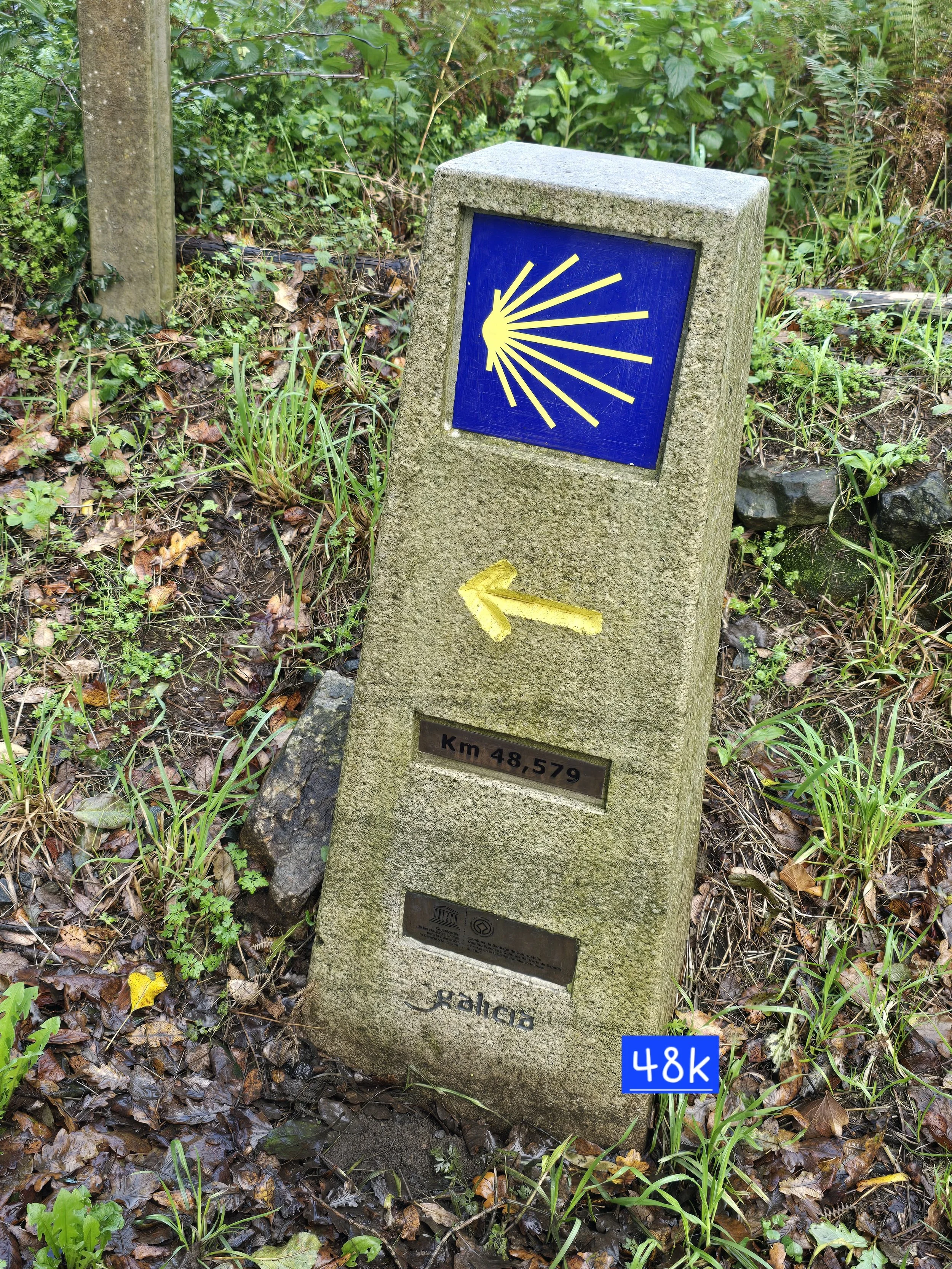
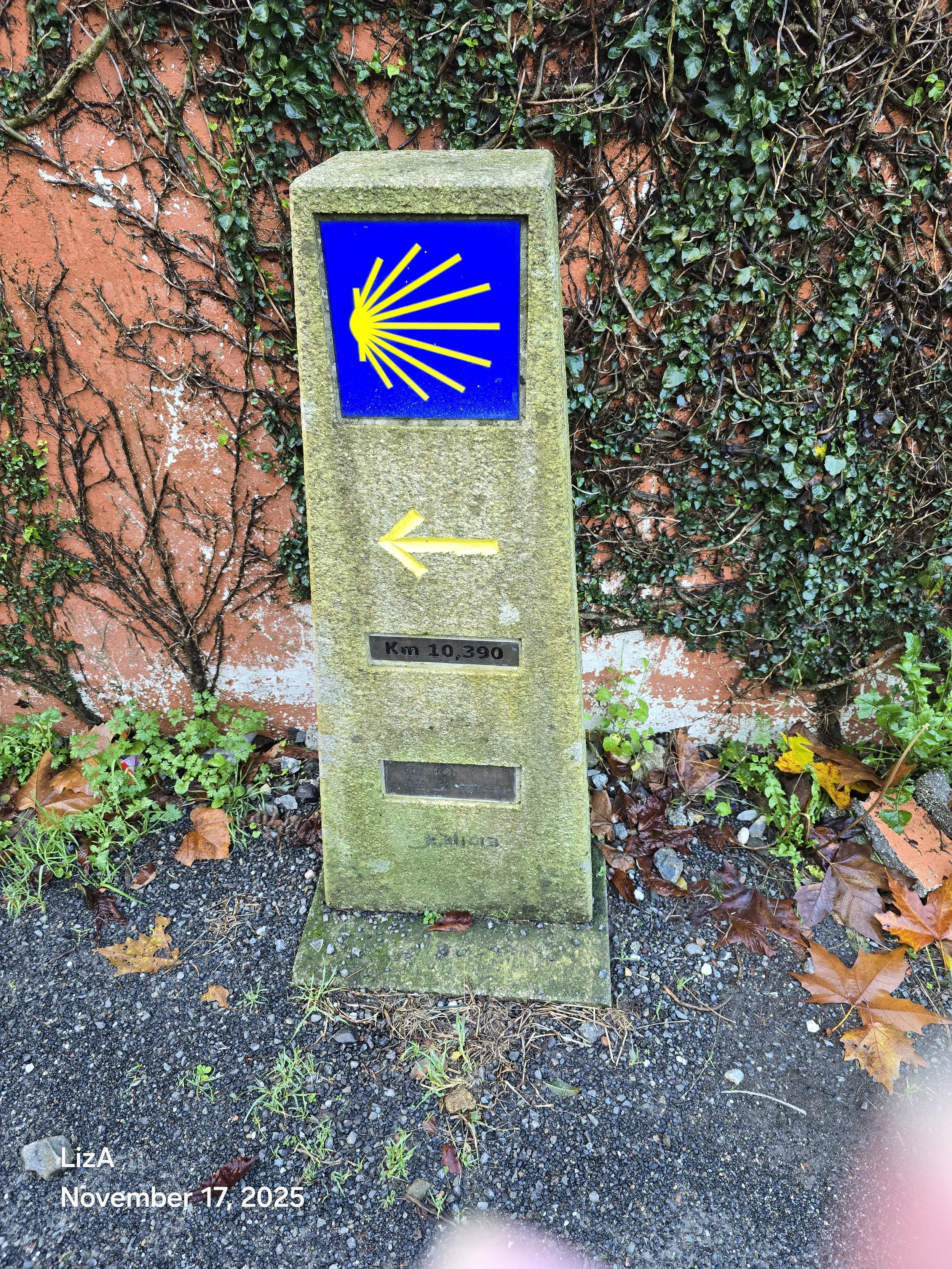
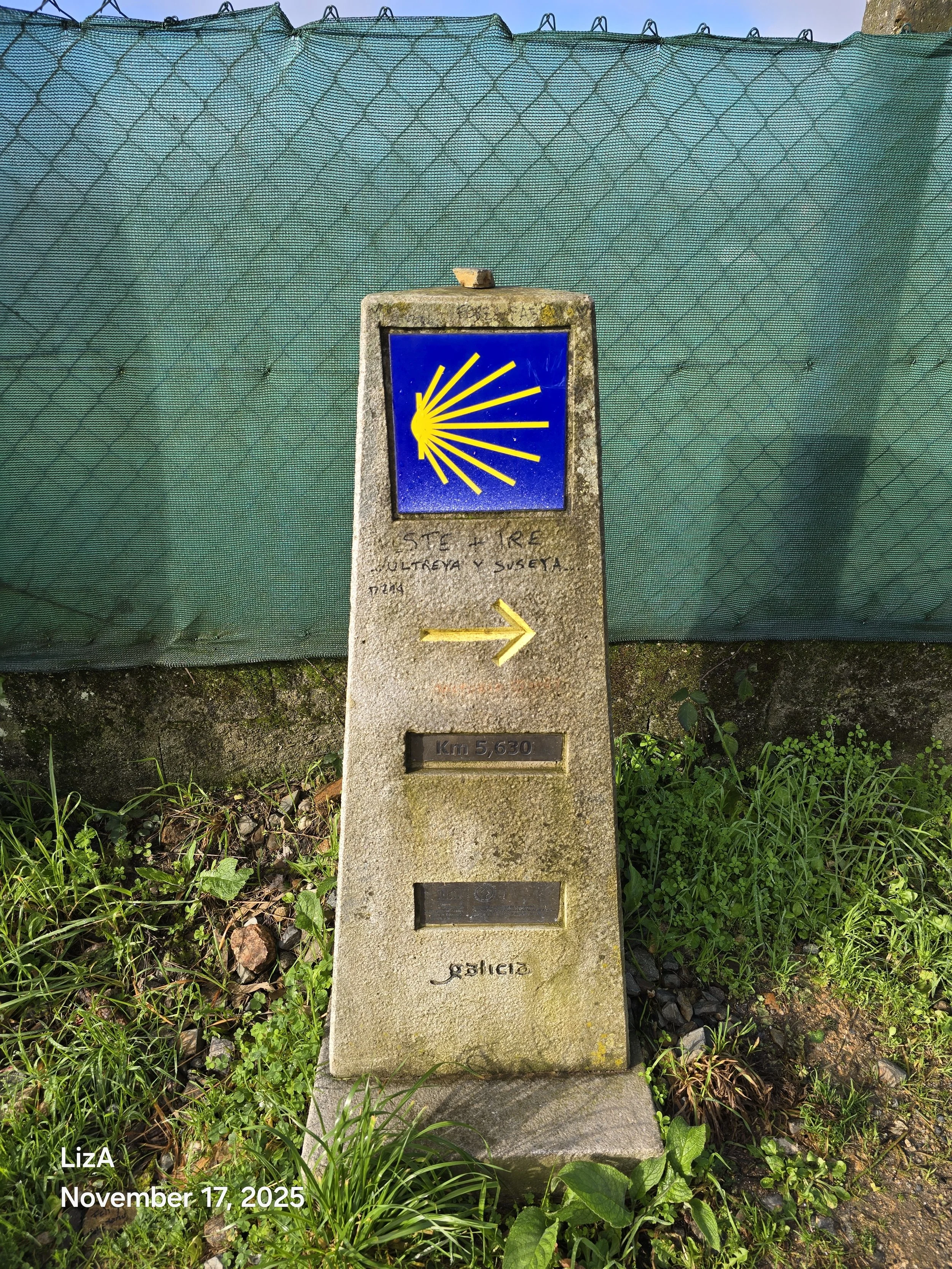
The el Camino de Santiageo is very well marked. Cement markers on the Camino de Santiago are milestones or bollards (called mojones) that guide pilgrims, often made of concrete or stone, featuring the iconic yellow scallop shell and/or yellow arrow, indicating distance to Santiago, with variations by region, some spaced every 500m in Galicia and often topped with symbolic stones or shoes left by other travelers. They are essential wayfinding tools, along with painted arrows on surfaces, to keep pilgrims oriented towards the cathedral in Santiago de Compostela.
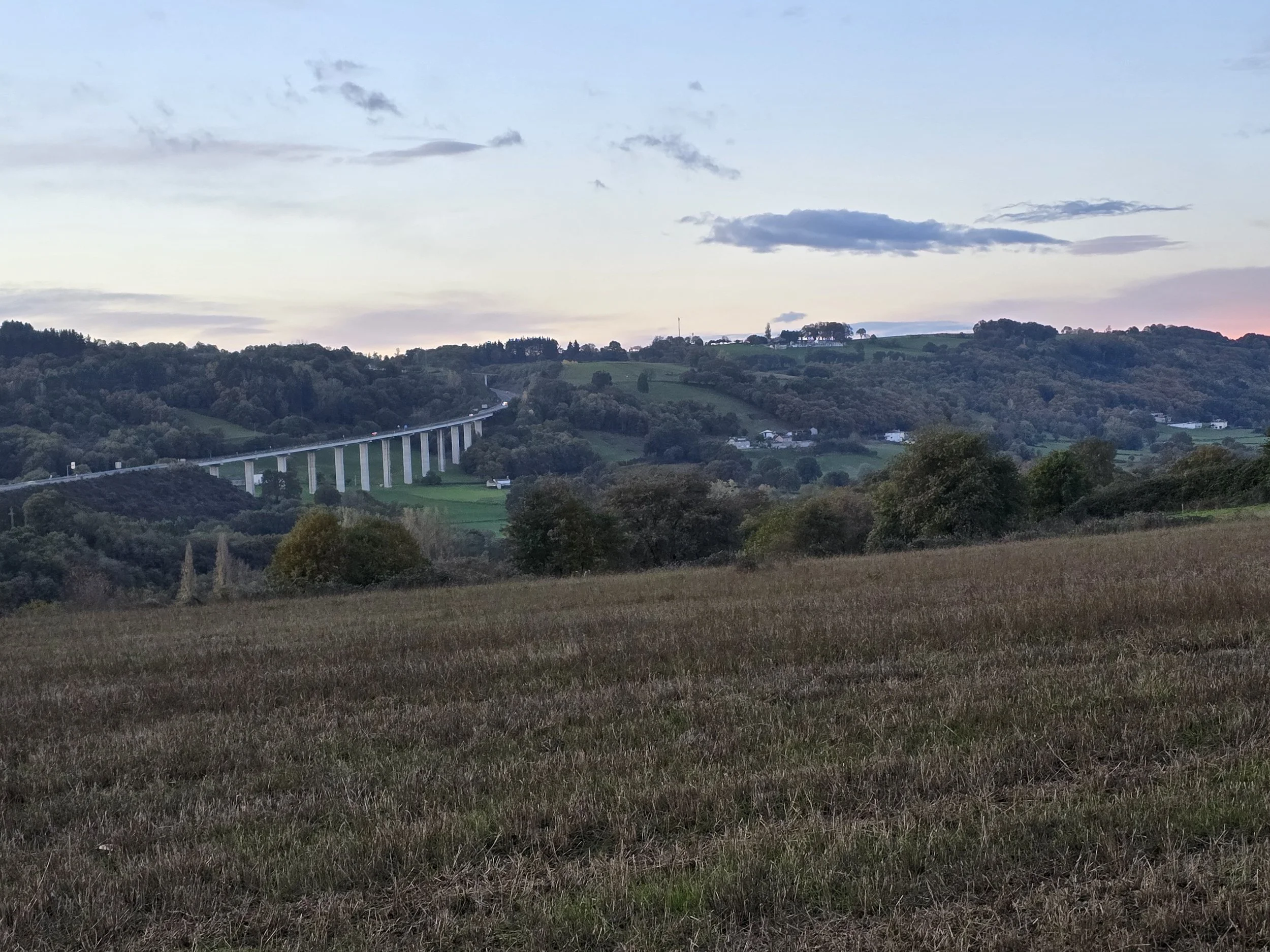
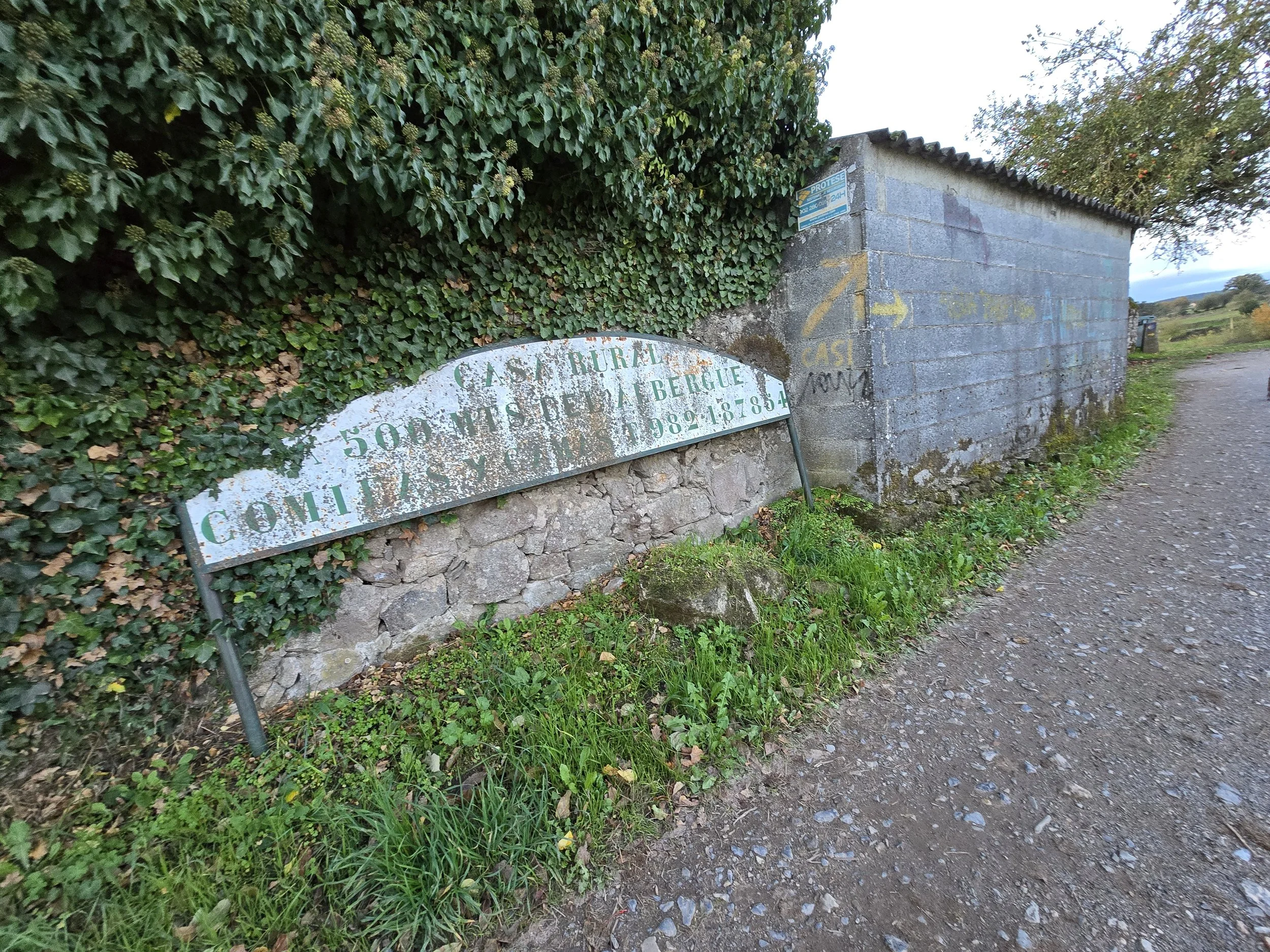
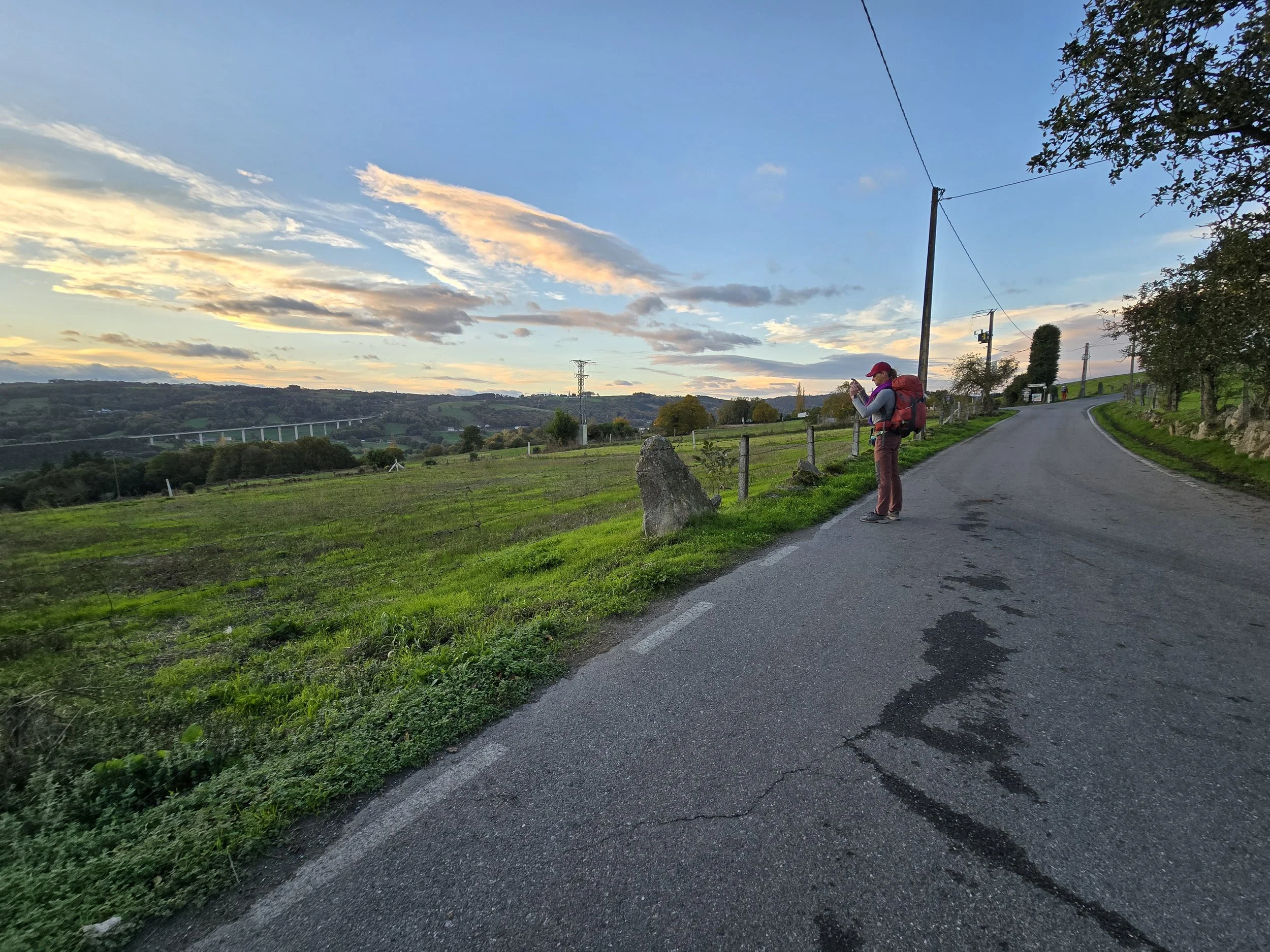
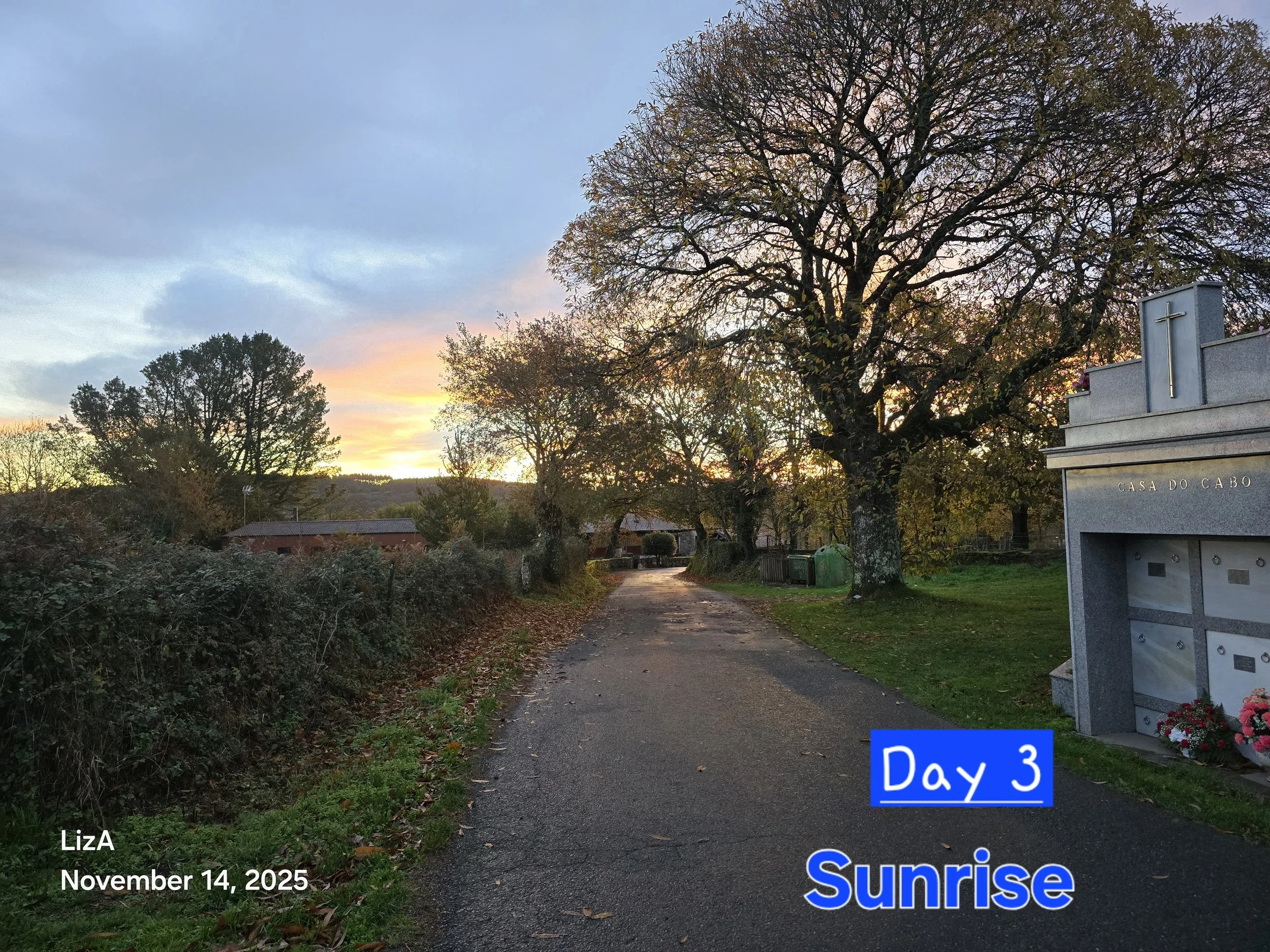
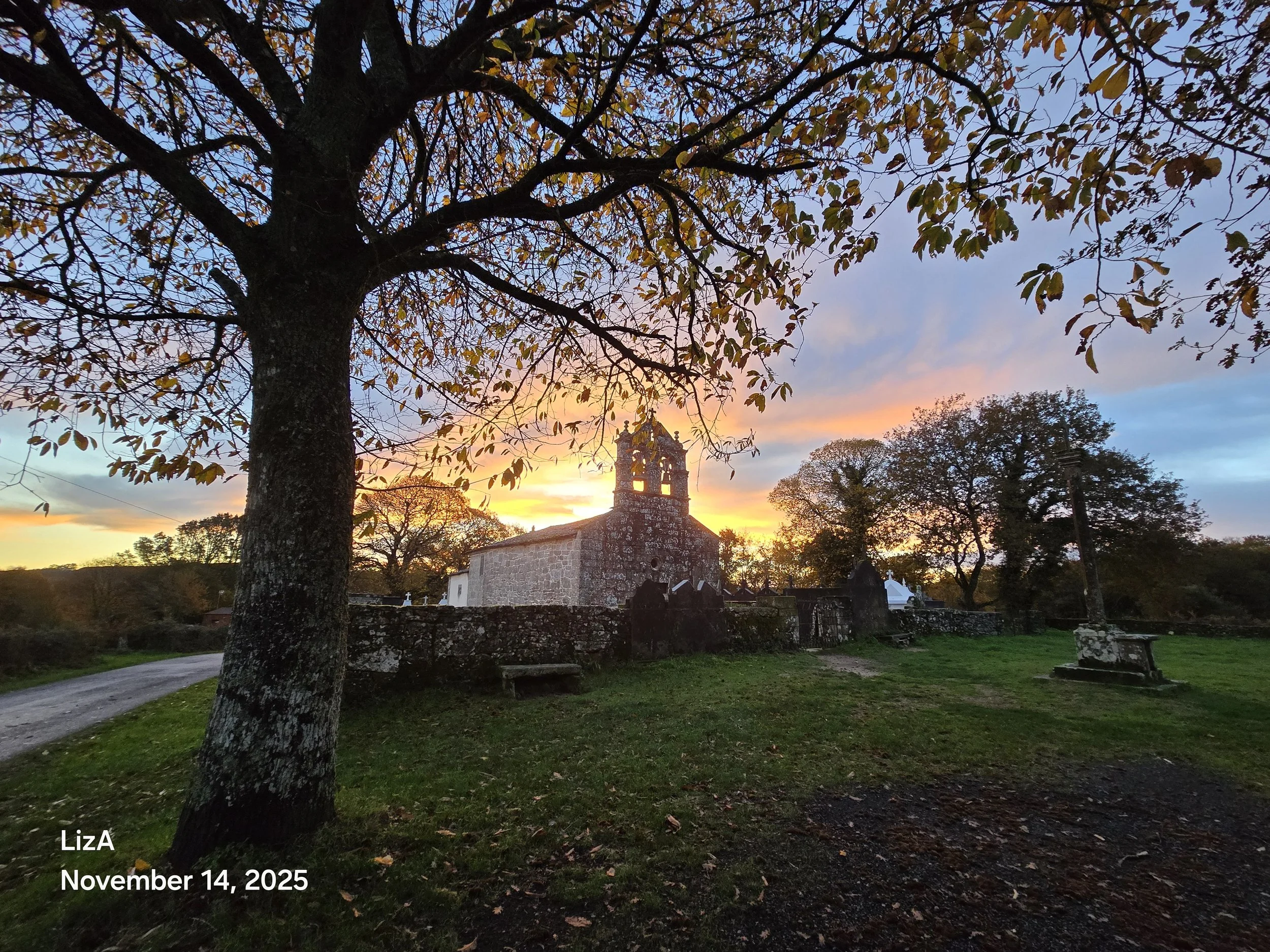
Anyone who knows me, knows I am not a morning person.
A whole lot of this.
A whole lot of this.
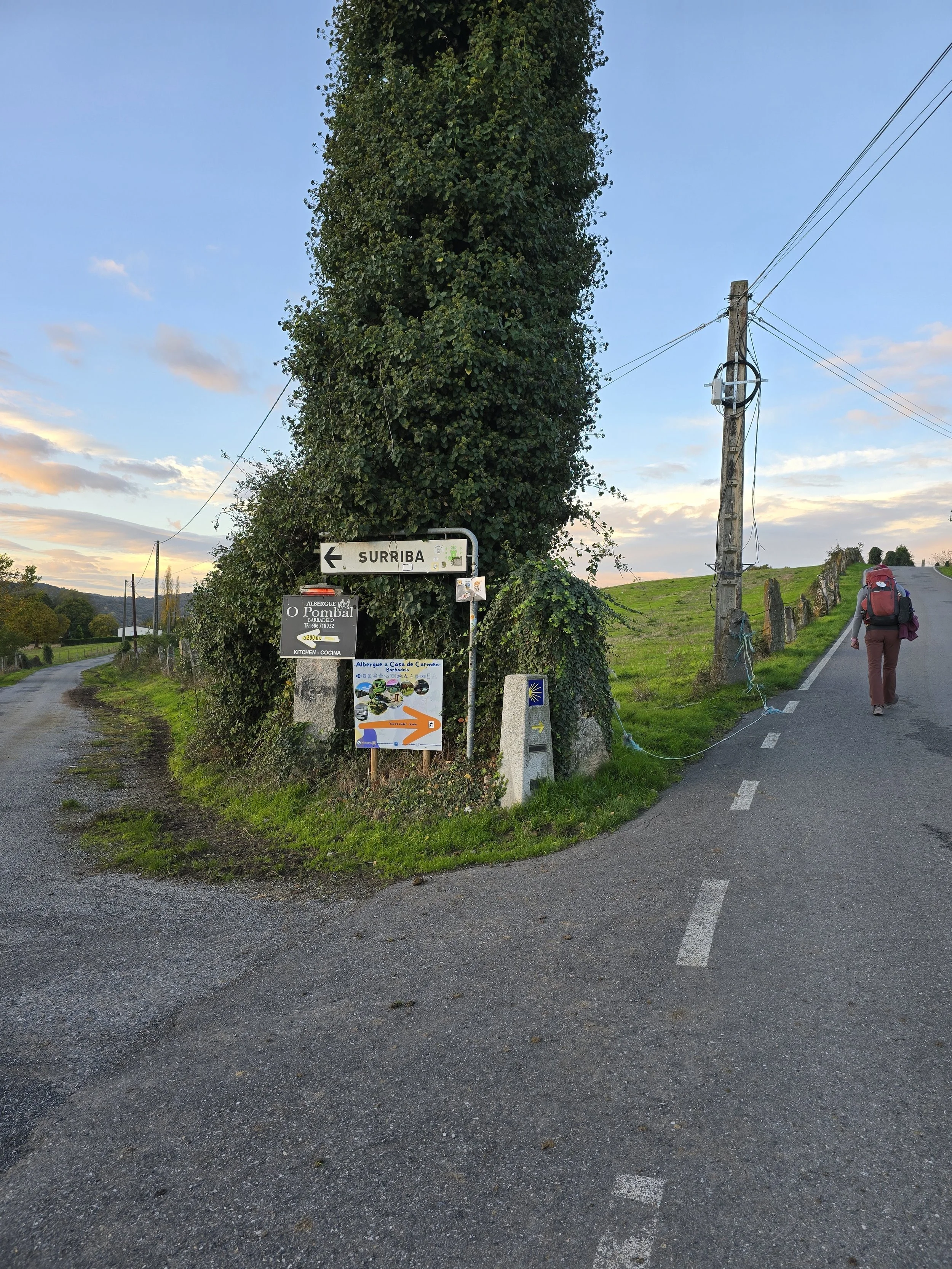
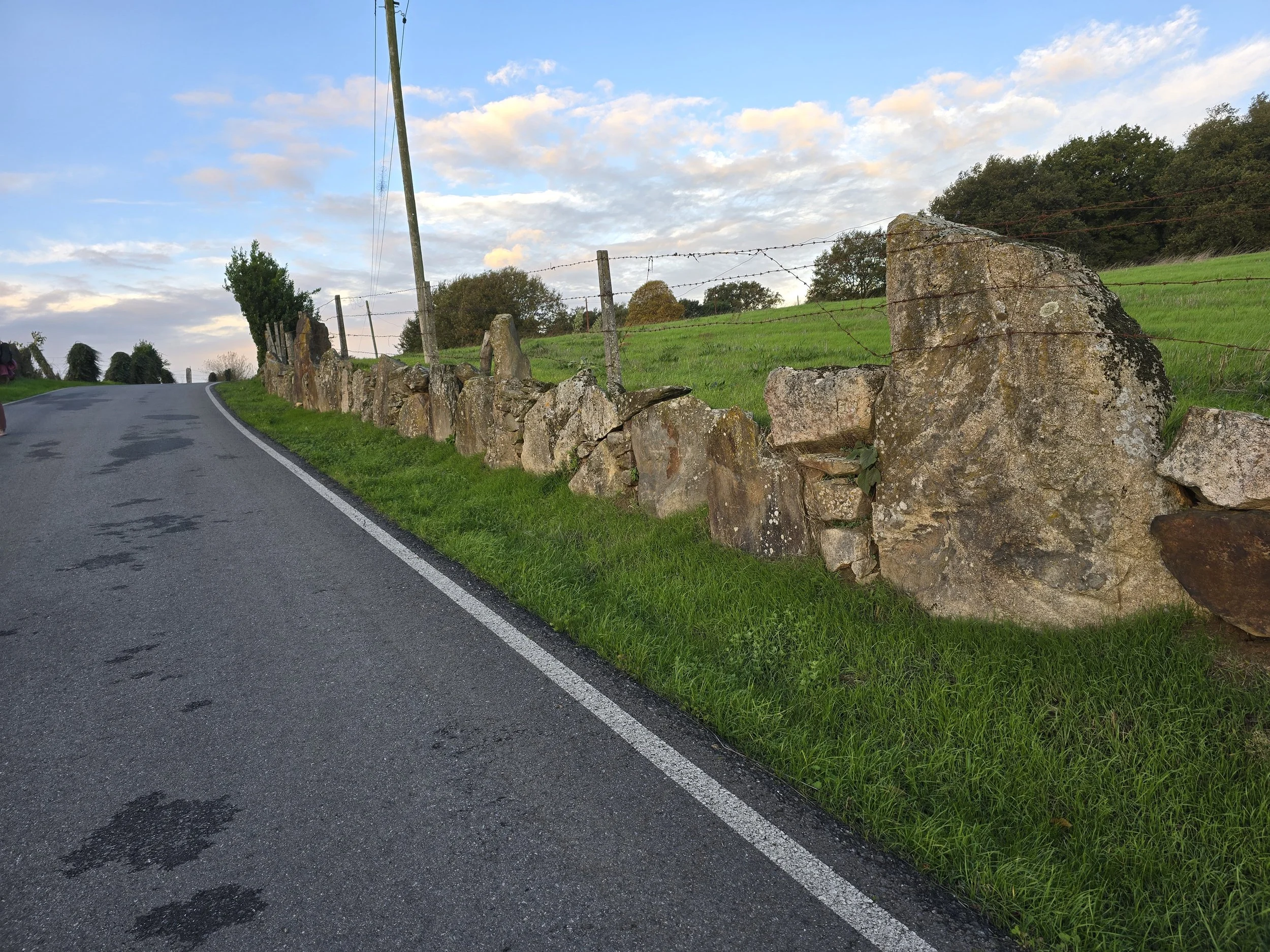
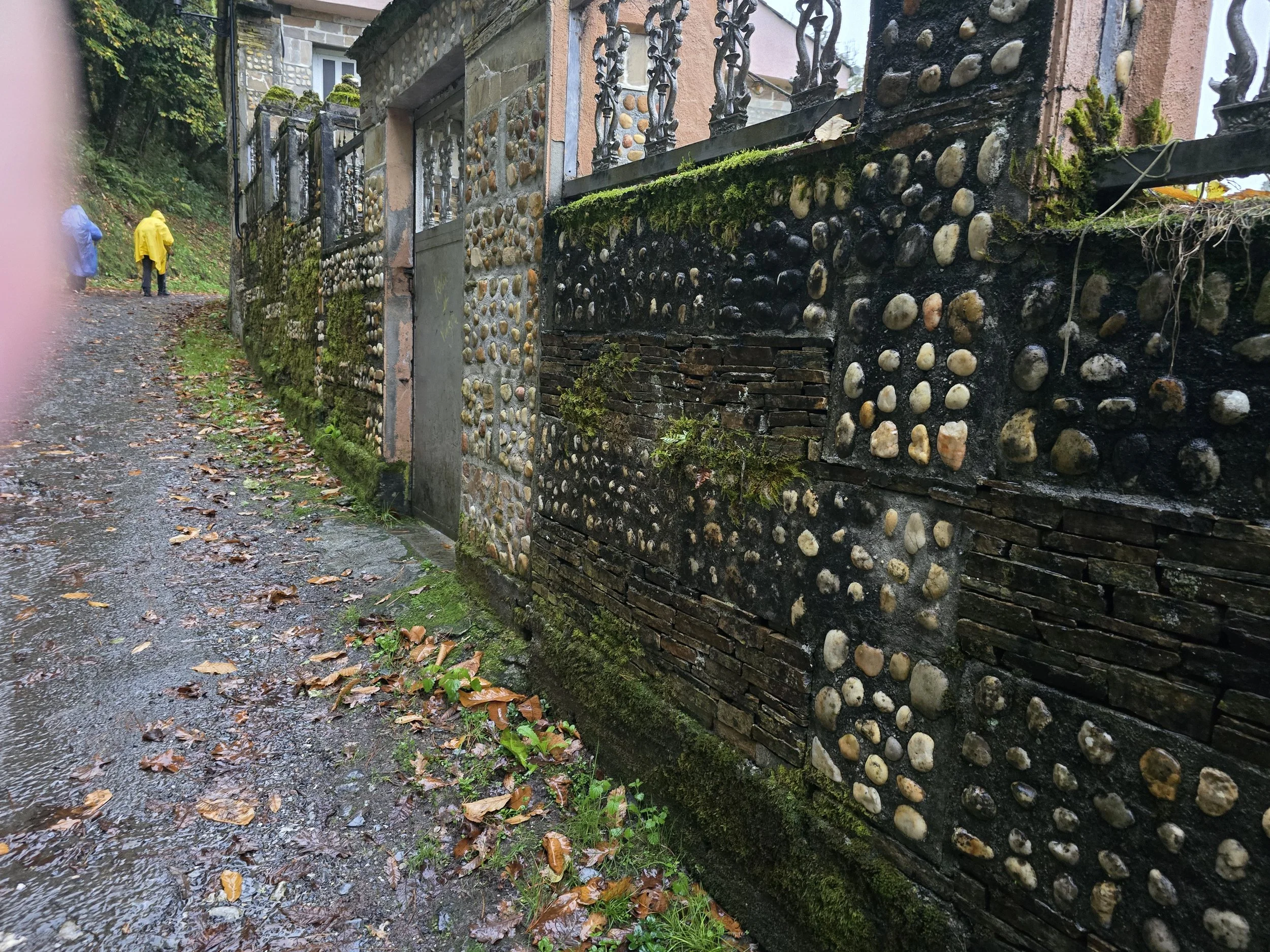
Walls made out of rocks!
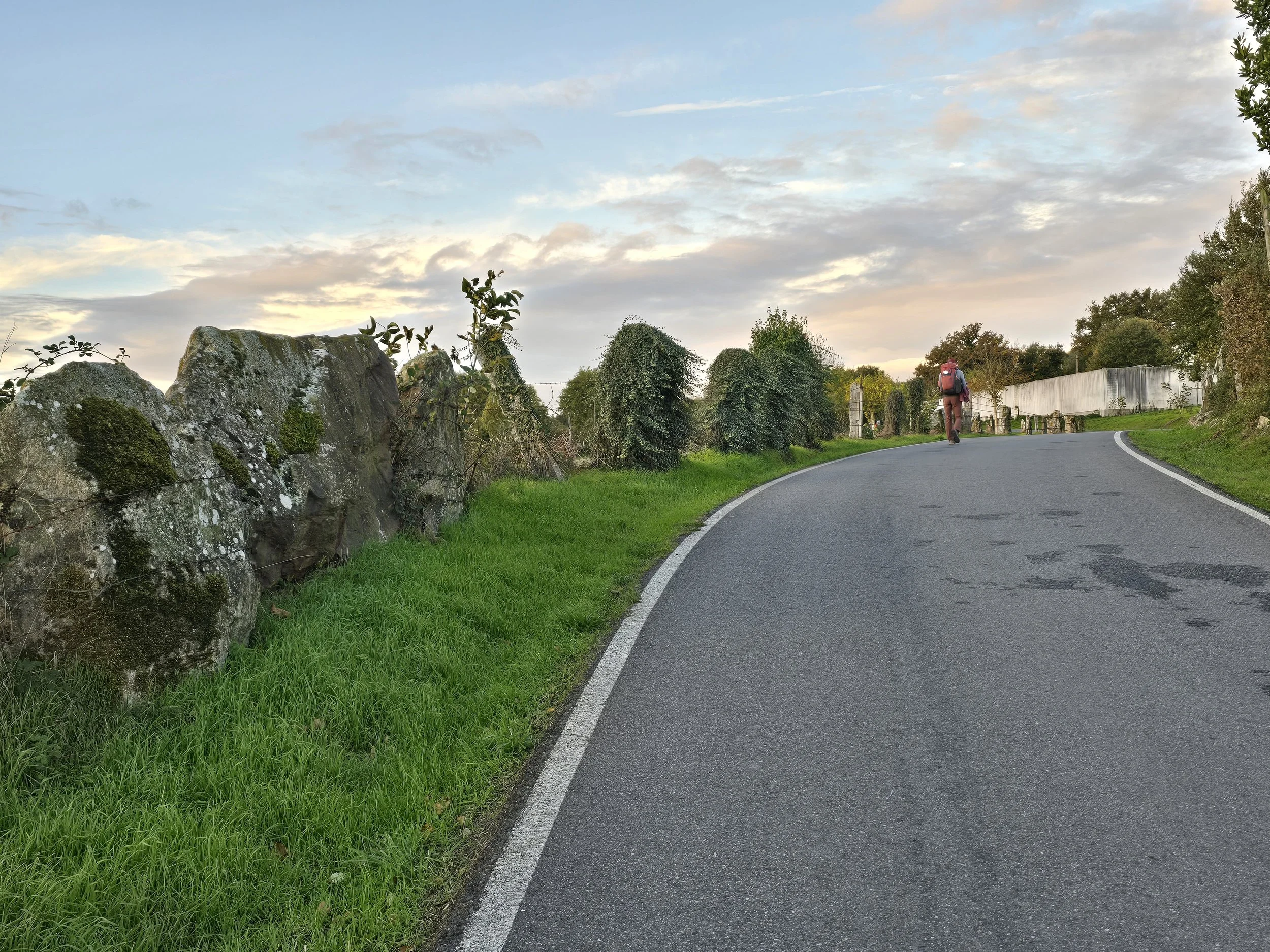
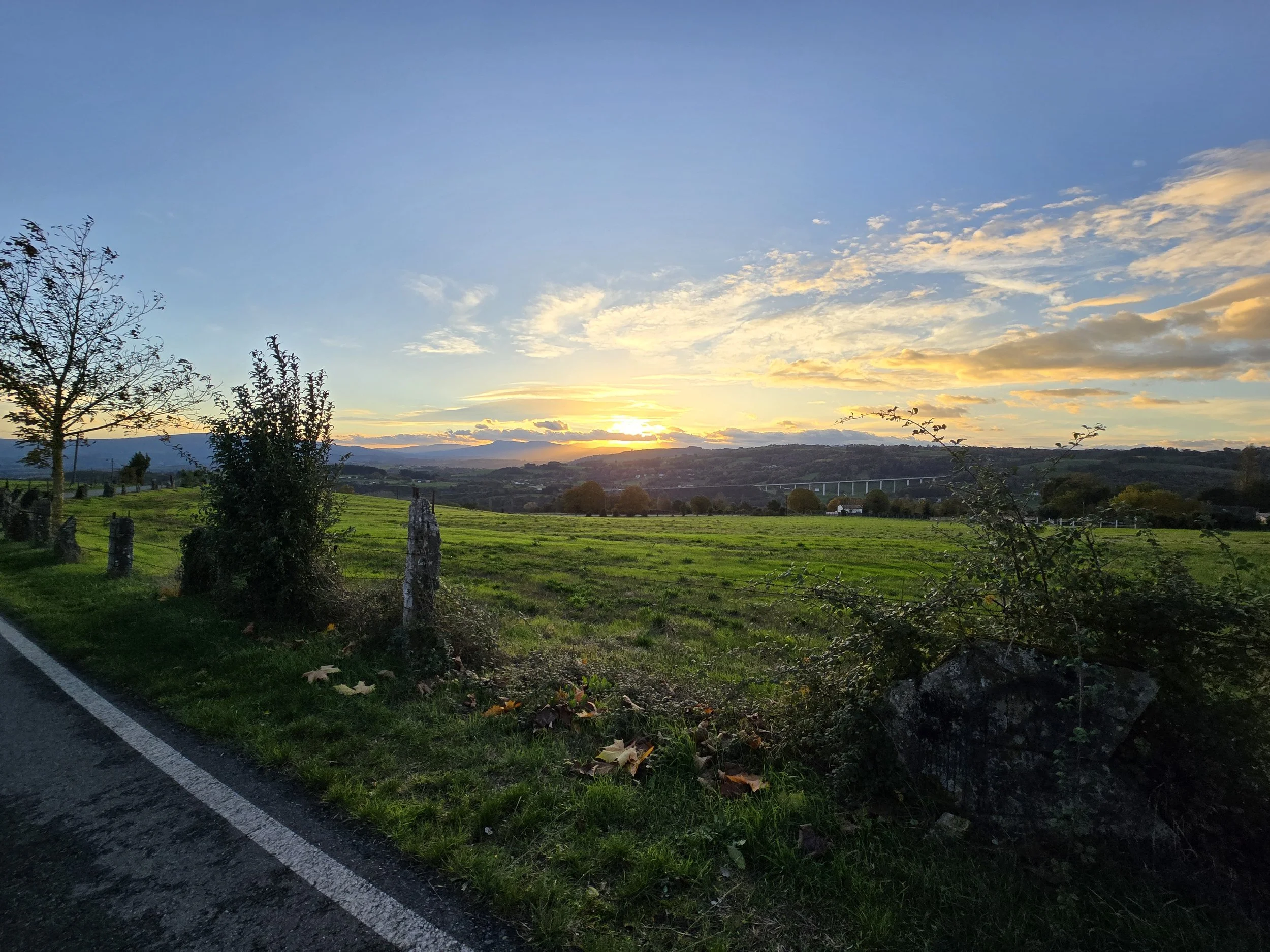
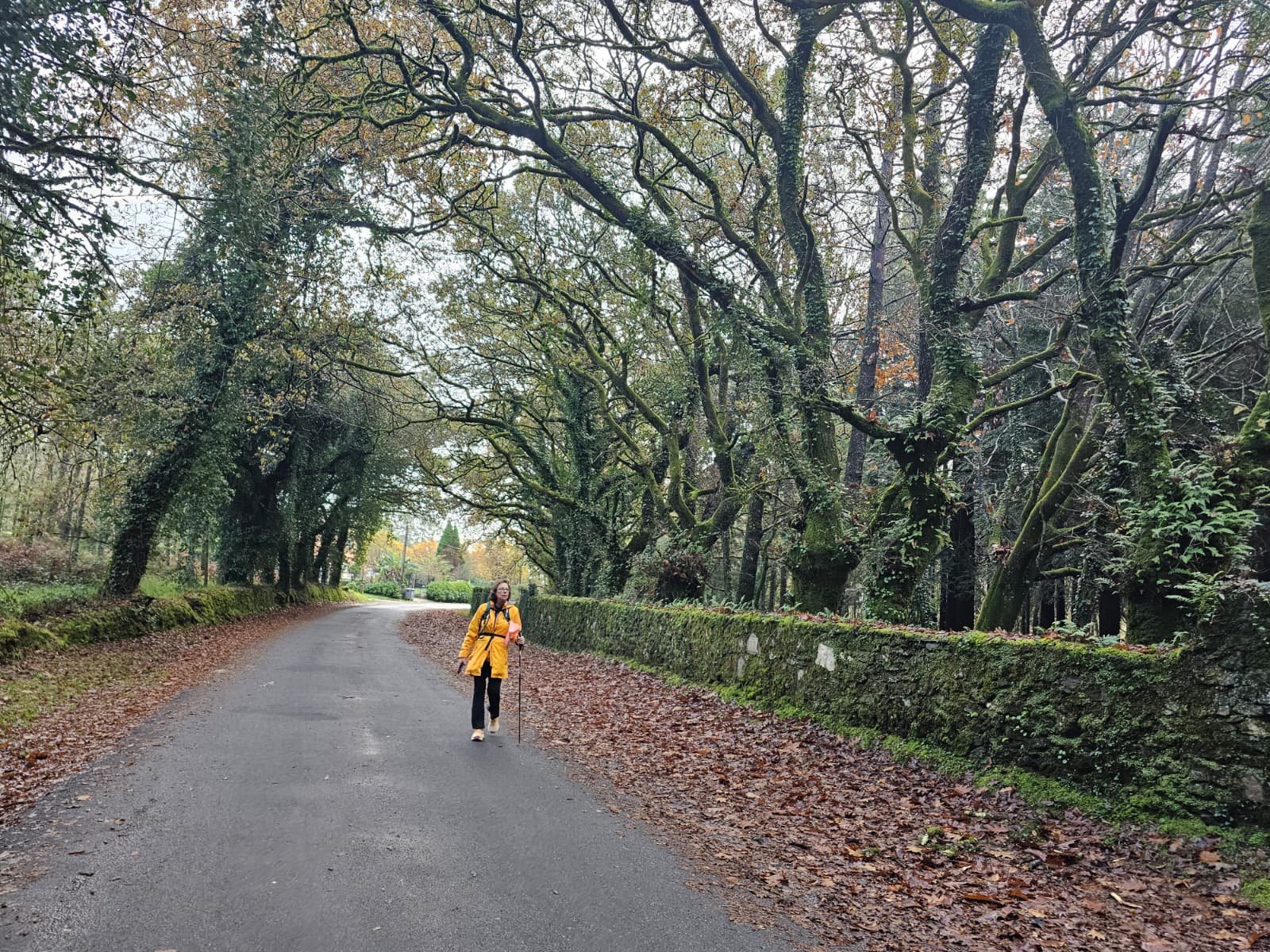
No TV, no internet, no radio, no traffic. Bliss.
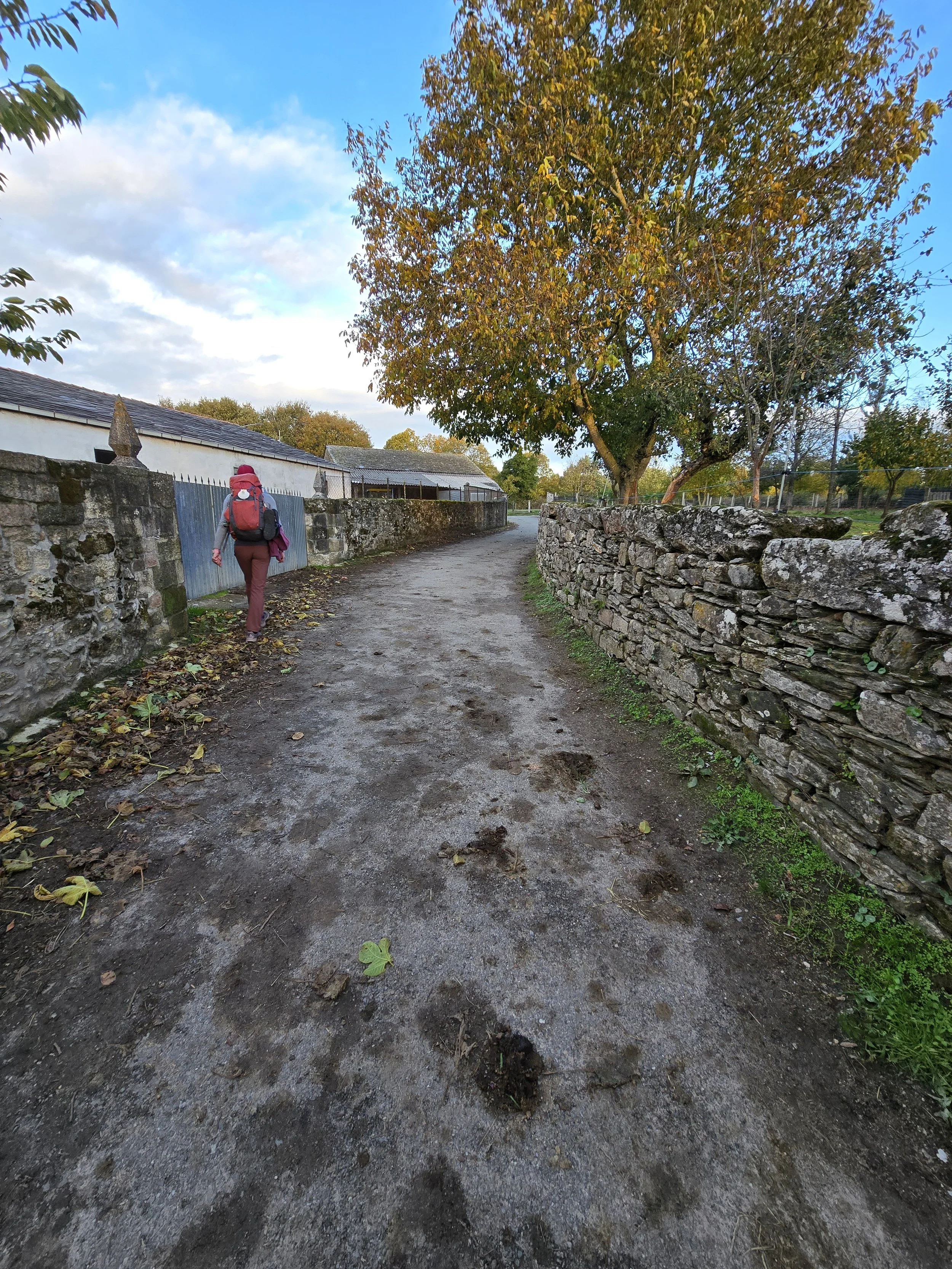
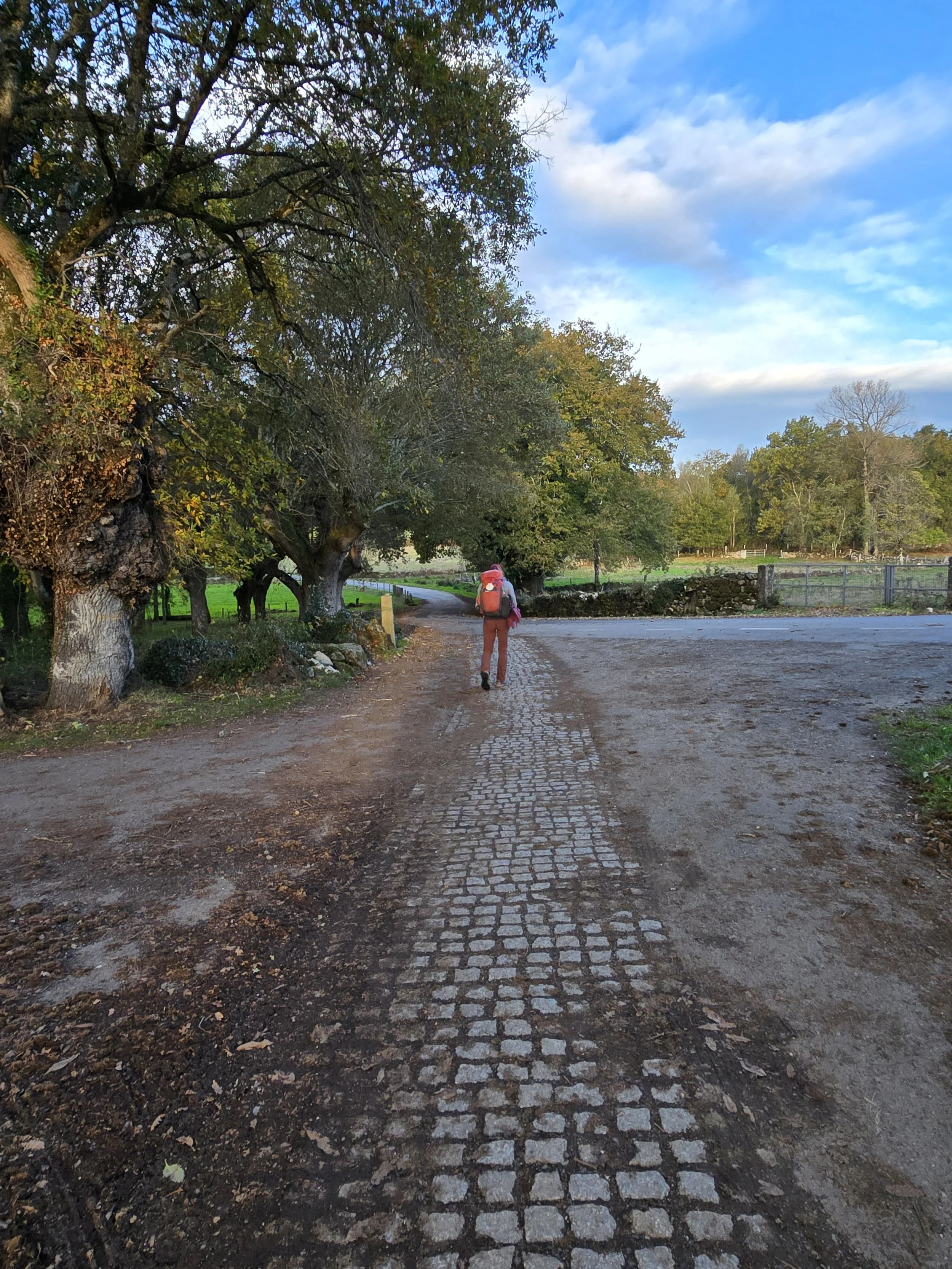
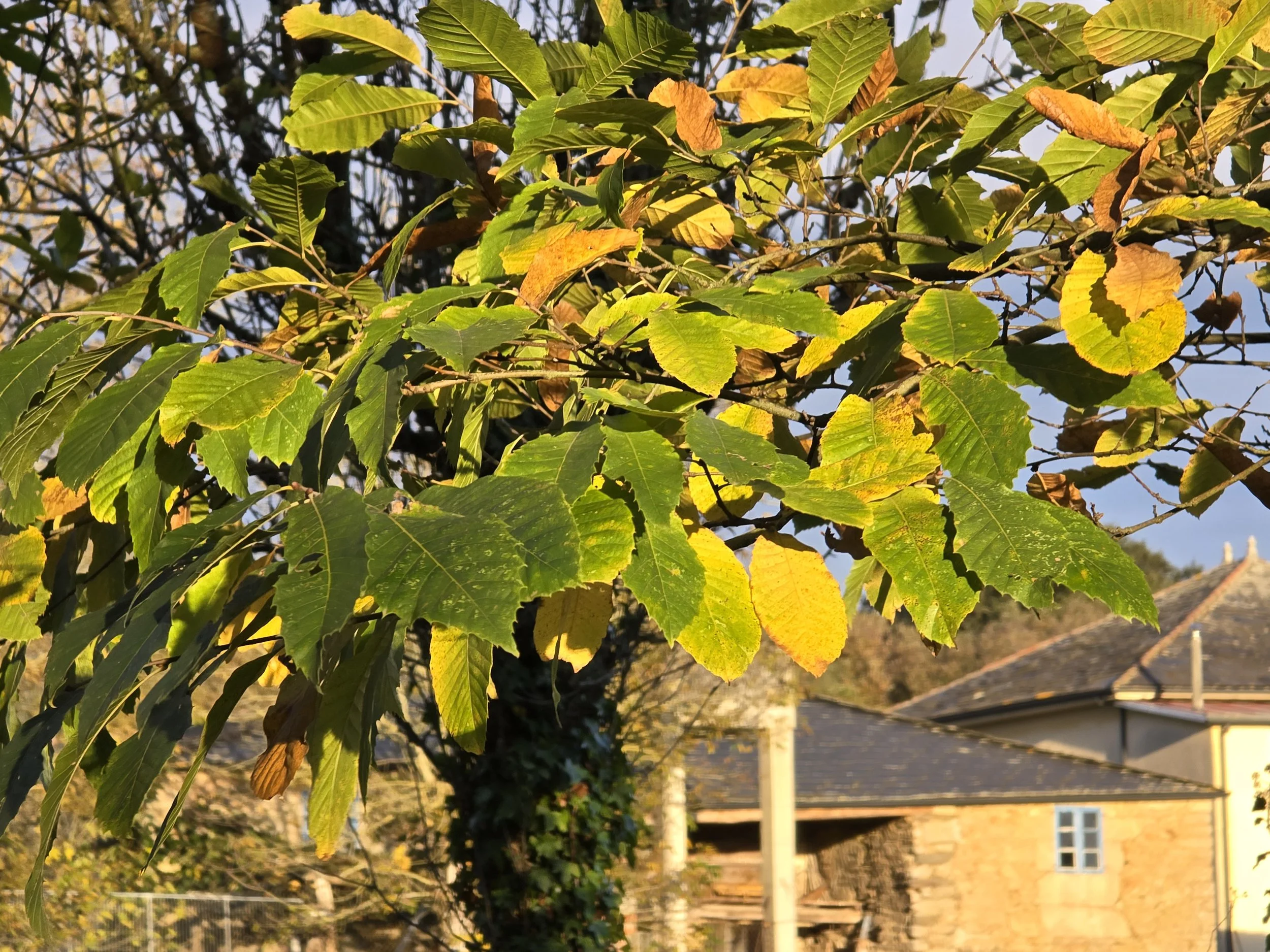
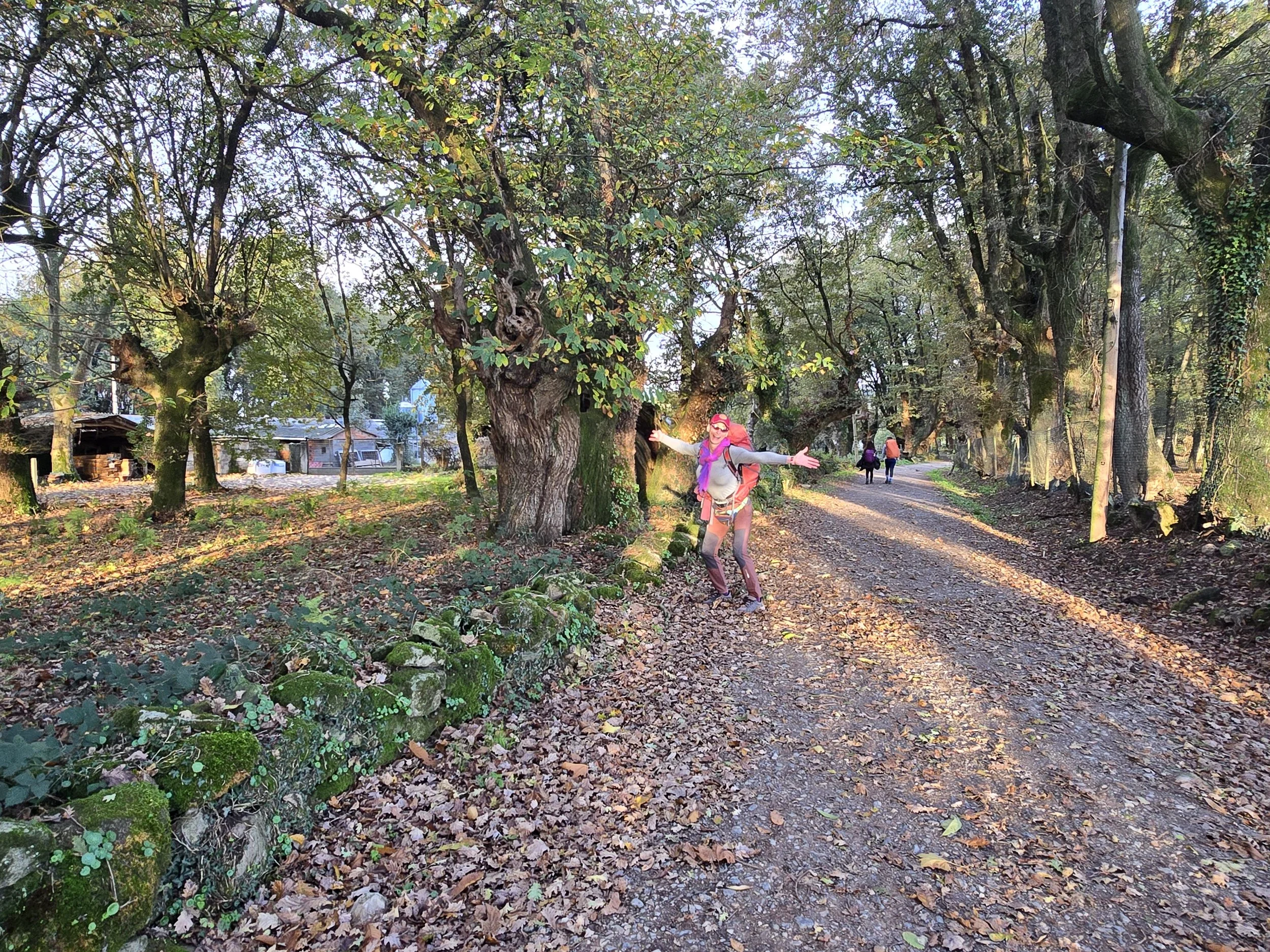
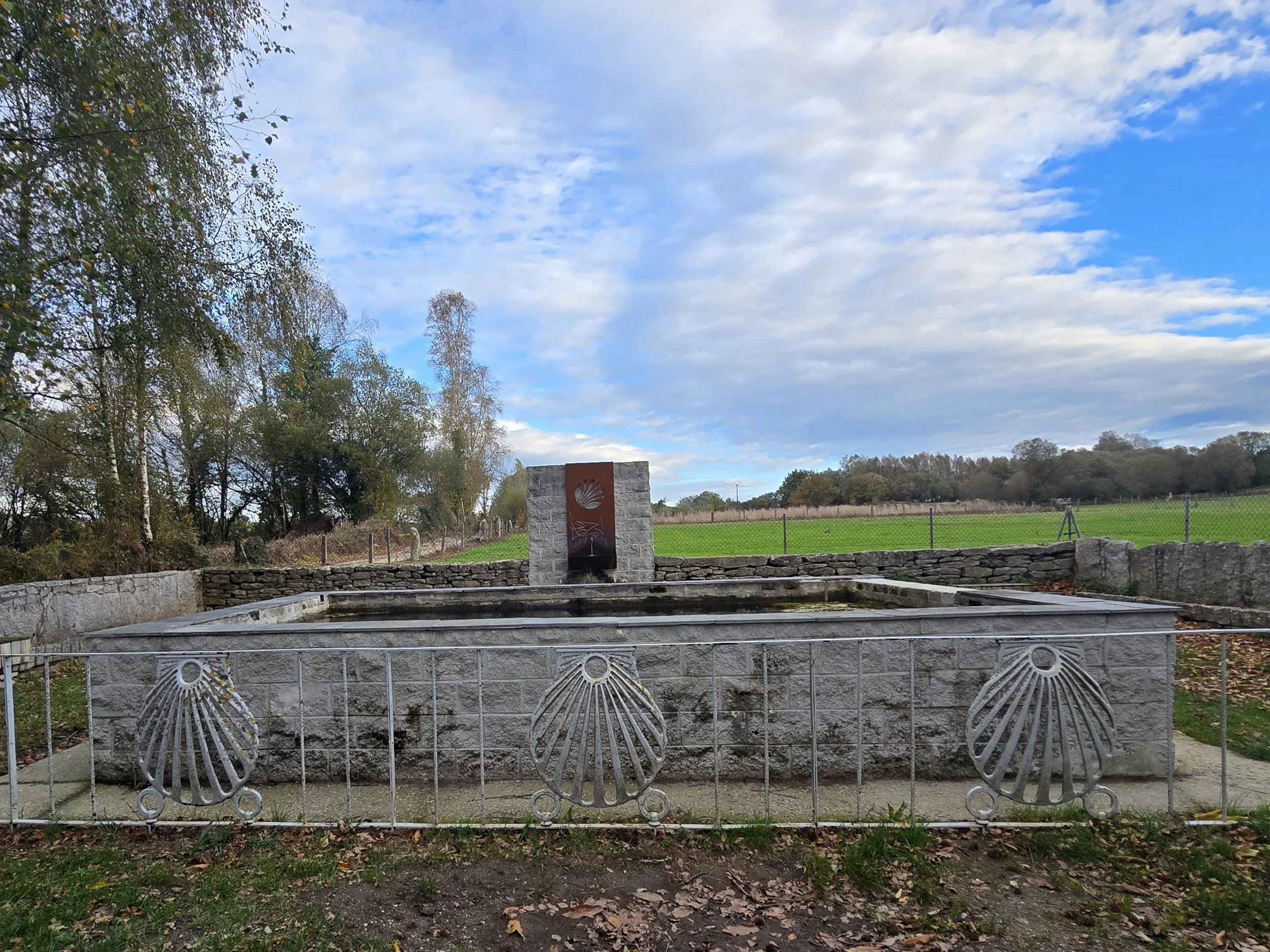
Water for horses, and pilgrams.
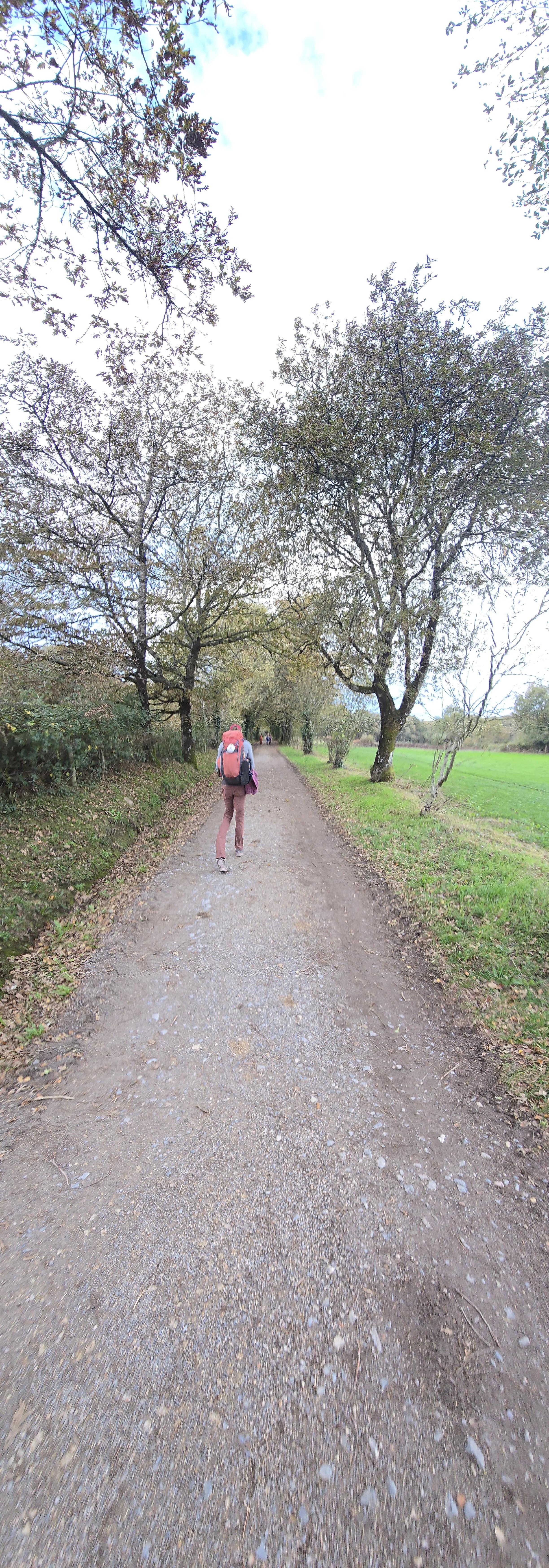
Leaving stones on the Camino de Santiago is a deep-rooted tradition symbolizing leaving burdens, pains, or memories behind, often done at the iconic Cruz de Ferro (Iron Cross) on the Camino Francés, though stones also serve as trail markers, while other pilgrims leave items like trekking poles or notes for personal reasons, creating a symbolic "trail of meaning" that's both communal and personal.
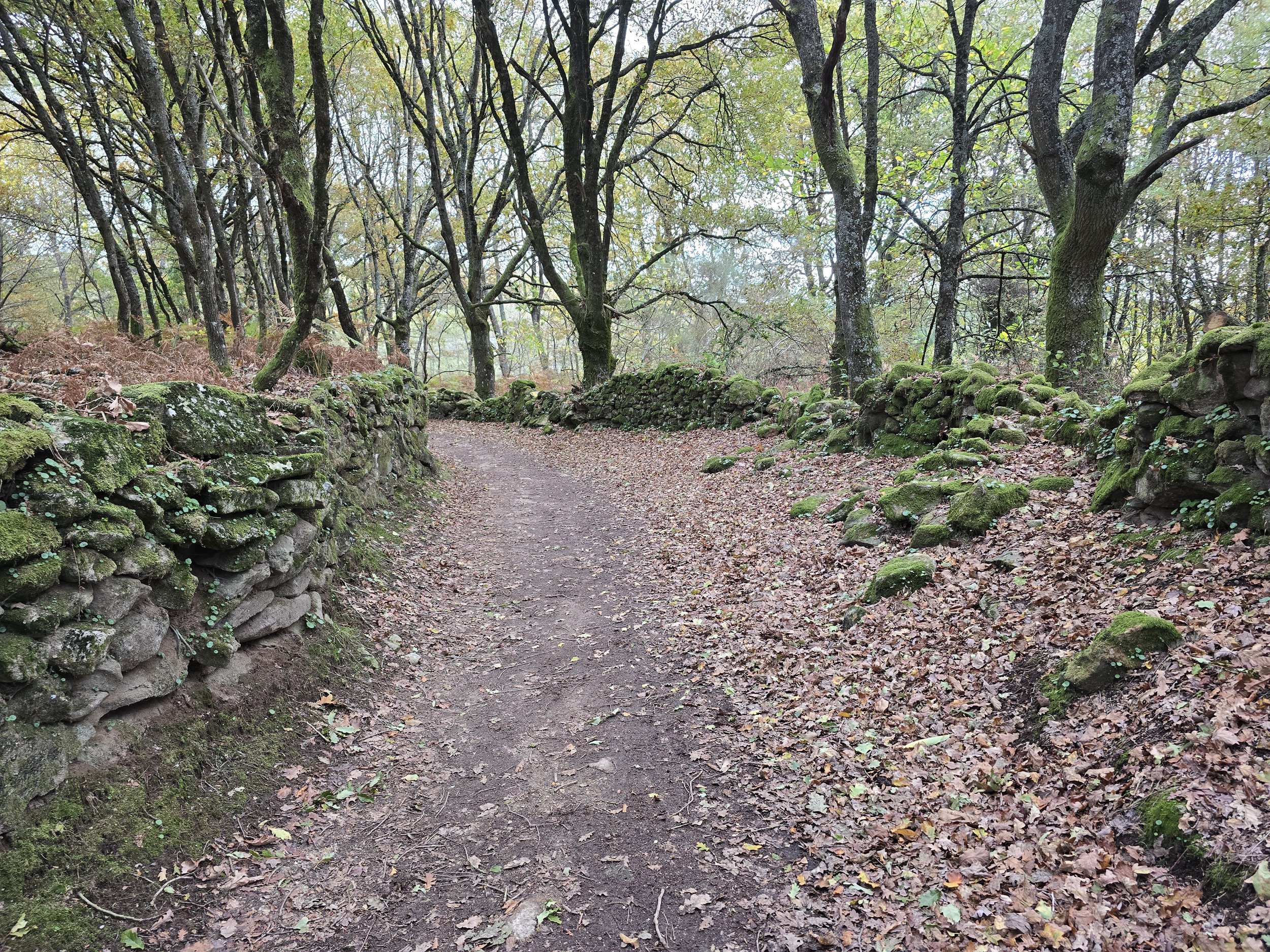
This was as quiet as this image.
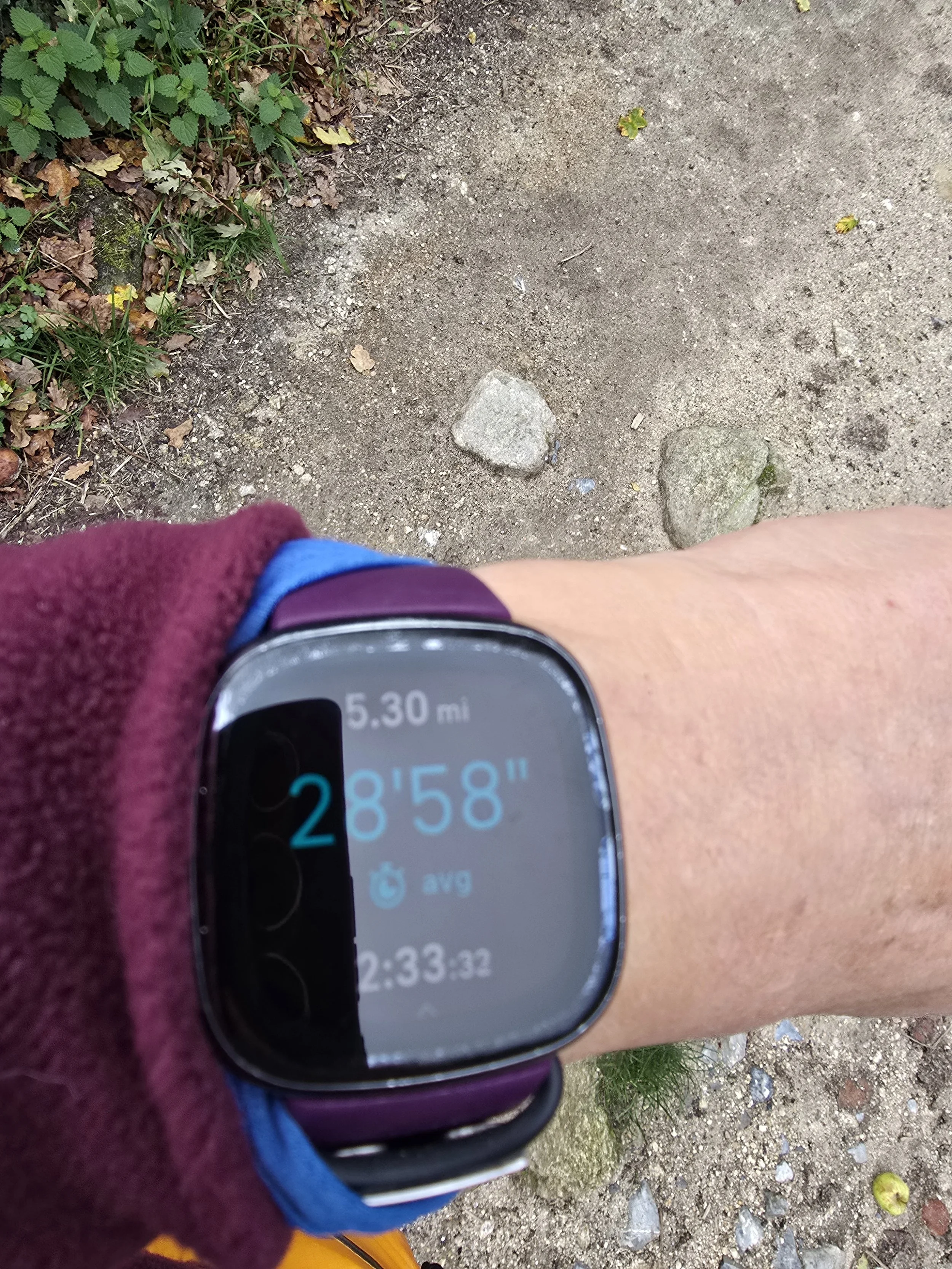
Just checking how far we’ve gone and how long it took us.
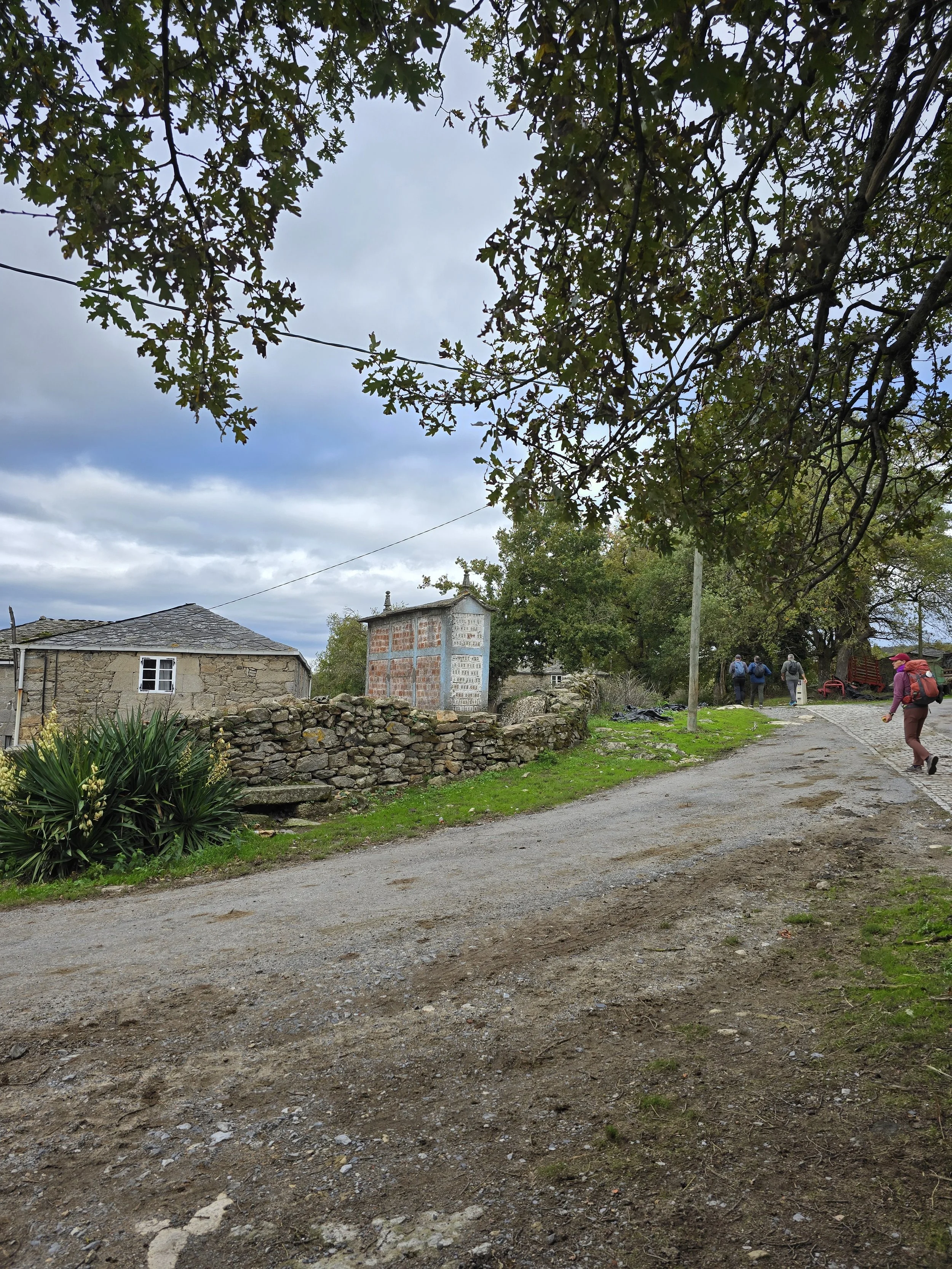
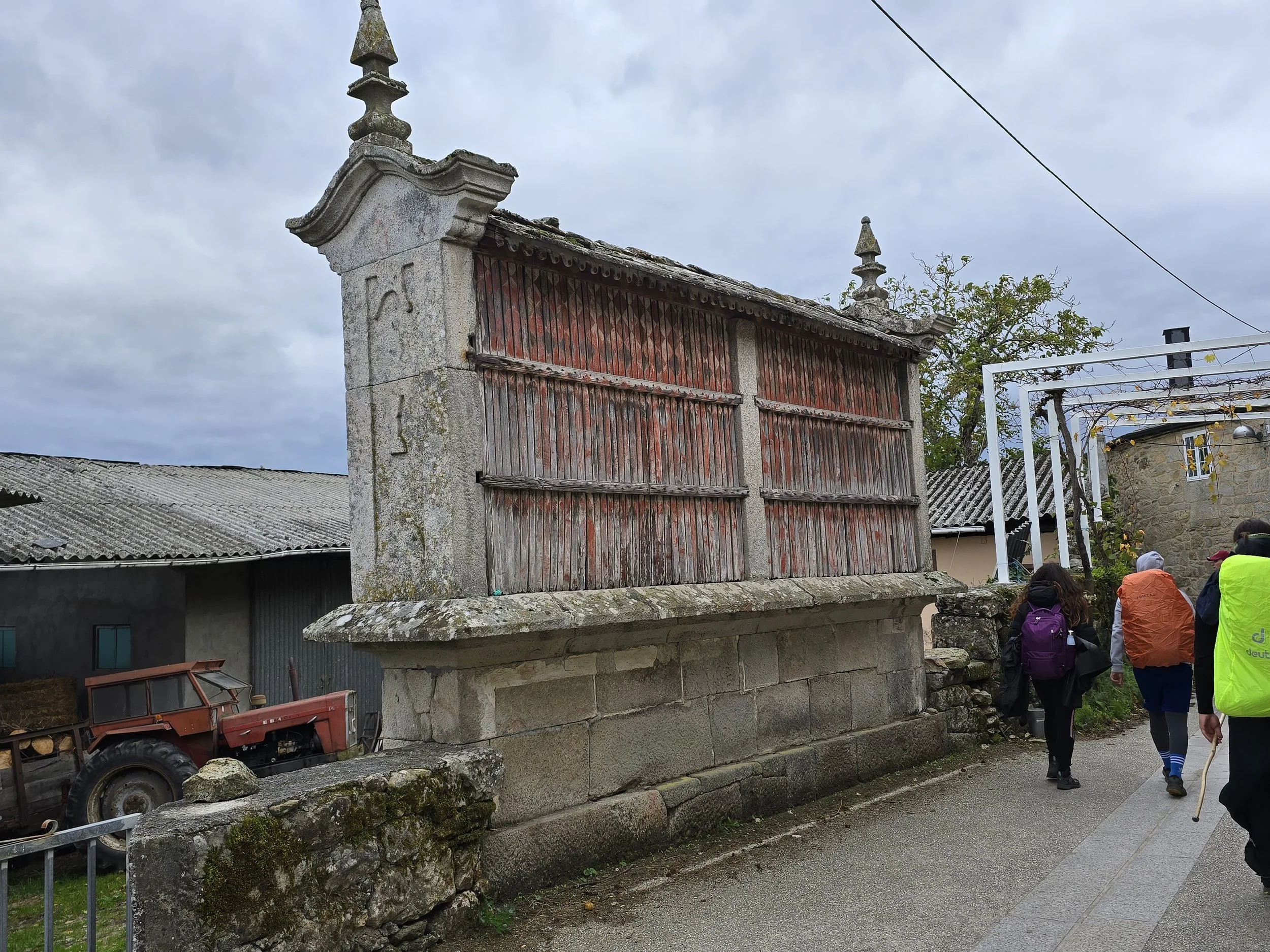
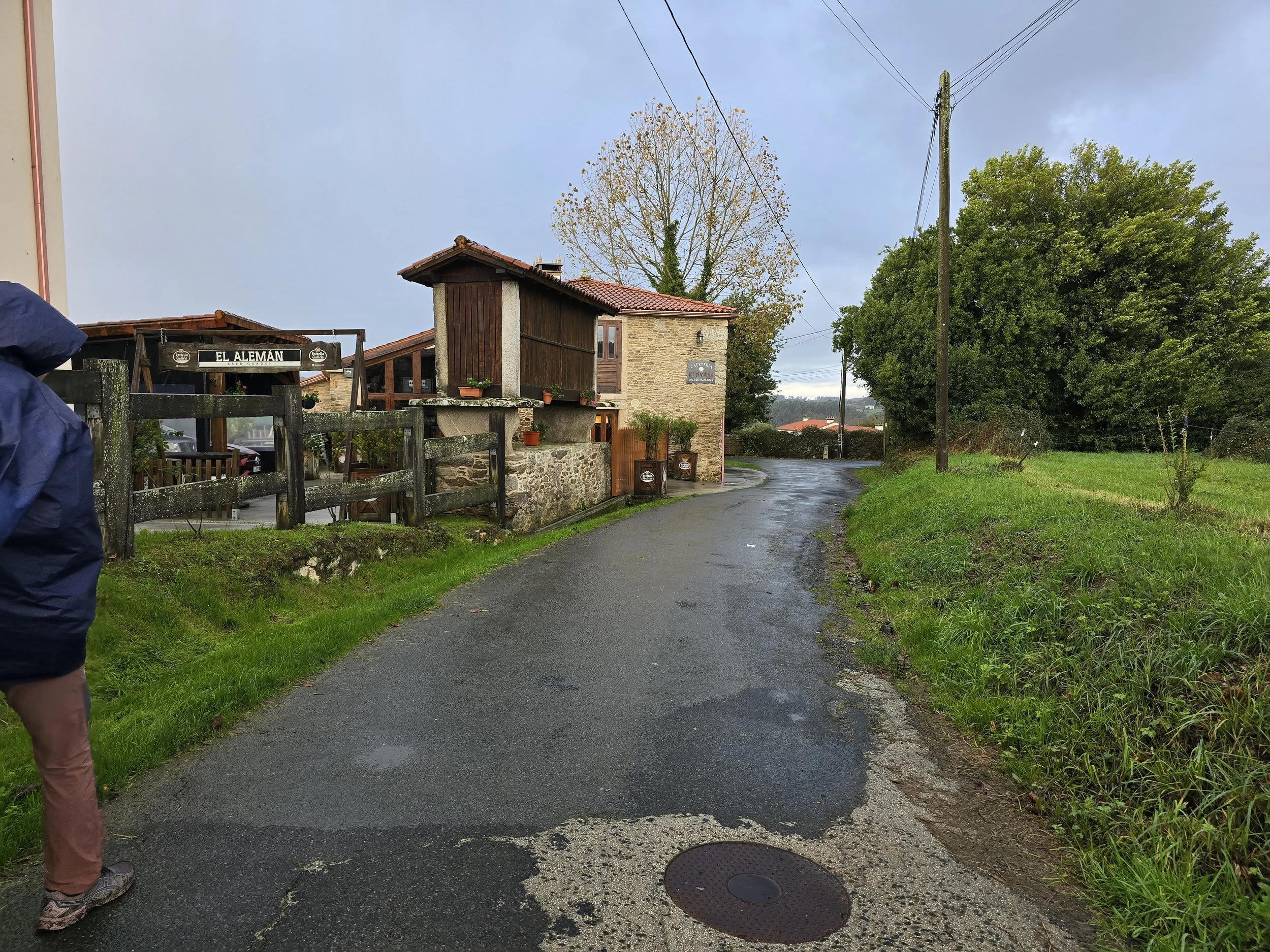
We saw these structures all over and it took us awhile to figure out what exactly they were.
The food drying containers on farms along the Camino de Santiago, especially in Galicia, are traditional raised stone or wood structures called hórreos, used for storing and drying grain (like corn) and food, protecting it from rodents with their elevated design and stone bases. There are also smaller, simpler wooden structures called espigueros (or cabaceiros in Galician), which are essentially ventilated wooden racks for drying corn, often seen on elevated threshing fields
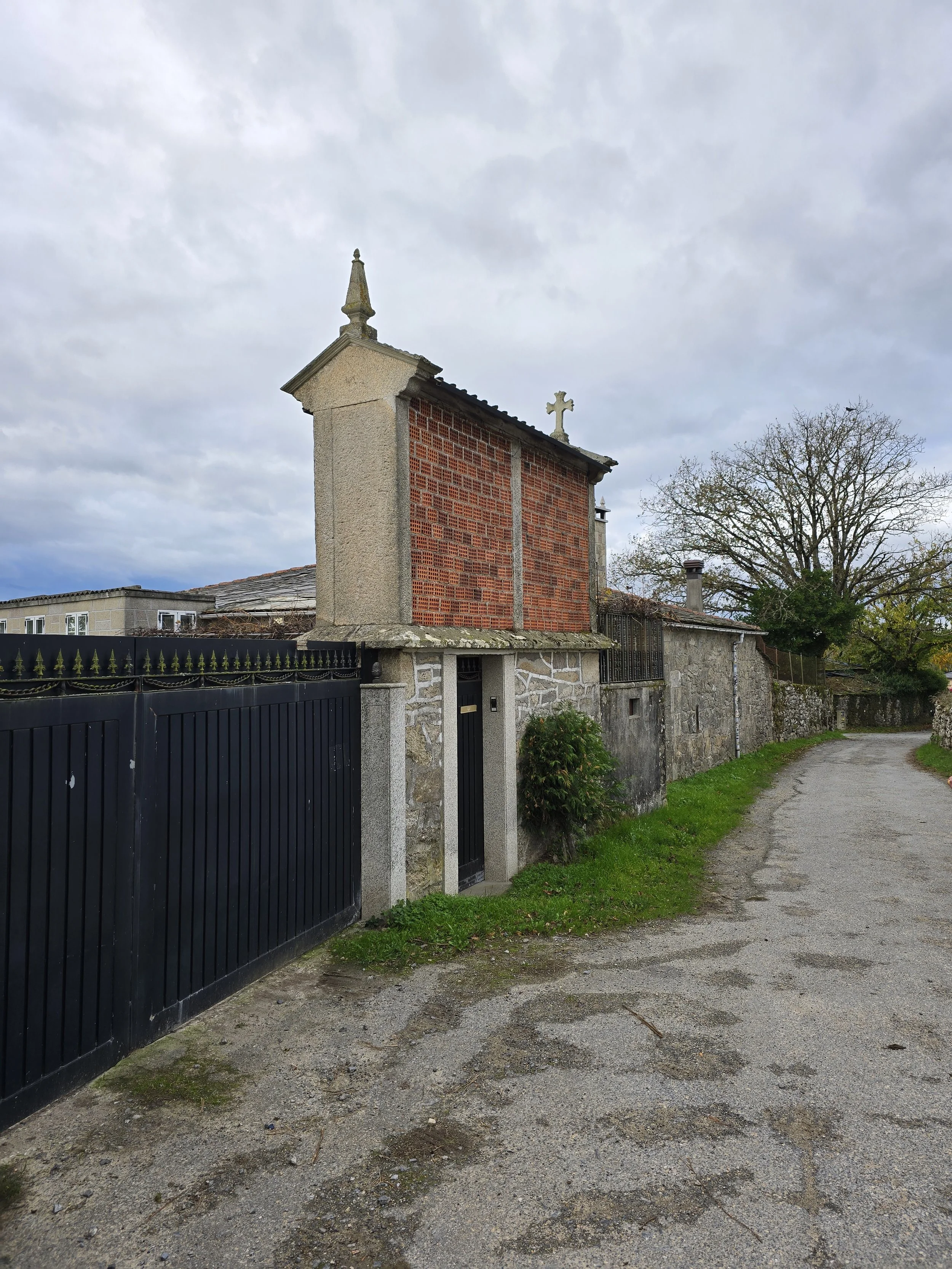
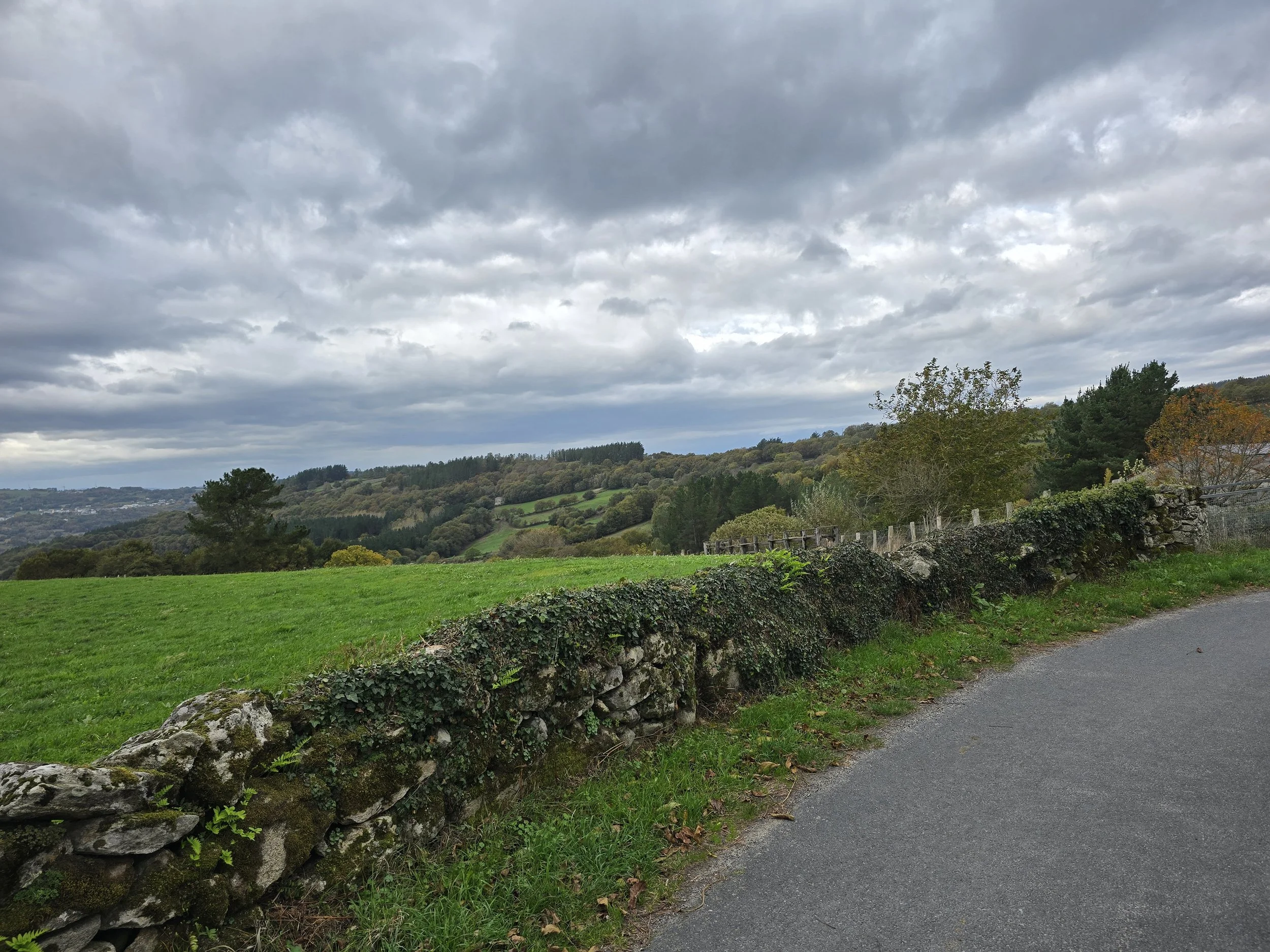
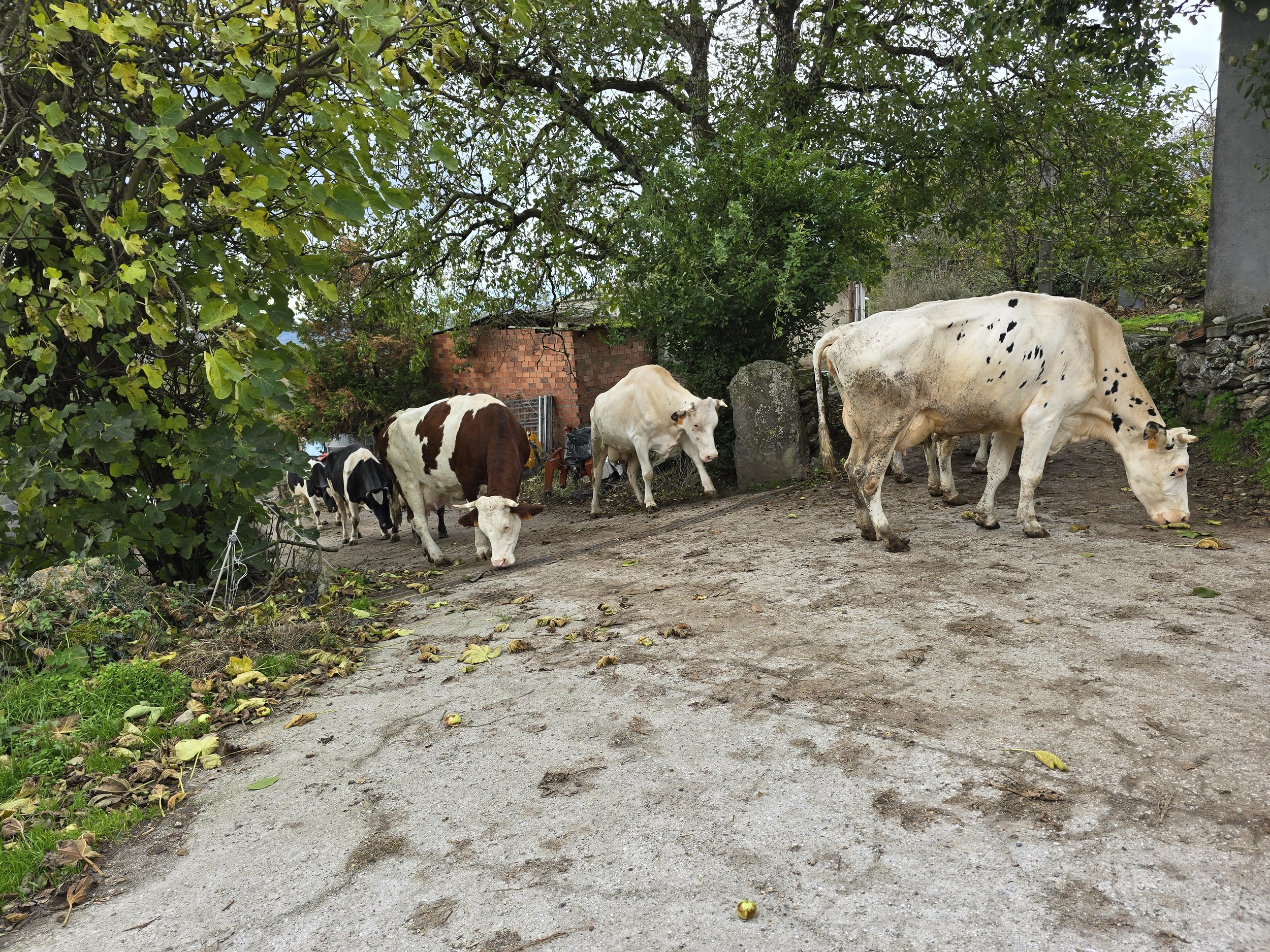
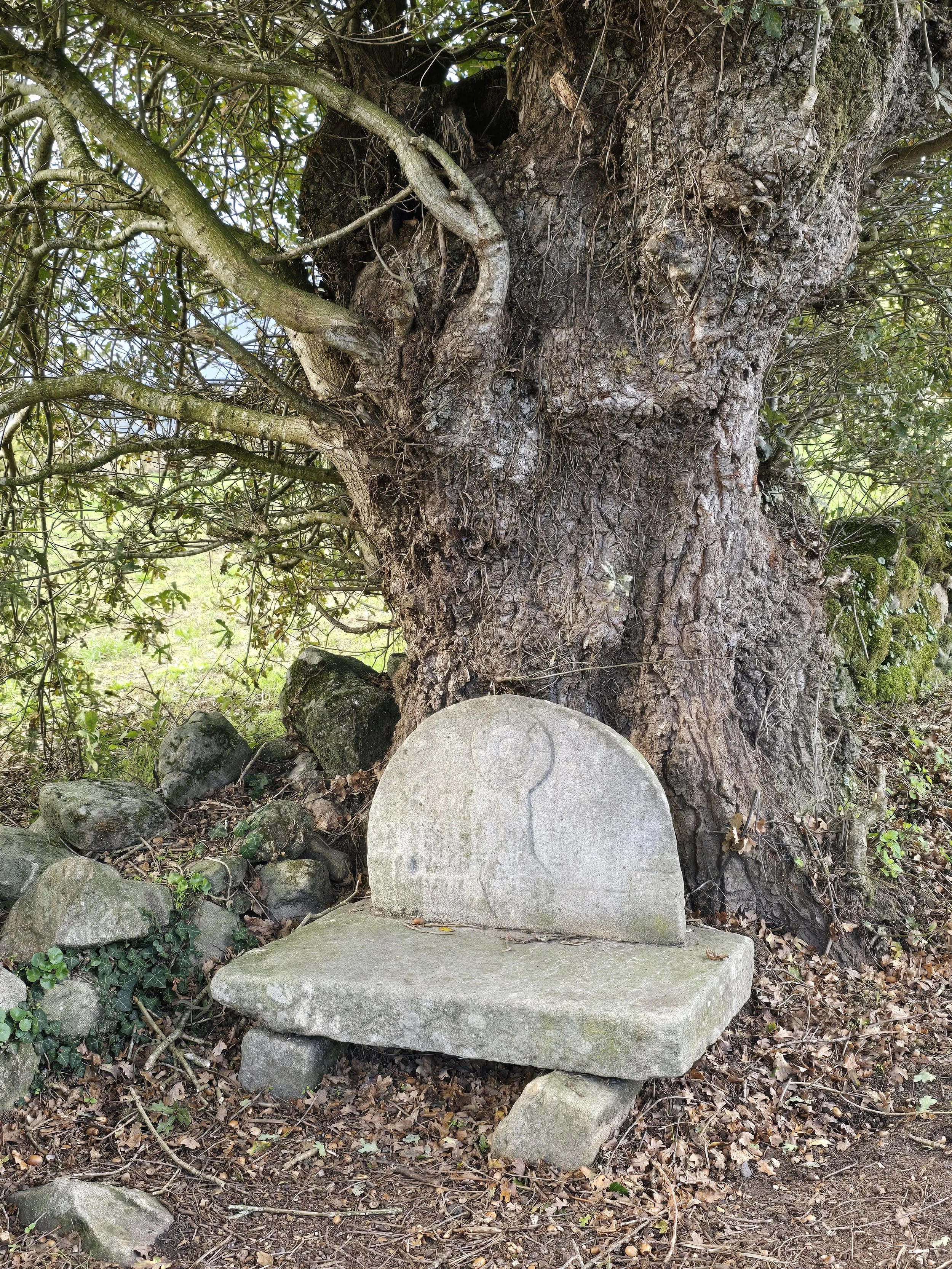
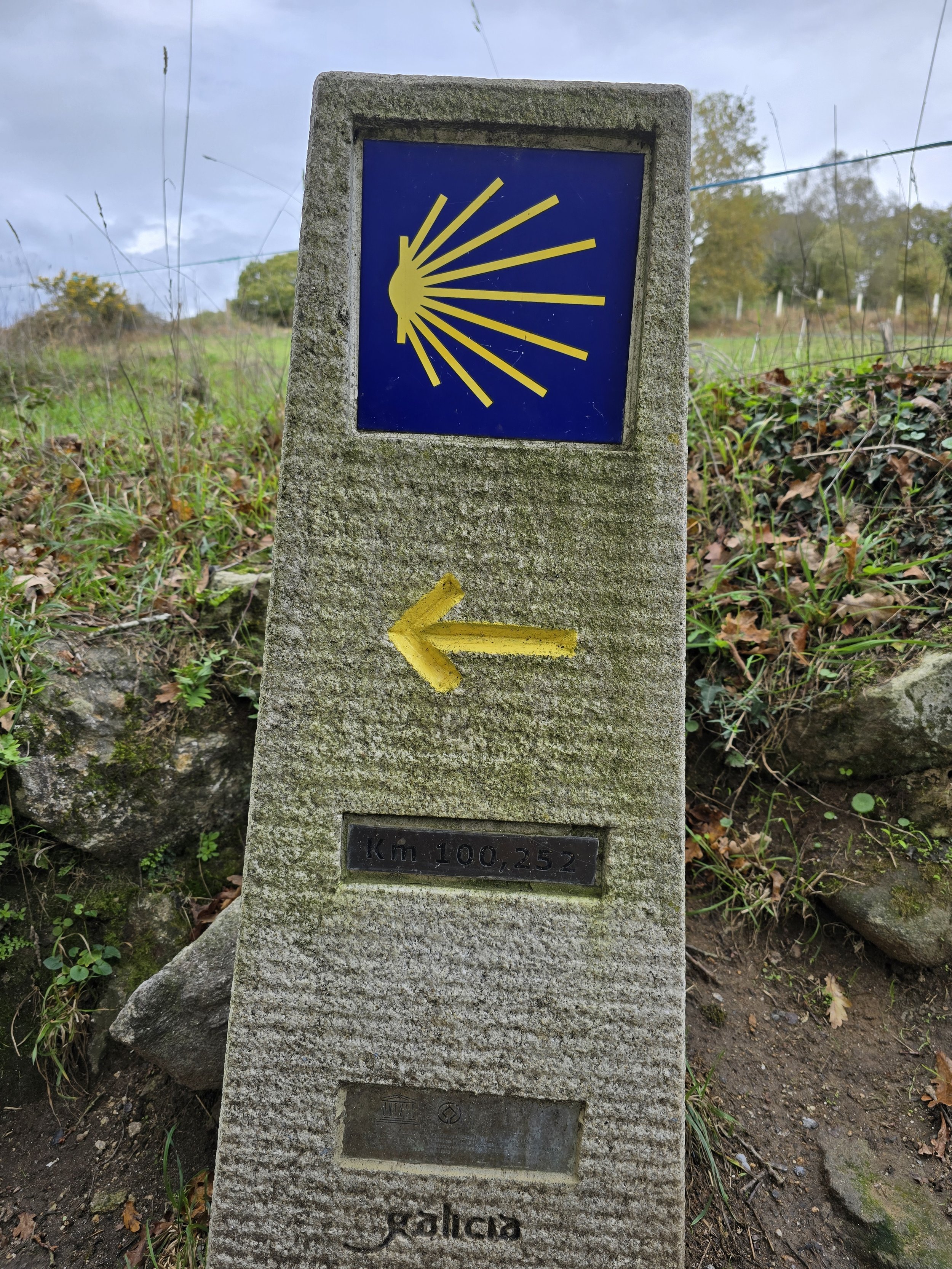
I tried to take pictures of these as the kilometers melted down.
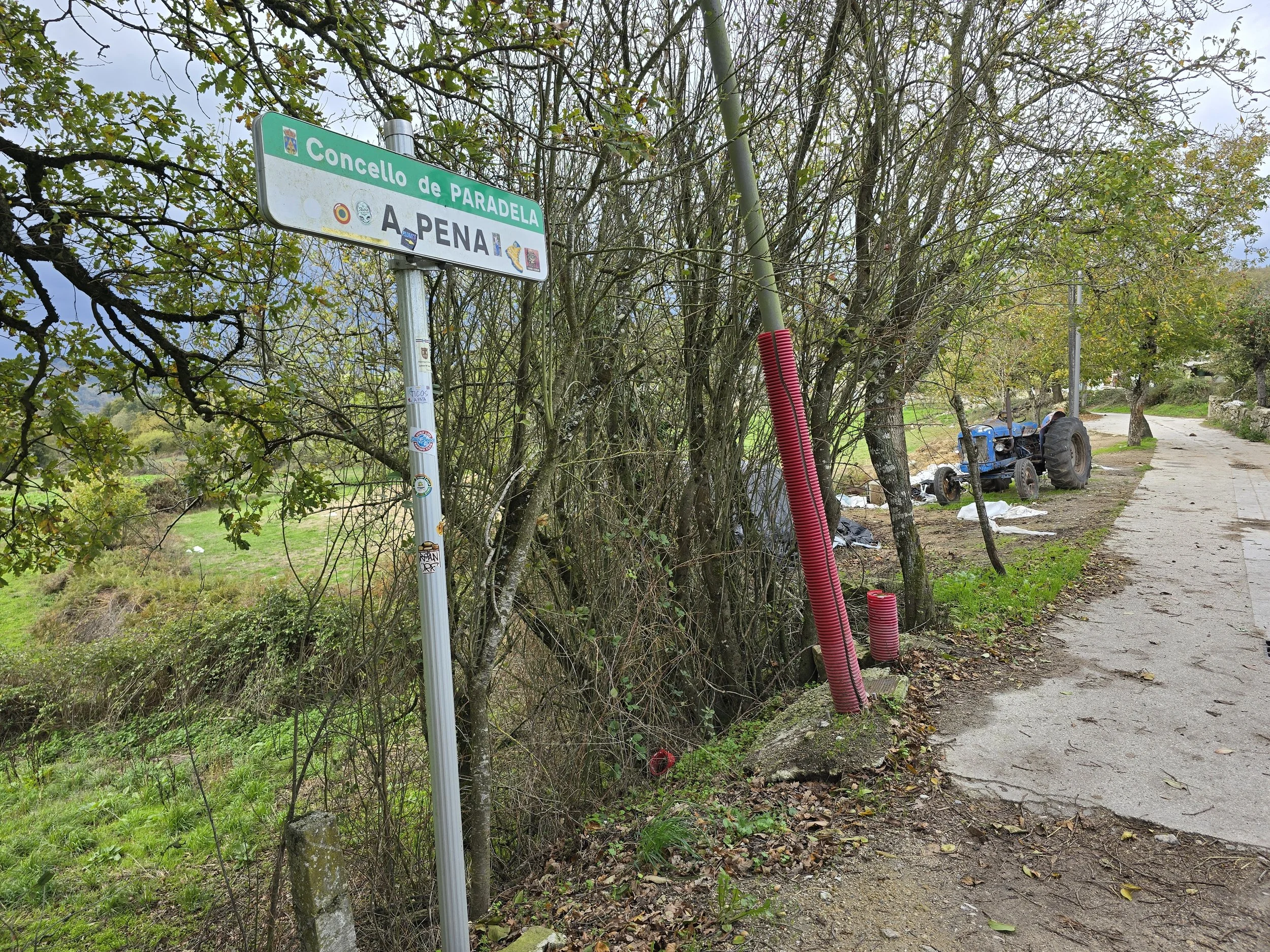
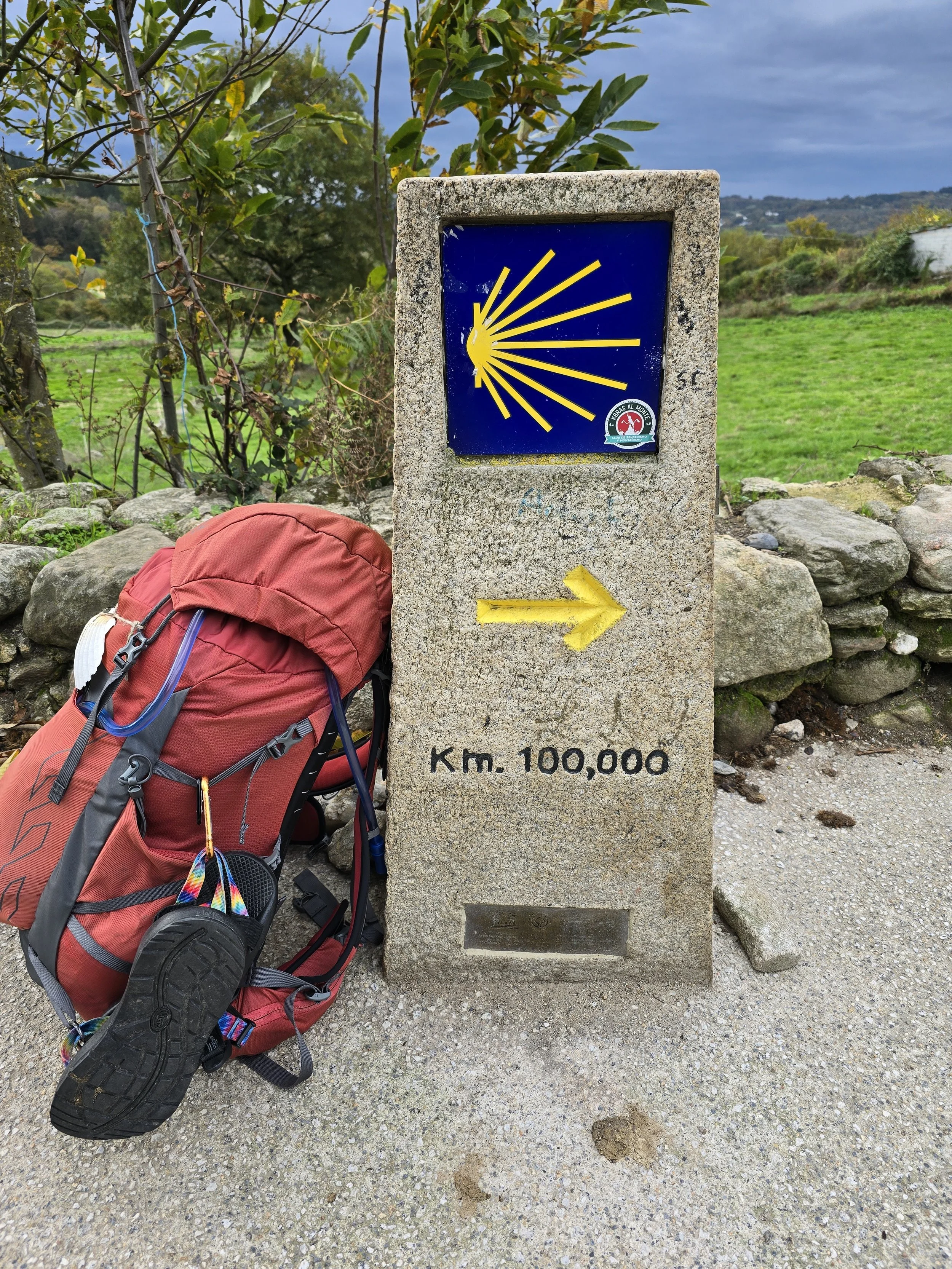
Walking the last 100 kilometers (approx. 62 miles) of the Camino de Santiago is a popular goal, mainly to earn the official Compostela certificate, with the most common starting point being Sarria (where I started 71 miles/115 kilometers) on the Camino Francés, taking about 5-7 days to reach Santiago, though other routes like Primitivo or del Norte also offer qualifying last 100k sections, balancing iconic trails with varied experiences.
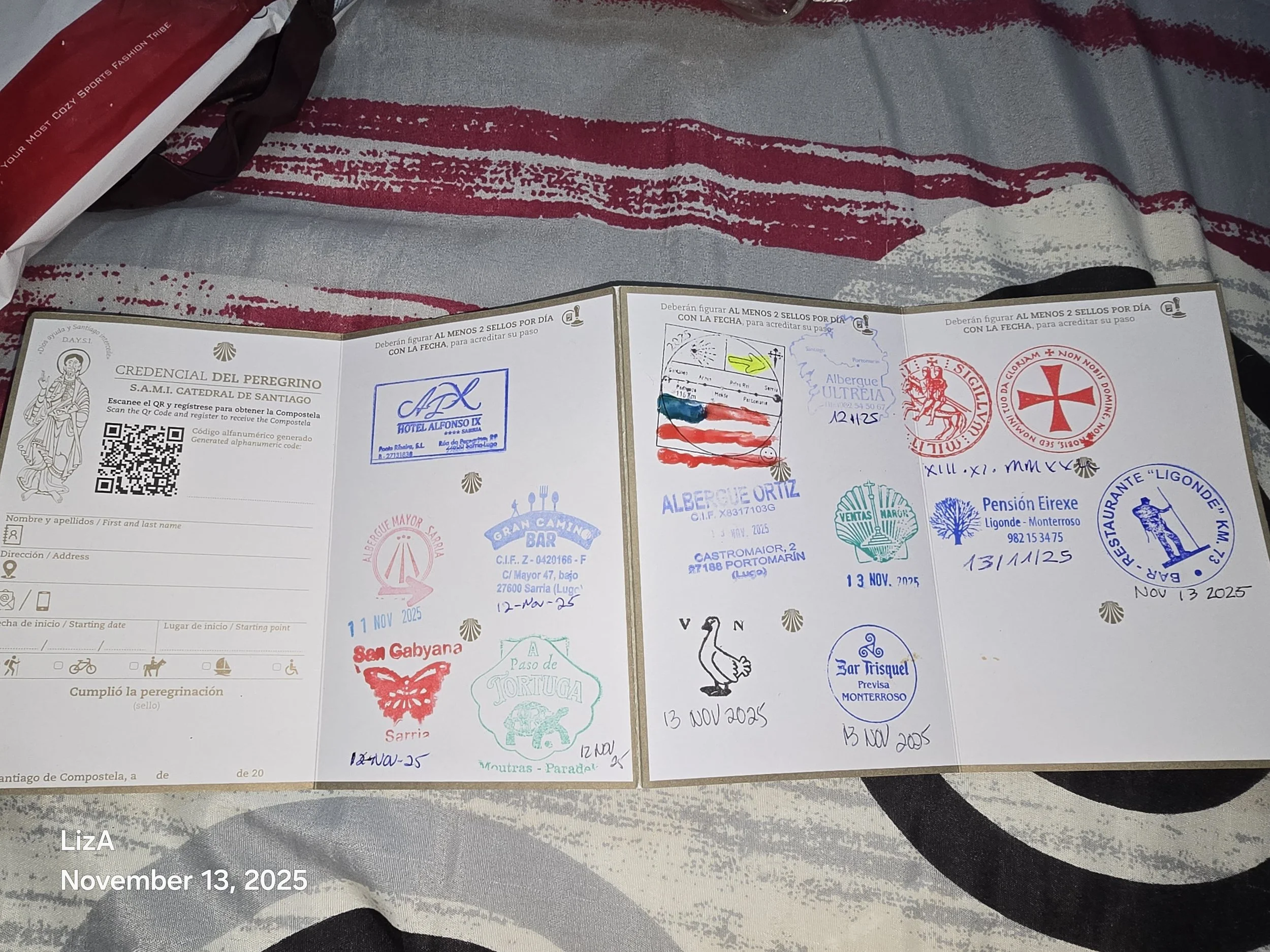
A few stamps I collected.


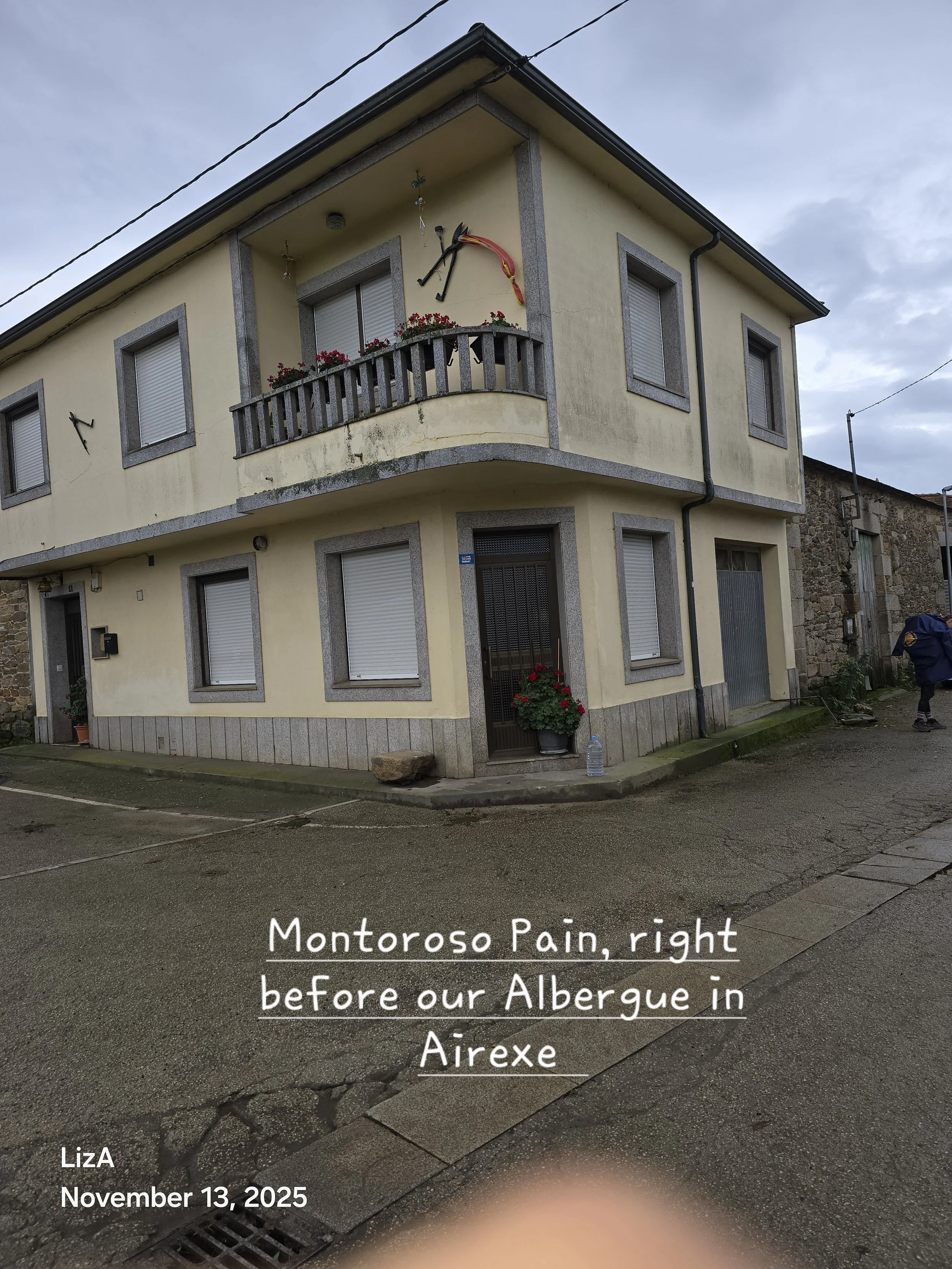
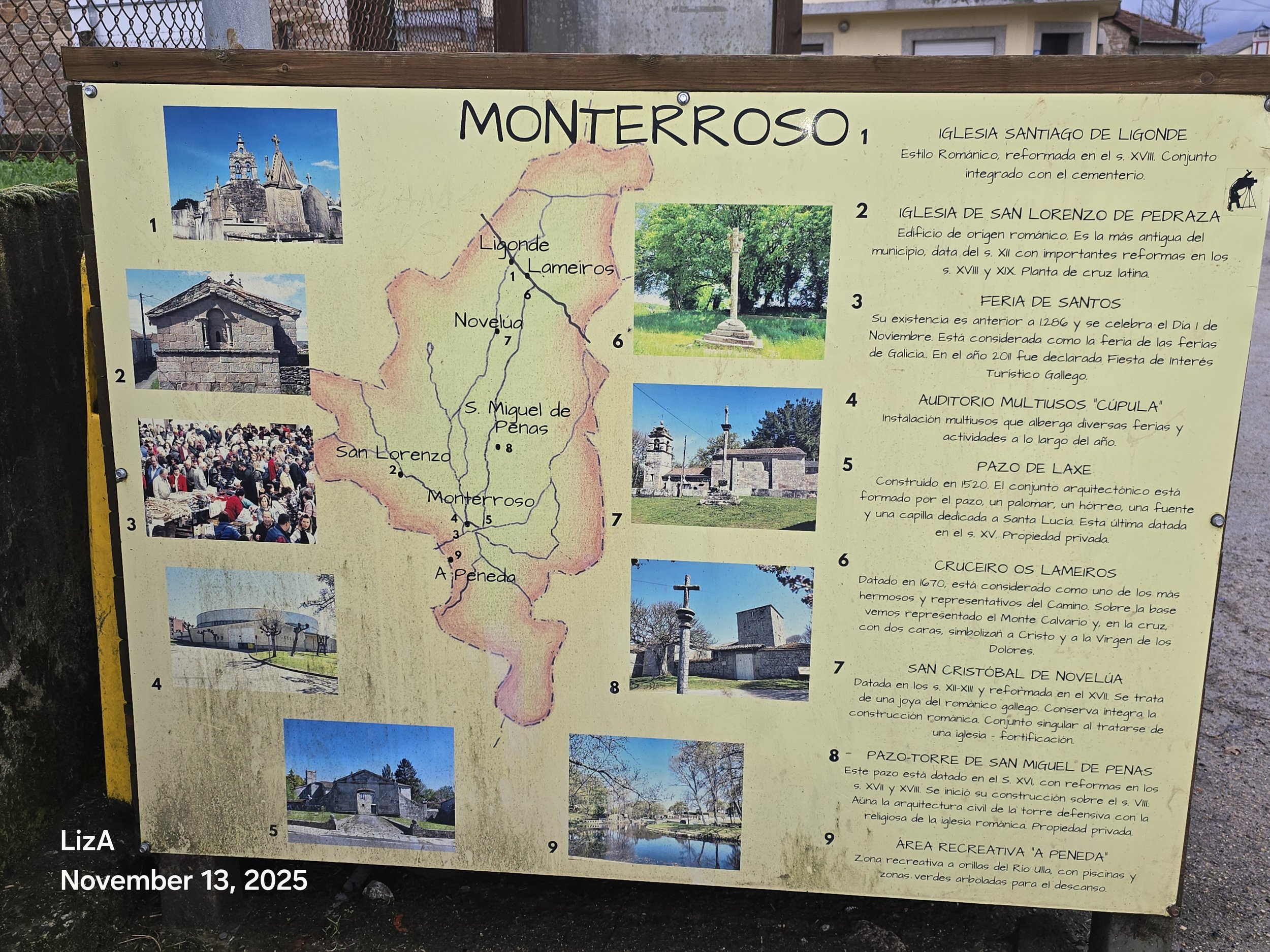
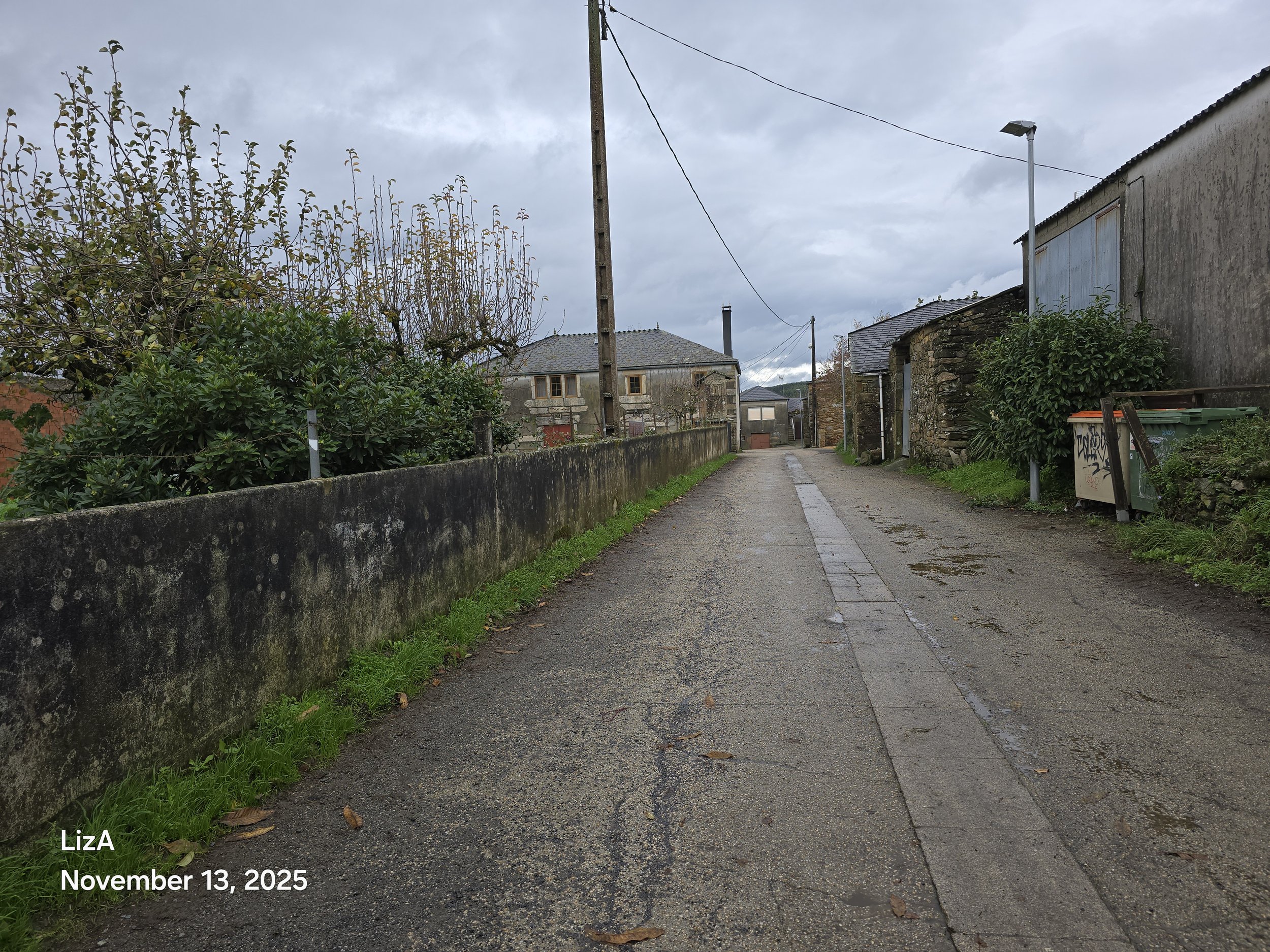
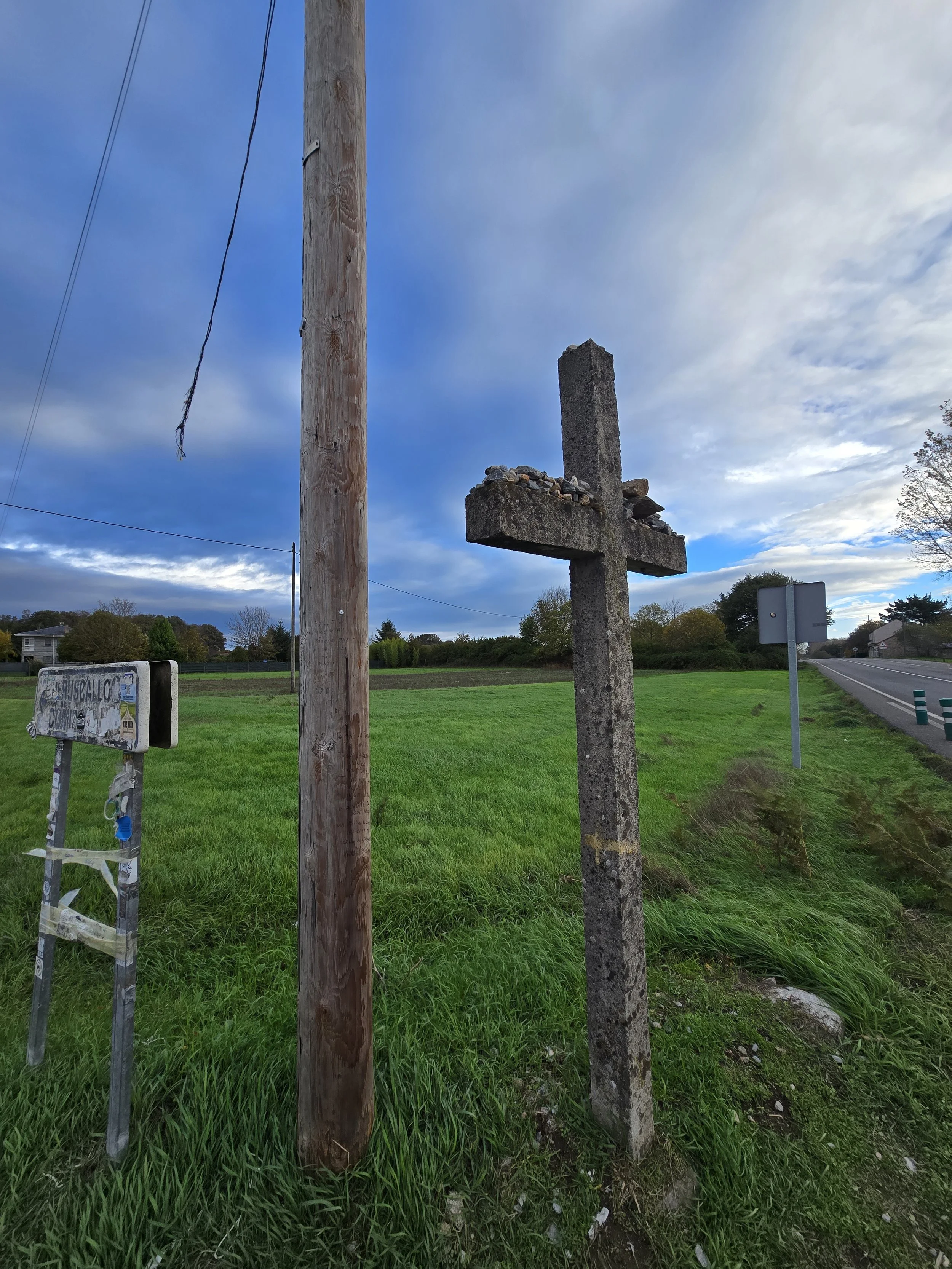
The stones on the Iron Cross (Cruz de Ferro) on the Camino de Santiago are a powerful tradition where pilgrims carry a stone representing their burdens, worries, or past and leave it at the base of the cross to symbolize letting go, seeking healing, and continuing with a lighter heart, making it an emotional turning point on the journey. This massive cairn, crowned by an iron cross, serves as a focal point for this ritual of release and renewal, with origins potentially dating back to Roman times and Christianized by a hermit in the 11th century.
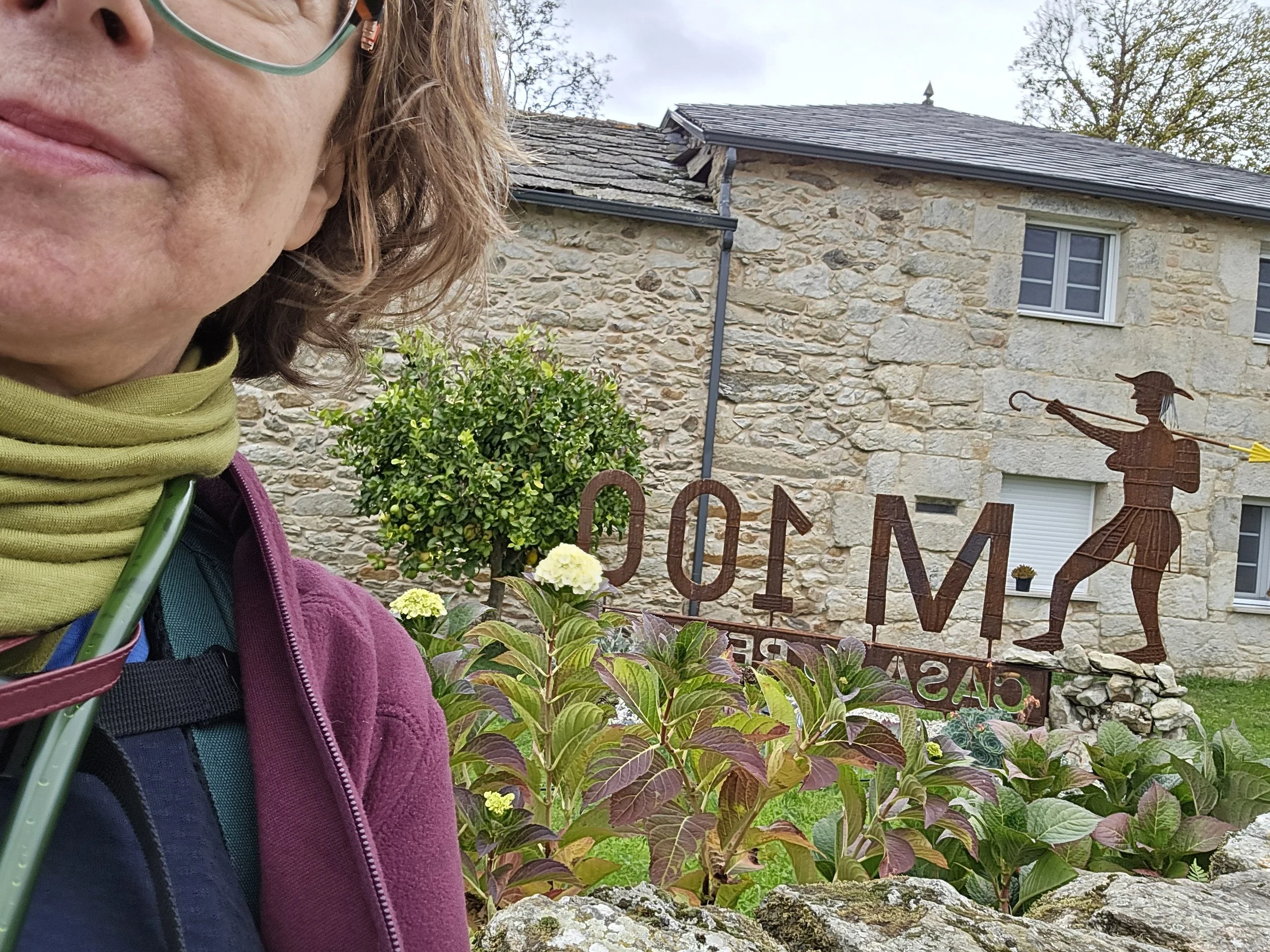
On our way to Portomarin. From Portomarín to Palas de Rei (Stage 30): A classic stage featuring hills, forests, Romanesque churches, and the Castro de Castromaior.
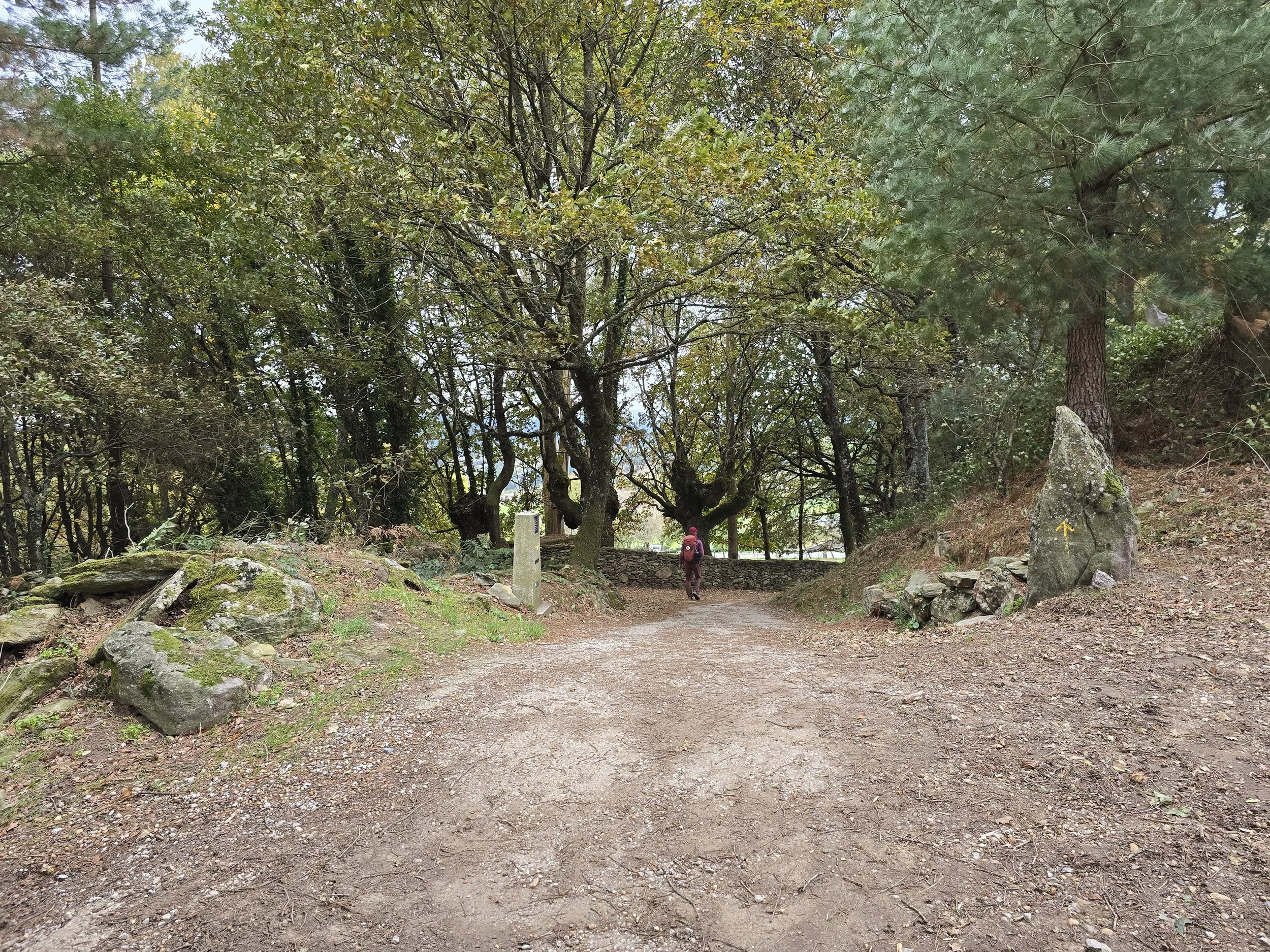
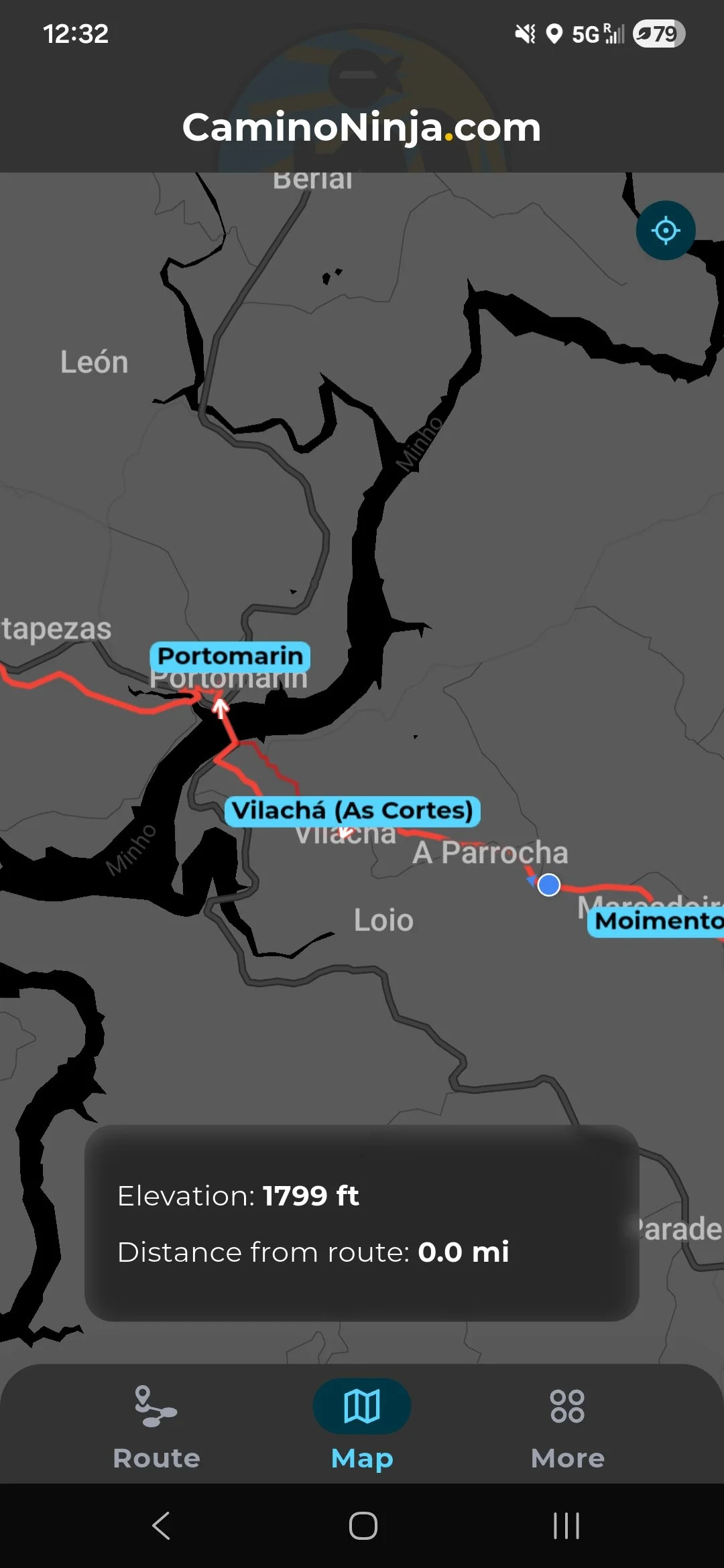
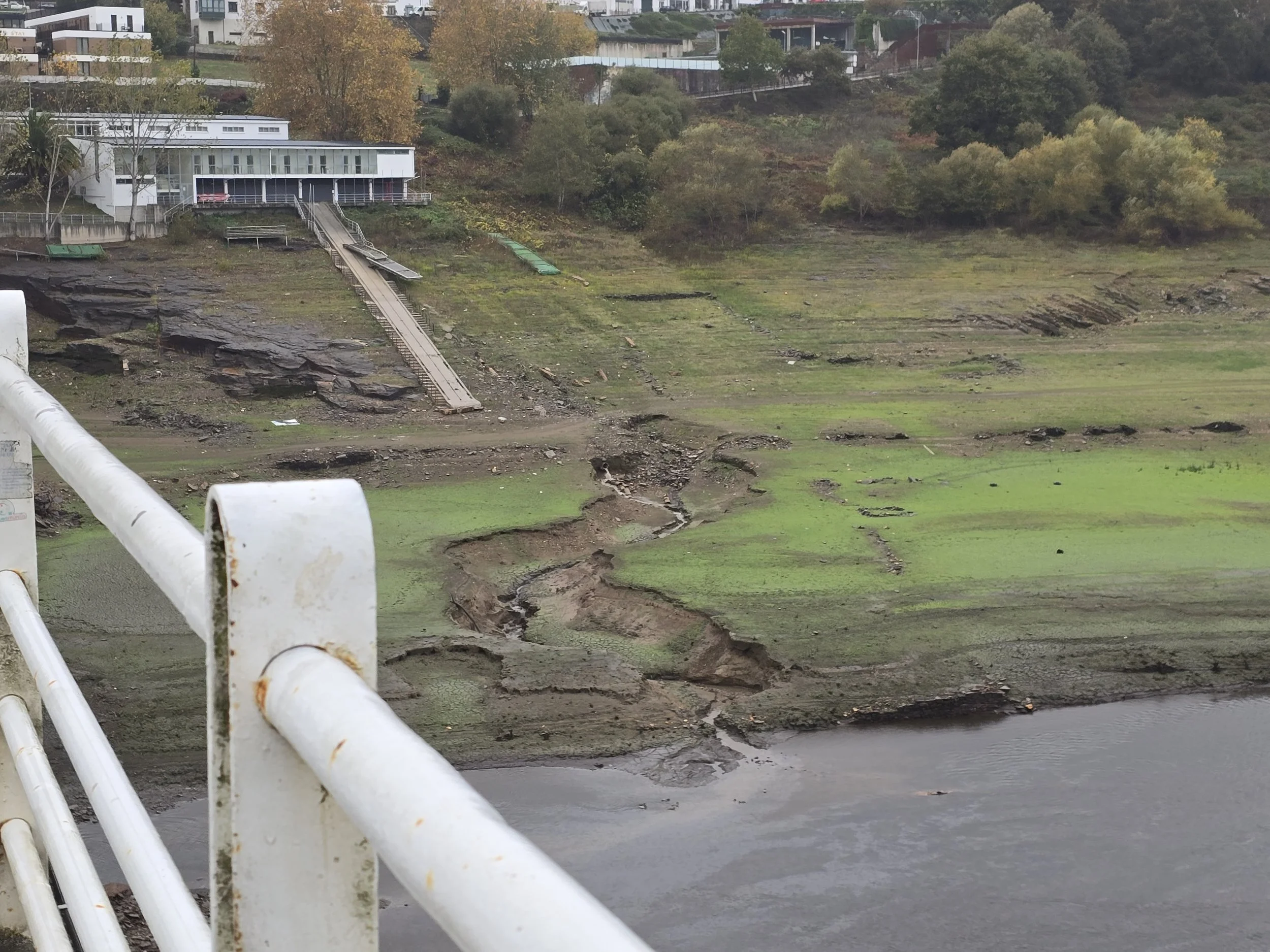
Portomarín, Spain, is famous as a key stop on the Camino de Santiago, known for its unique history of being dismantled and rebuilt due to the Miño River dam, featuring a fortress-like Romanesque Church of San Juan, the medieval Ponte do Miño bridge, and the submerged ruins of the old town visible during low water, making it a resilient and historic riverside town
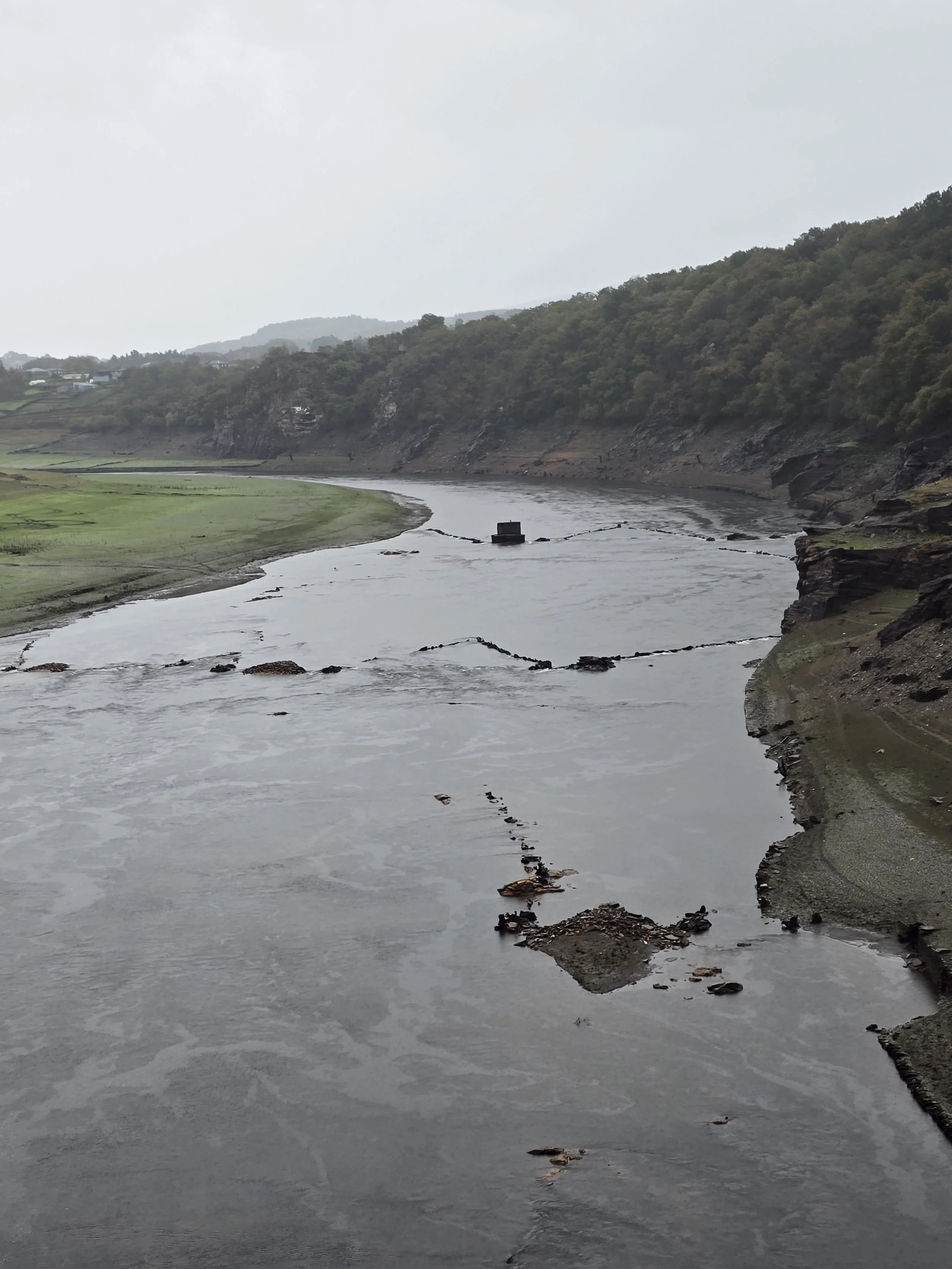
Old Portomarín Ruins: The original town was flooded in the 1960s to create the Belesar Reservoir, and its submerged ruins become visible when water levels drop, offering a unique sight
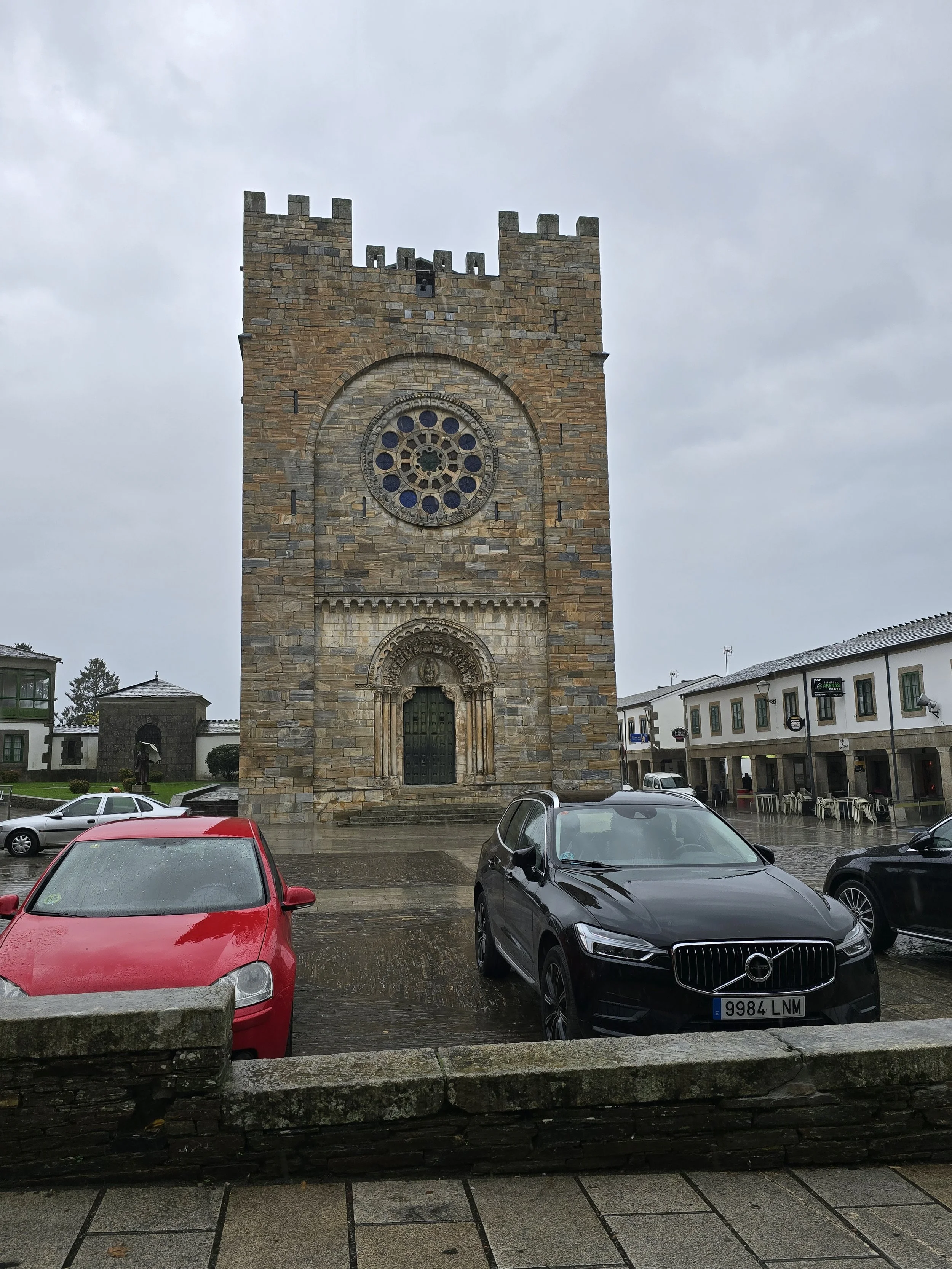
The Church of San Xoán (or Saint John) of Portomarín is a temple-fortress of the Order of St John of Jerusalem, in the Galician town of Portomarín, Spain.[1]
It is an unusual Late Romanesque temple as it is designed to be both a church and a castle and so has architectural characteristics of both buildings.[1] As a church it has one barrel vaulted nave, a semicircular apse and all the typical decorations of Romanesque churches; these include a carved portal with archivolts, rose windows and carved capitals. As a castle its perimeter is surrounded by merlons, it has four defense towers (one at each corner),[1] while behind it lies an adarve, a defensive street. The north west tower currently has a stork's nest with two young (2011). The church was relocated to its current position from the valley in the 1960s when the river was flooded to form a reservoir.
Strategic importance
It is situated on the principal route of the Way of St. James to Santiago de Compostela, where other Templar and Knight Hospitaller churches and castles were constructed as a result of the effort of the Hospital Orders to protect the way to the tomb of Santiago;[1] others include the churches of Torres del Río, Eunate and the Castle of Ponferrada[broken anchor].
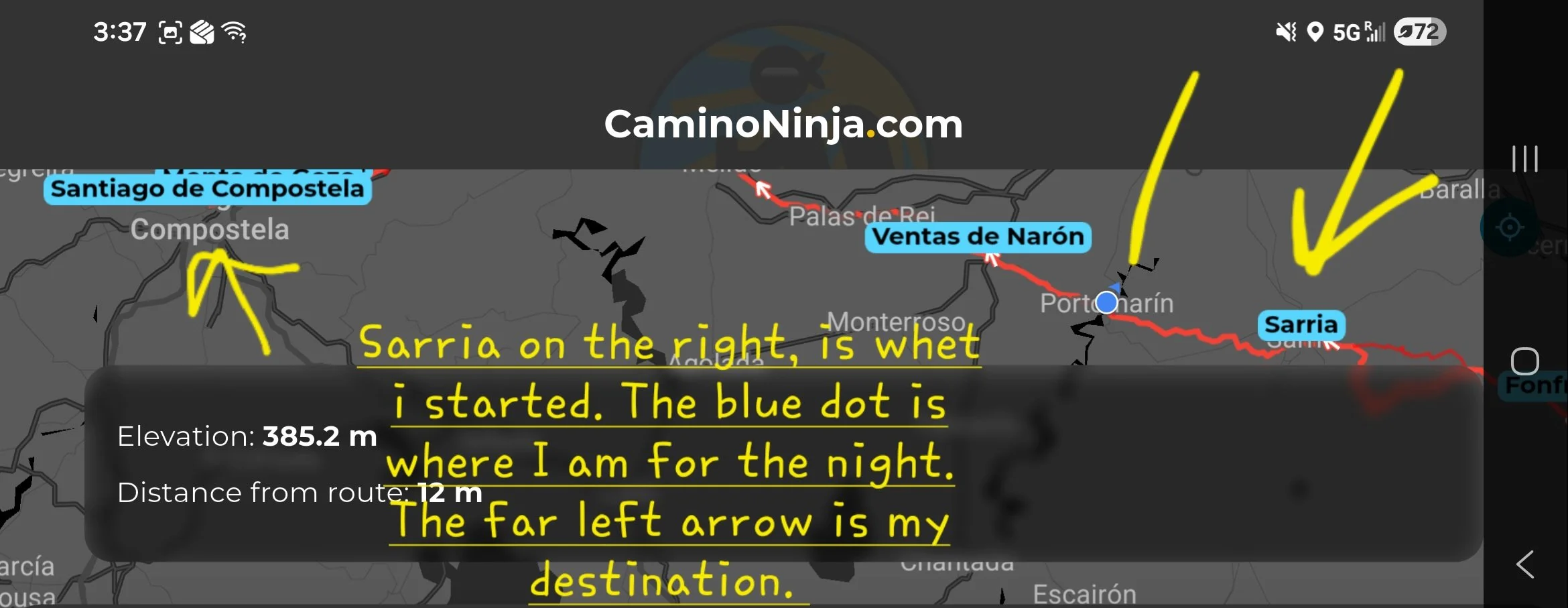
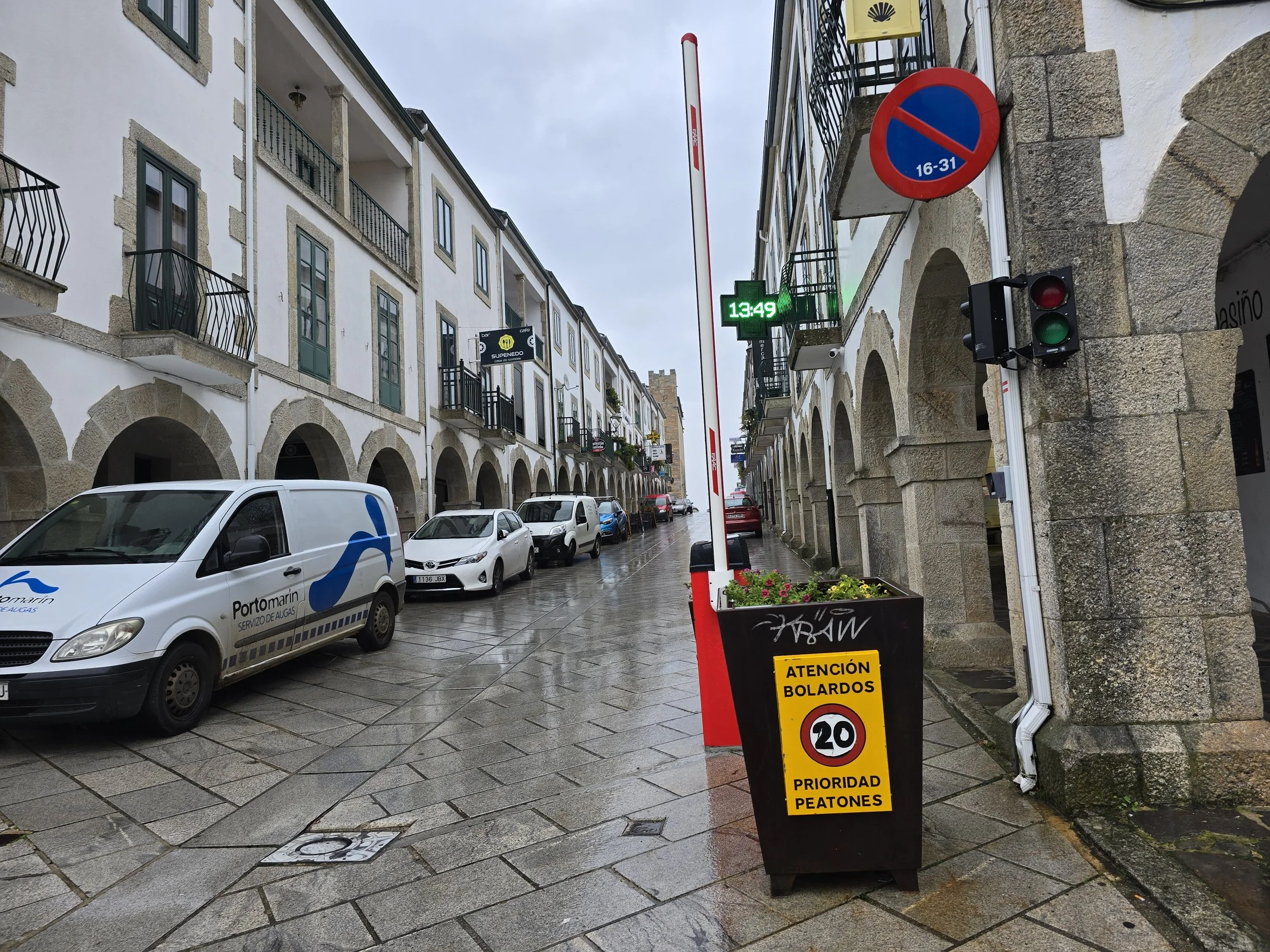
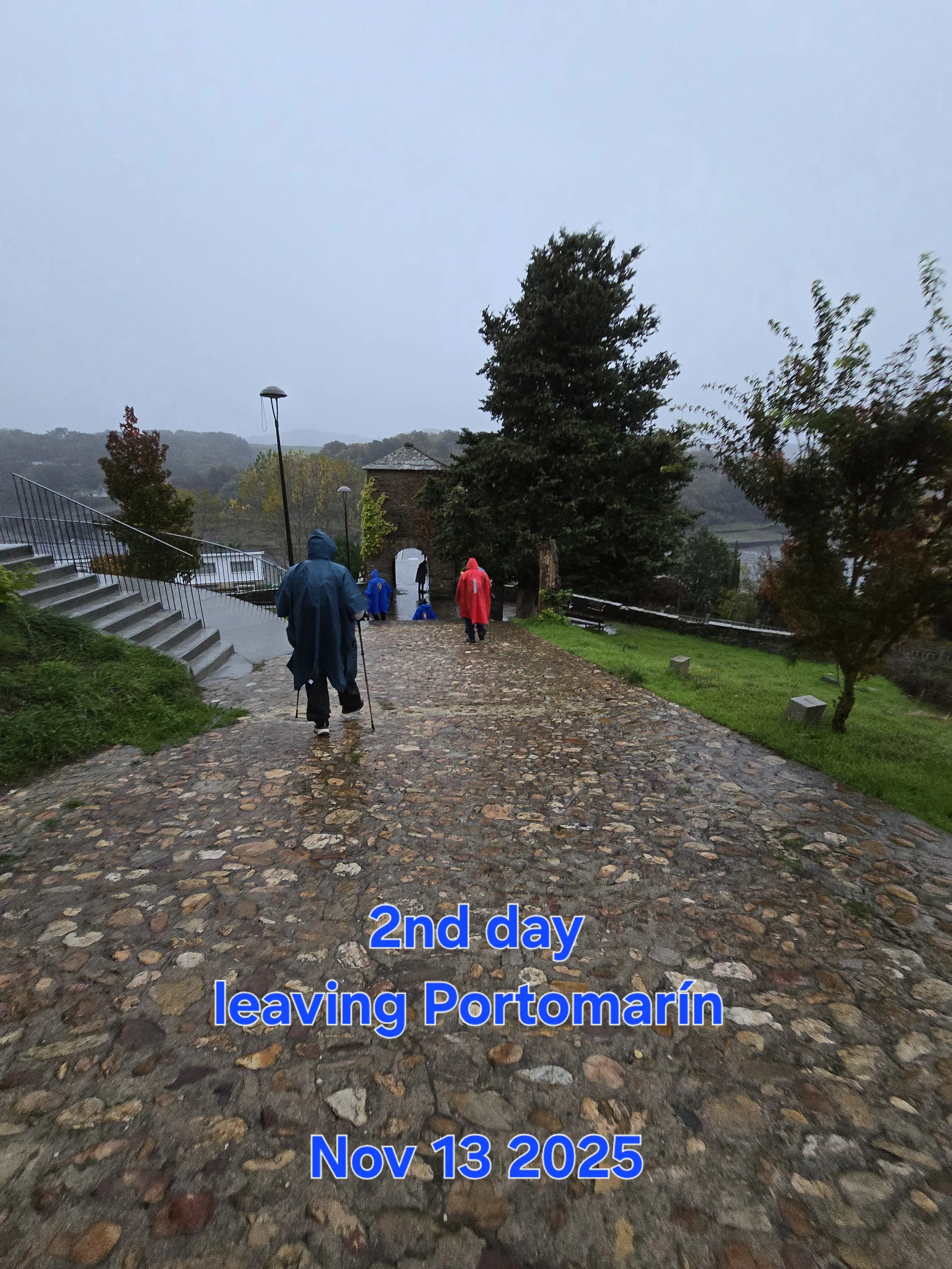

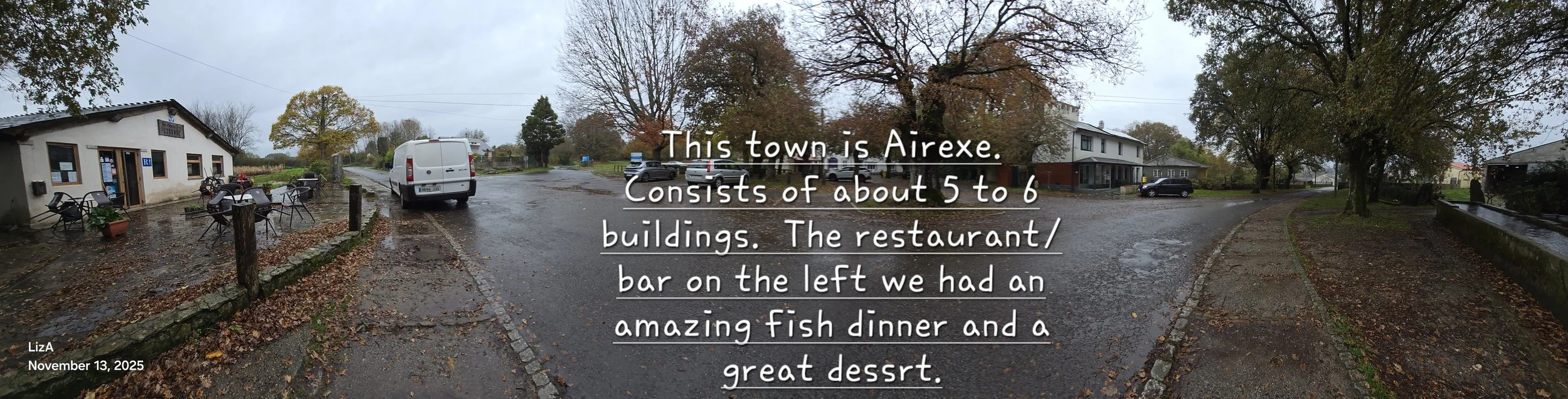


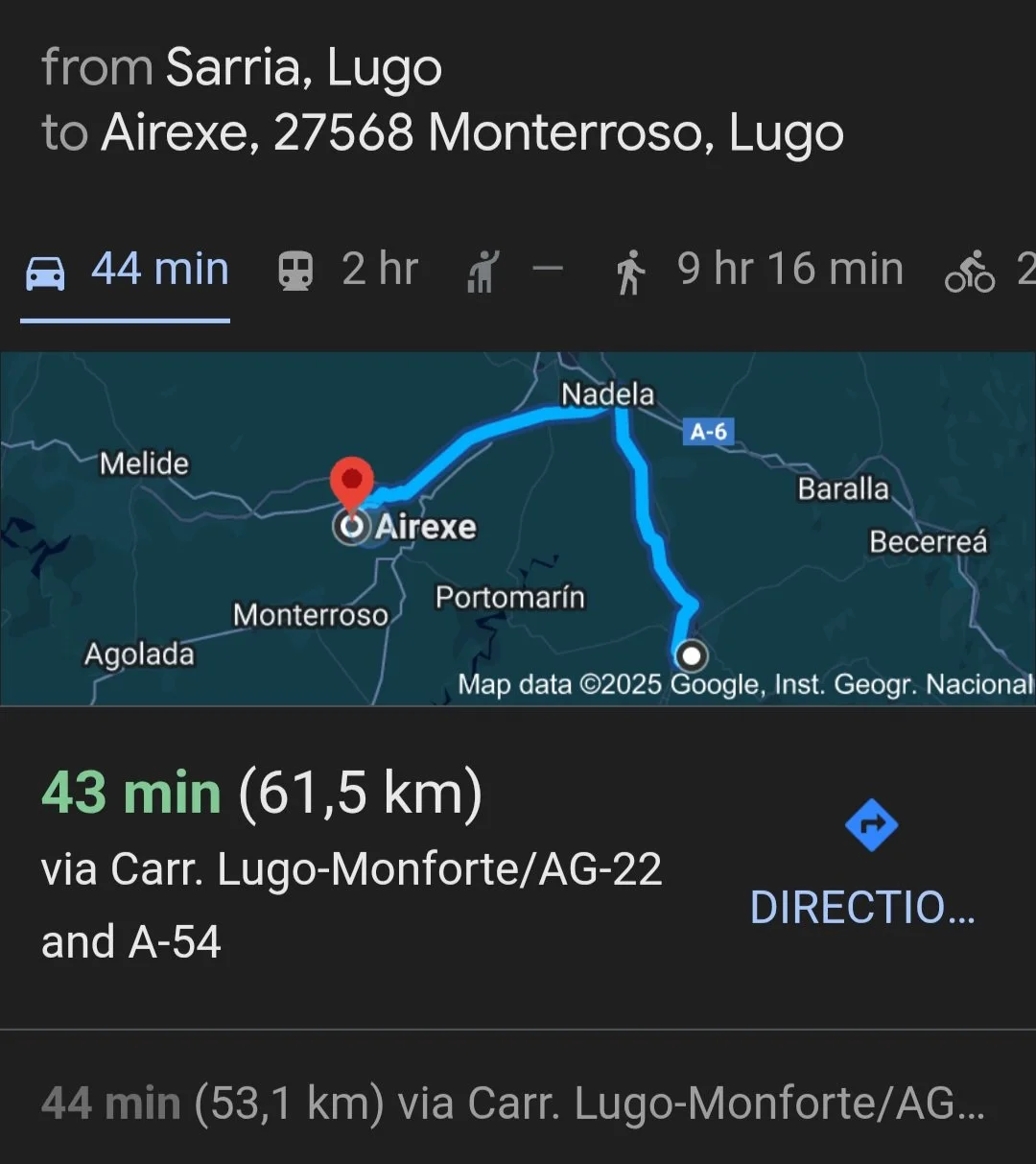
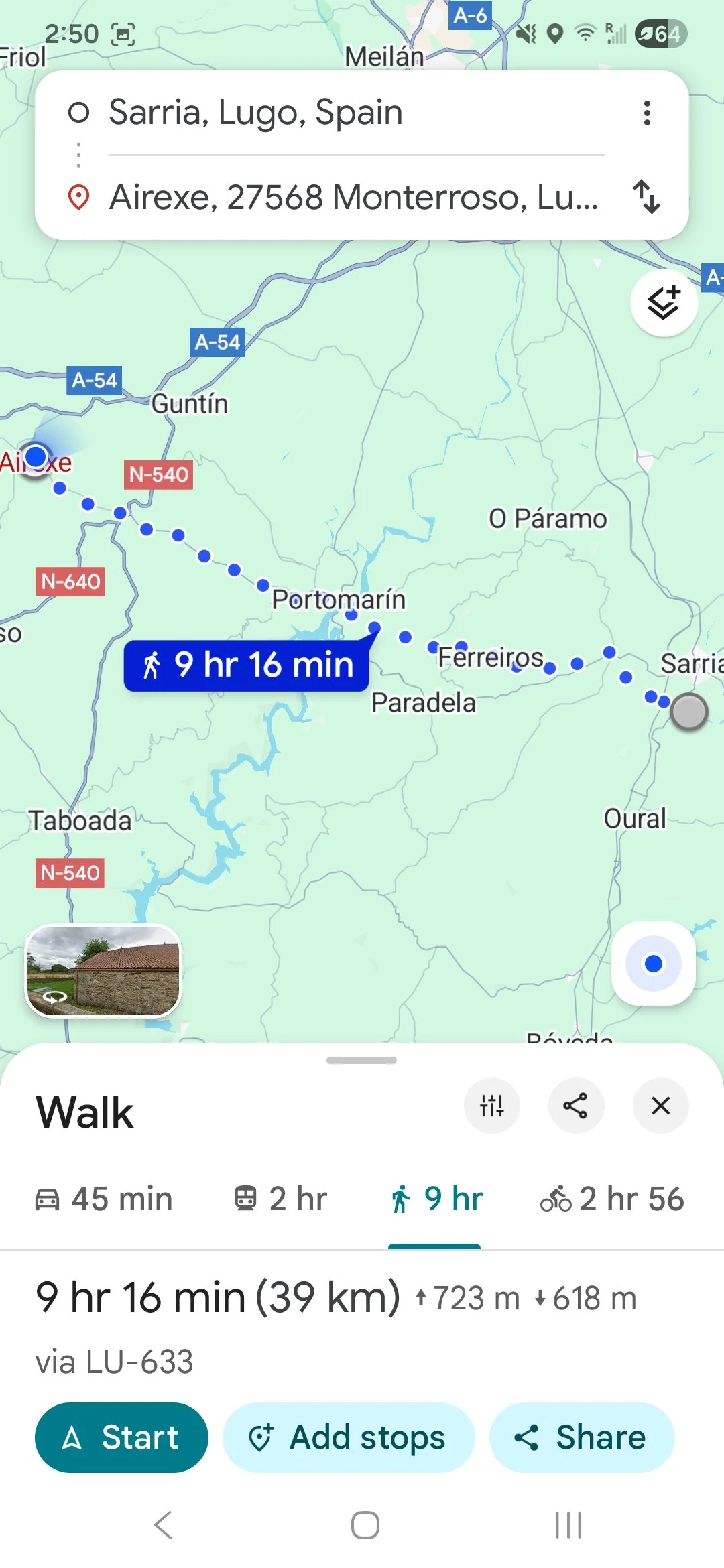
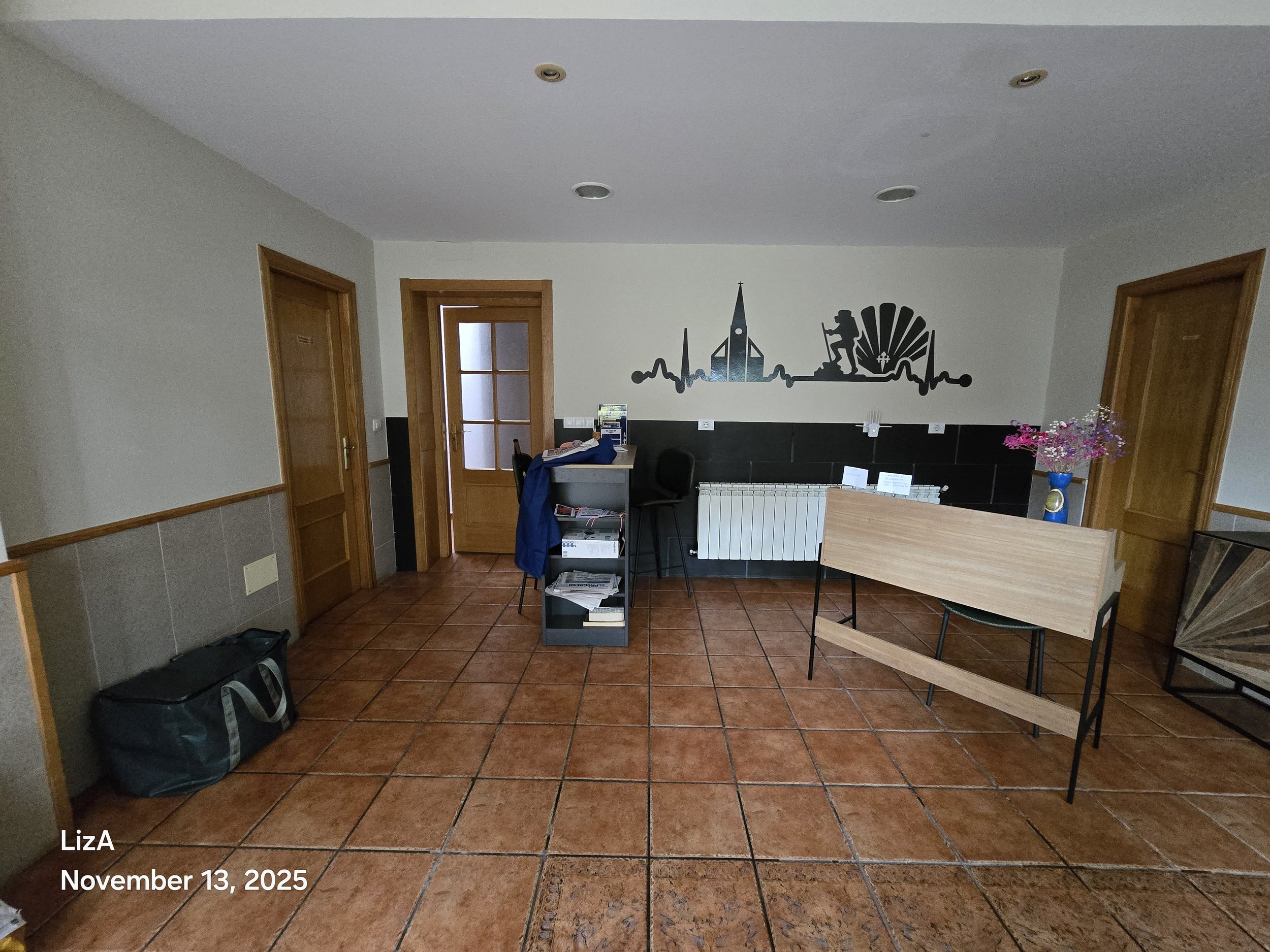
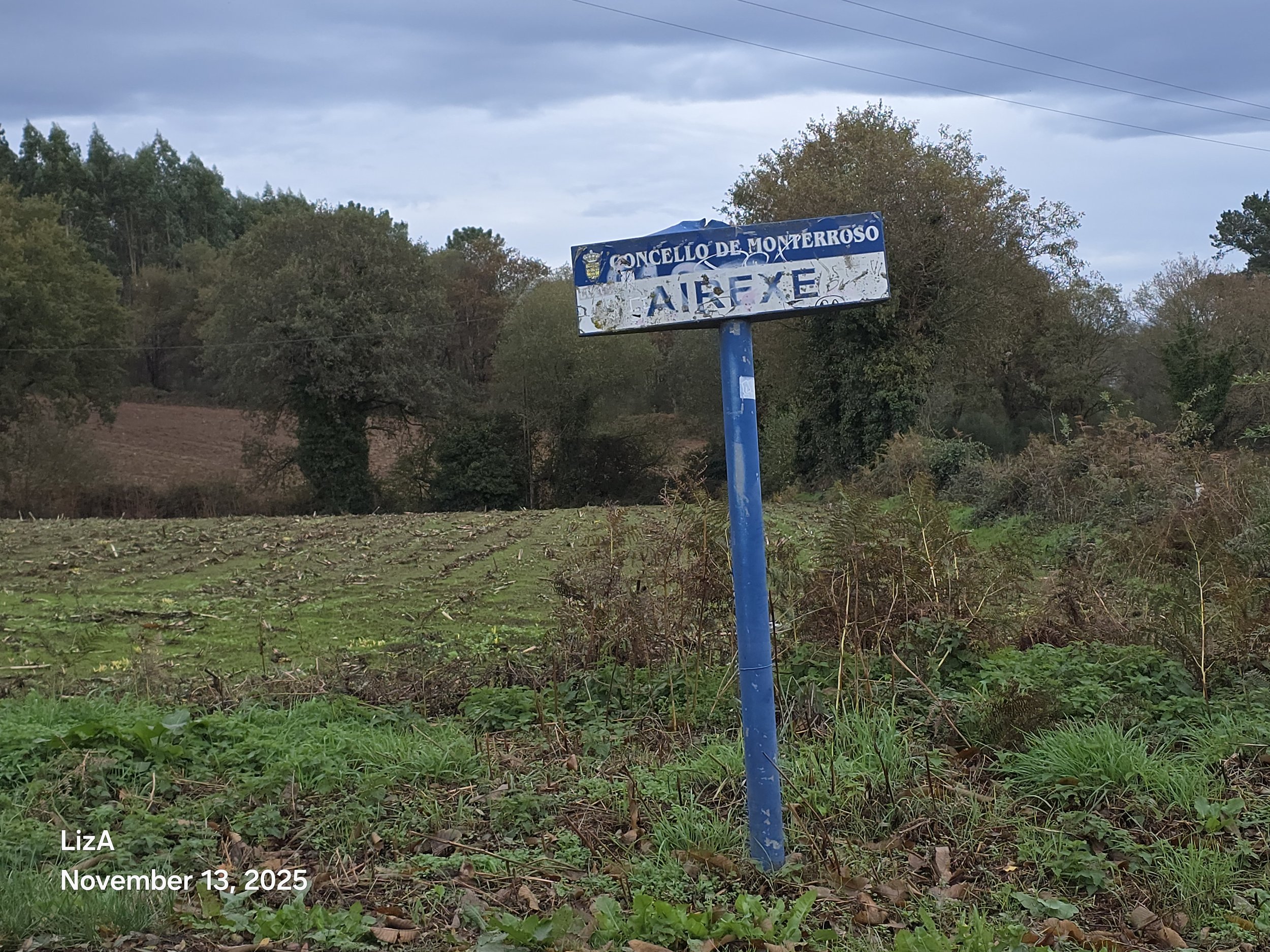
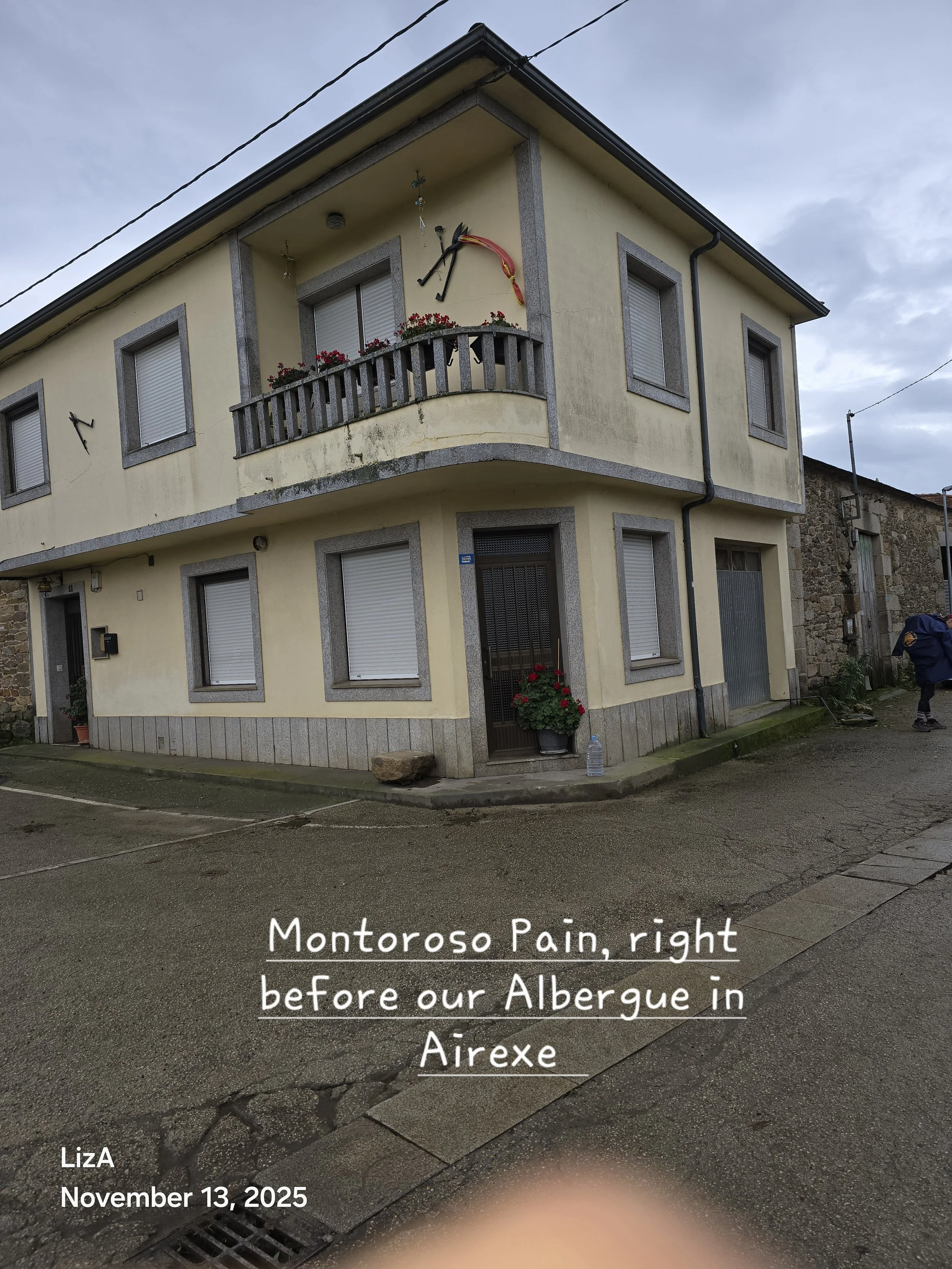
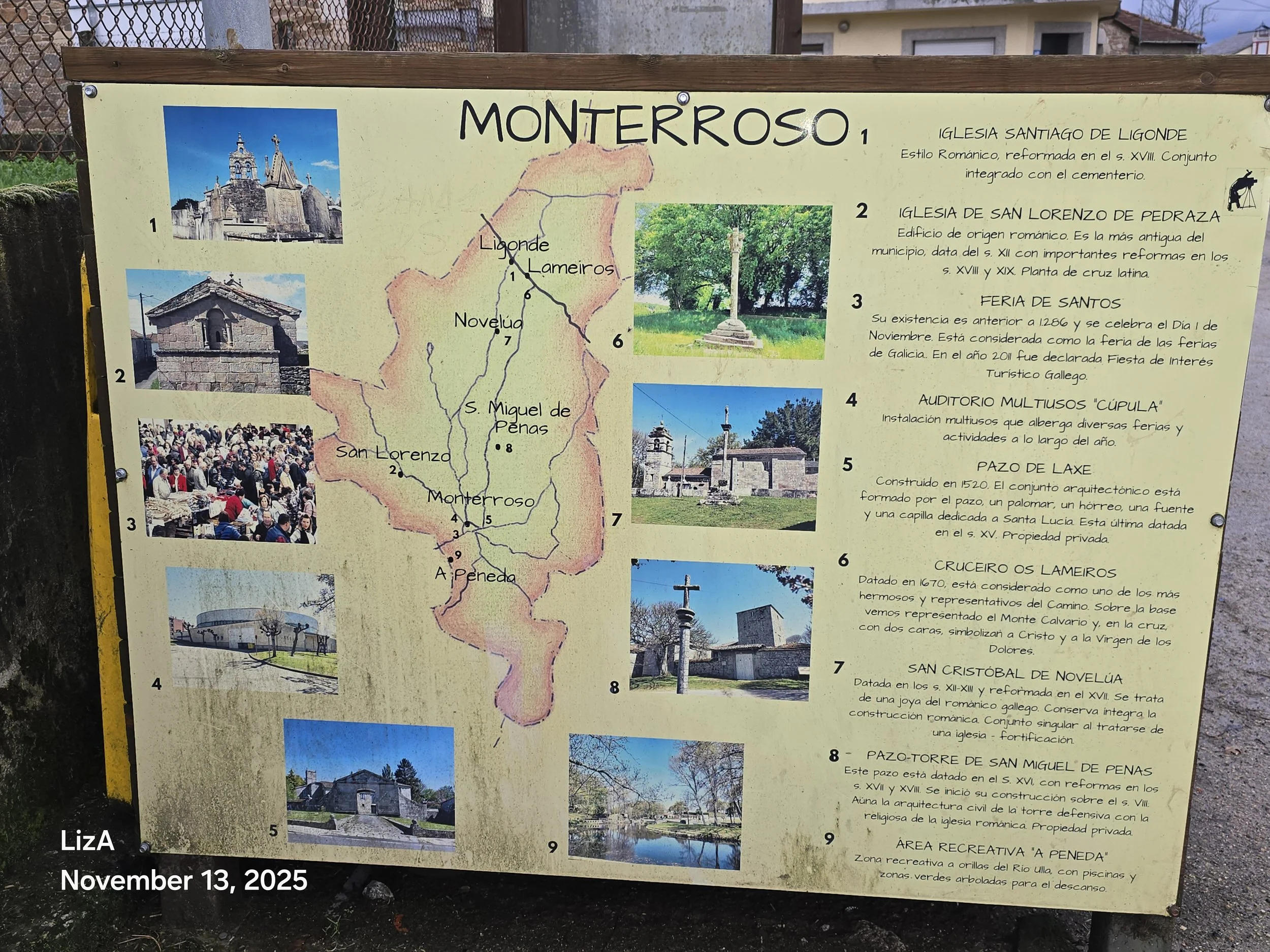
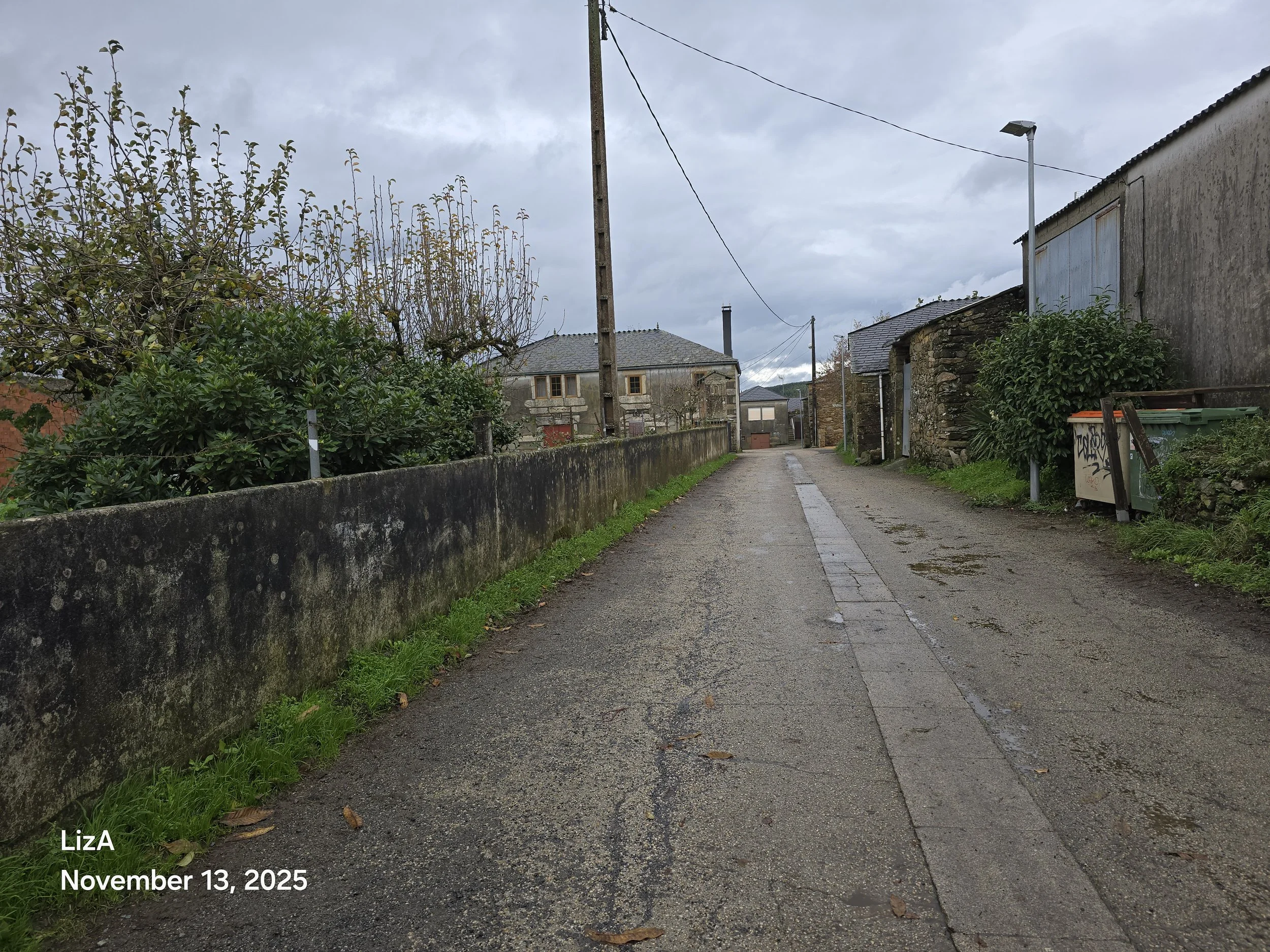
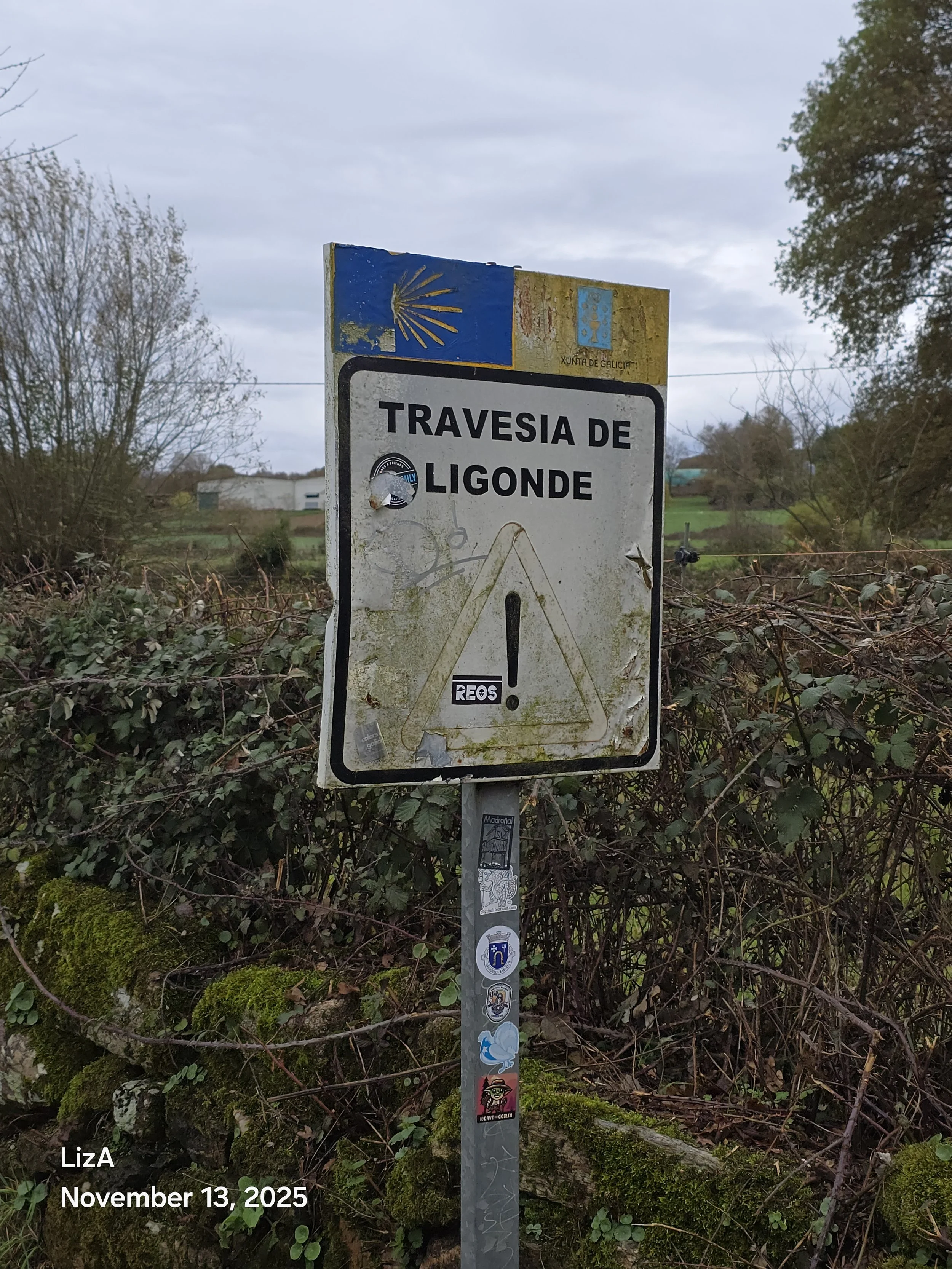
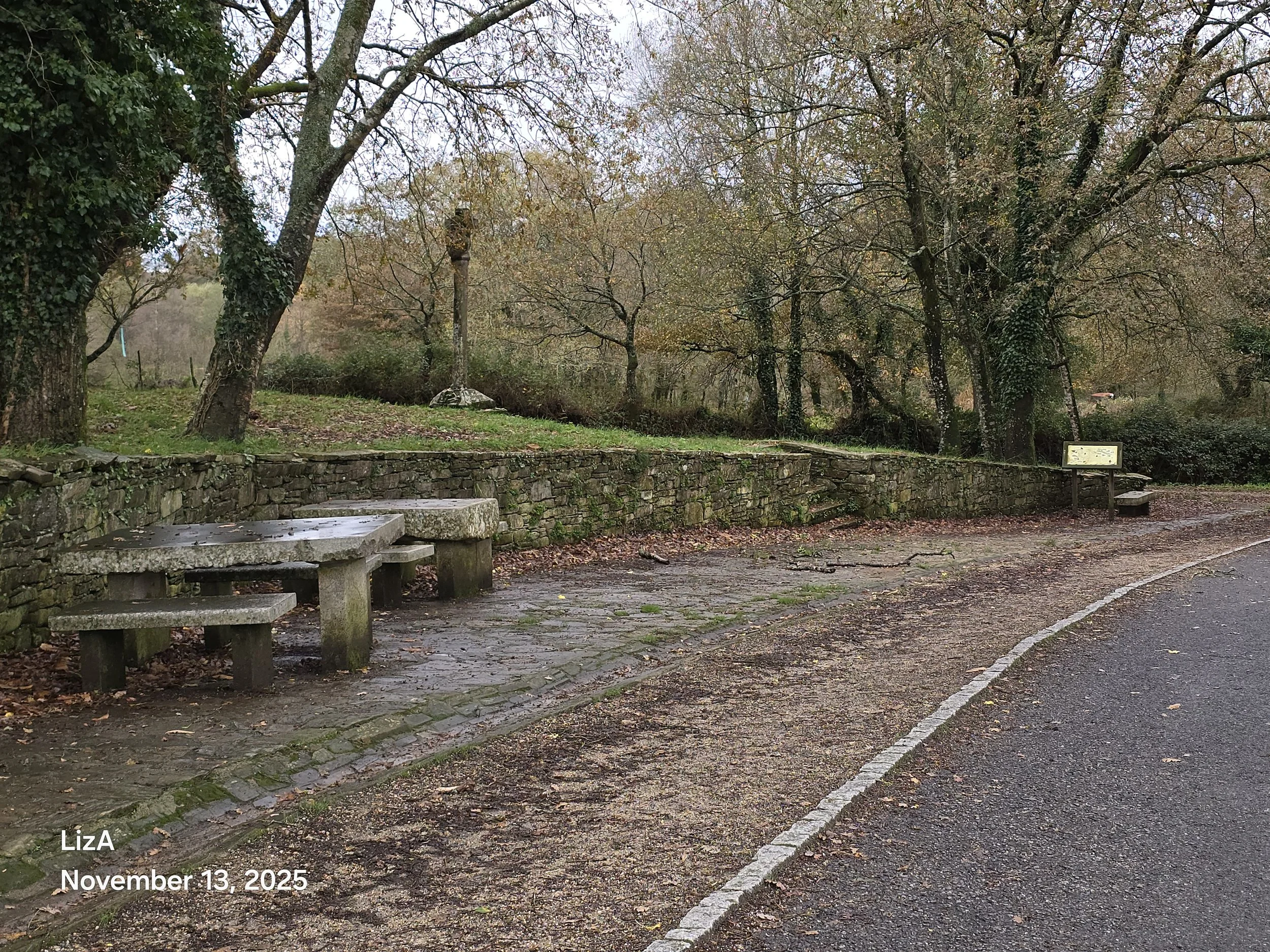
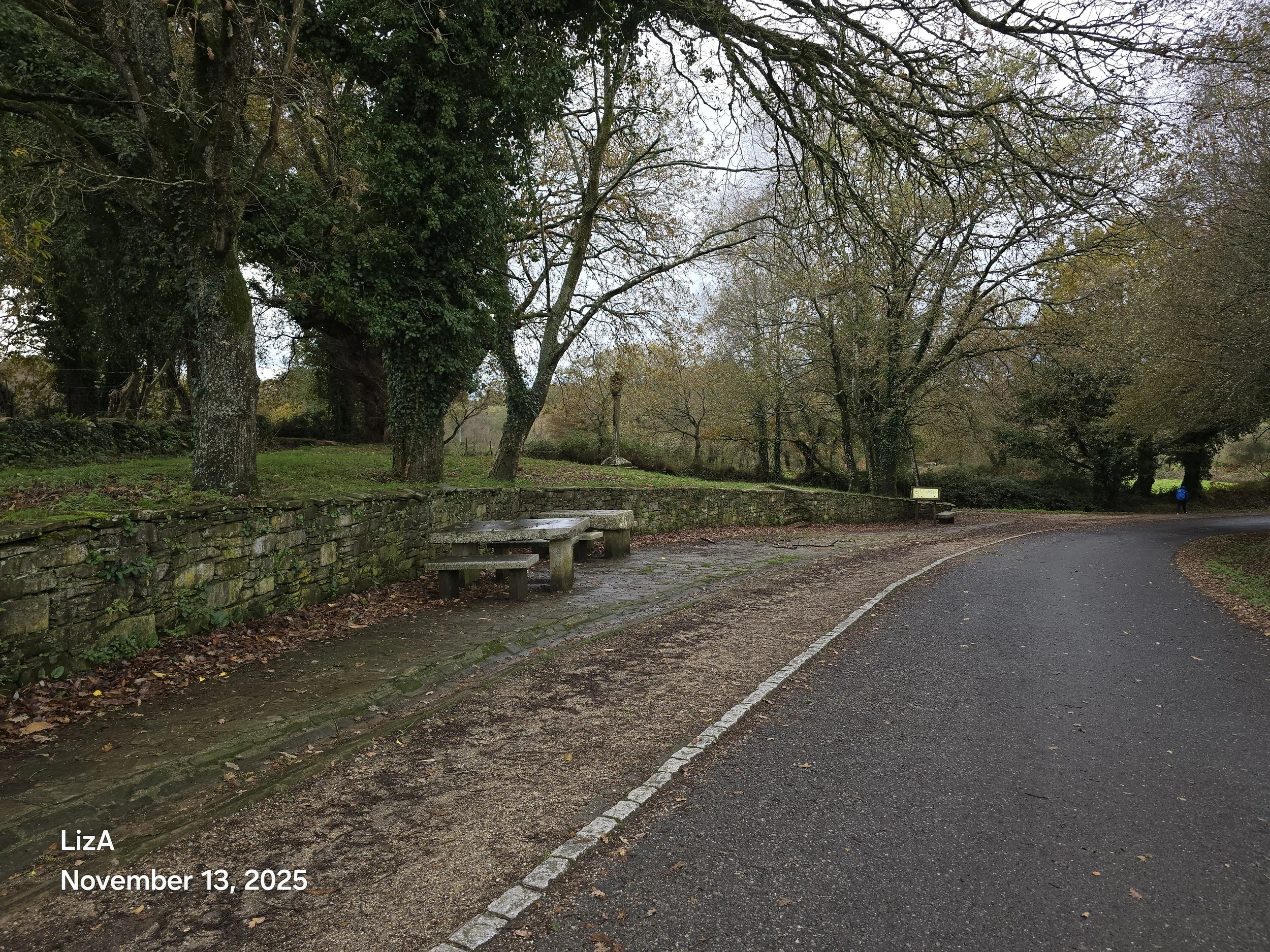
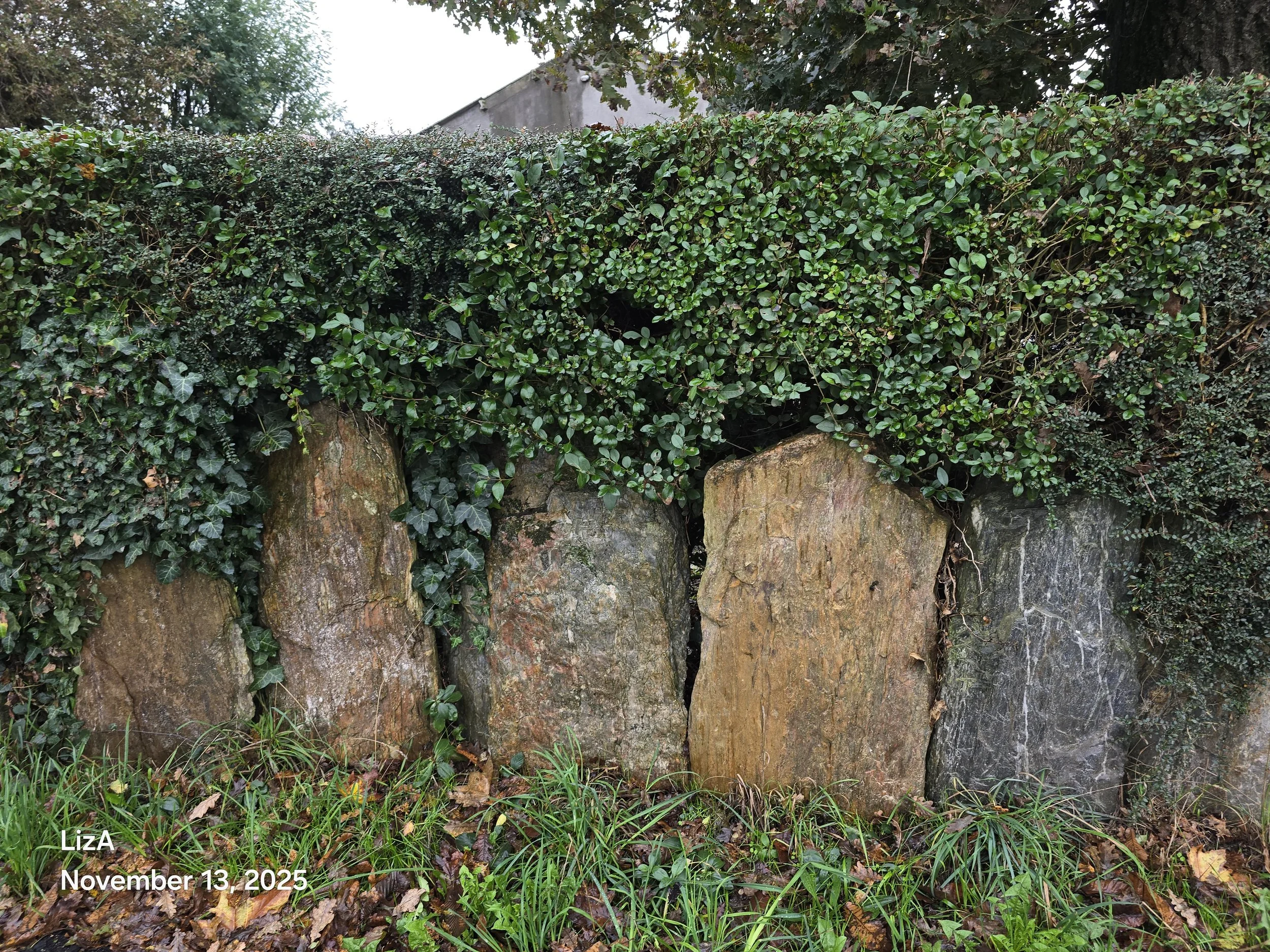
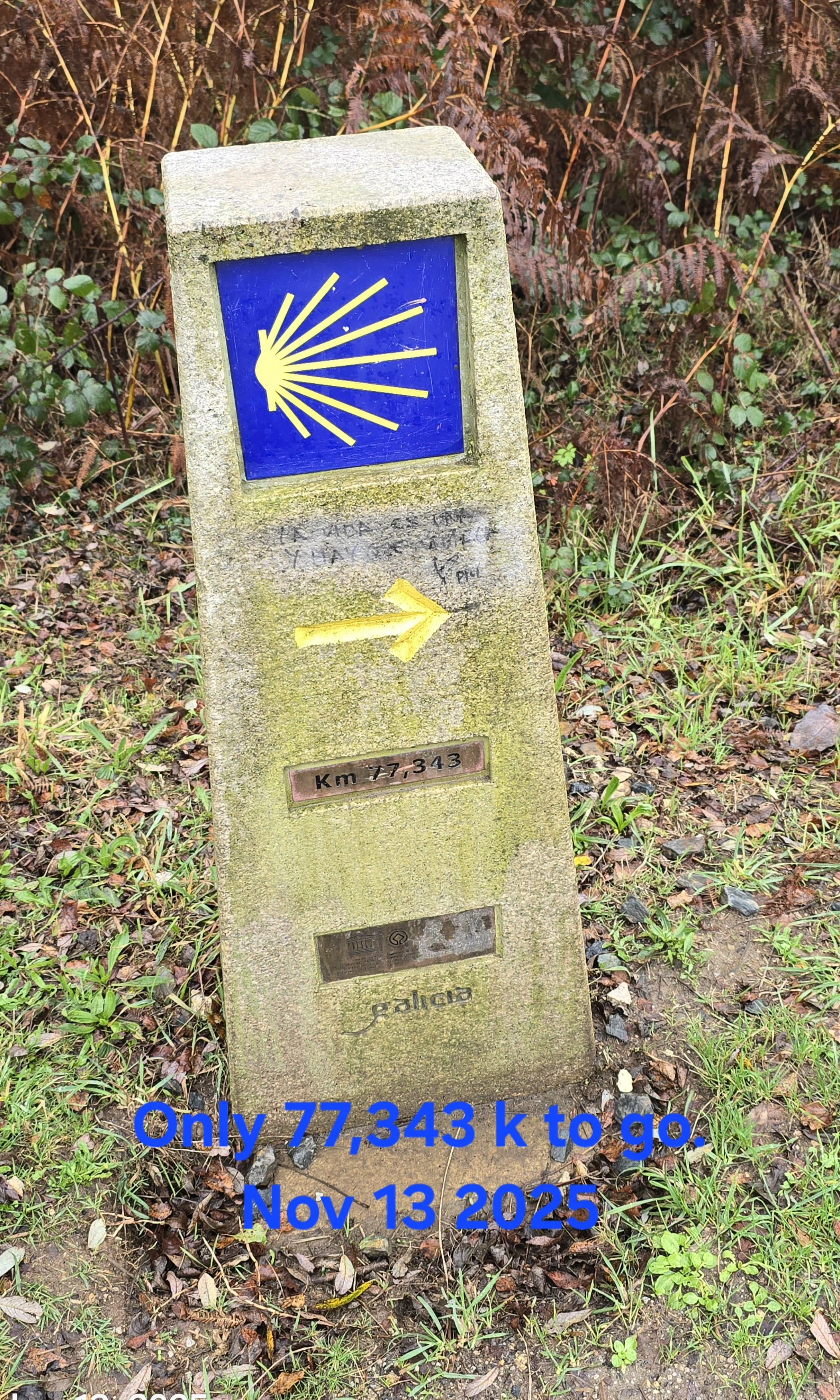
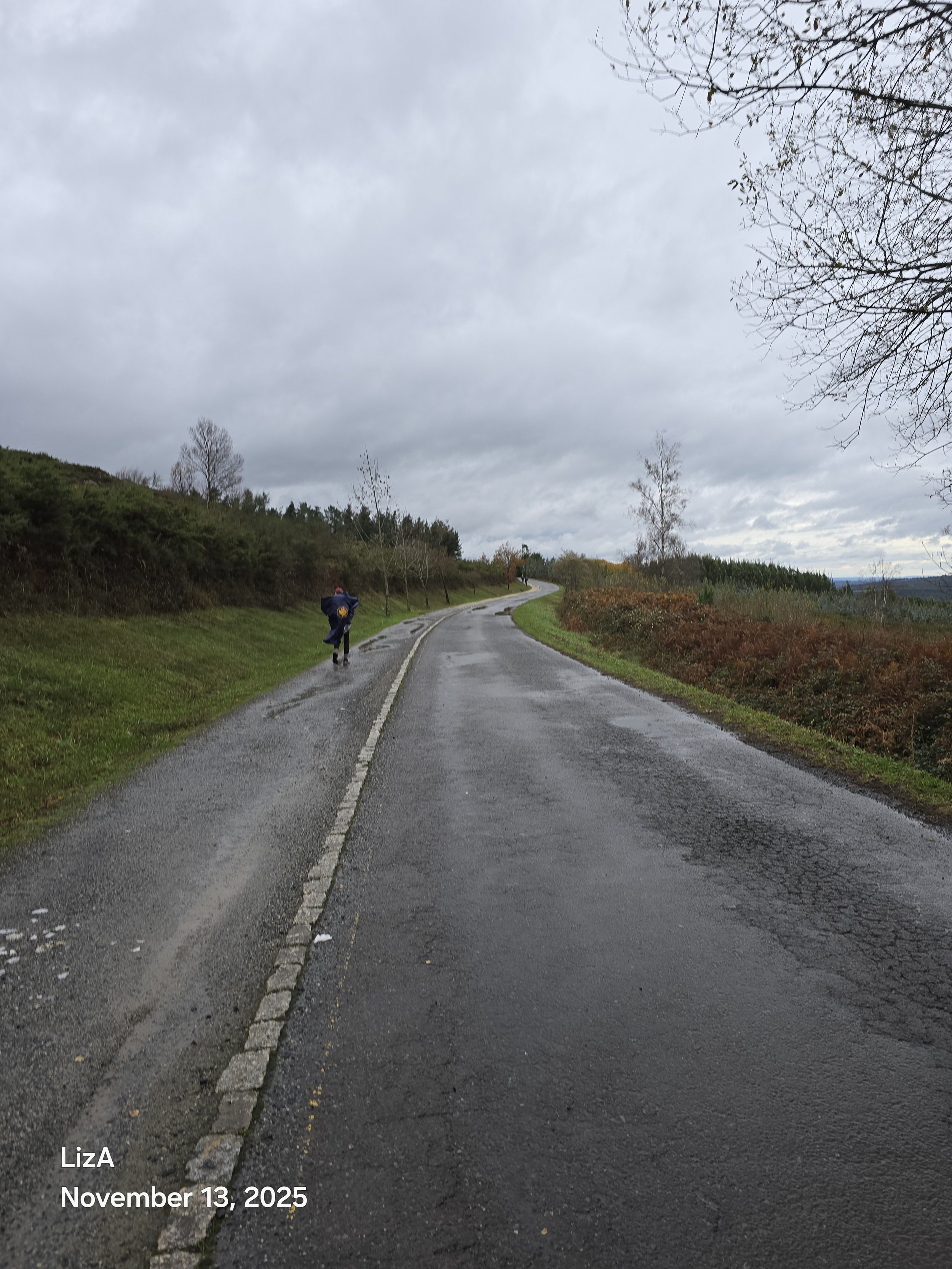
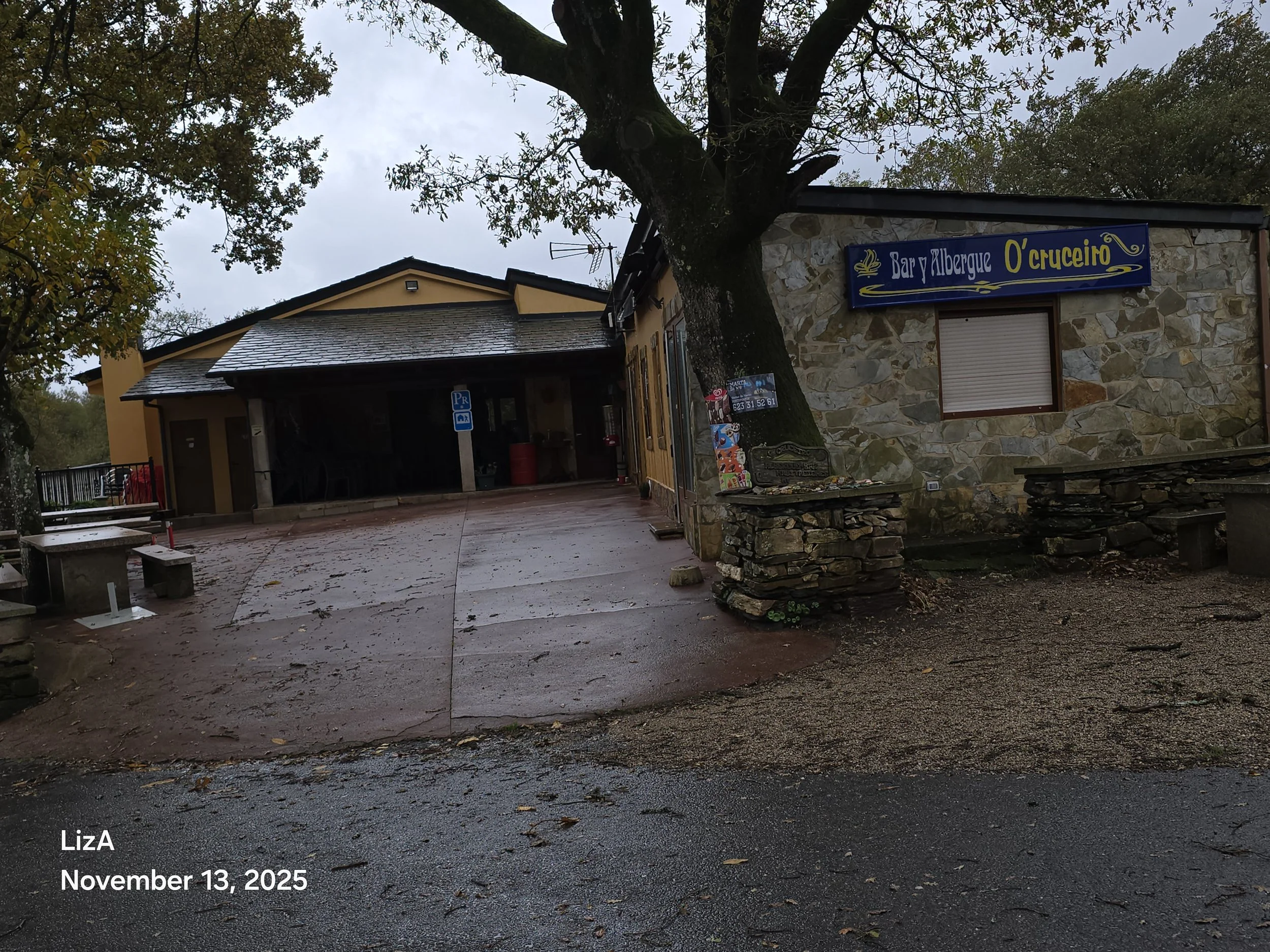
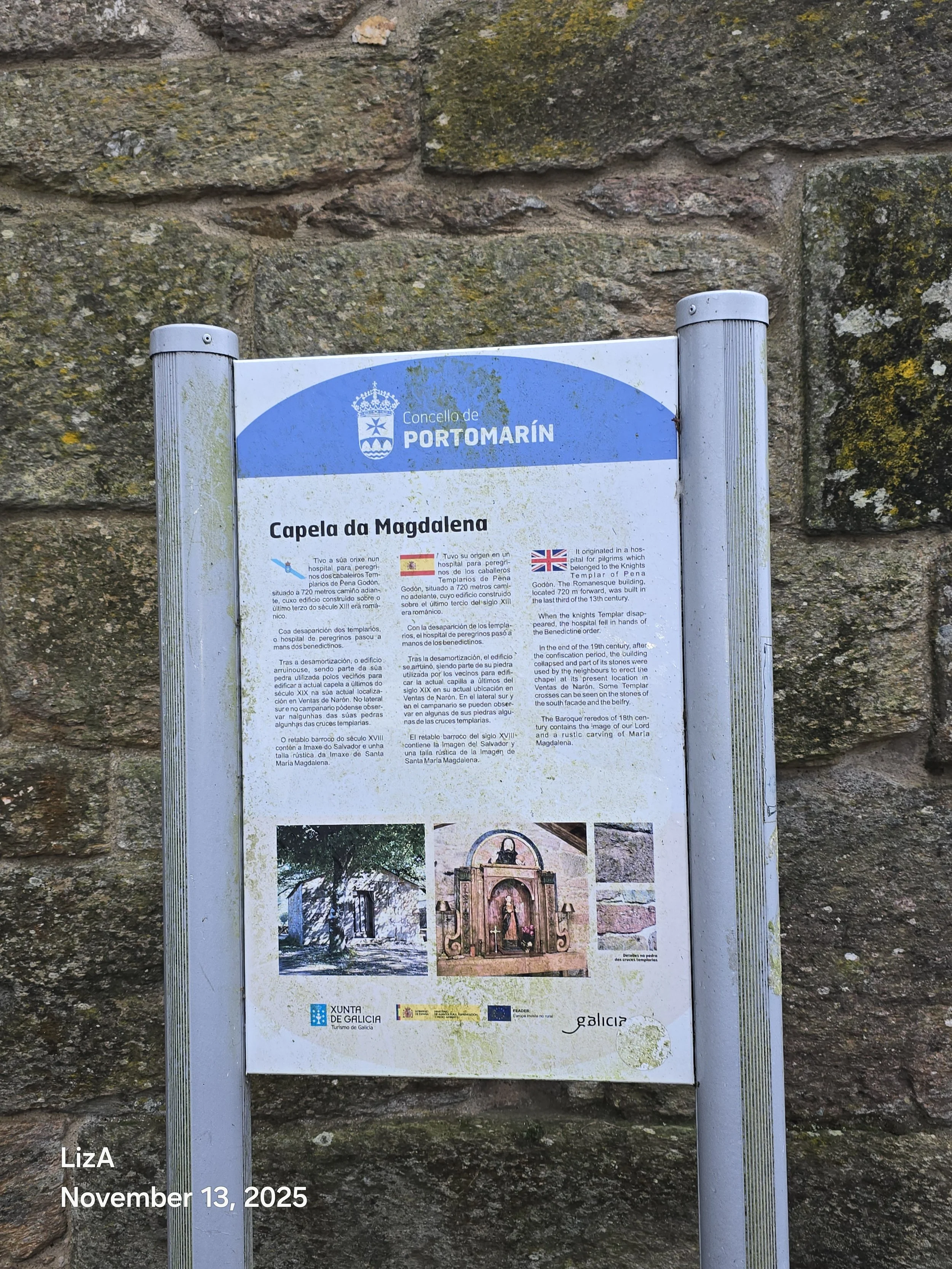
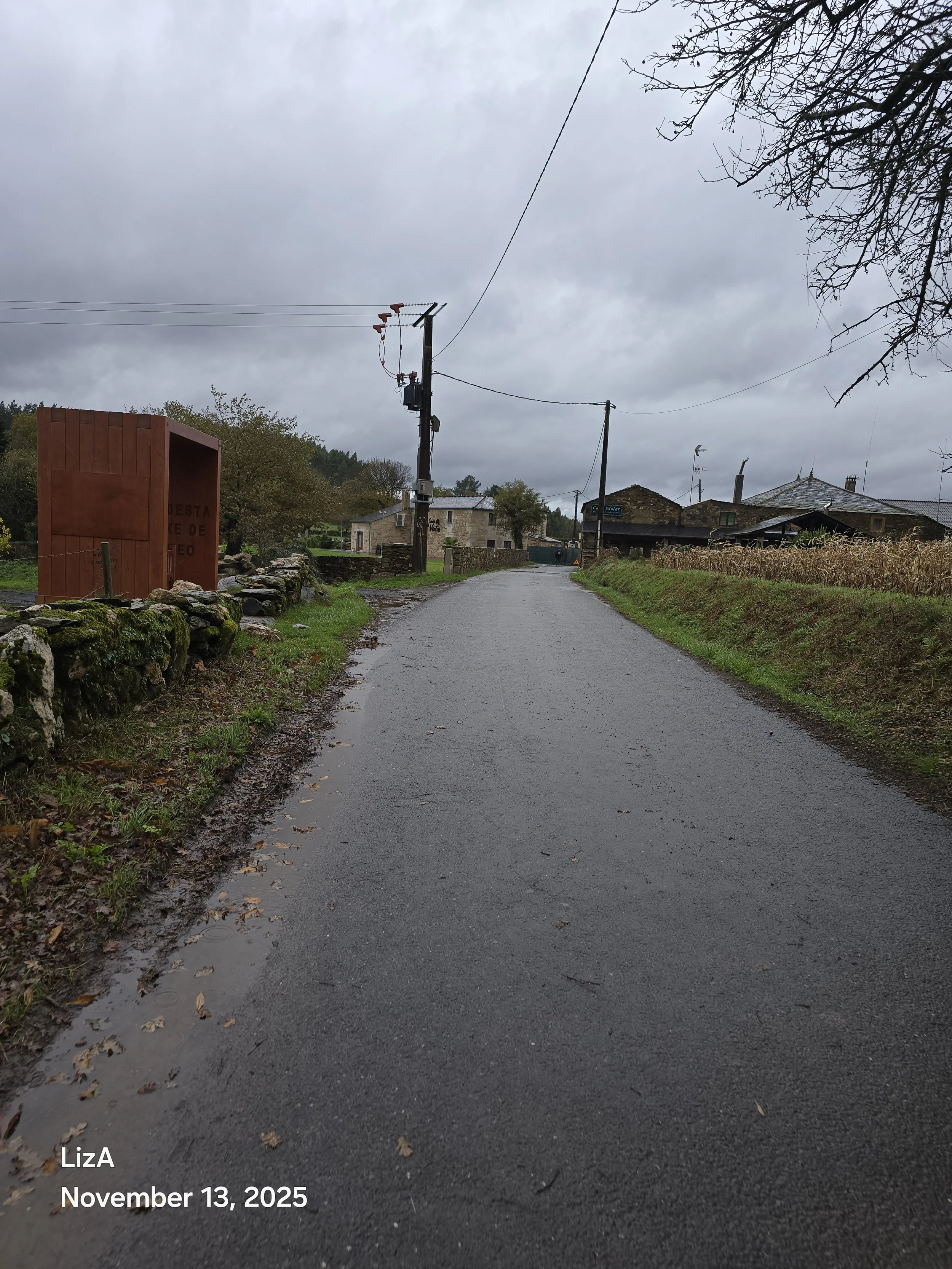
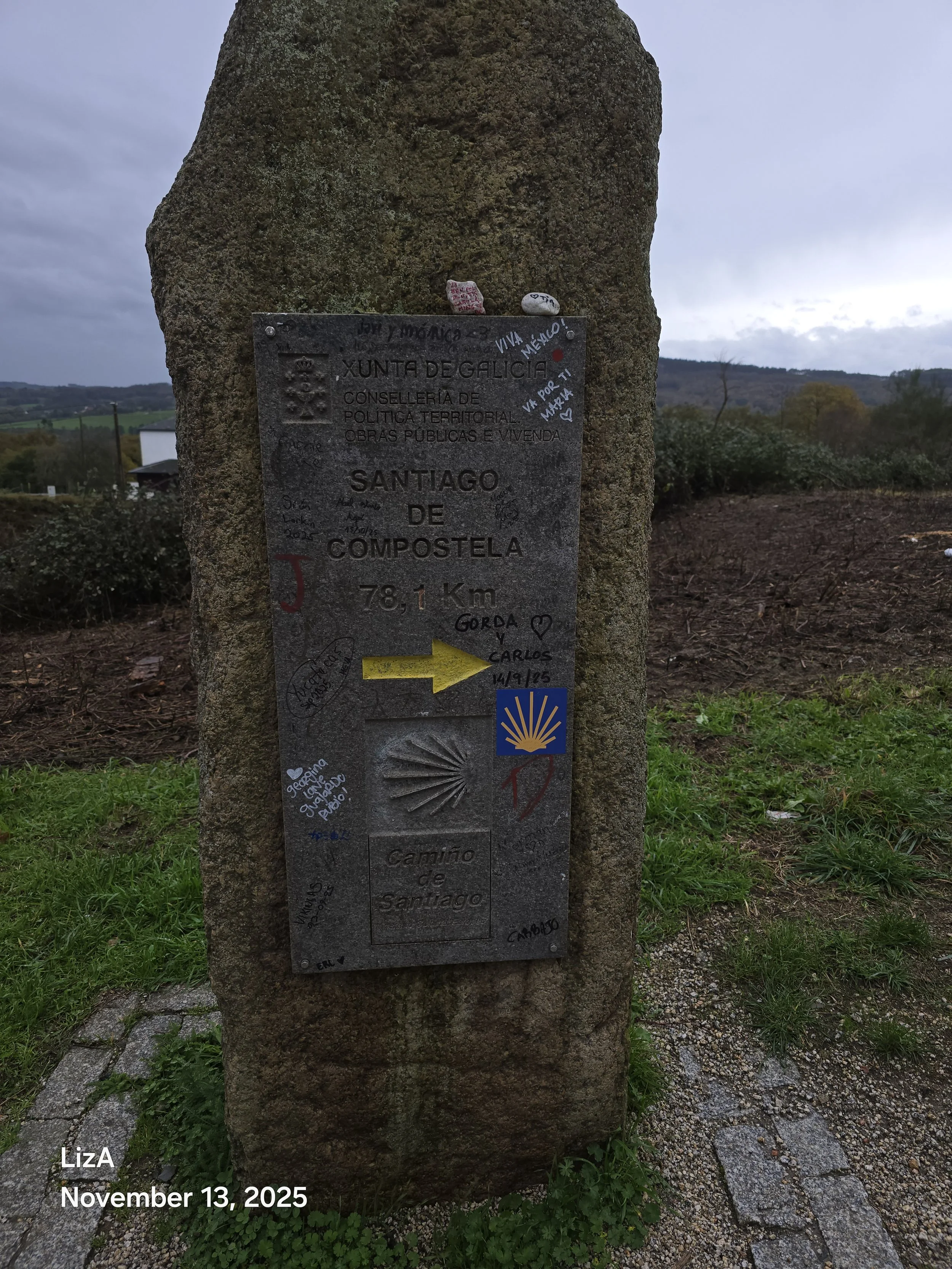
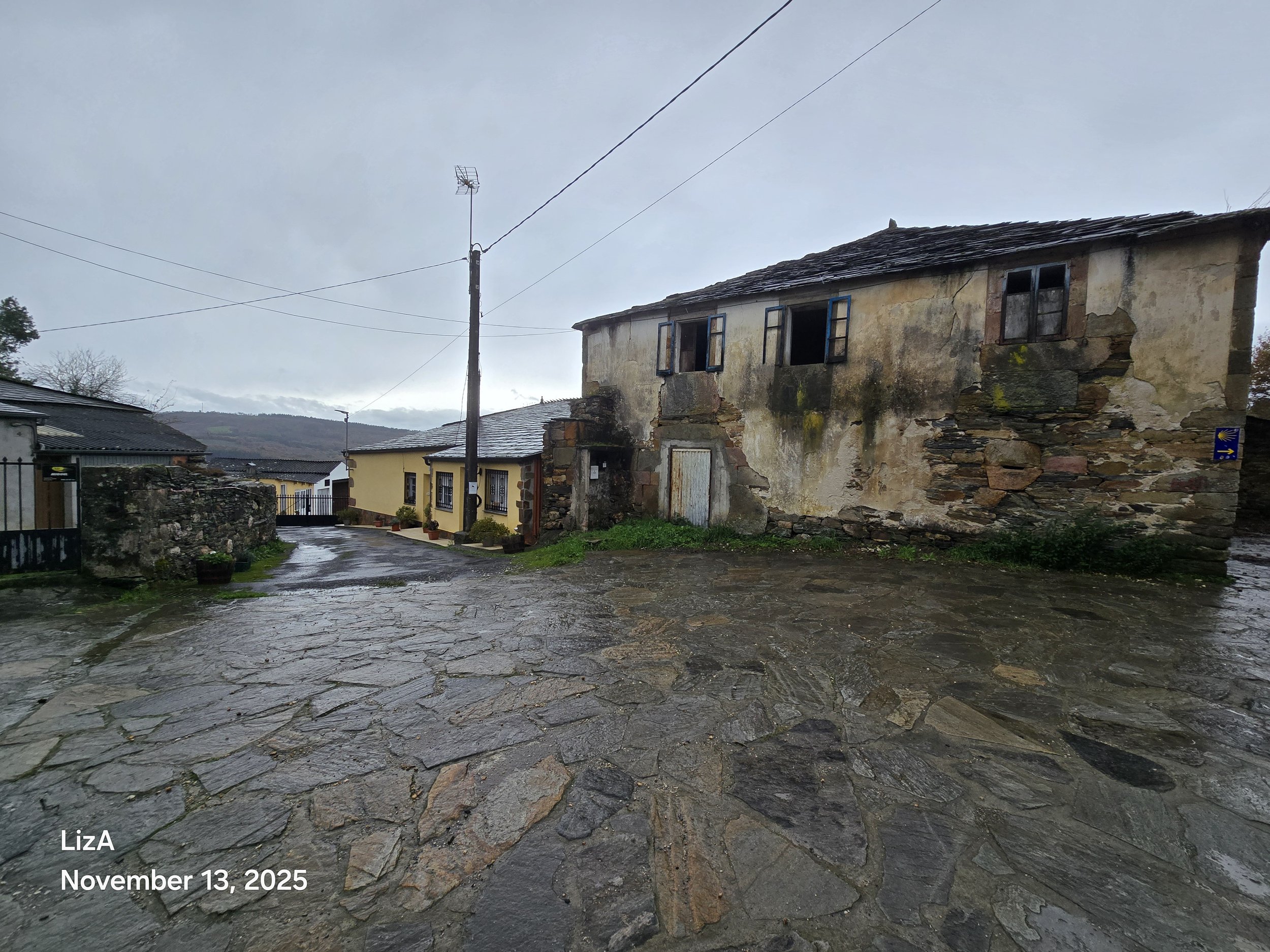
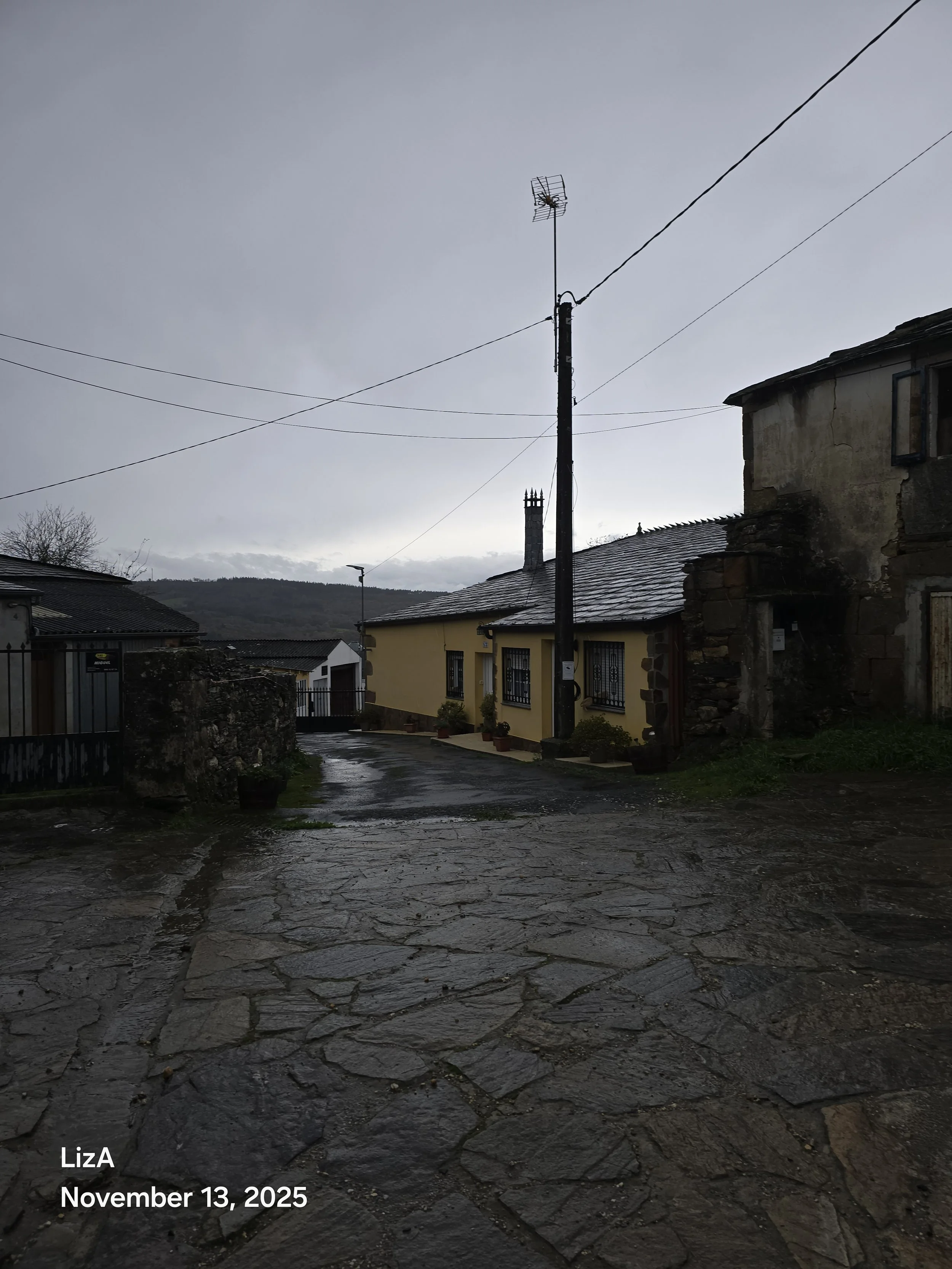
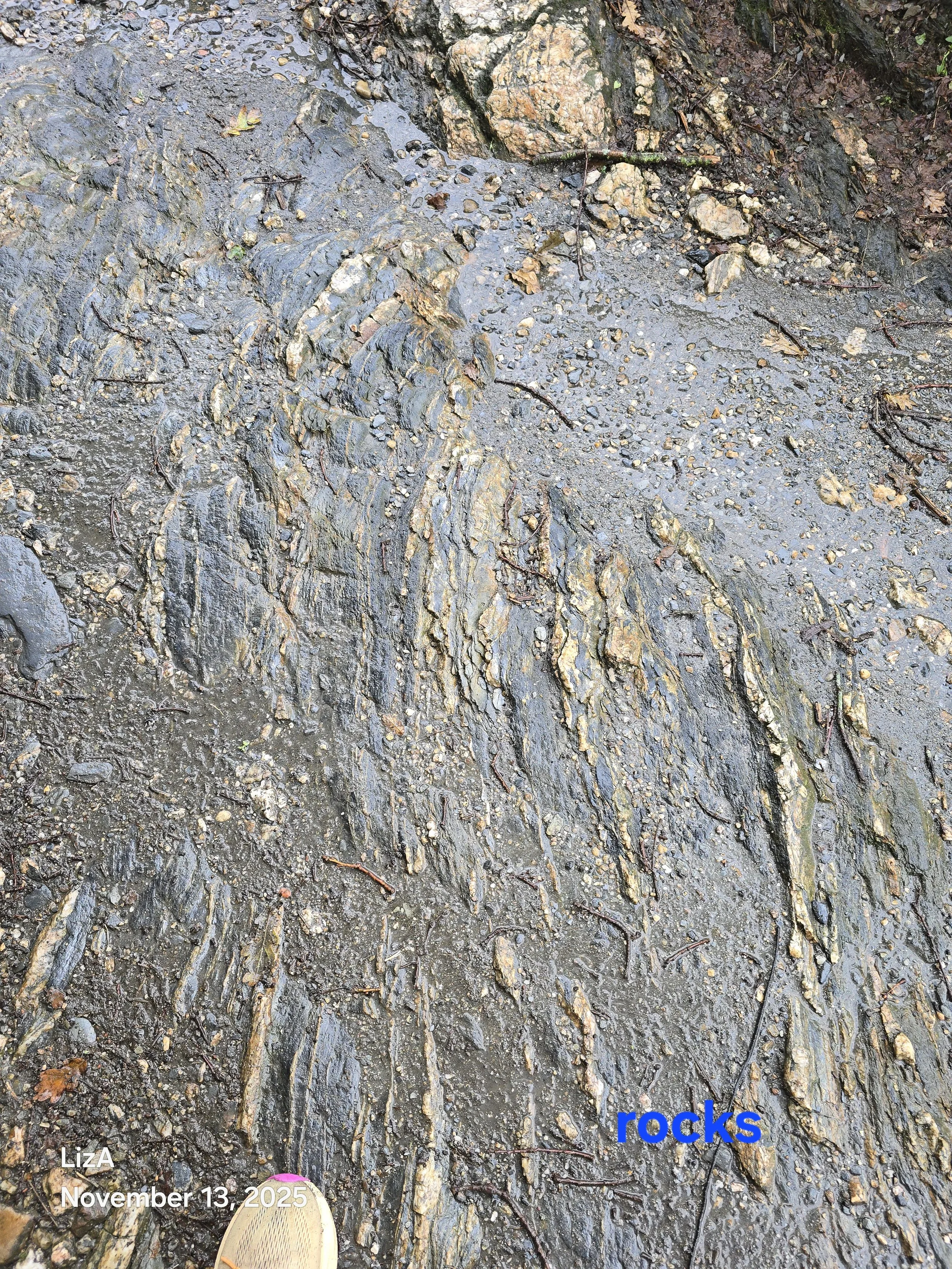
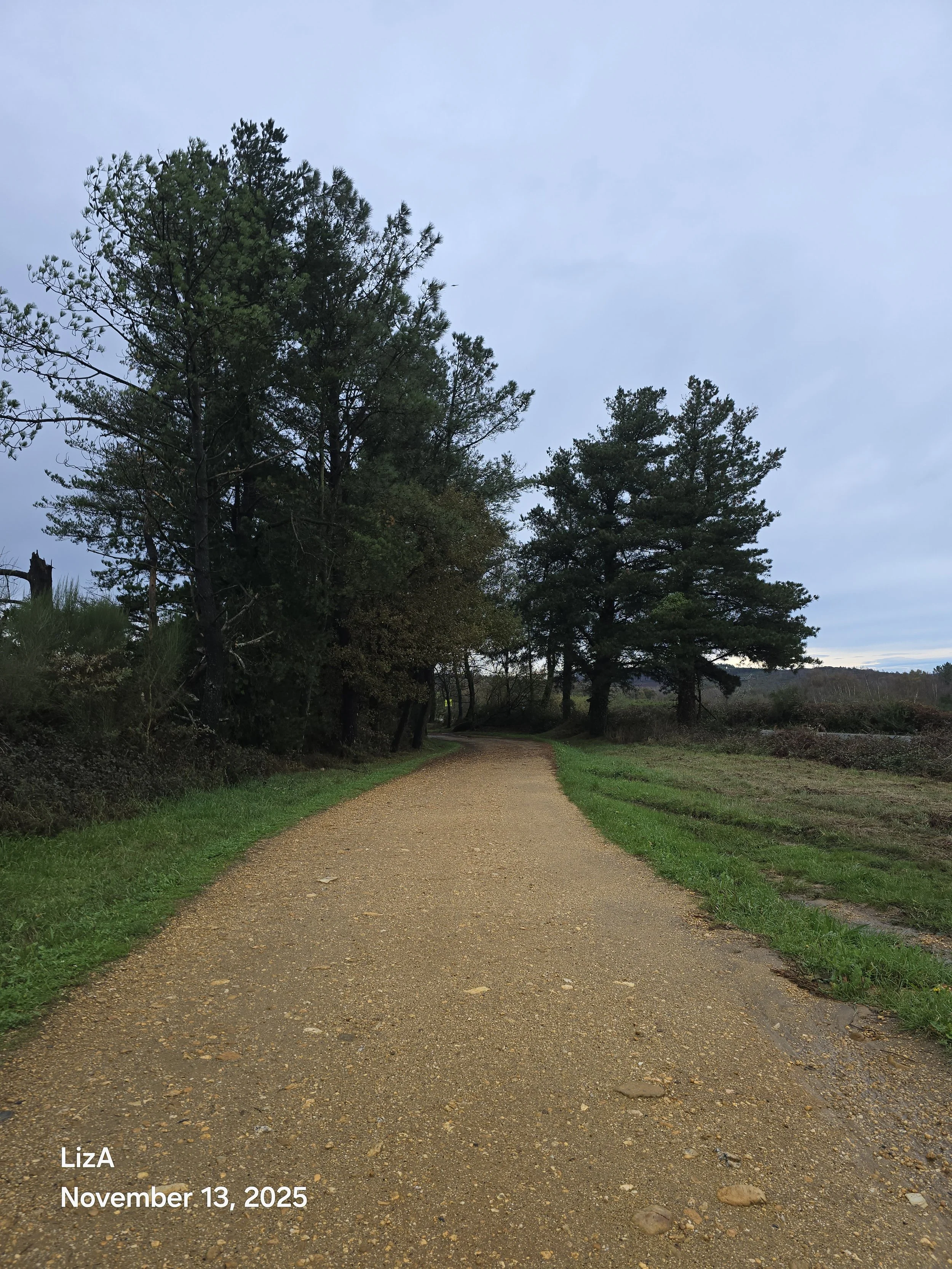
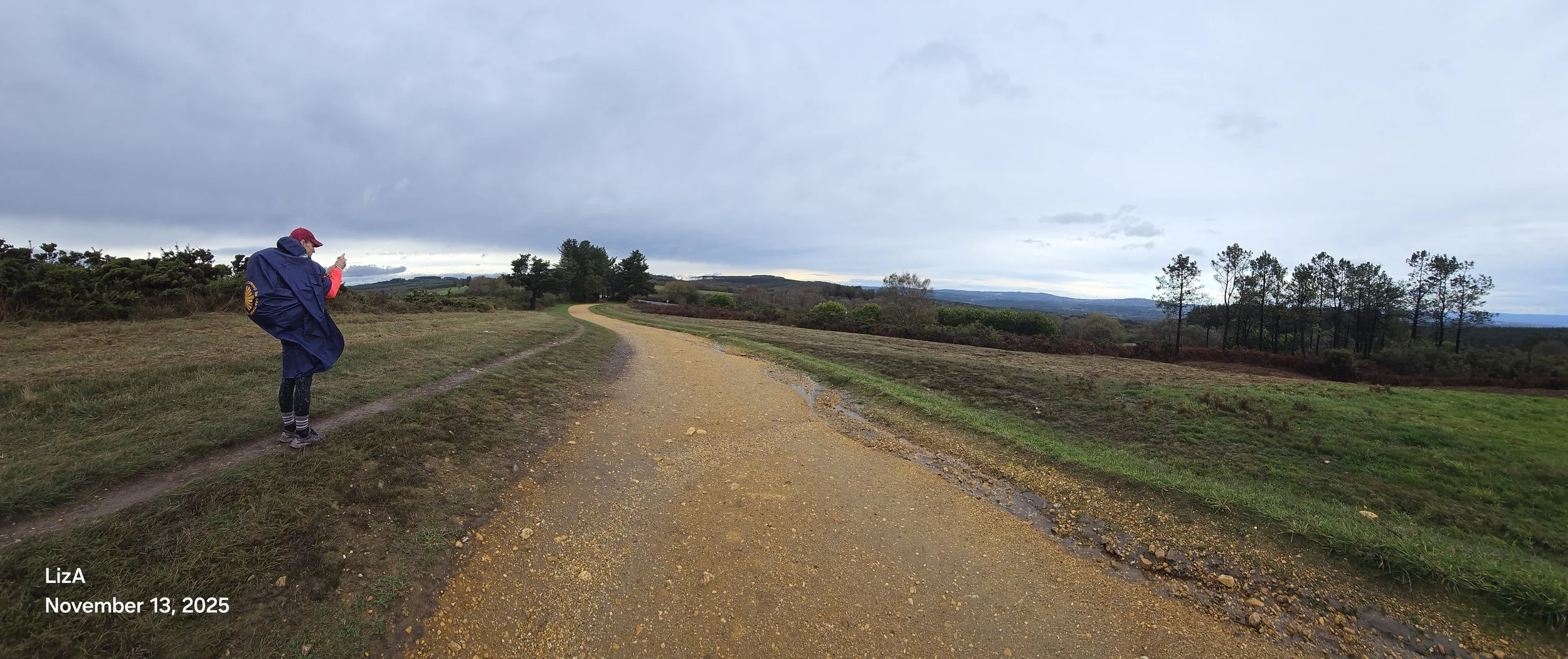
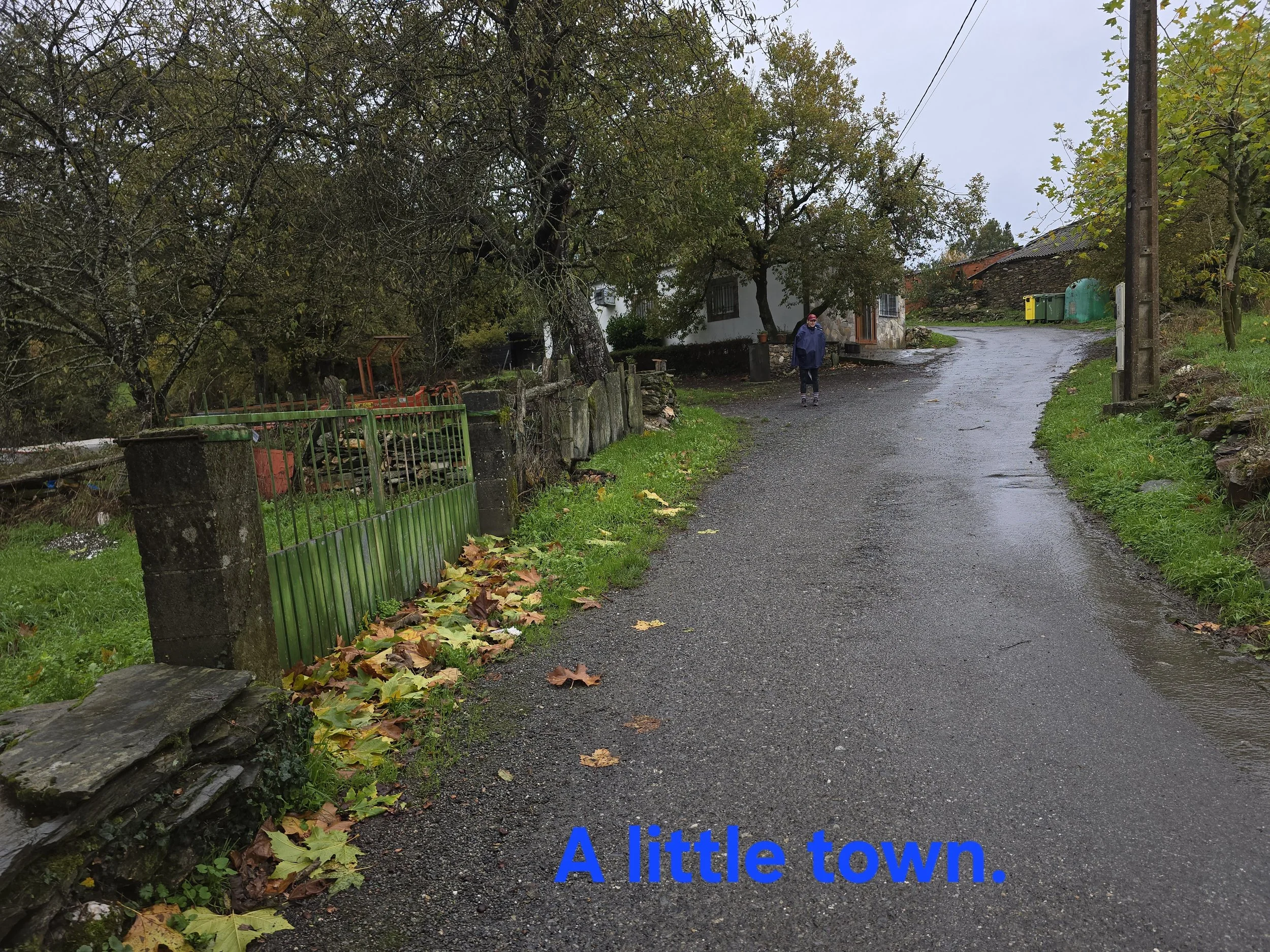
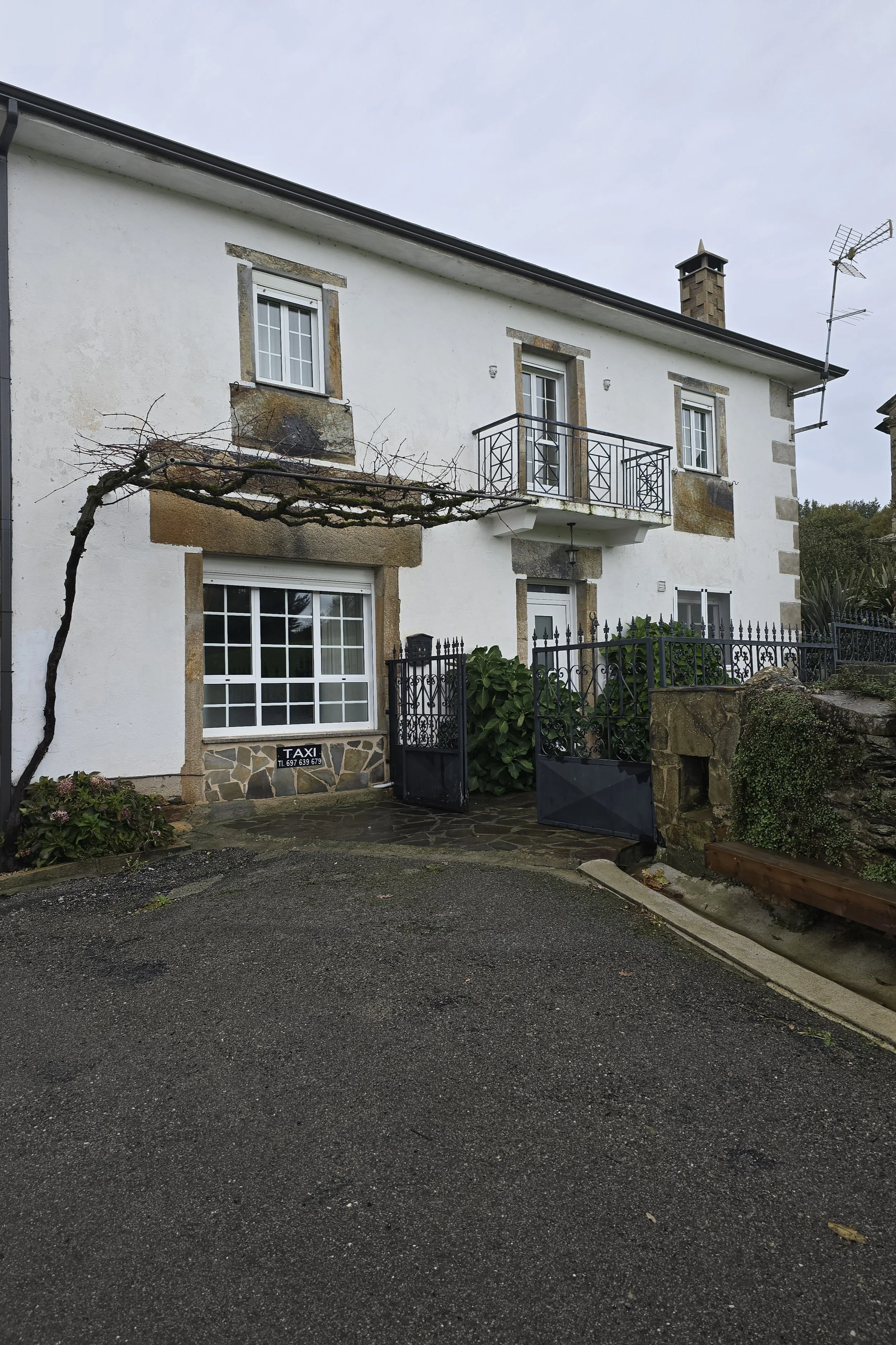
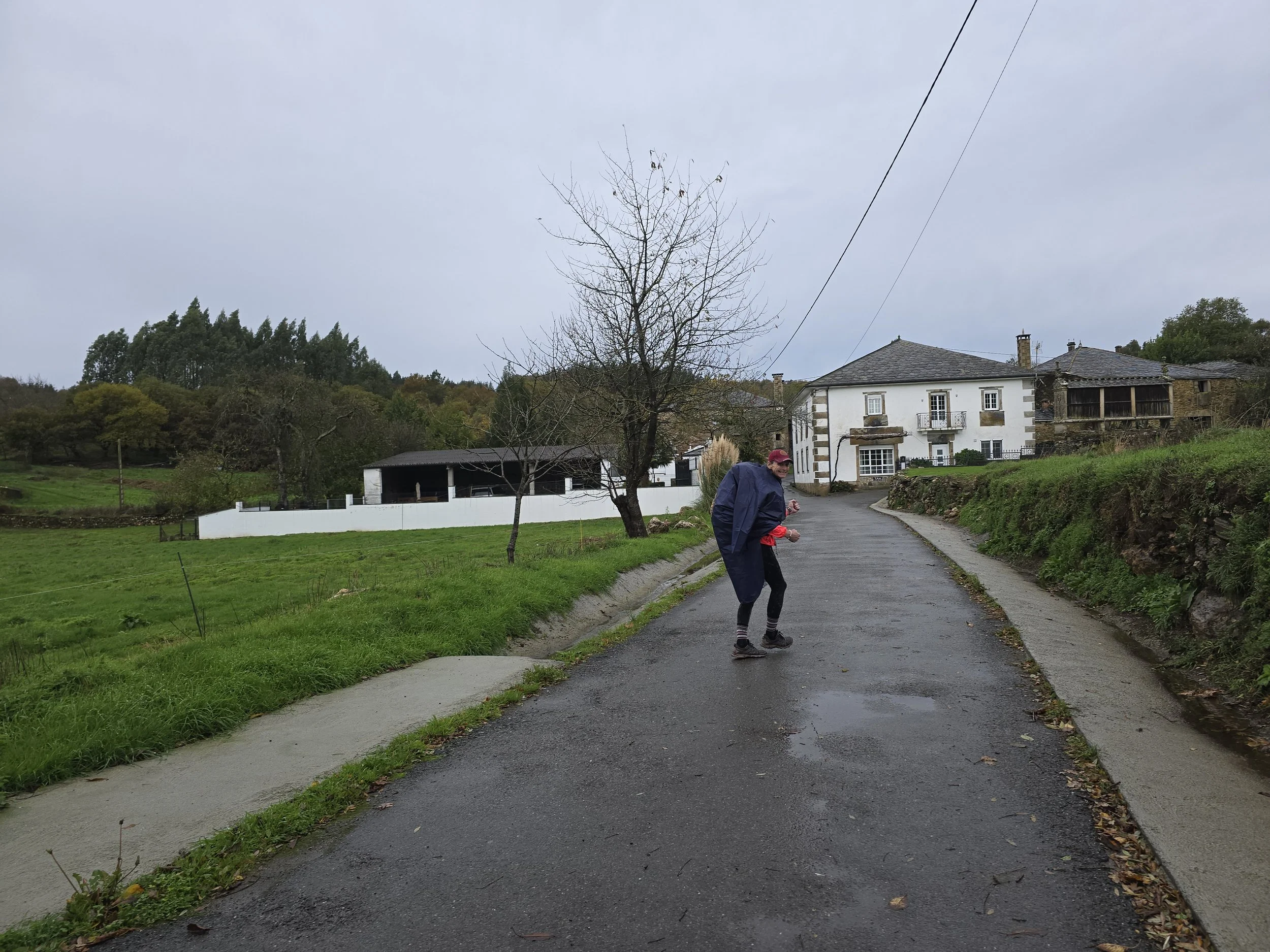
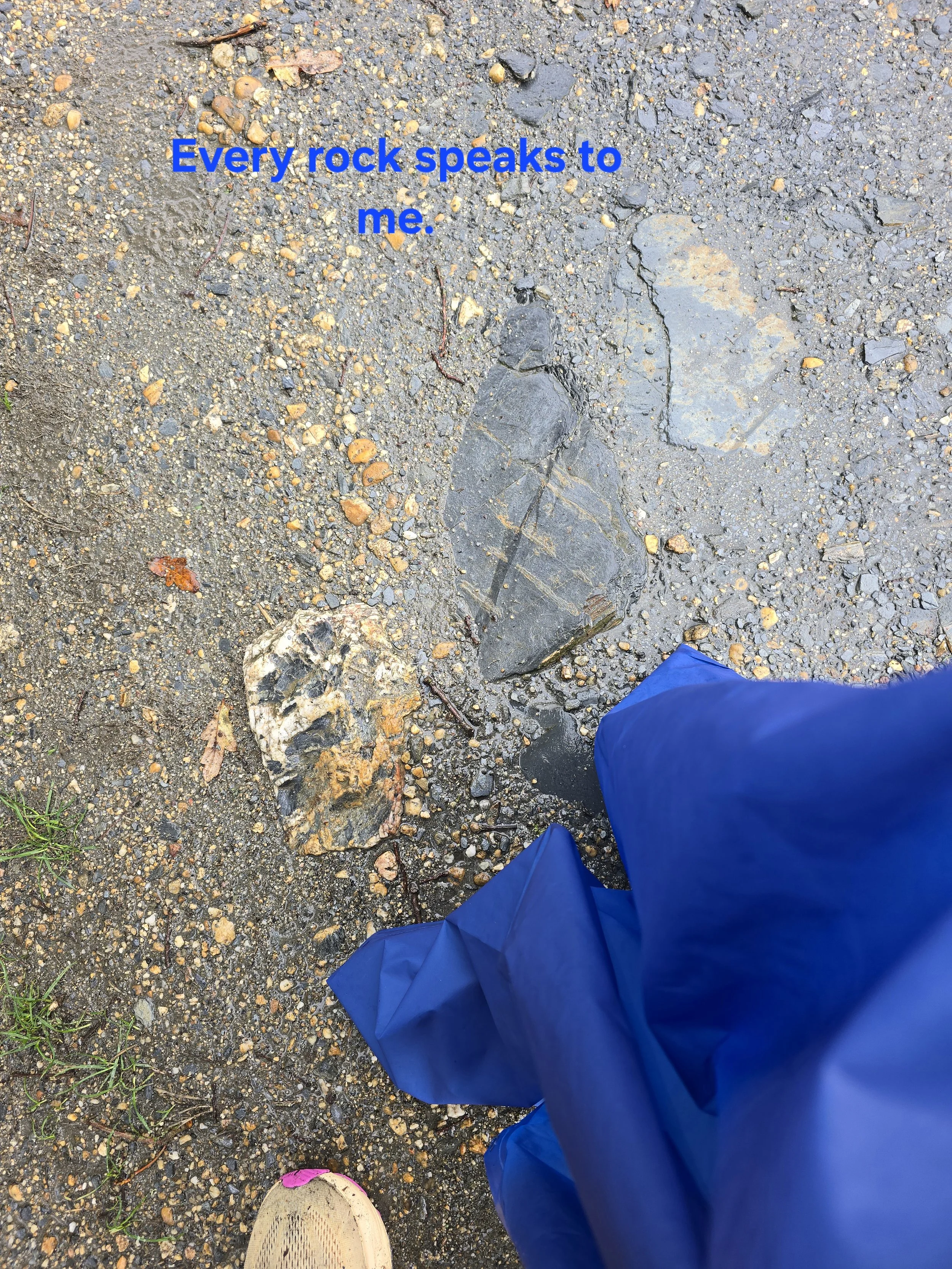

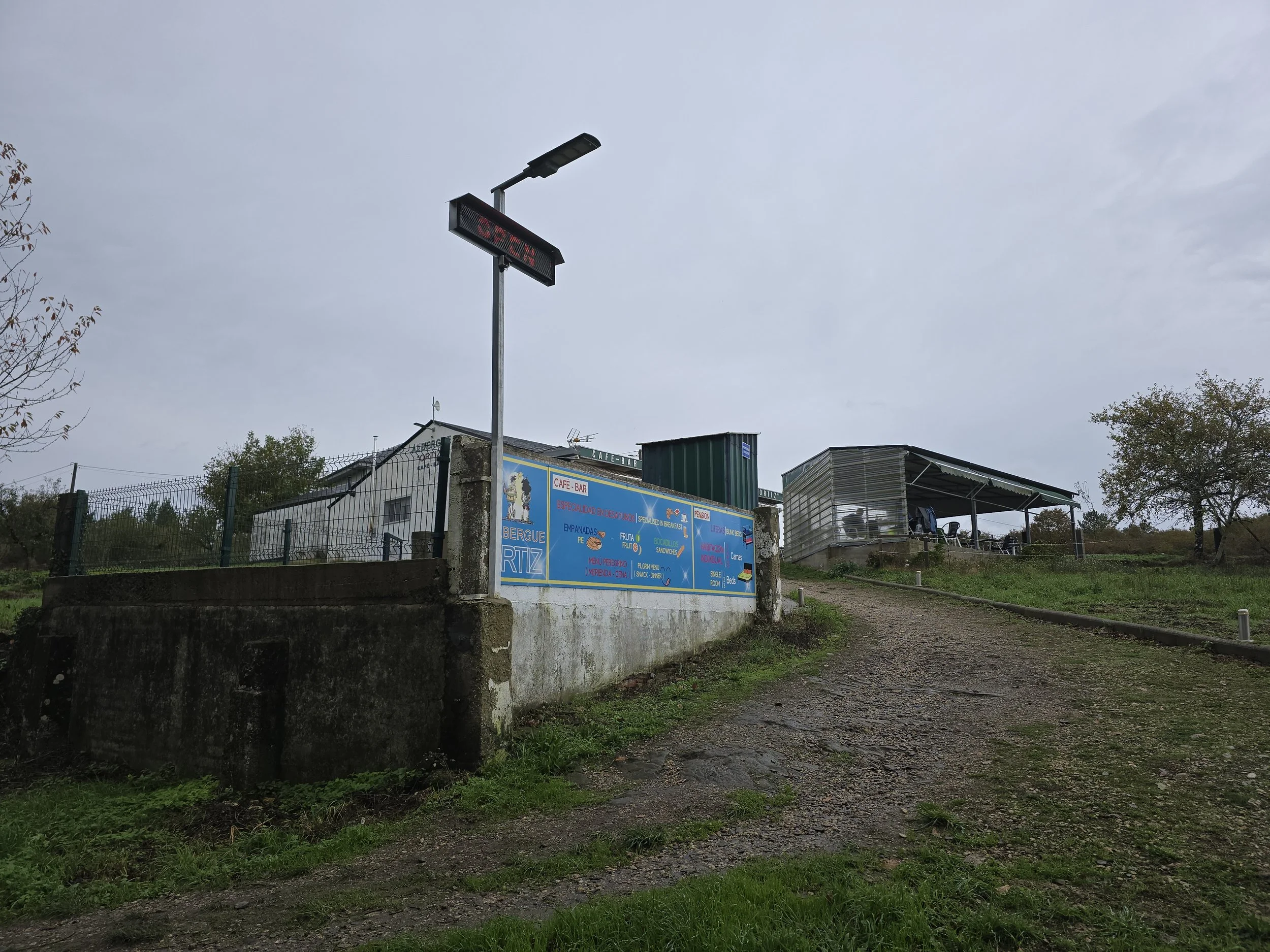

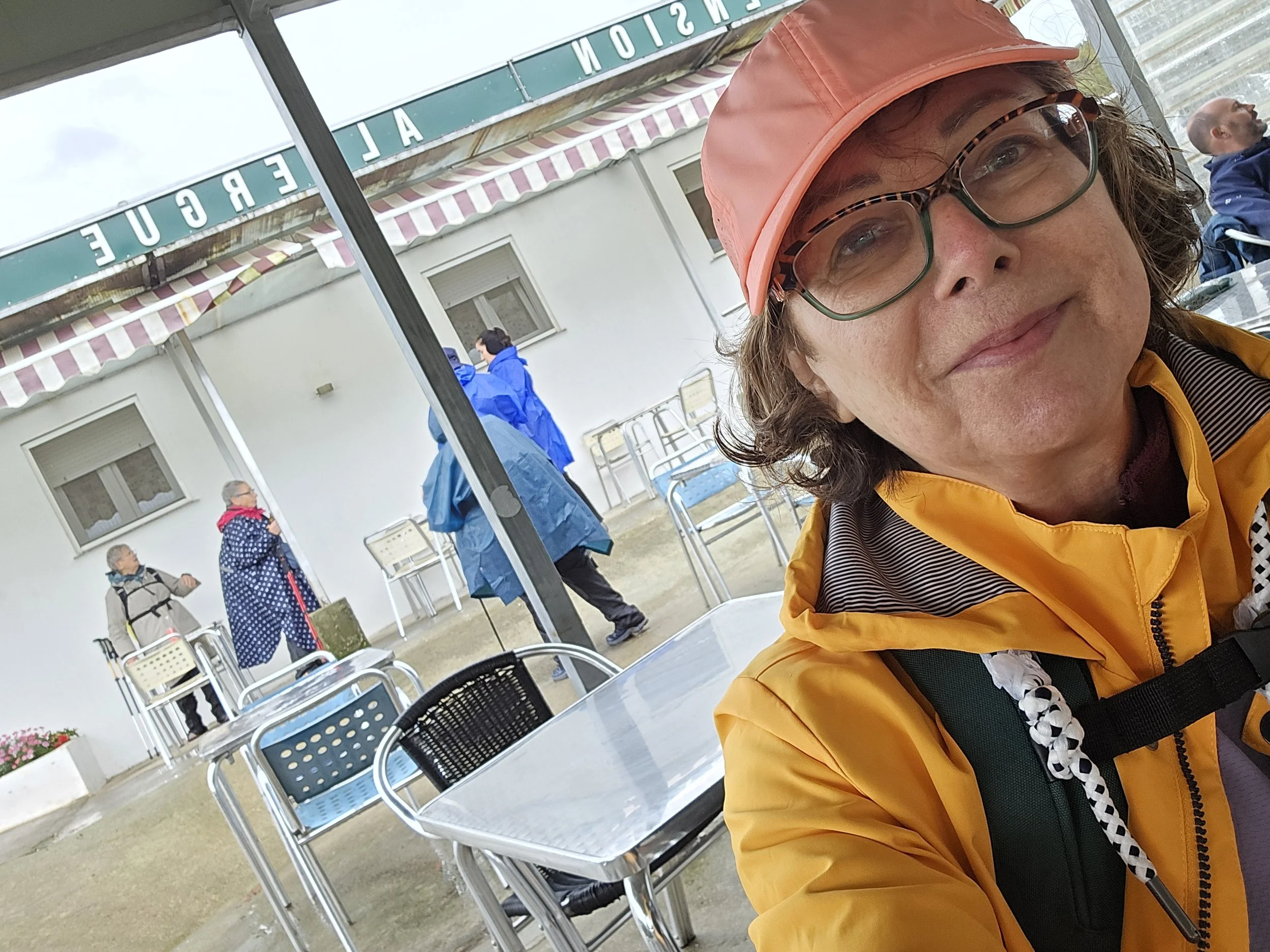
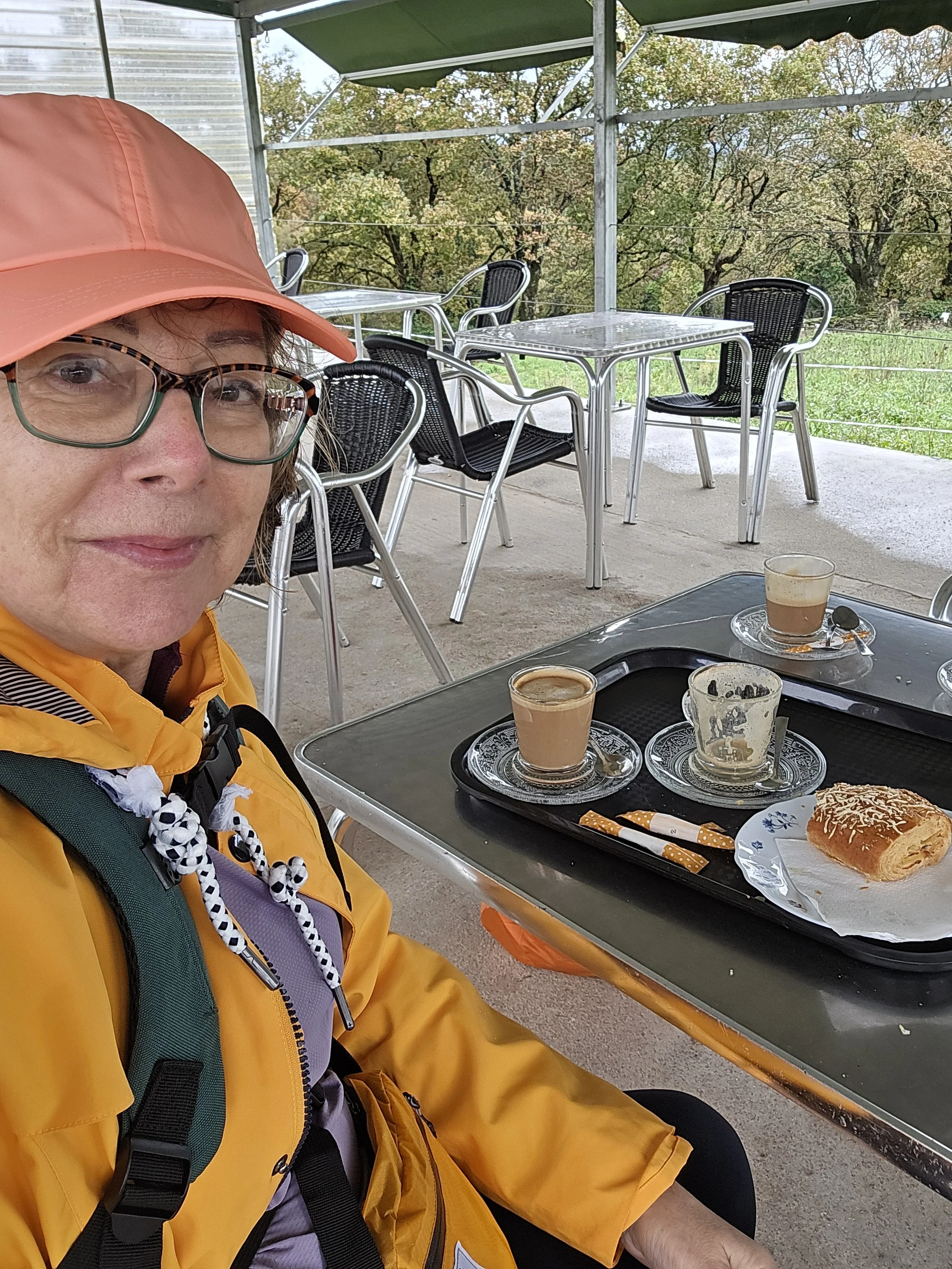
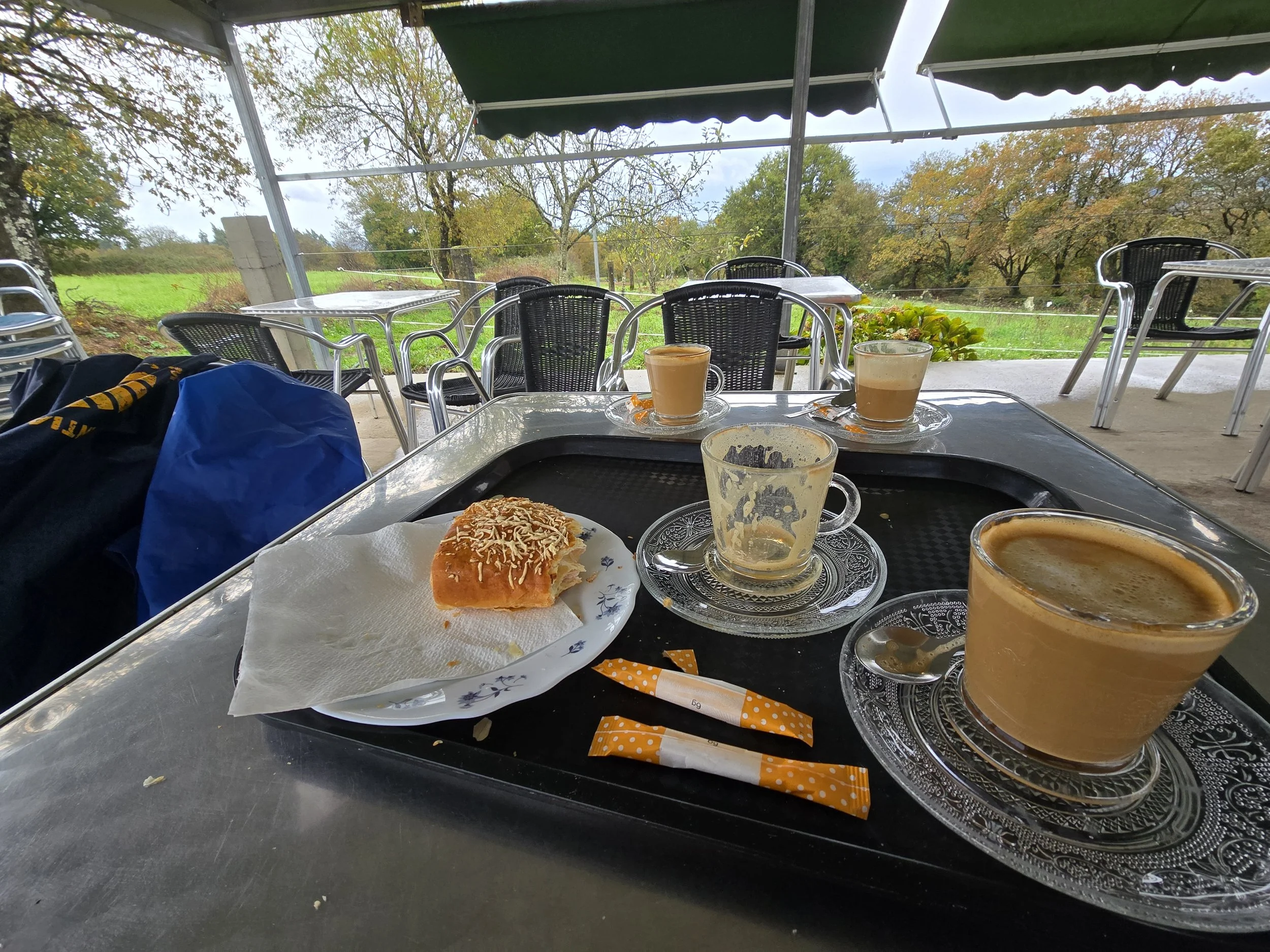
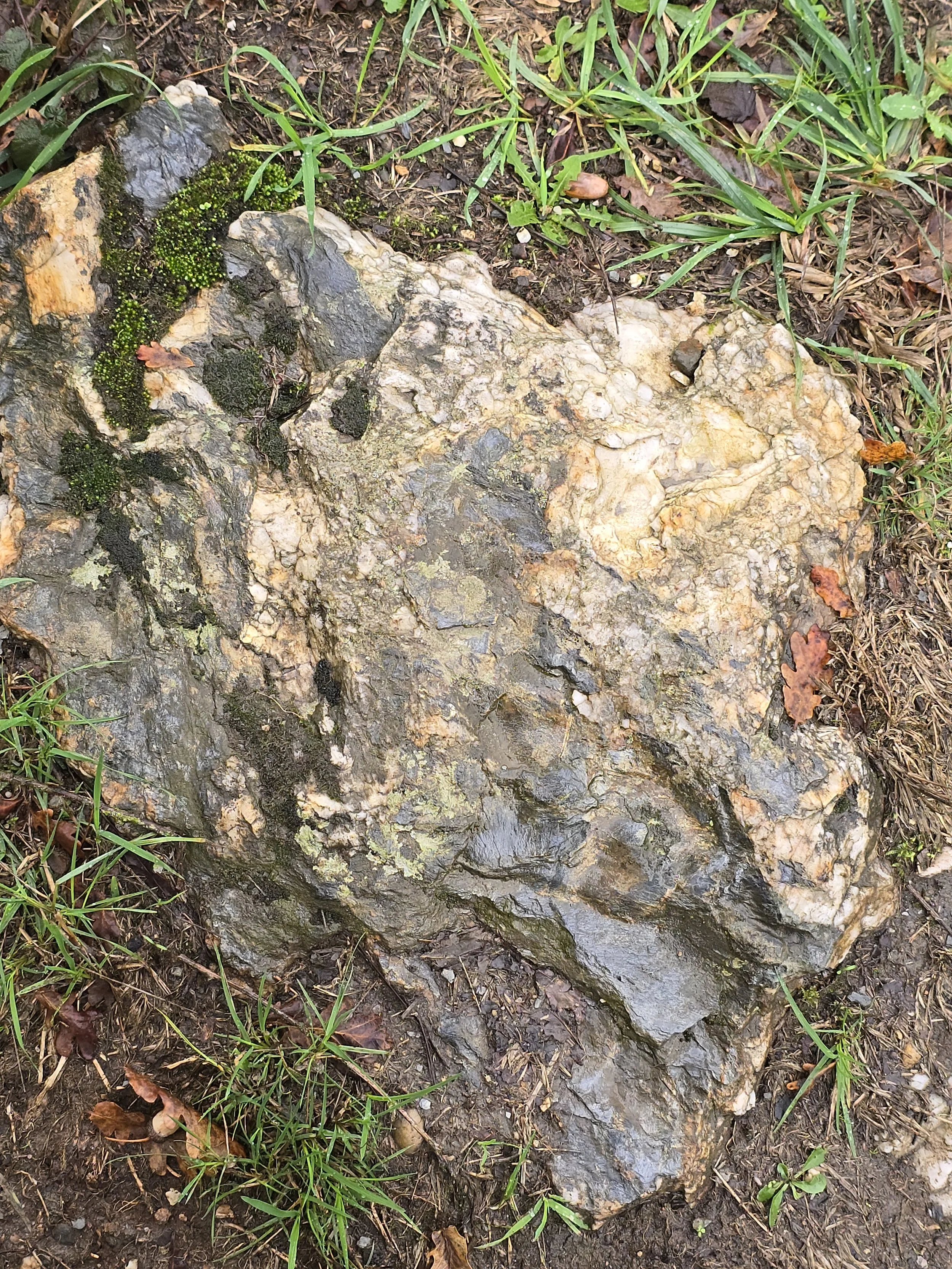
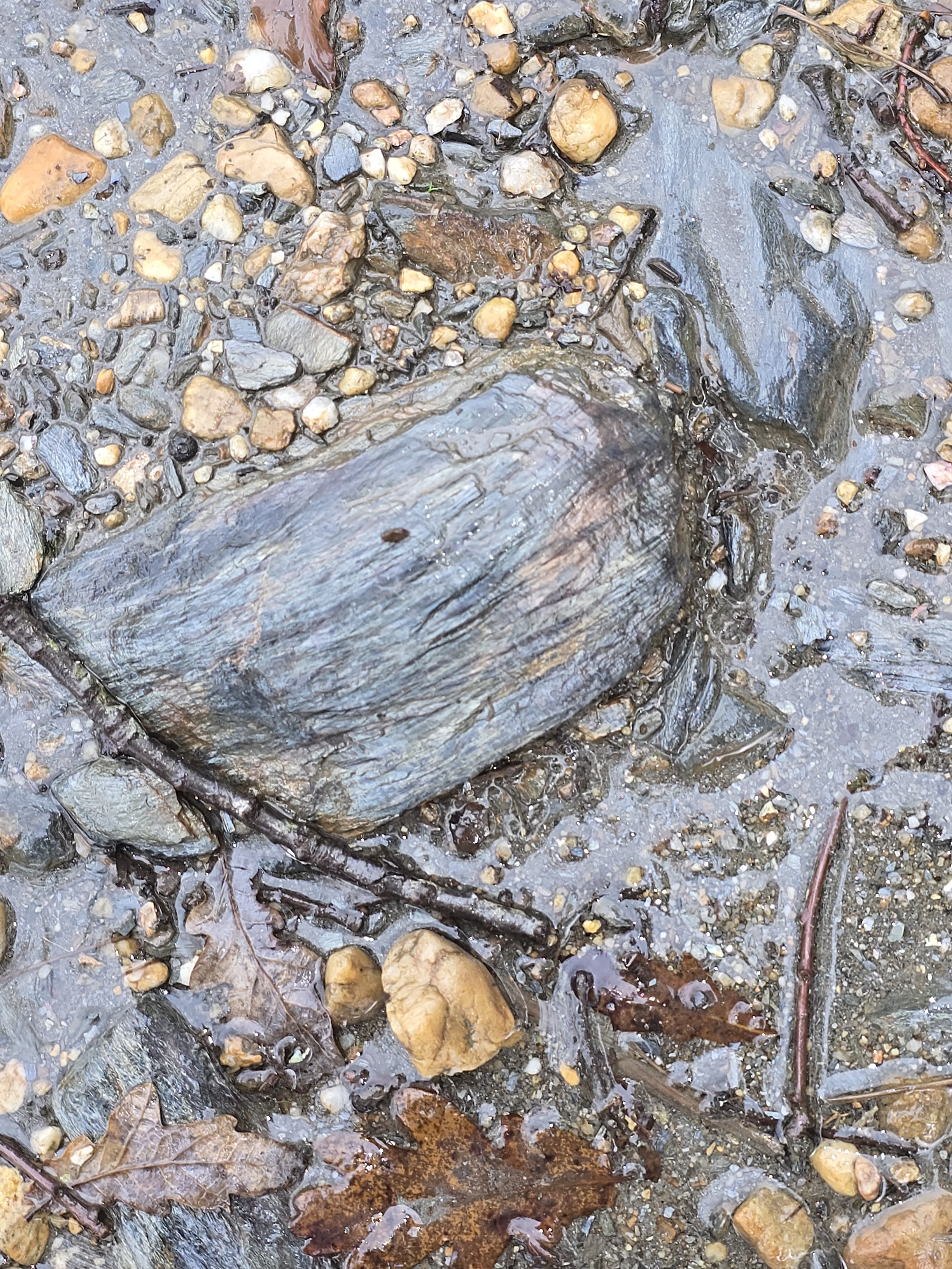
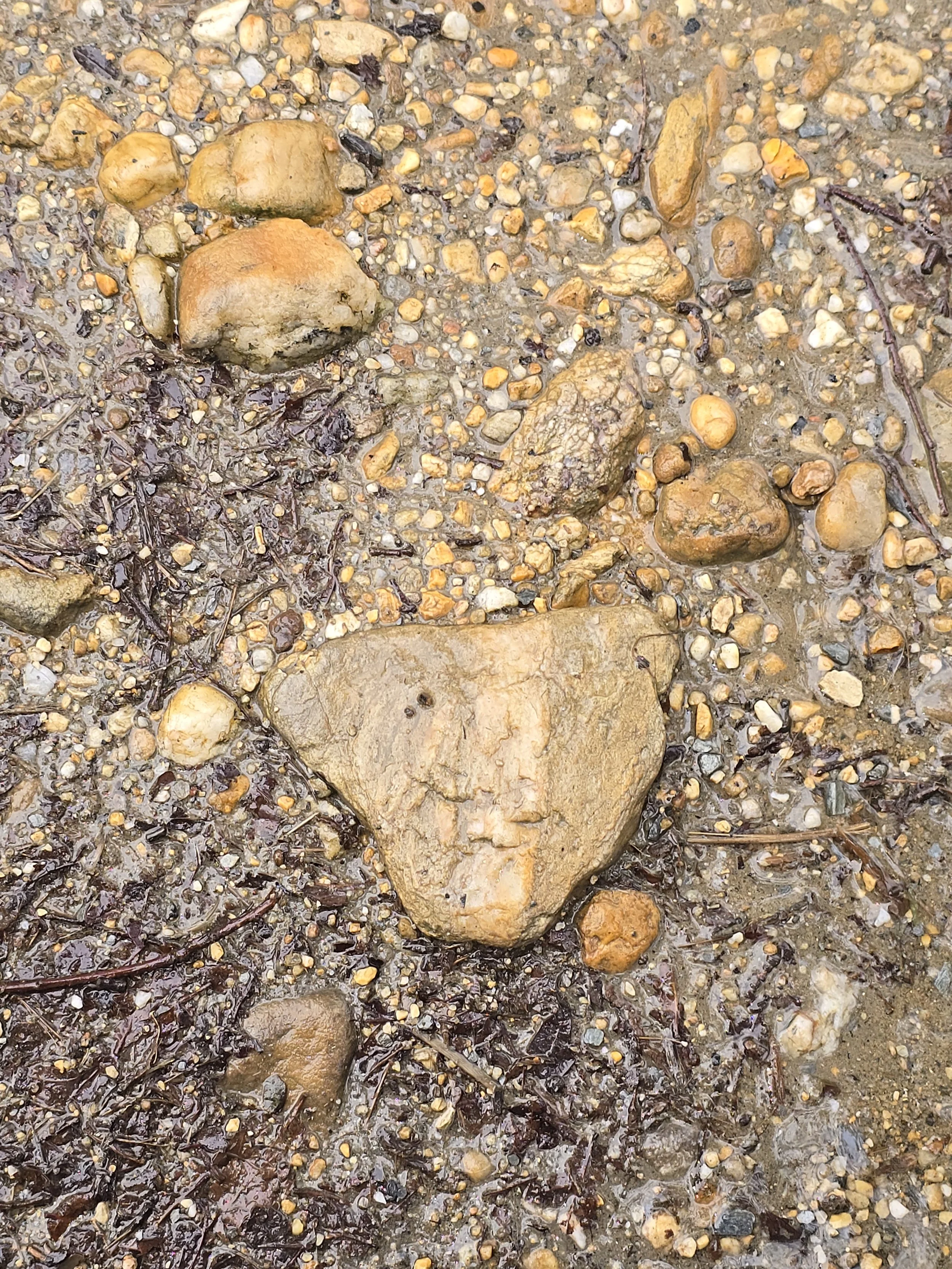
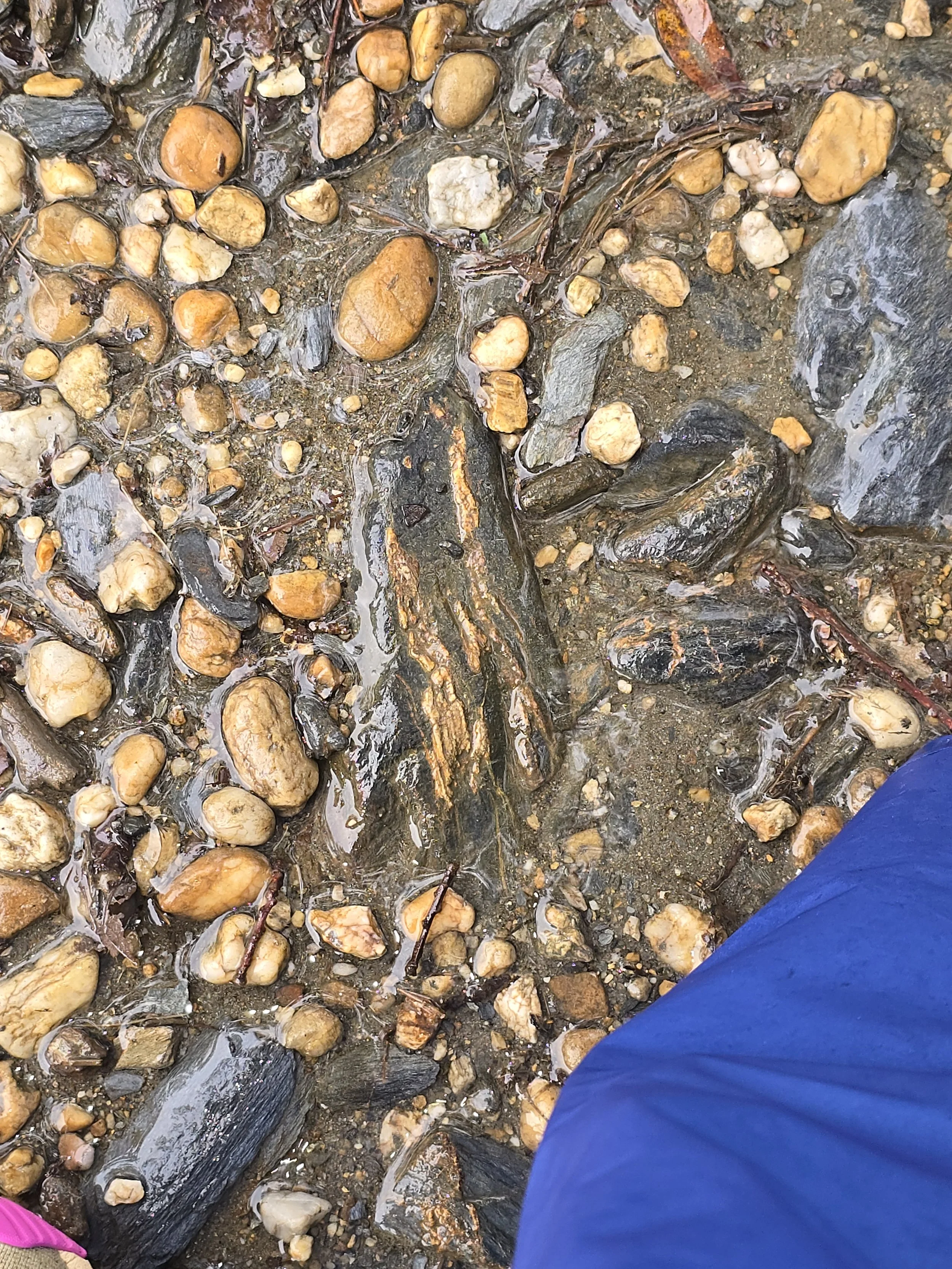
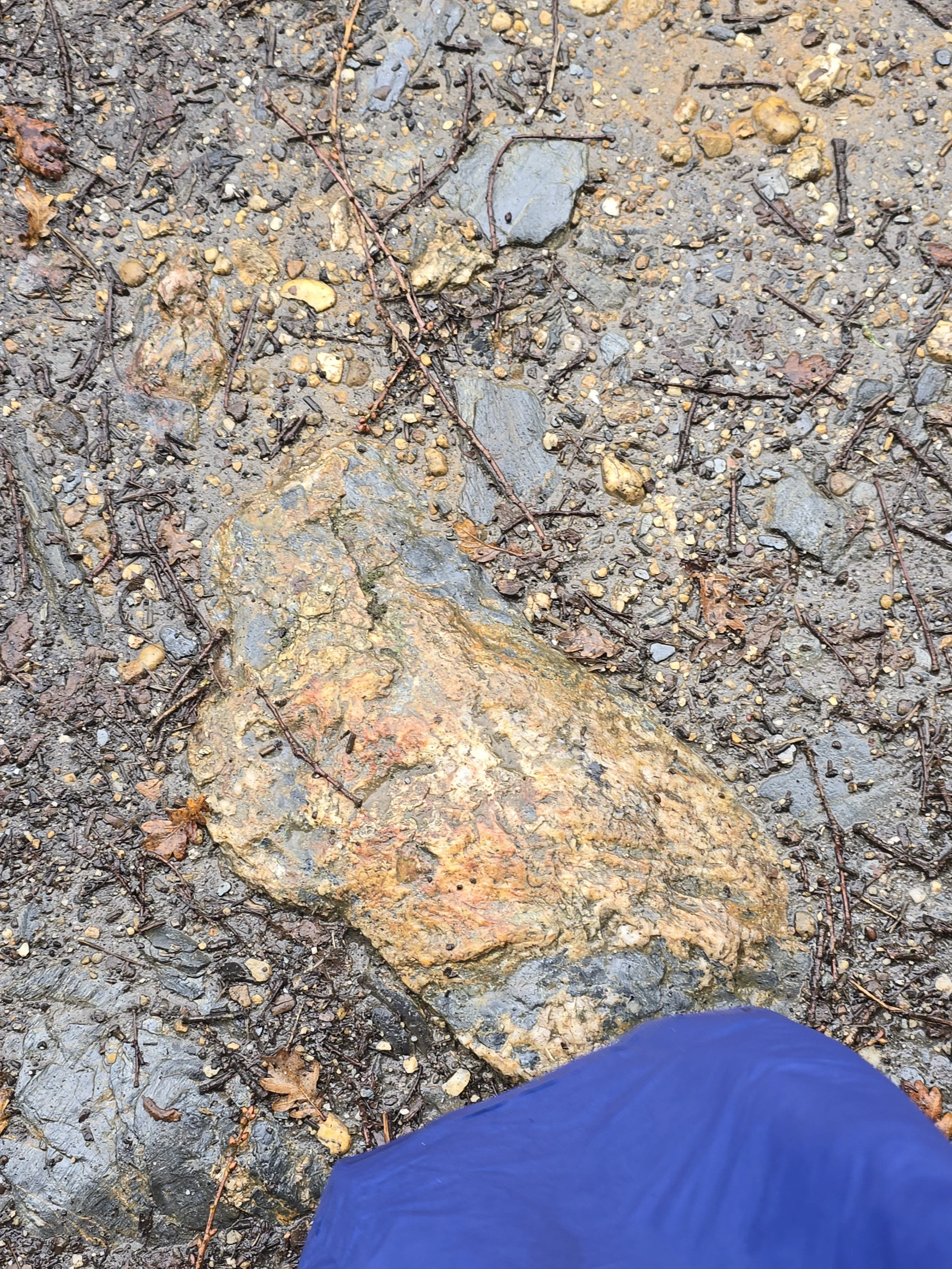
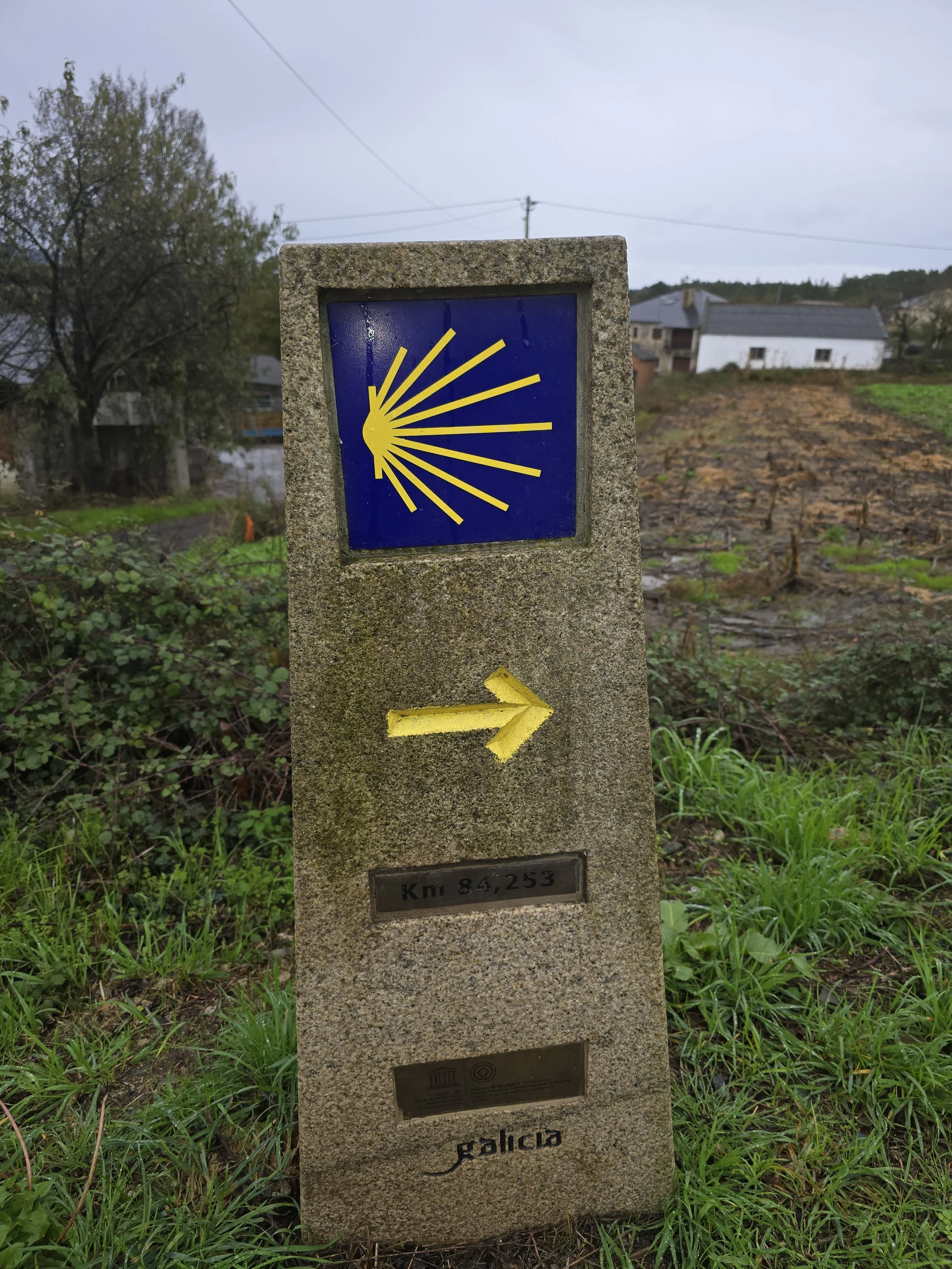
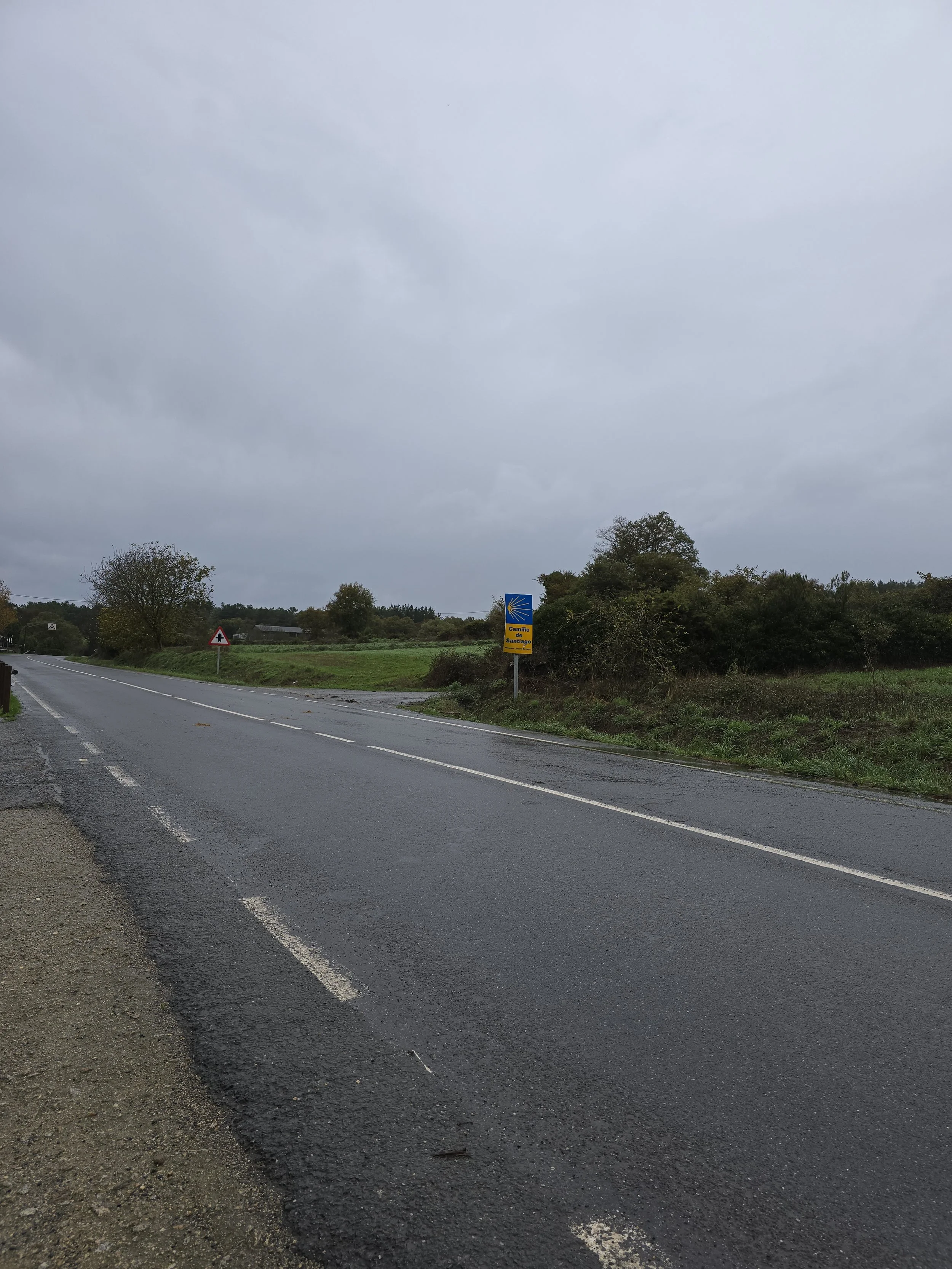
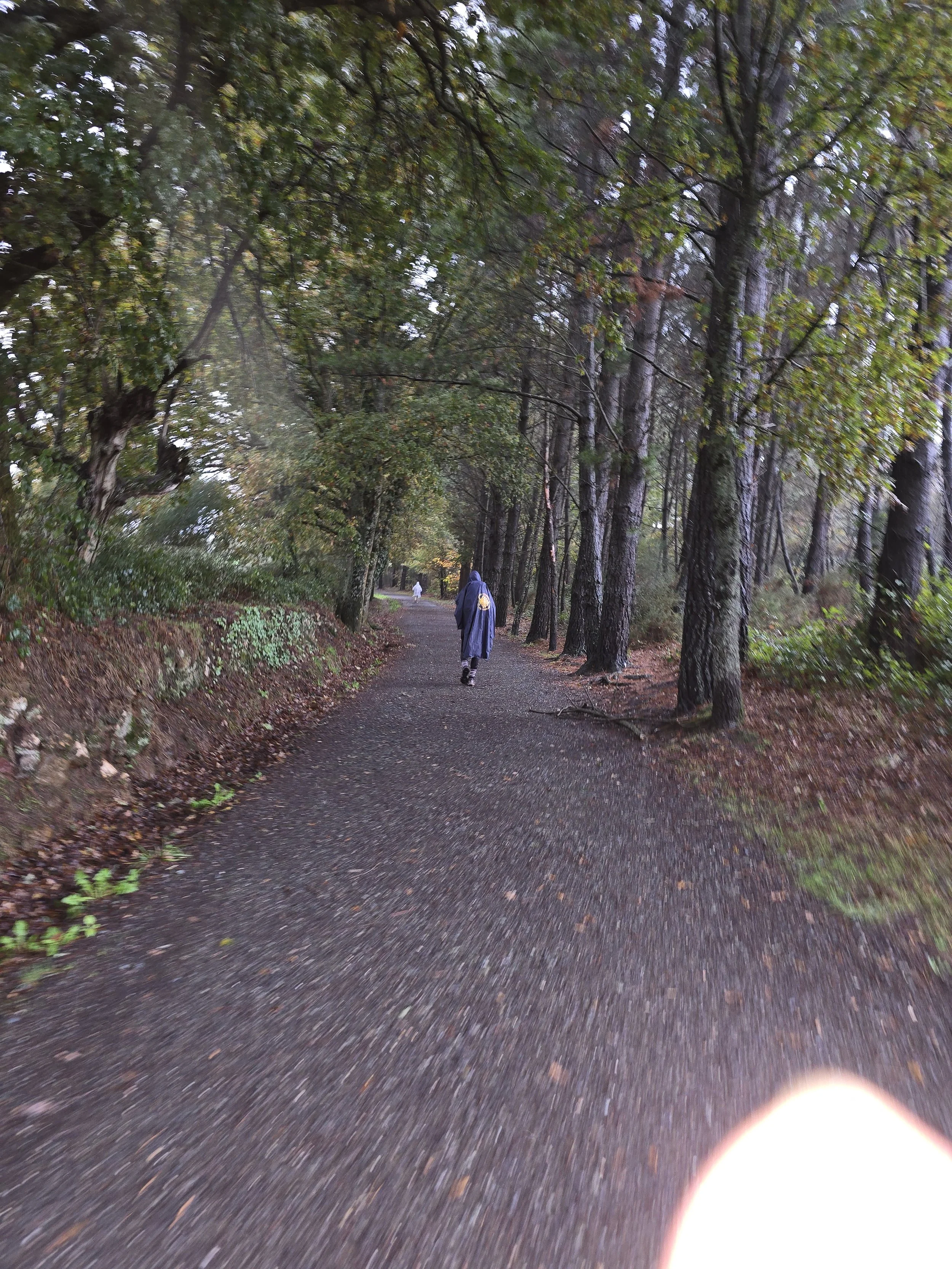
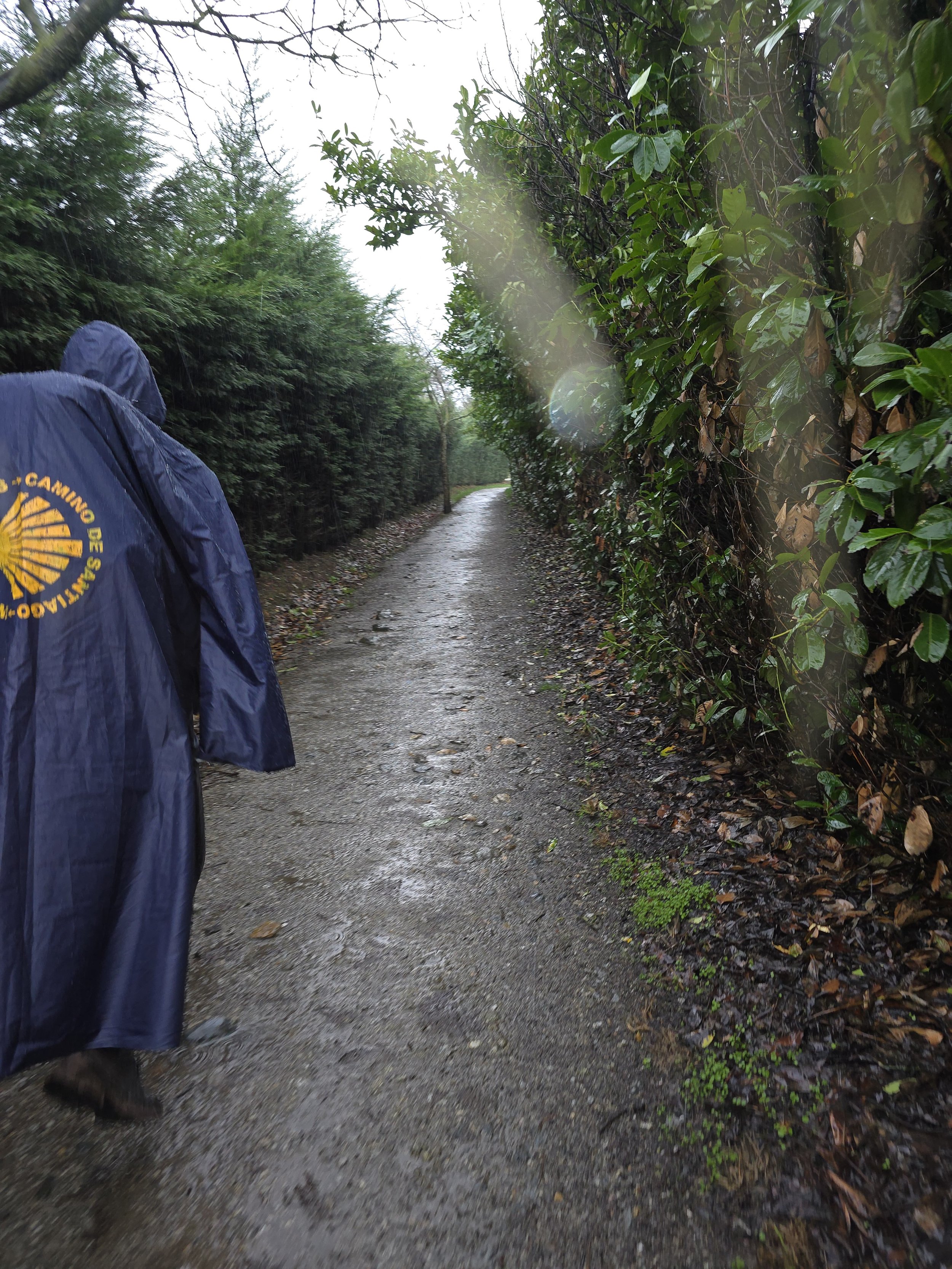
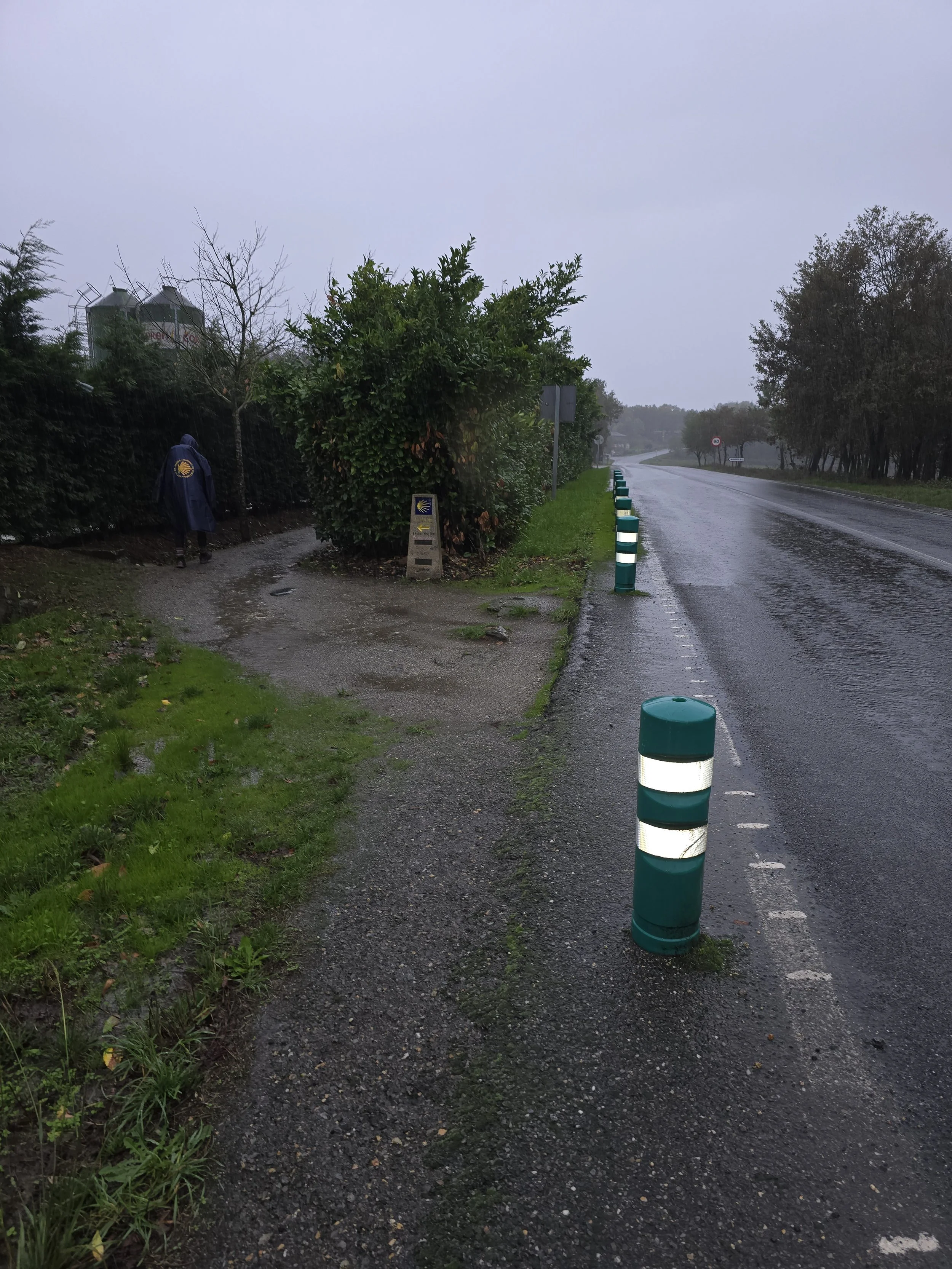
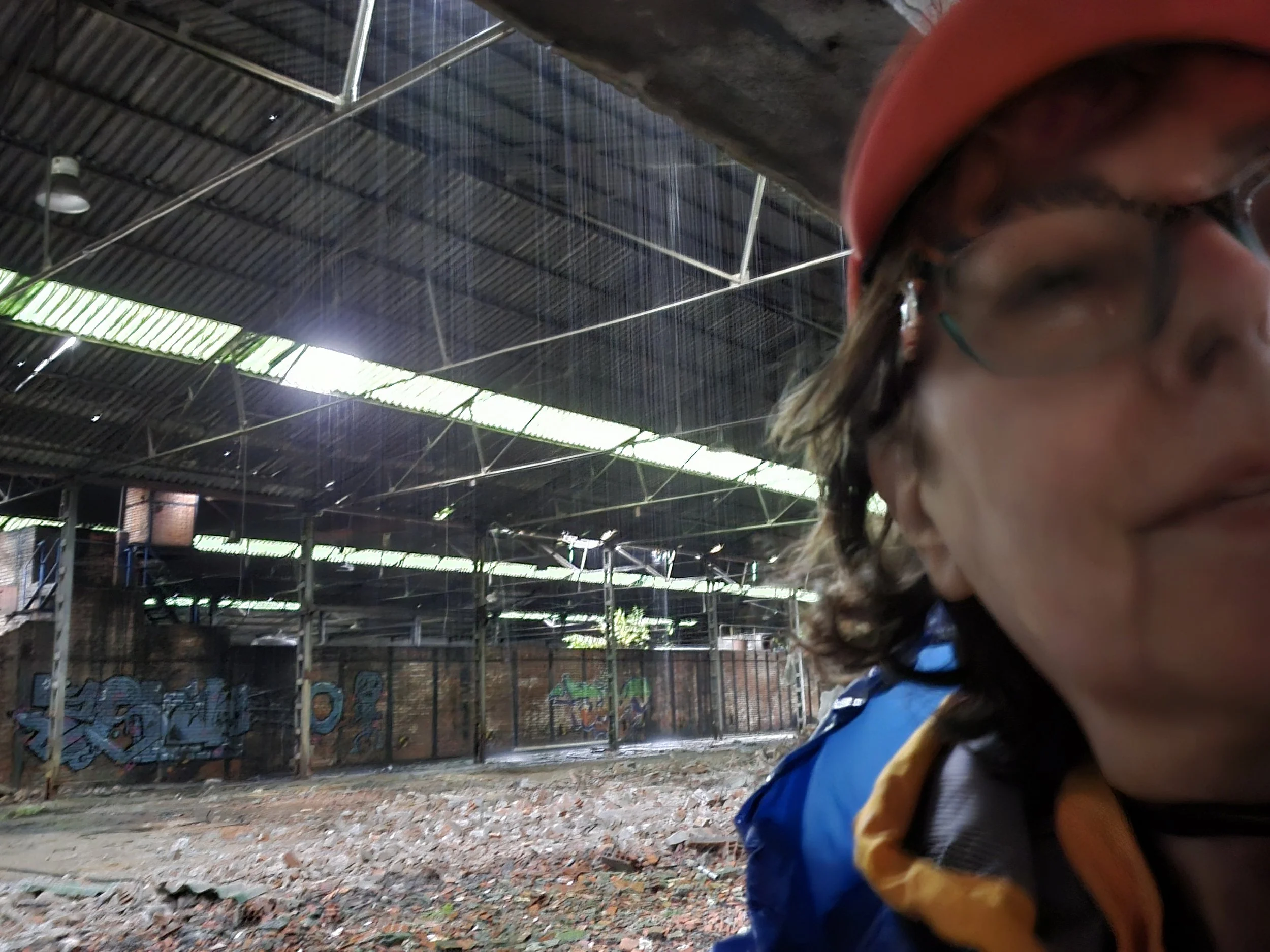
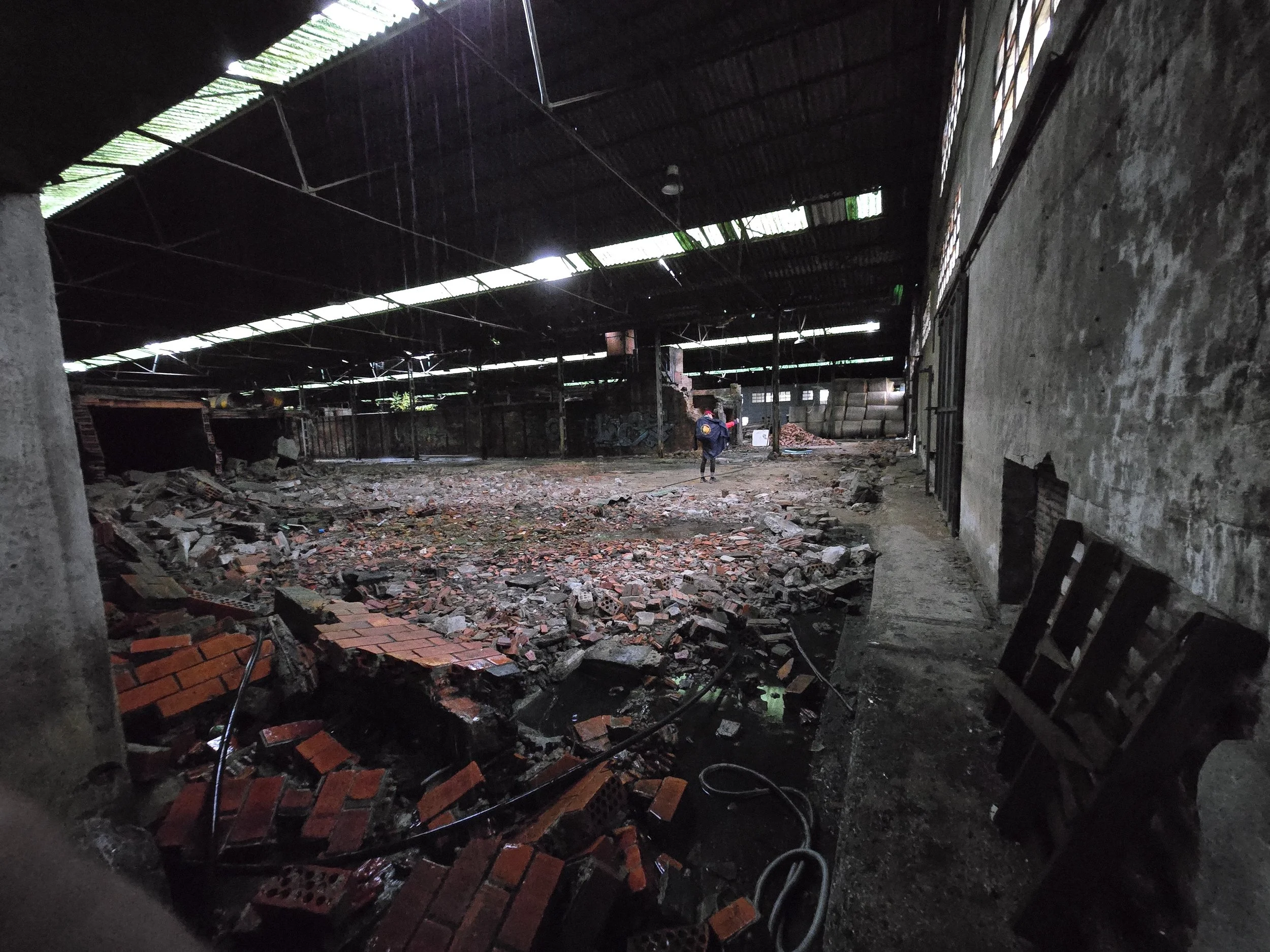
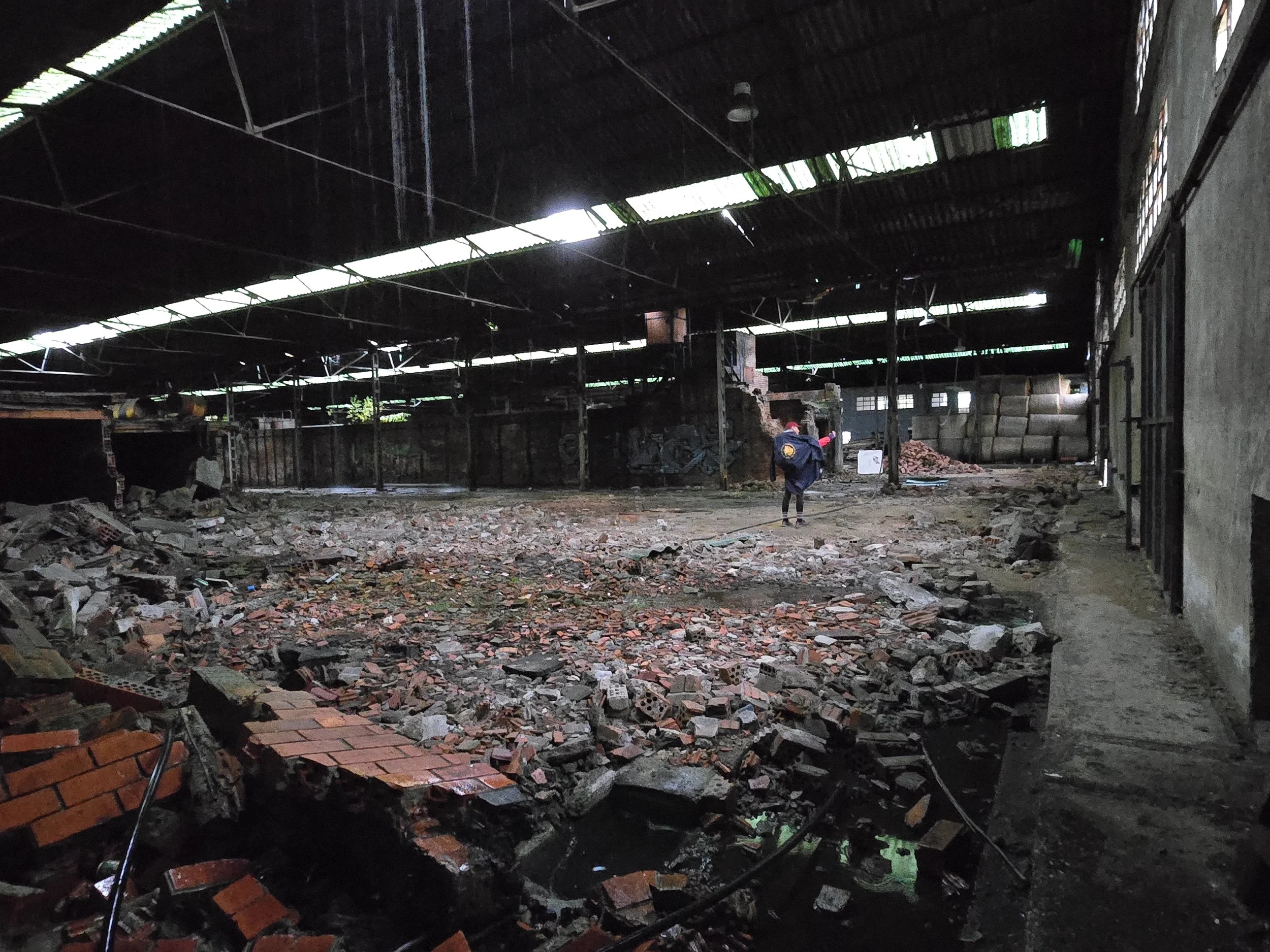
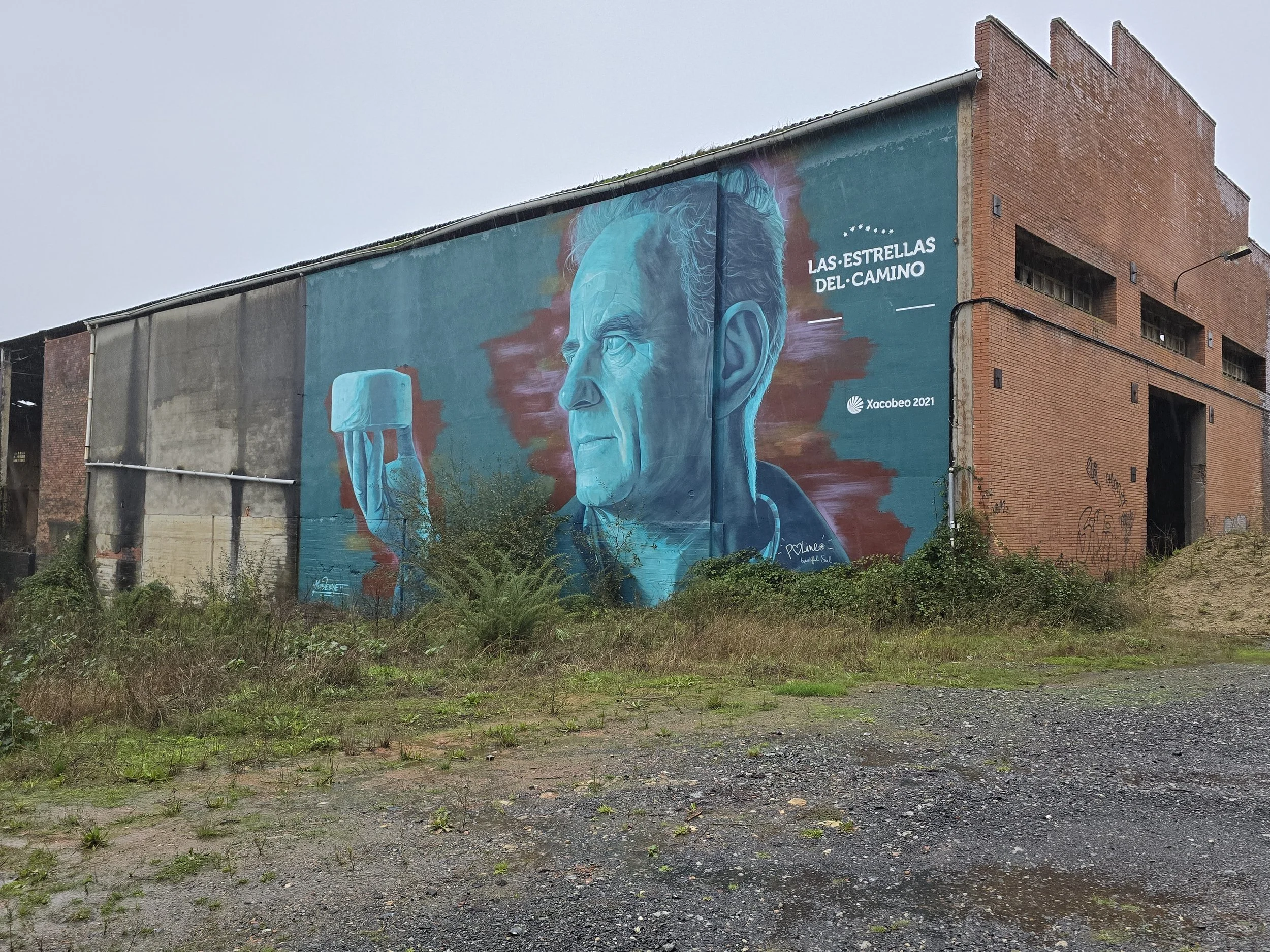
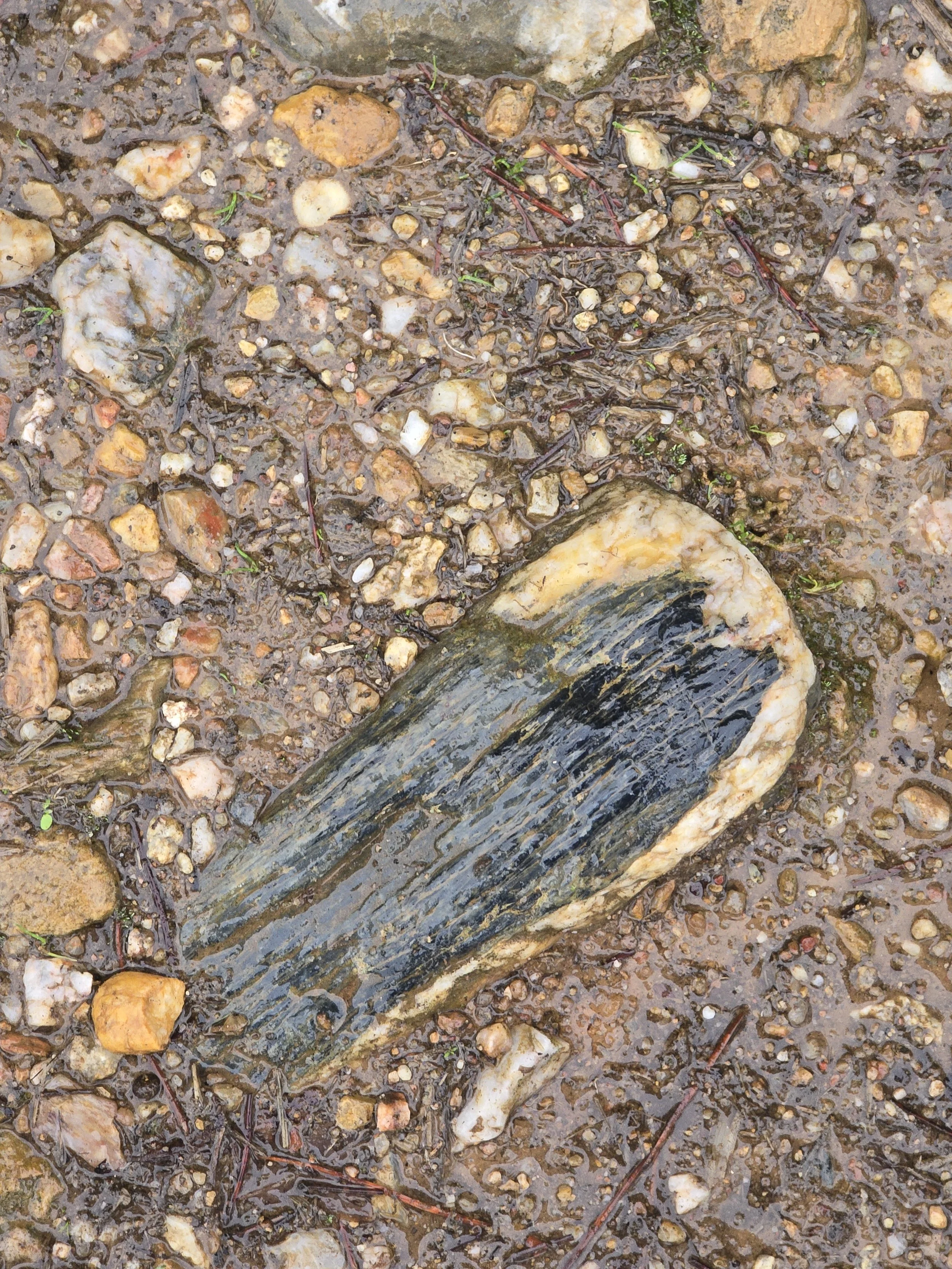
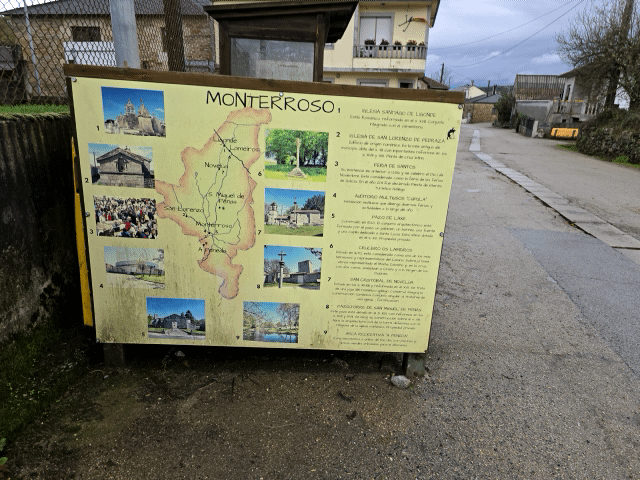
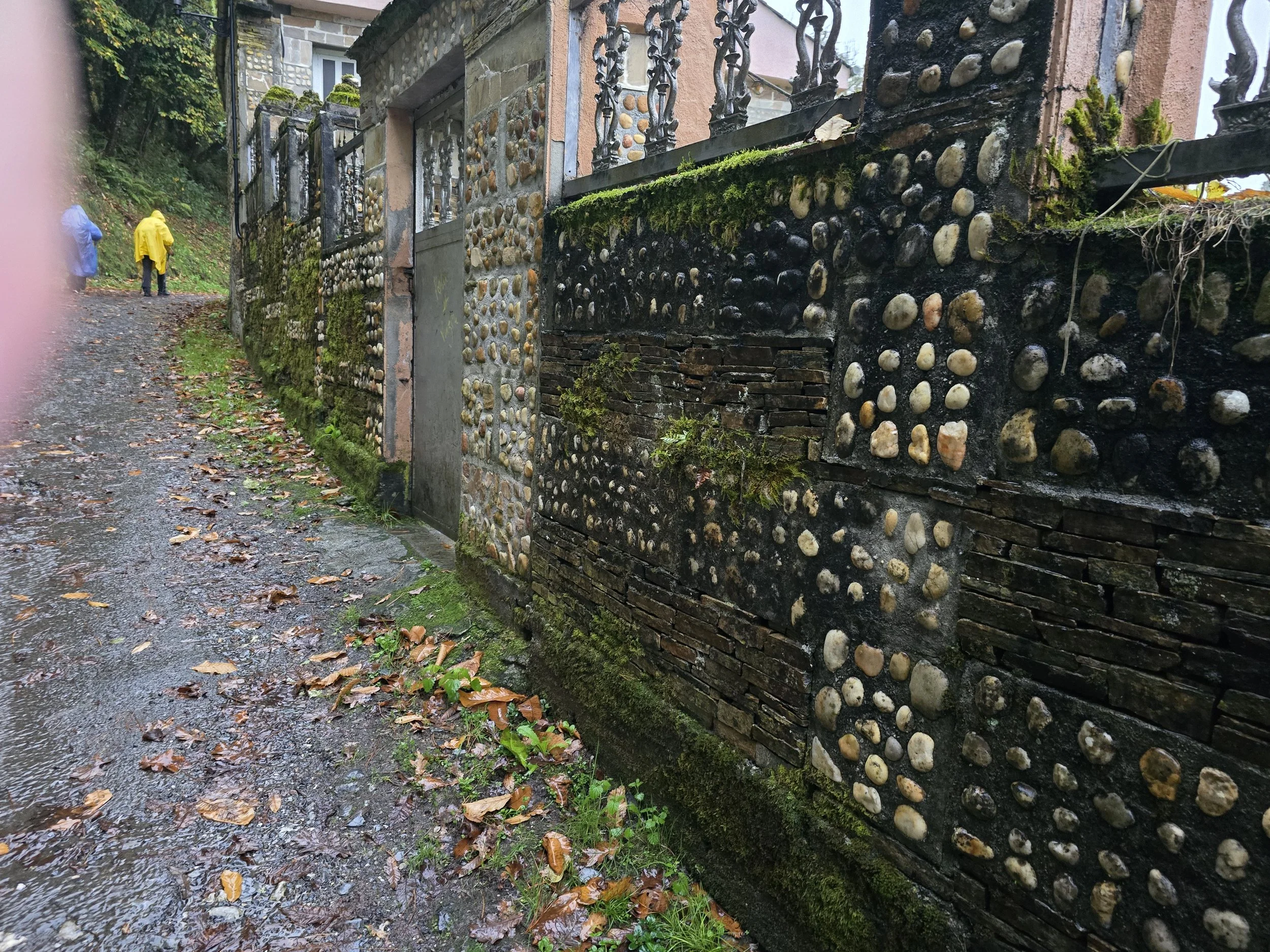
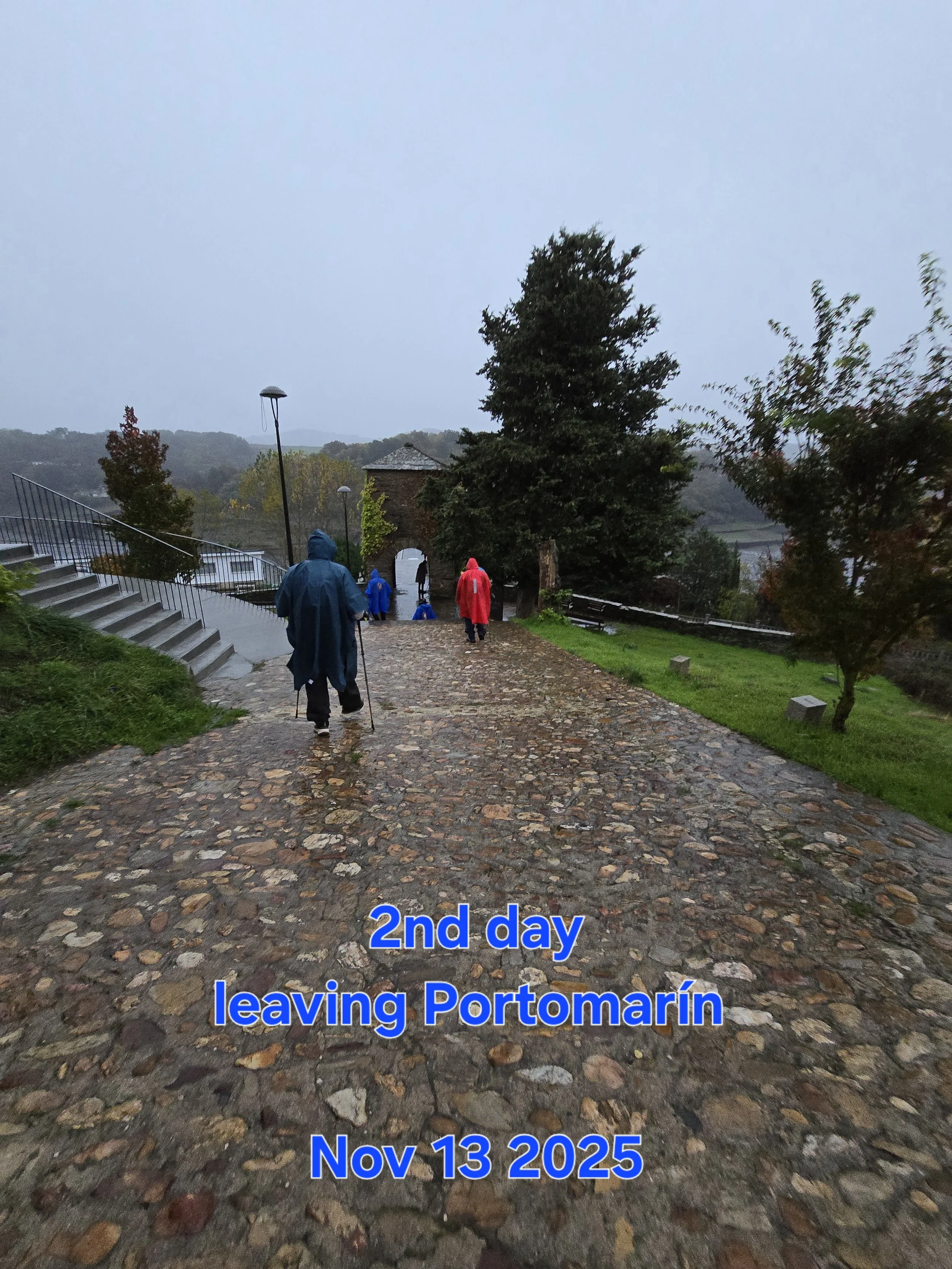
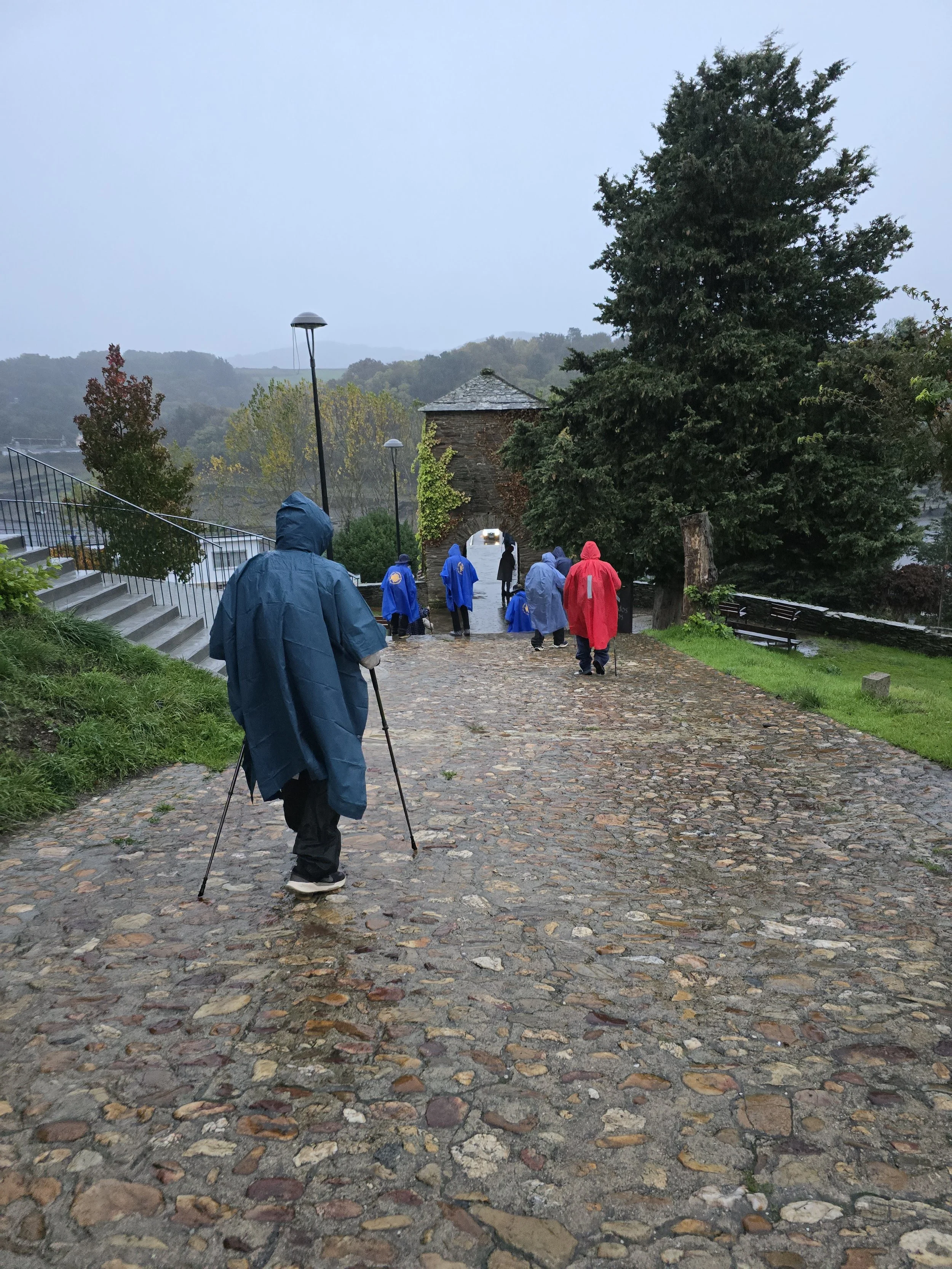
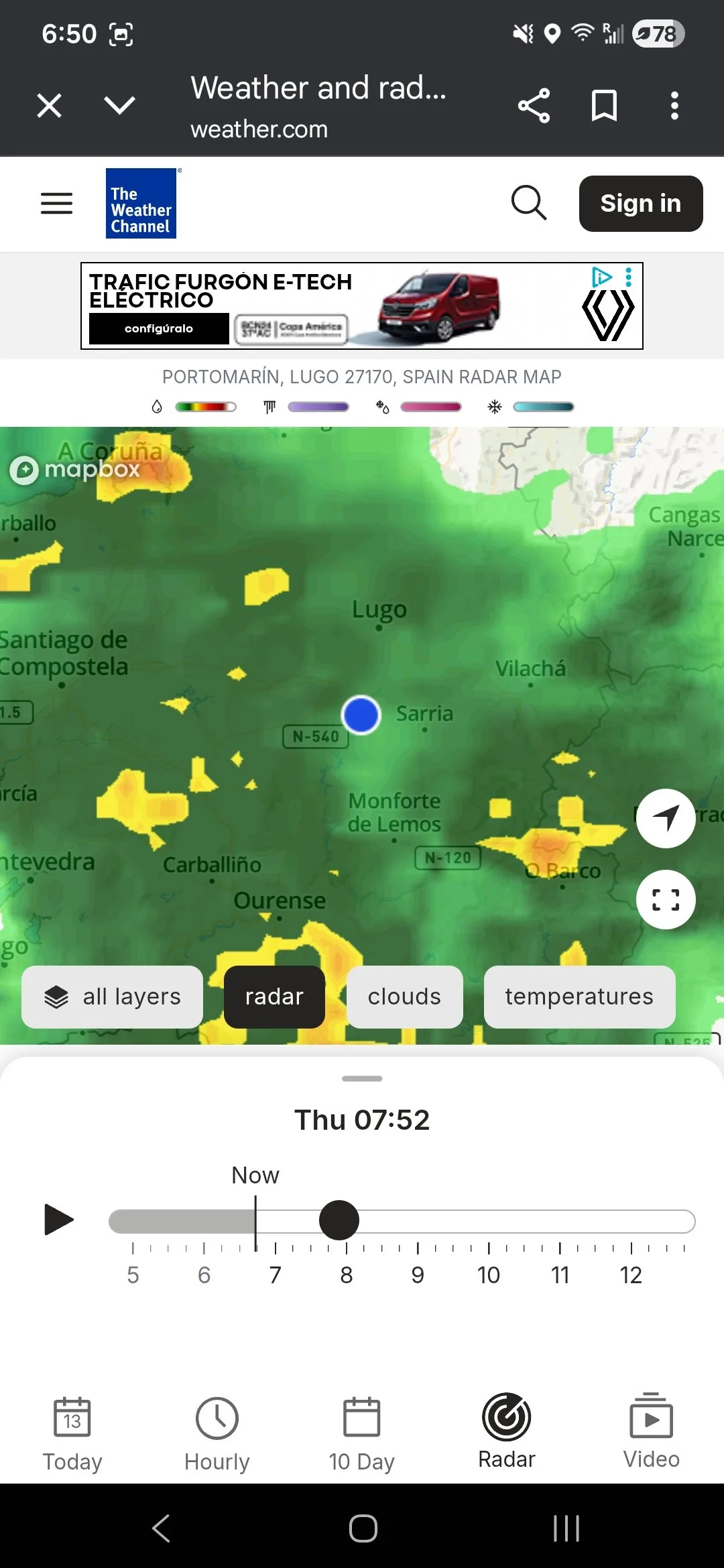
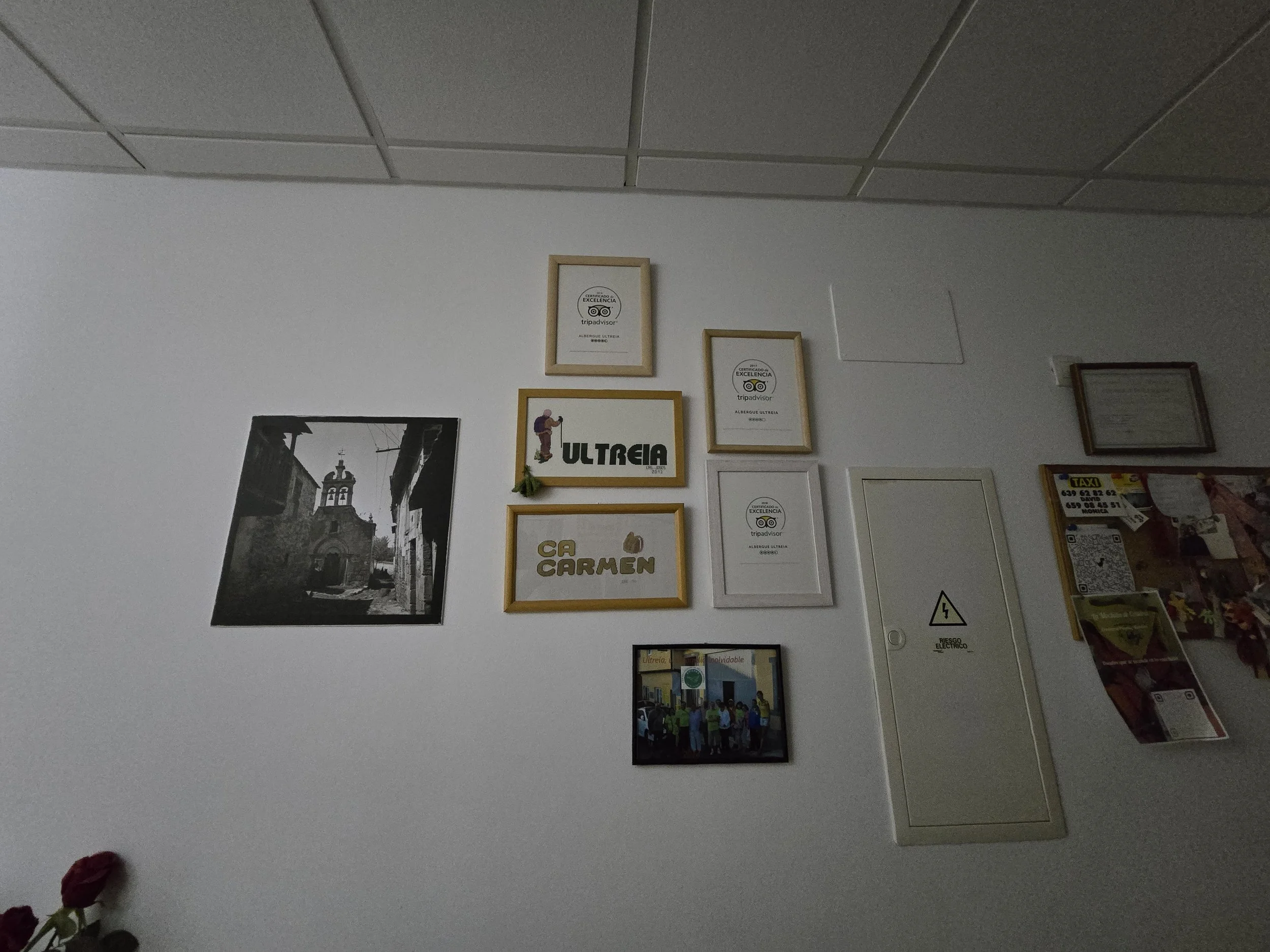
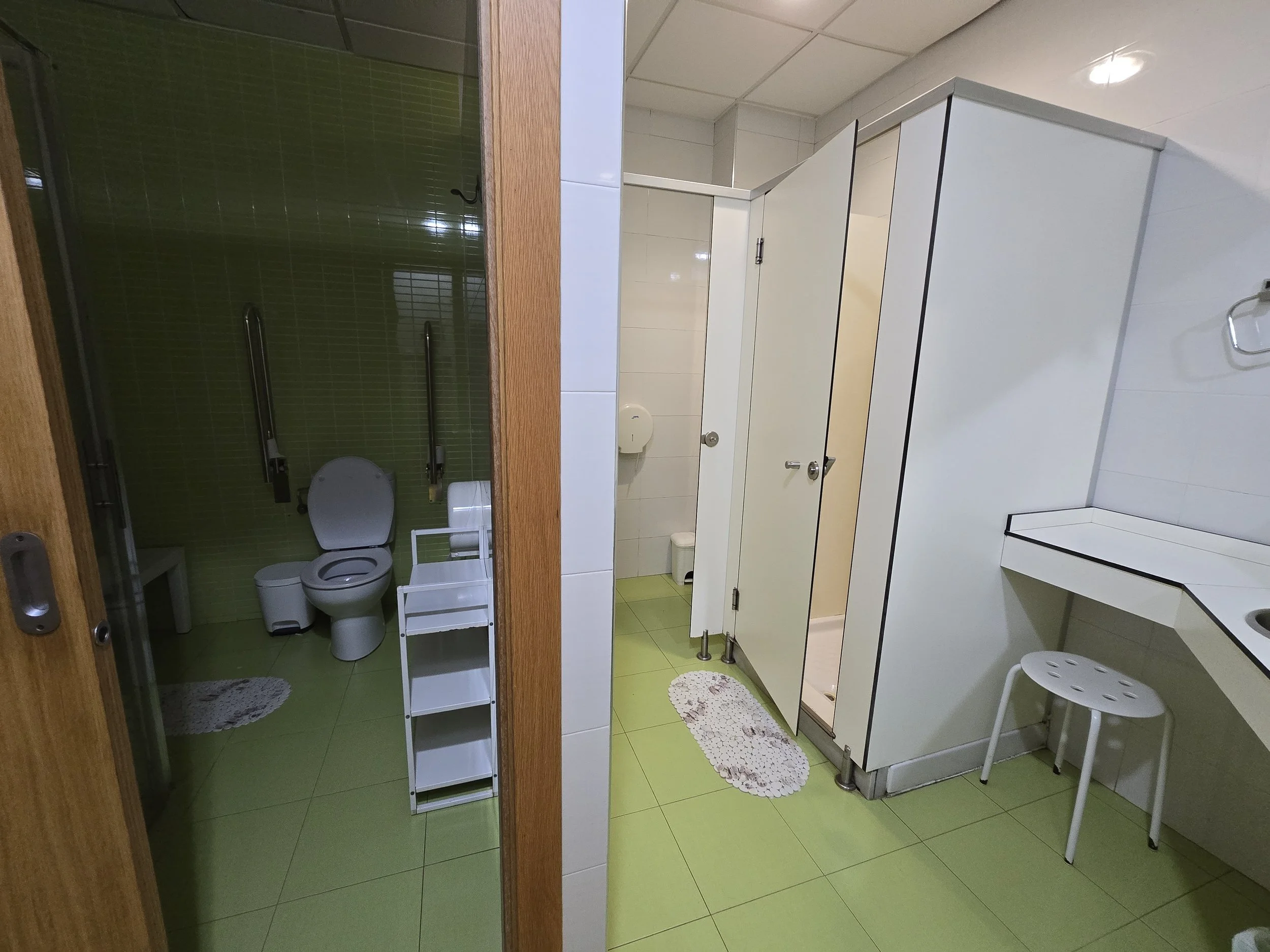
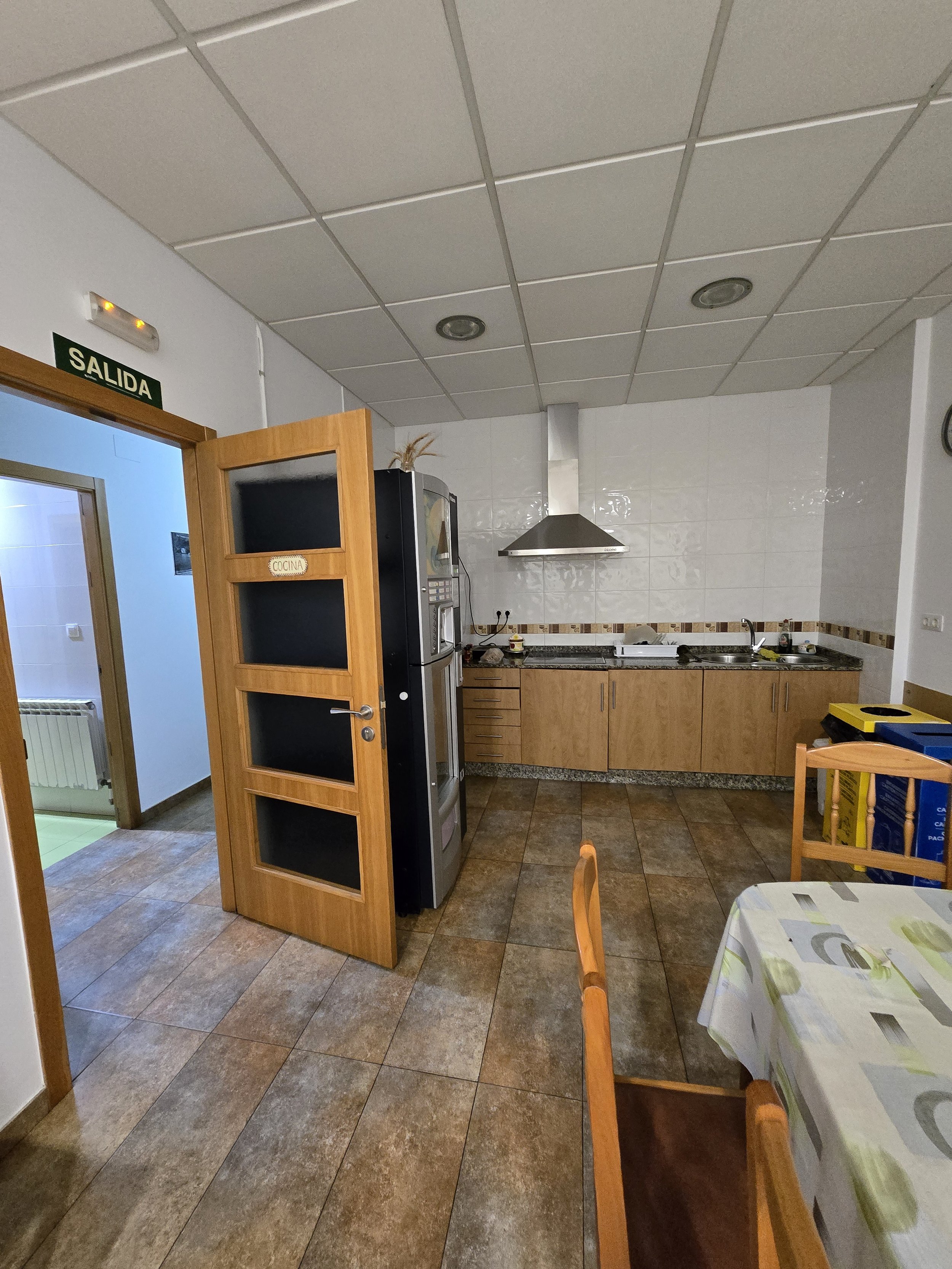
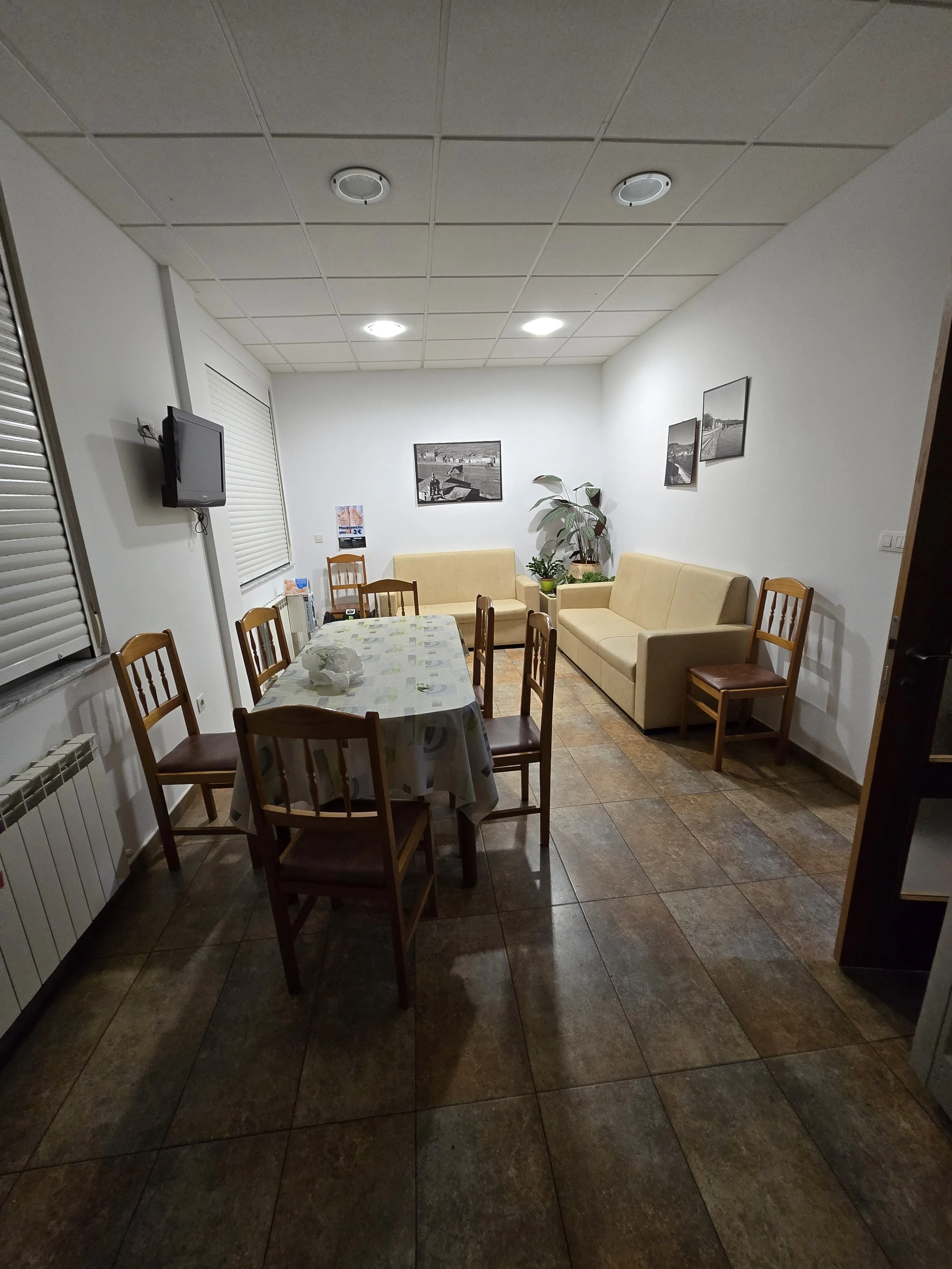
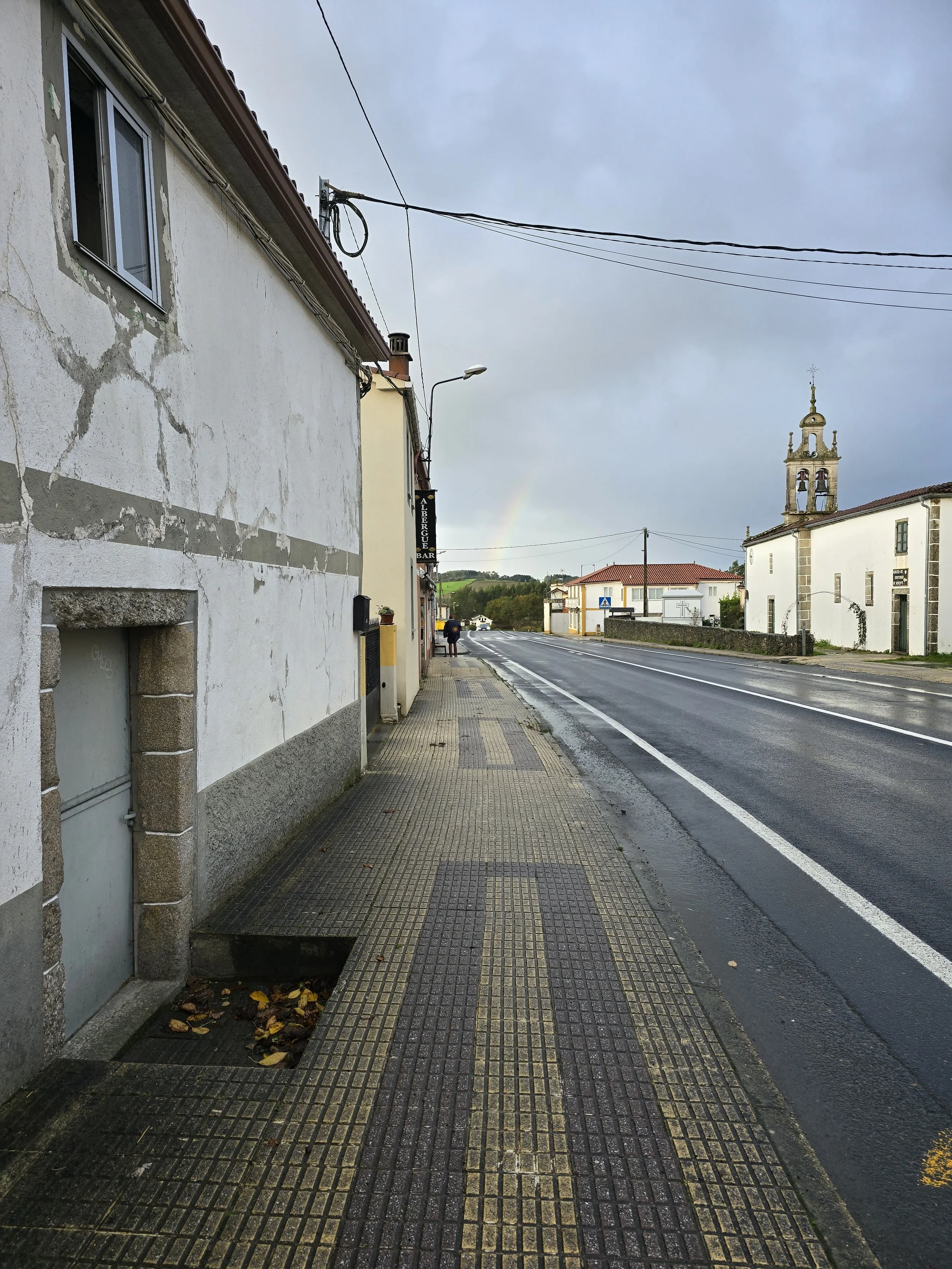
Long stretches of wonderful nothingness, stopped for a bite. my fascination with rocks, an albergue we stayed in, walking into Portomarin. It was wet and chilly, but not unbearable.
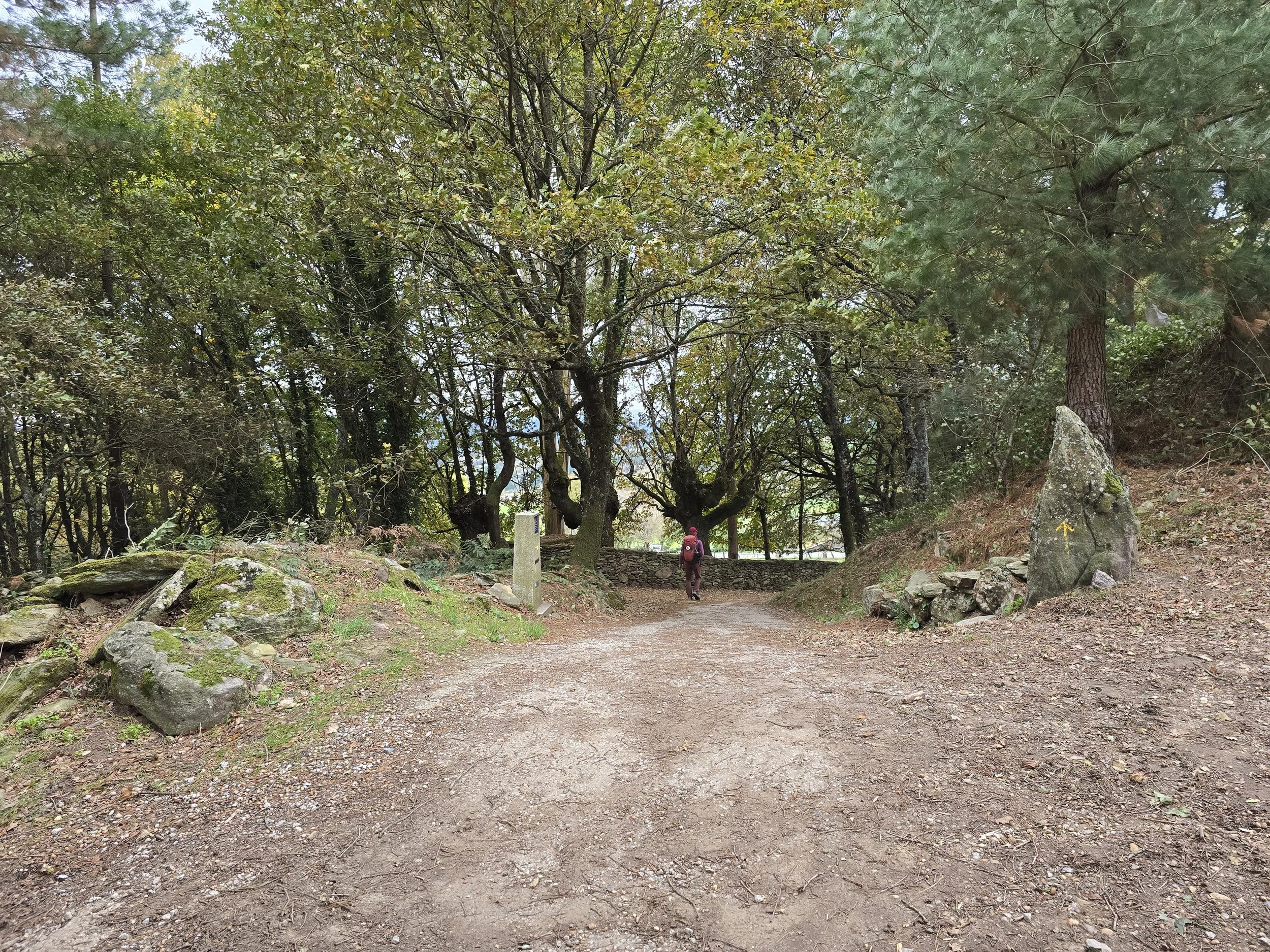
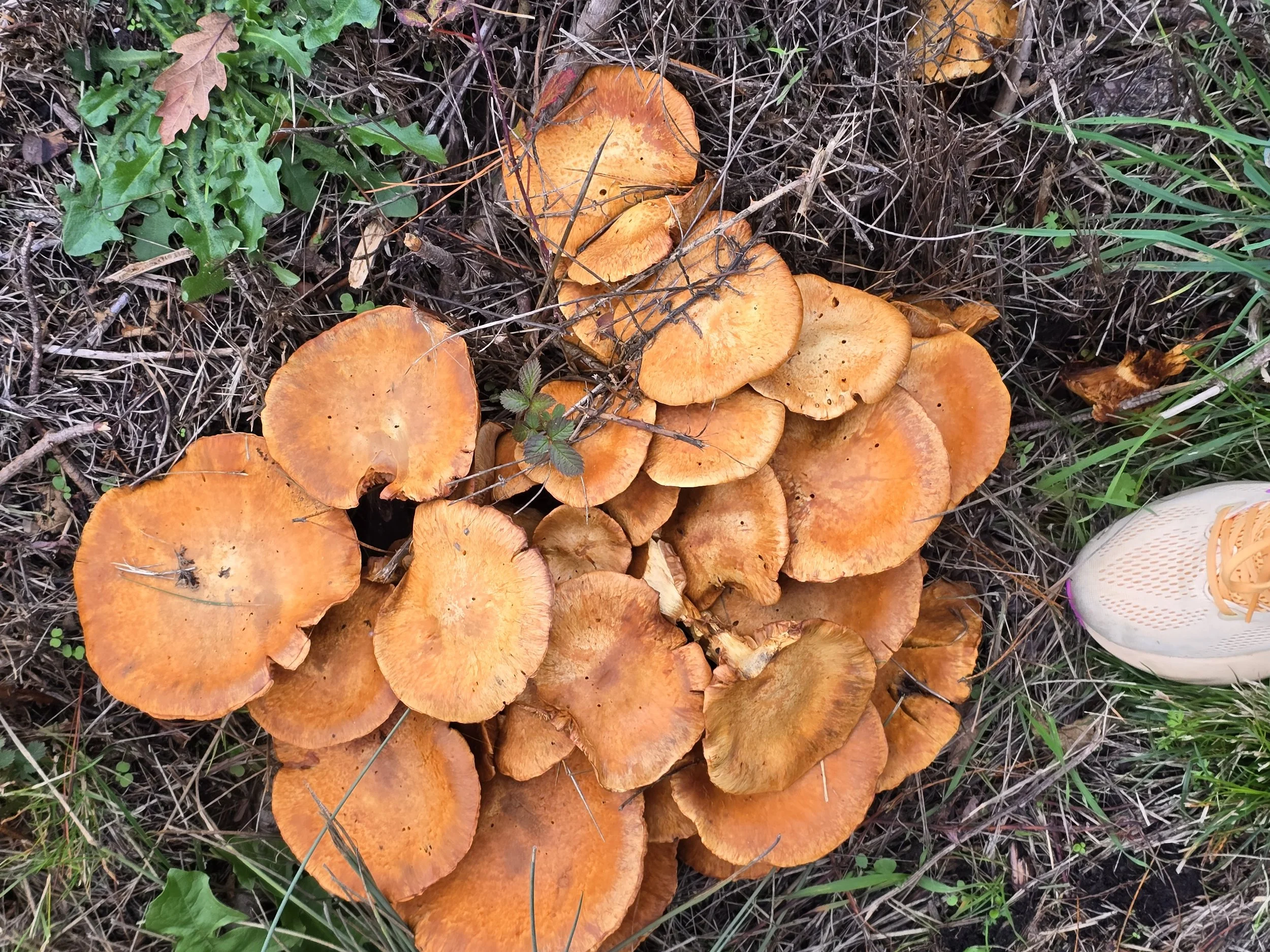
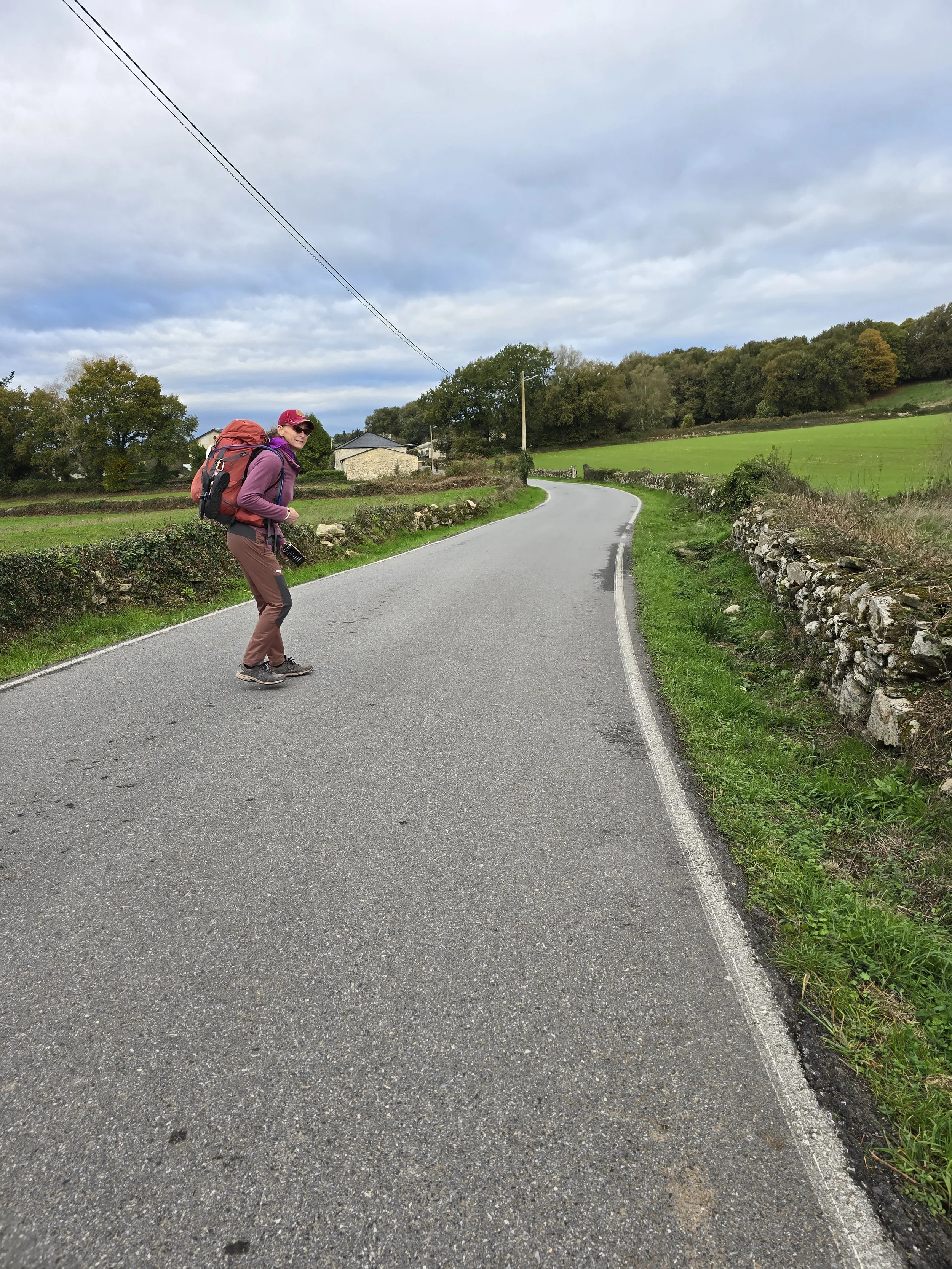
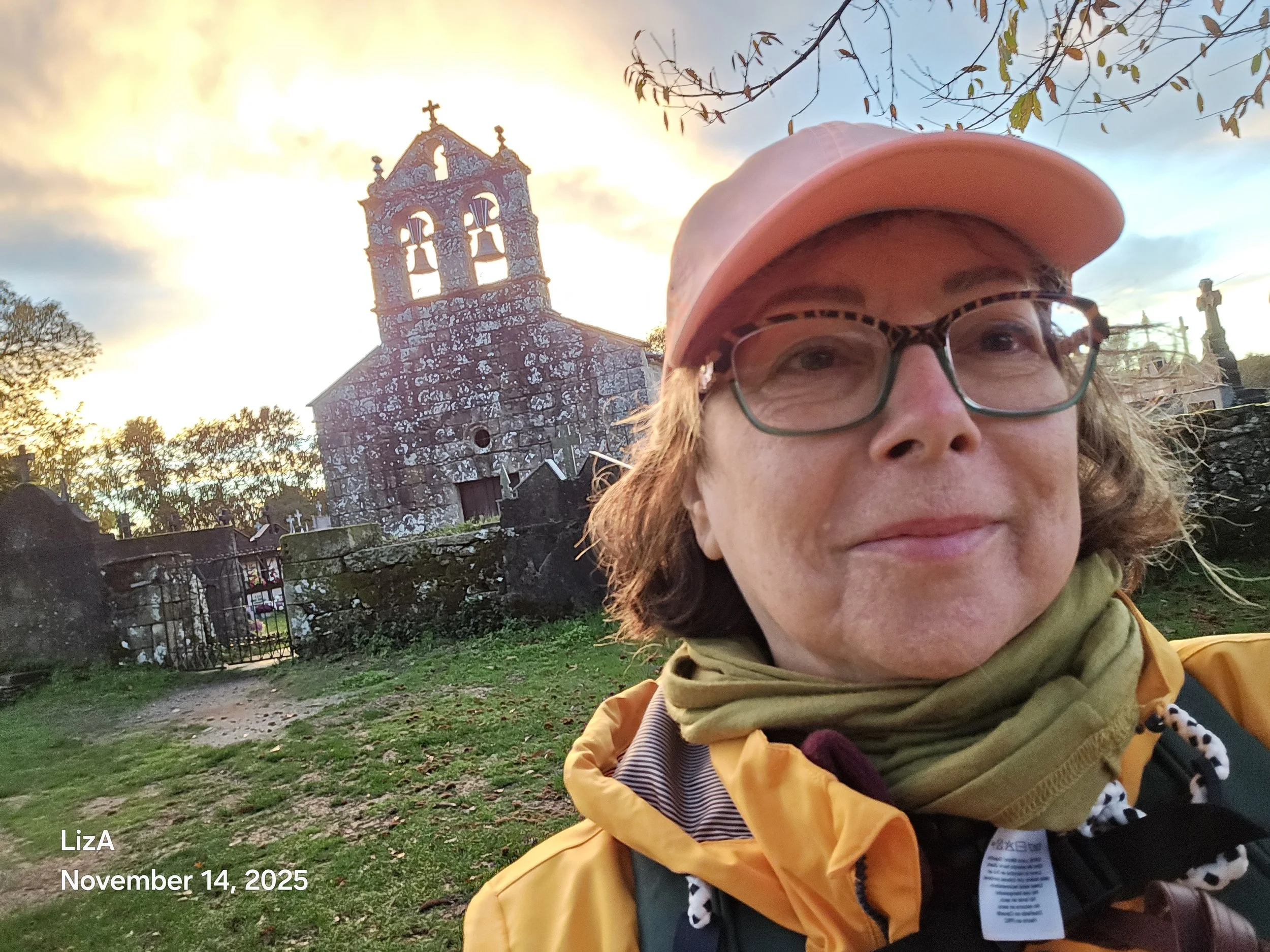
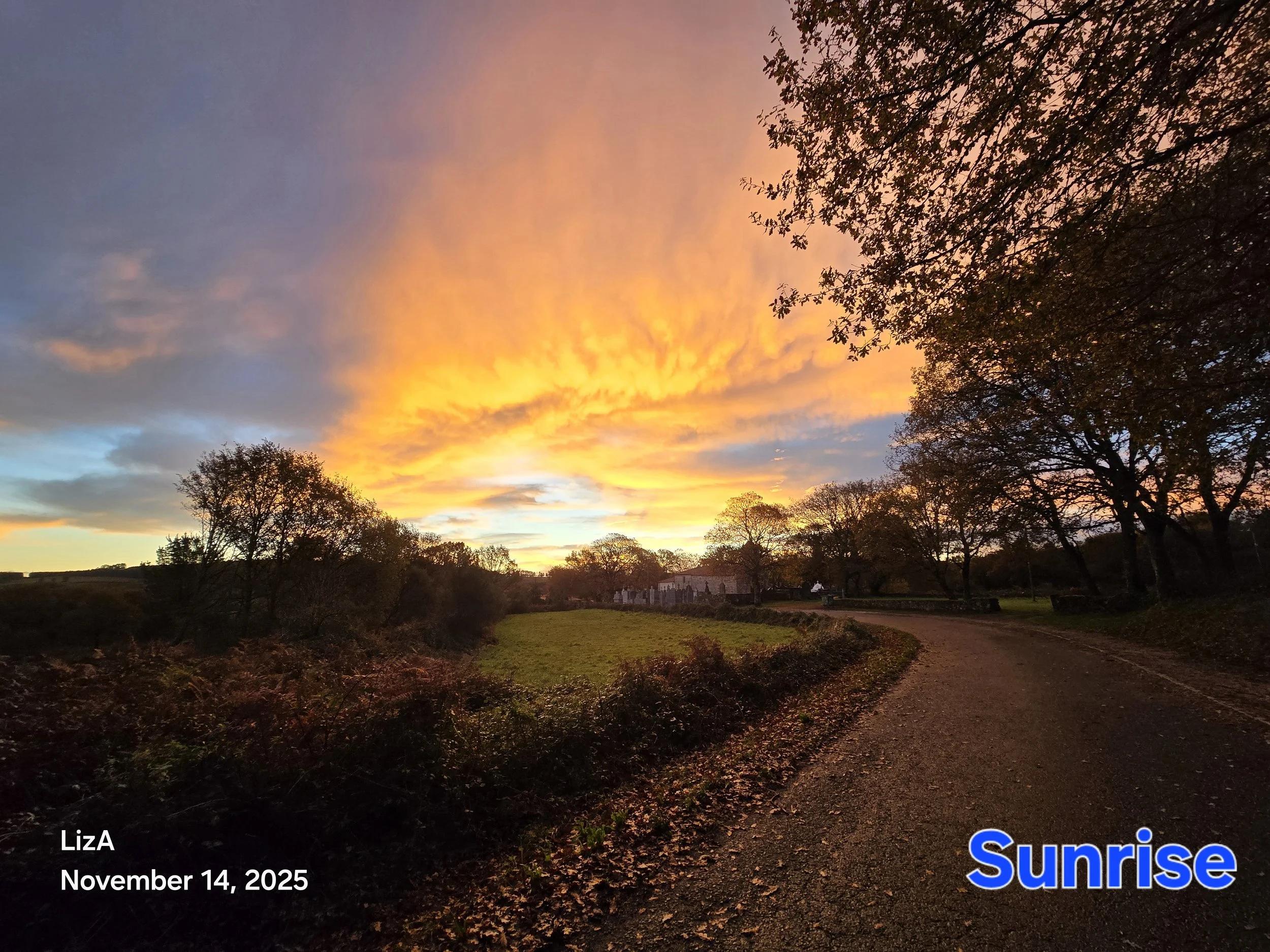
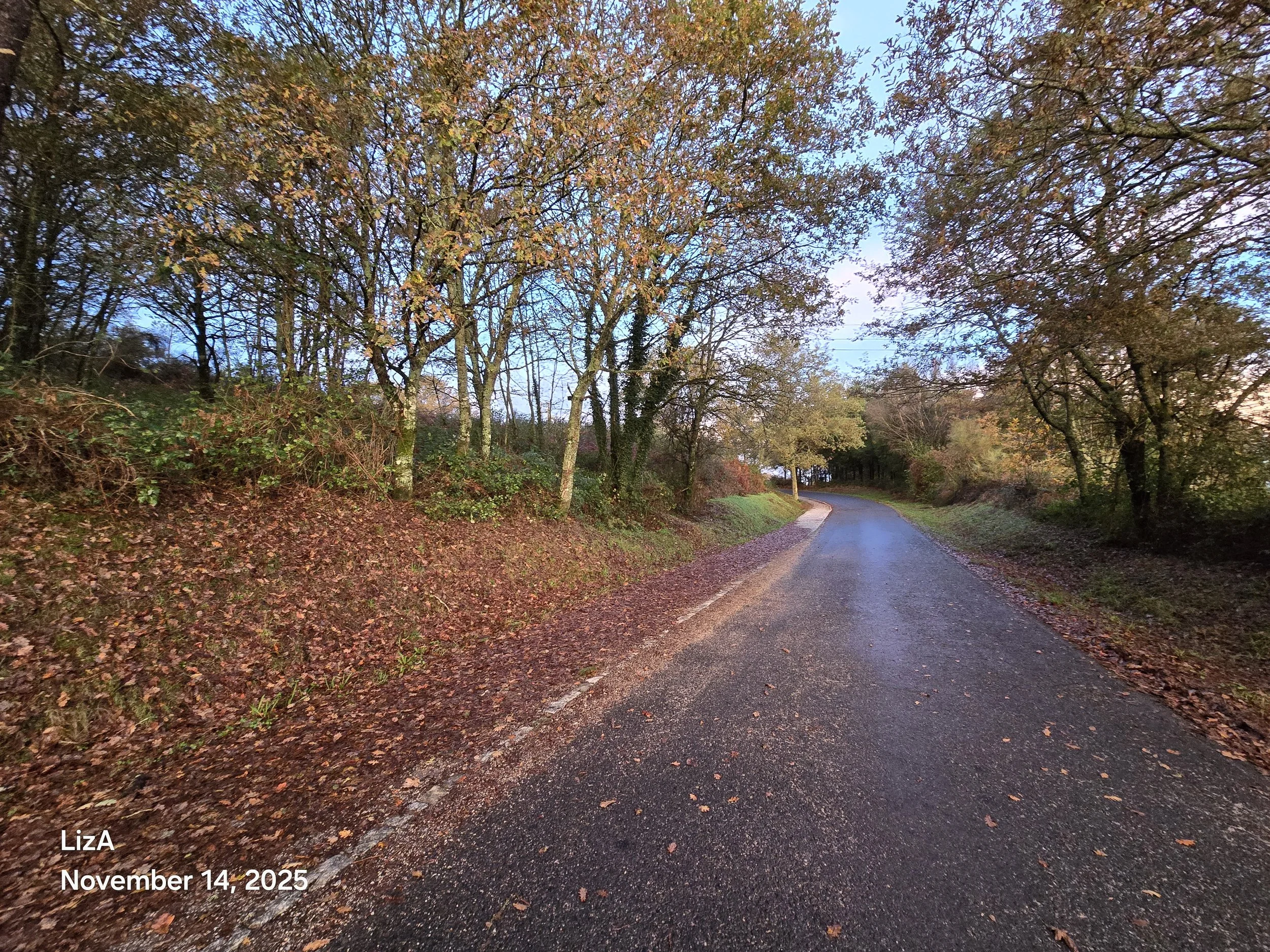
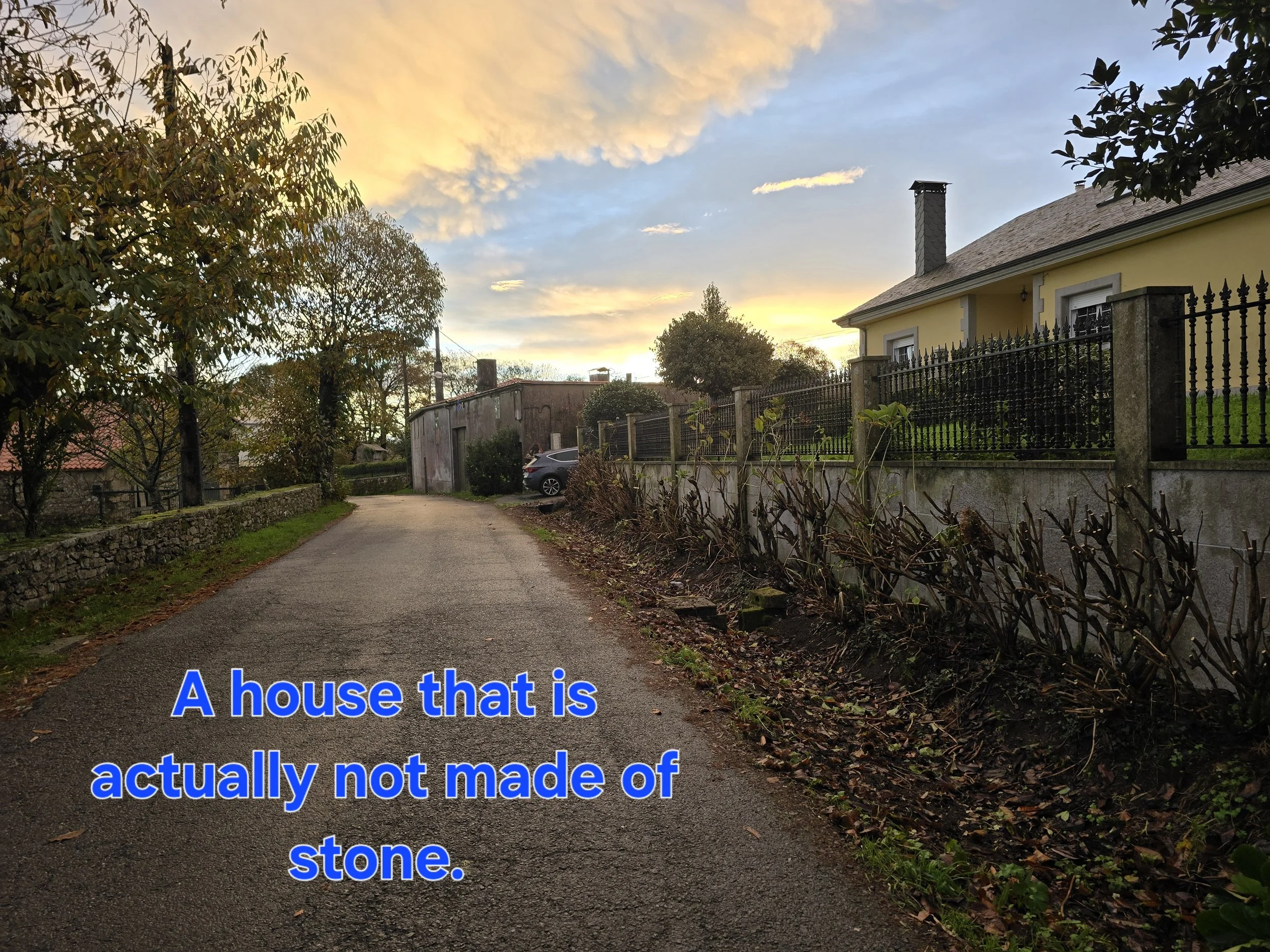
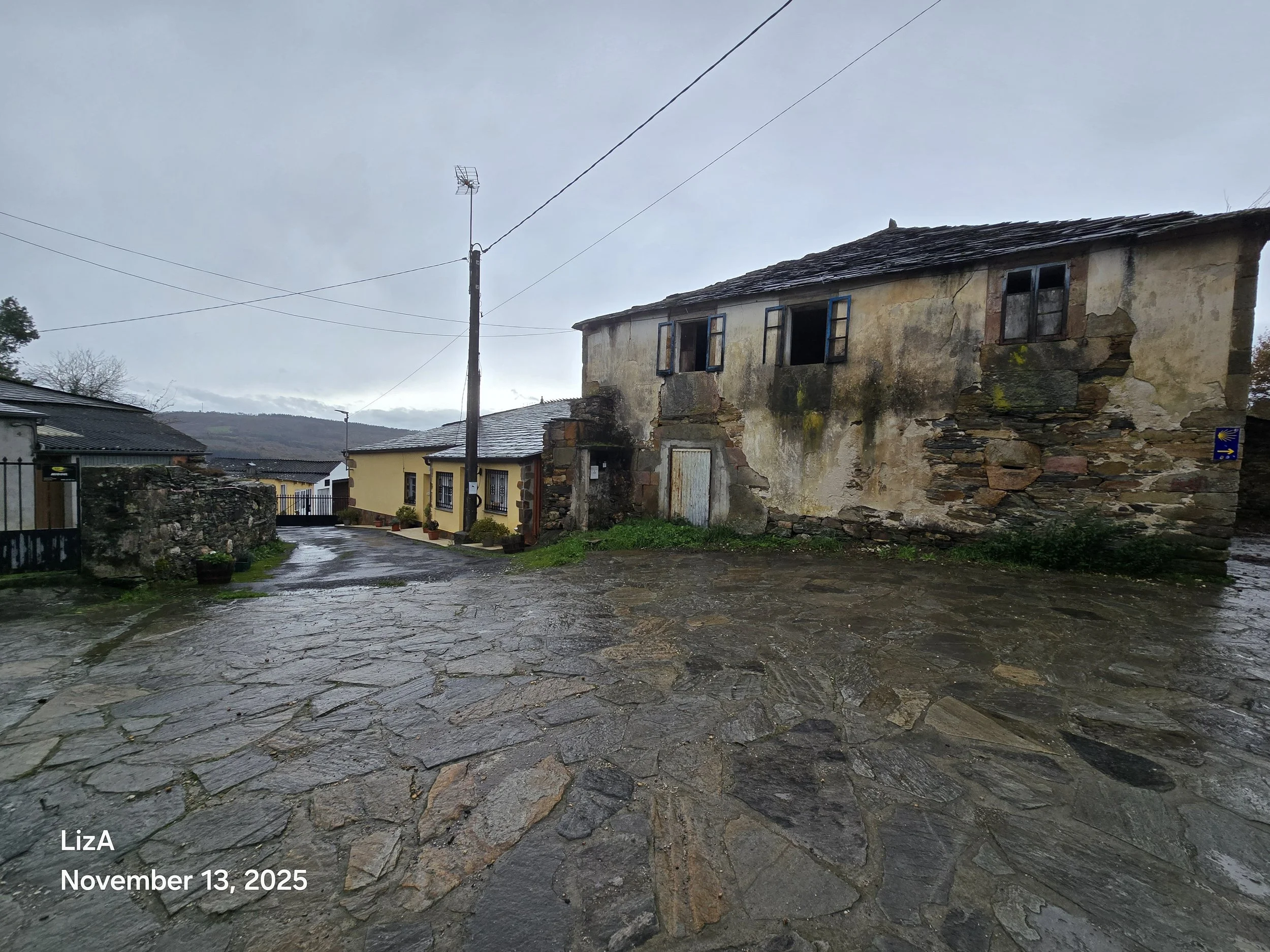
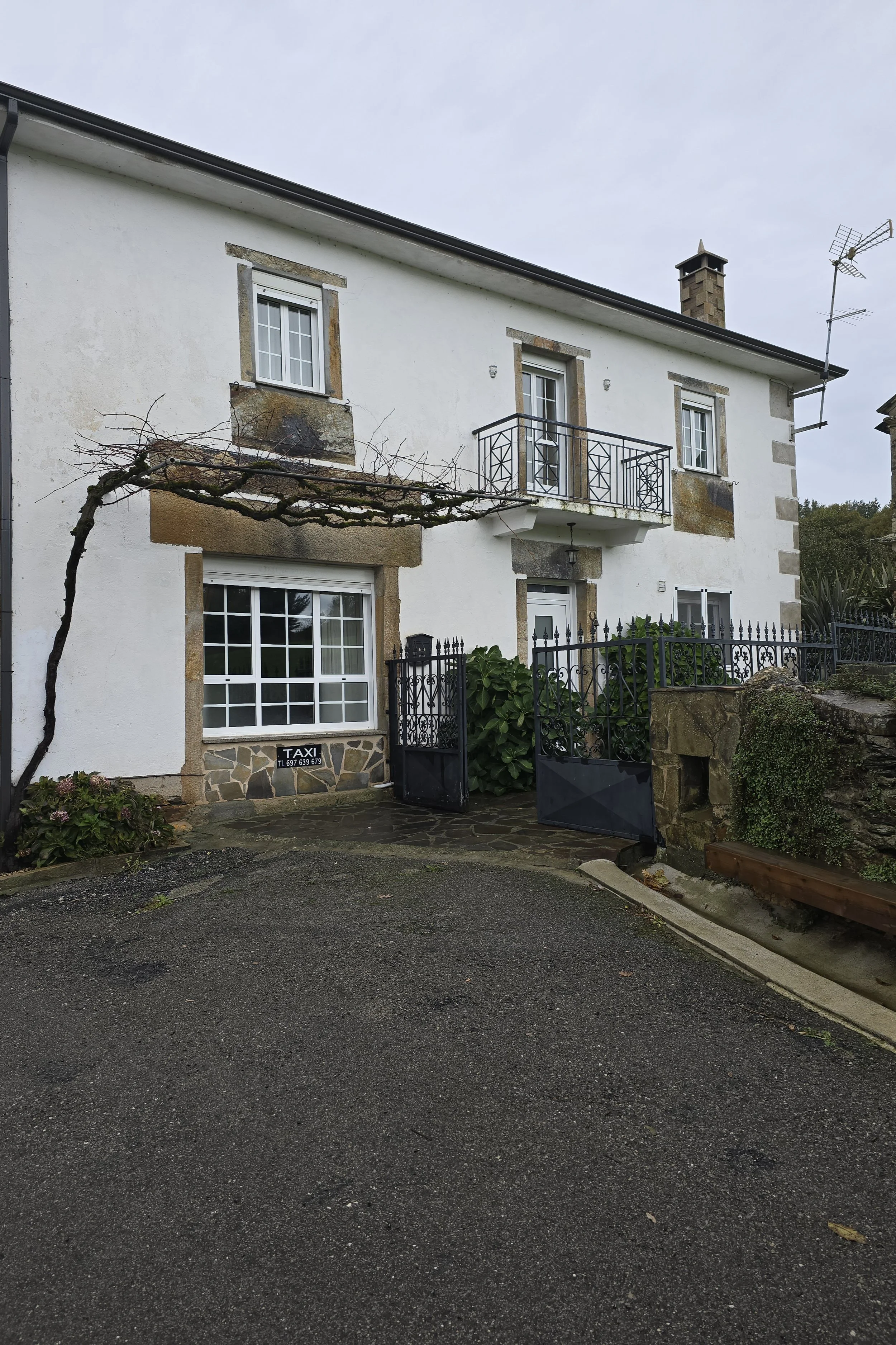
TAXI?
Hmmm..
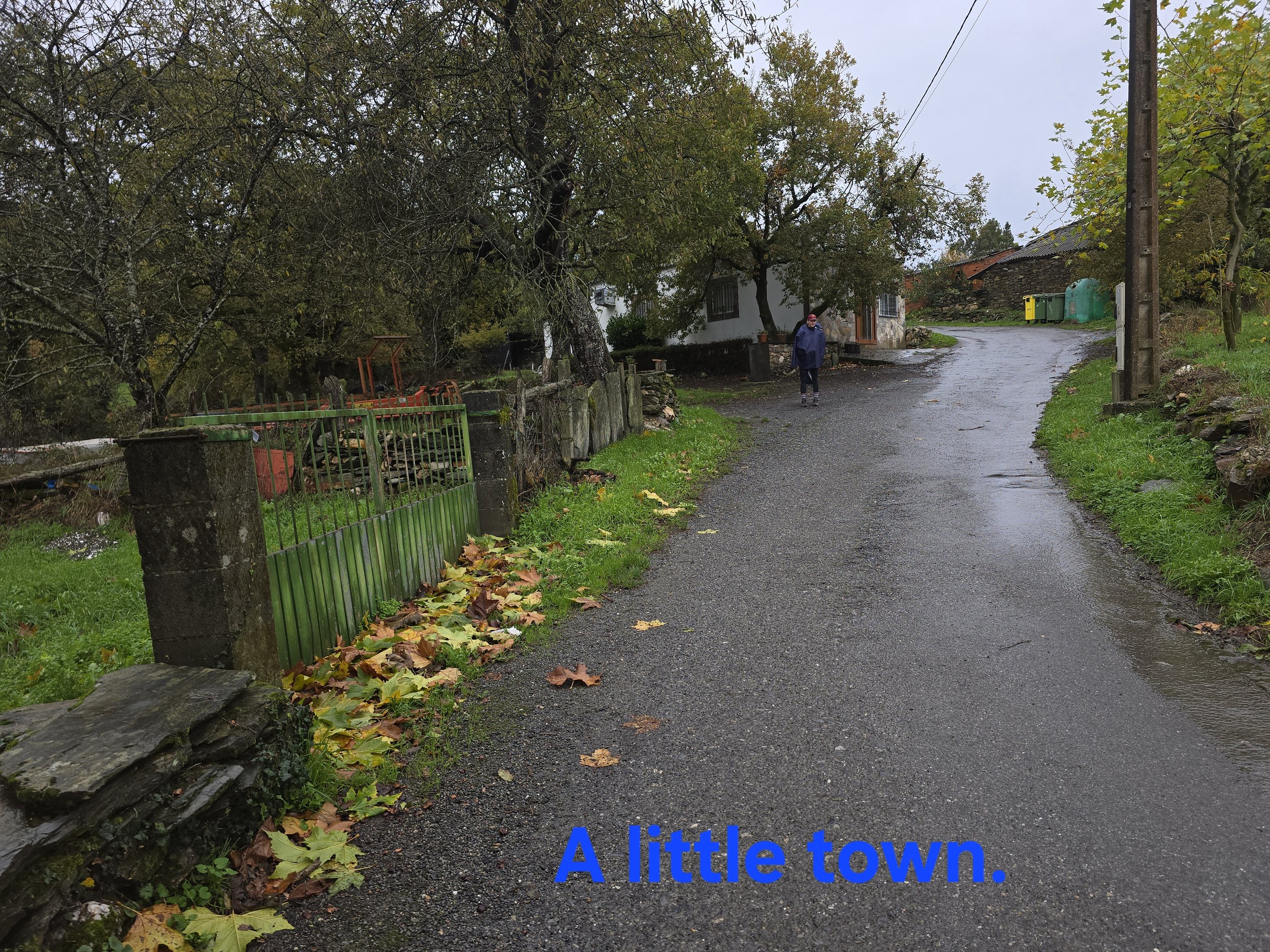
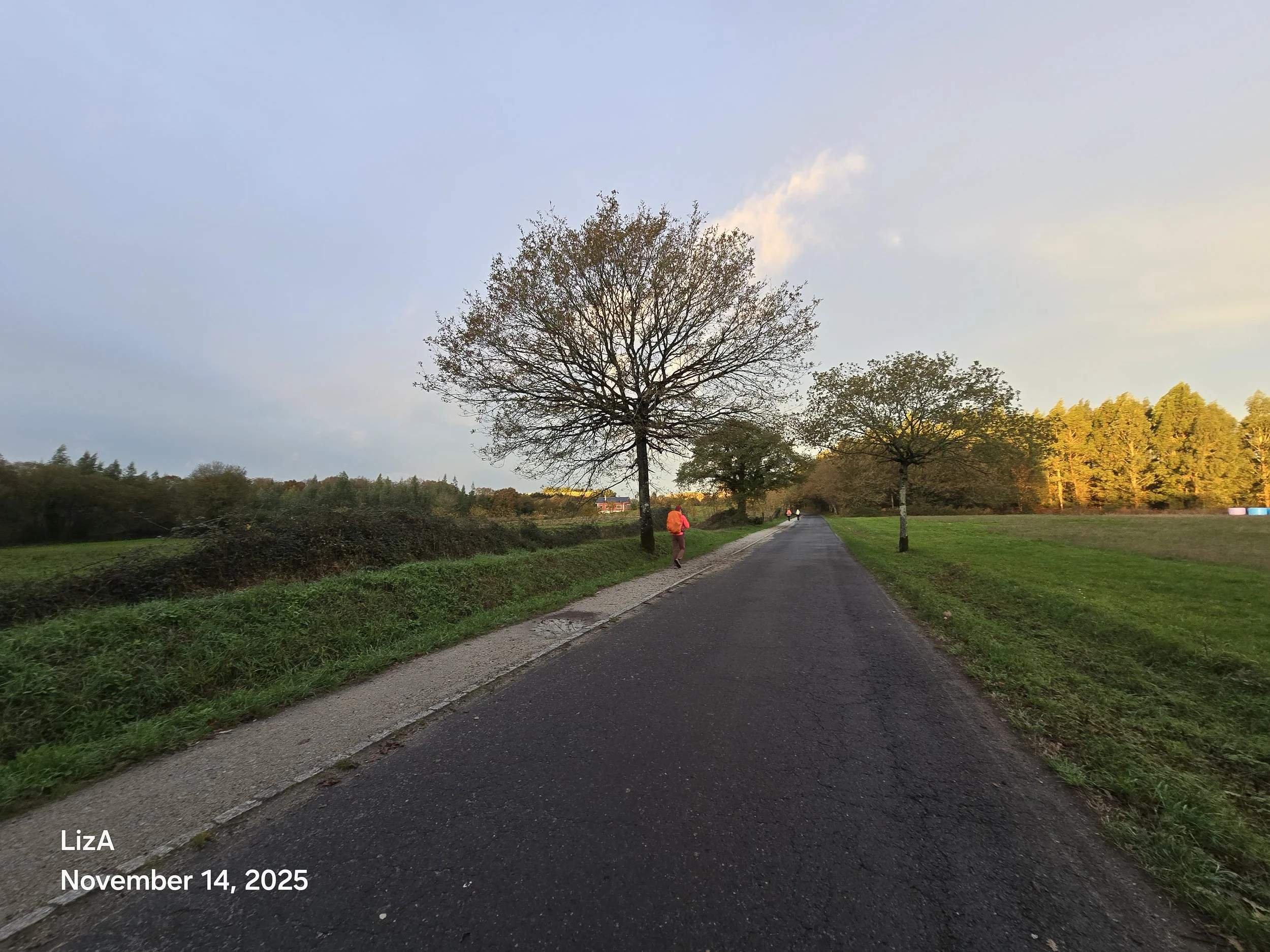
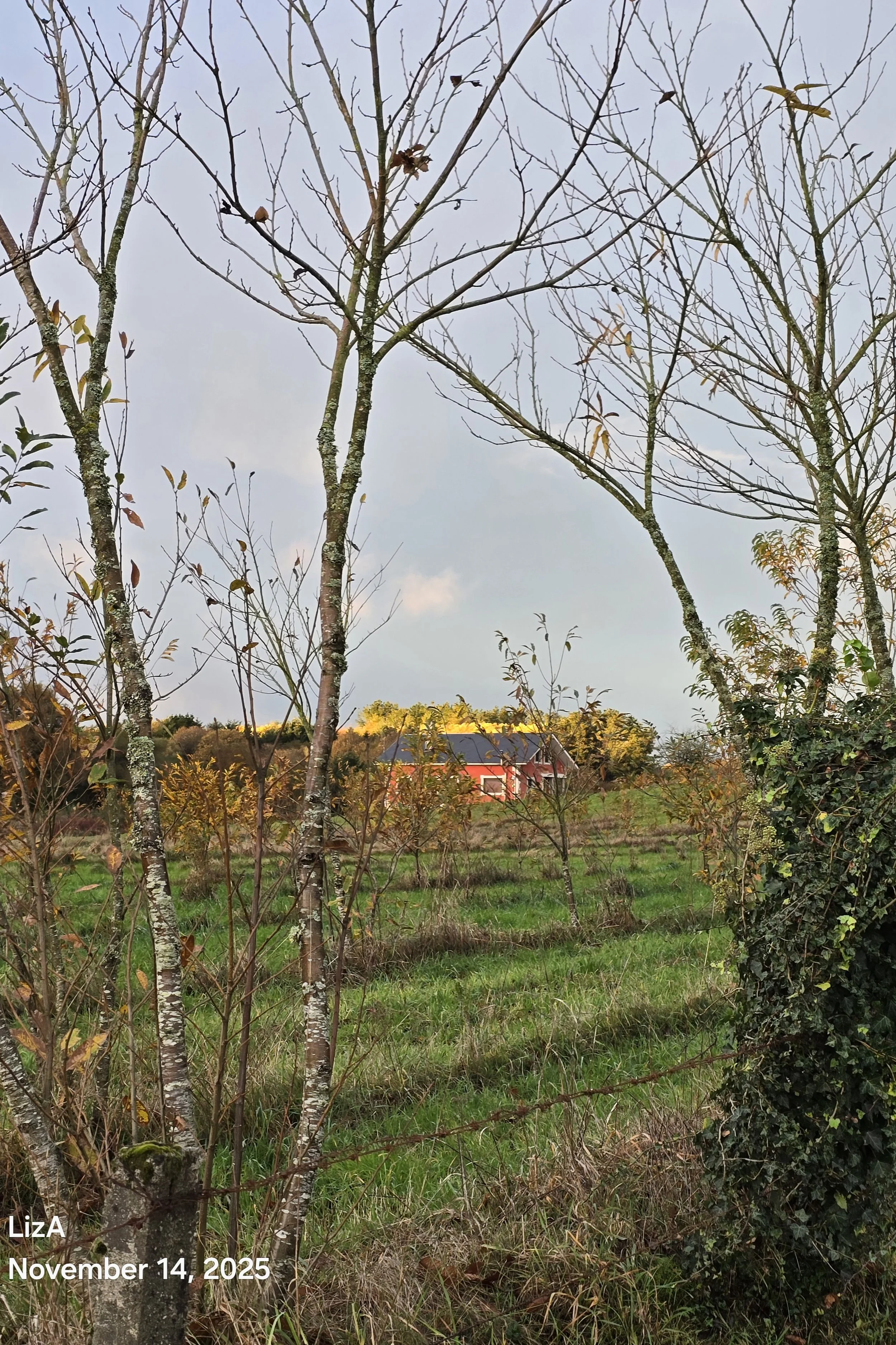
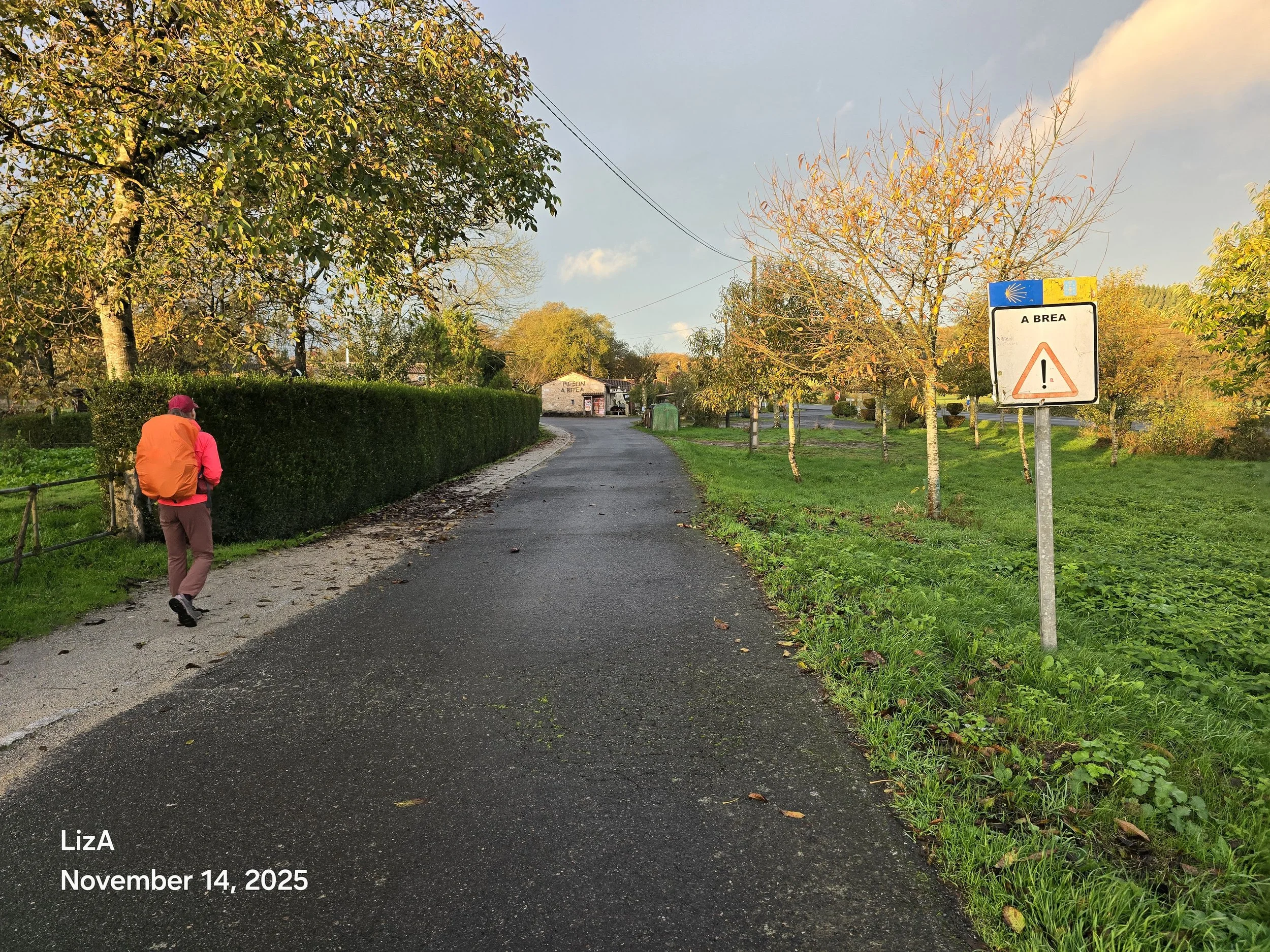
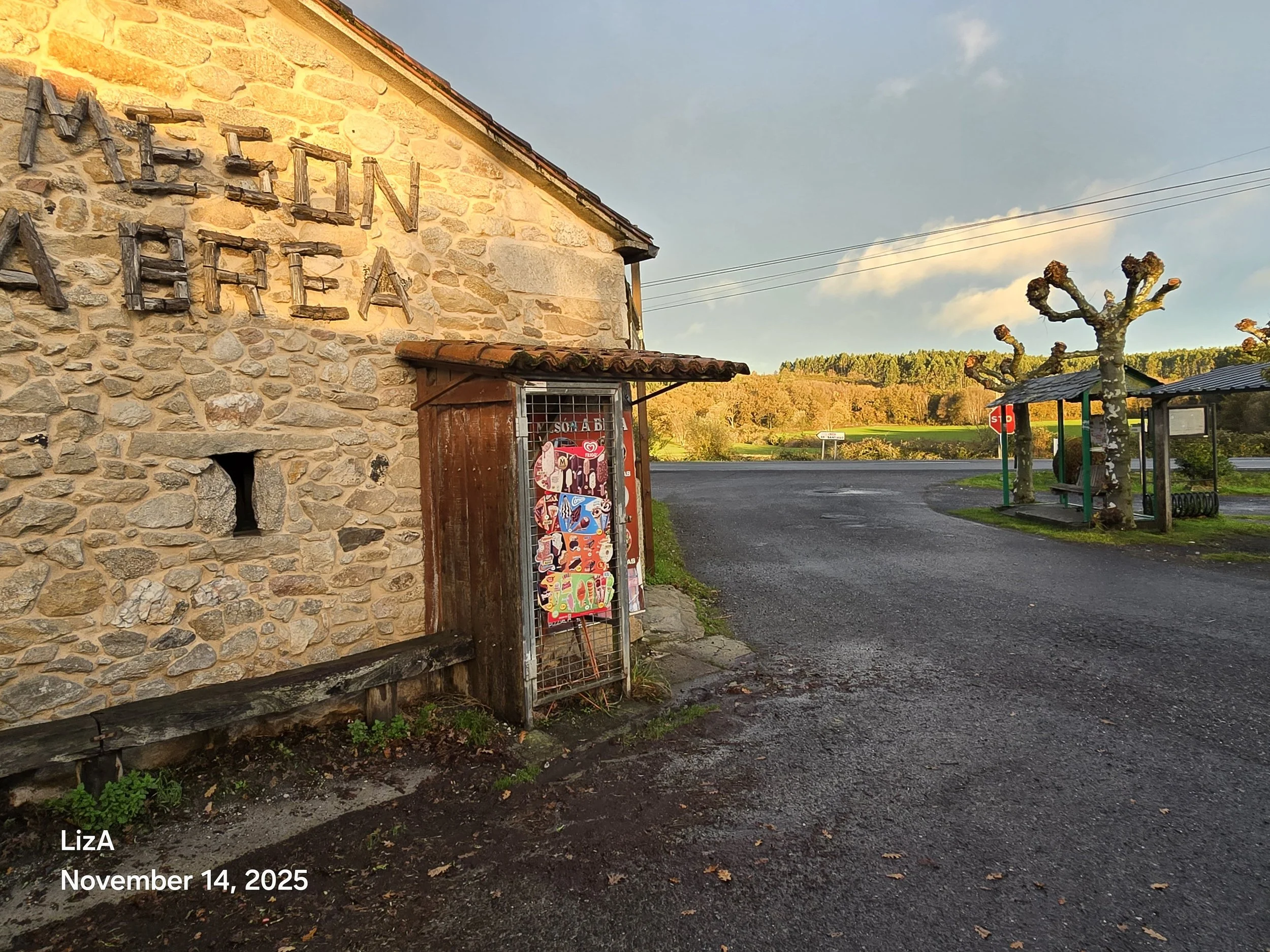
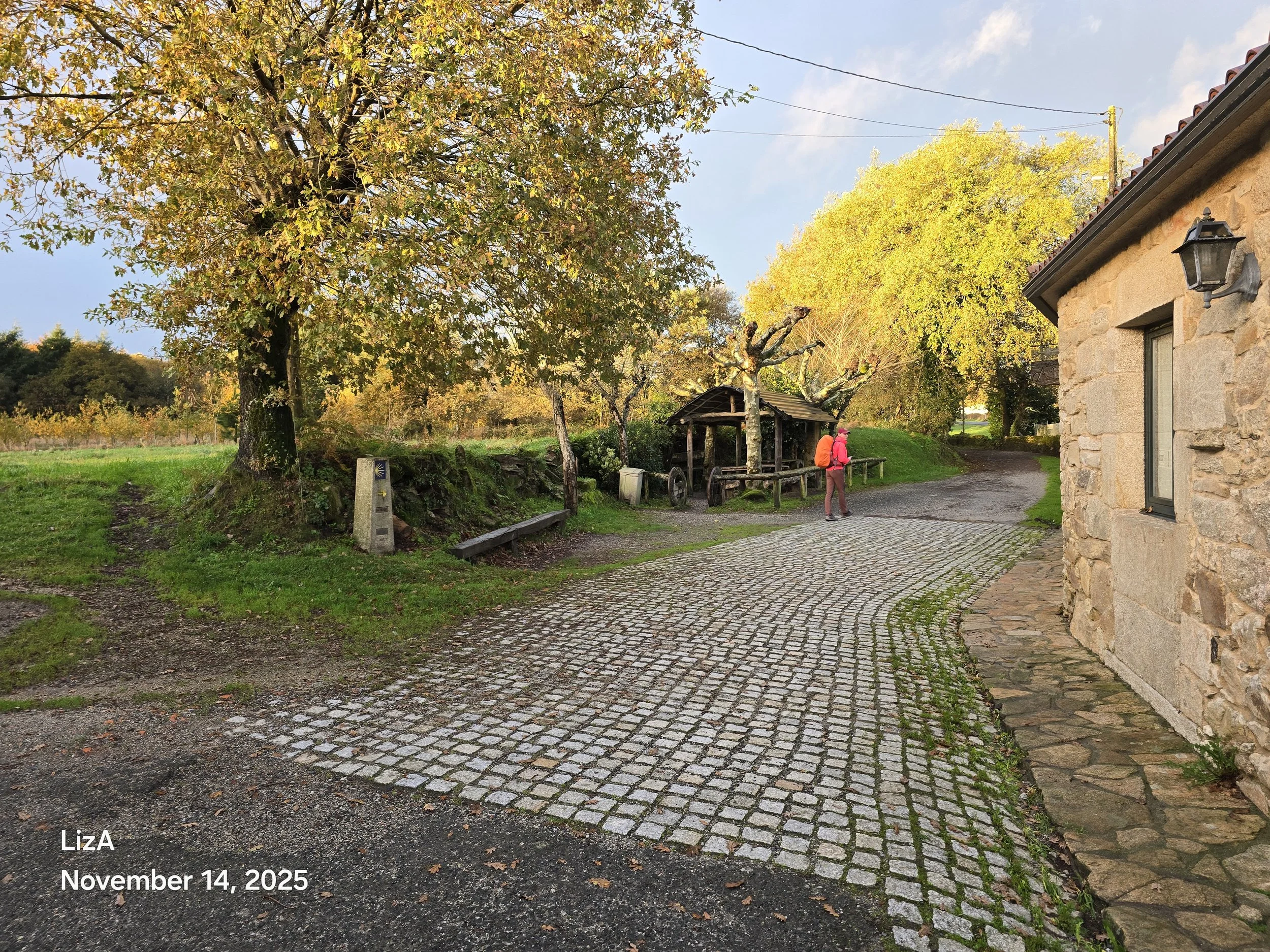
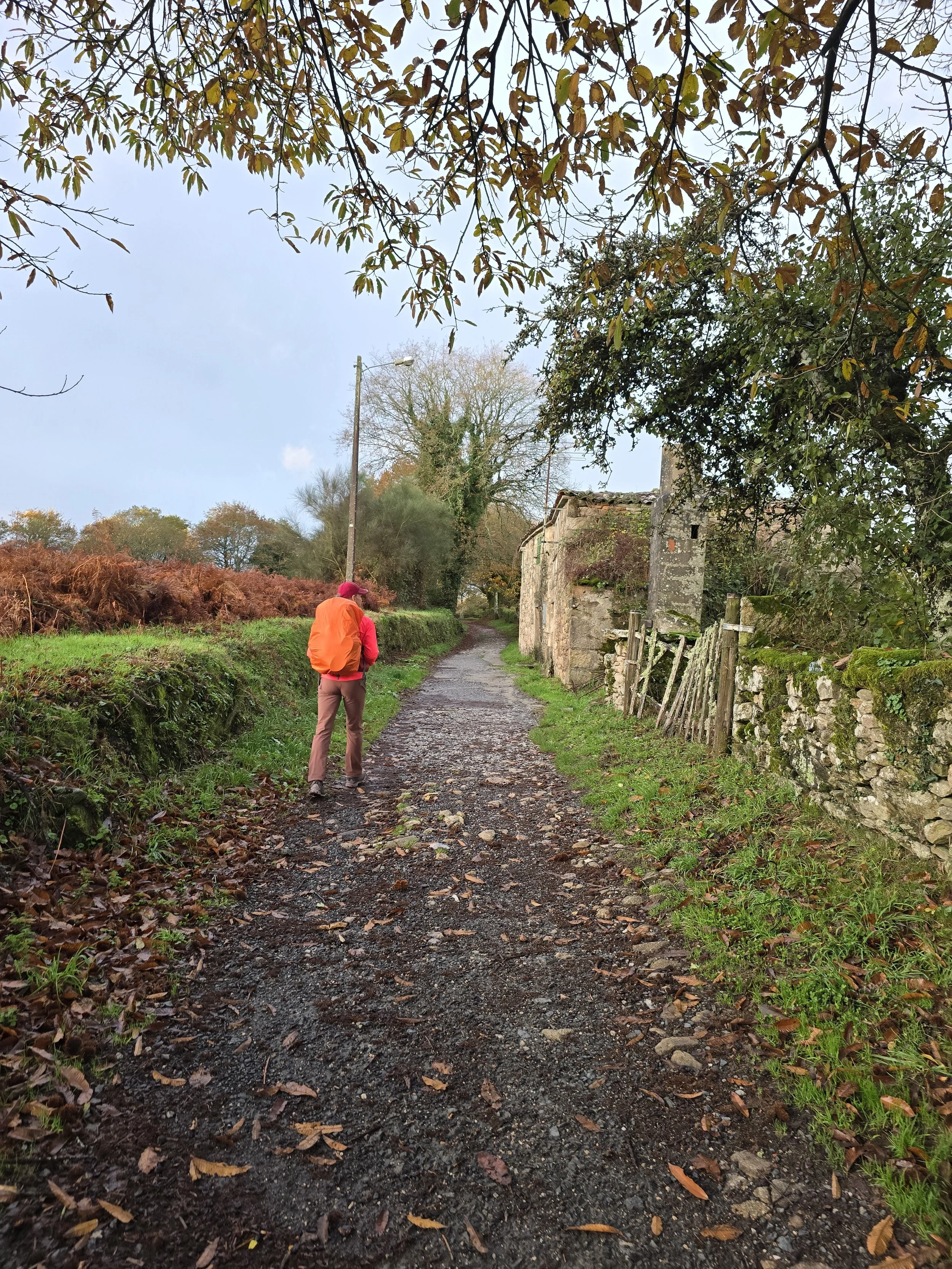
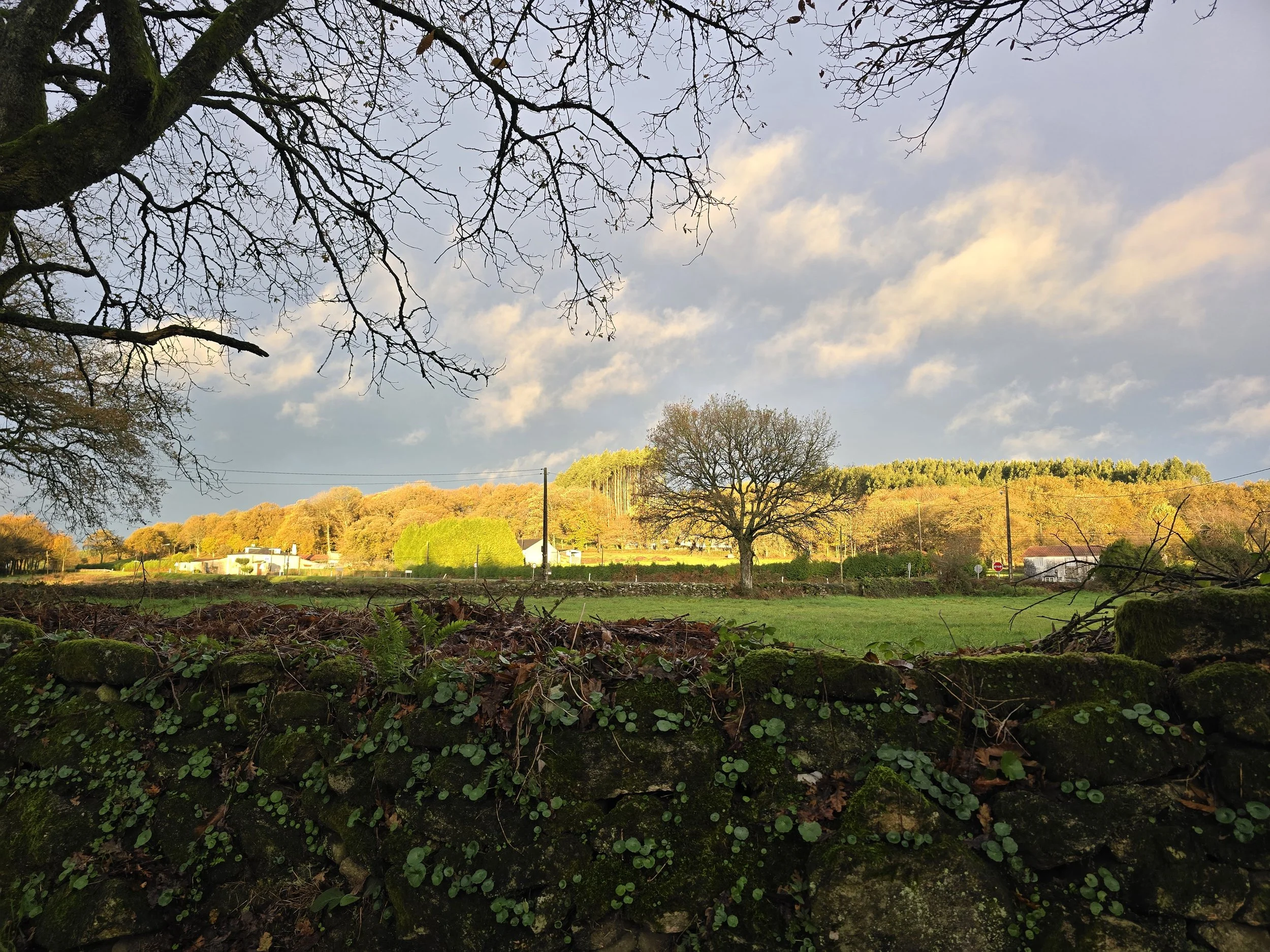
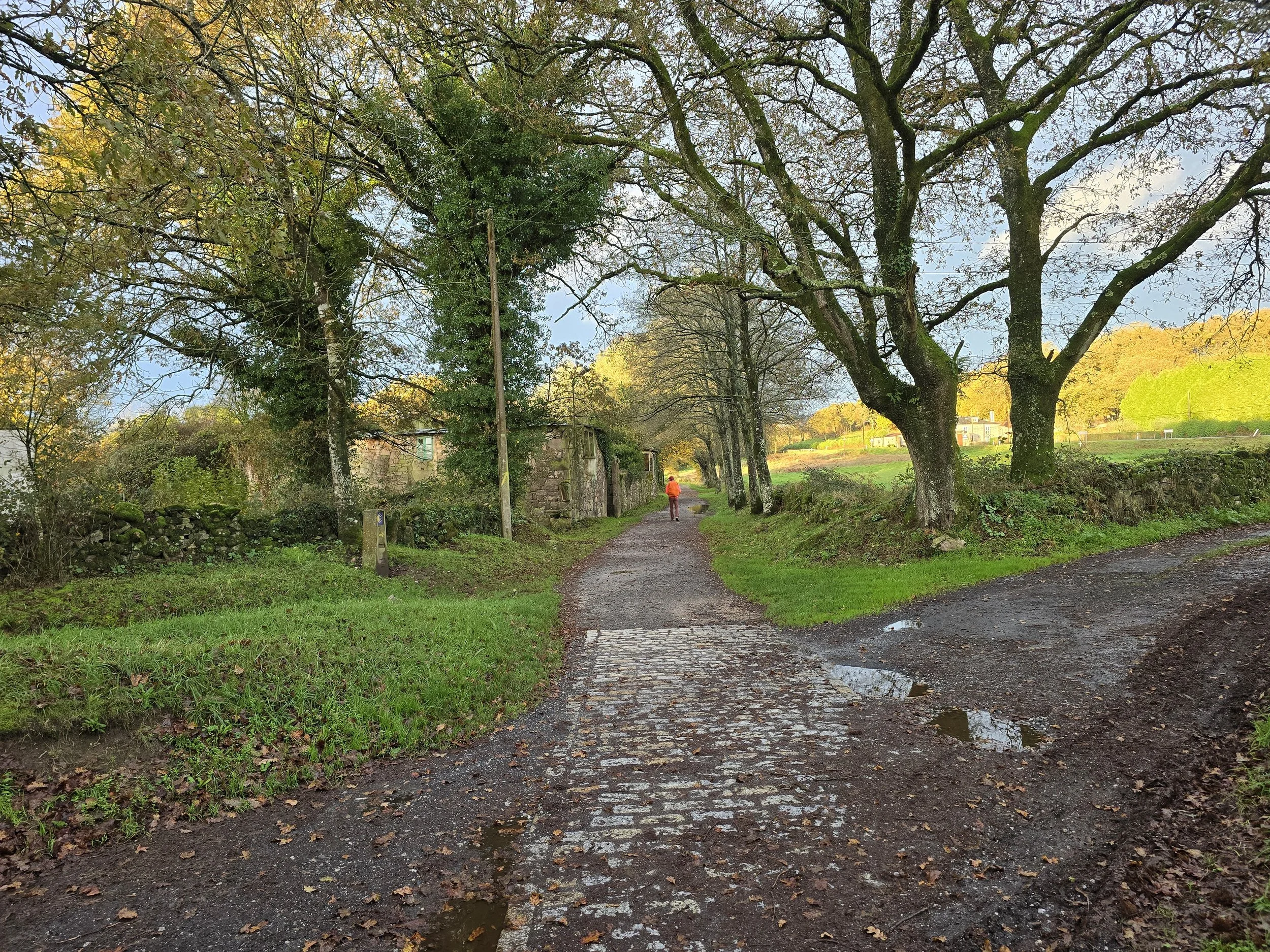
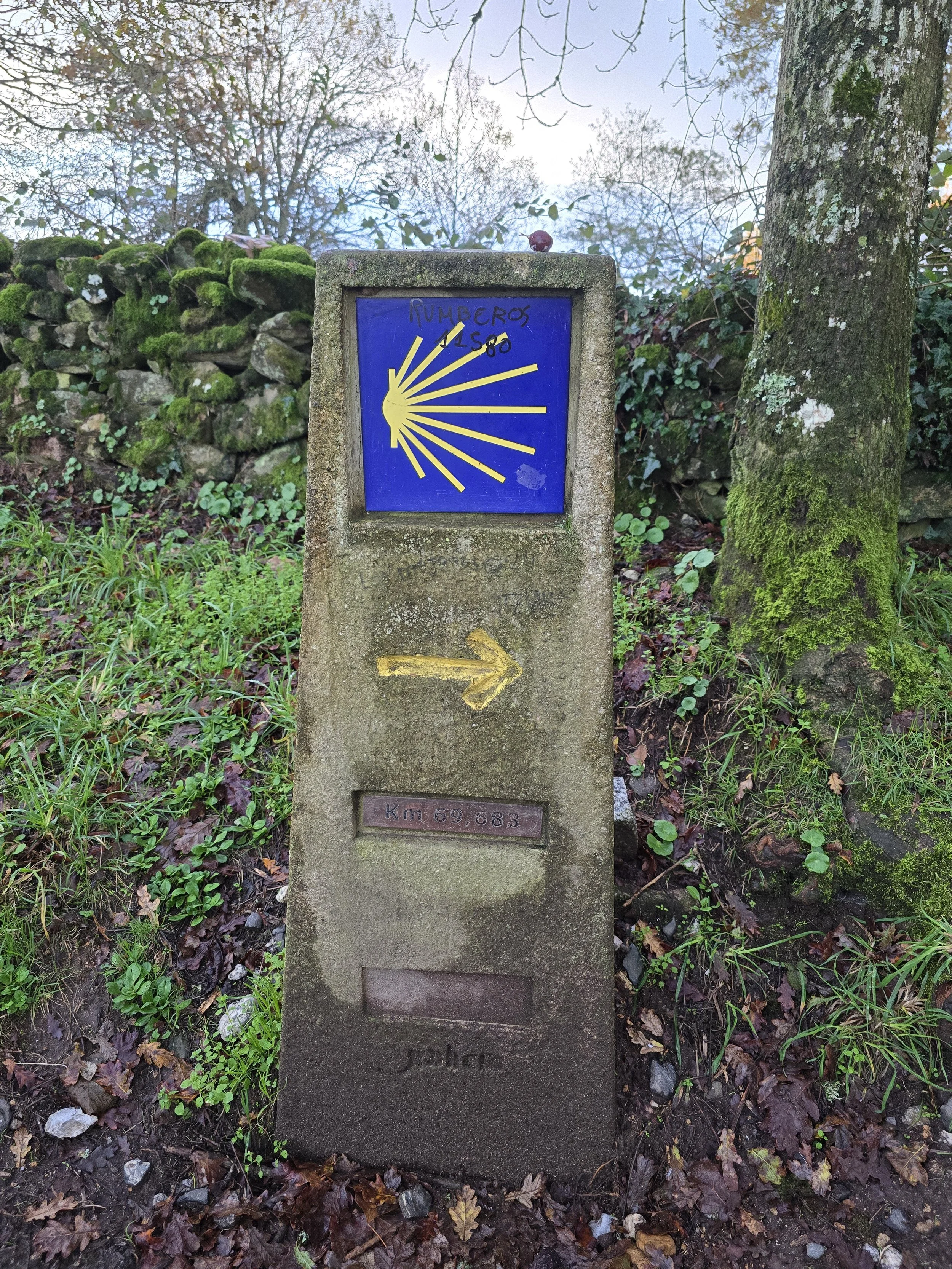
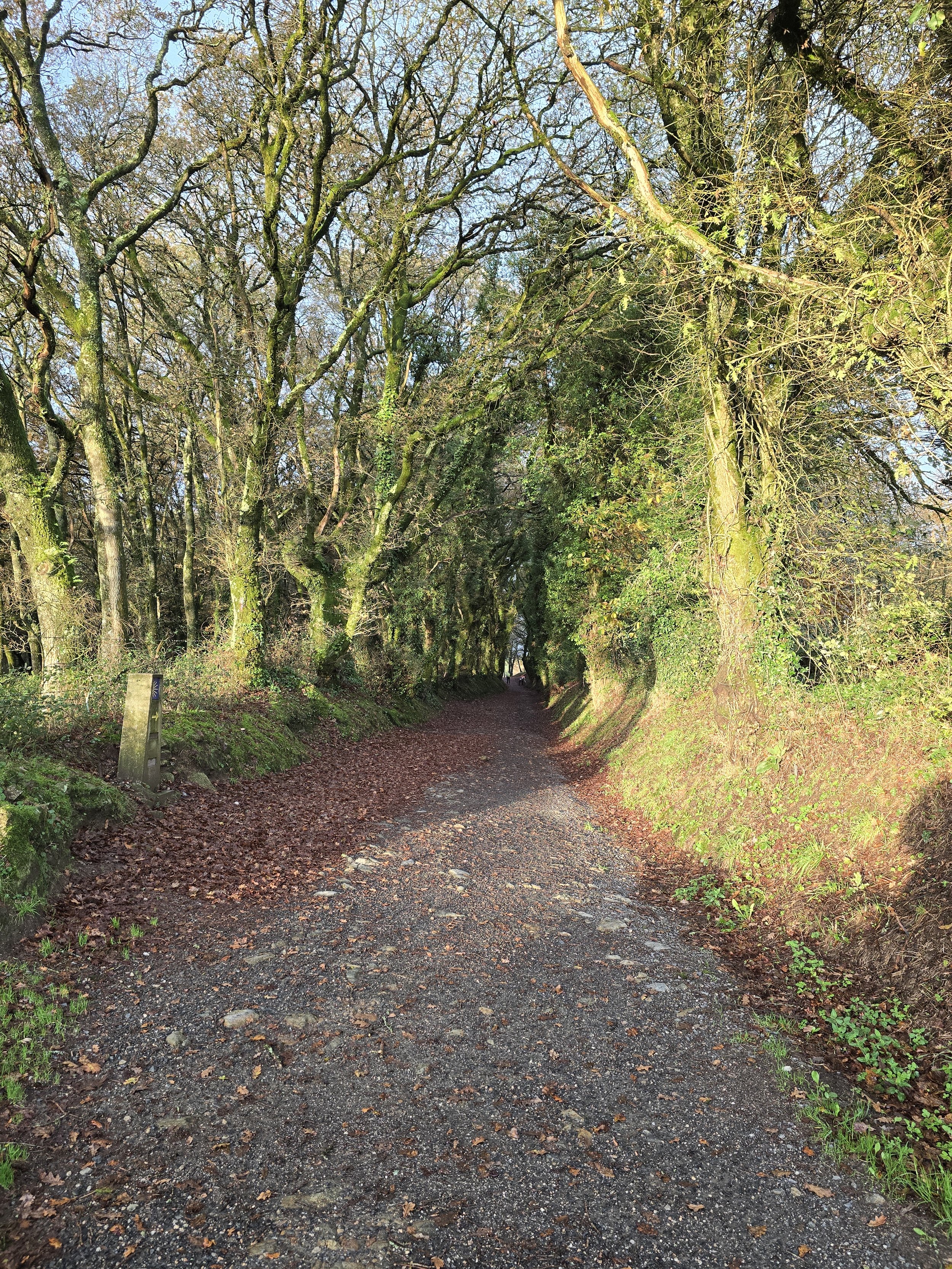
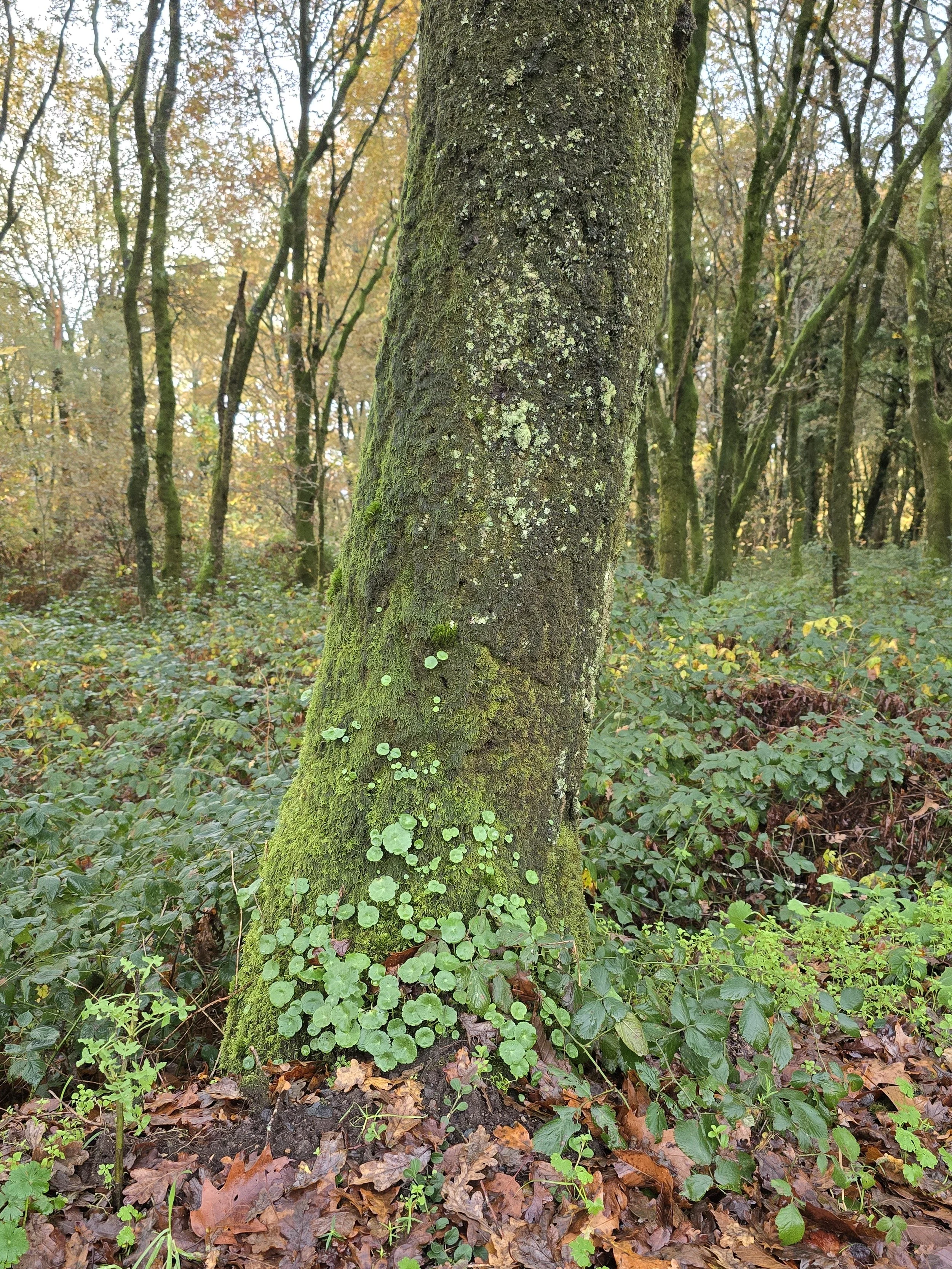
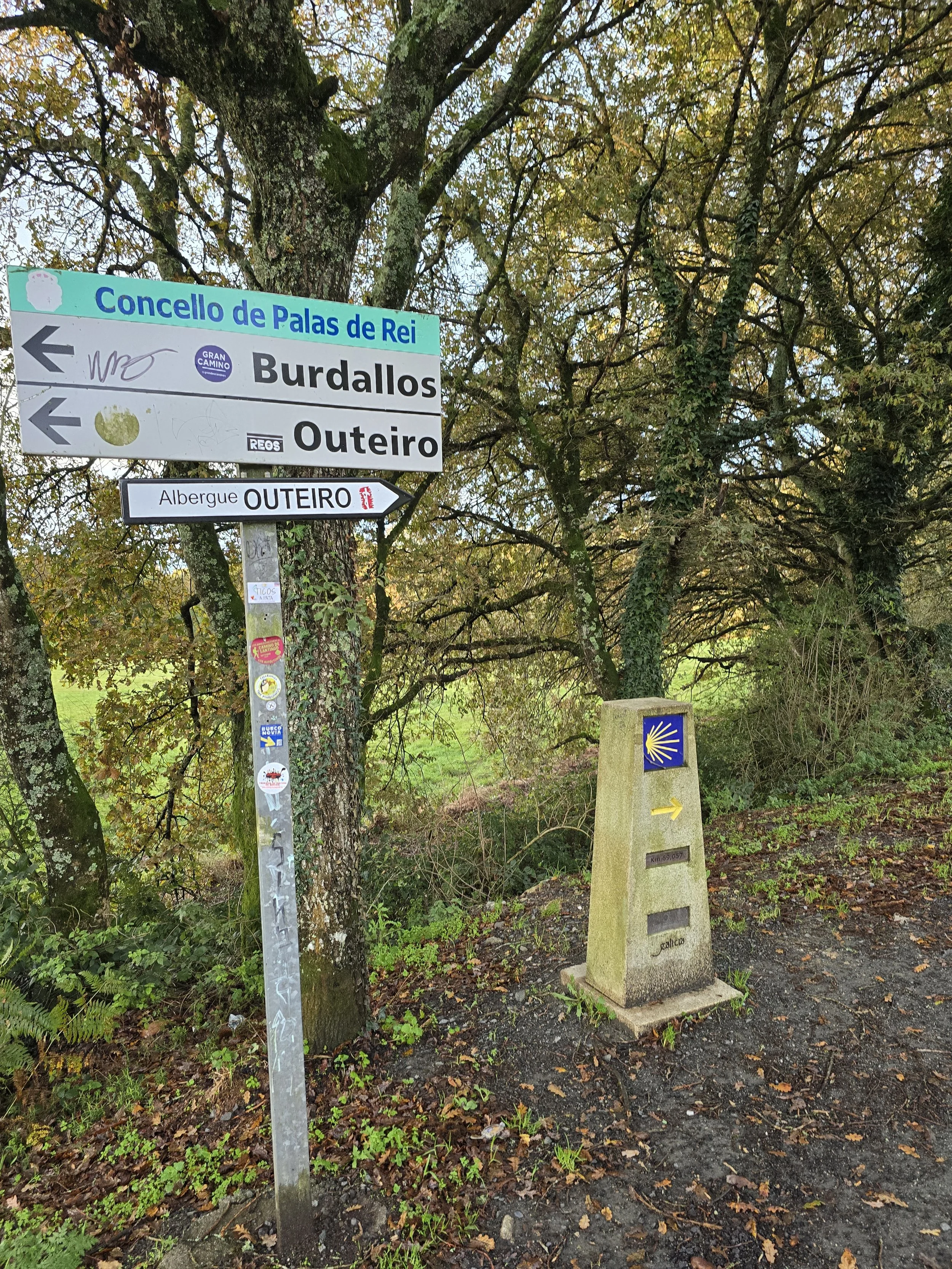
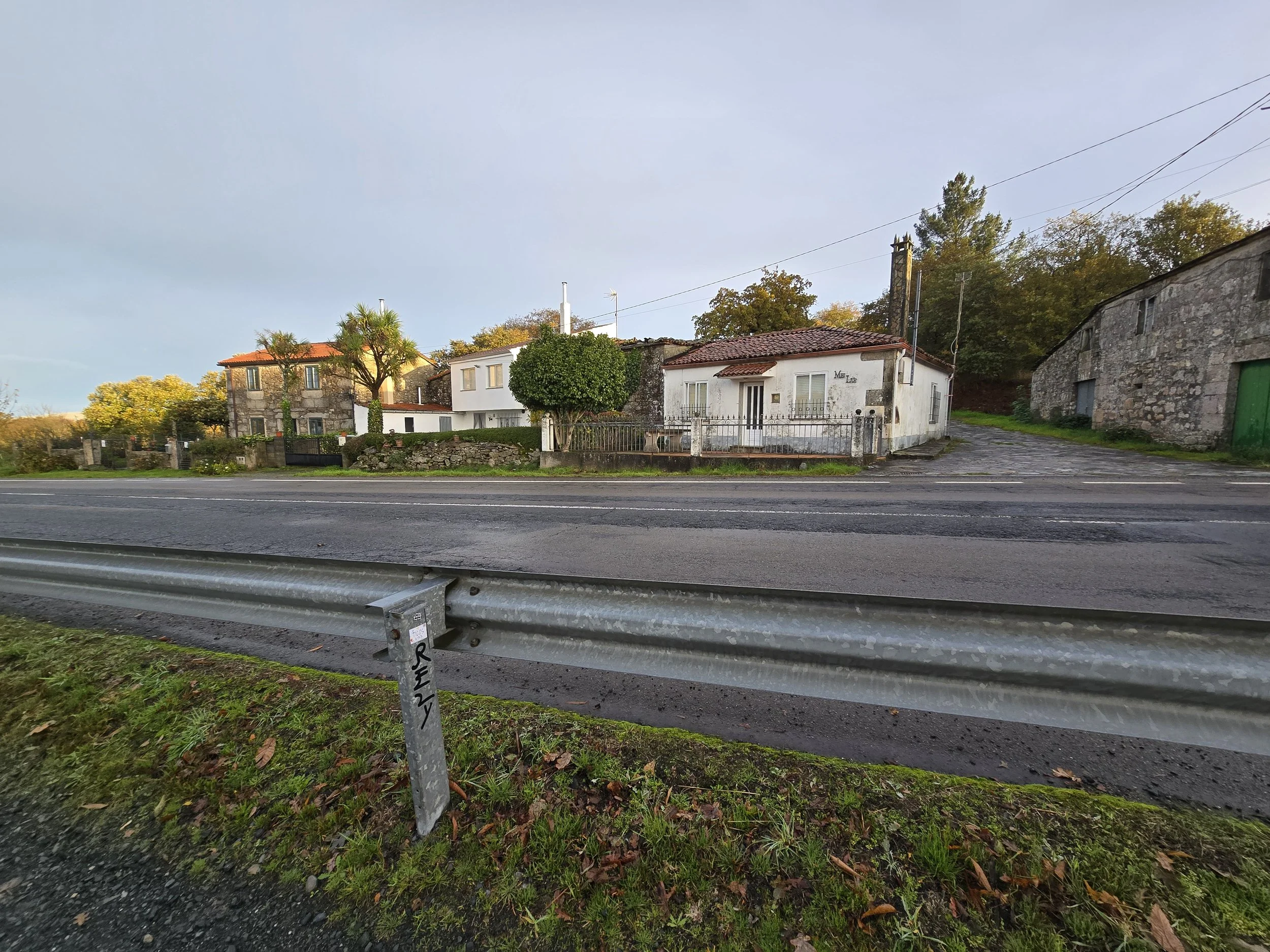
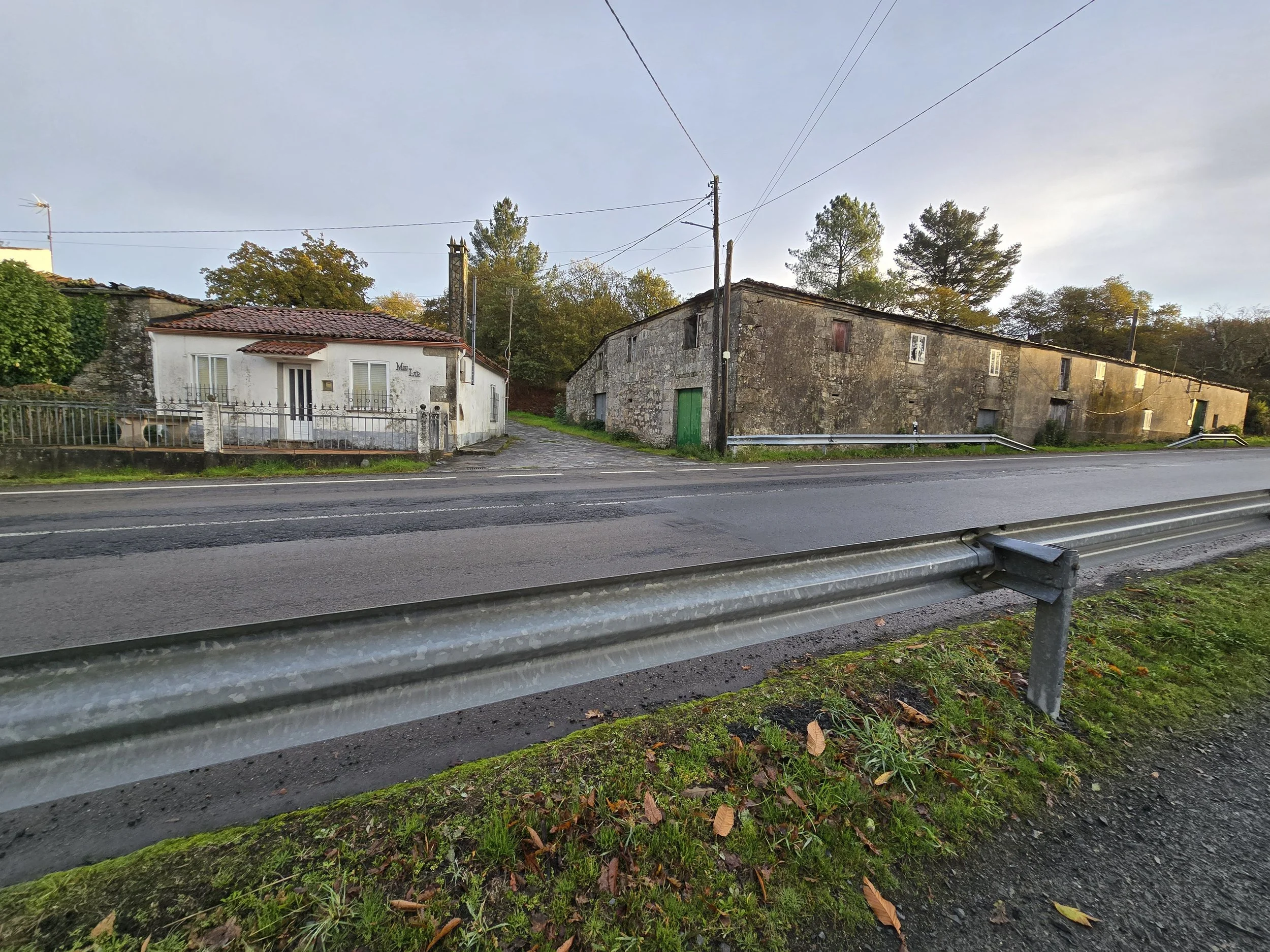
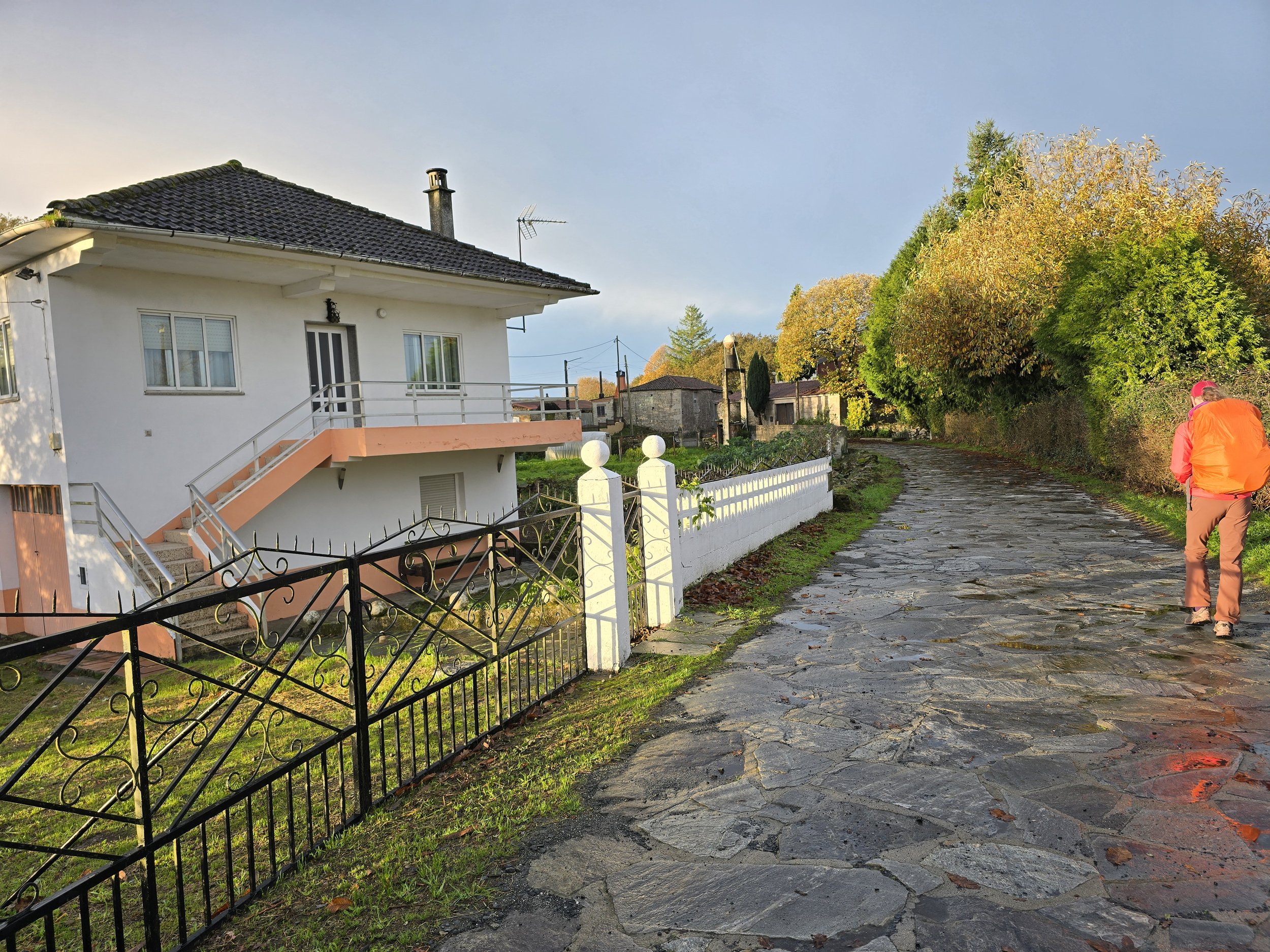
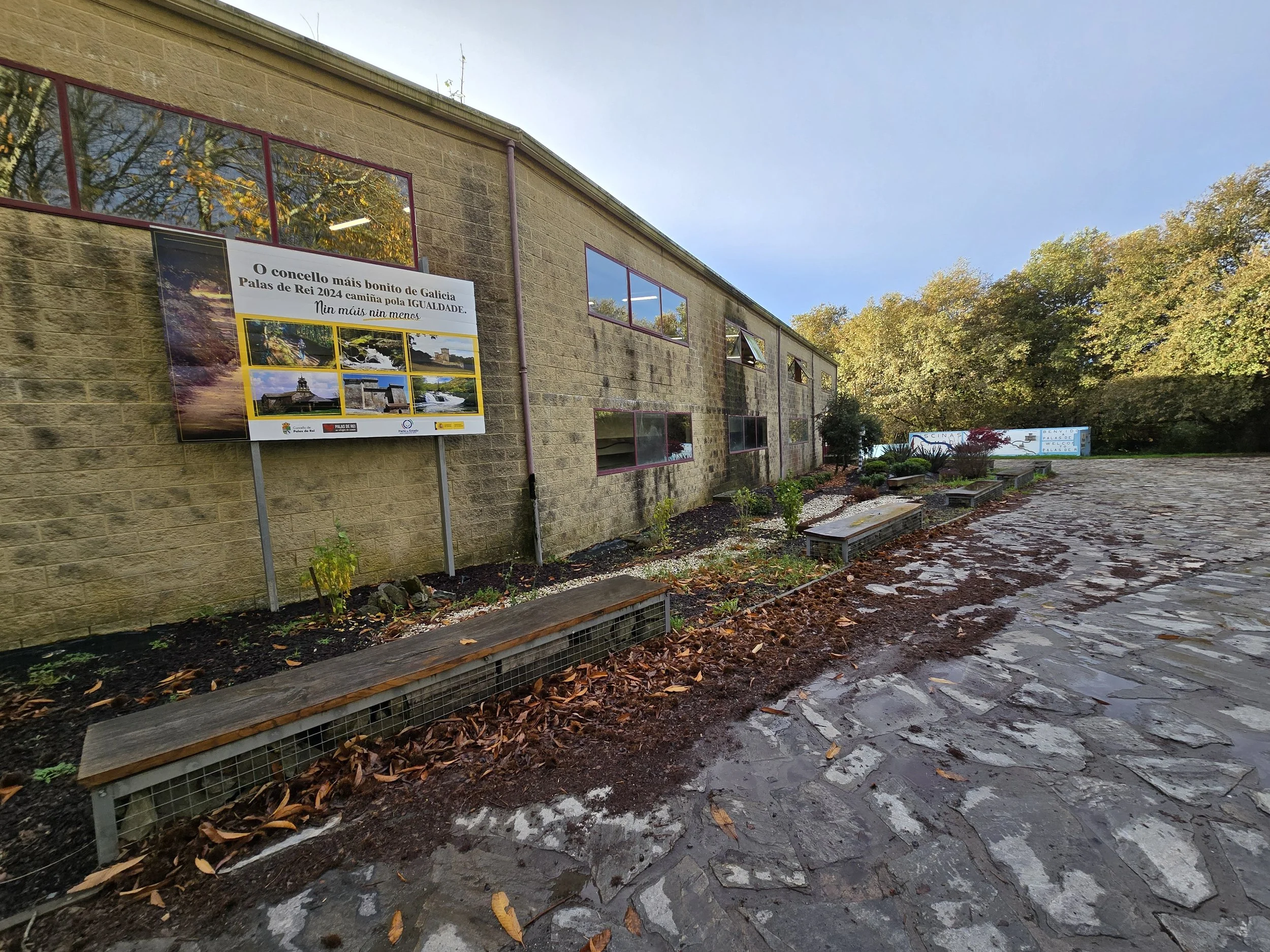
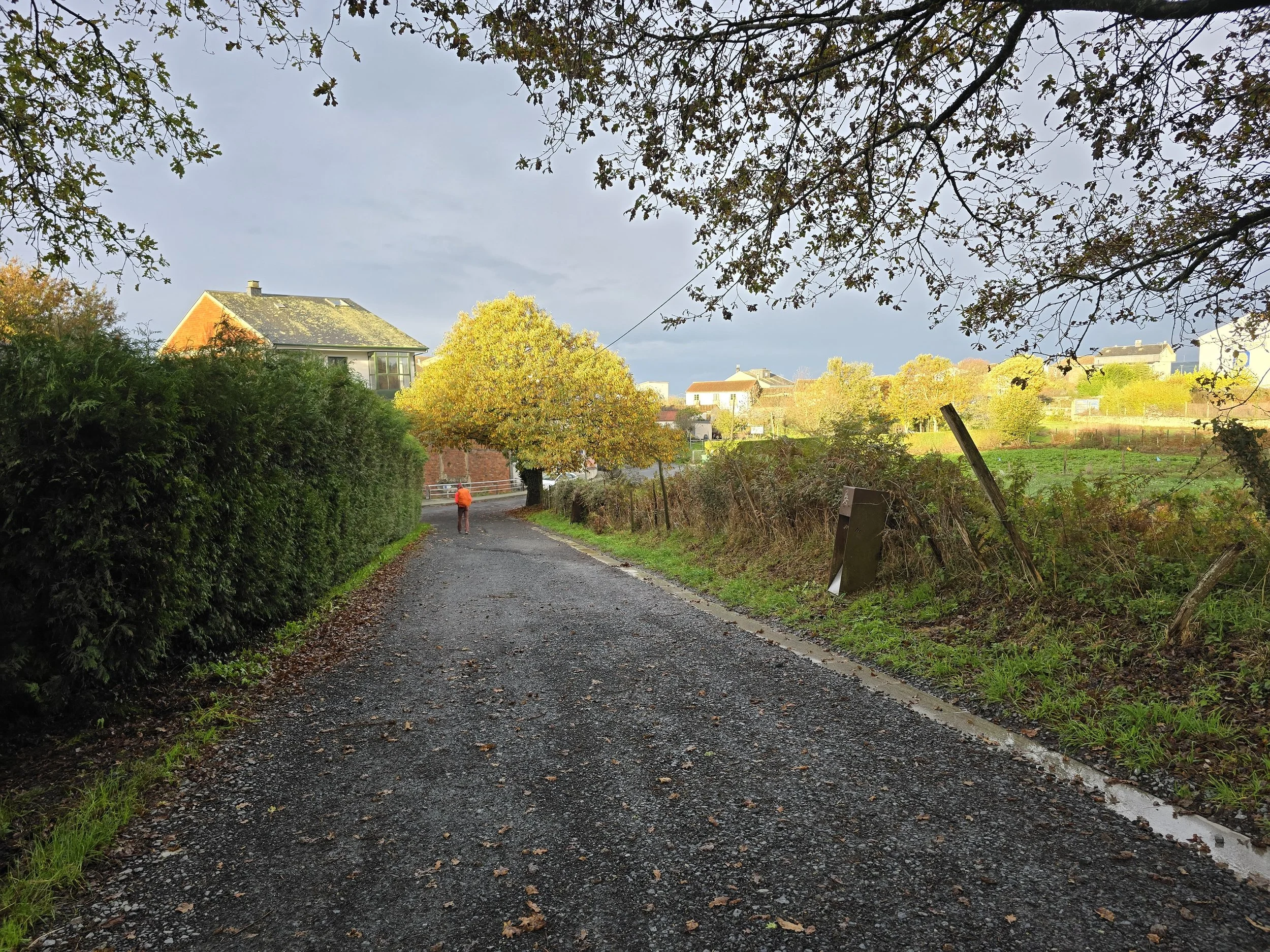
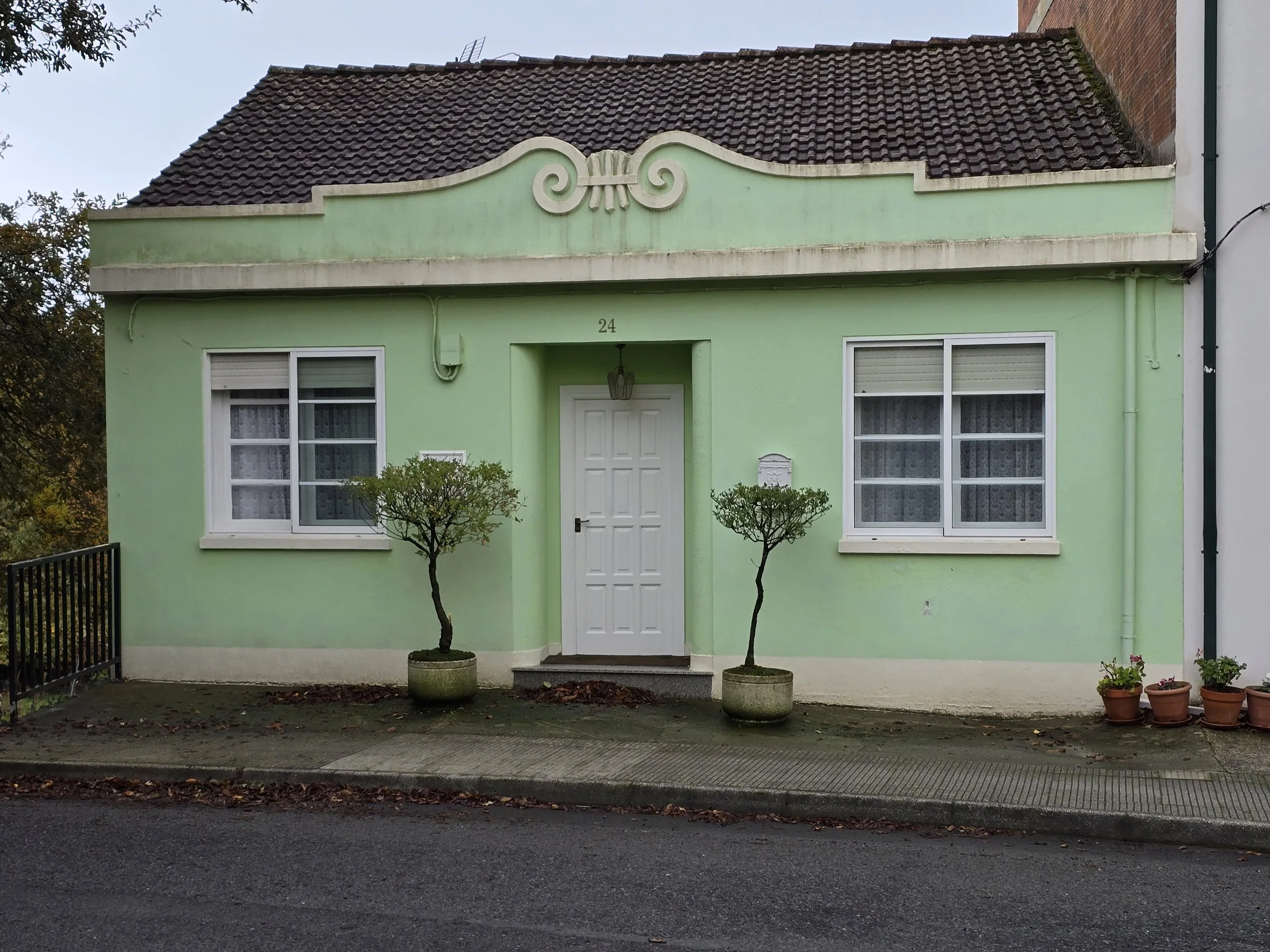
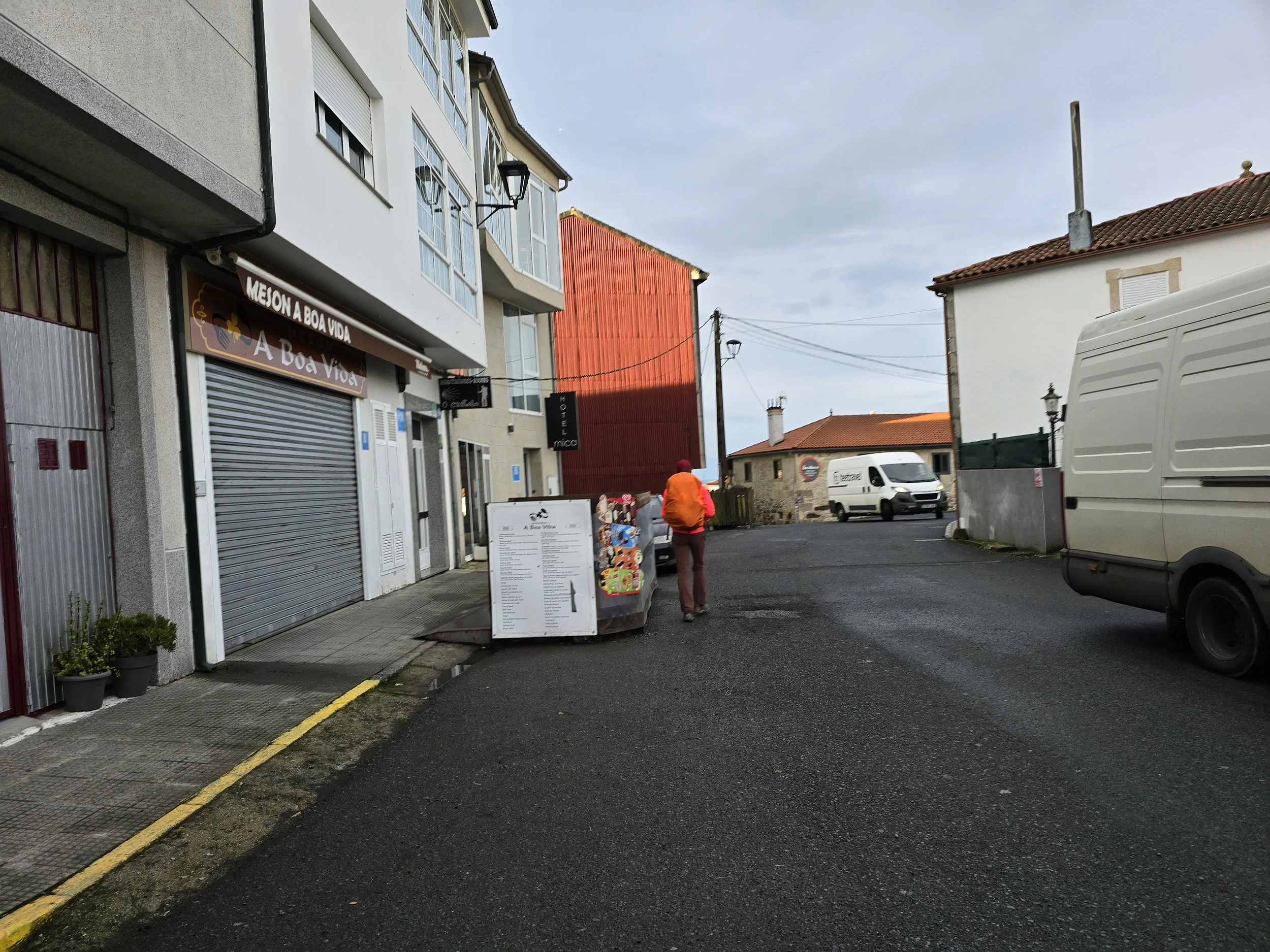
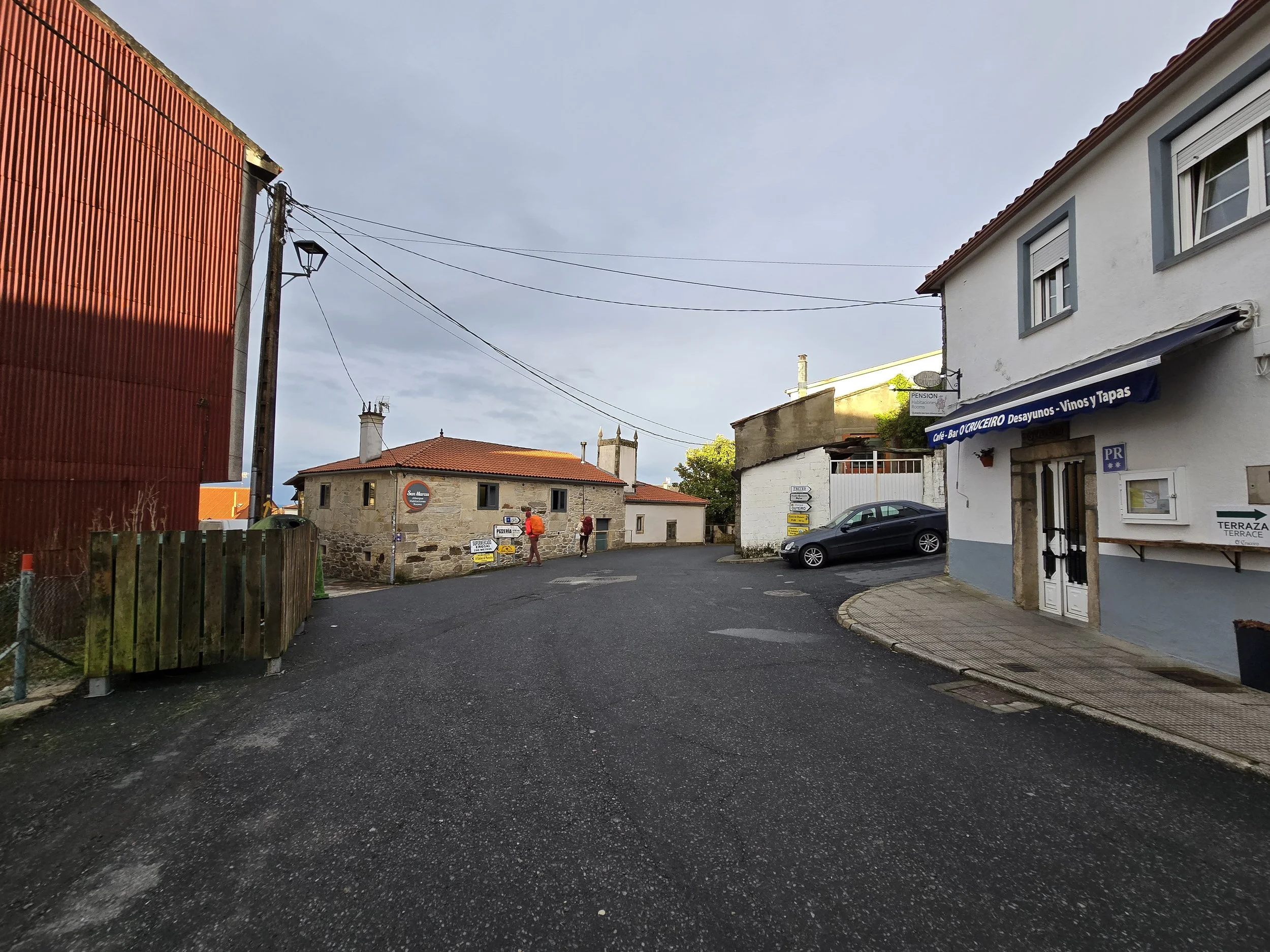
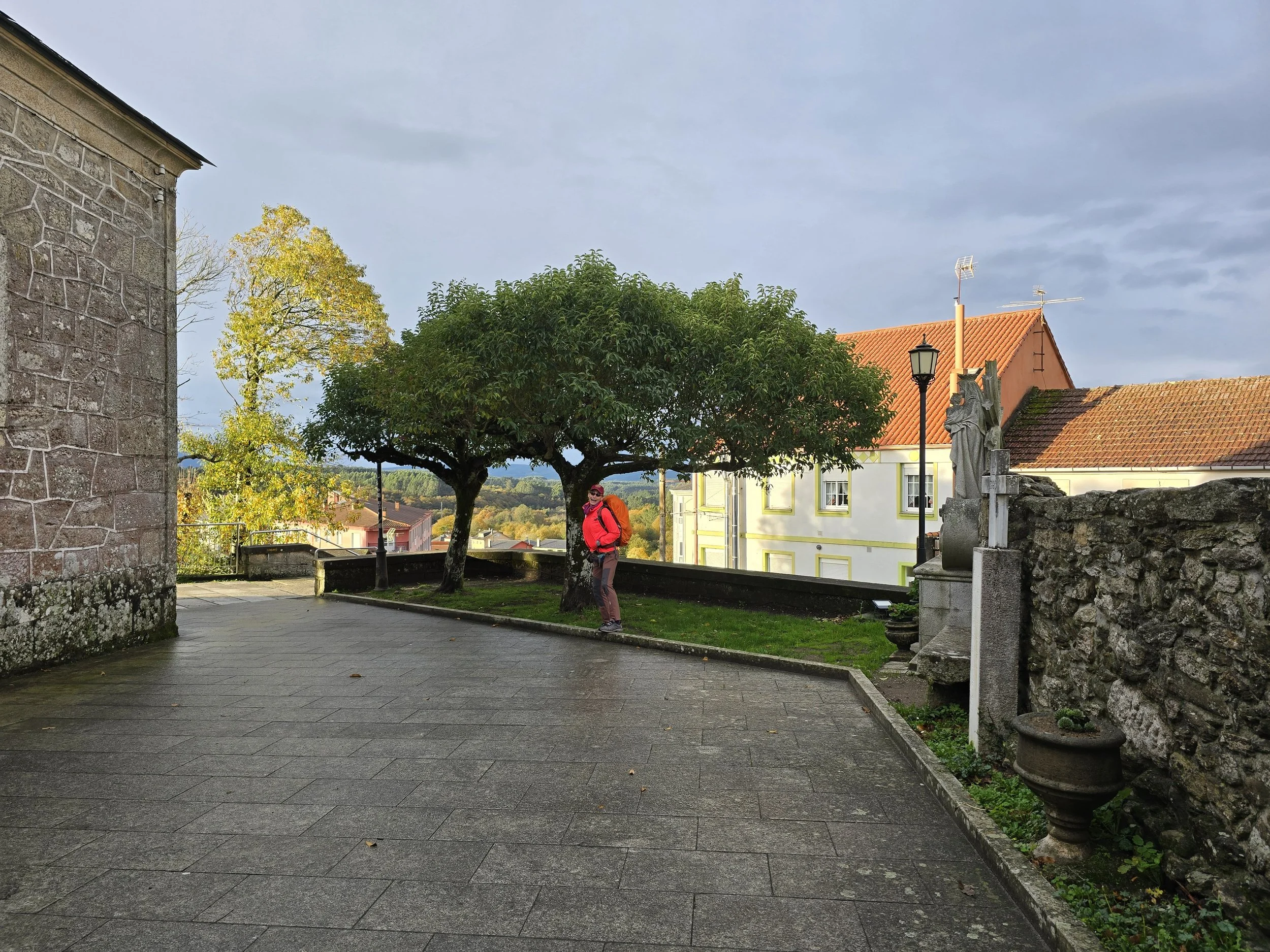
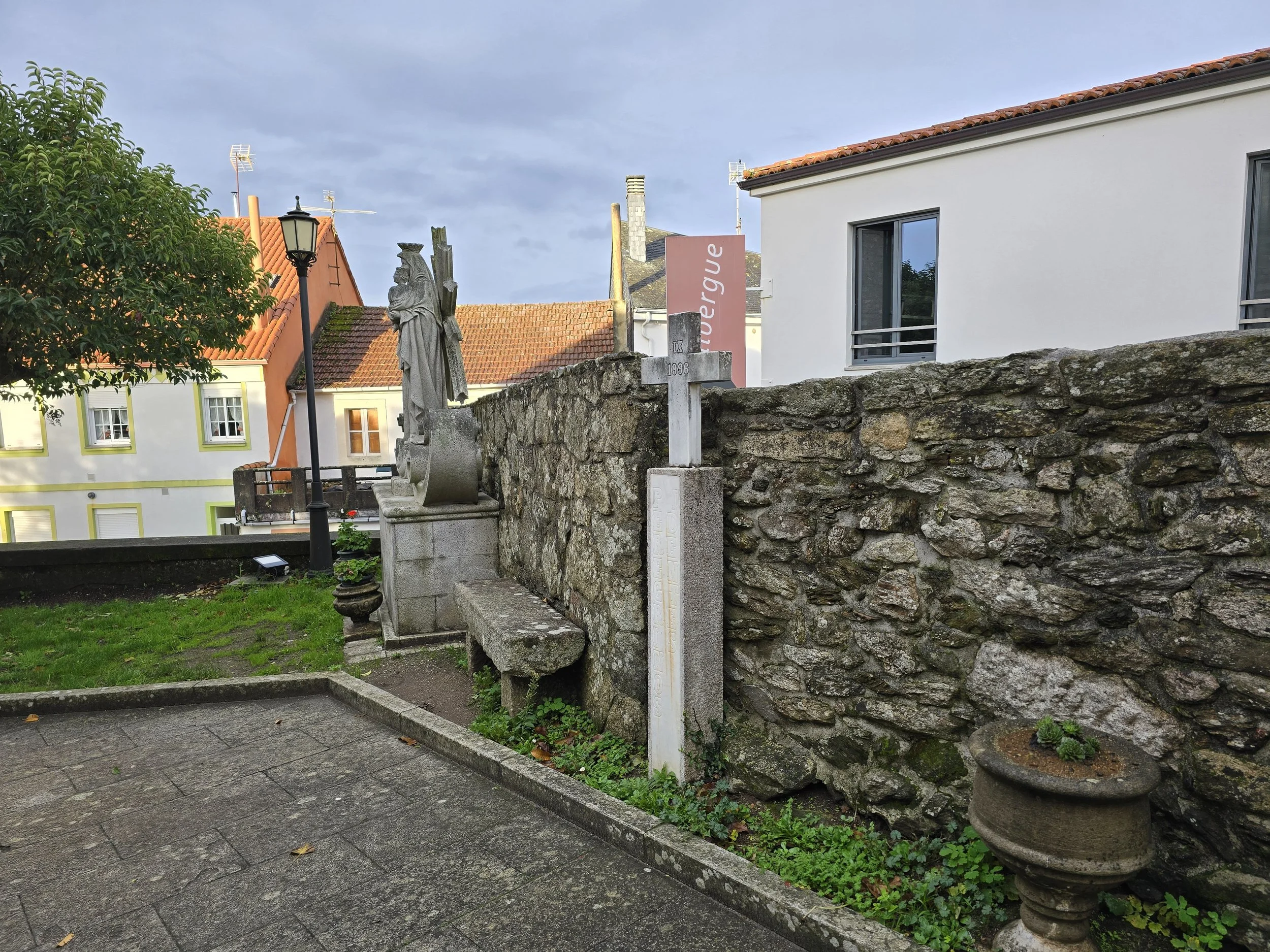
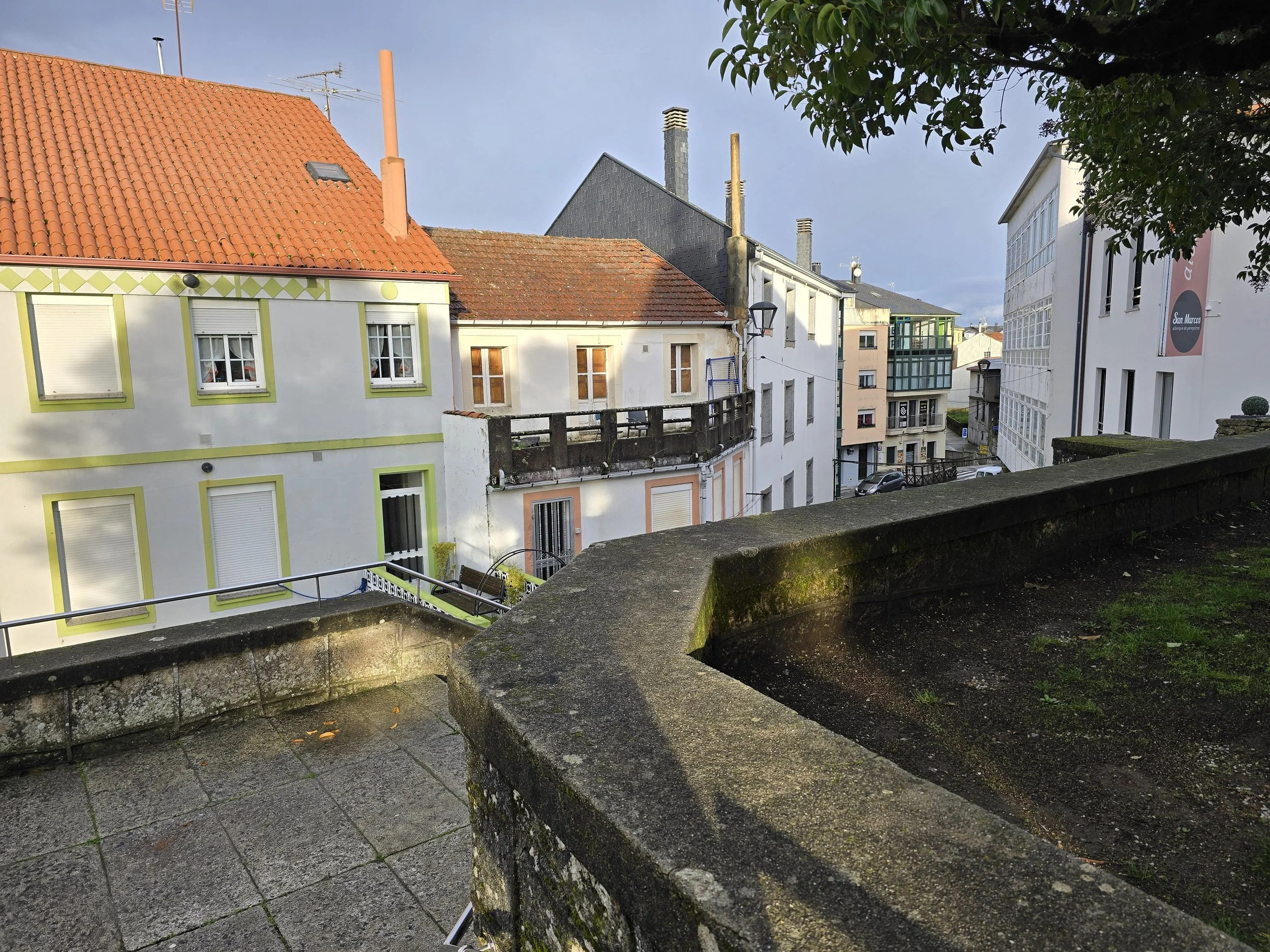
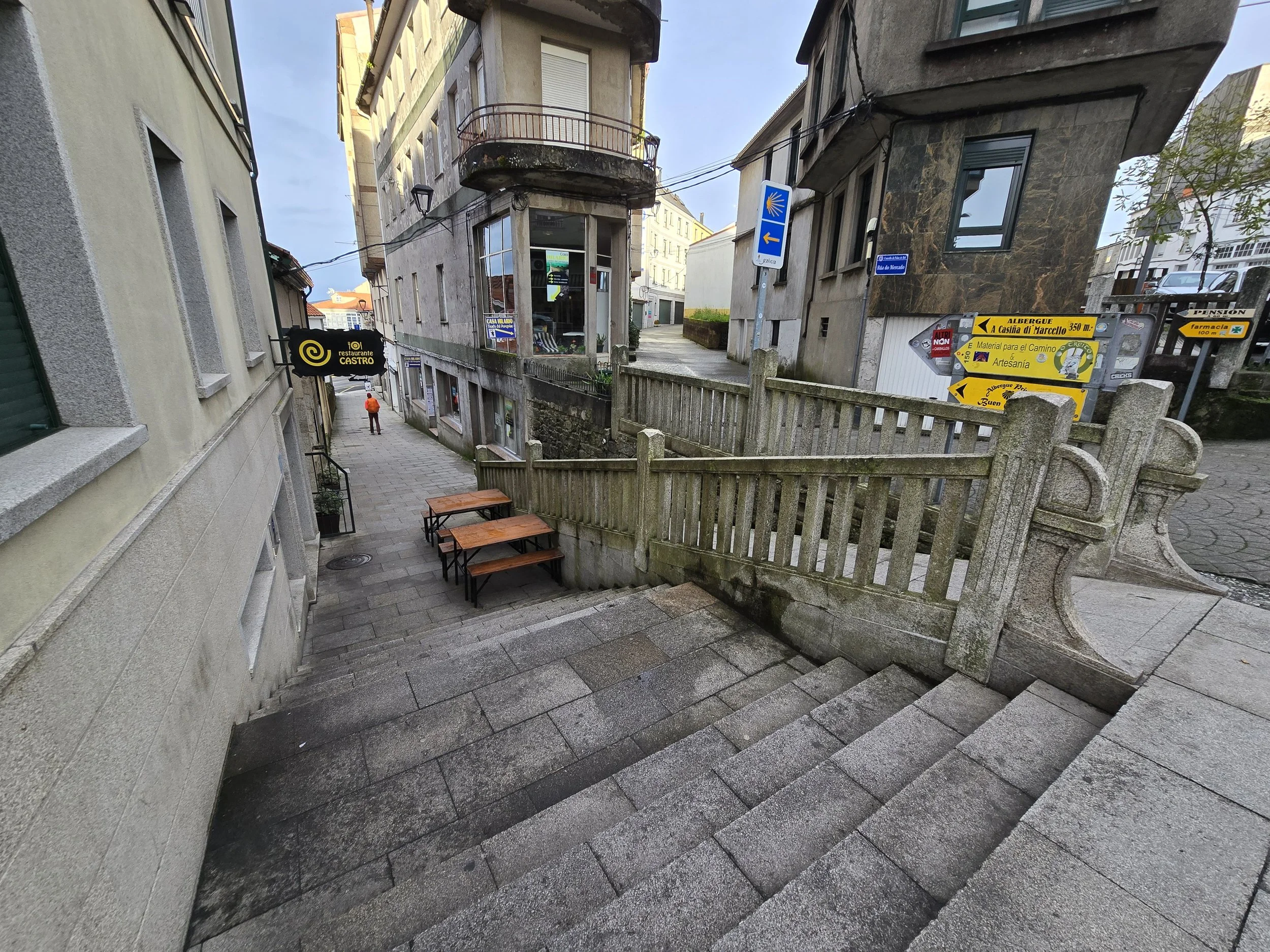
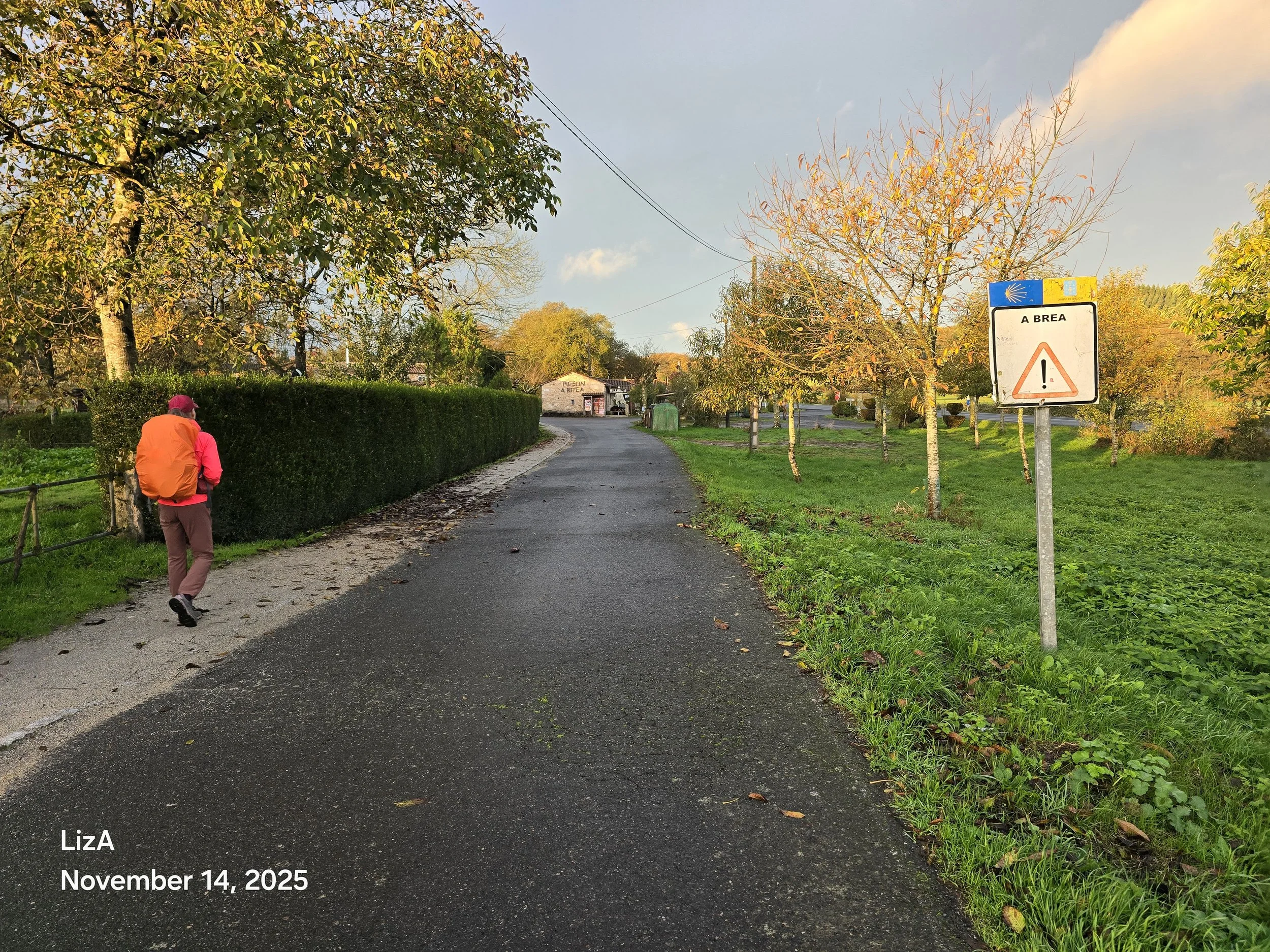
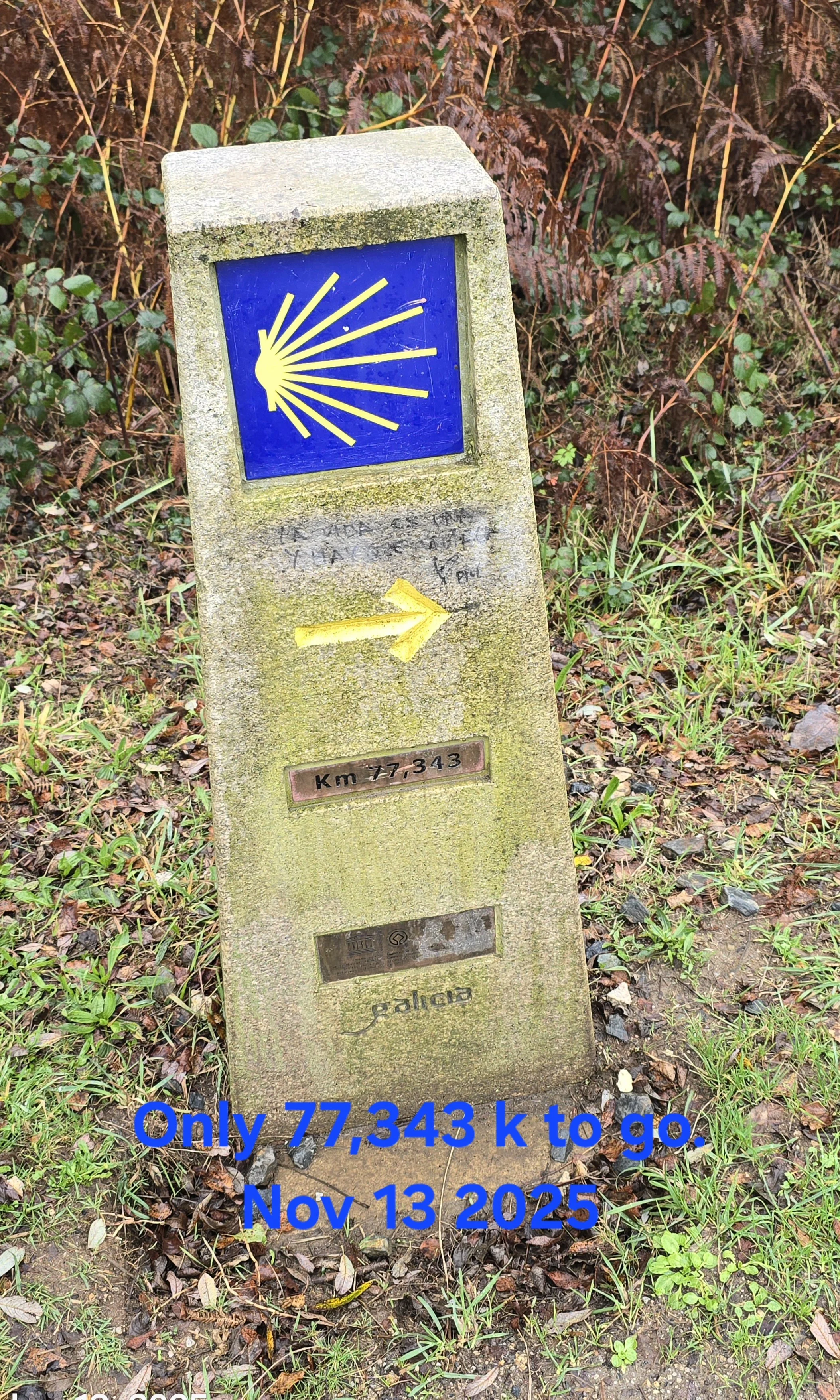
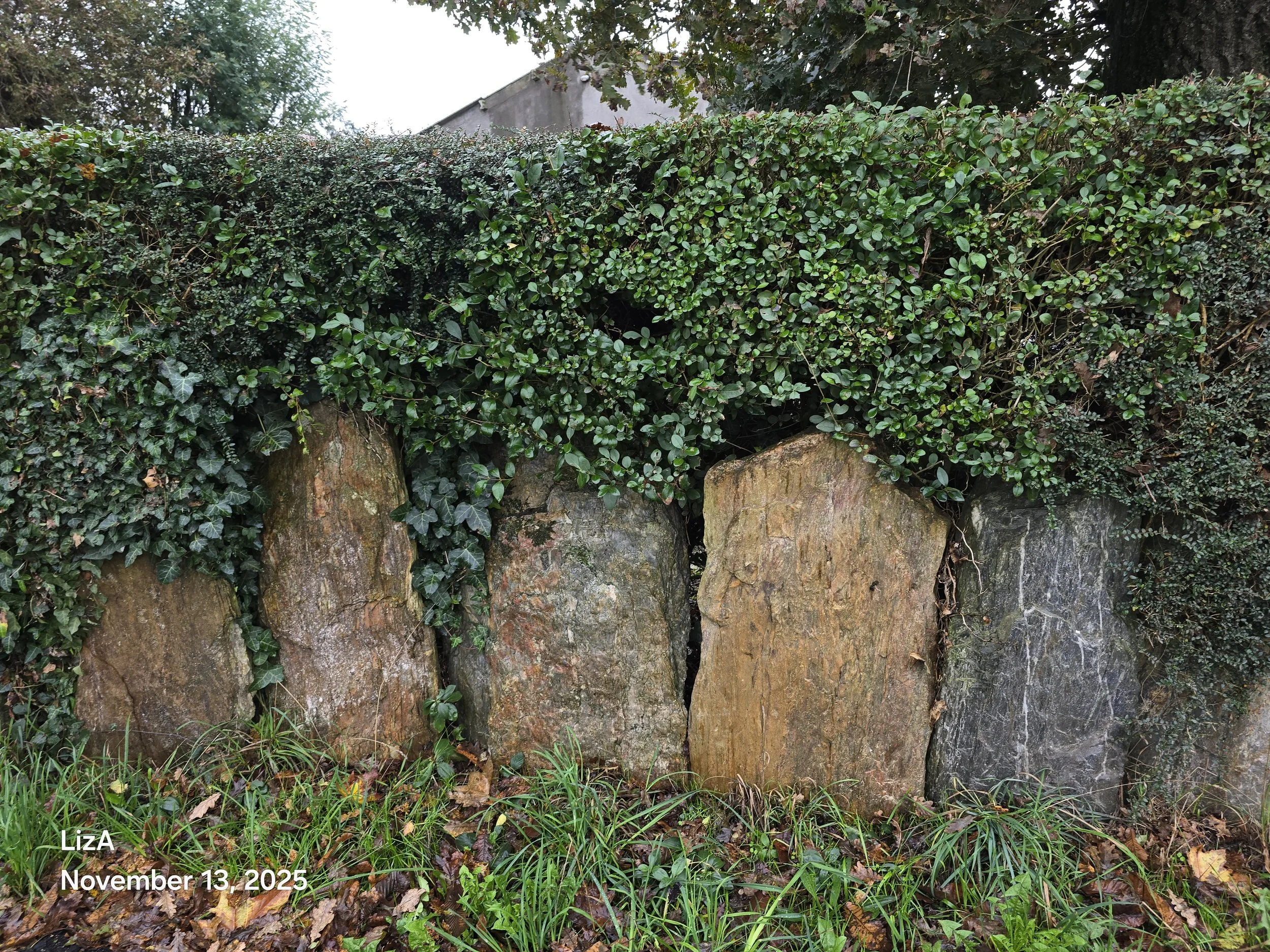
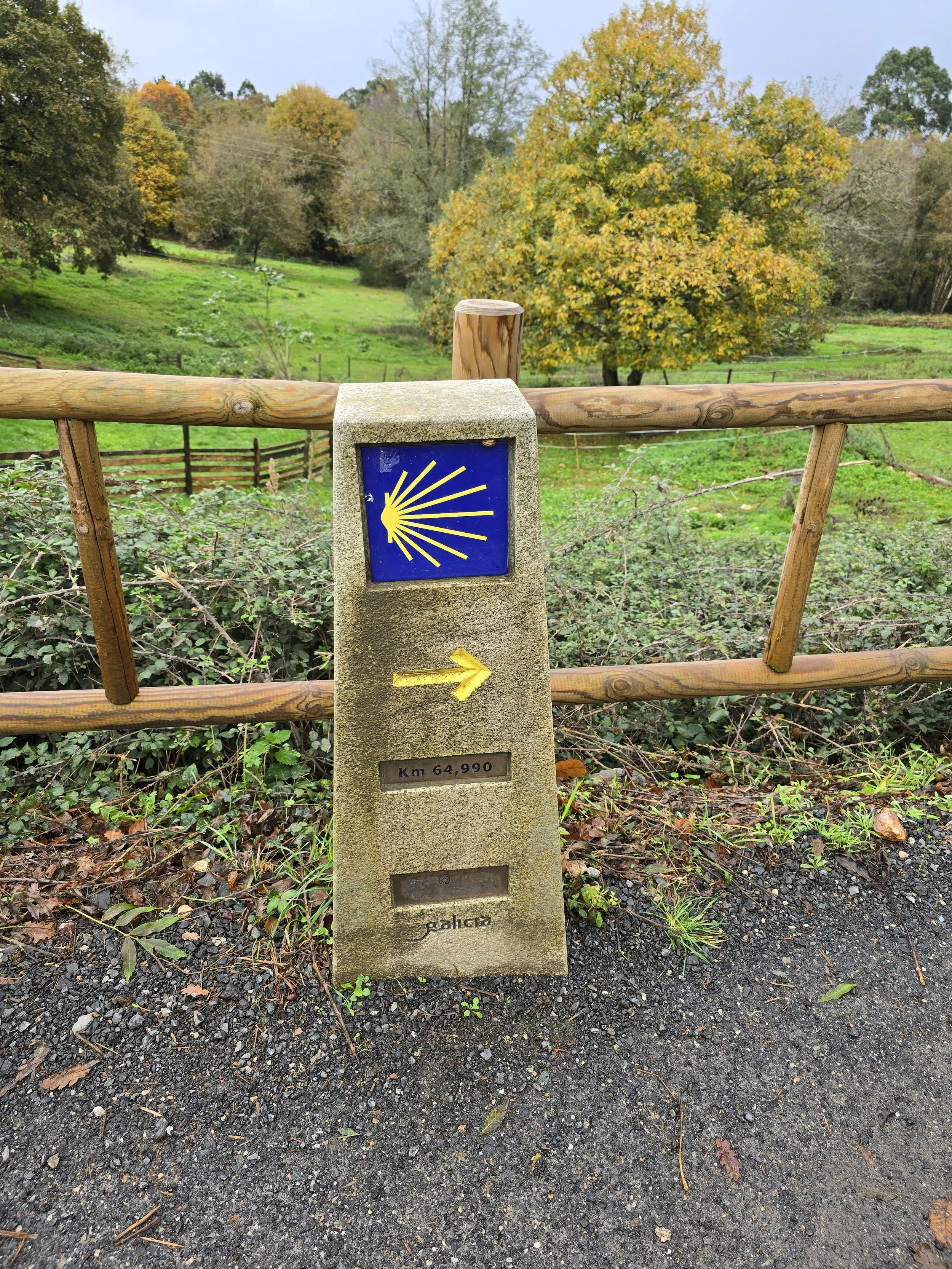
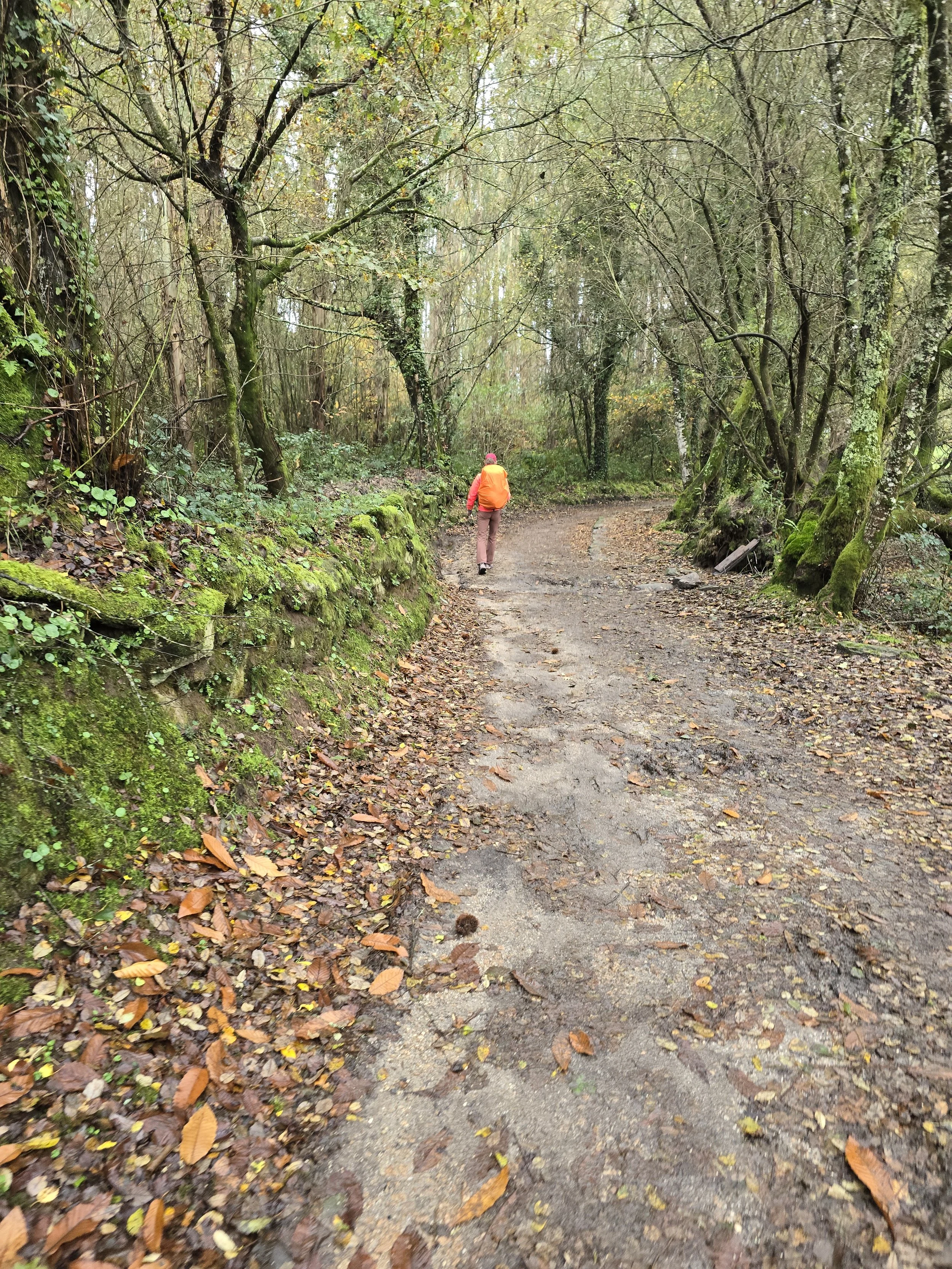
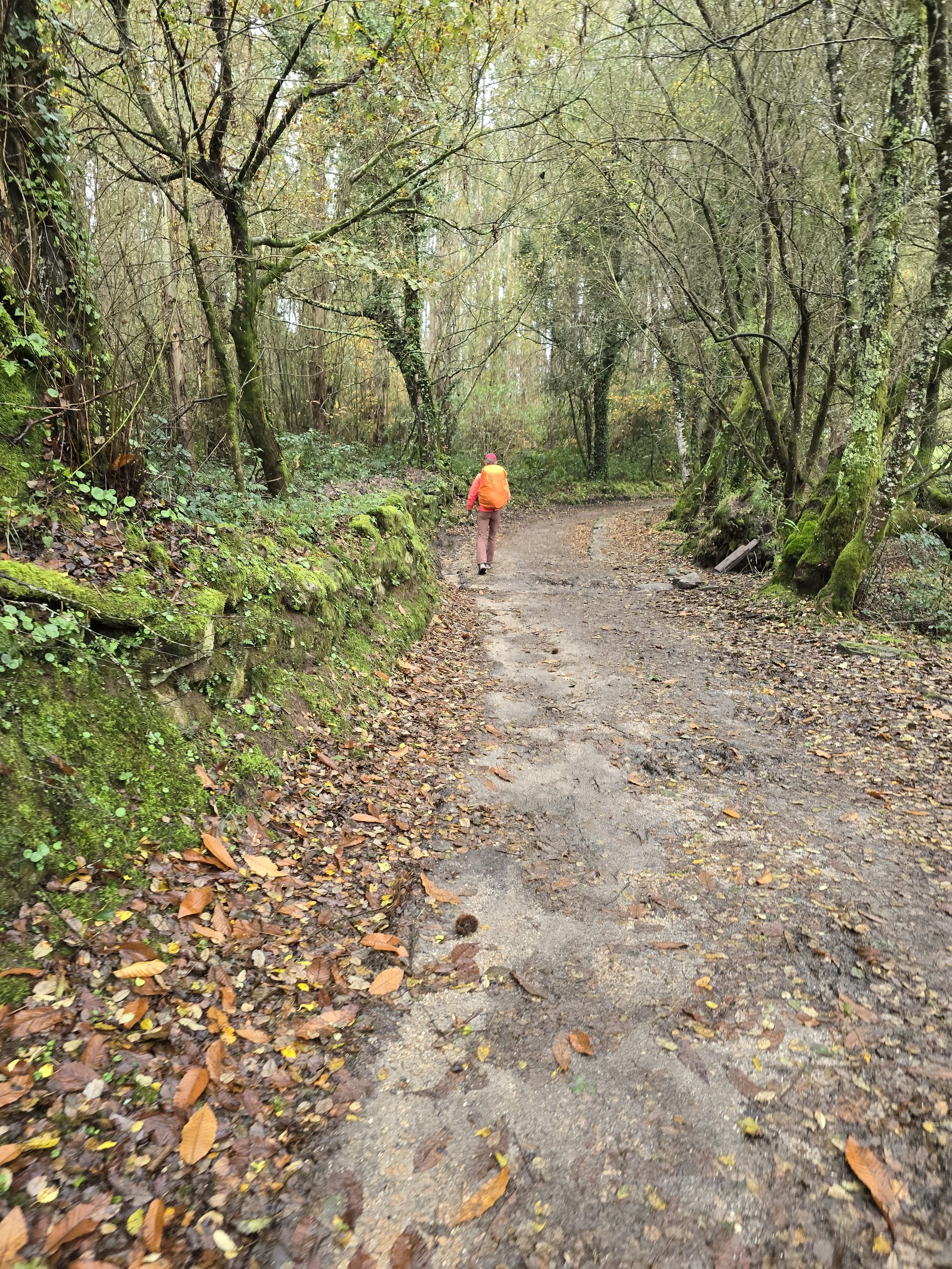
A whole lotta this!
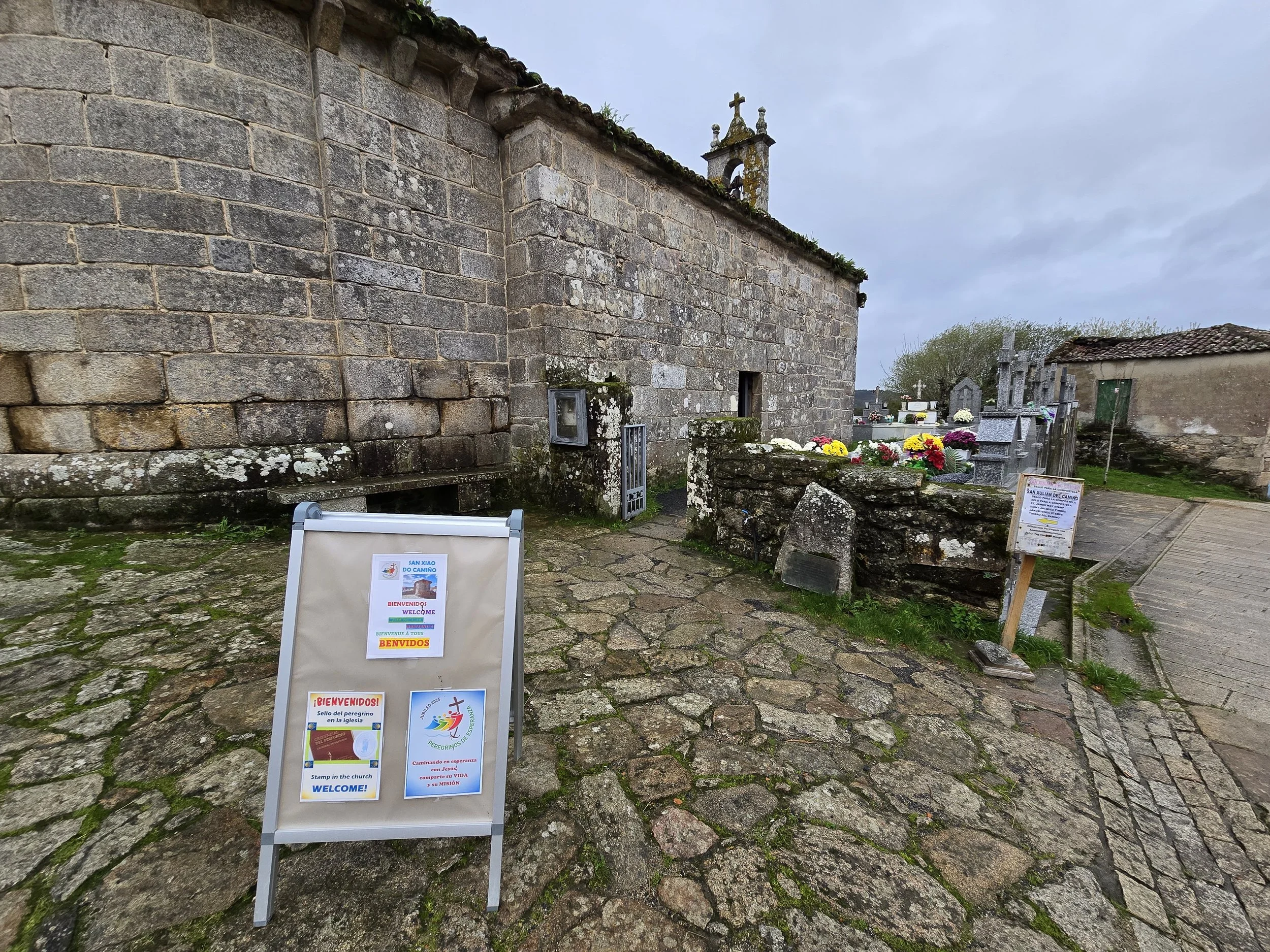
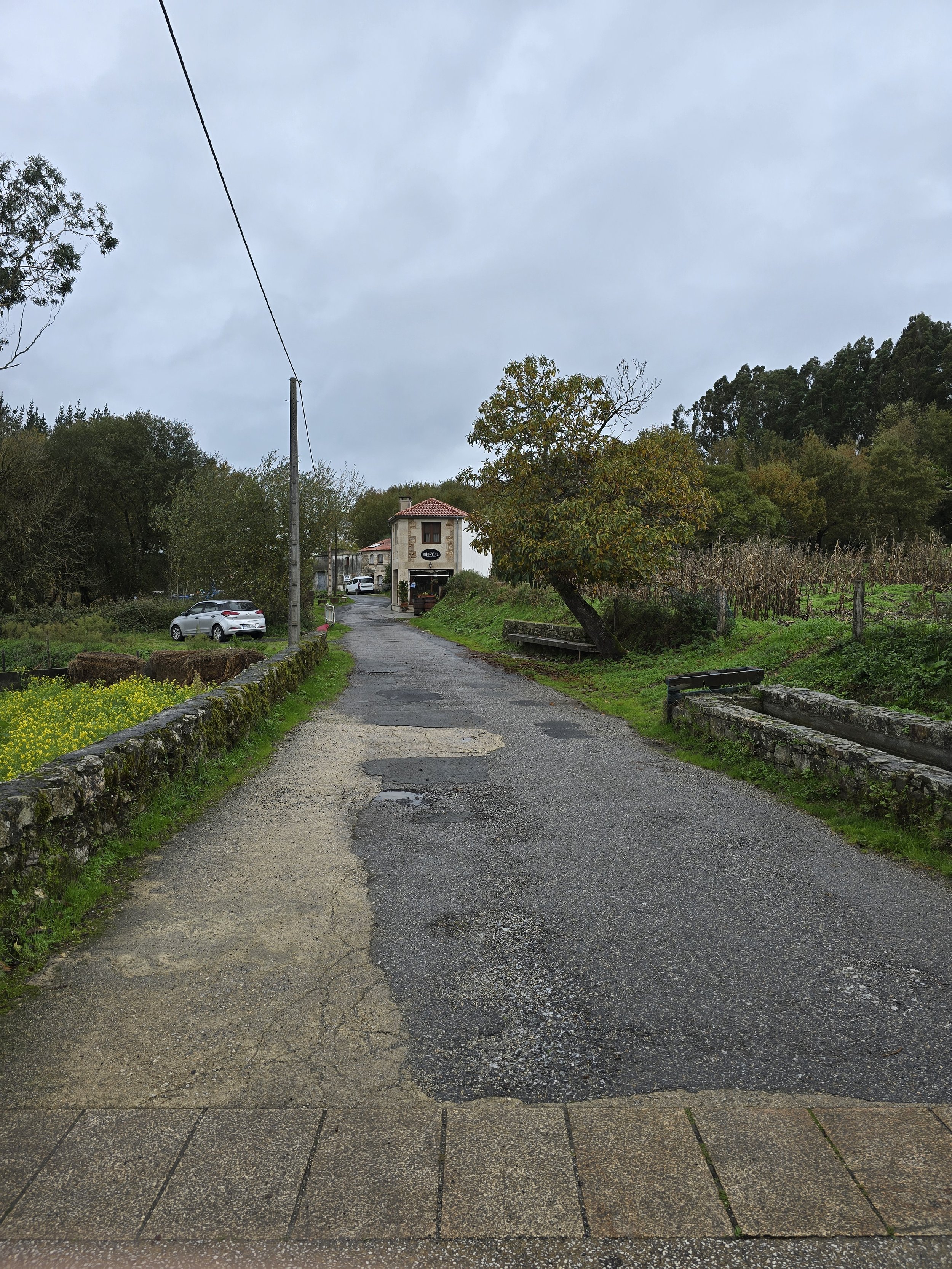
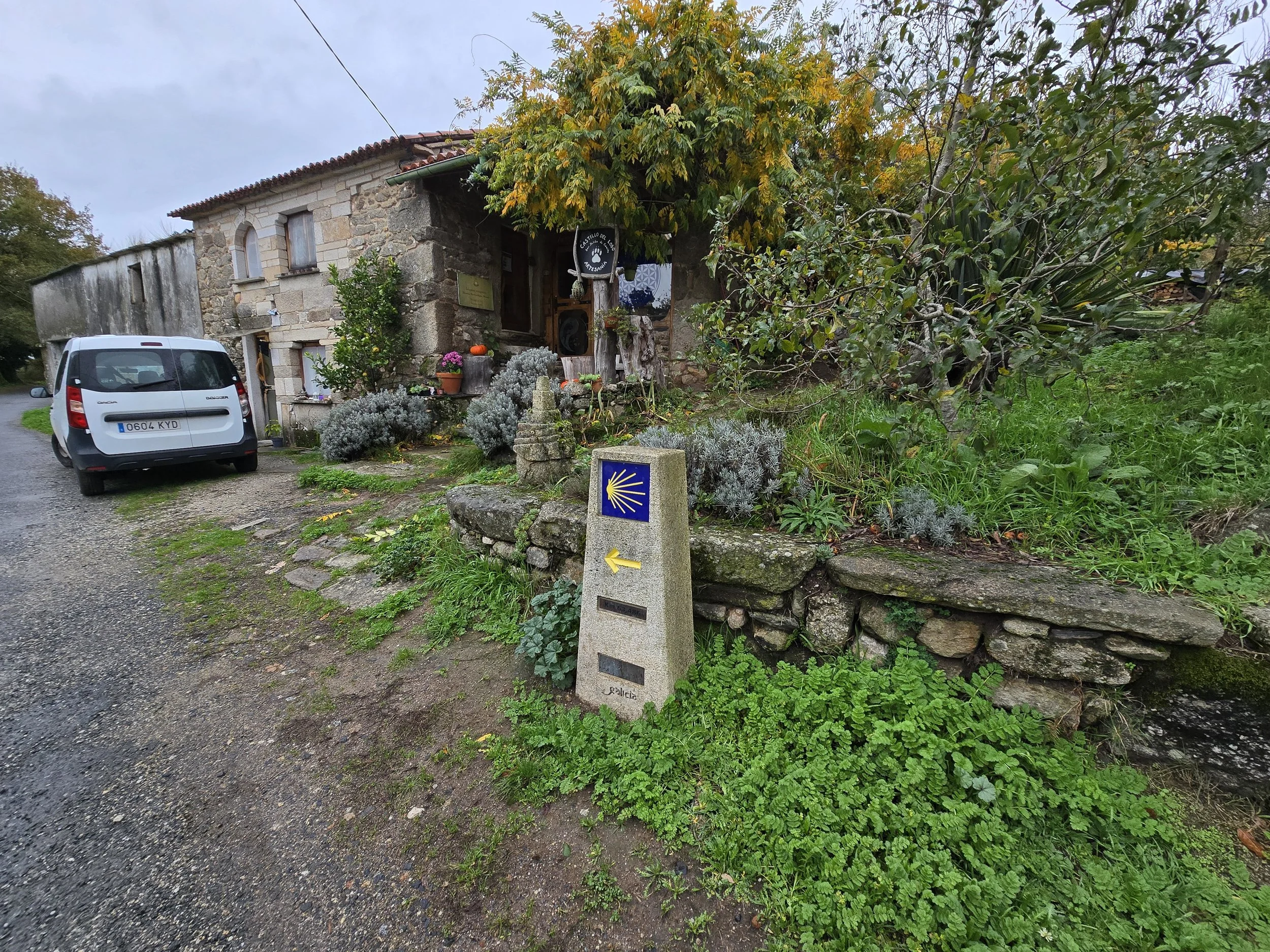
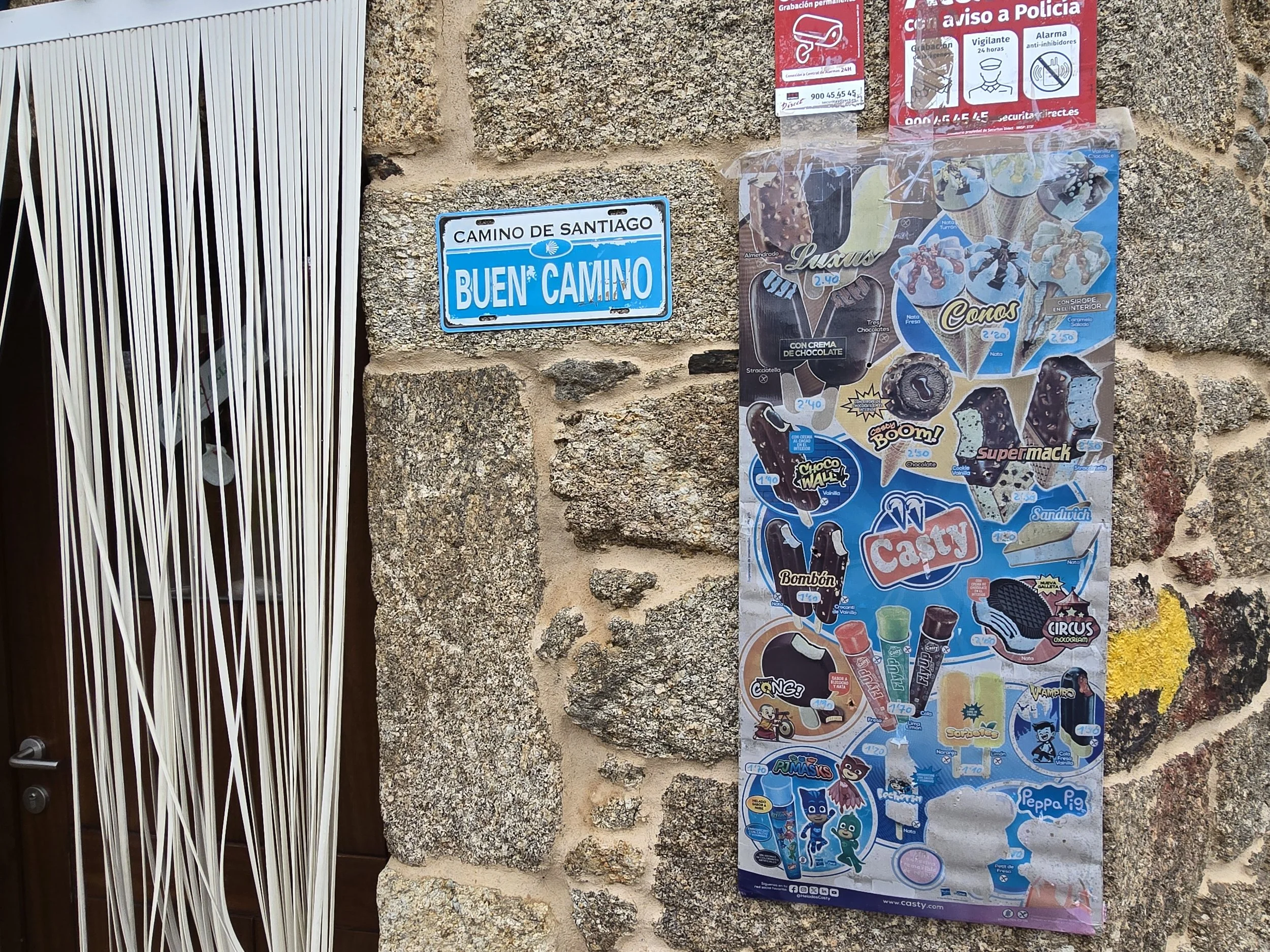
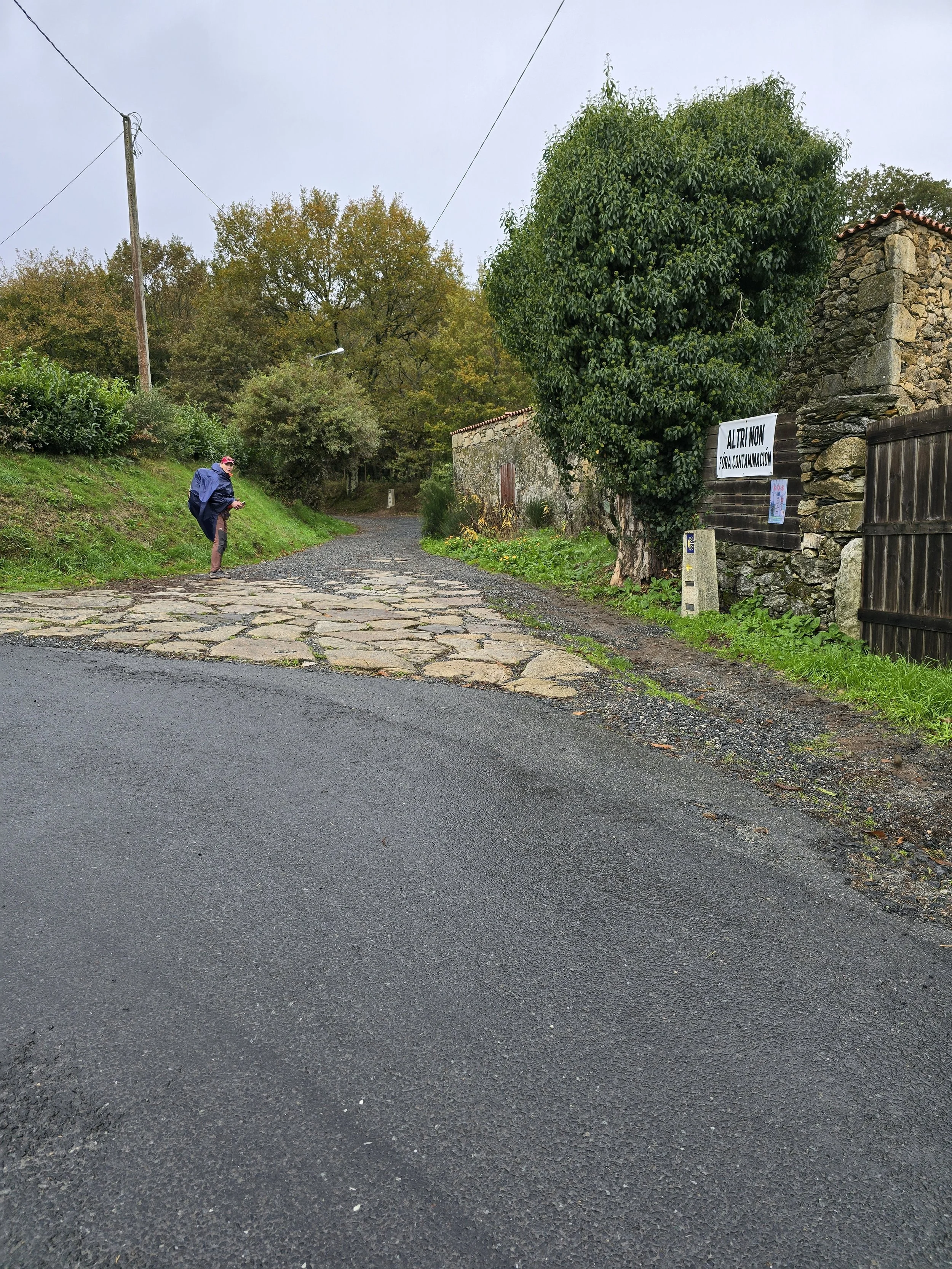
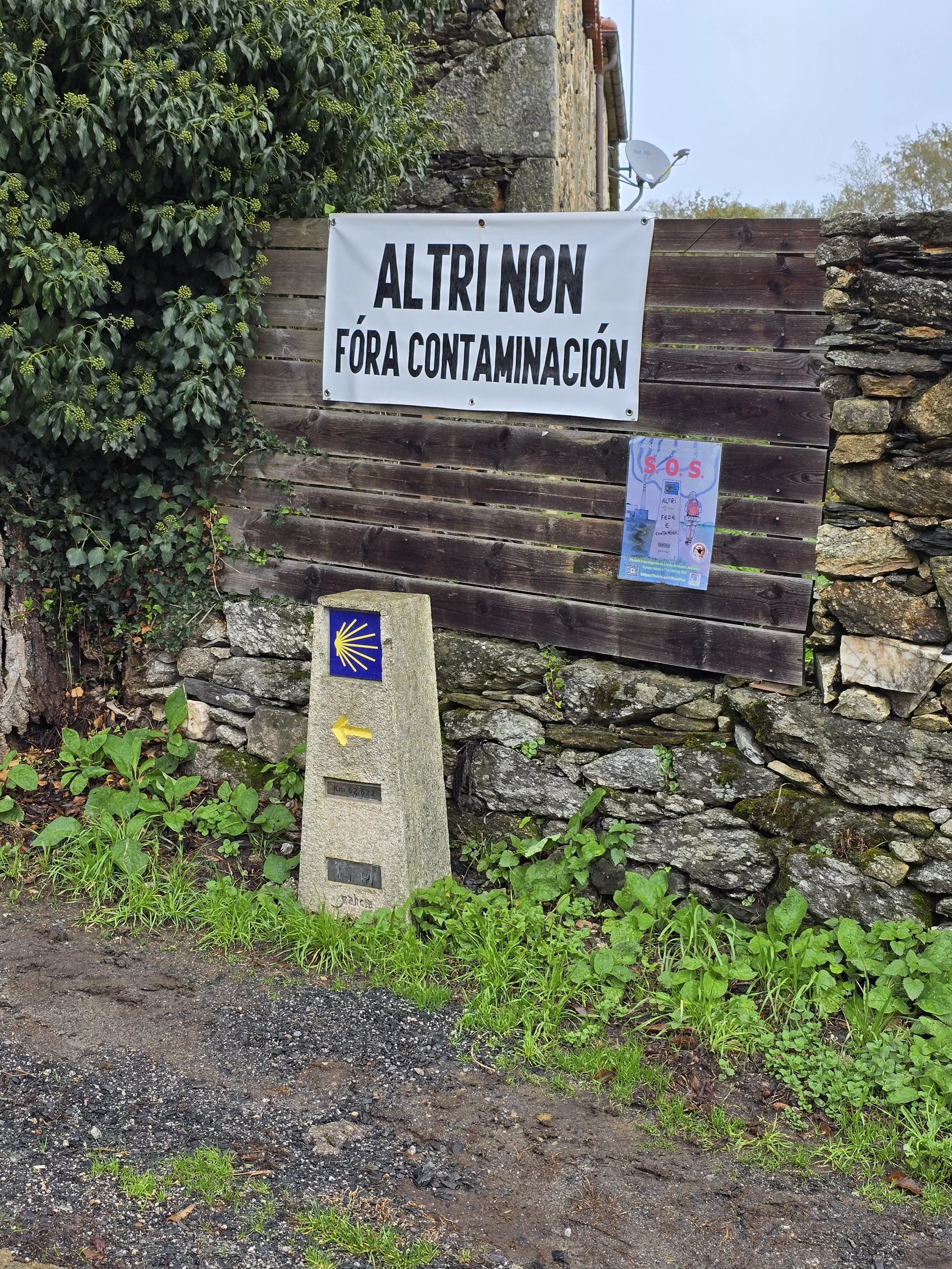
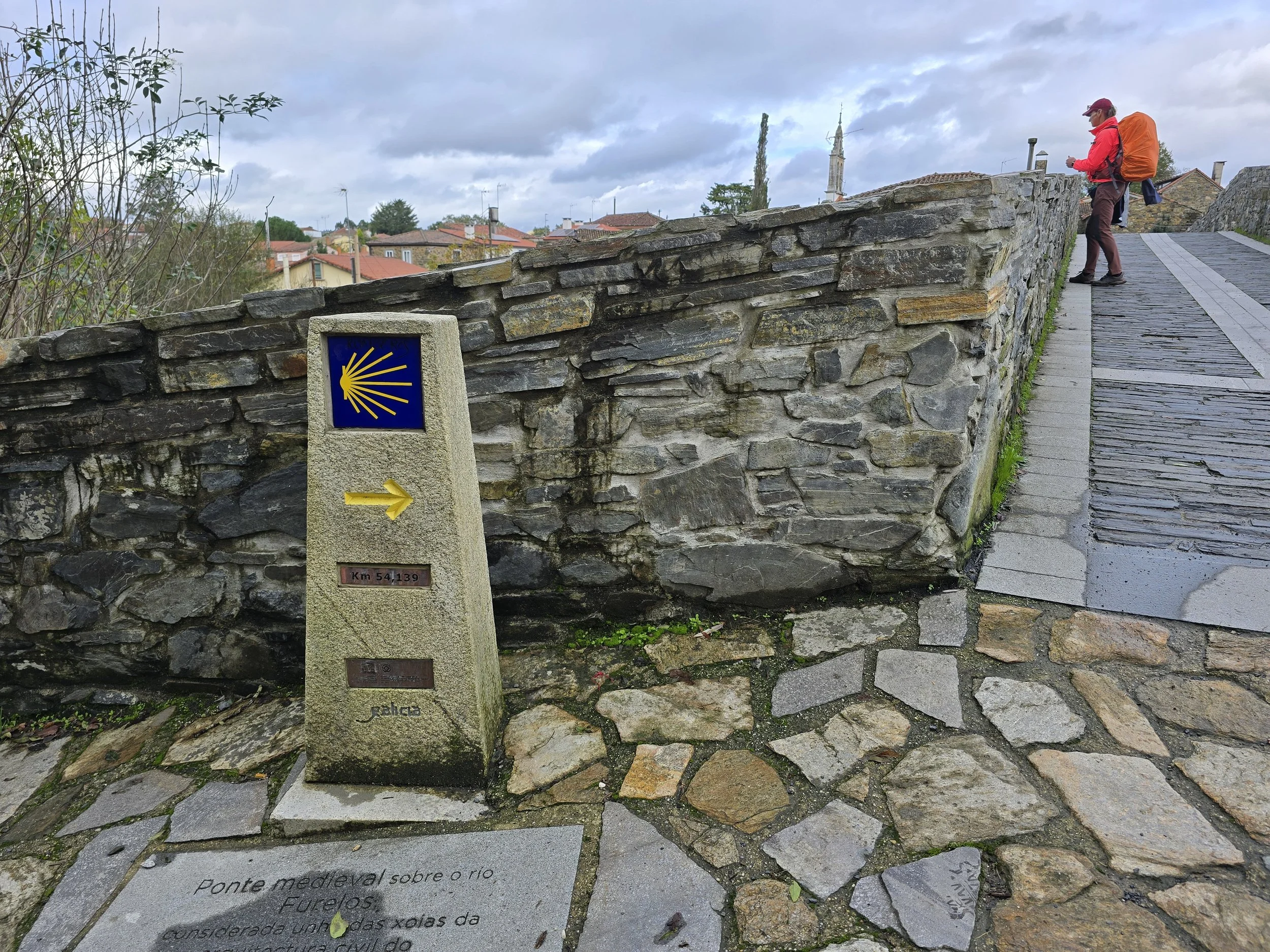
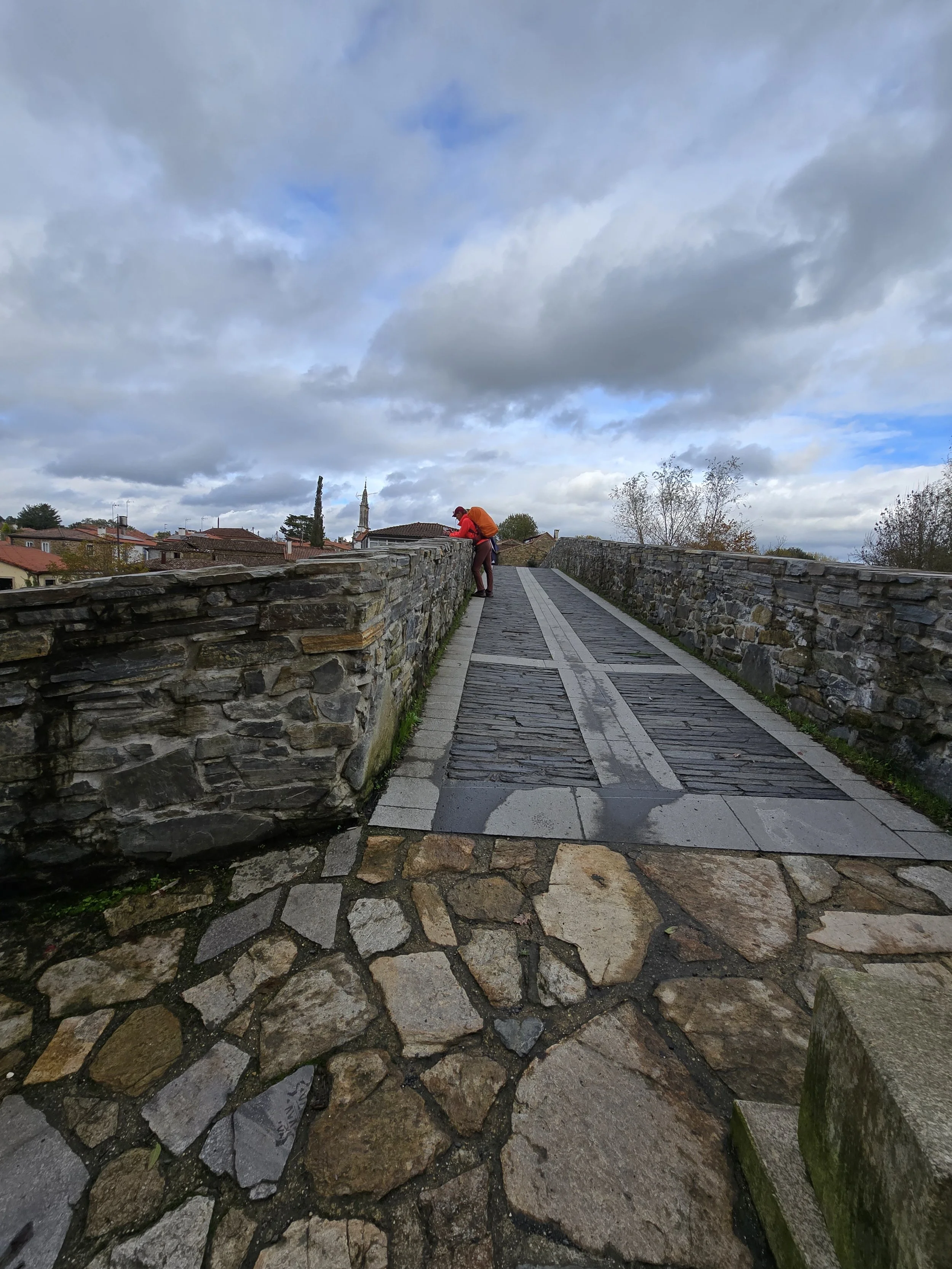
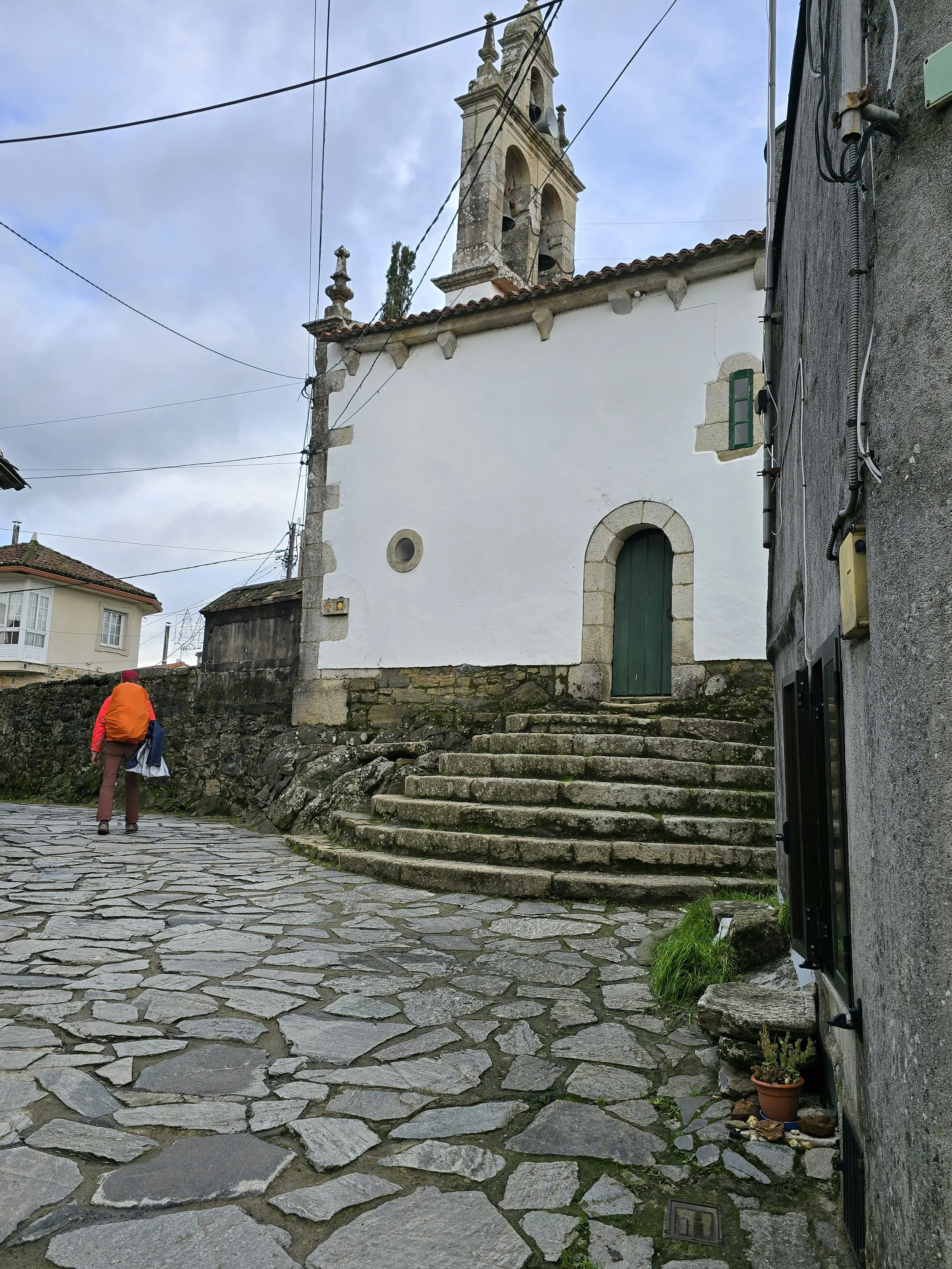
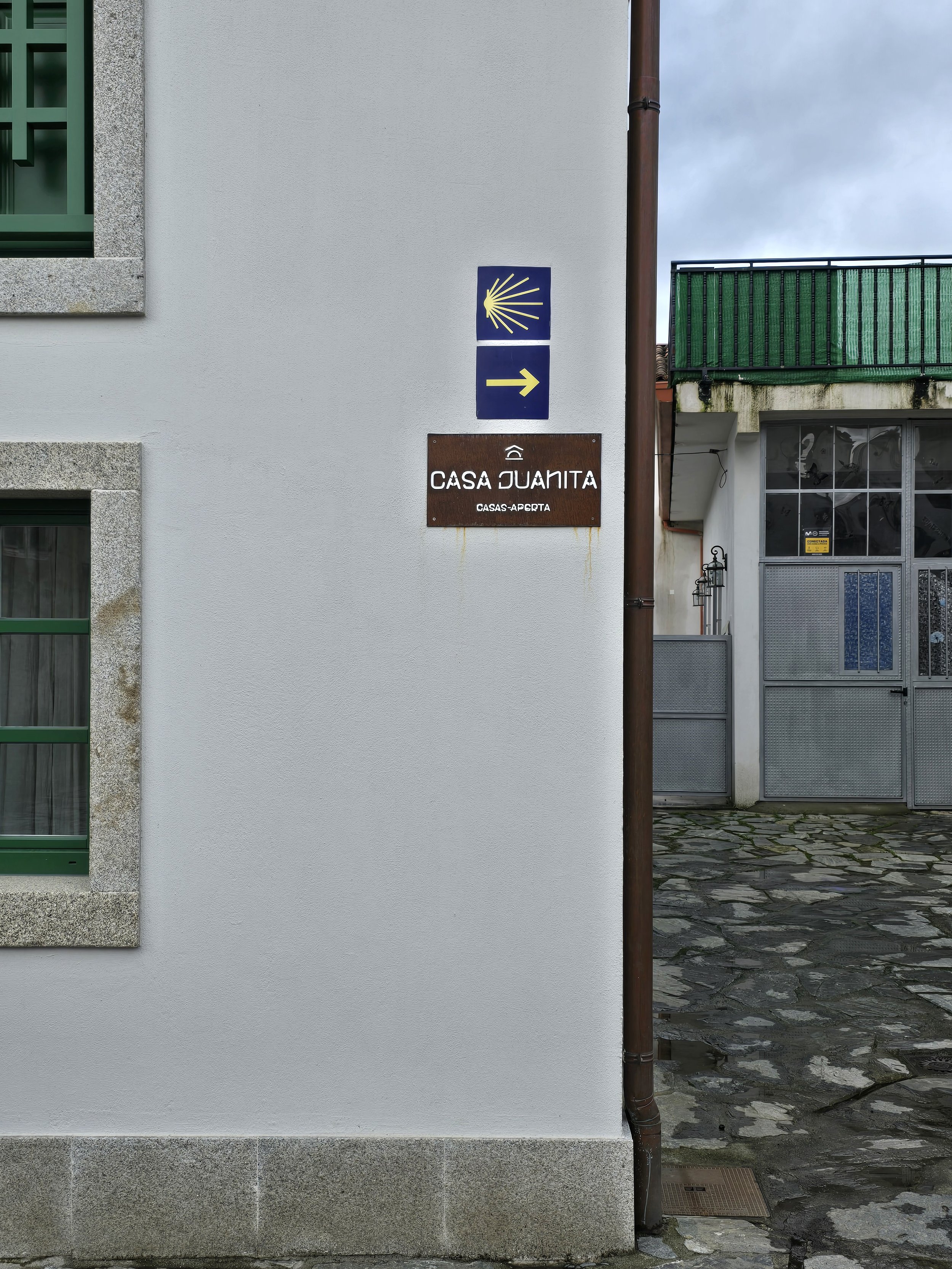
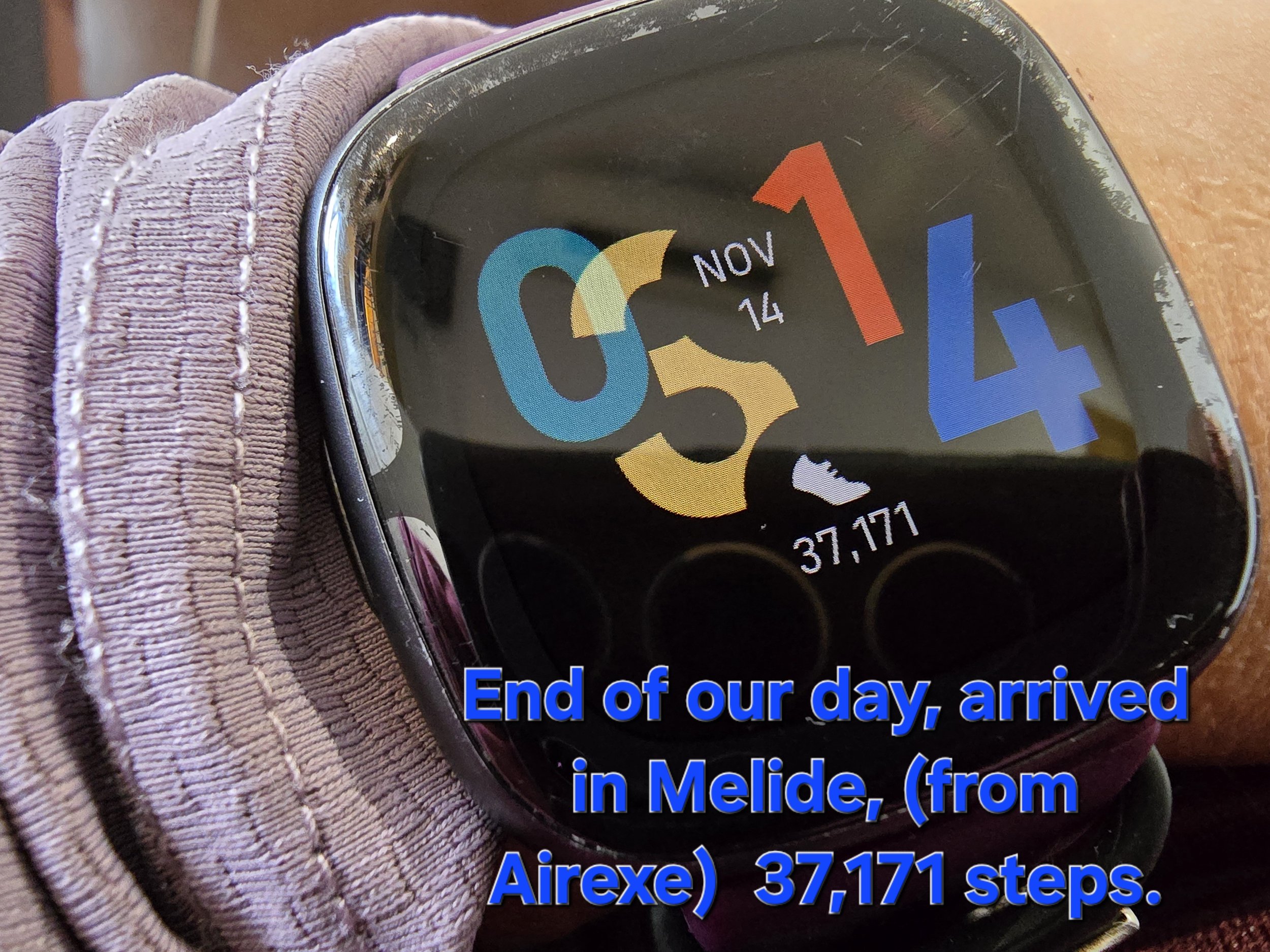
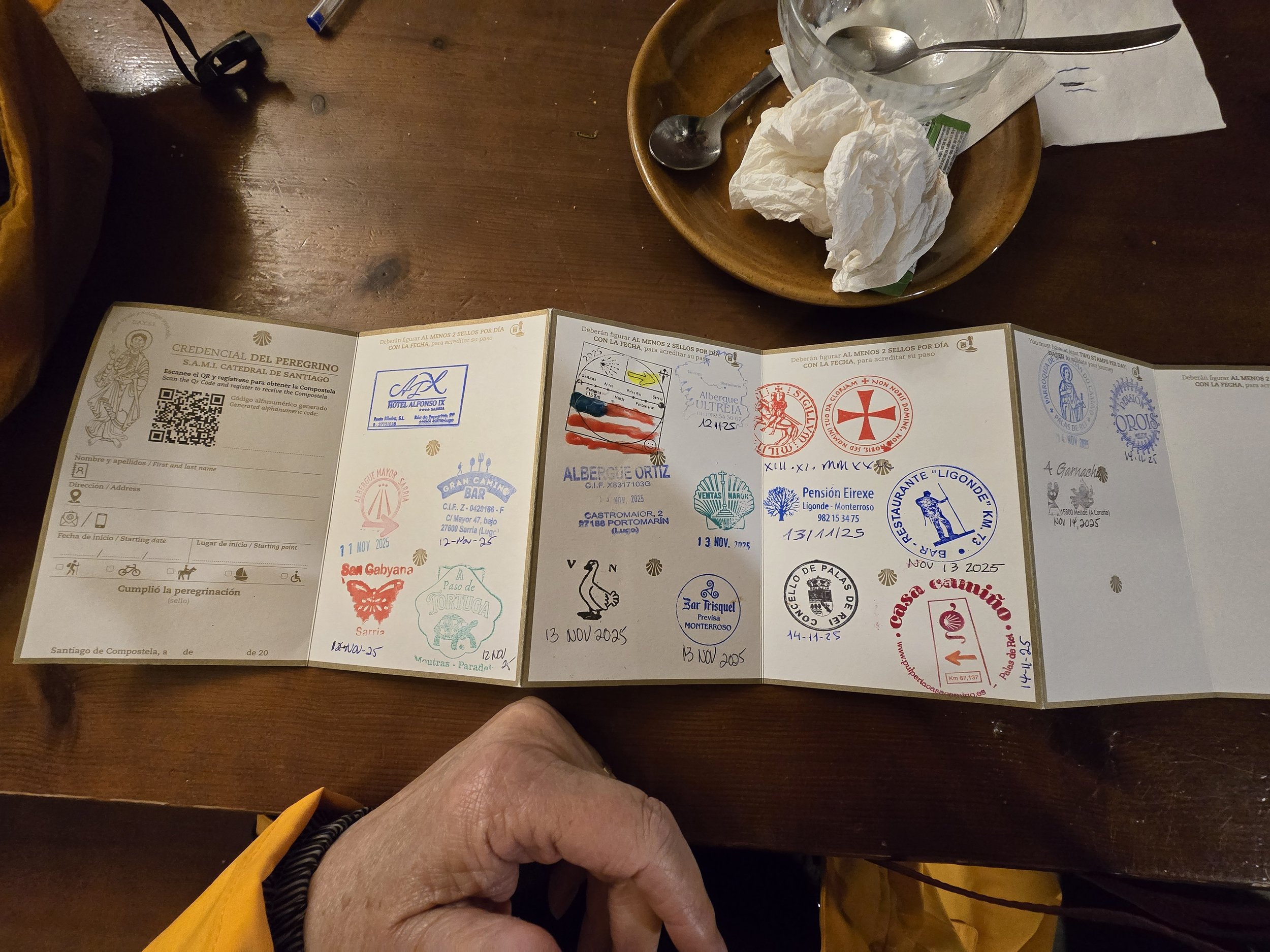
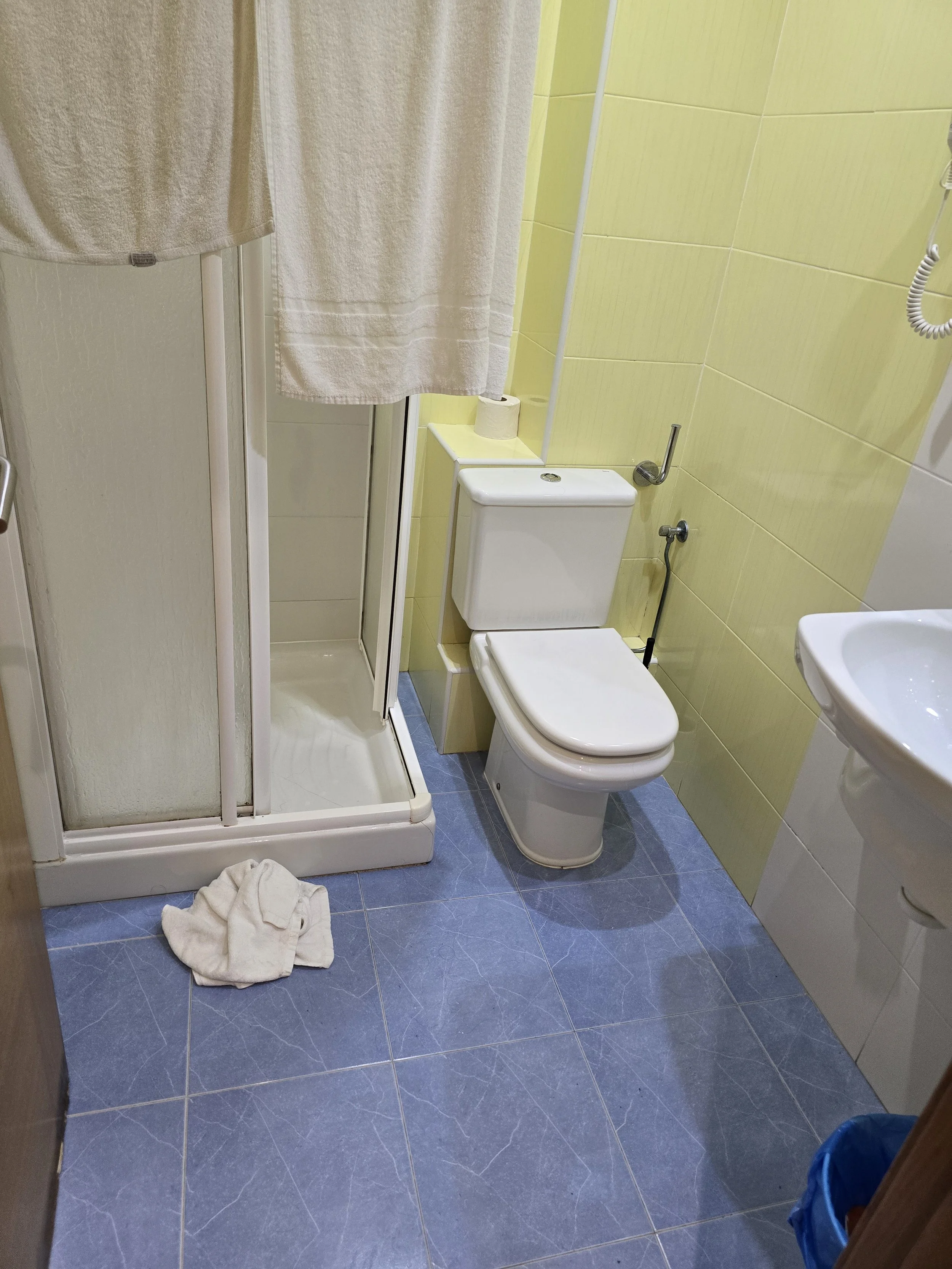
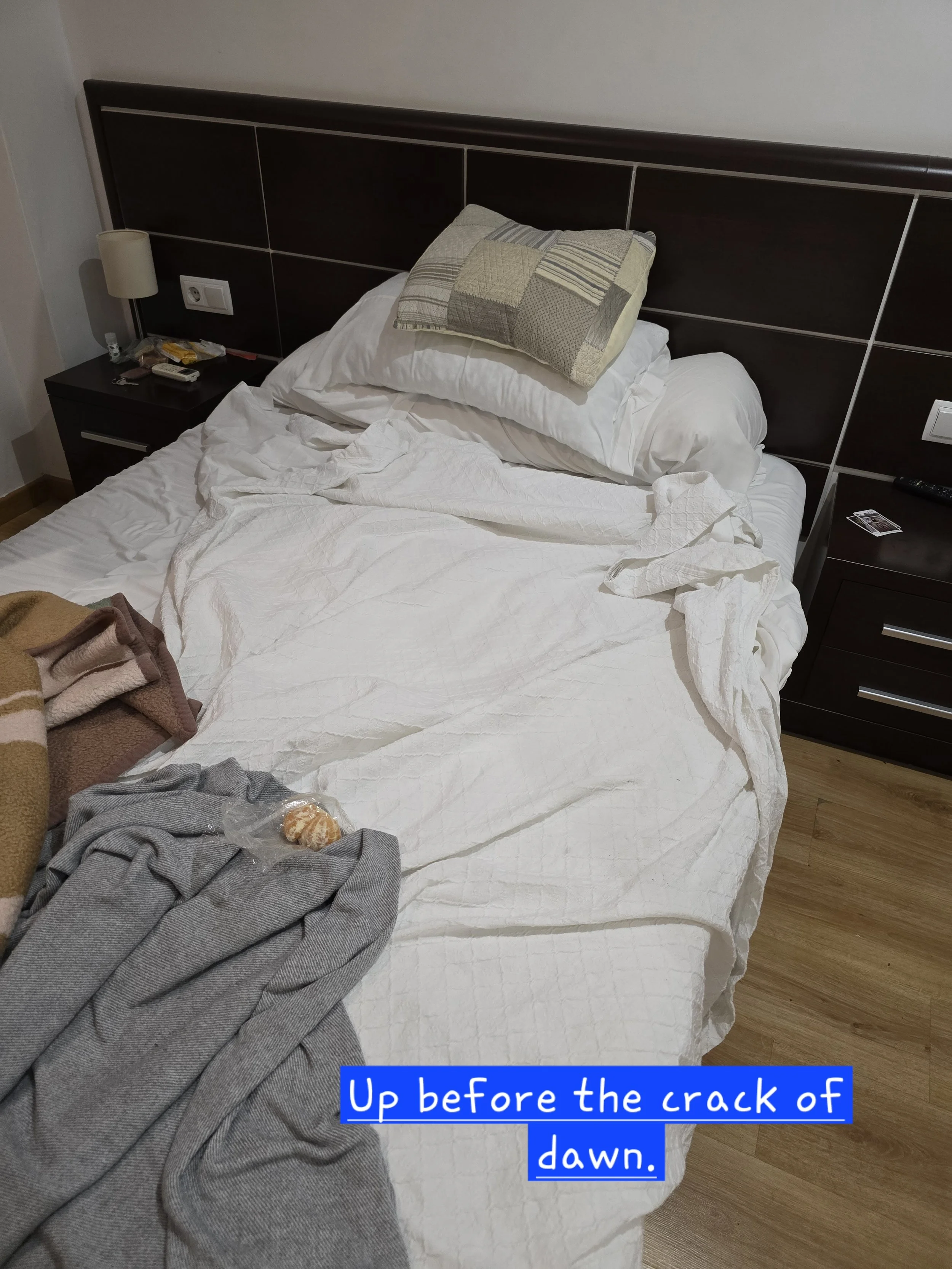
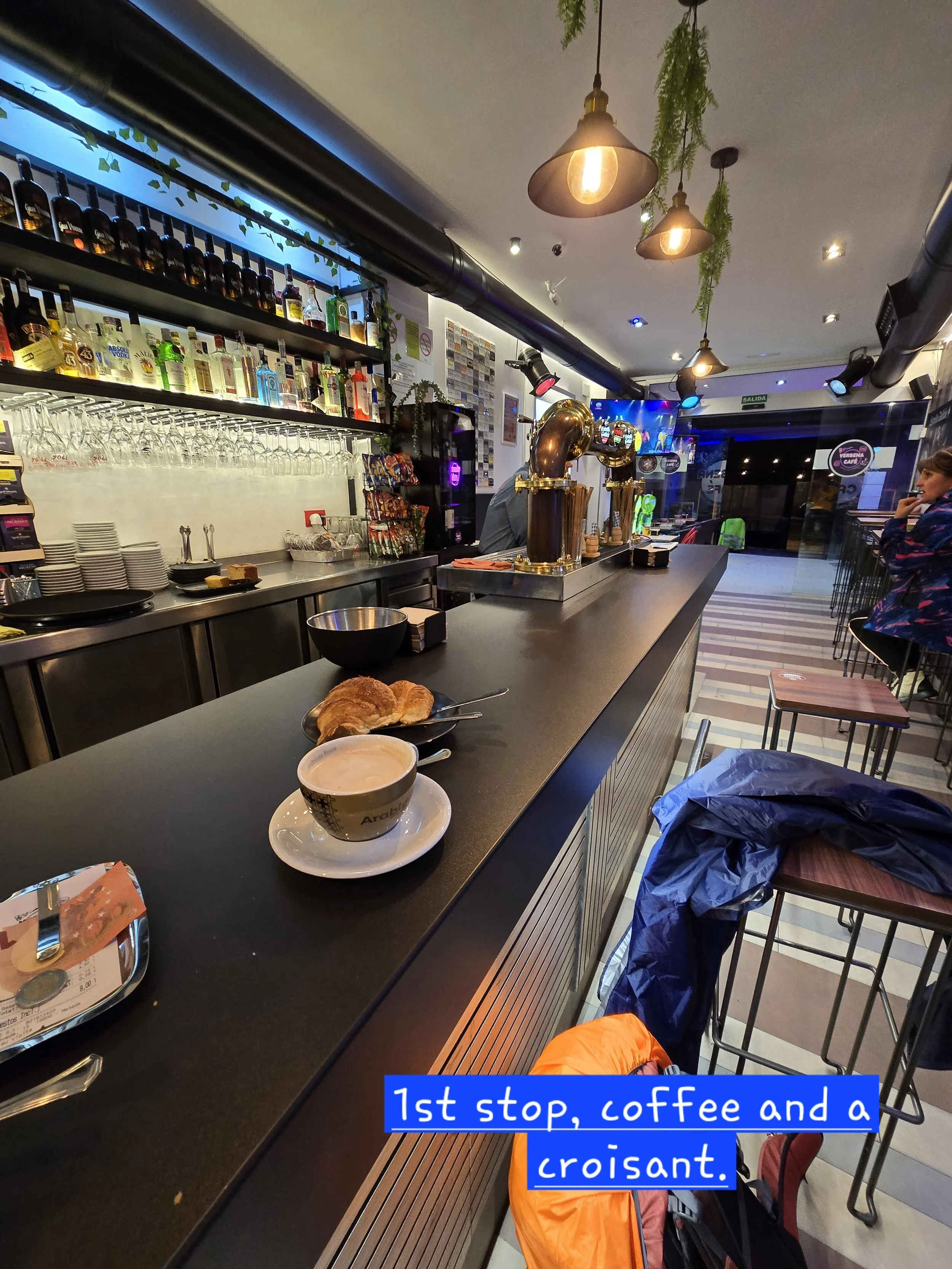
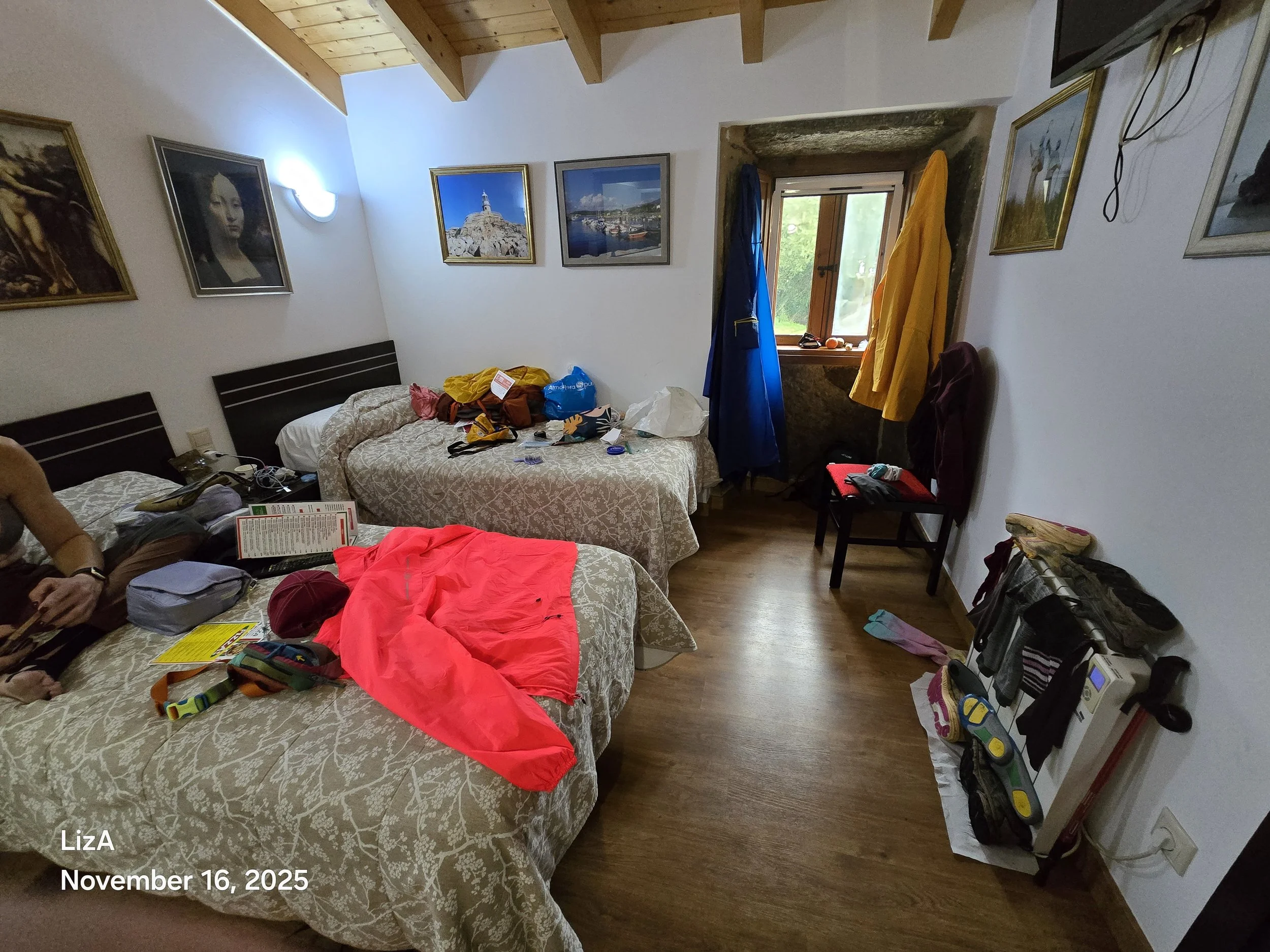
More peaceful nothingness, an Albergue with a real bed and private bathroom. Yes. we are slobs.
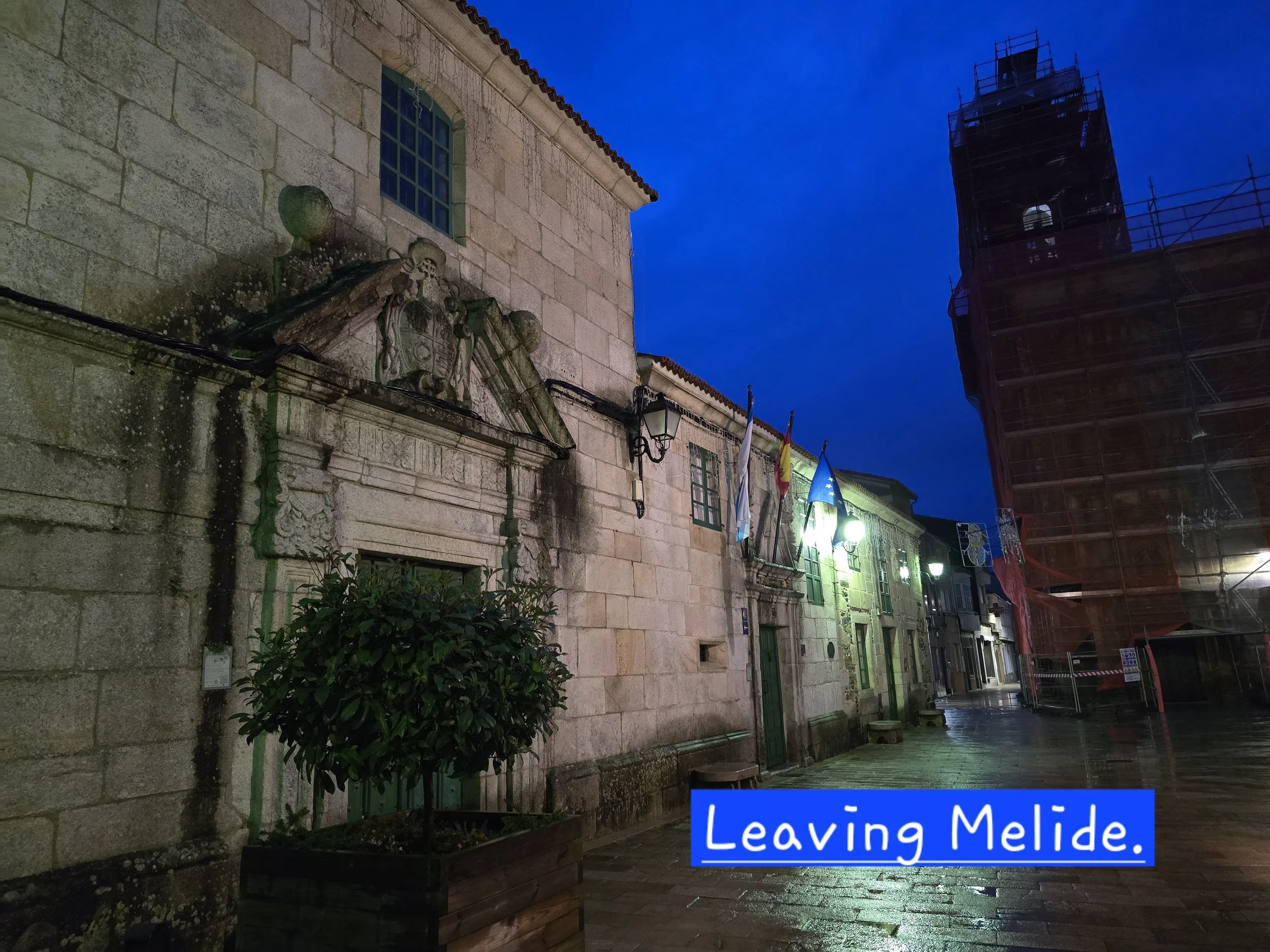
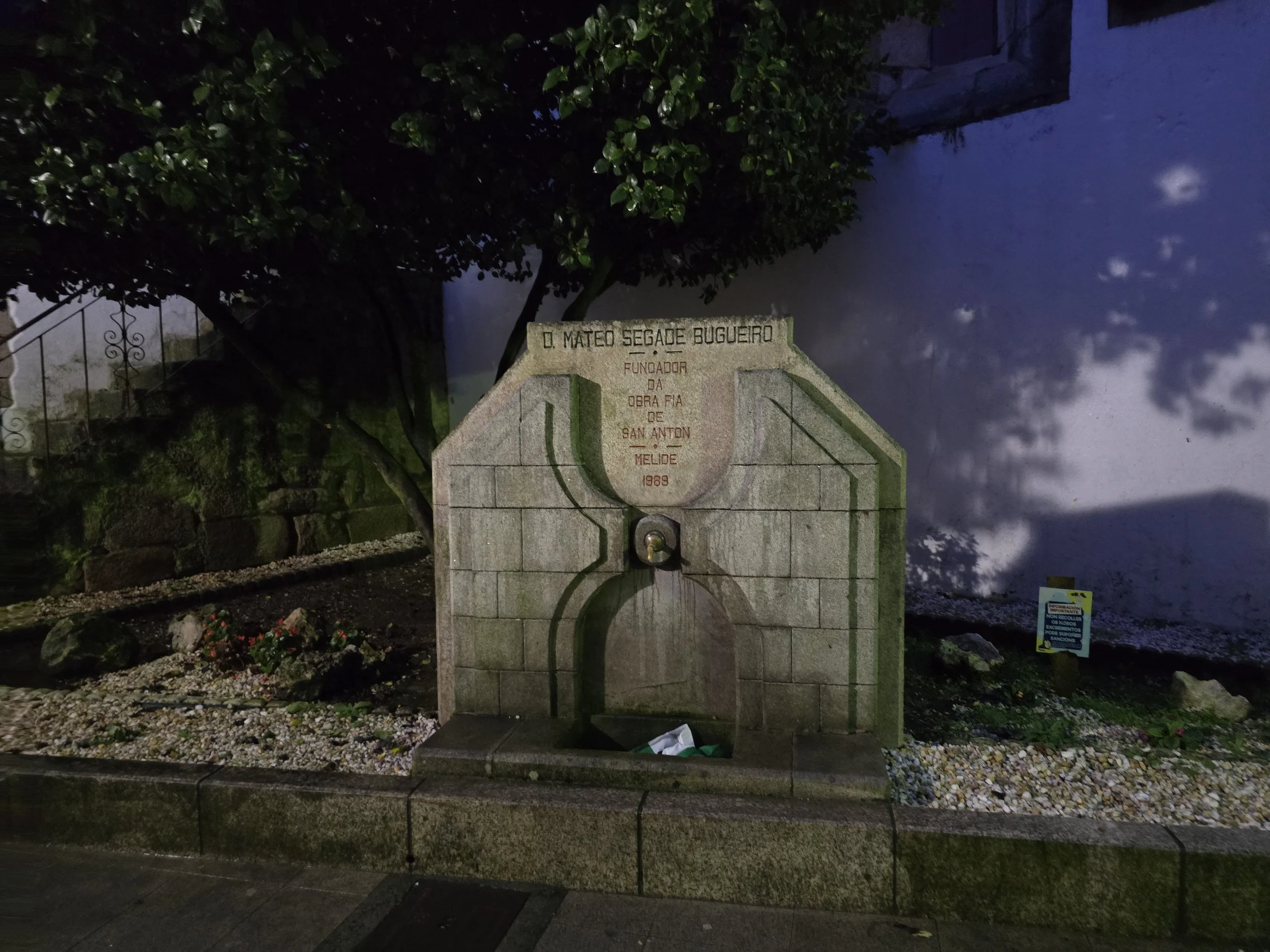
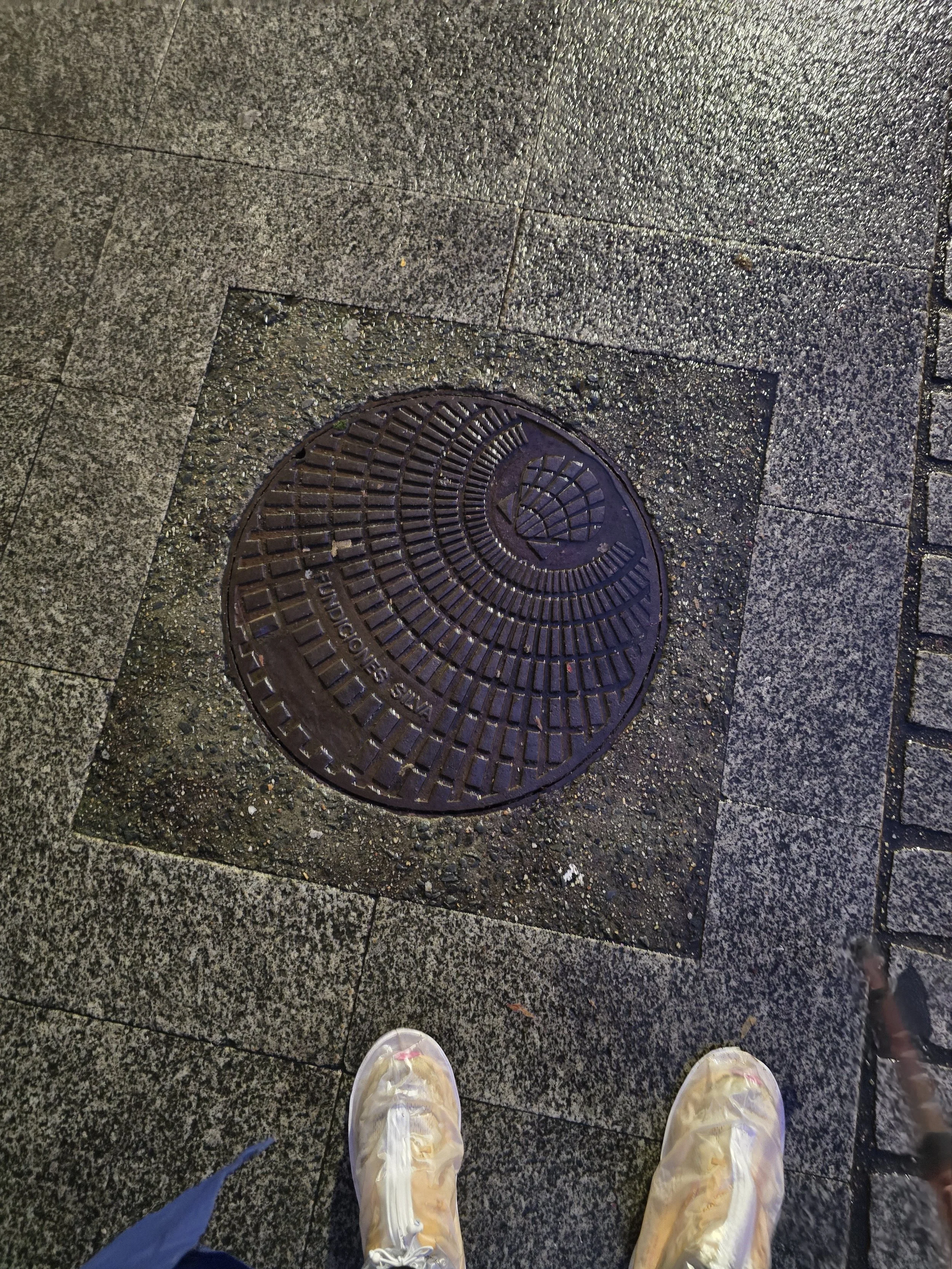
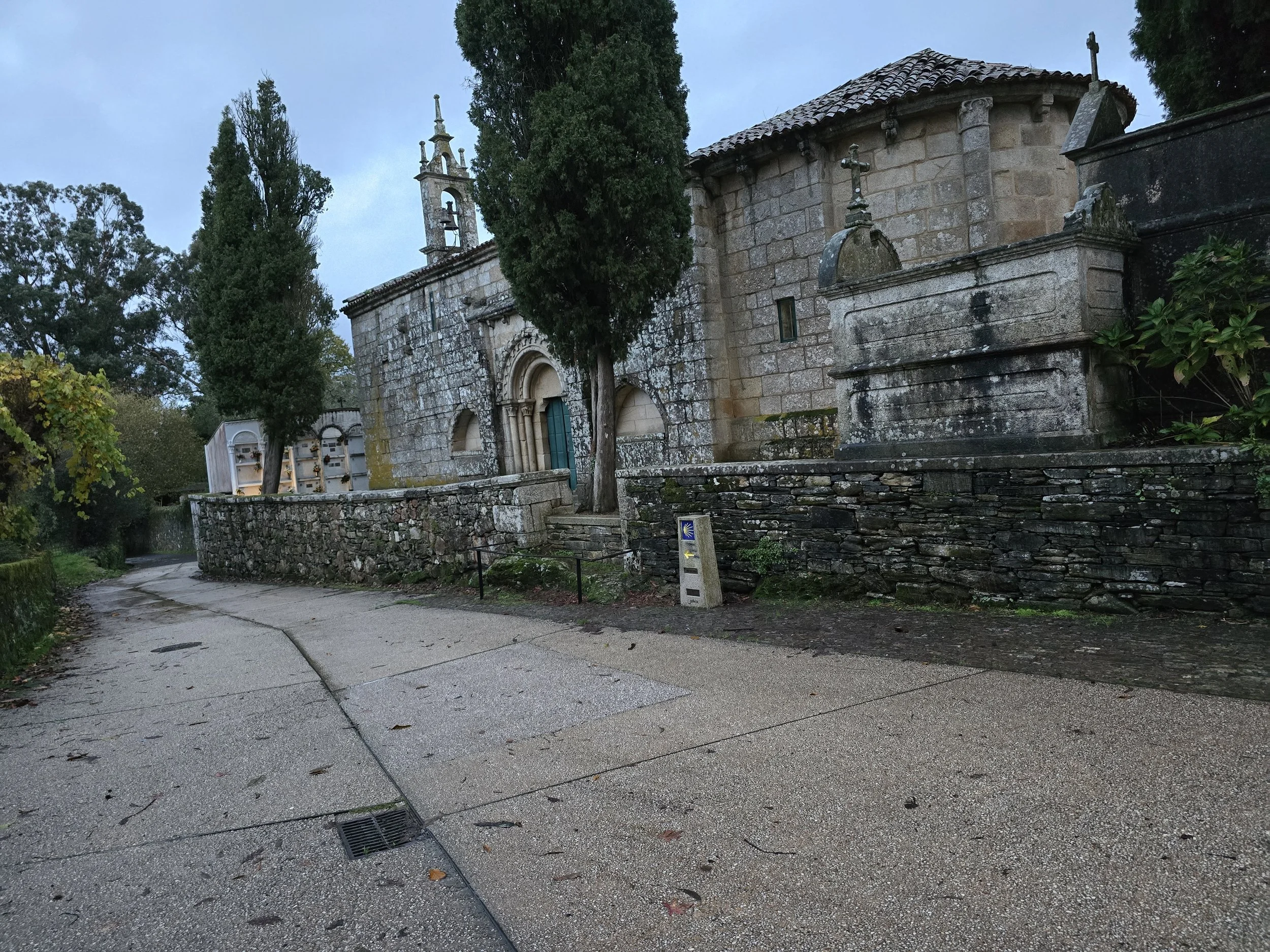
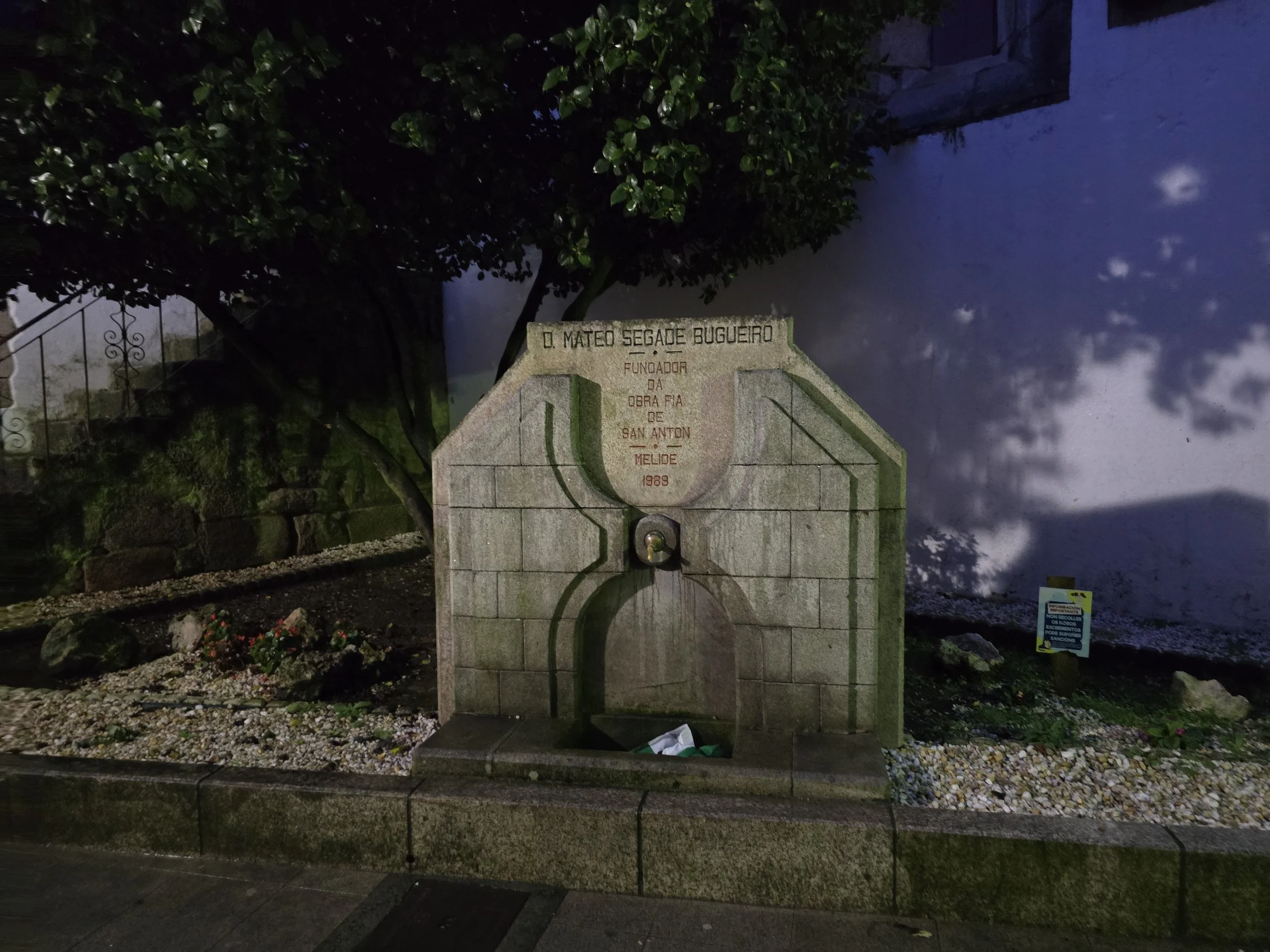
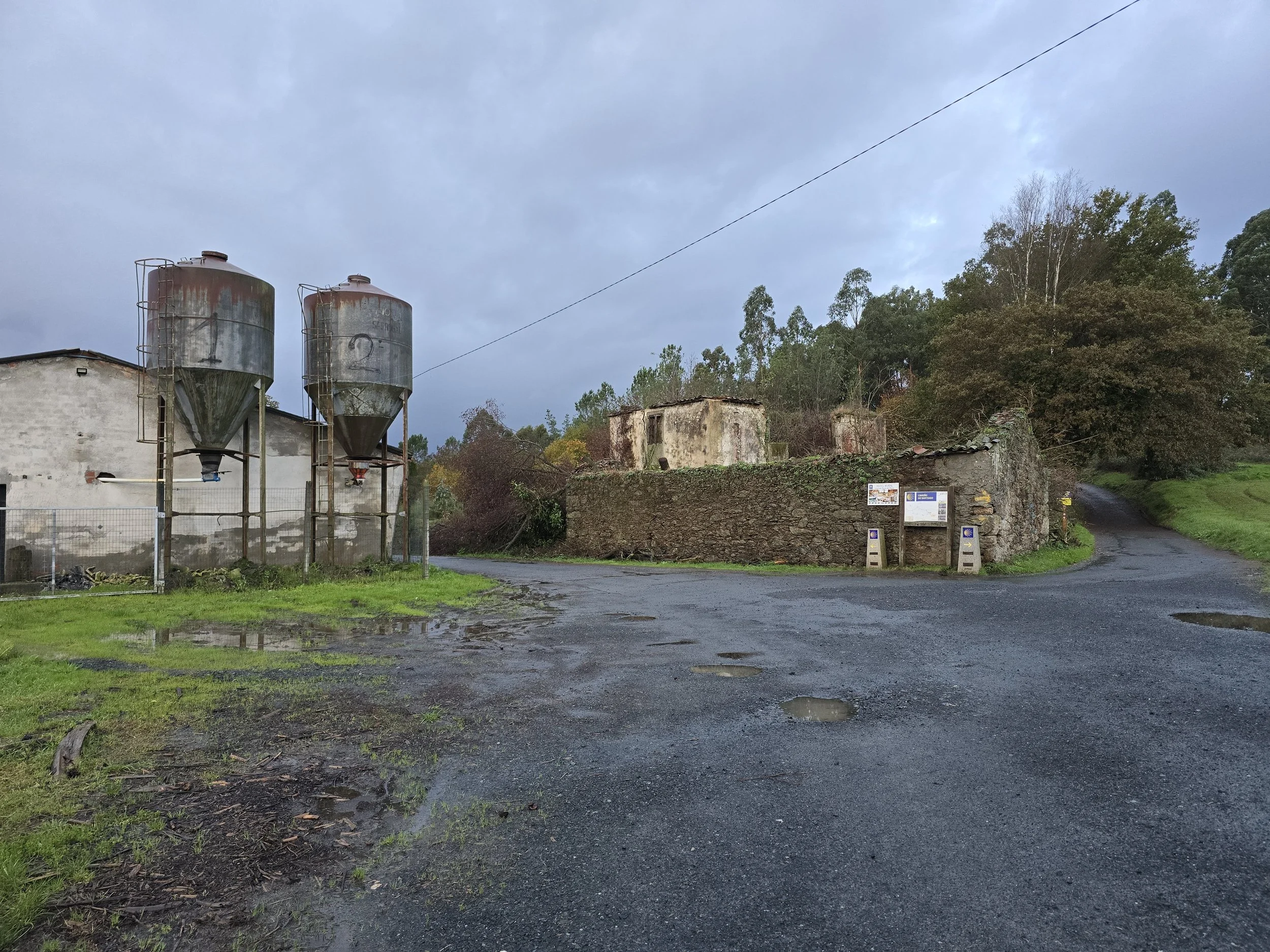
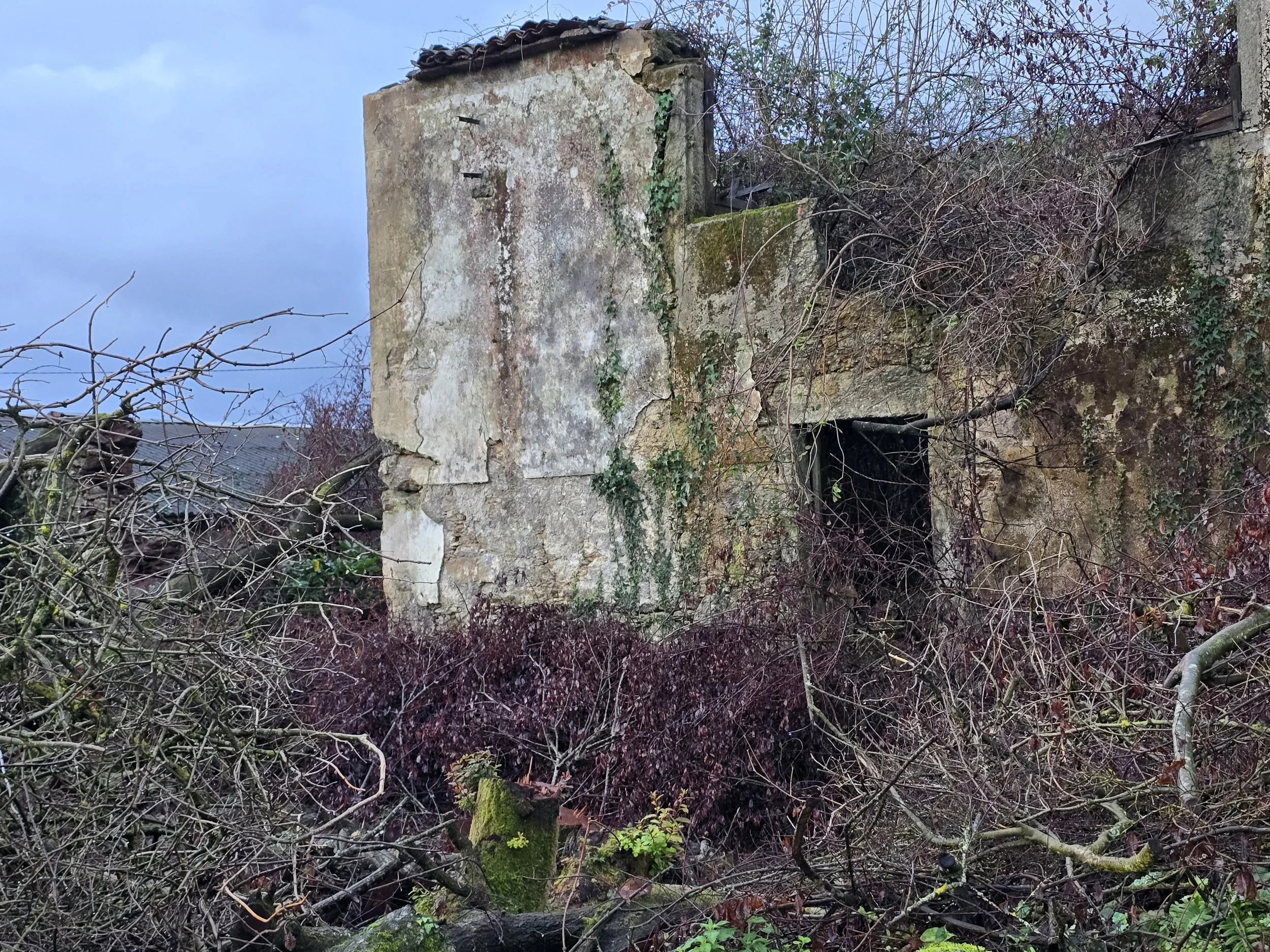
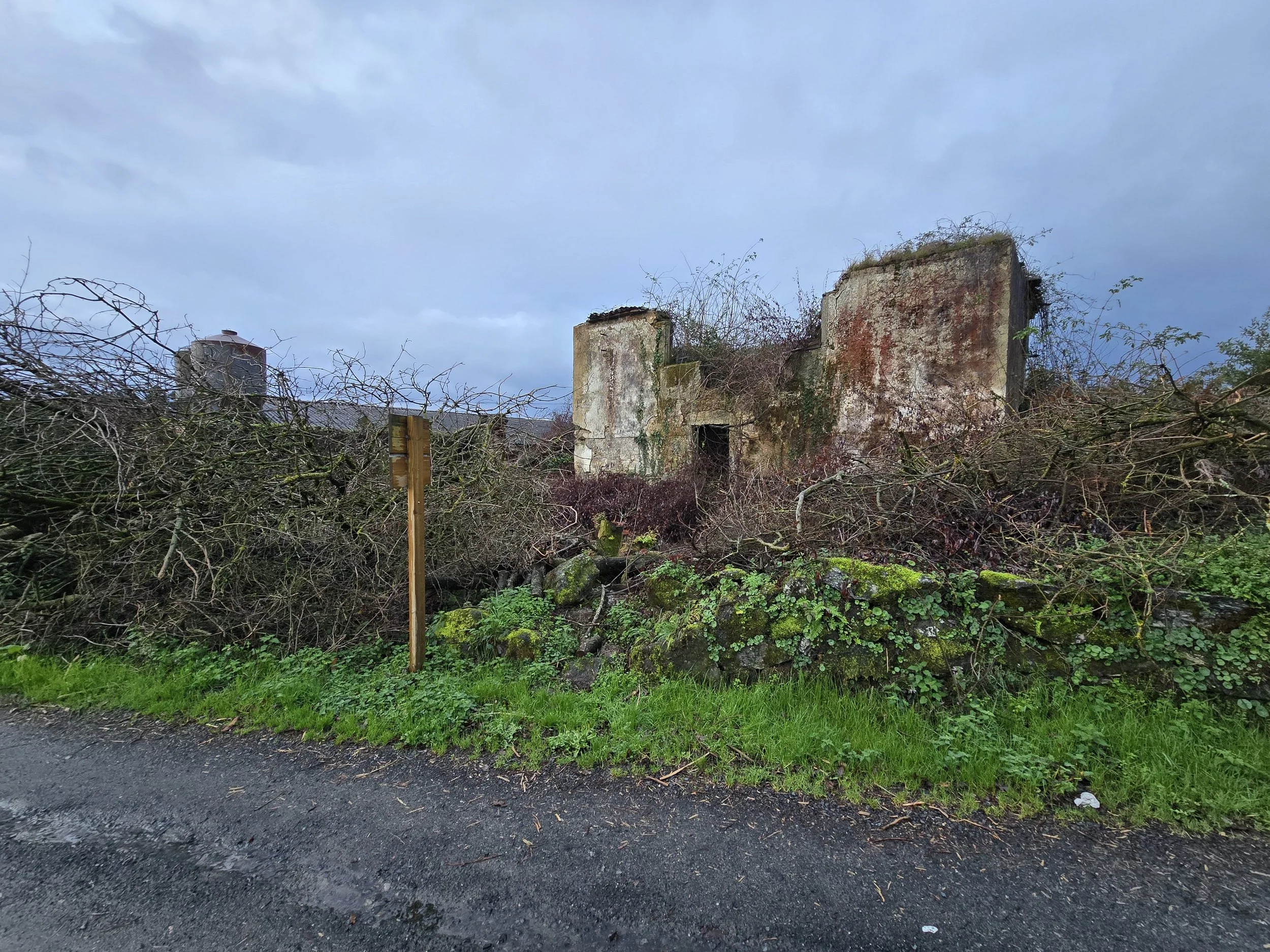
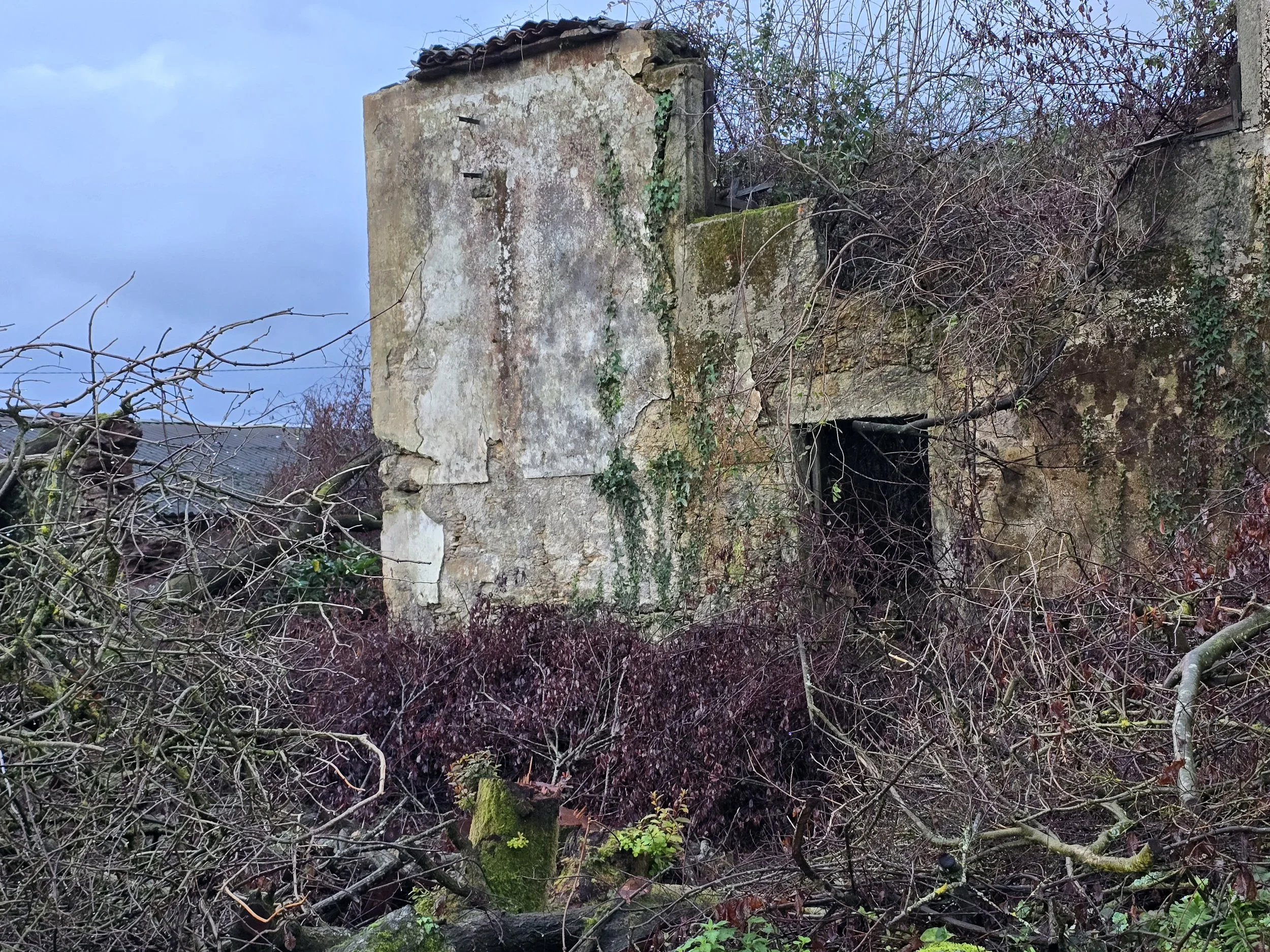
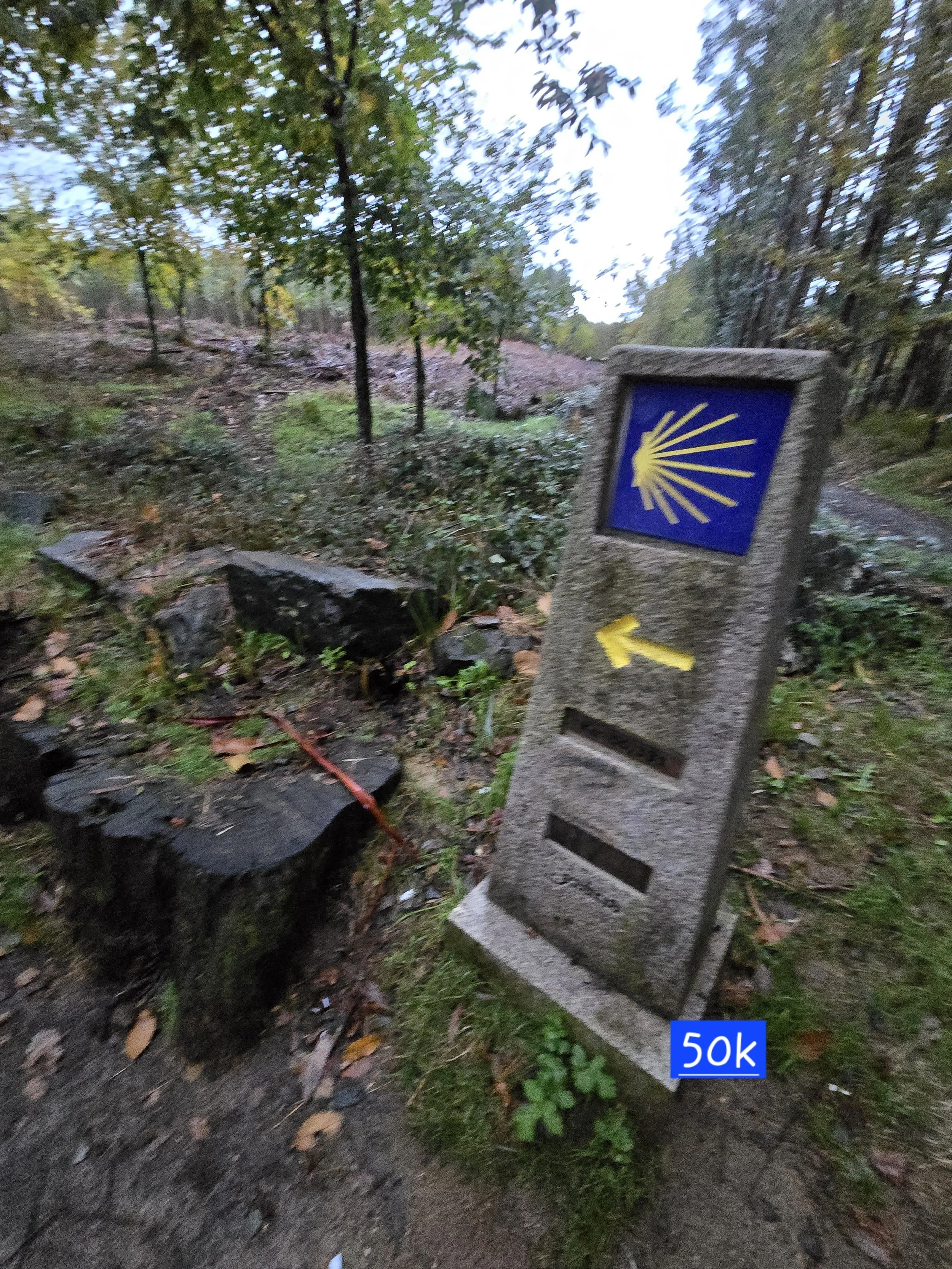
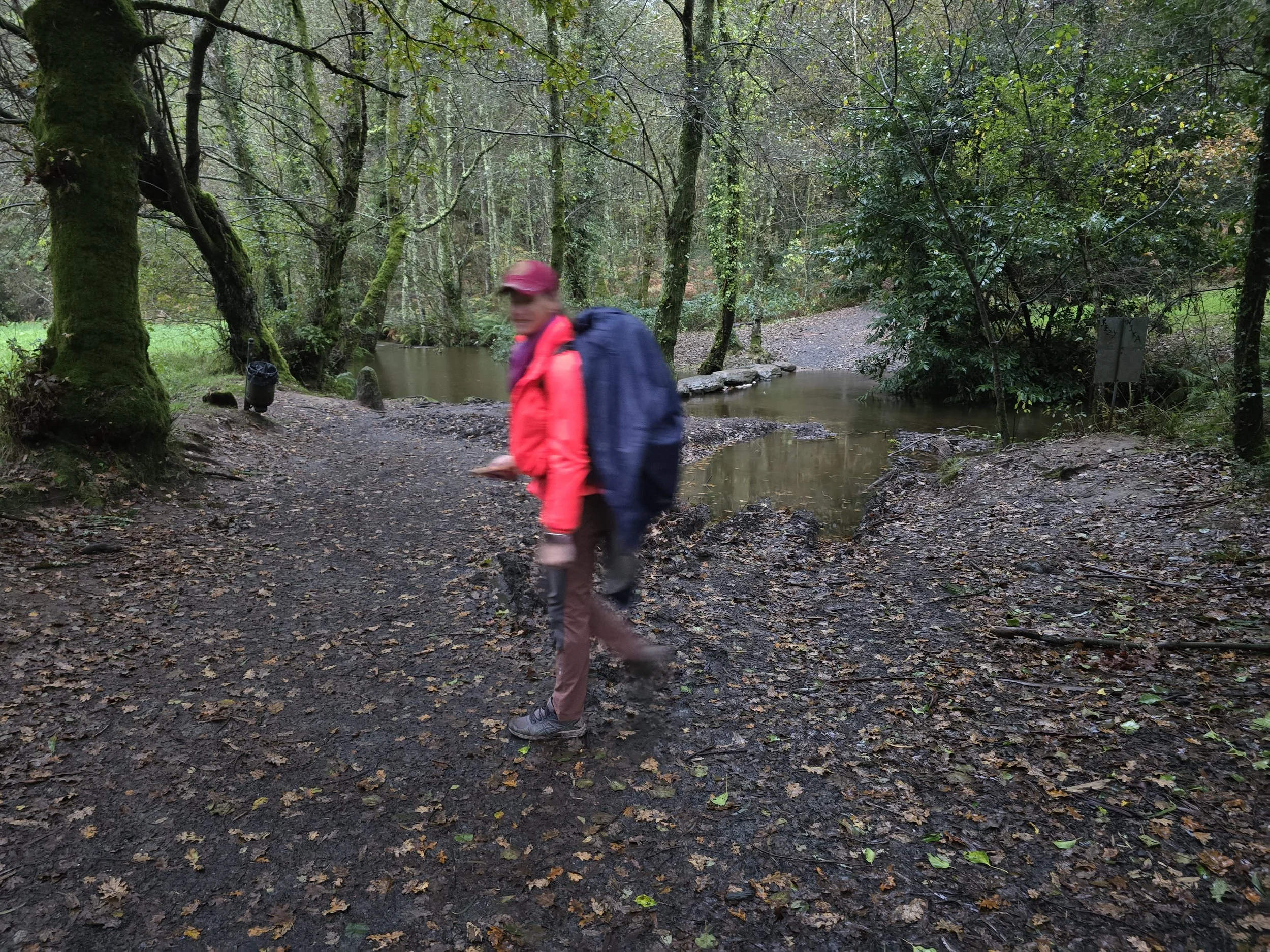
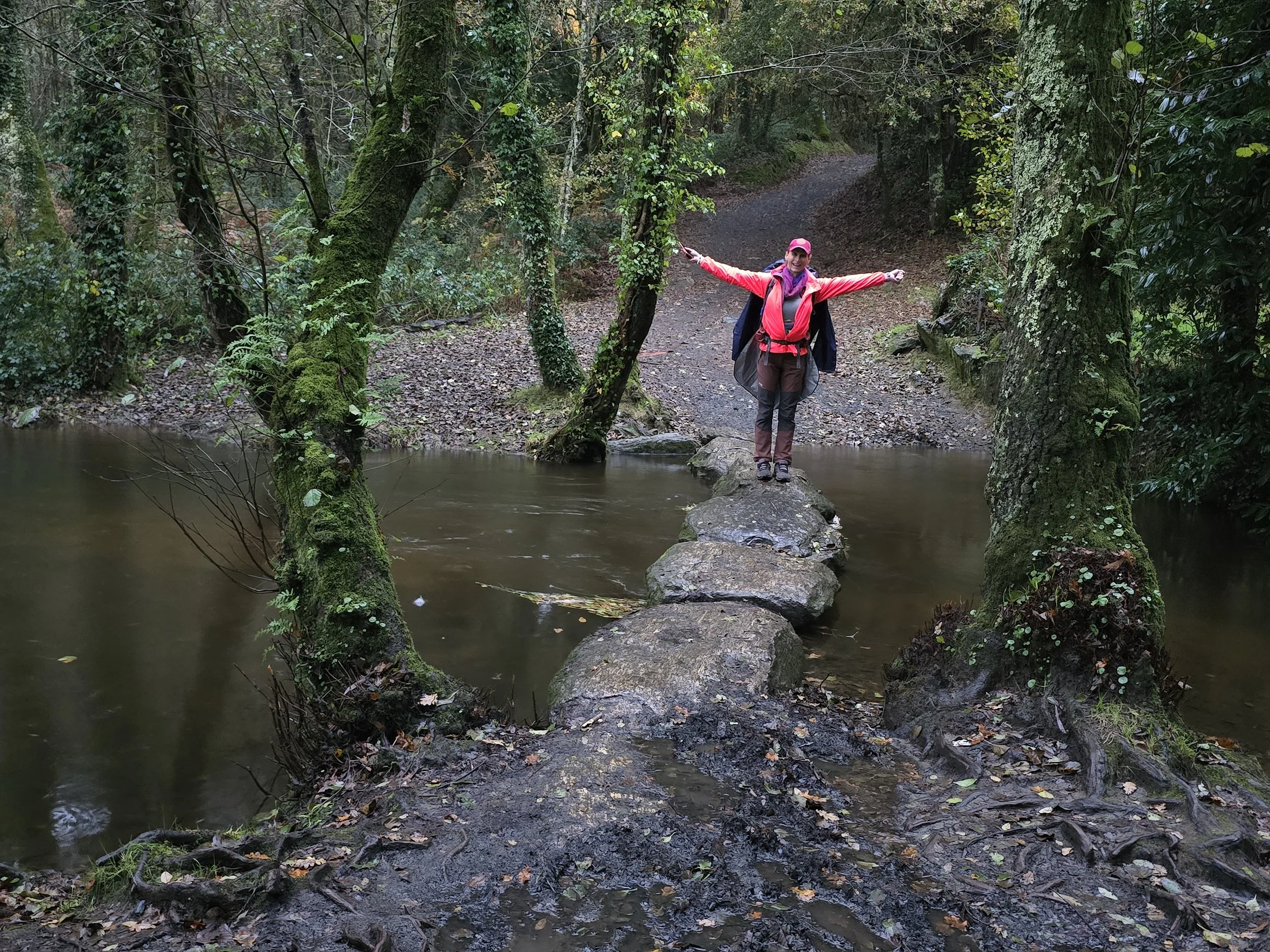
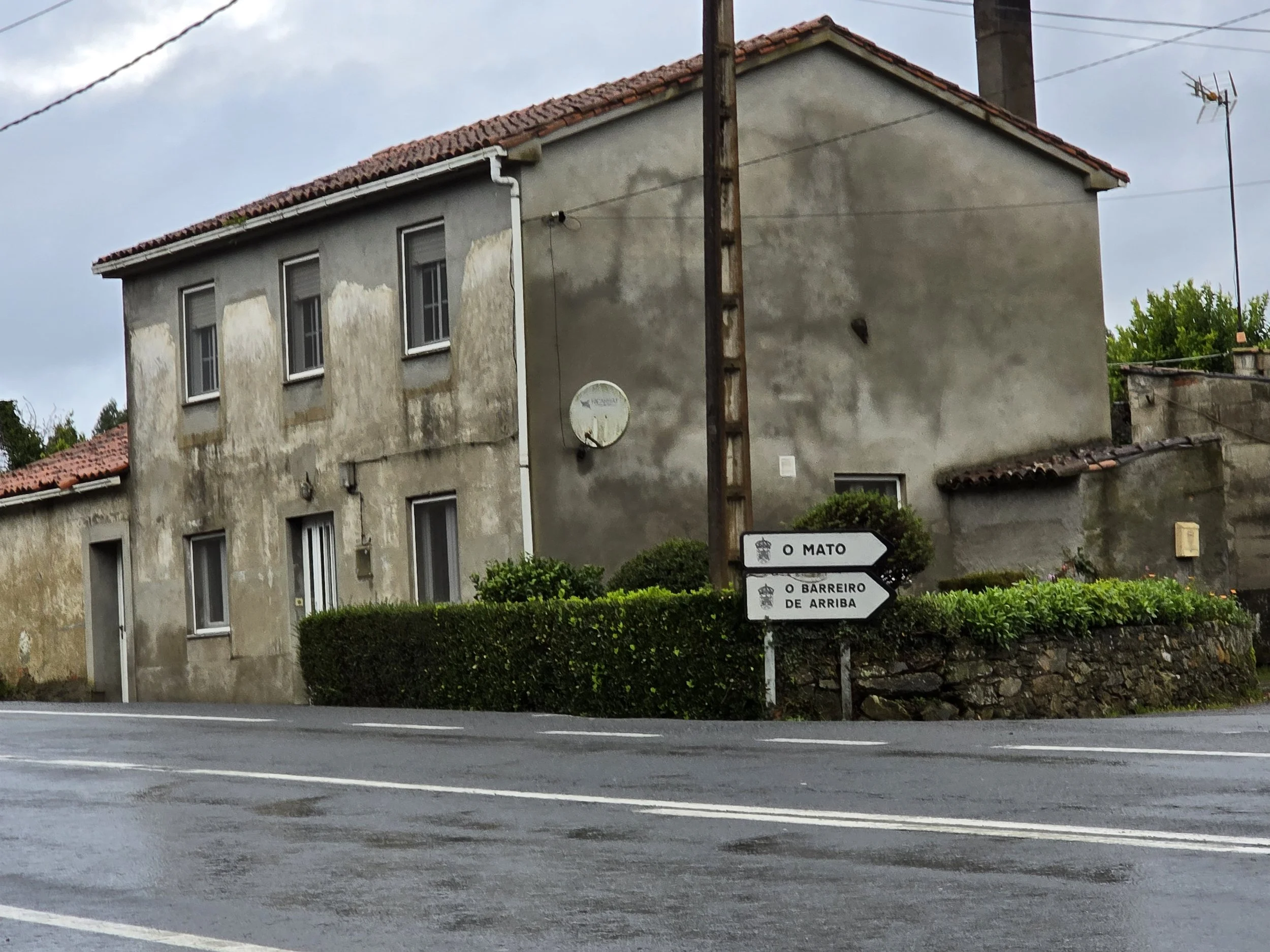
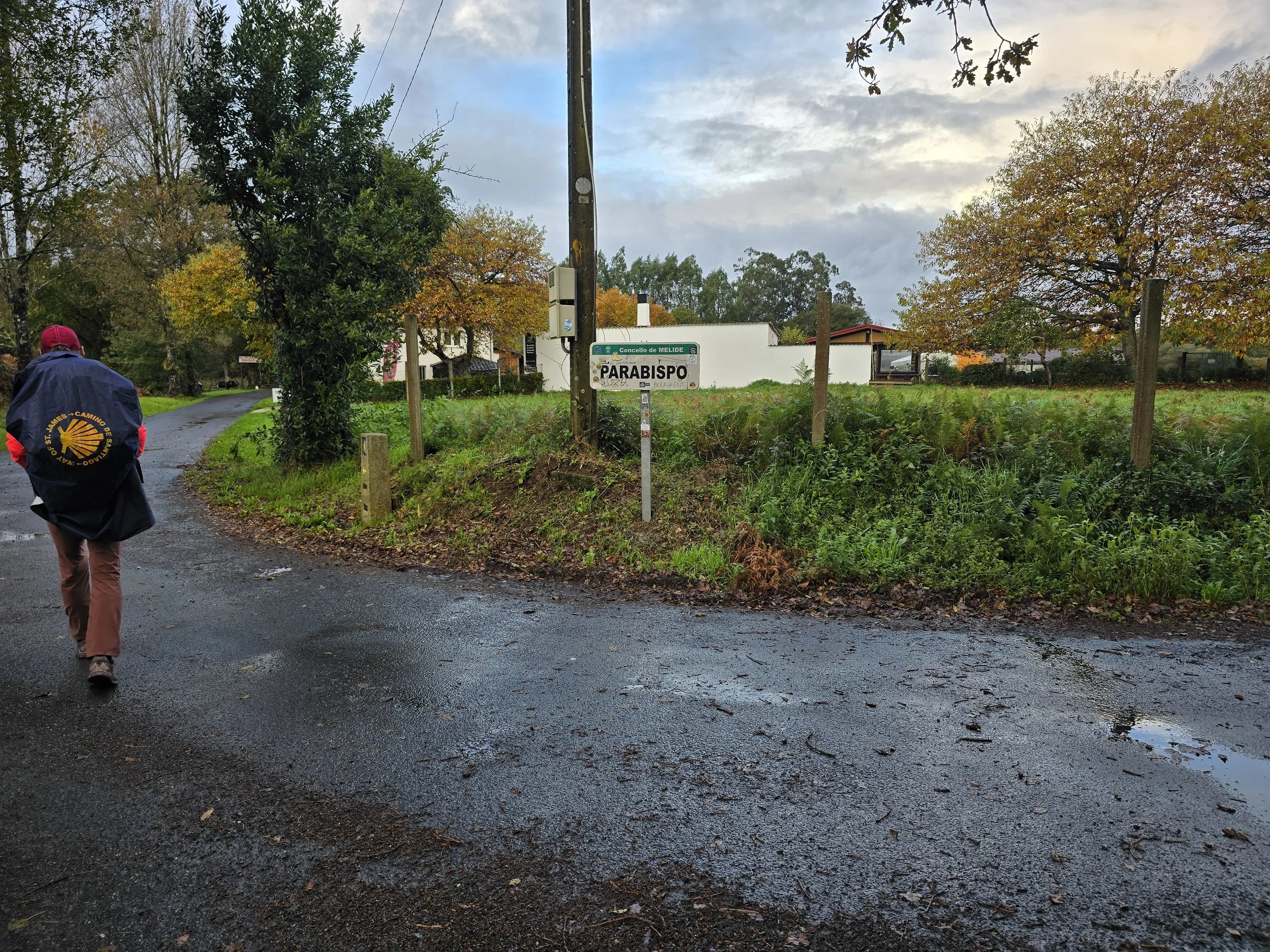
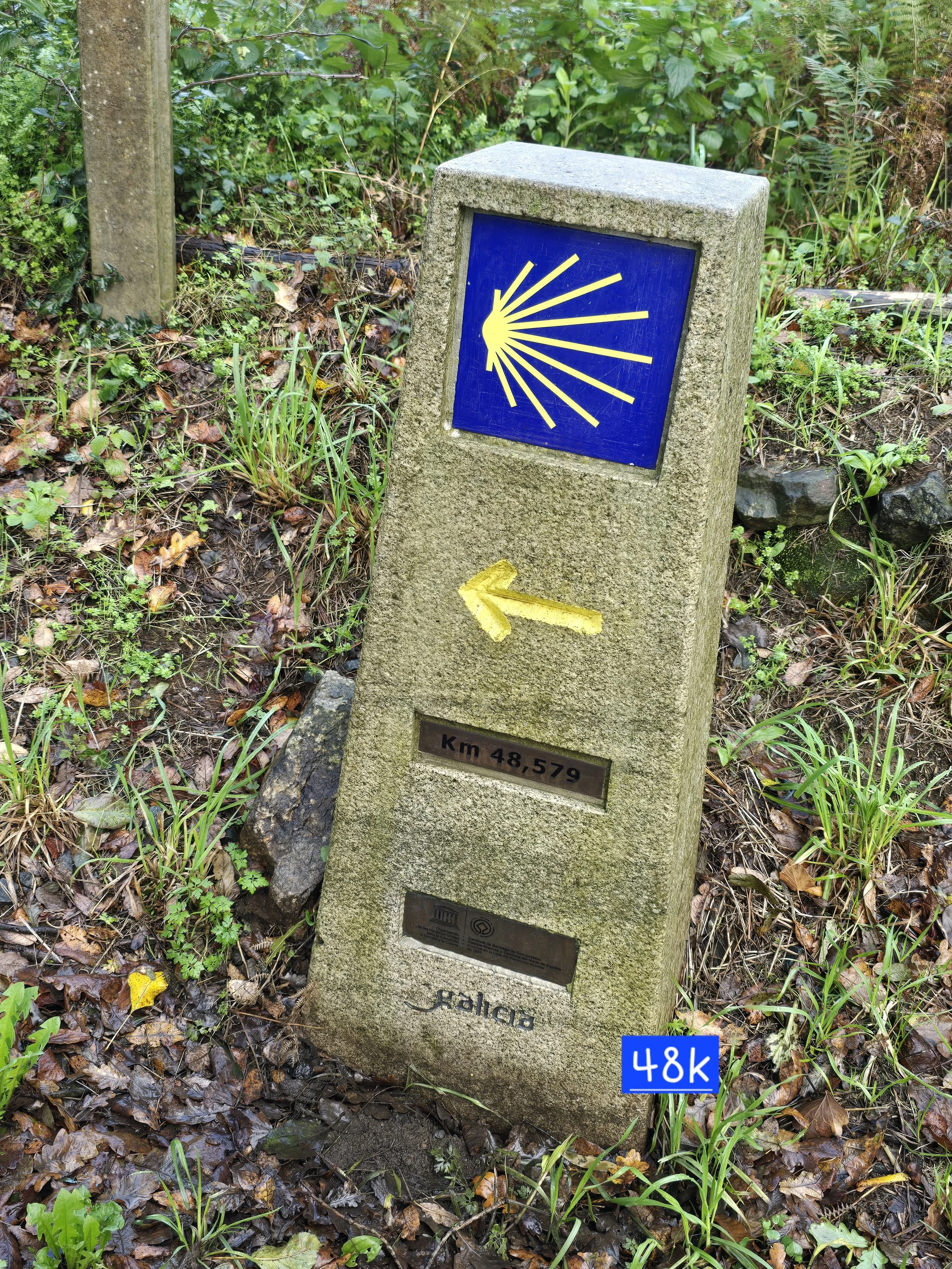
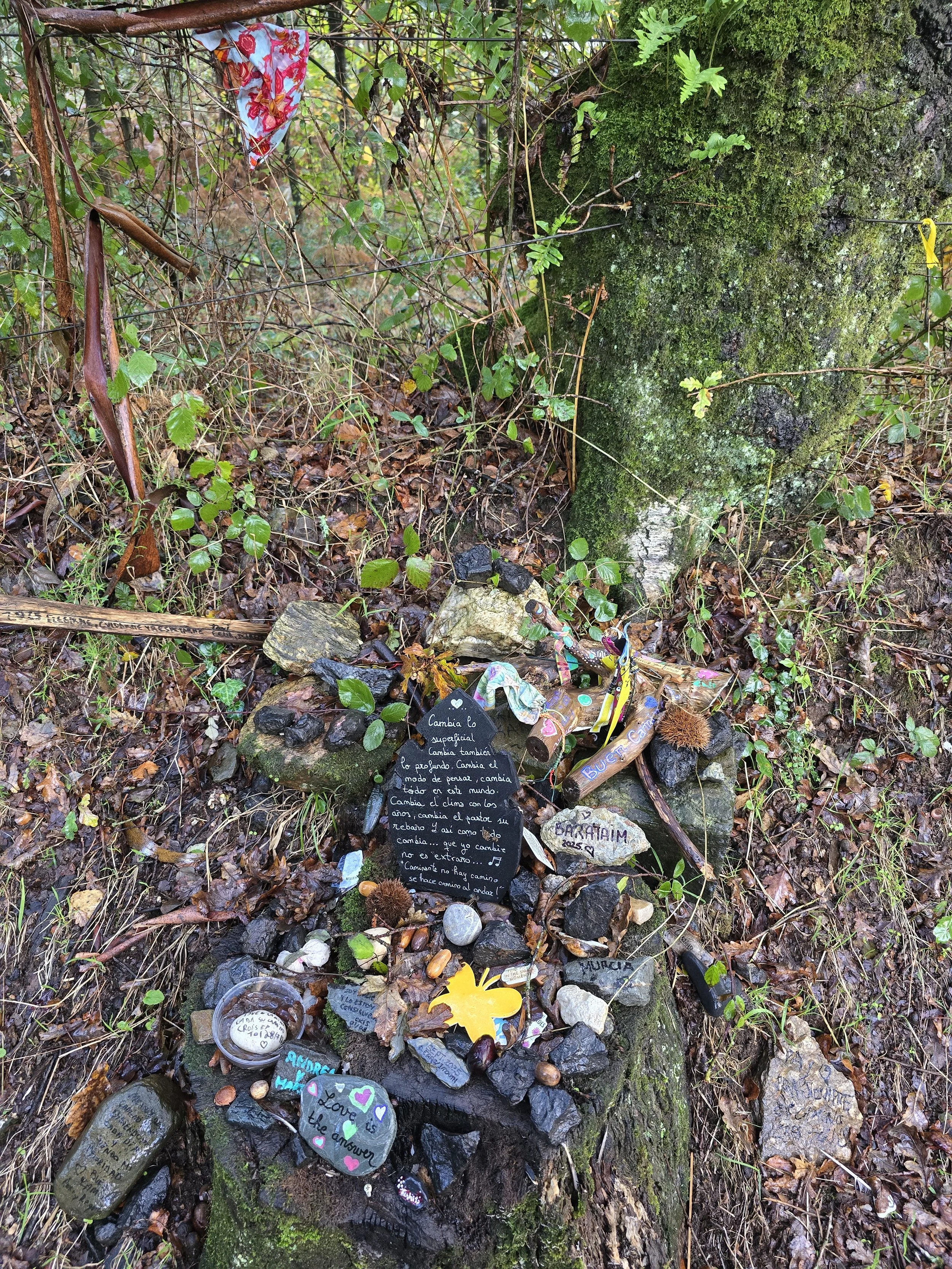
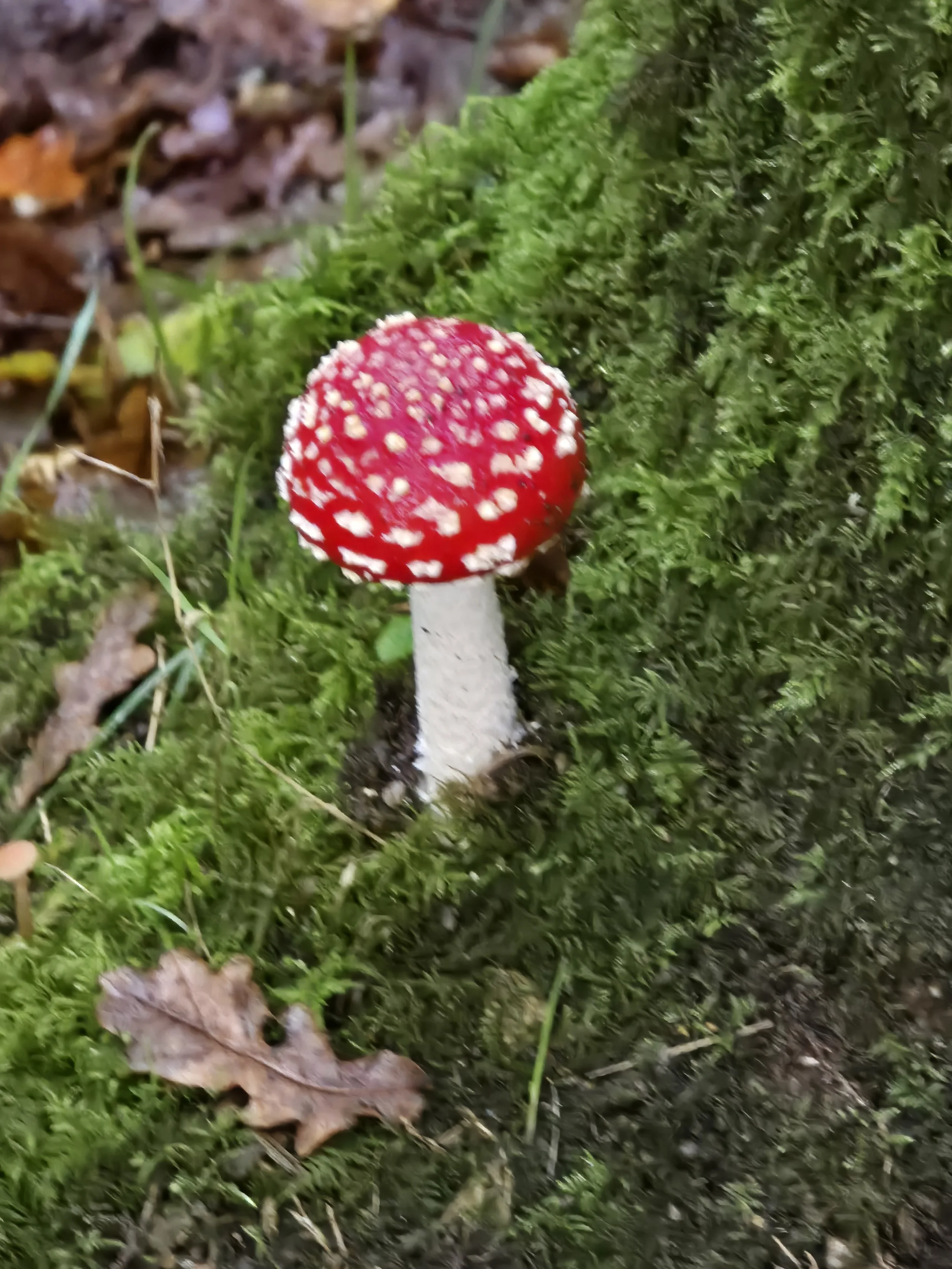
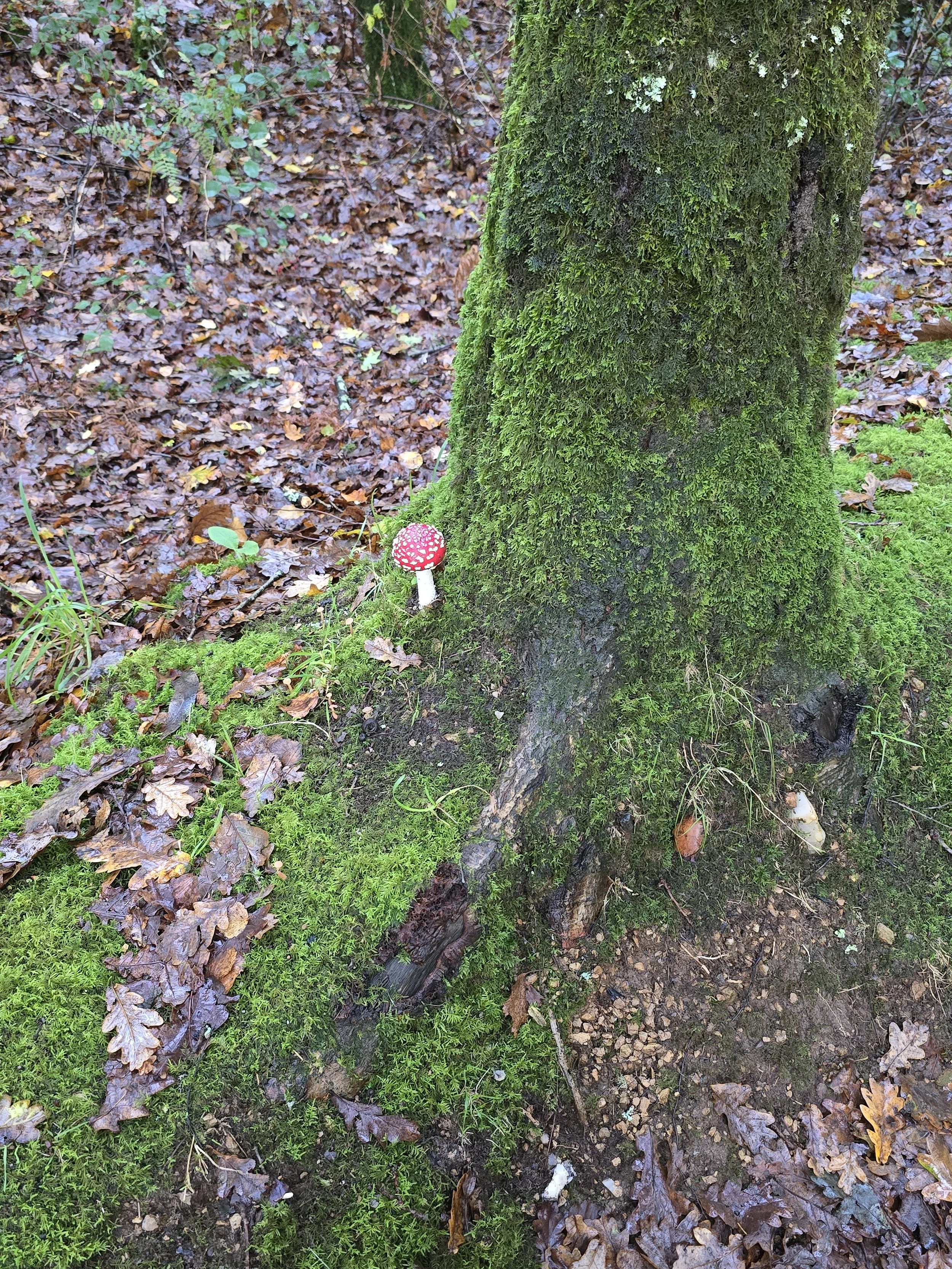
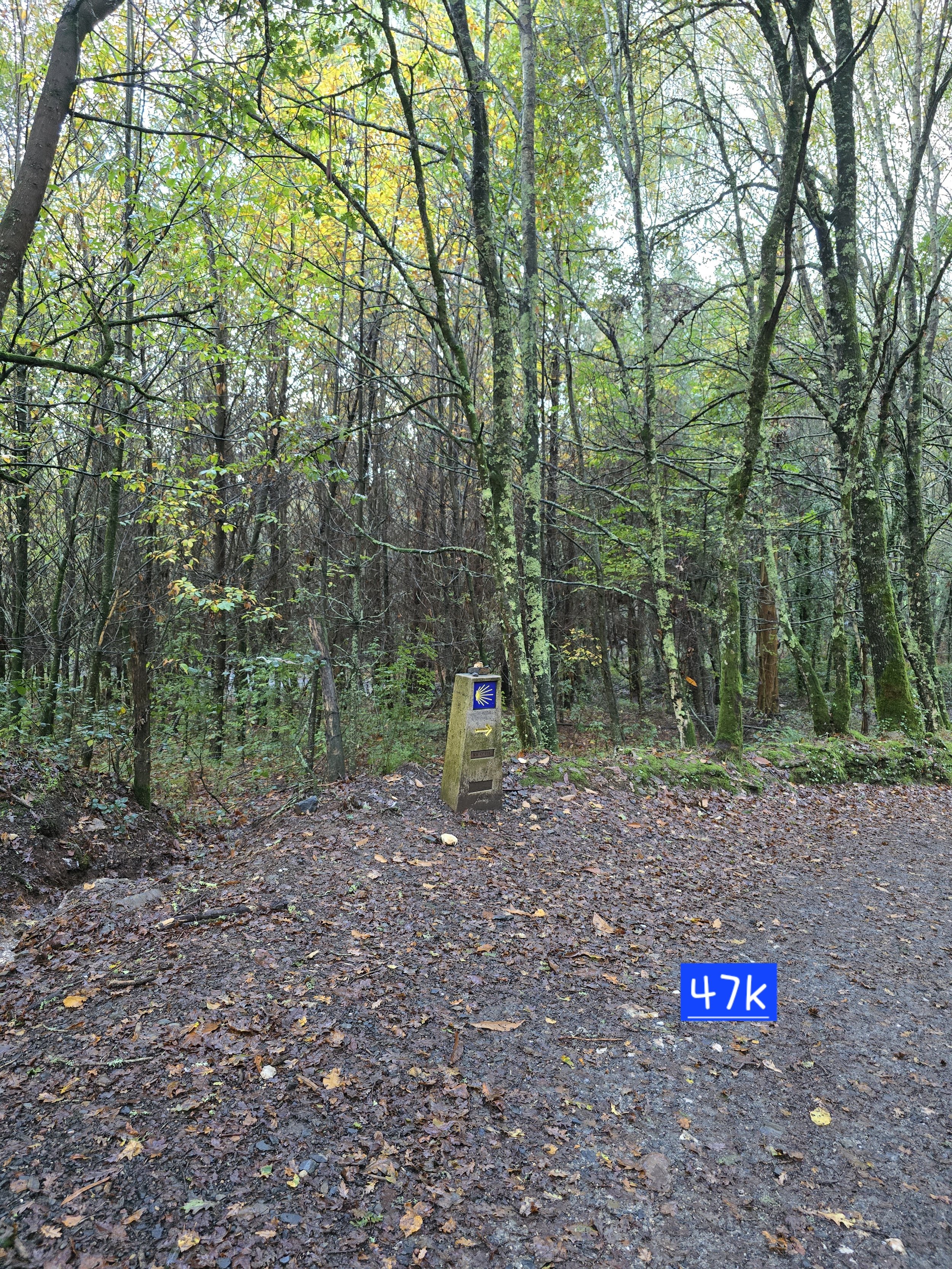
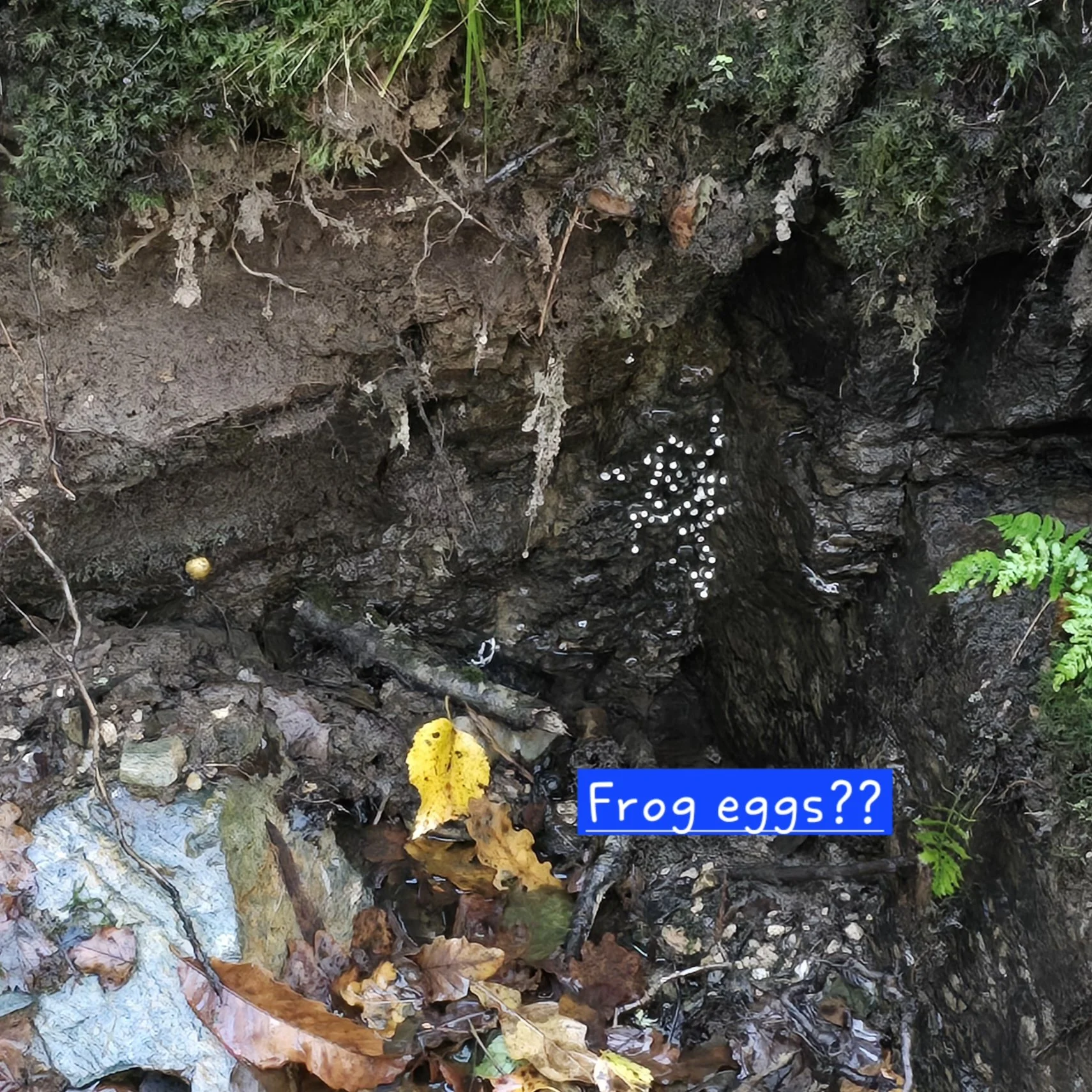
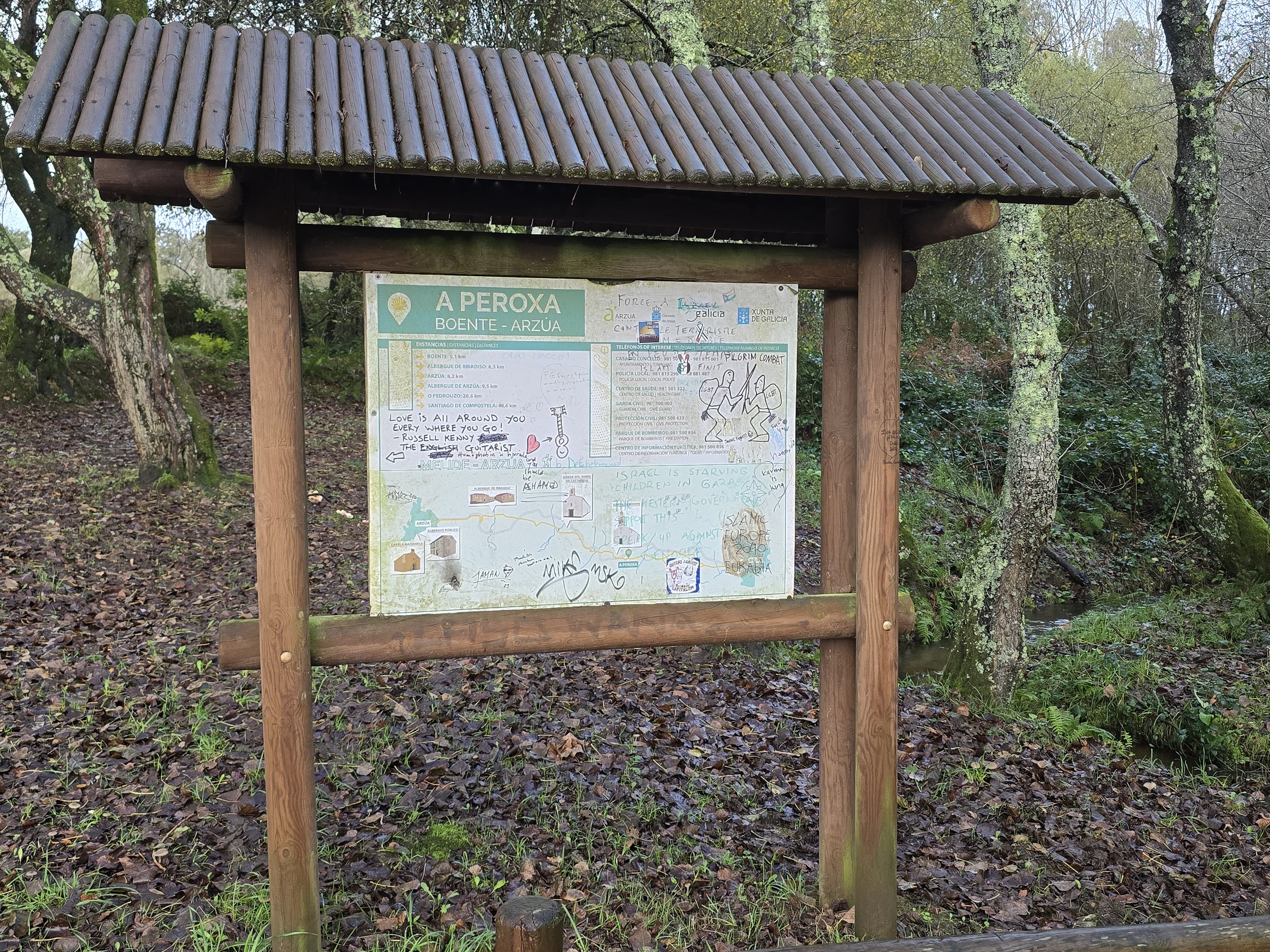
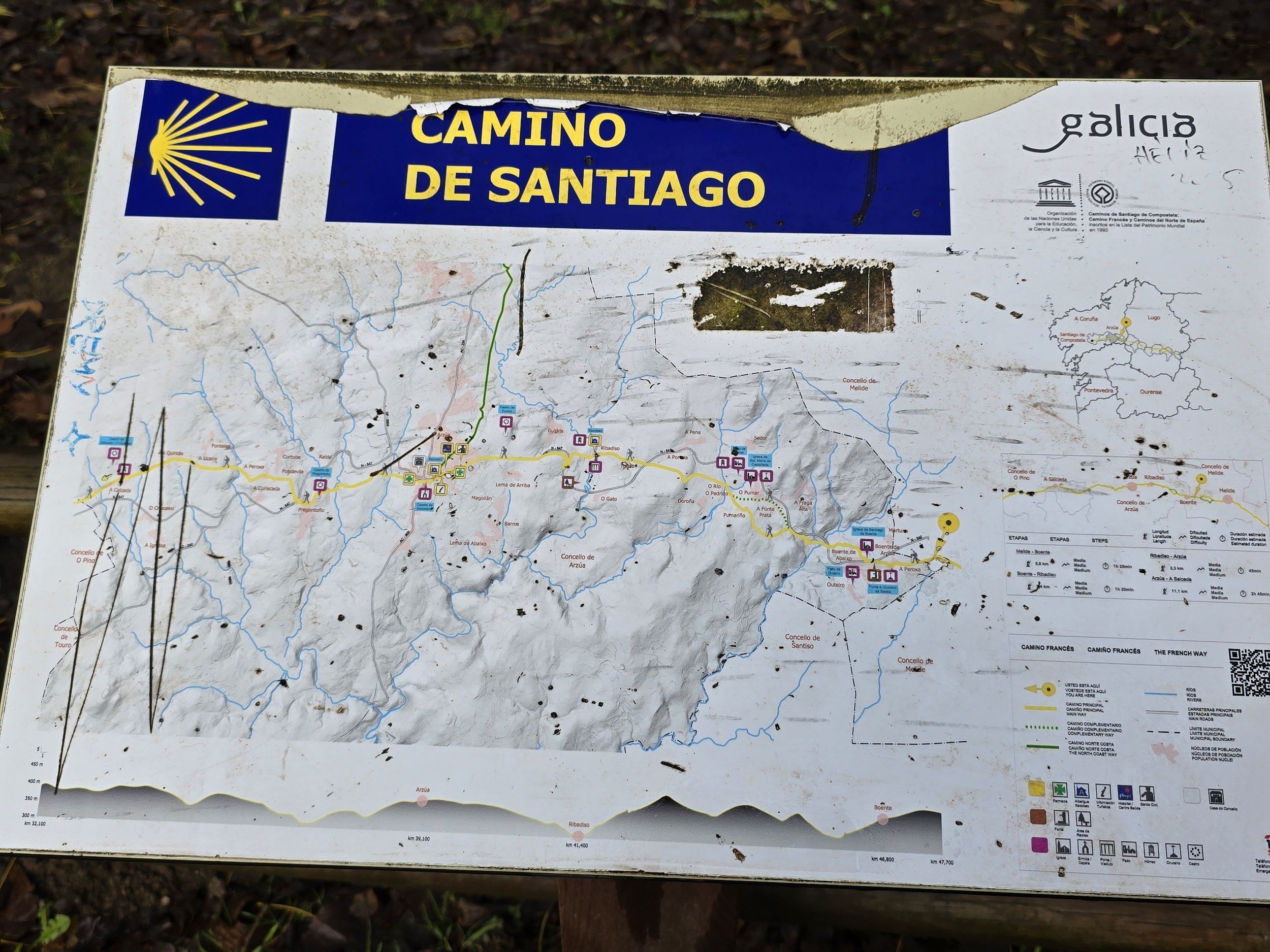
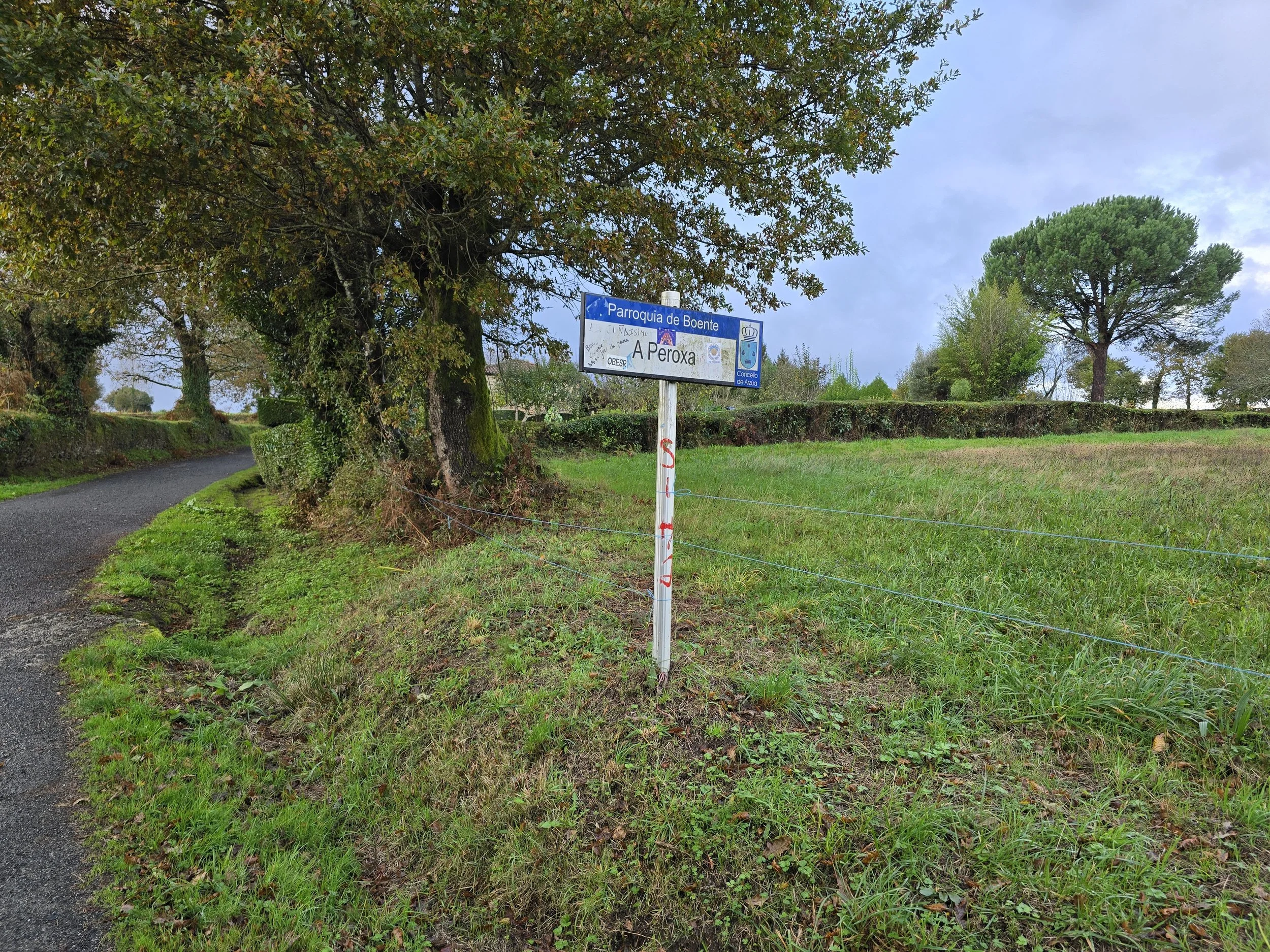
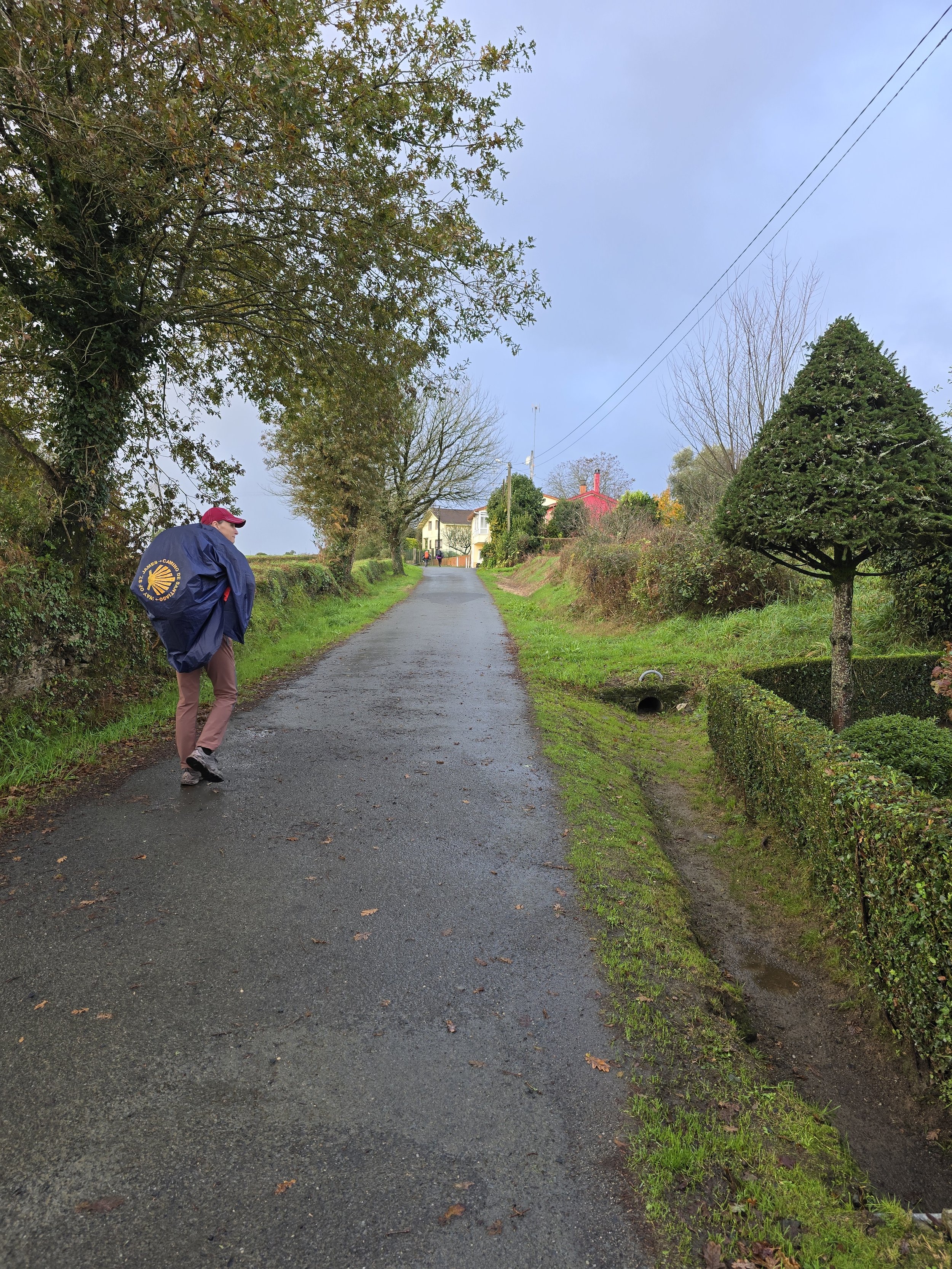
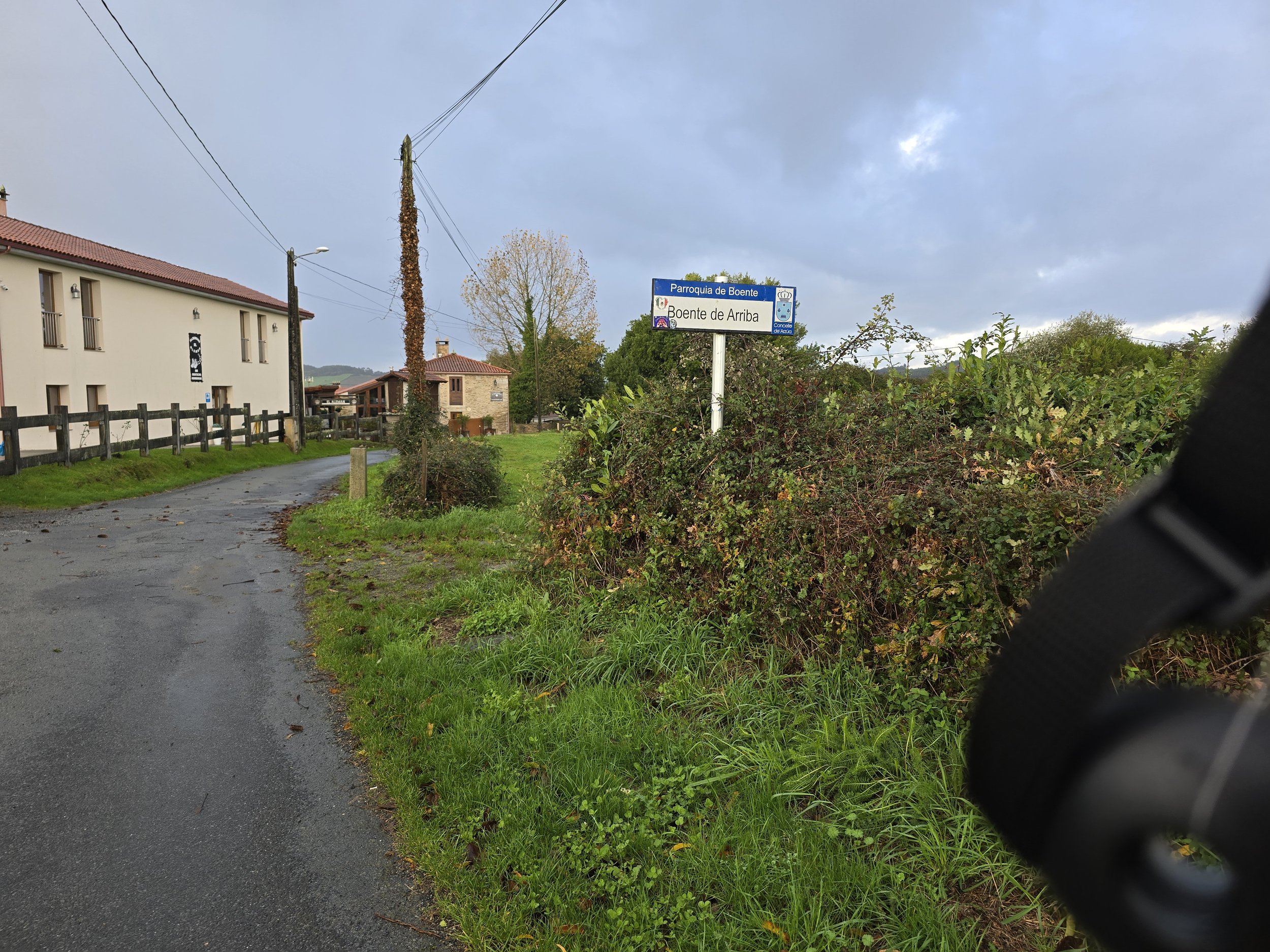
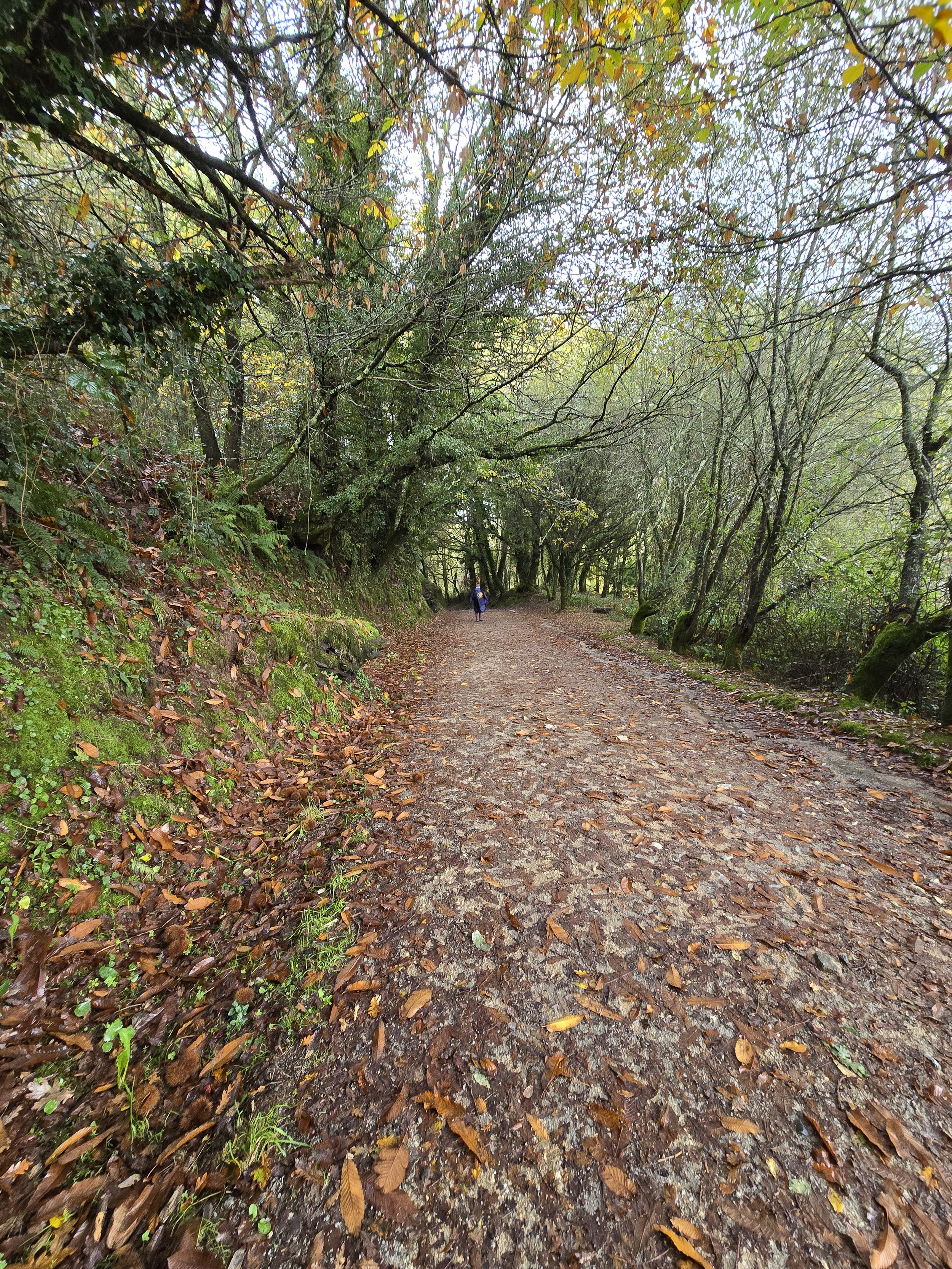
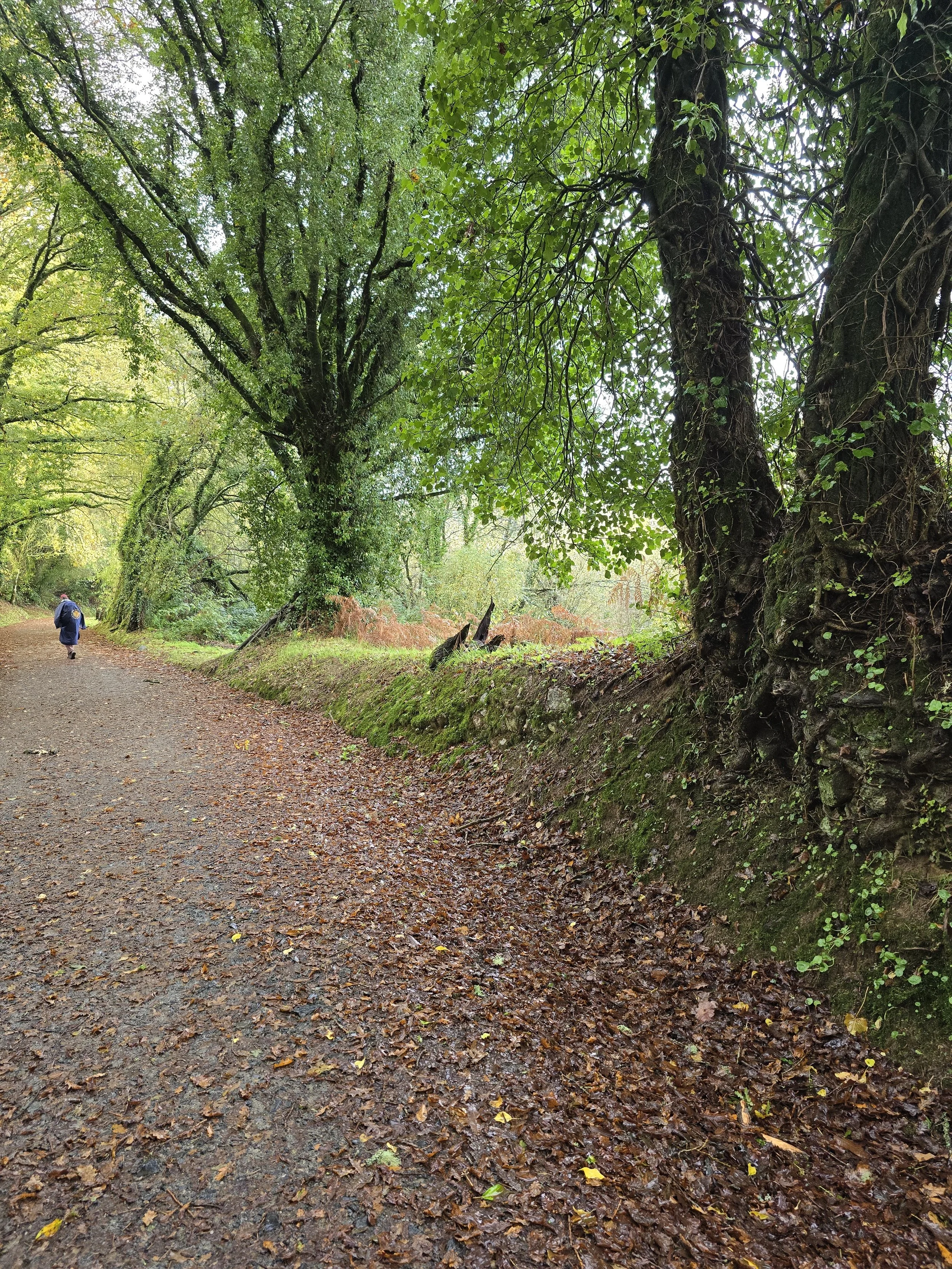
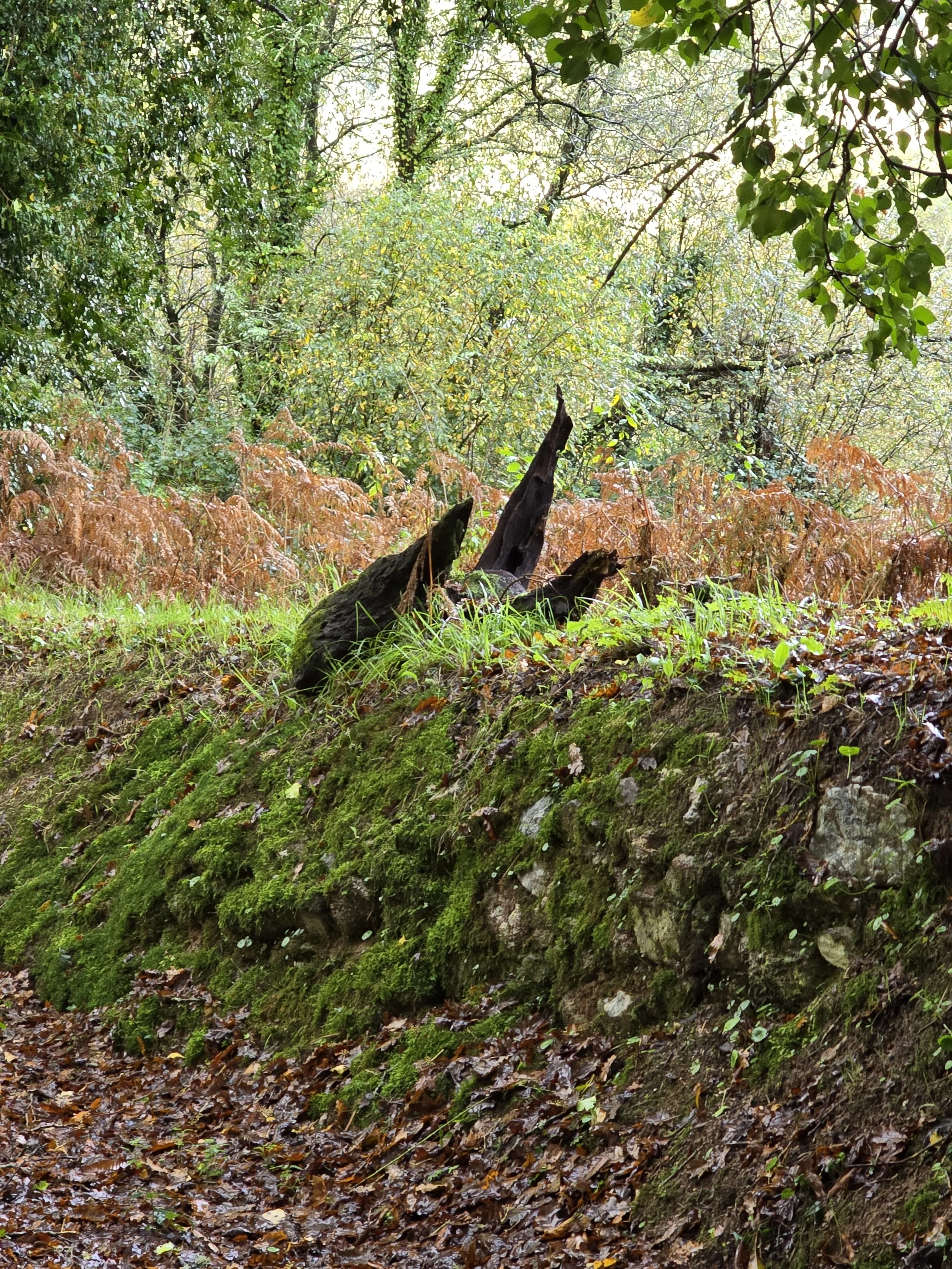
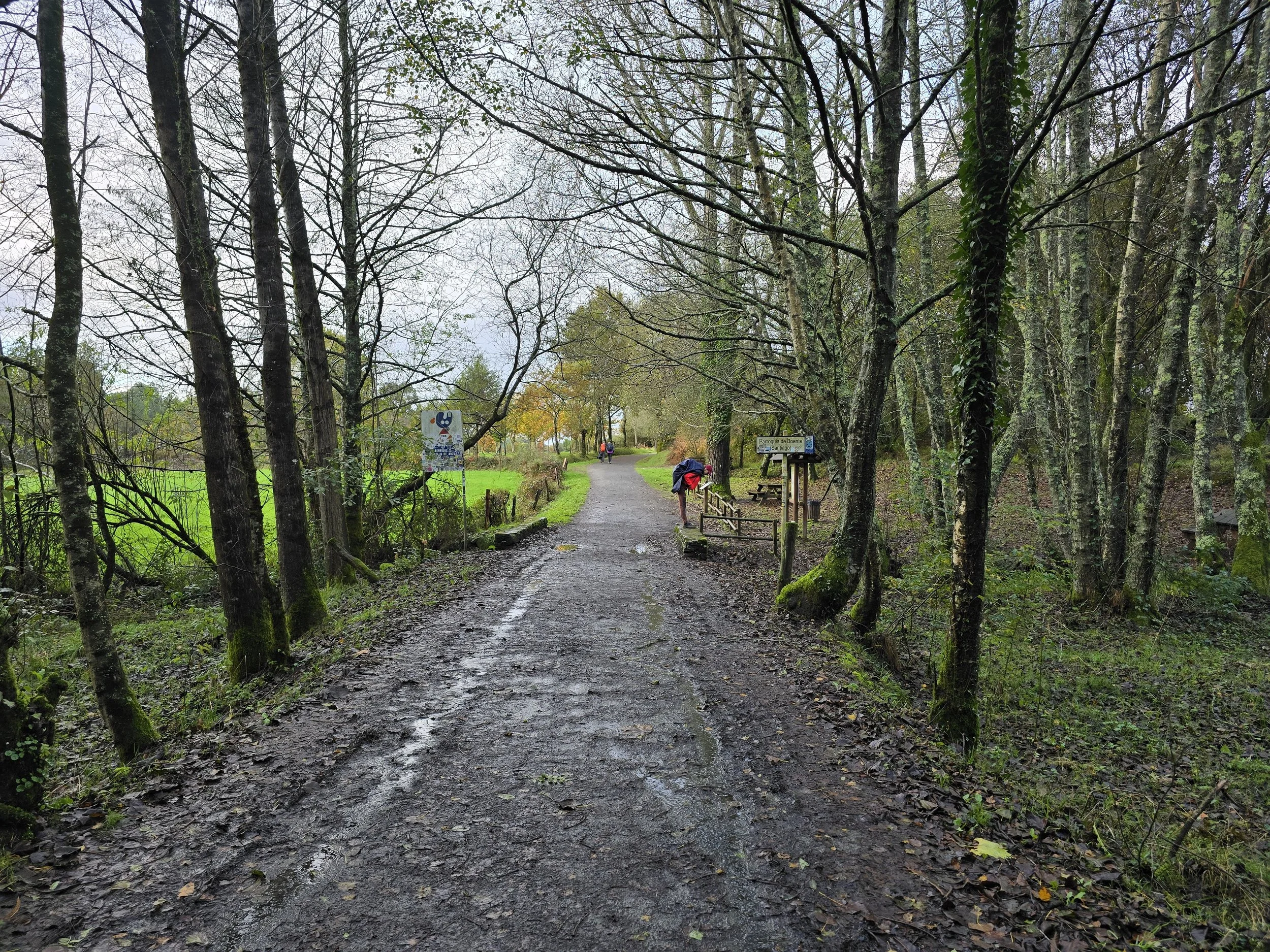
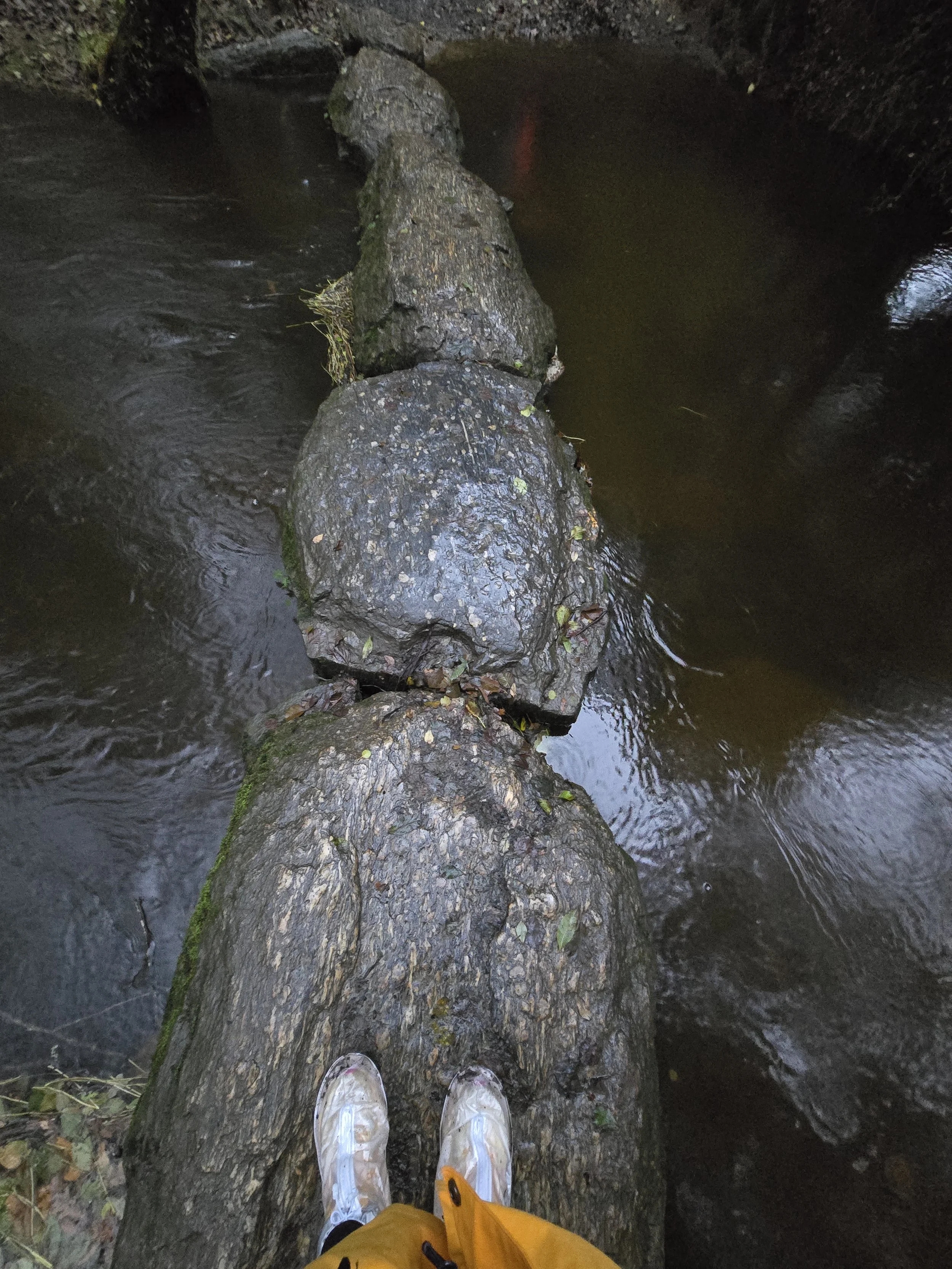
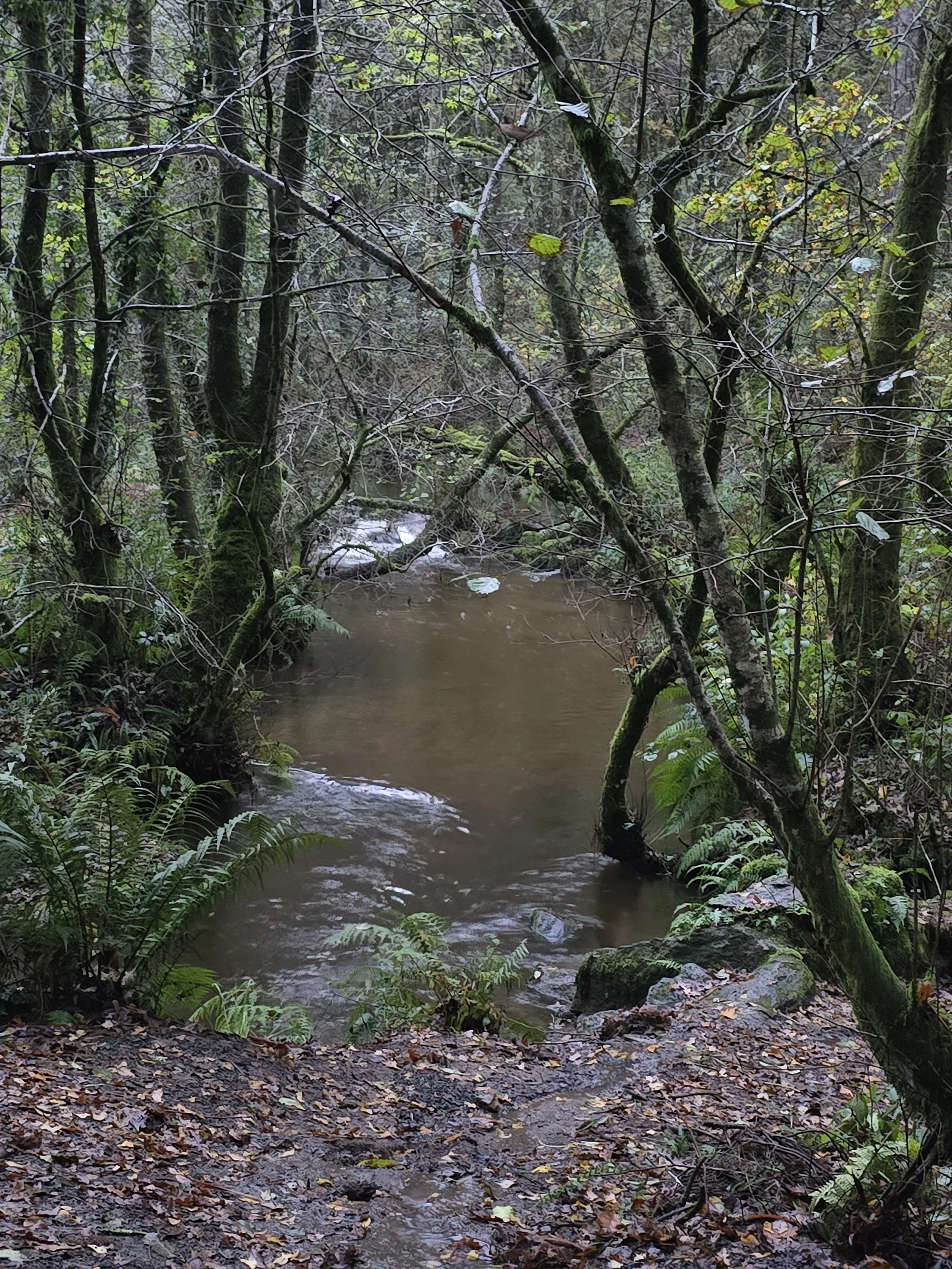
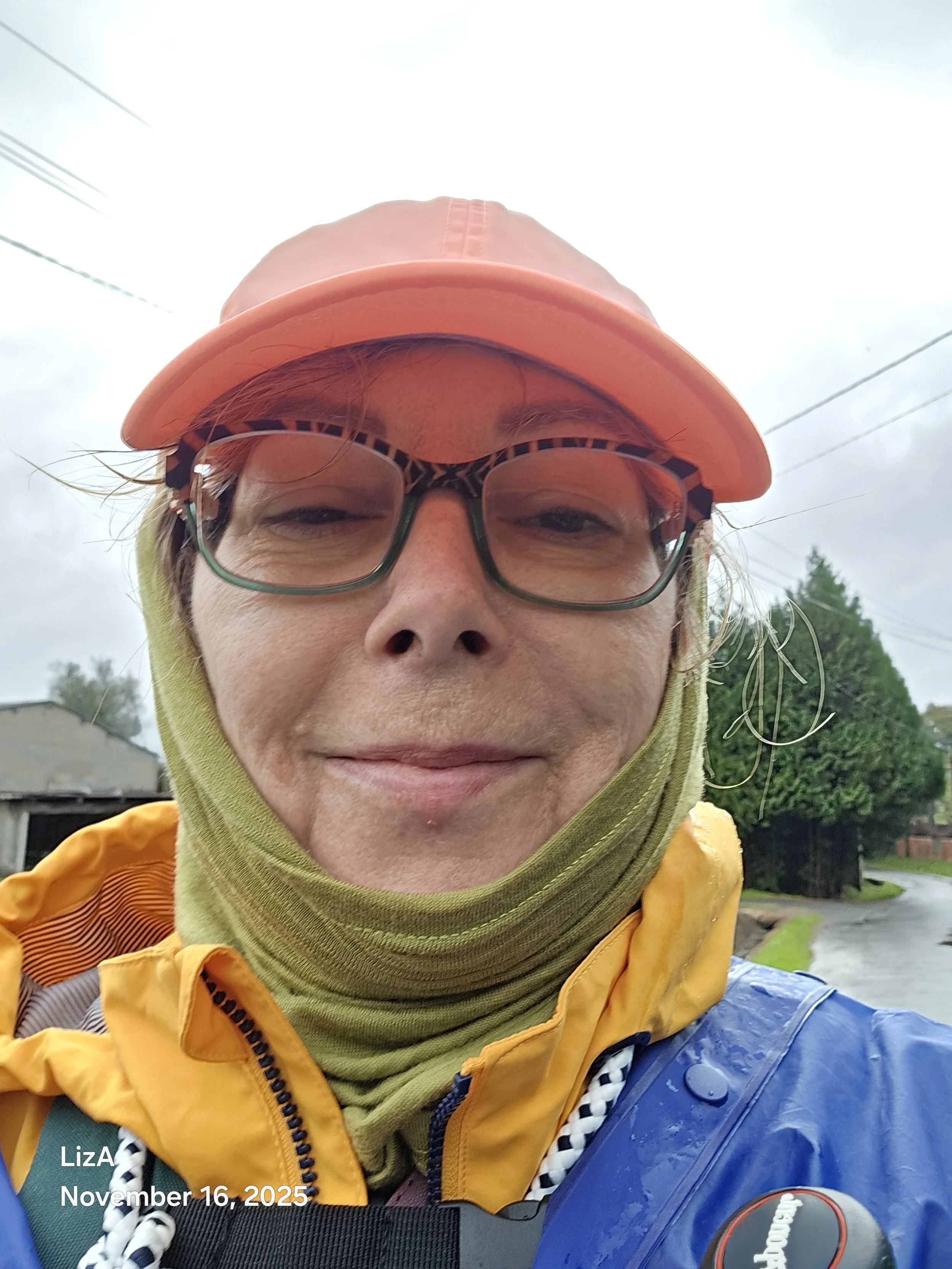
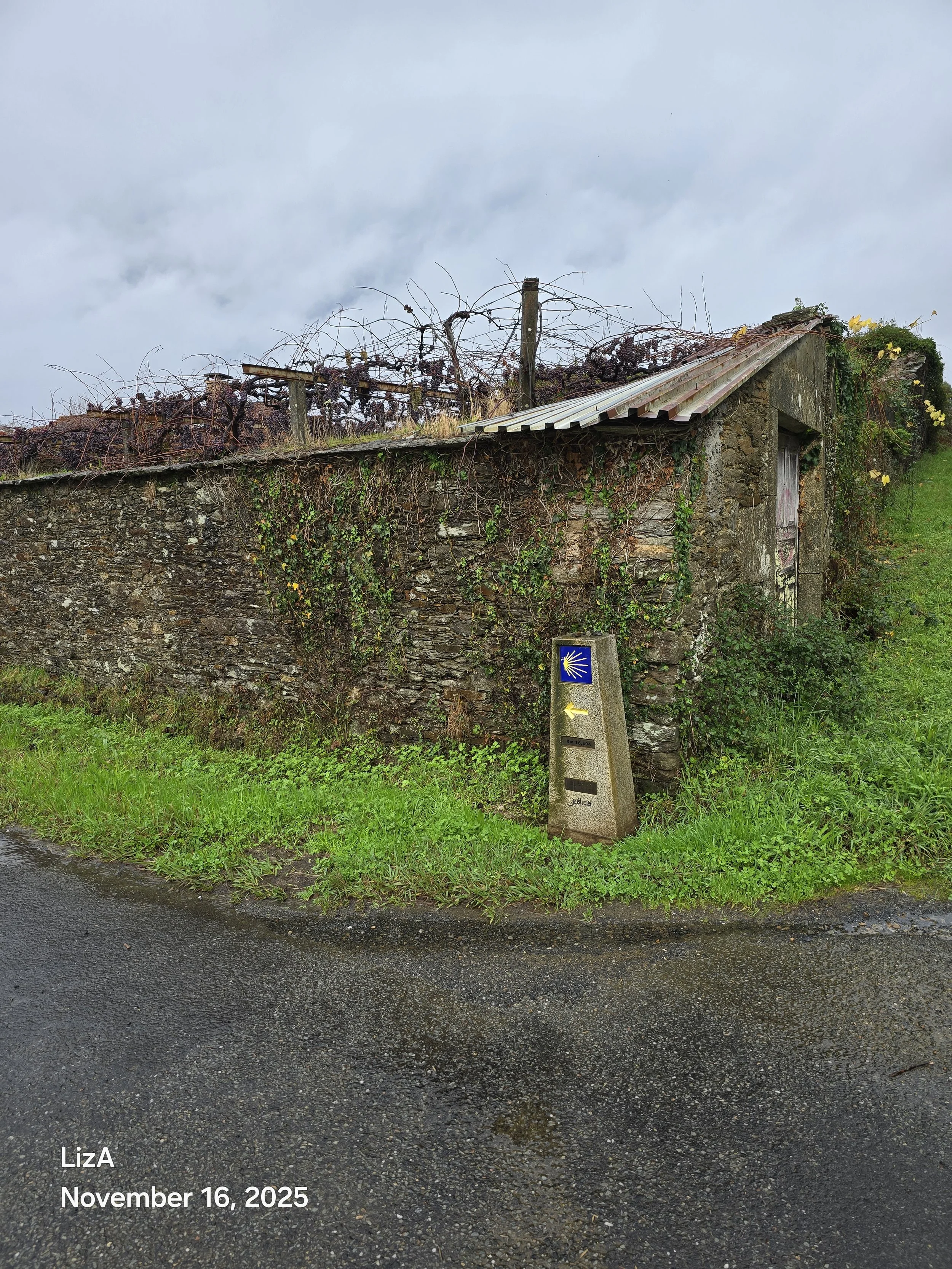
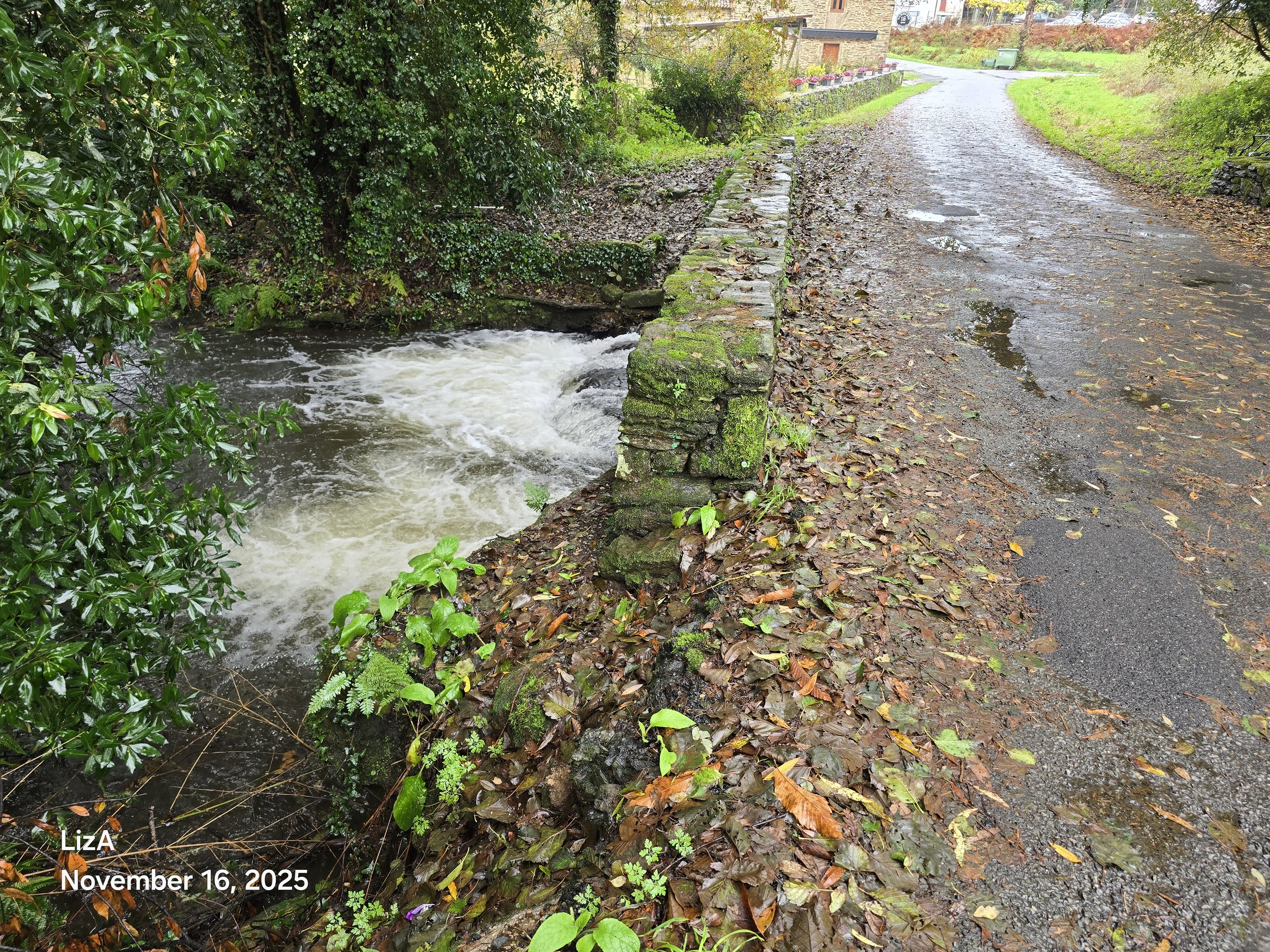
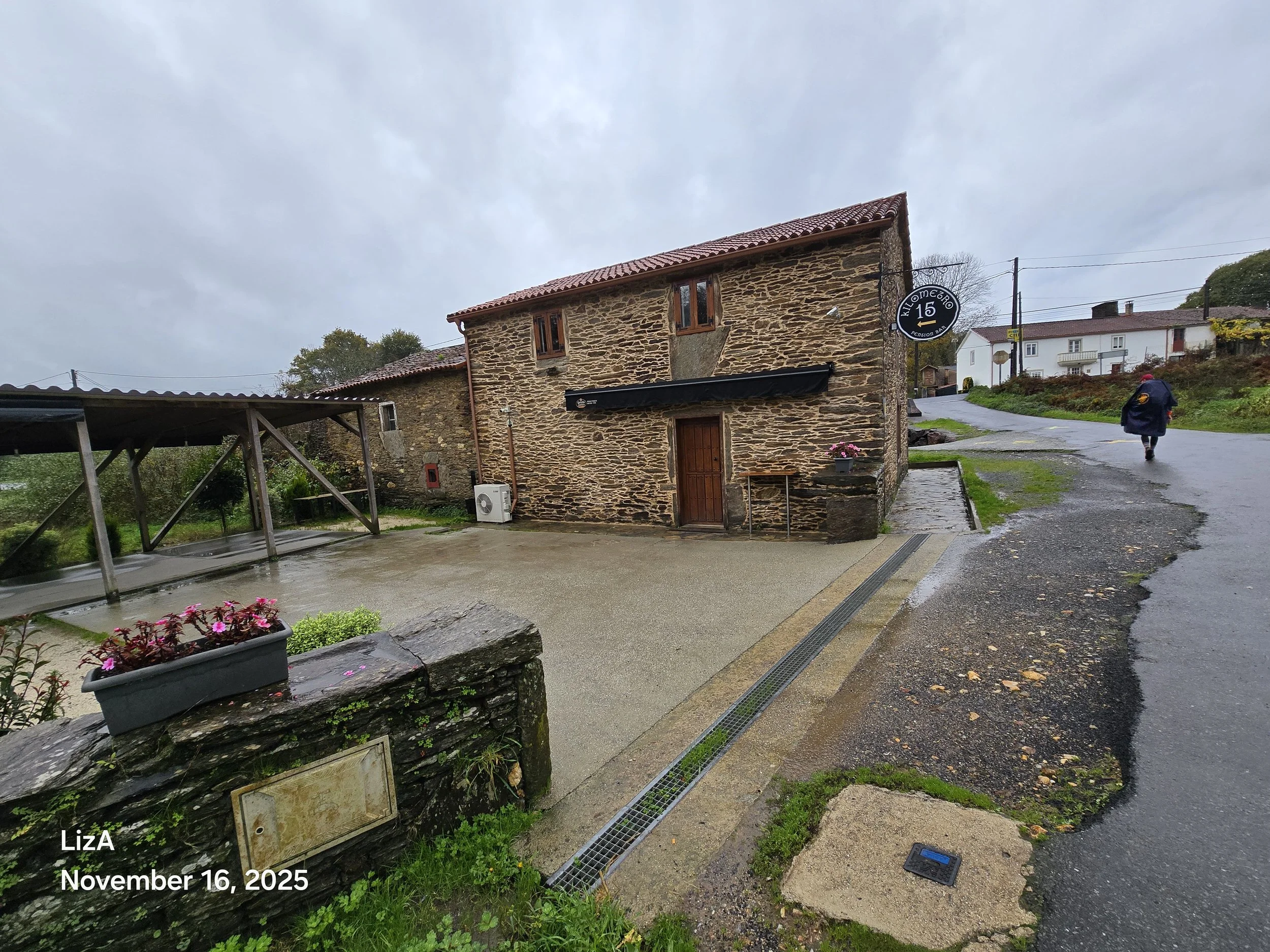
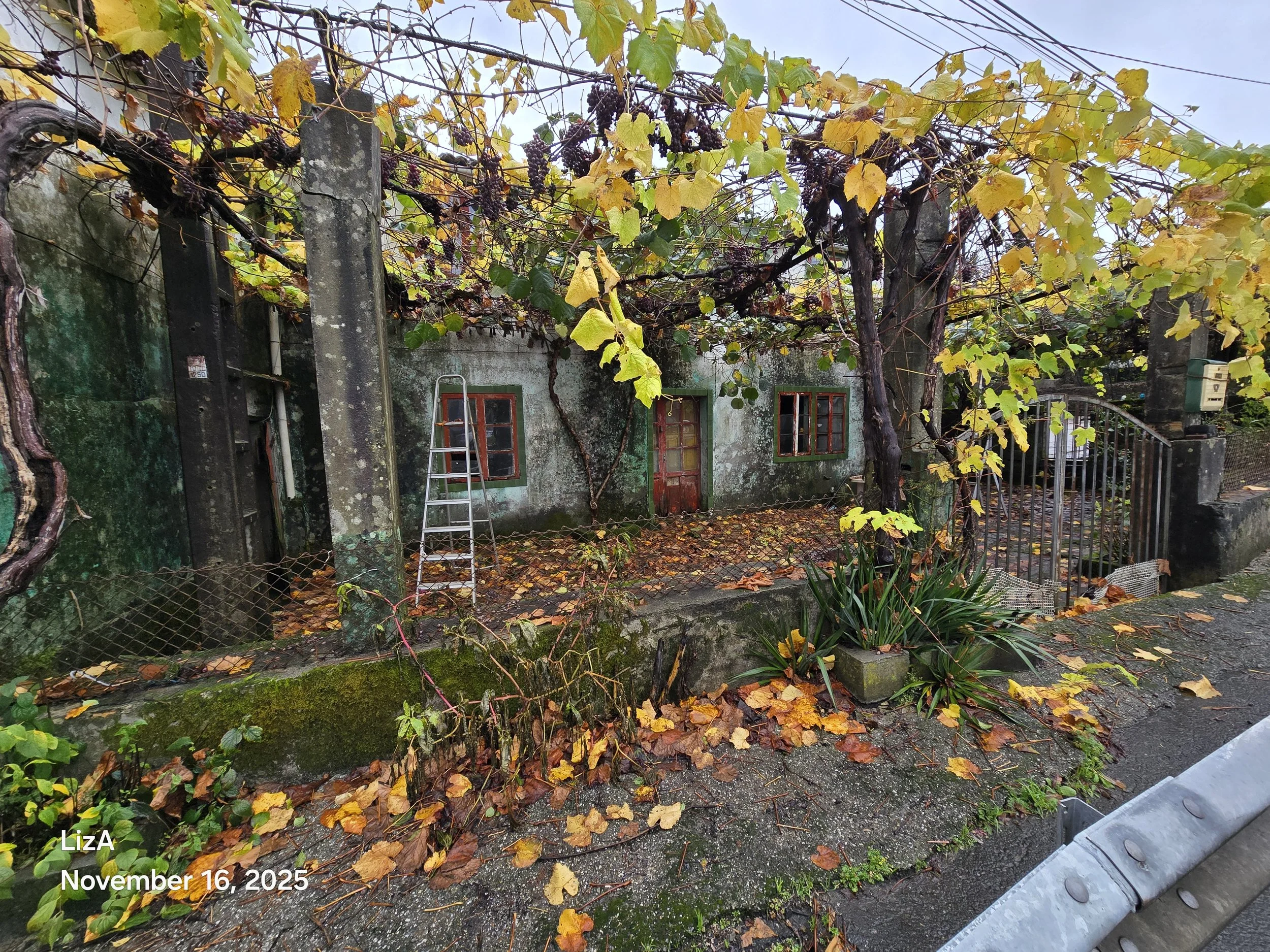
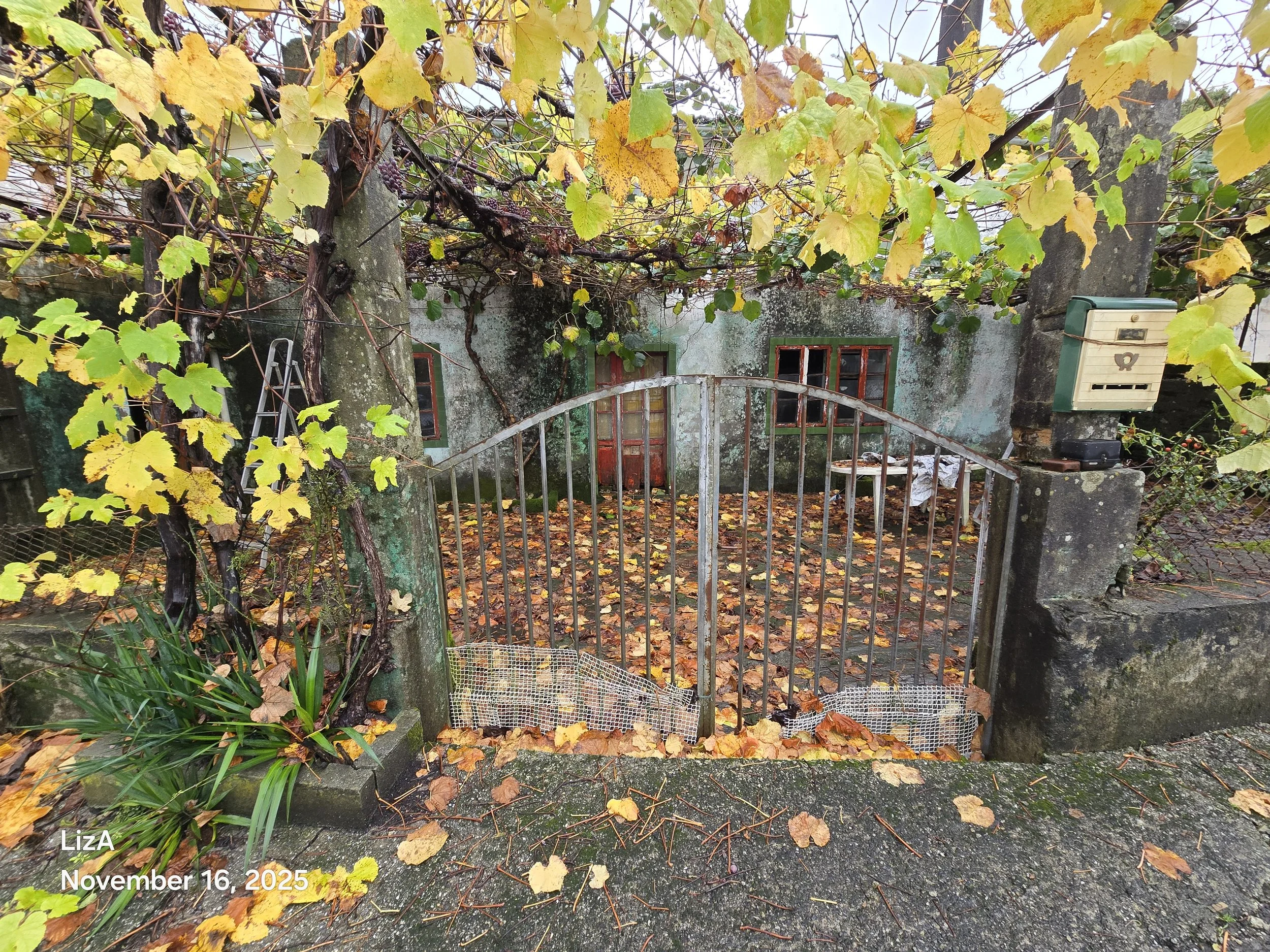
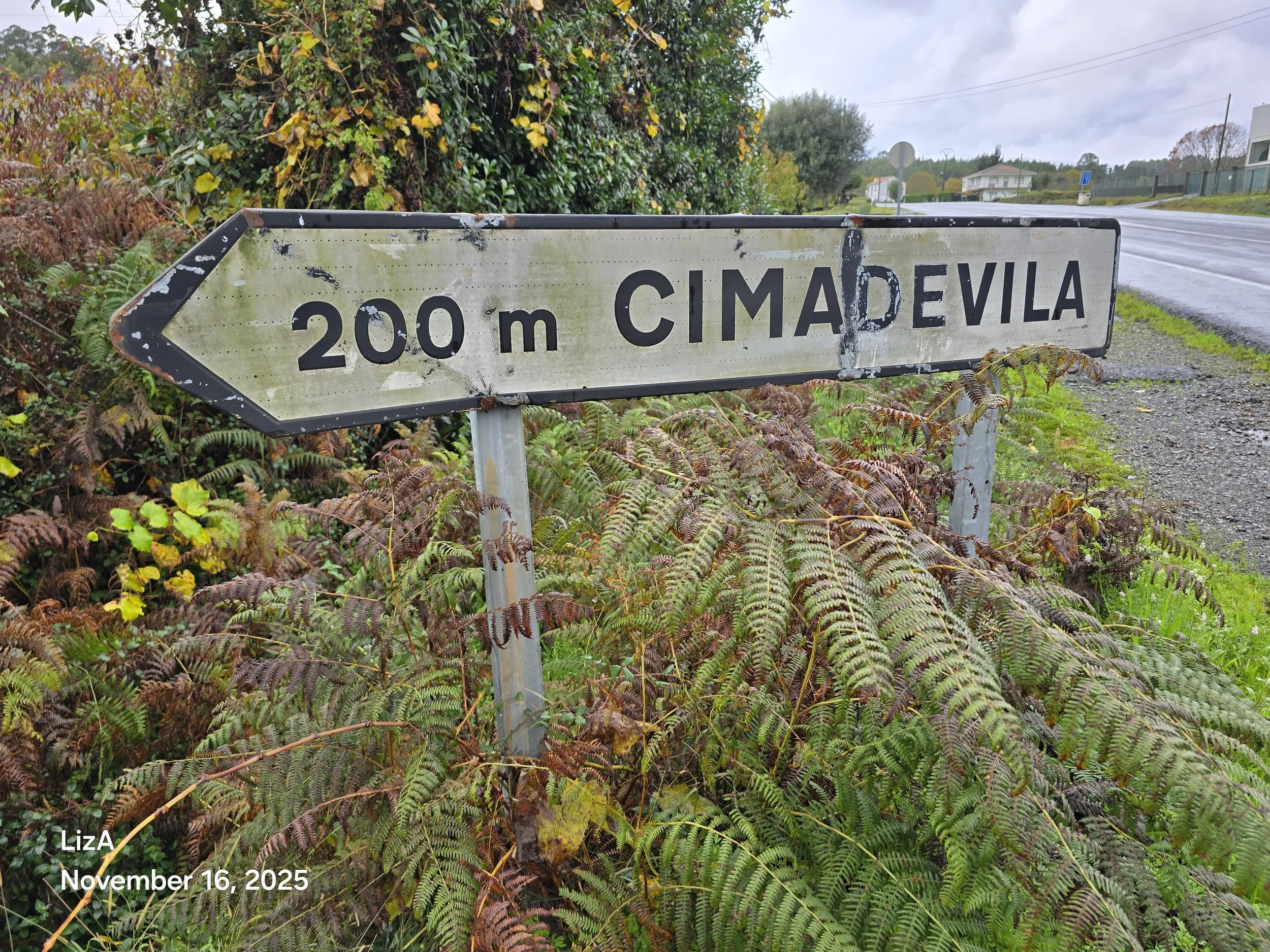
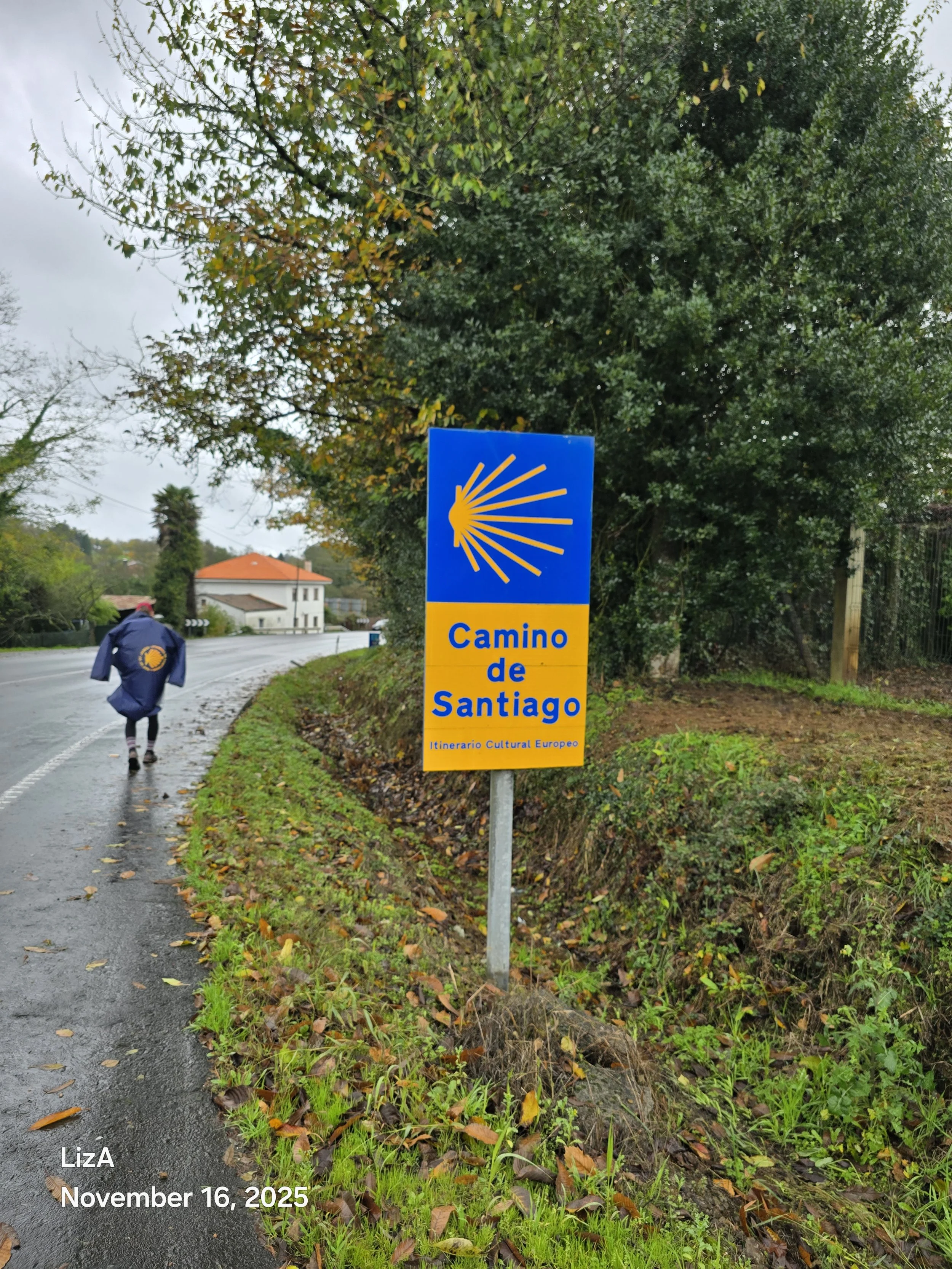
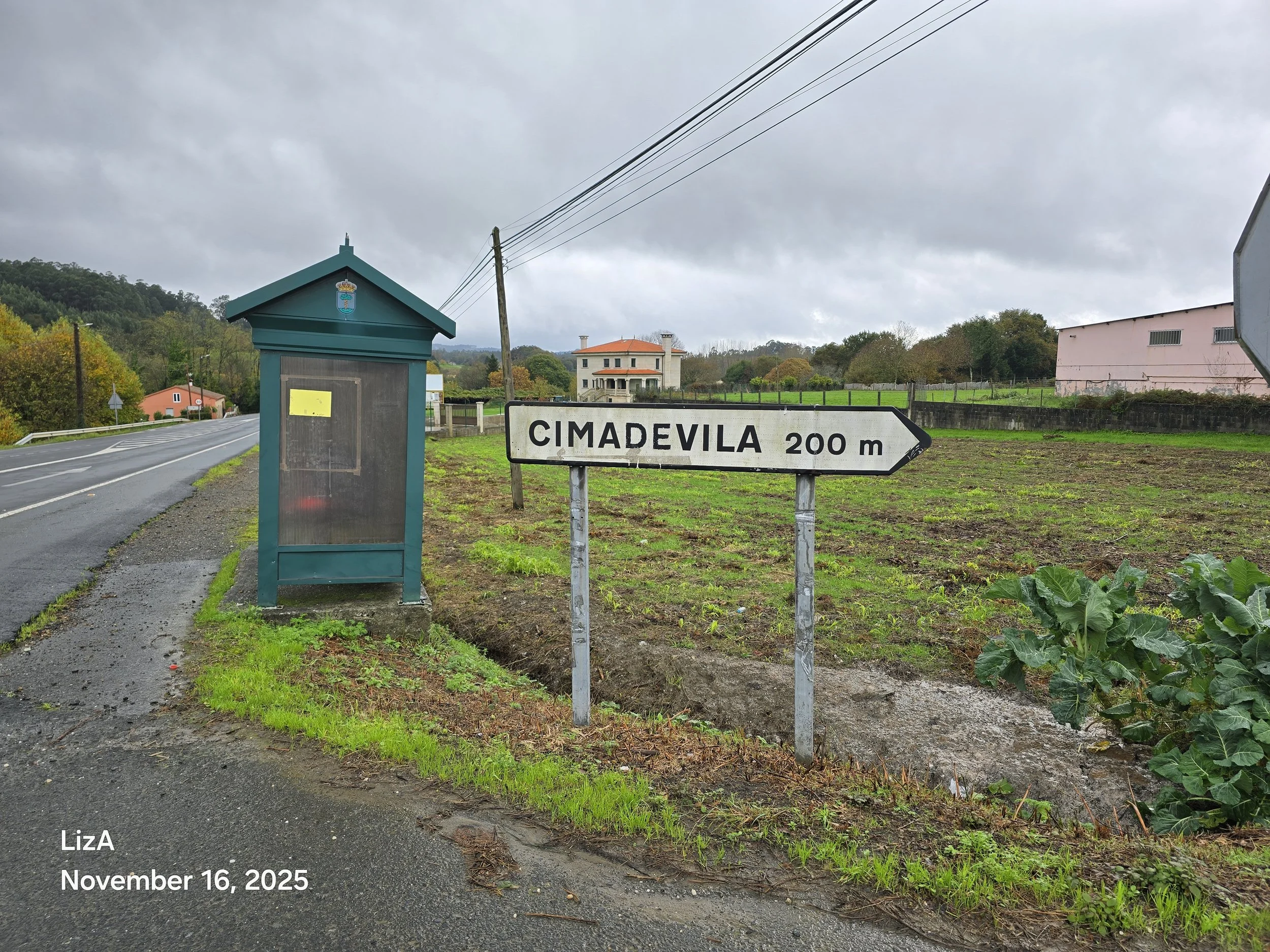
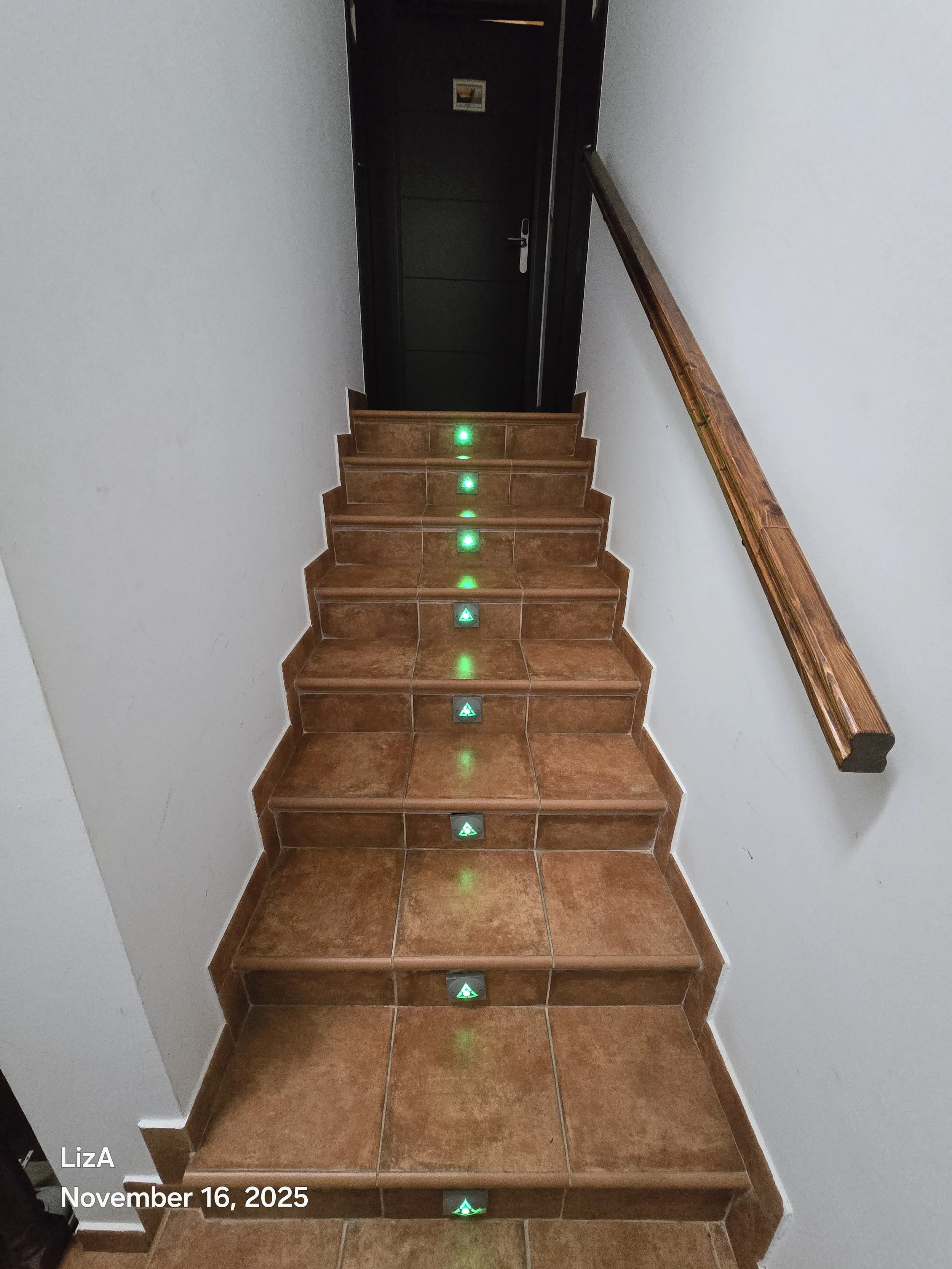
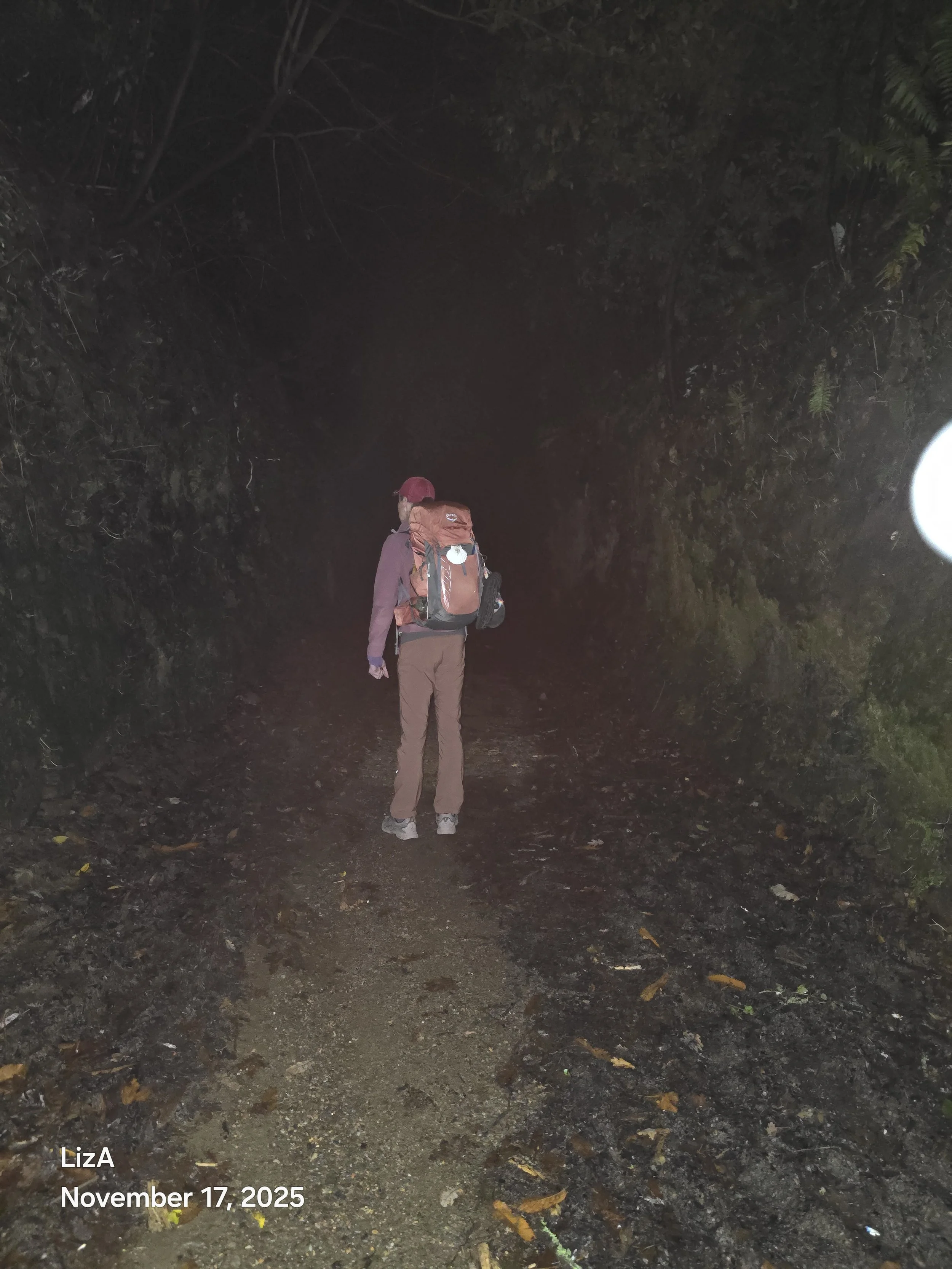
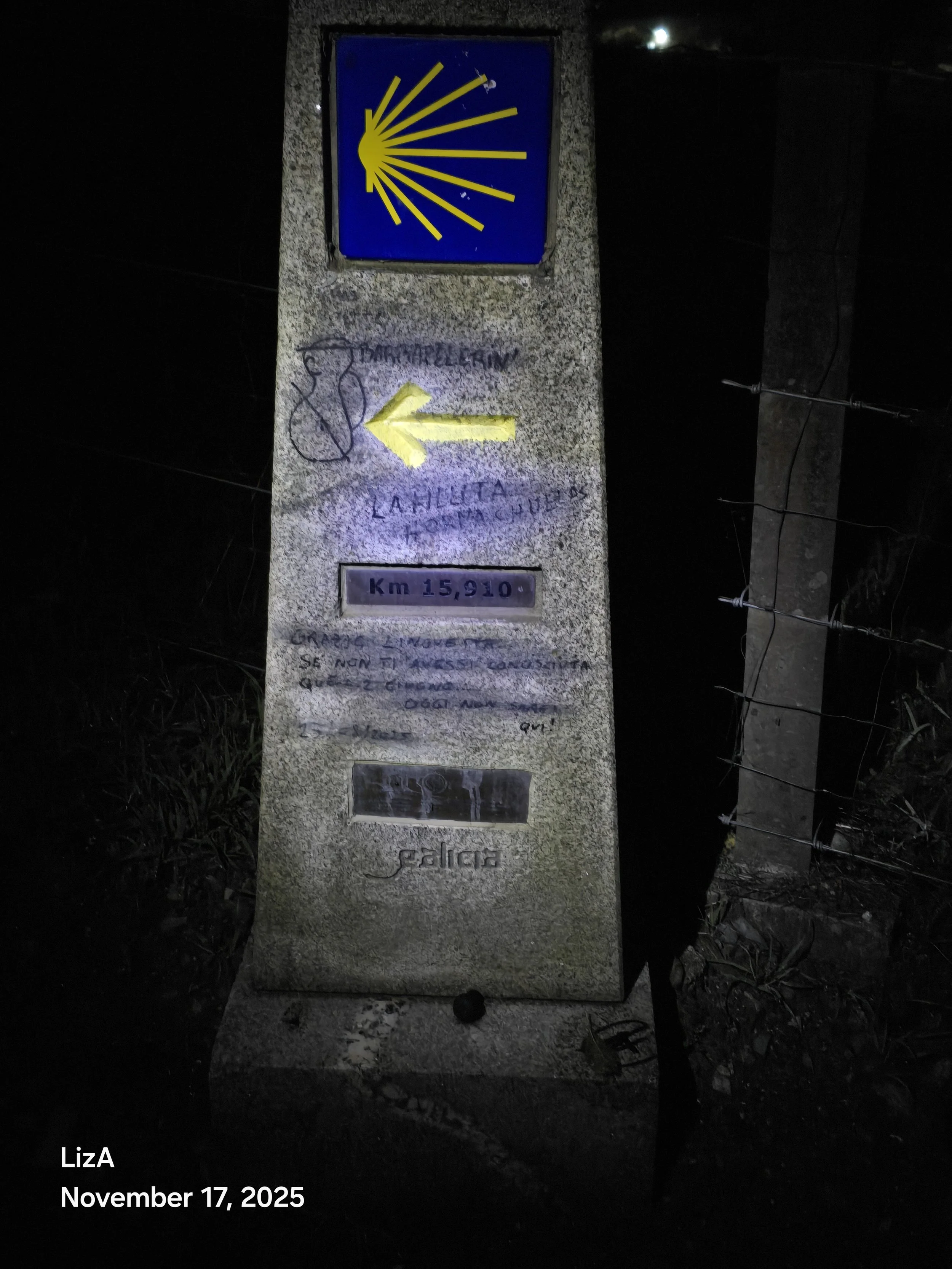
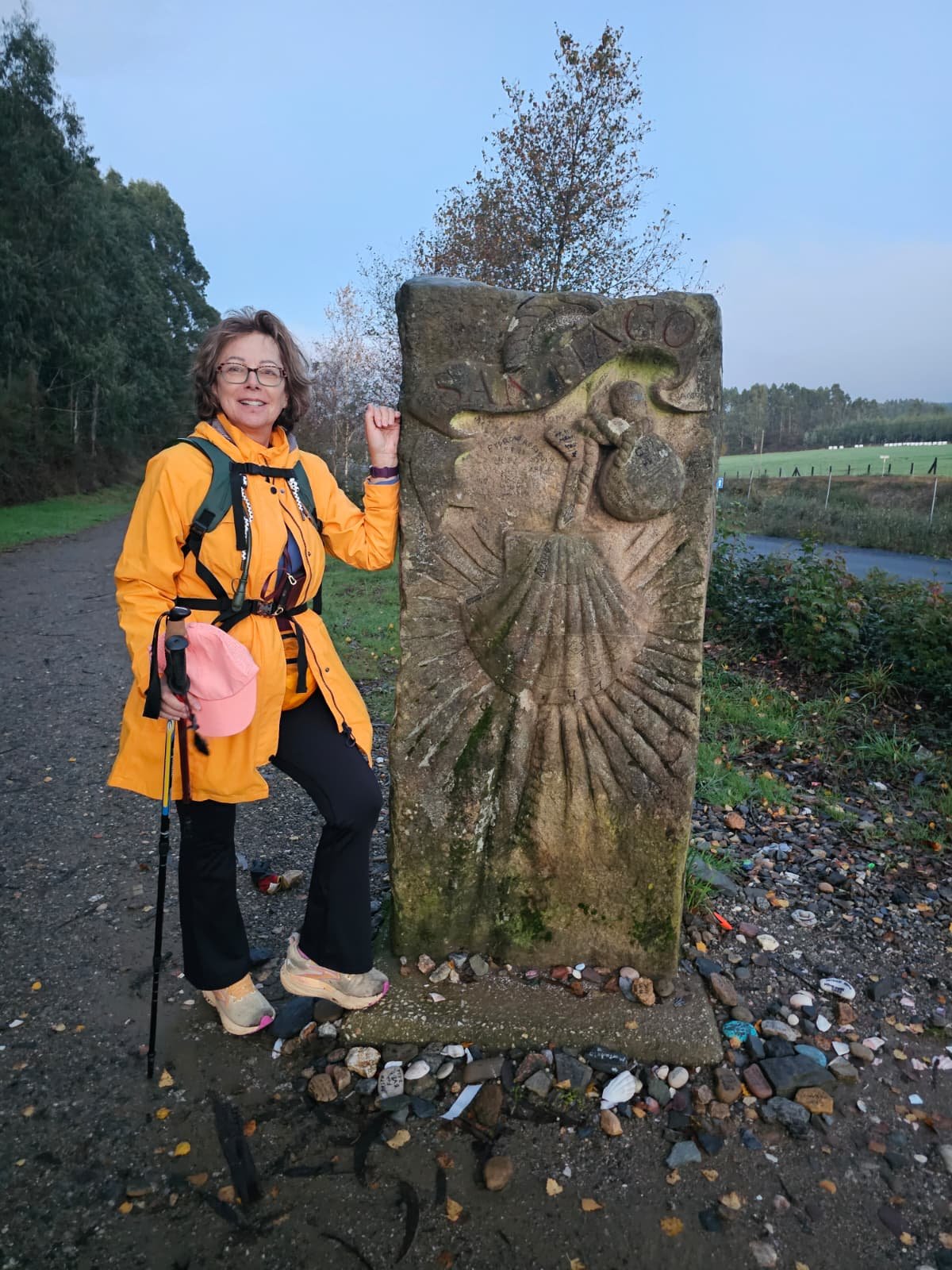
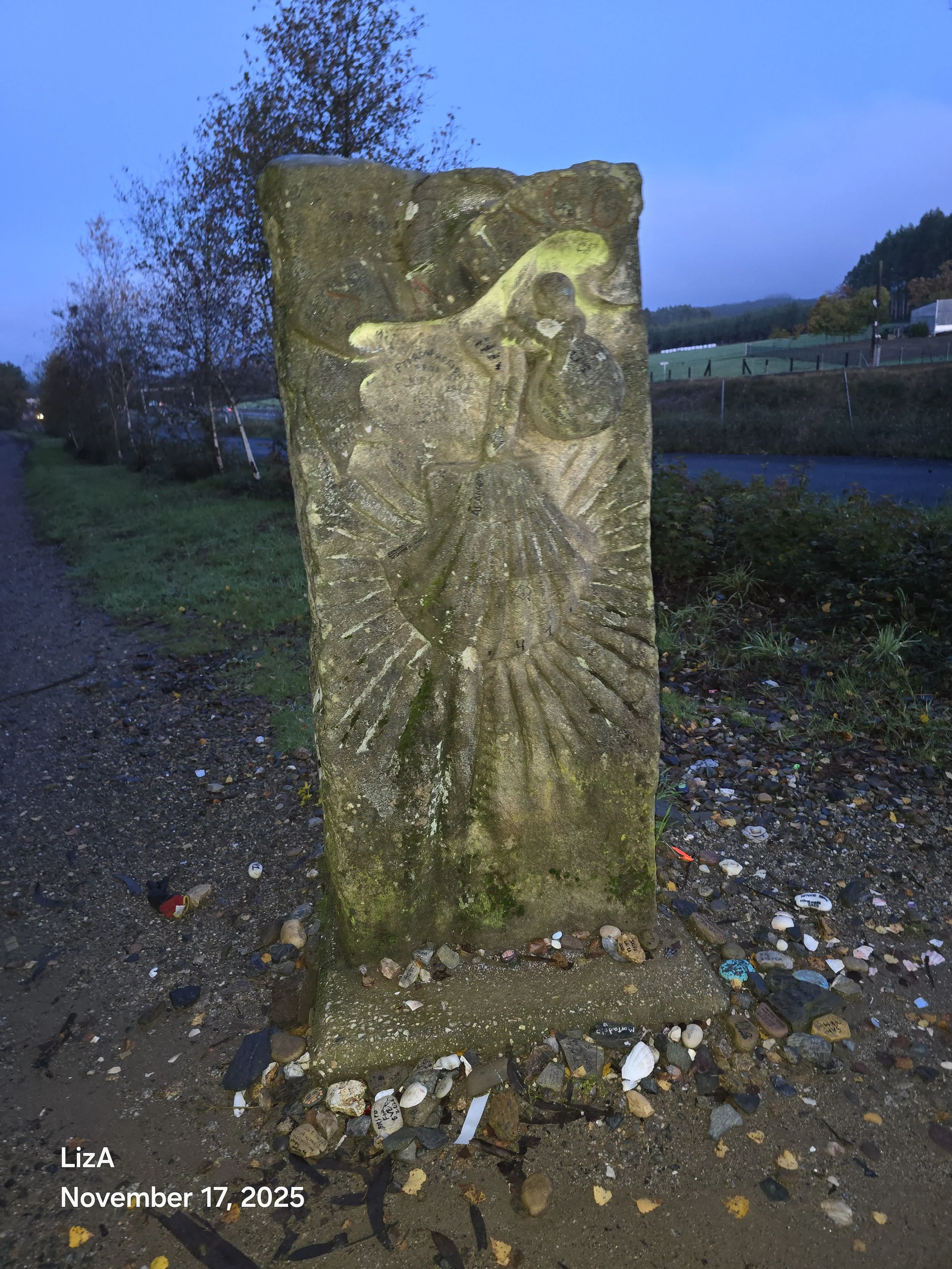
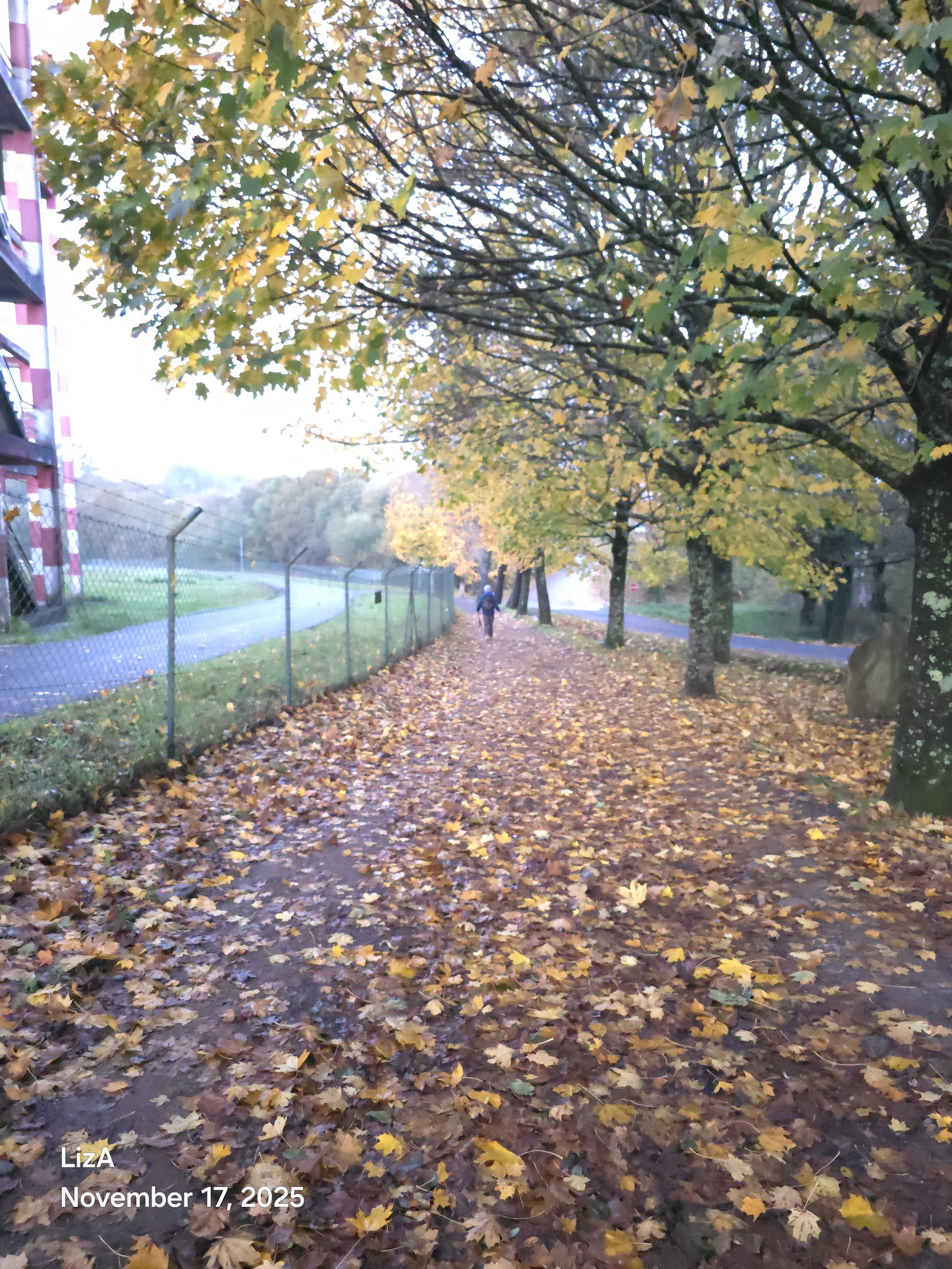
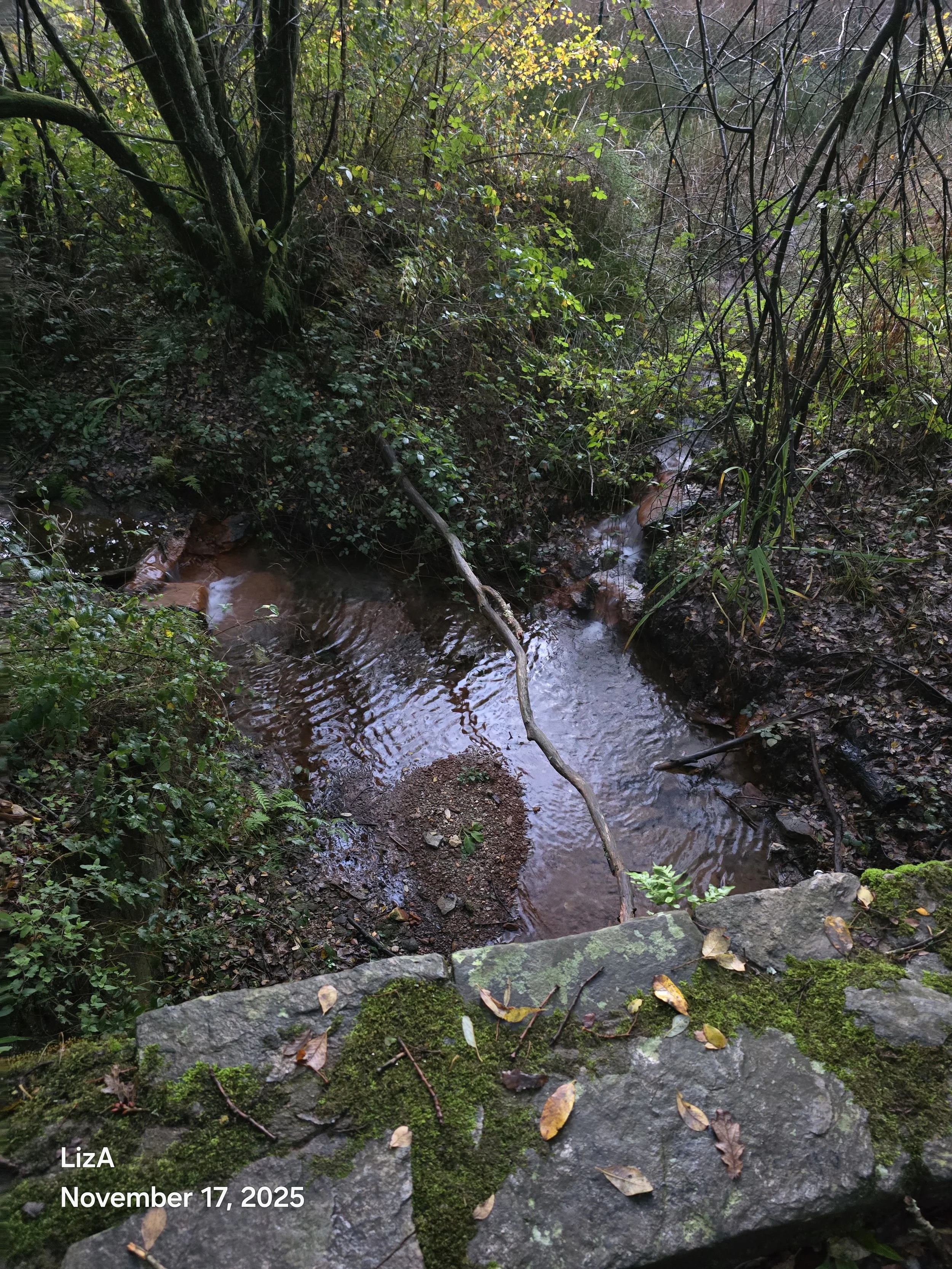
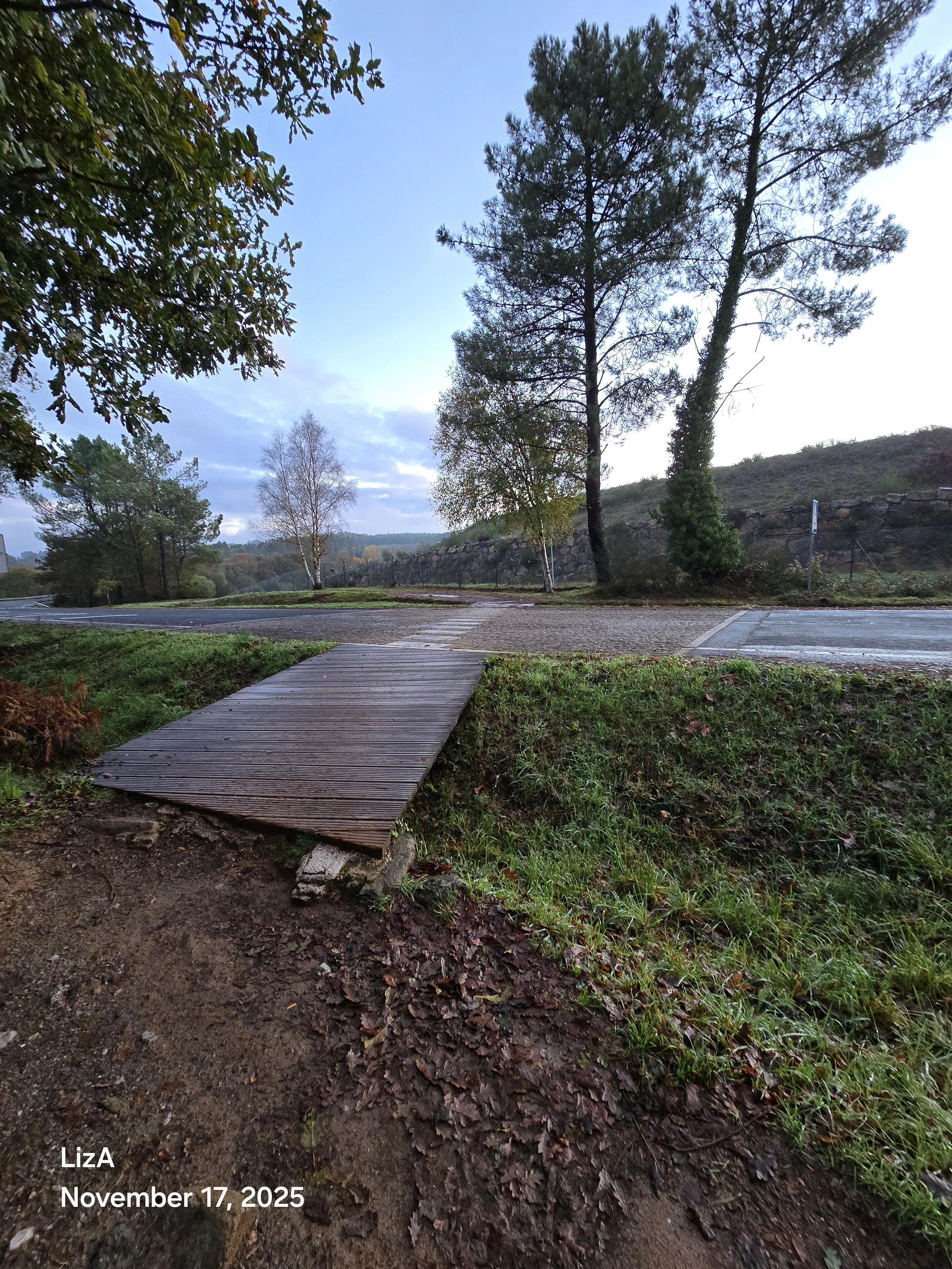
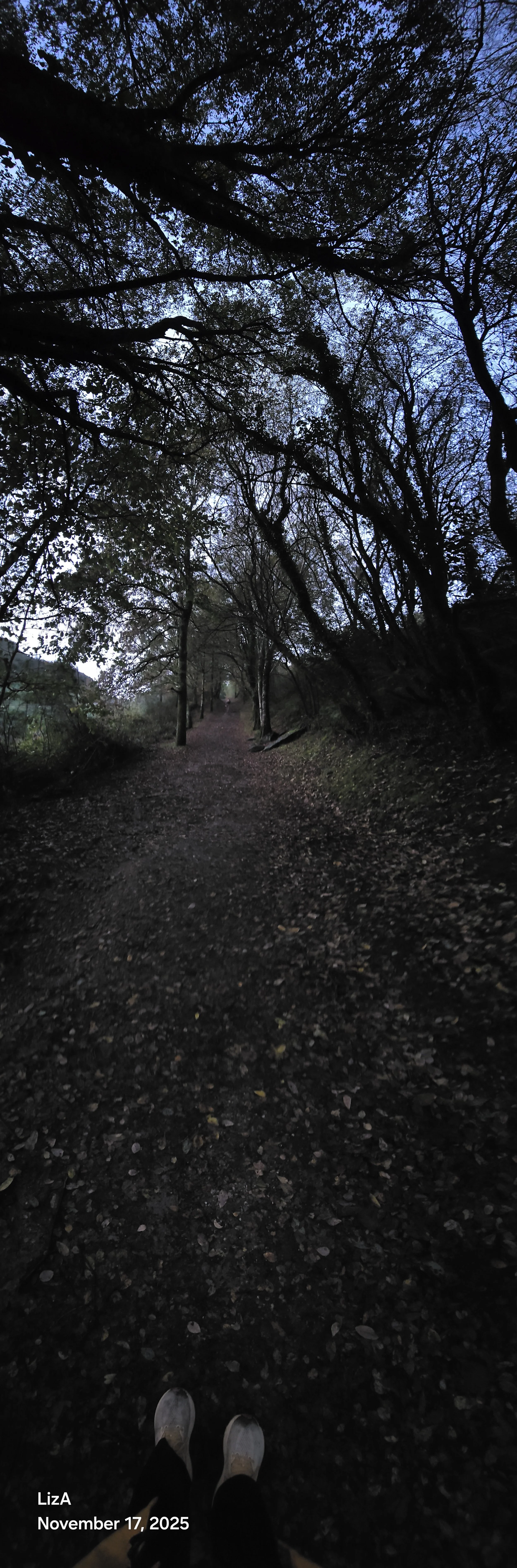
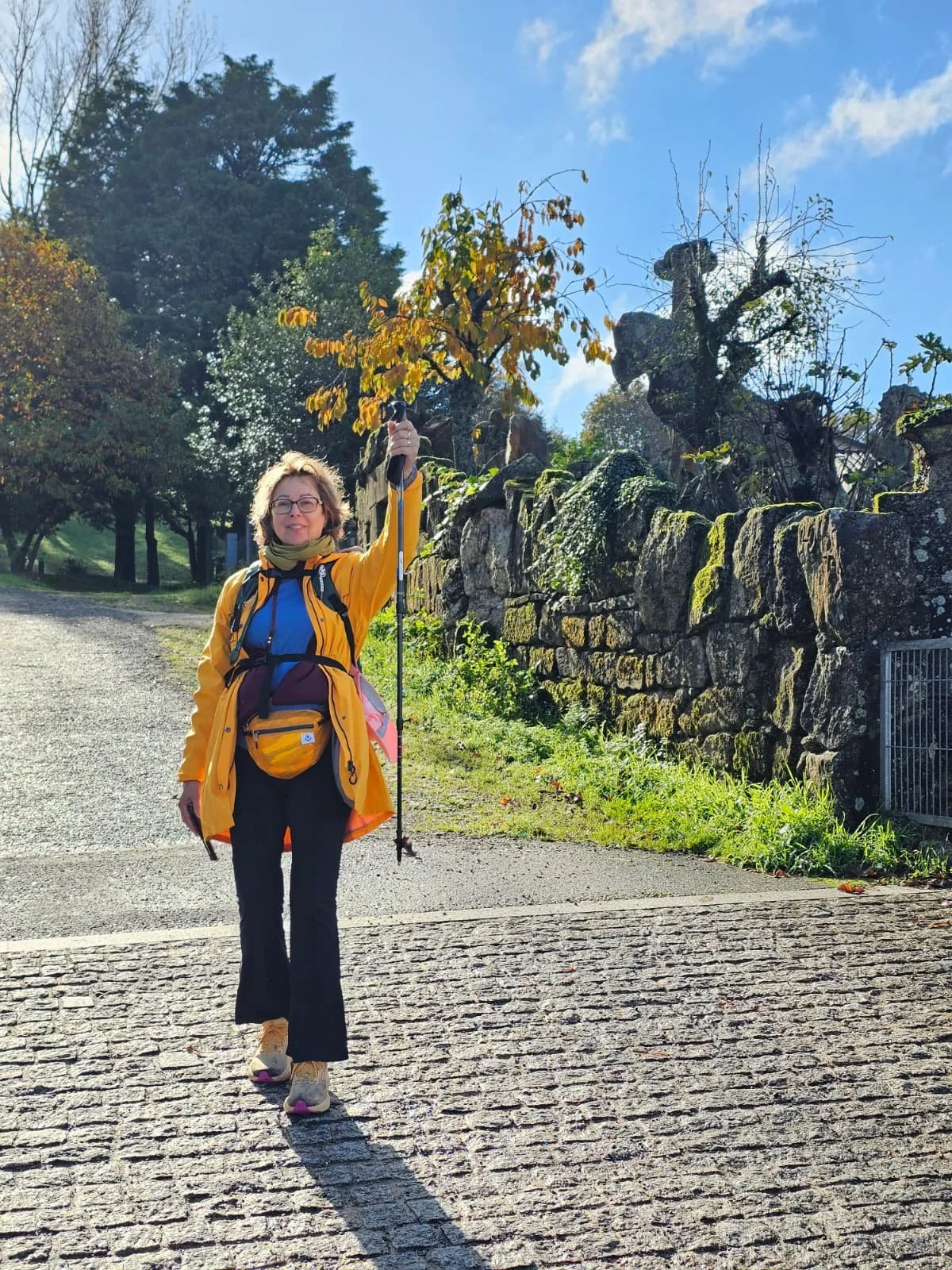
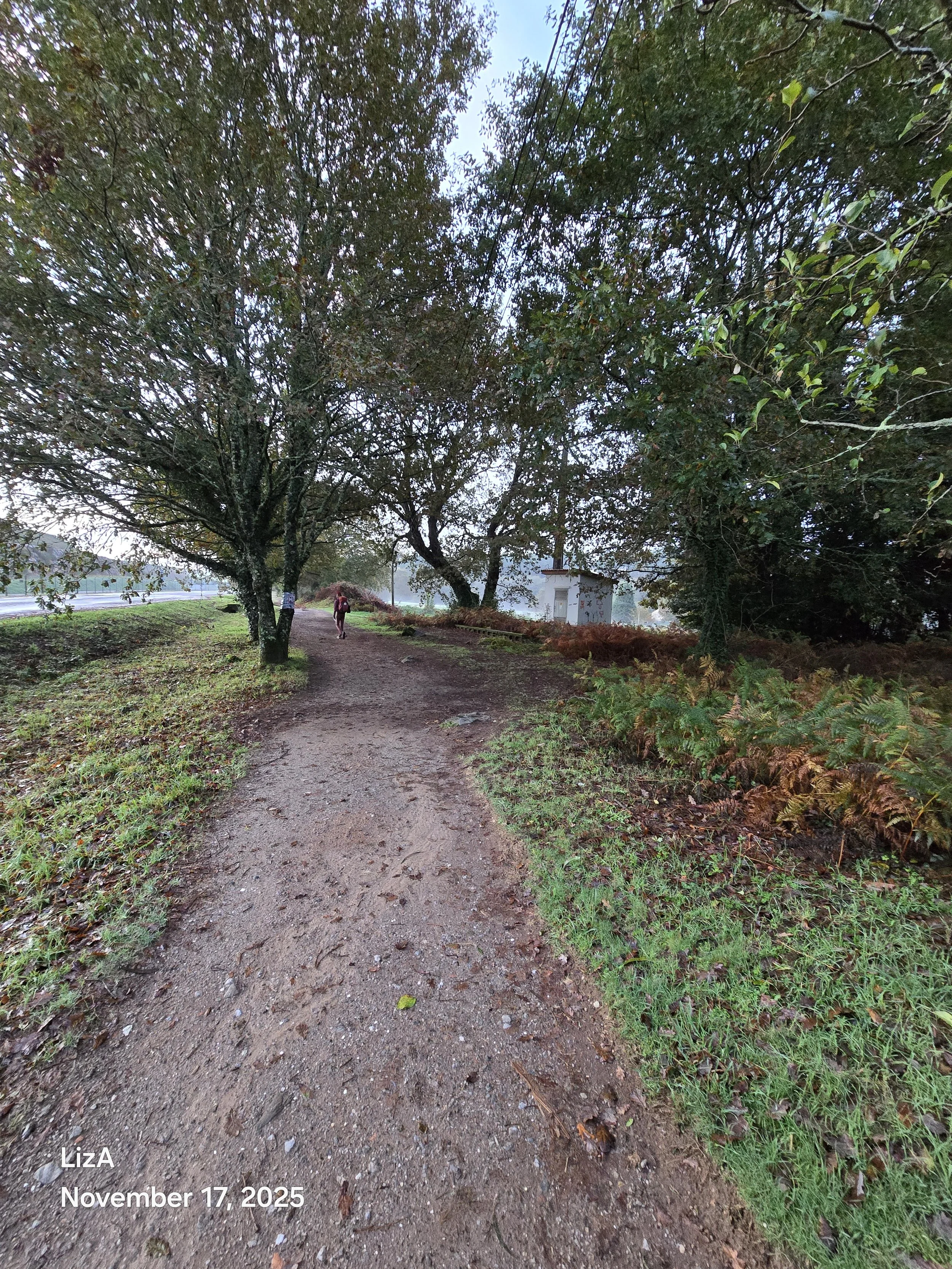
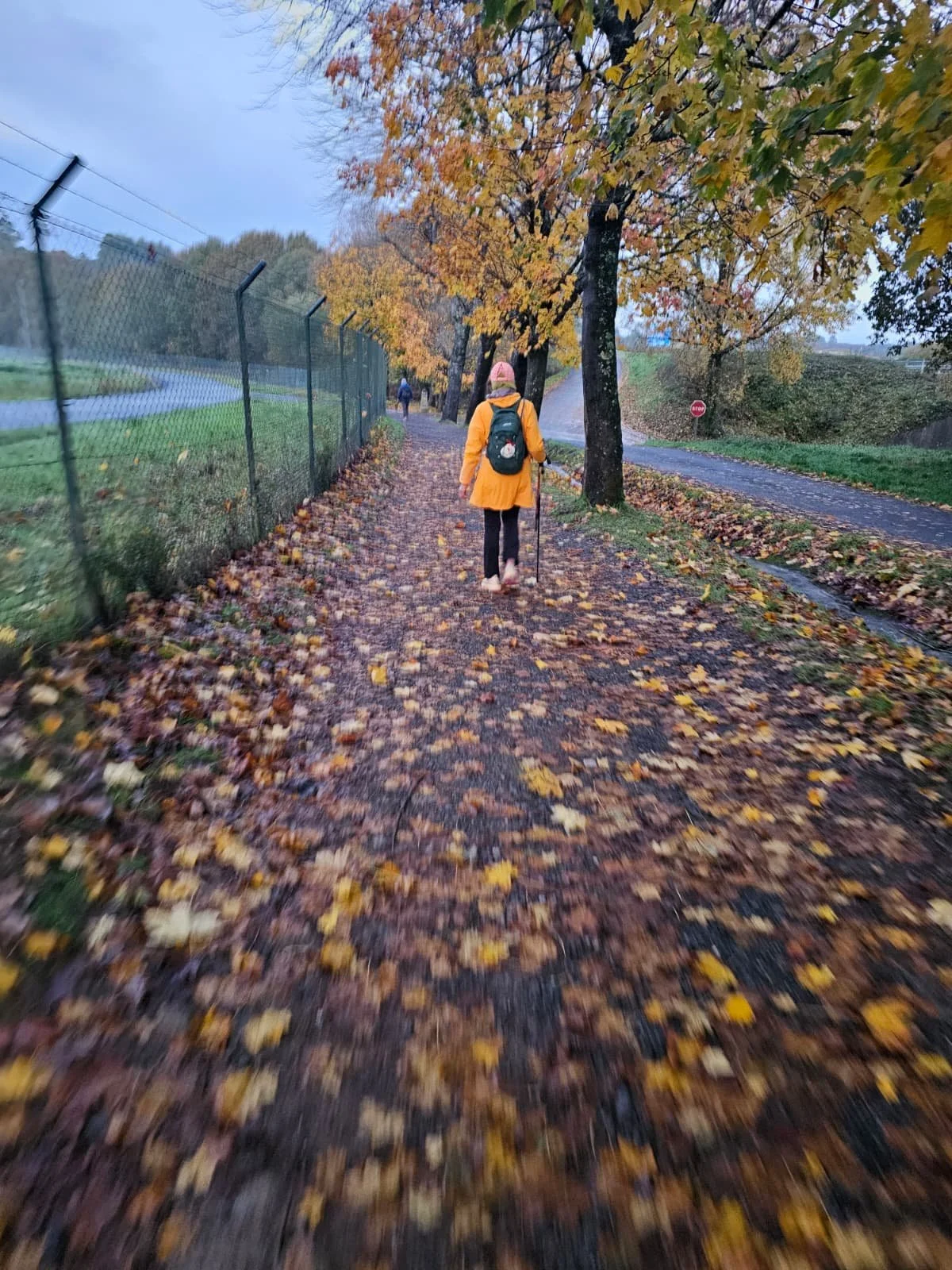
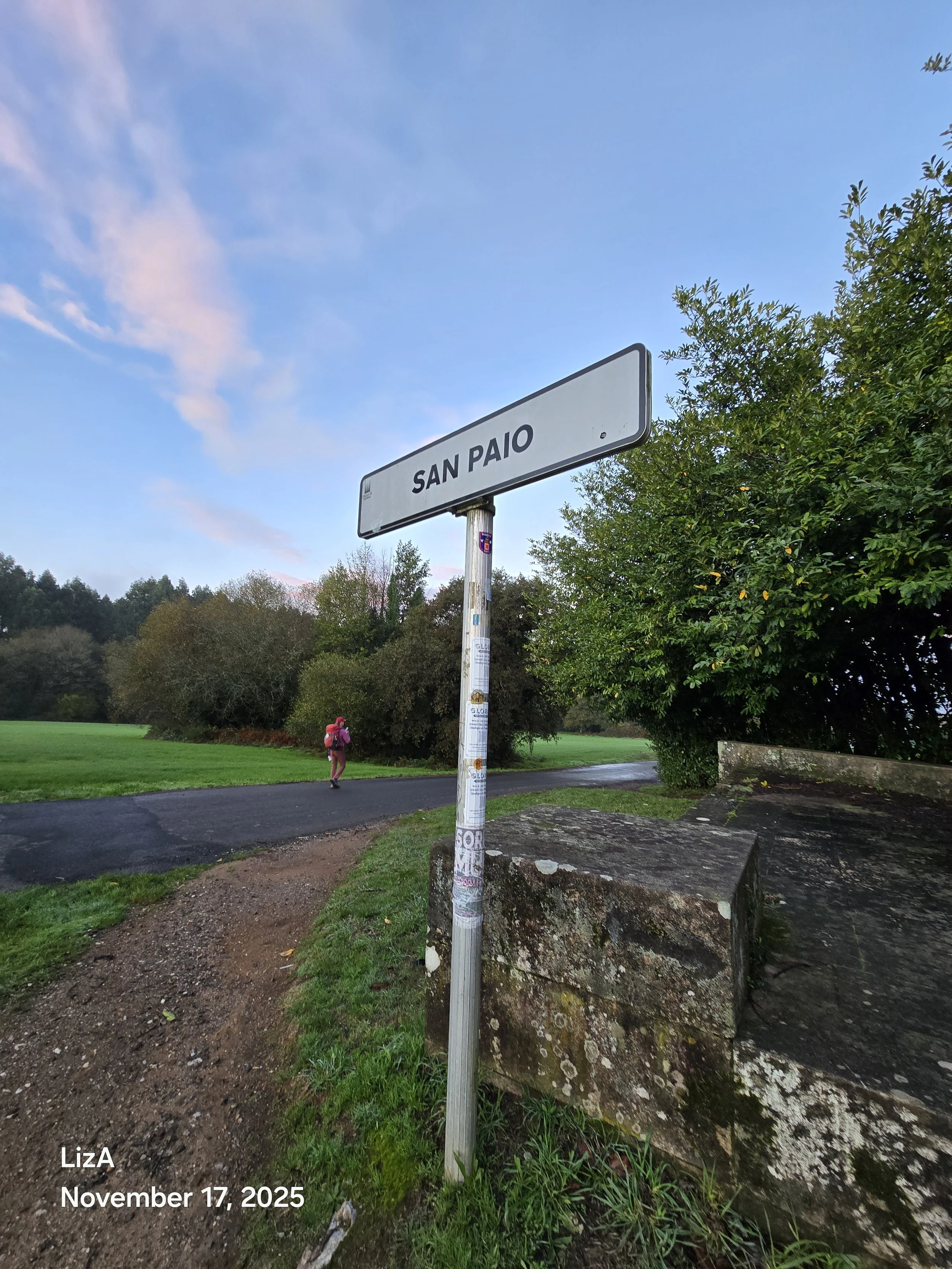
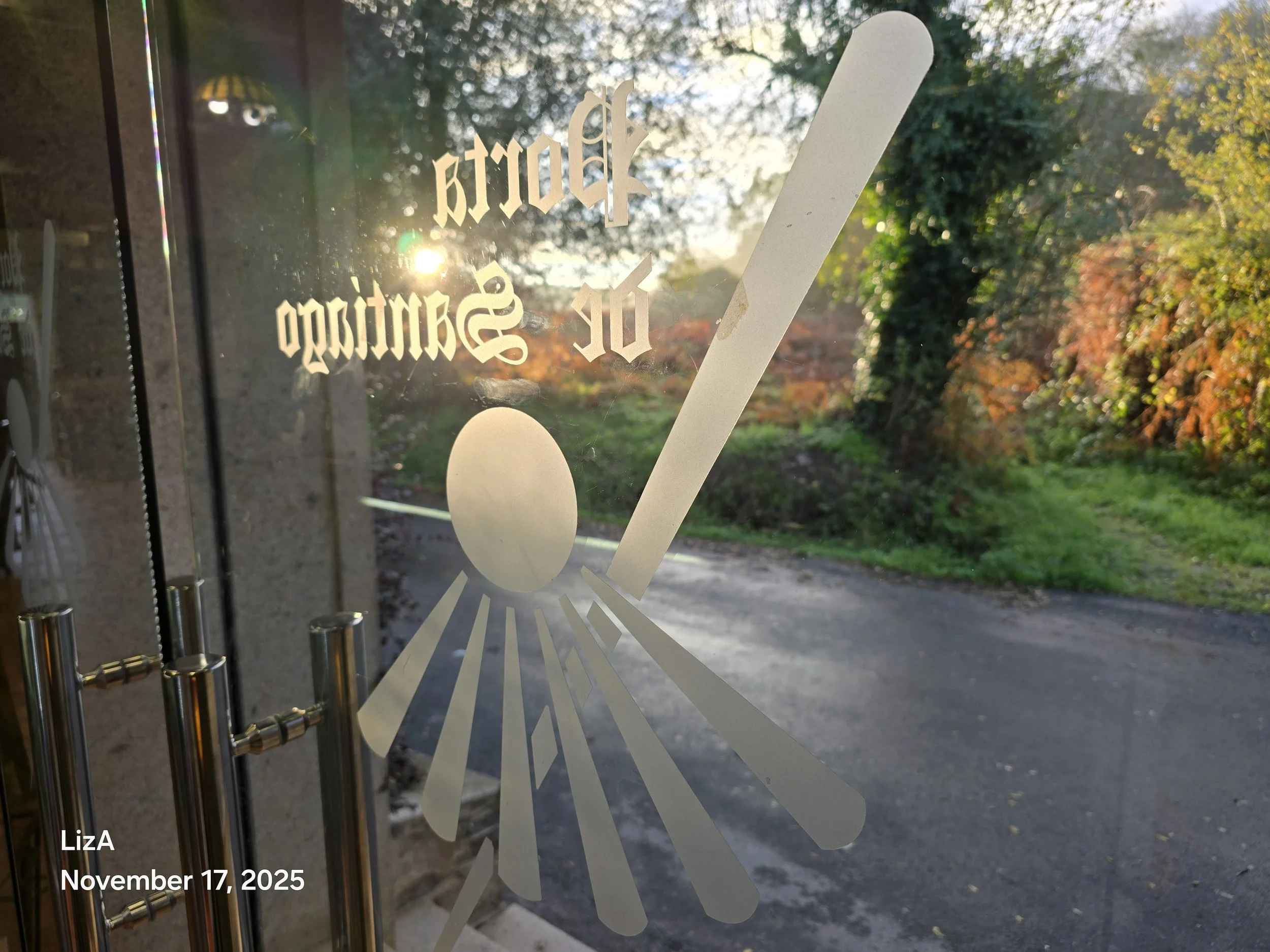
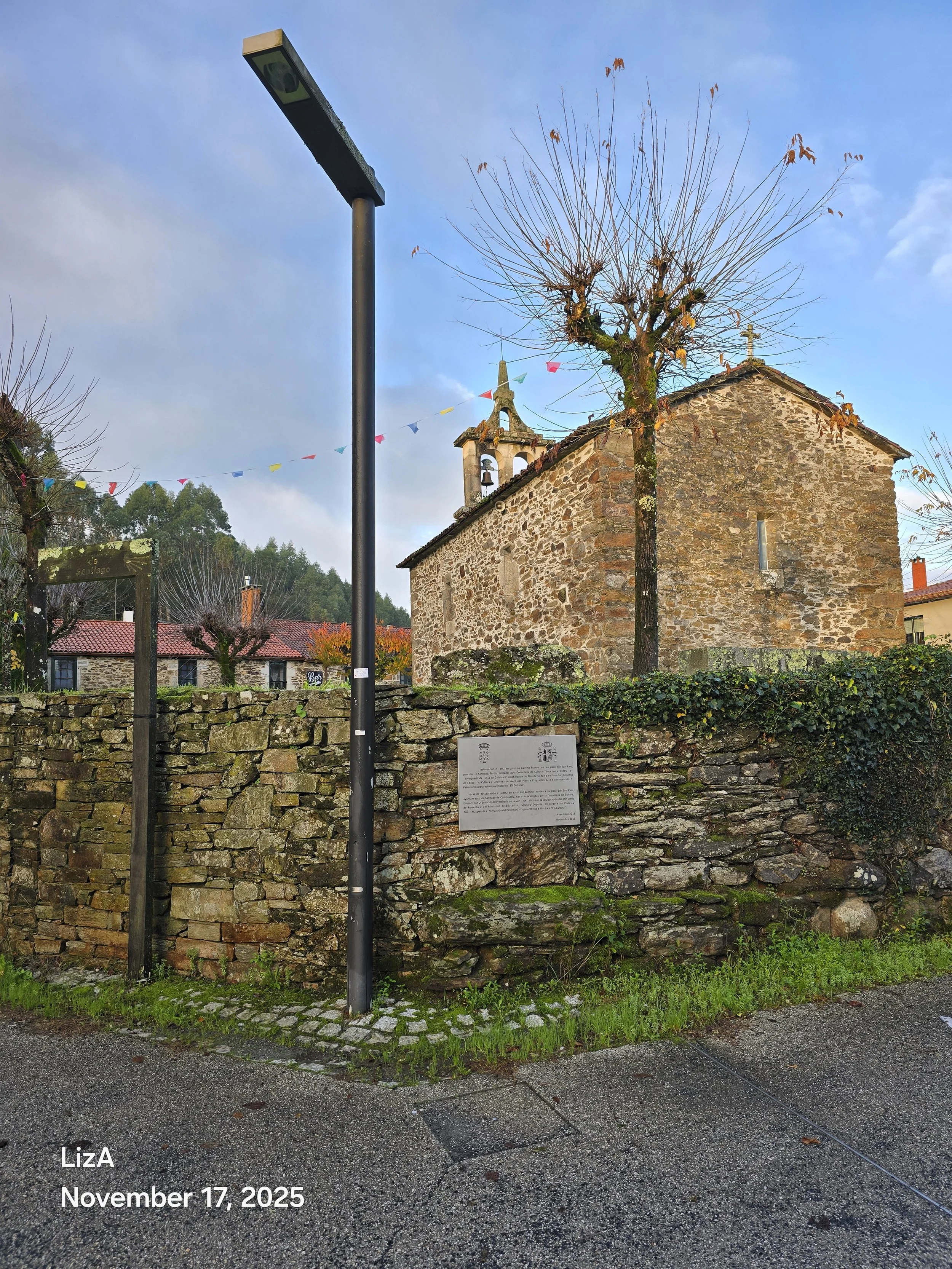
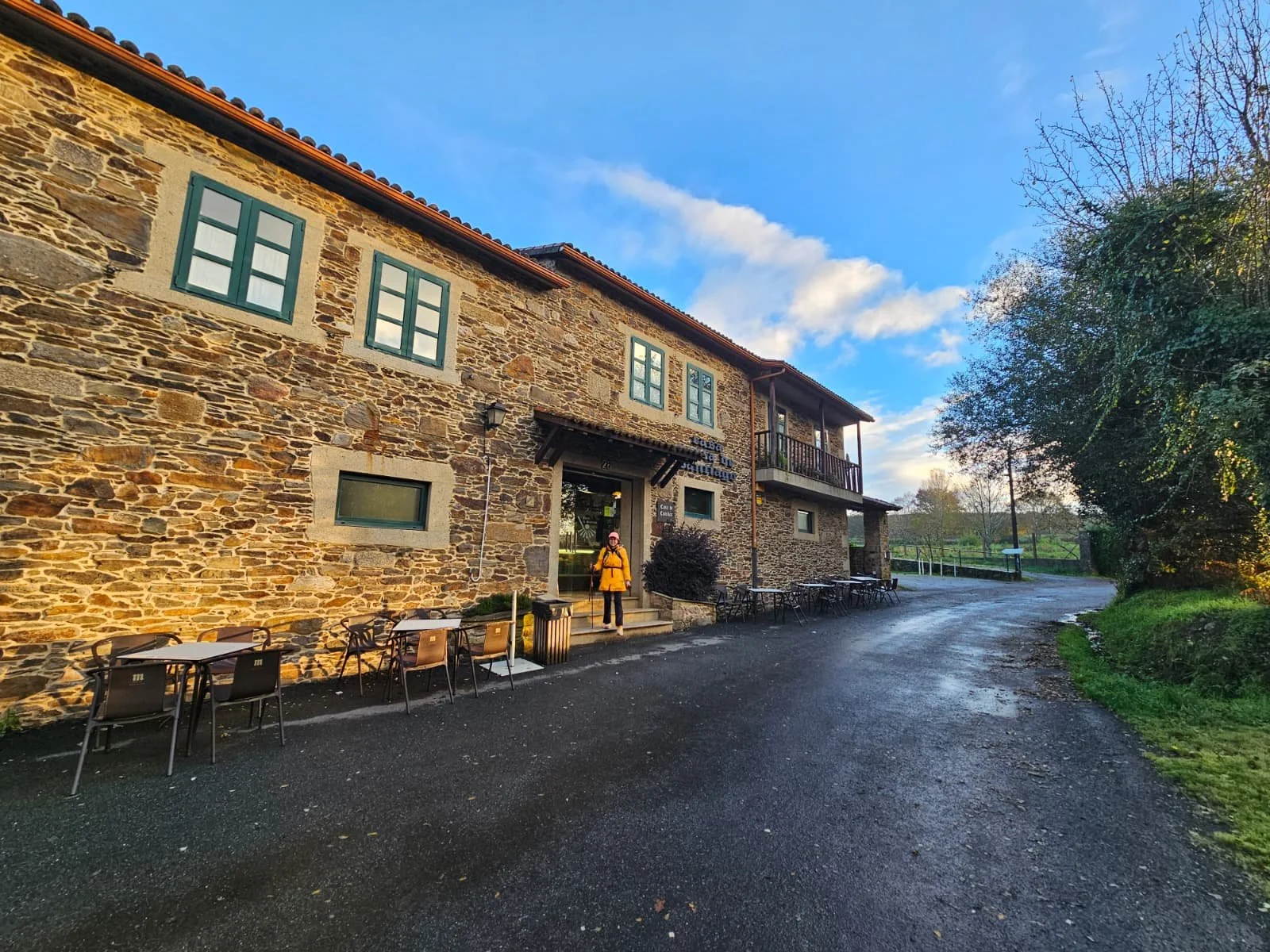
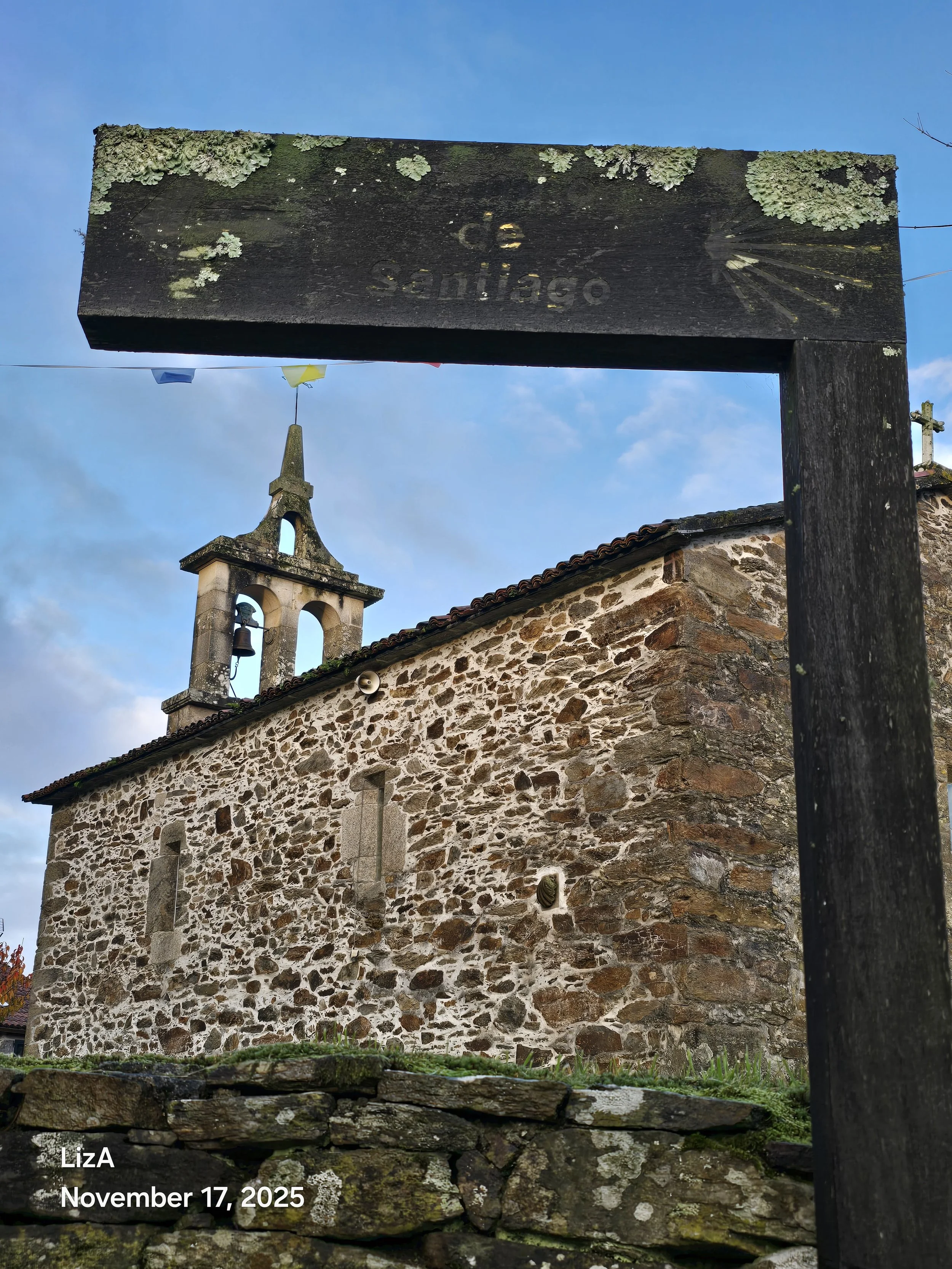
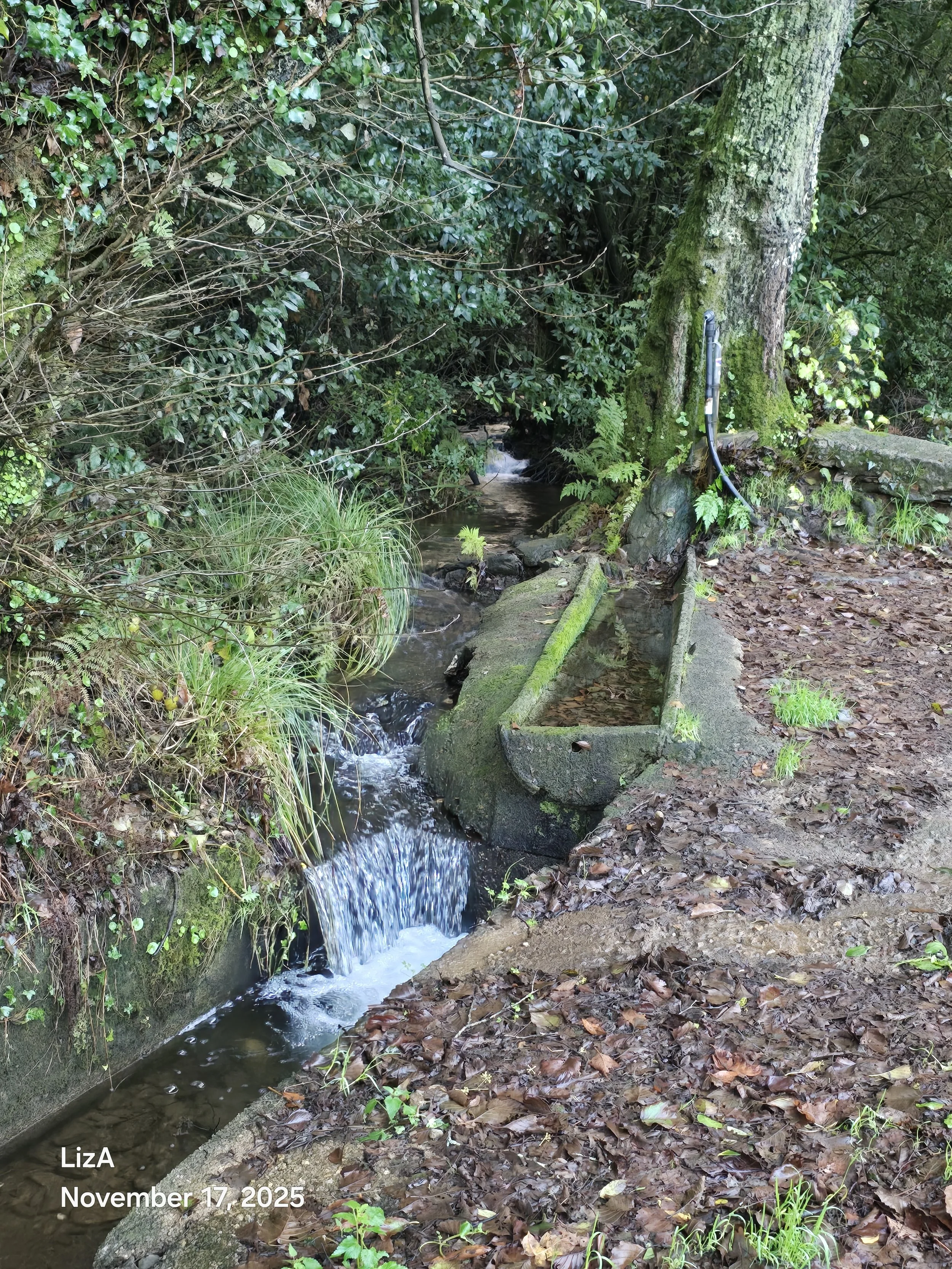
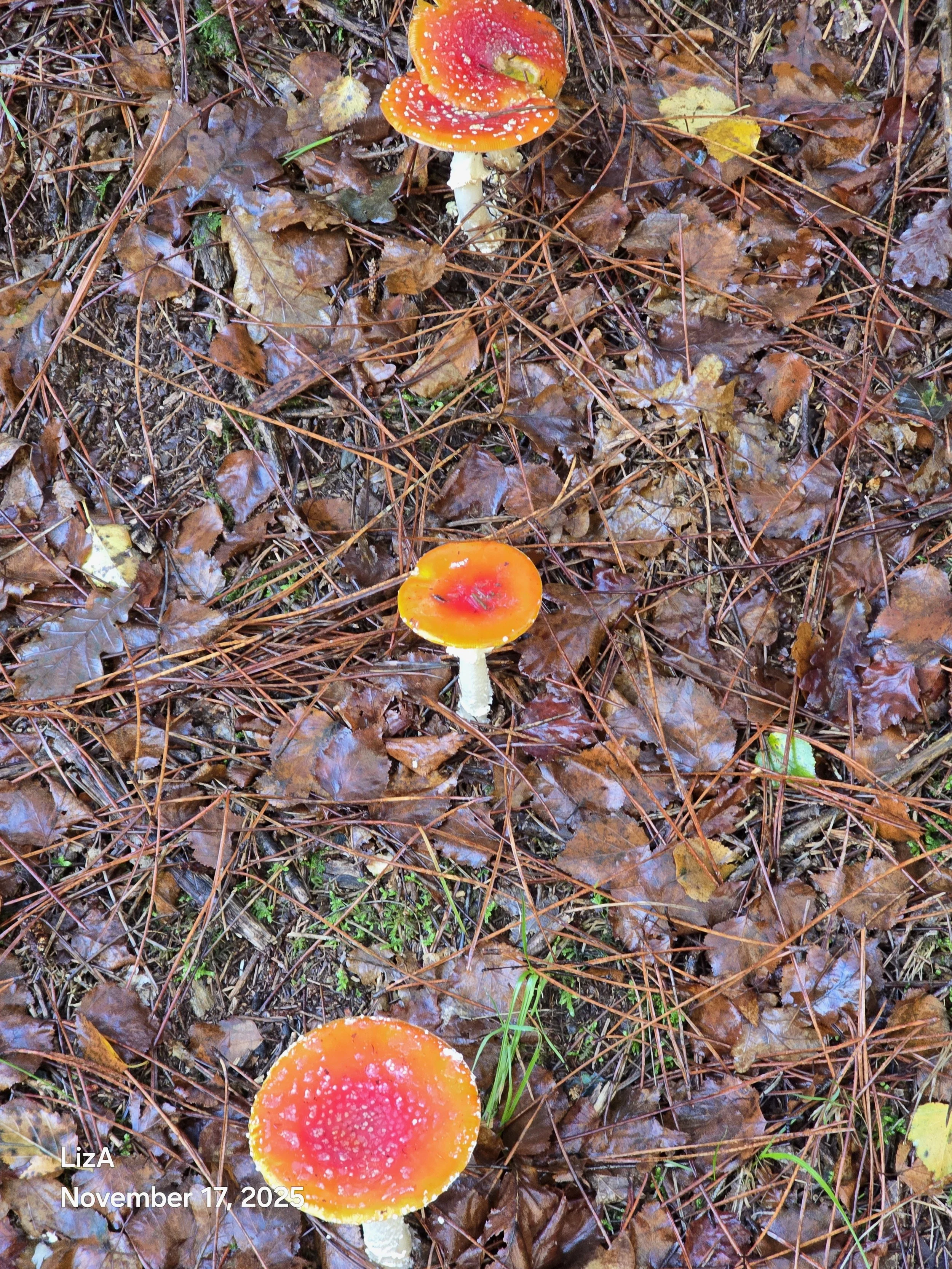
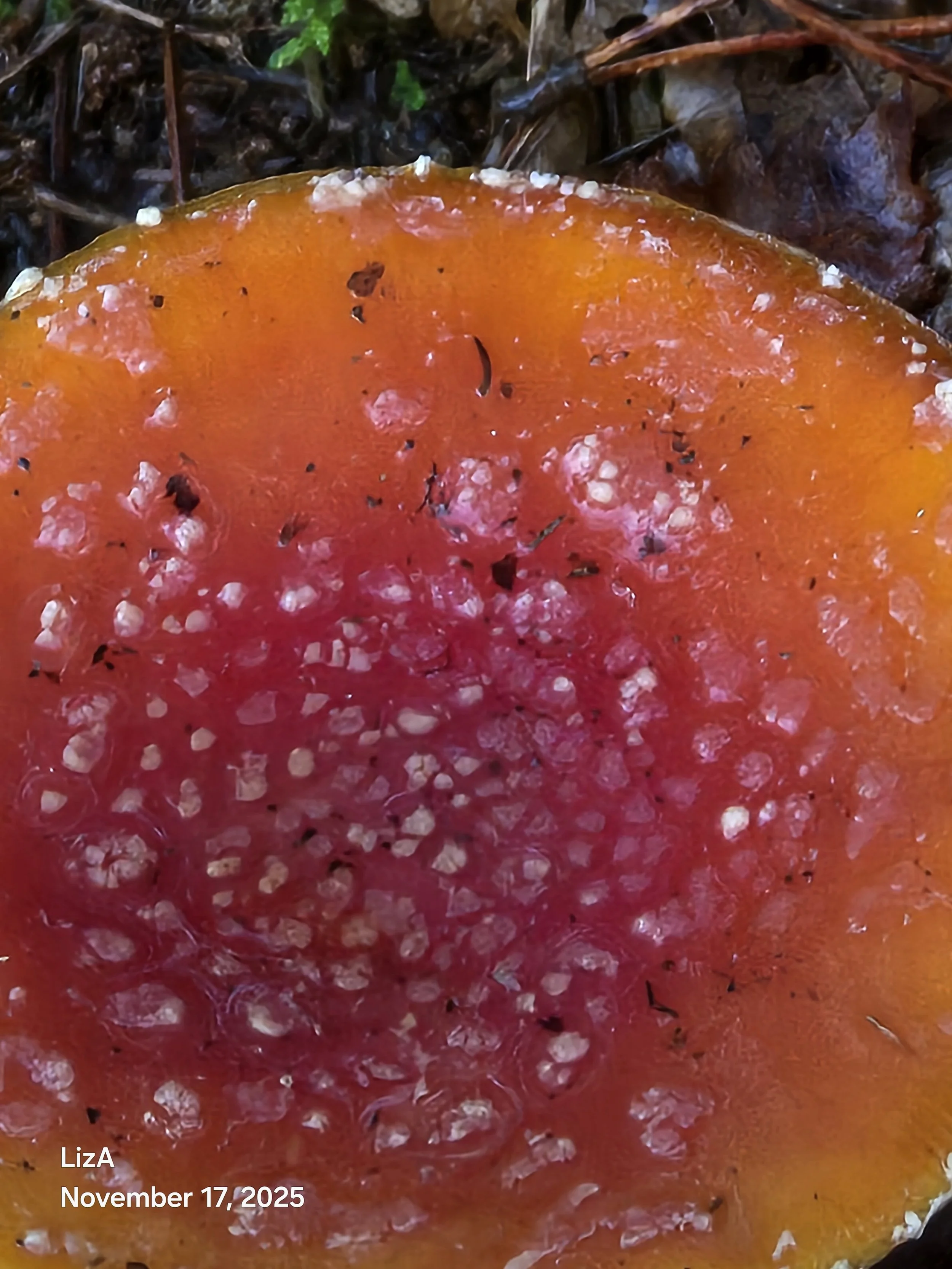
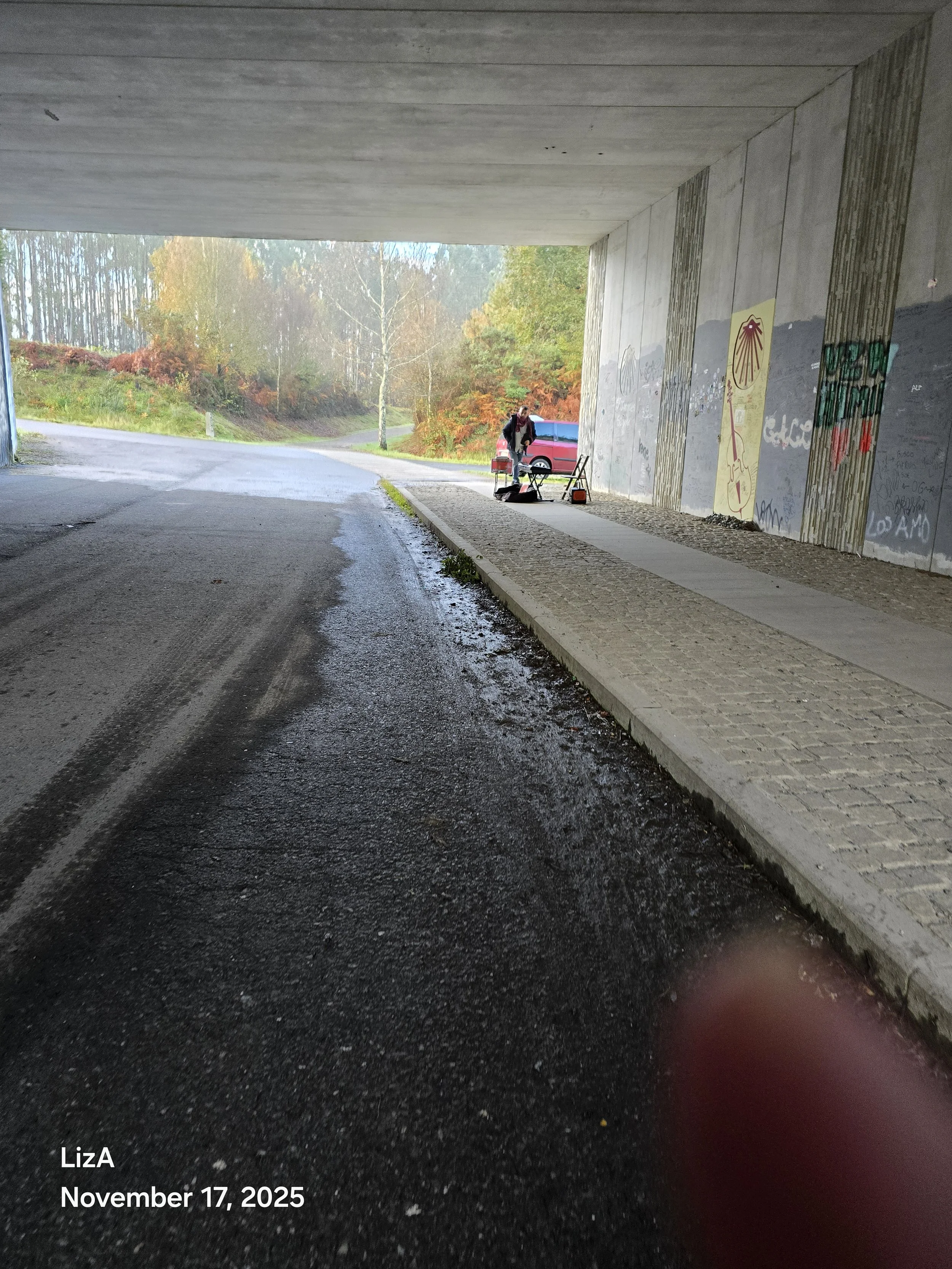
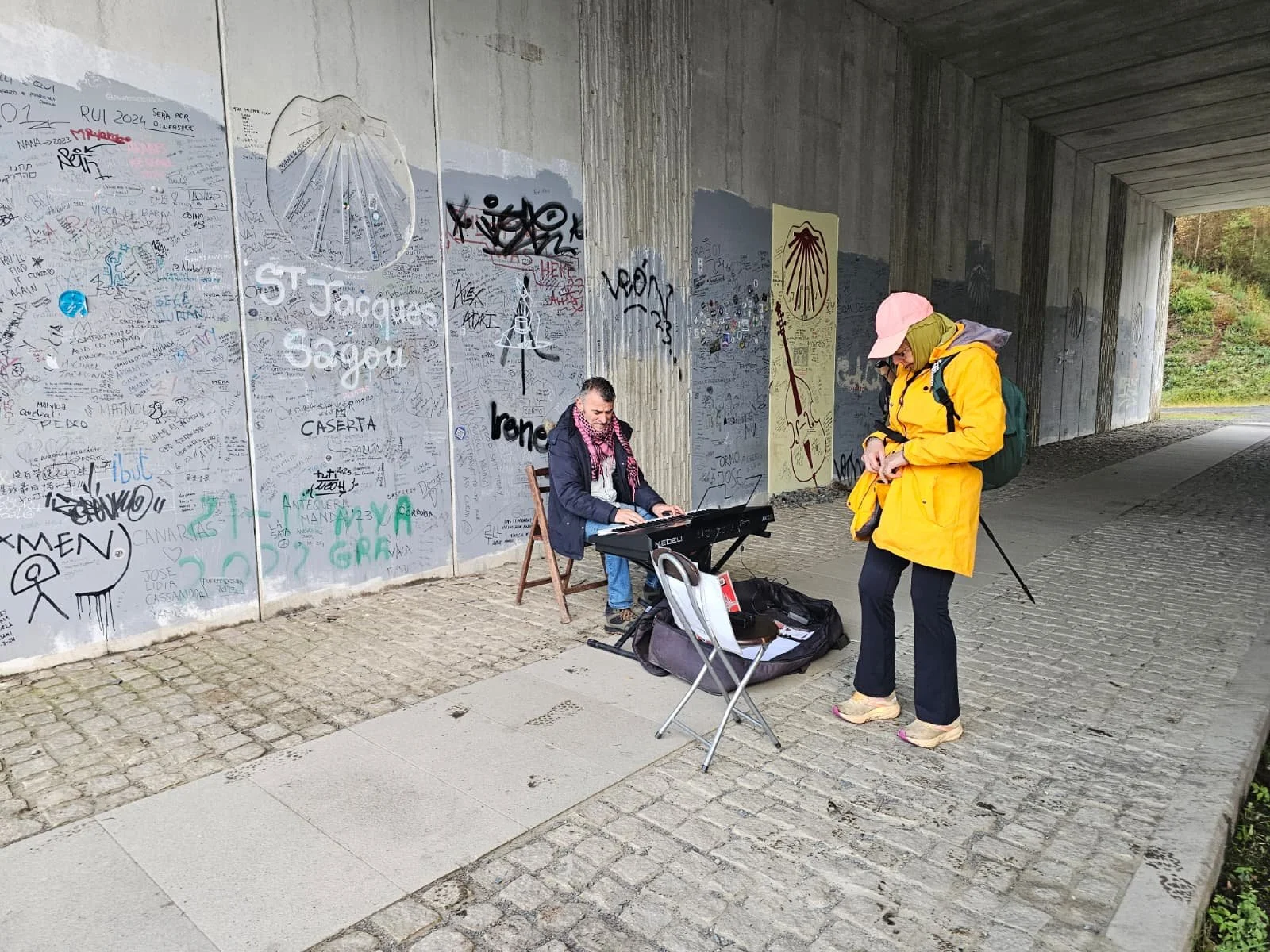
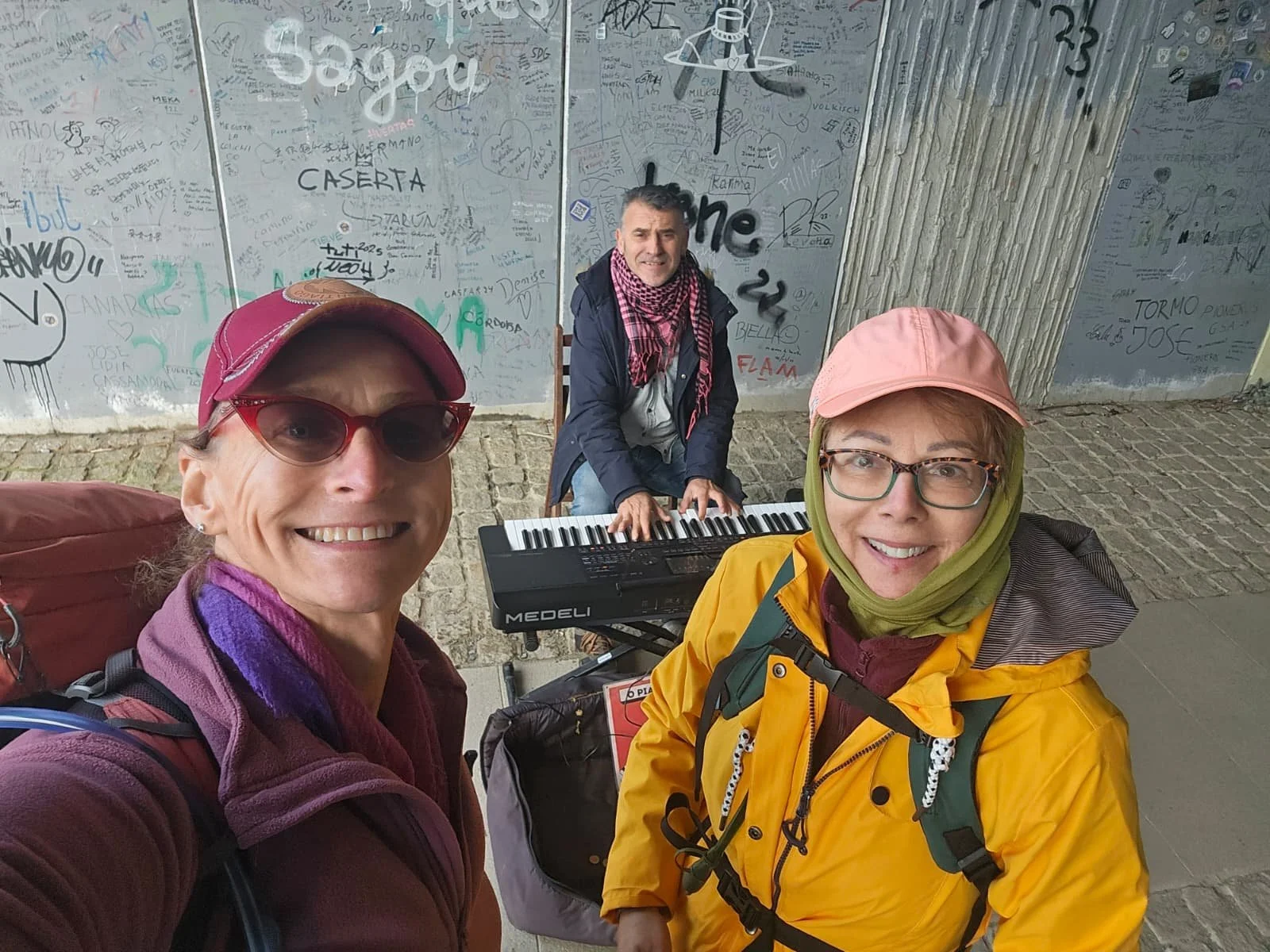
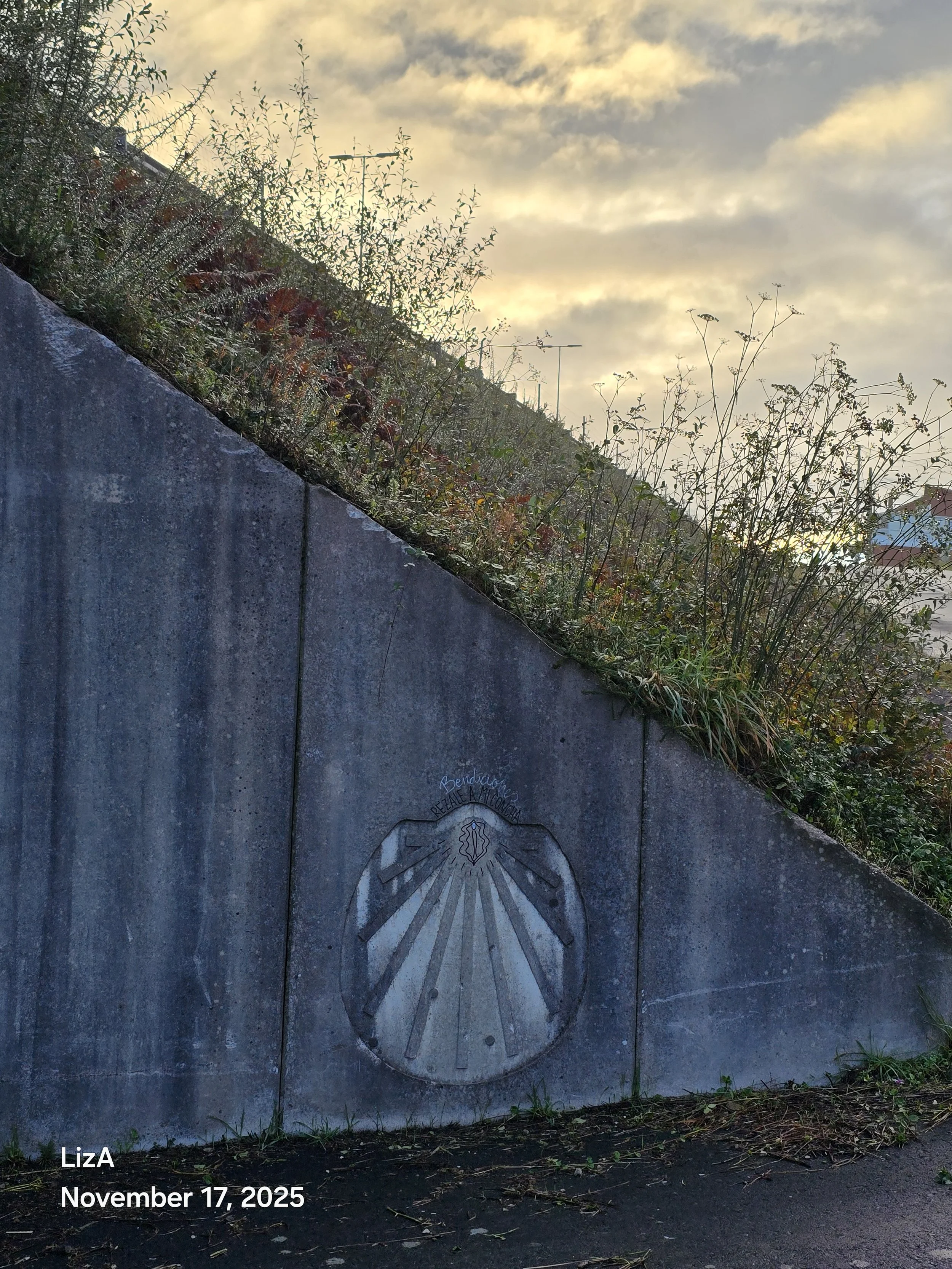
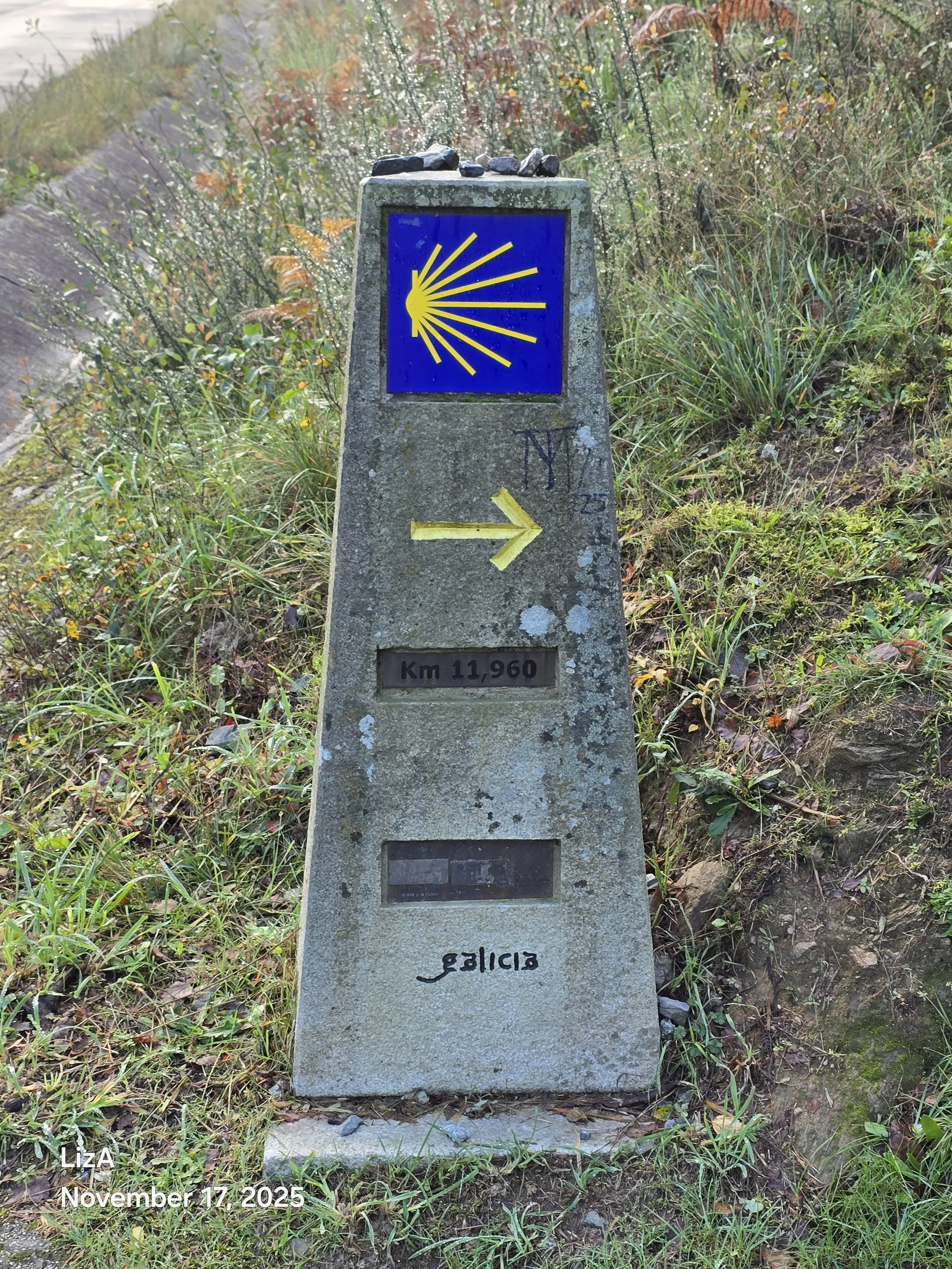
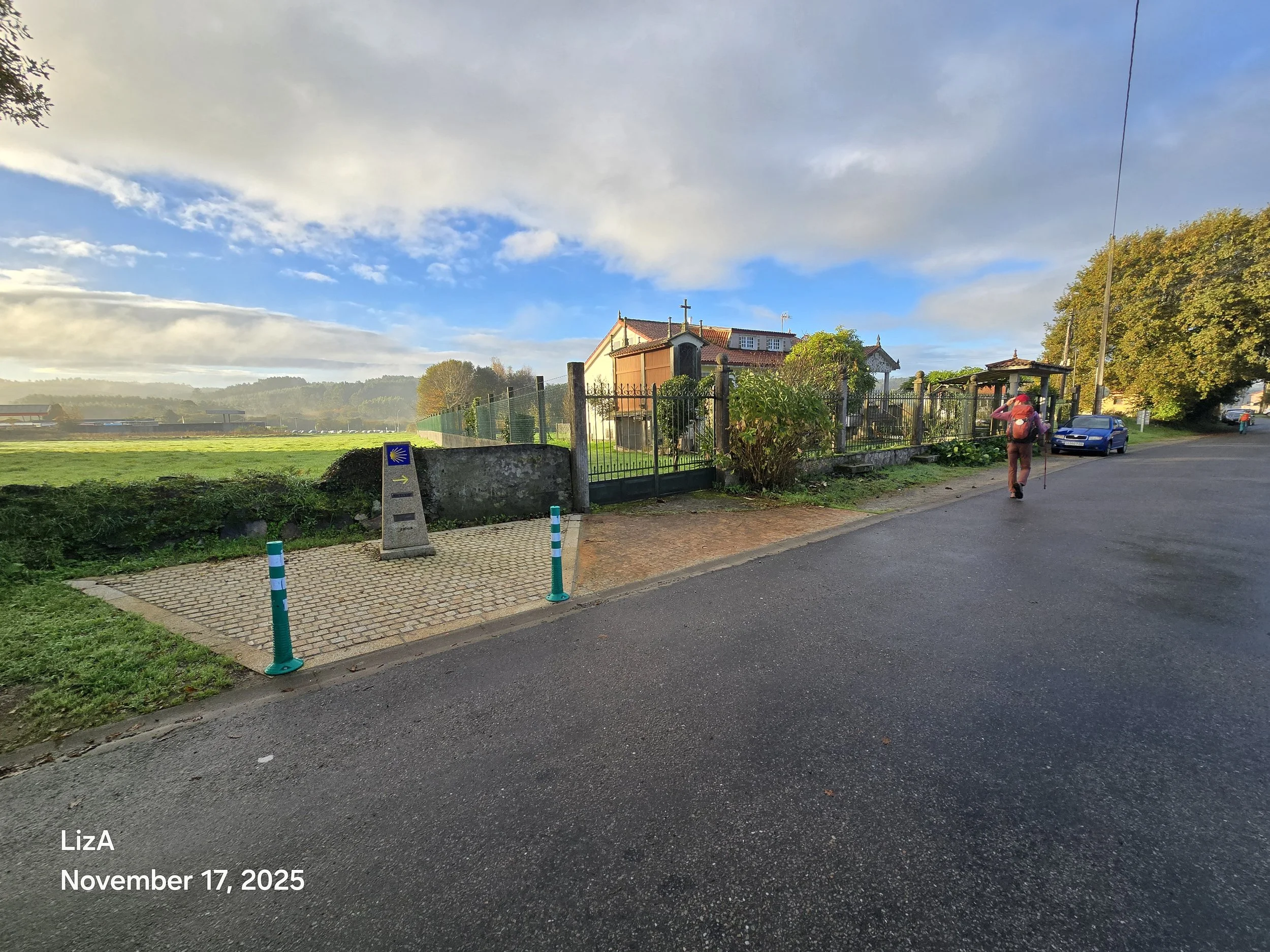
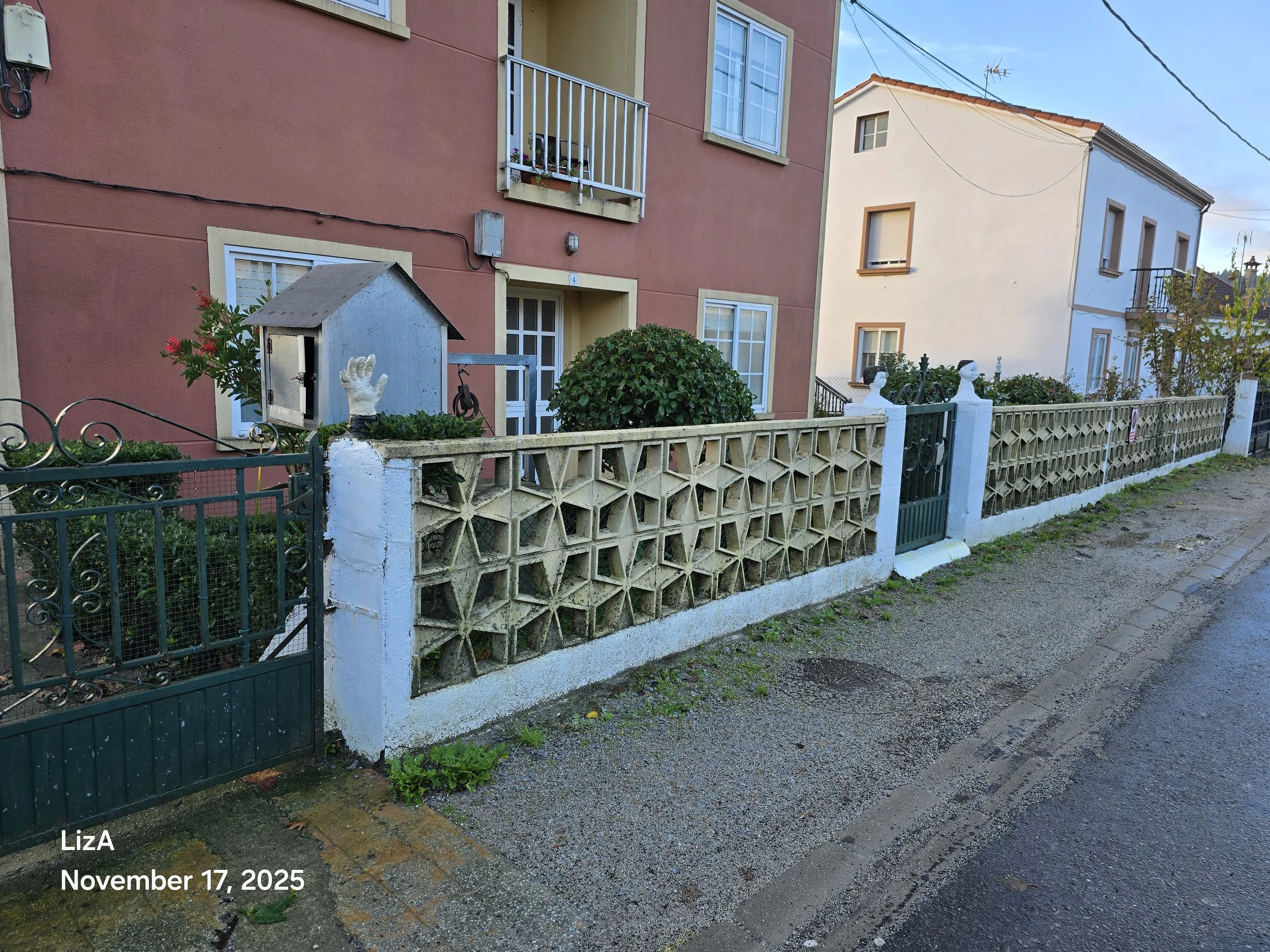

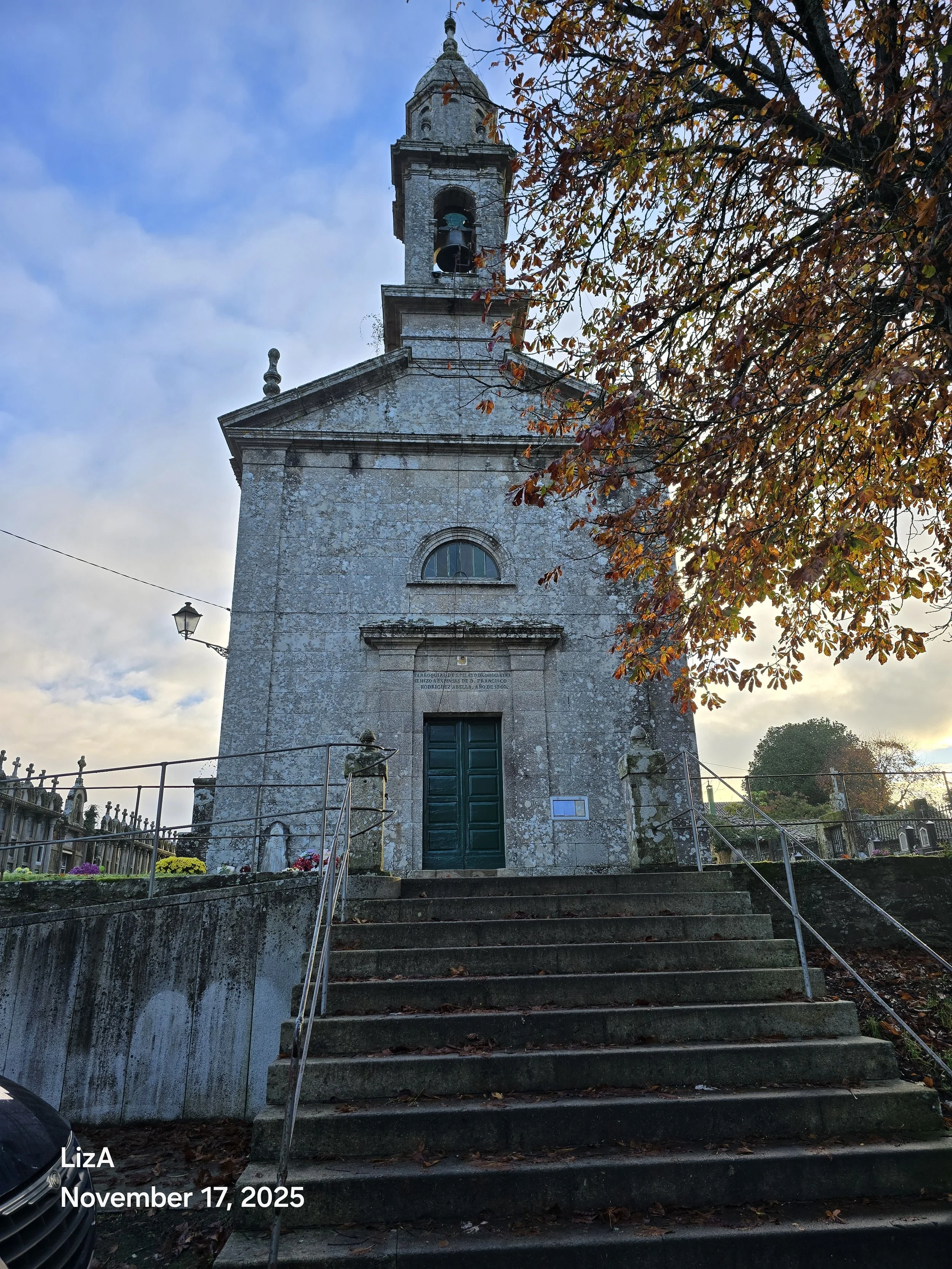
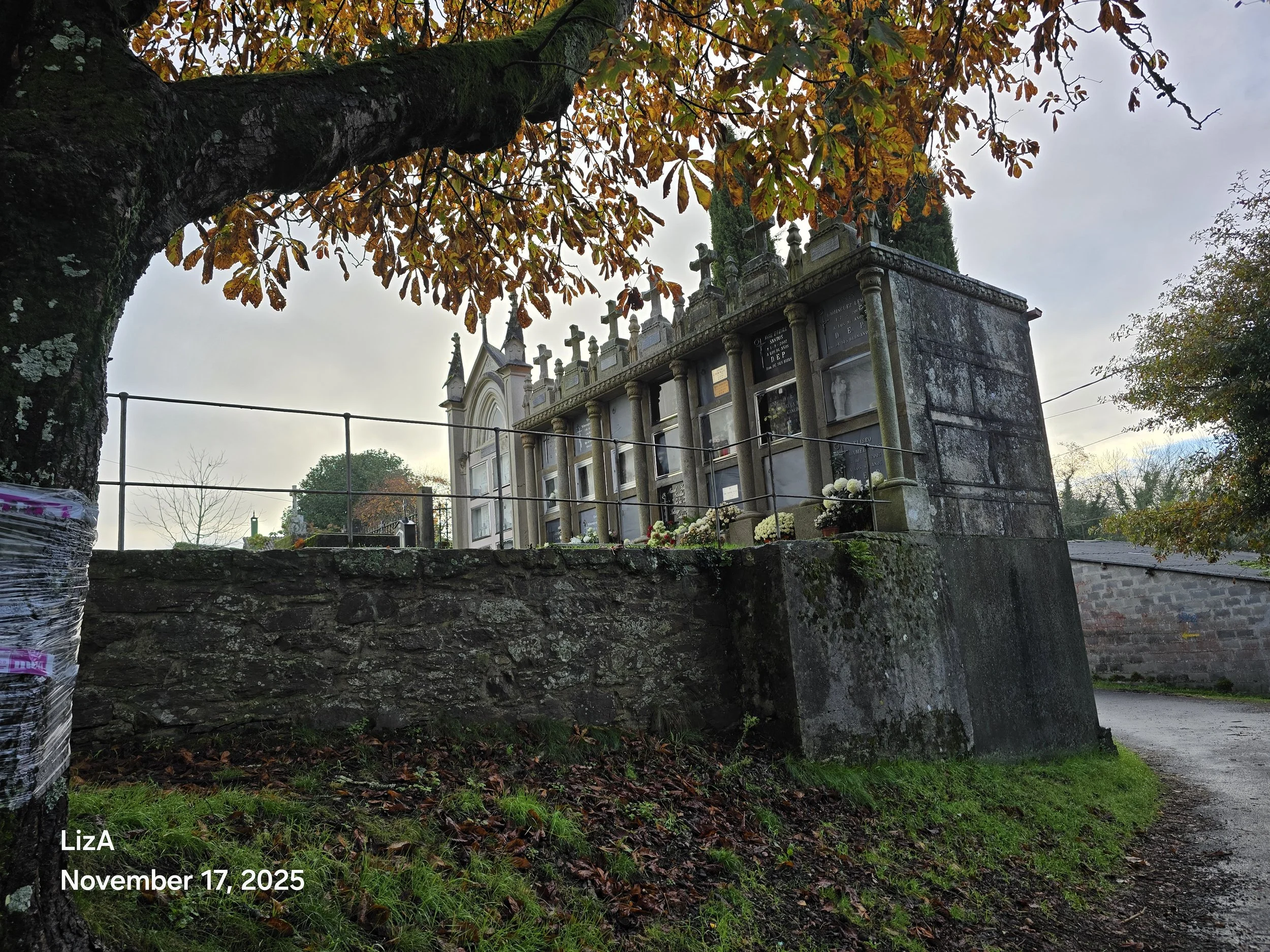
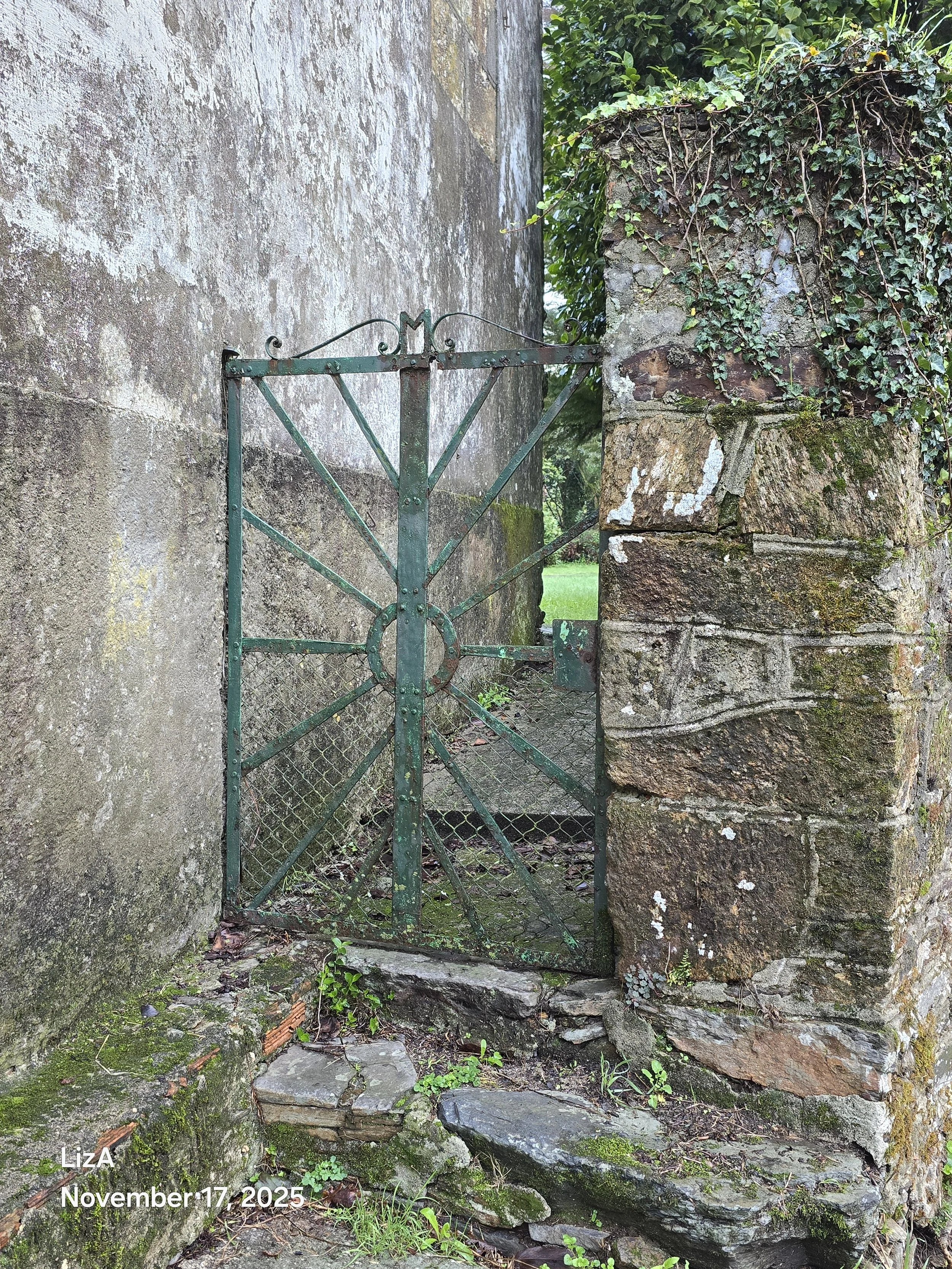
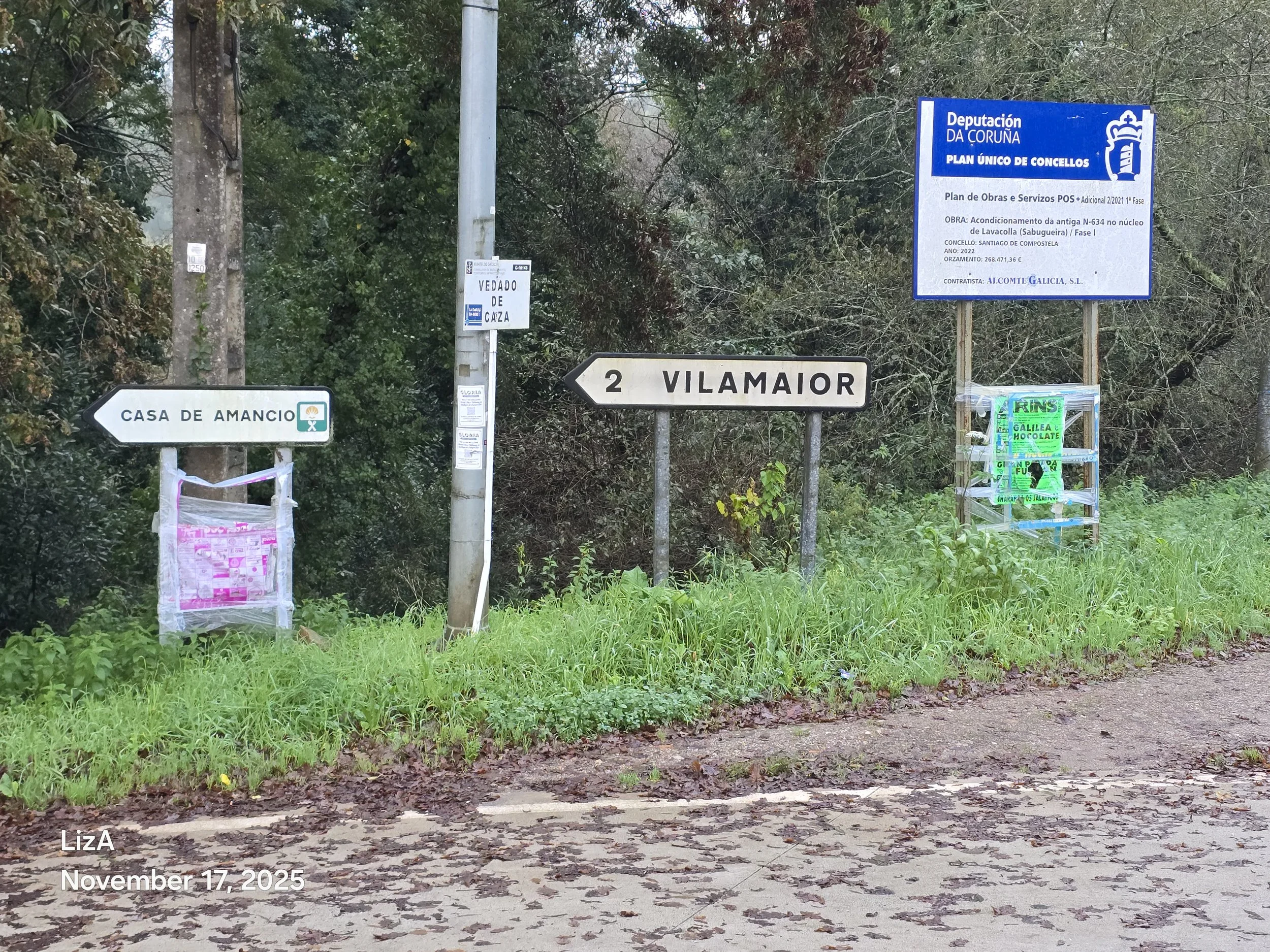
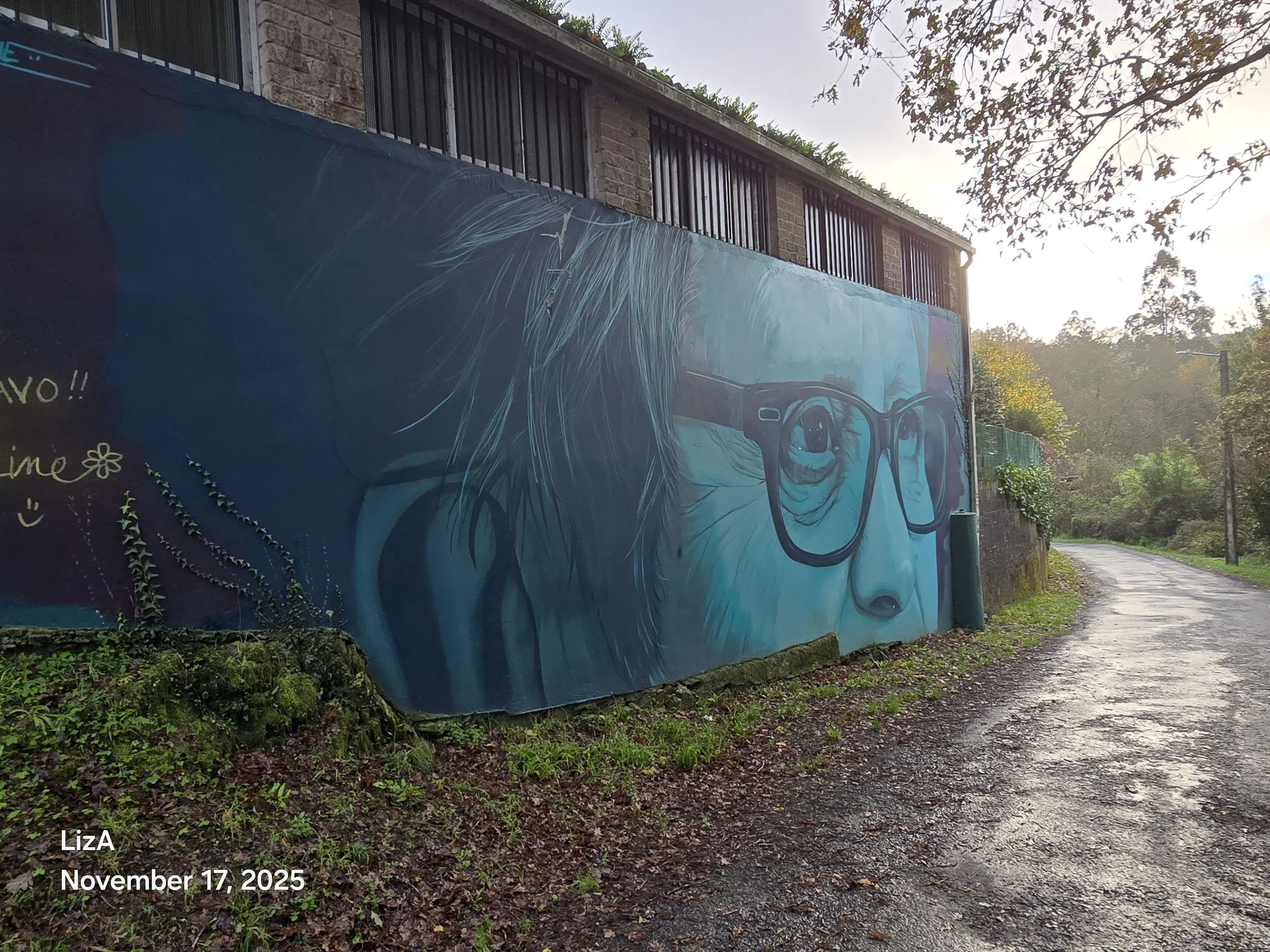
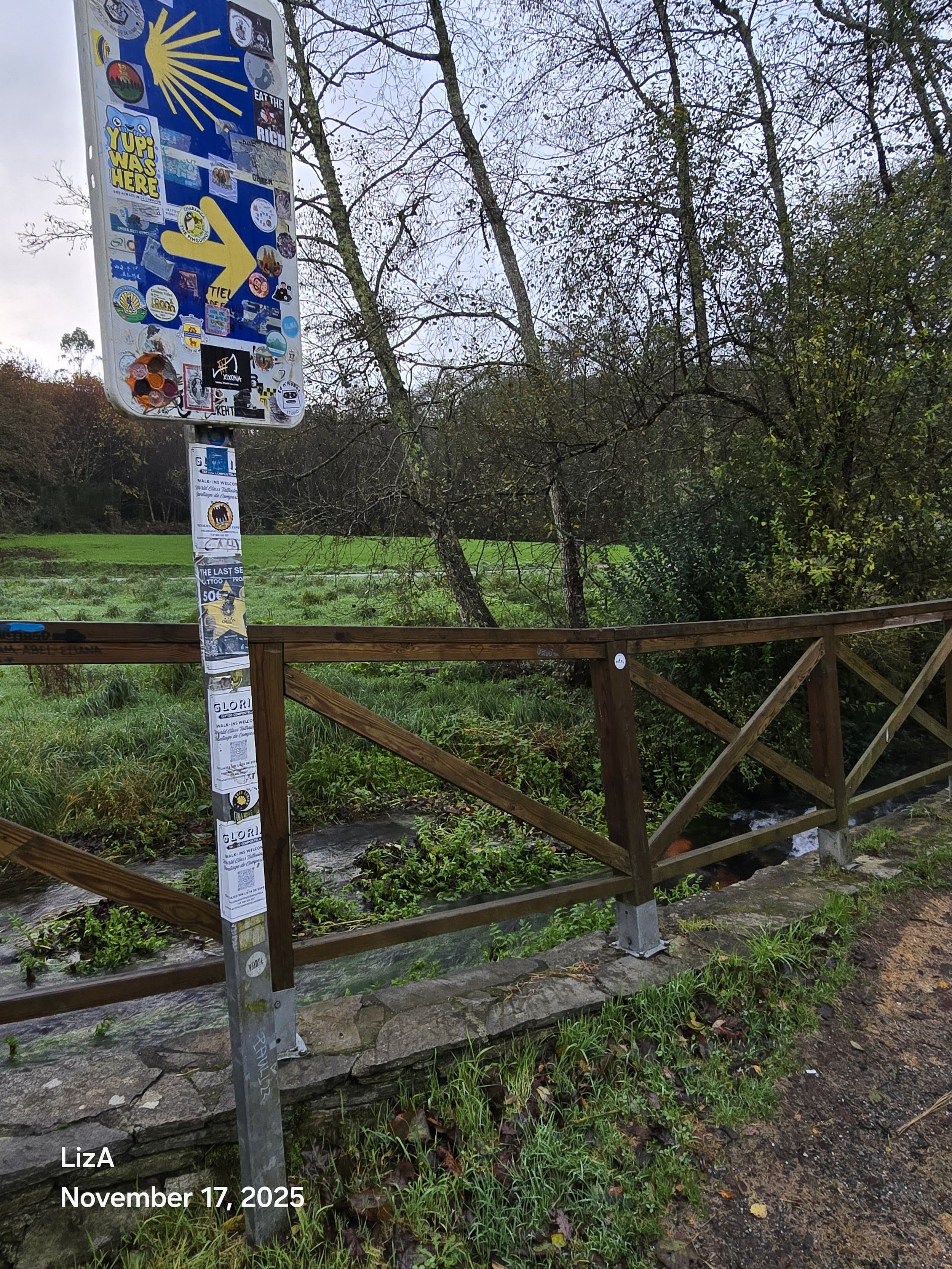
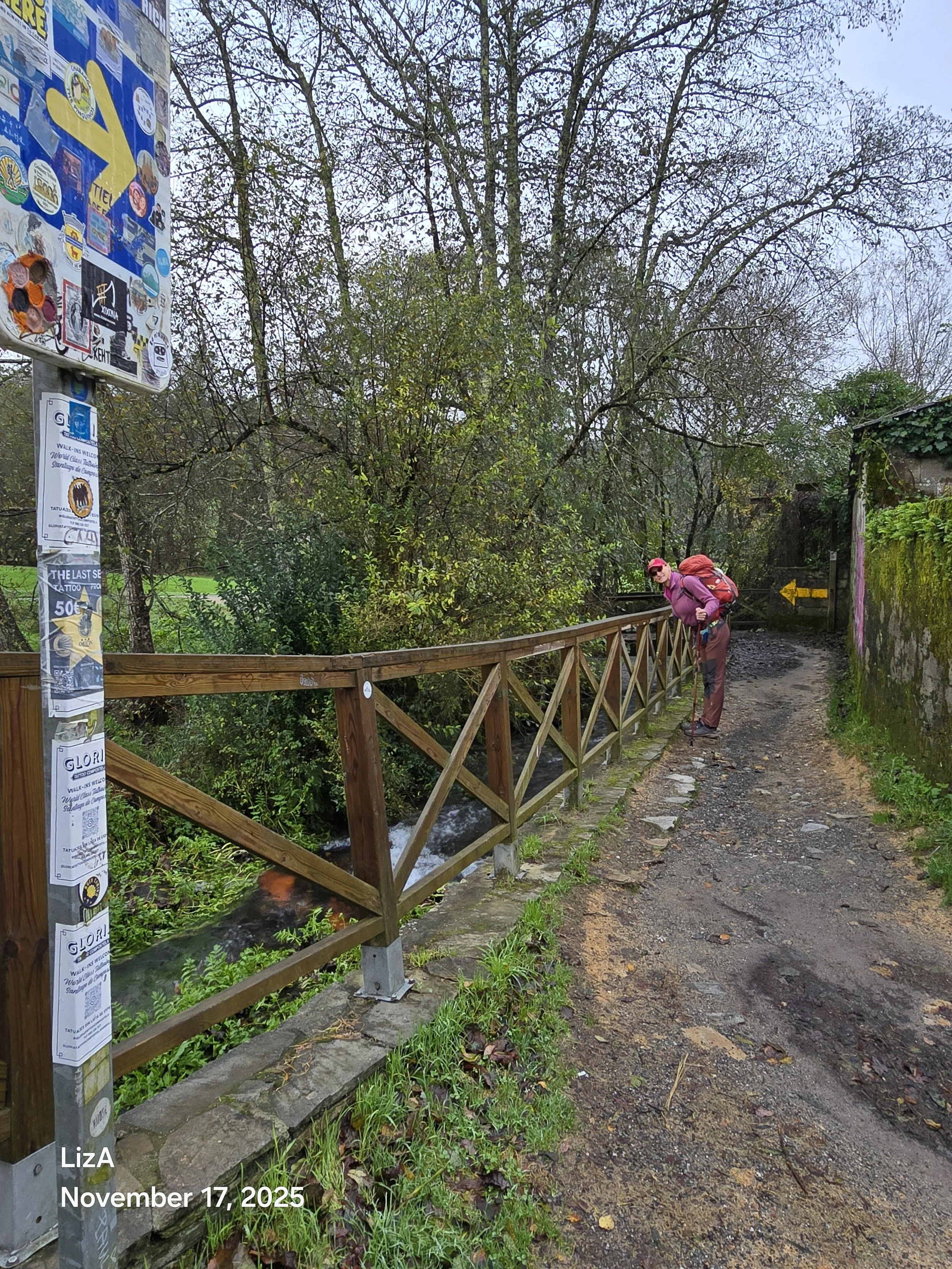
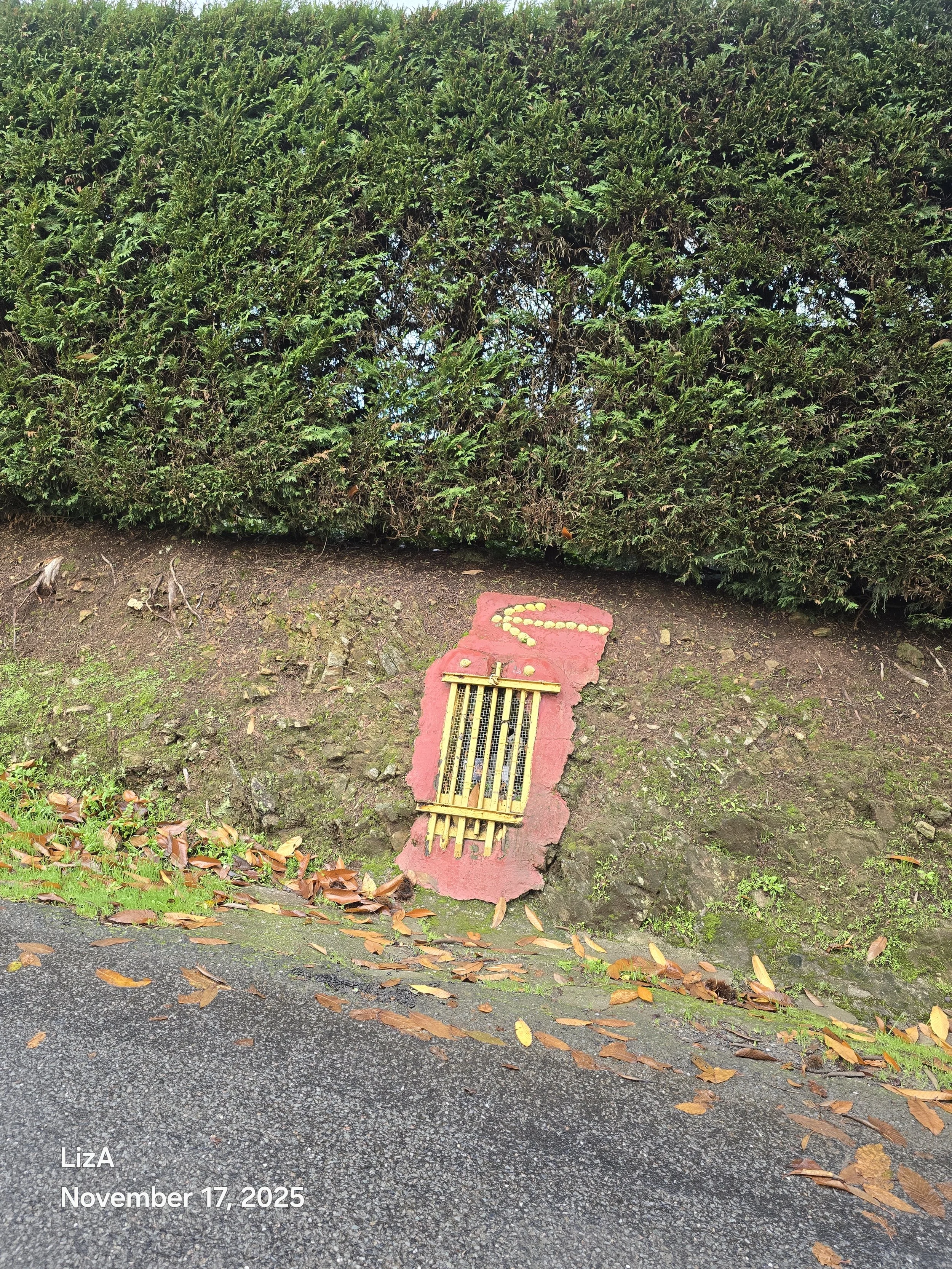
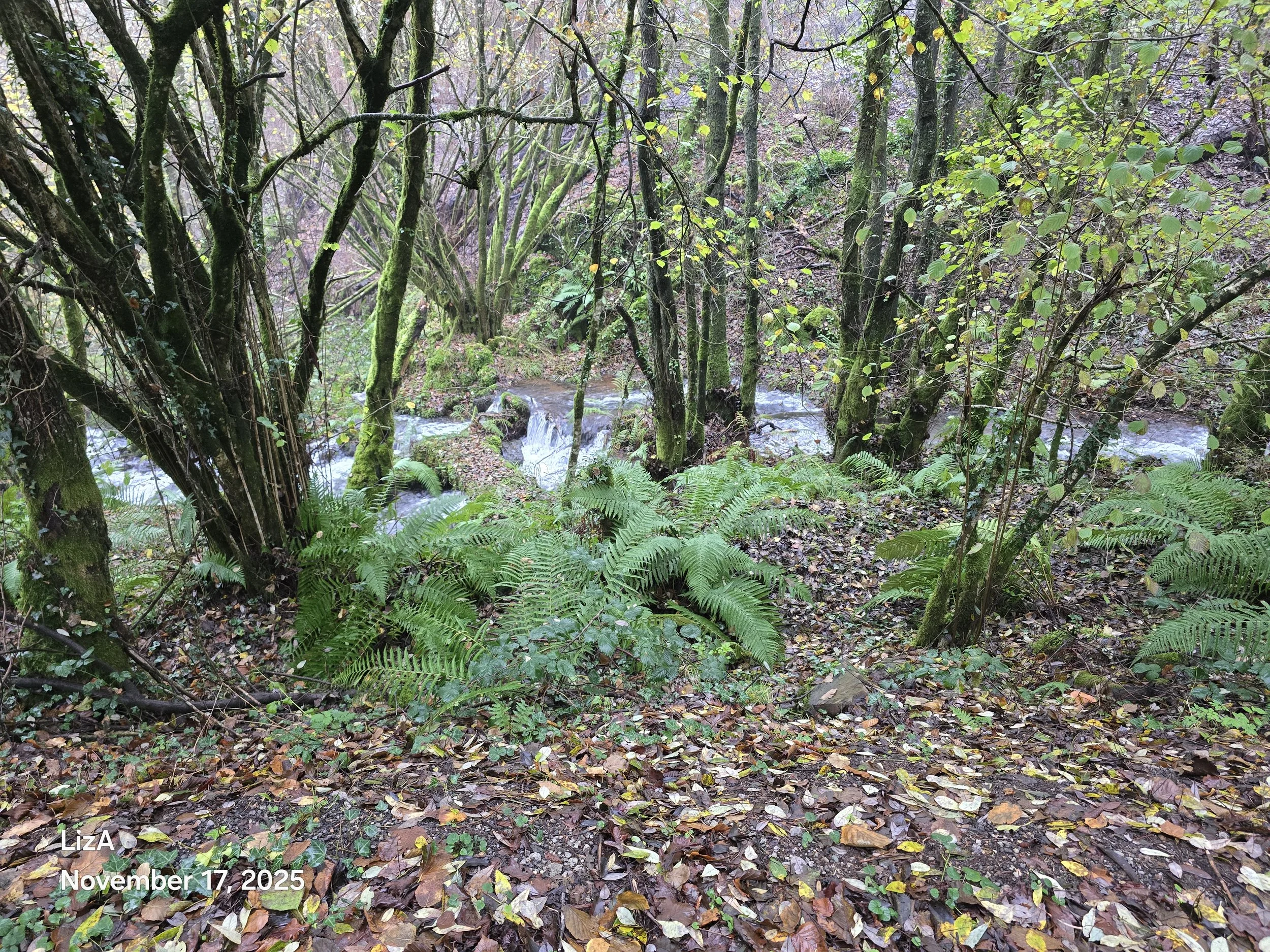
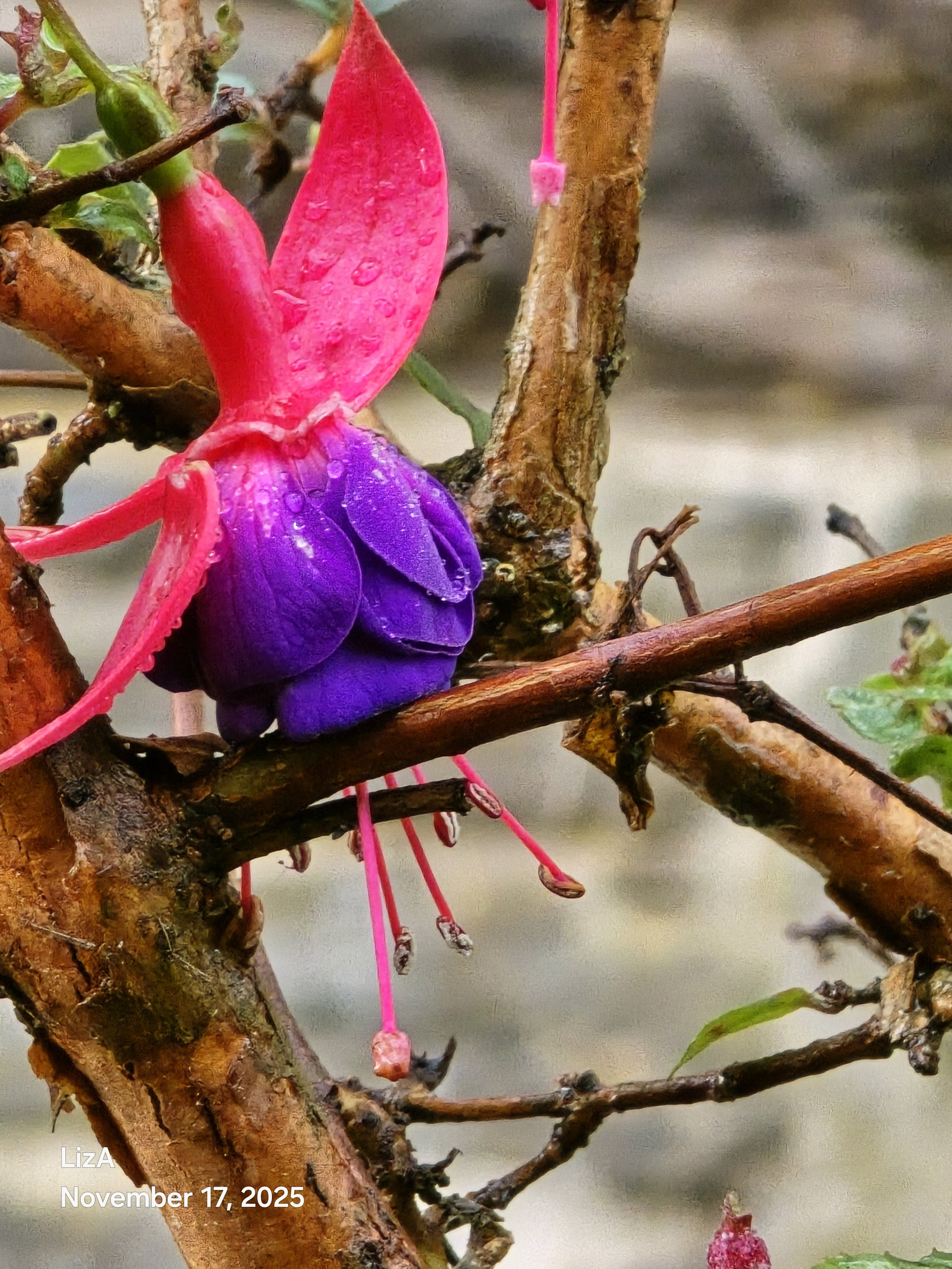
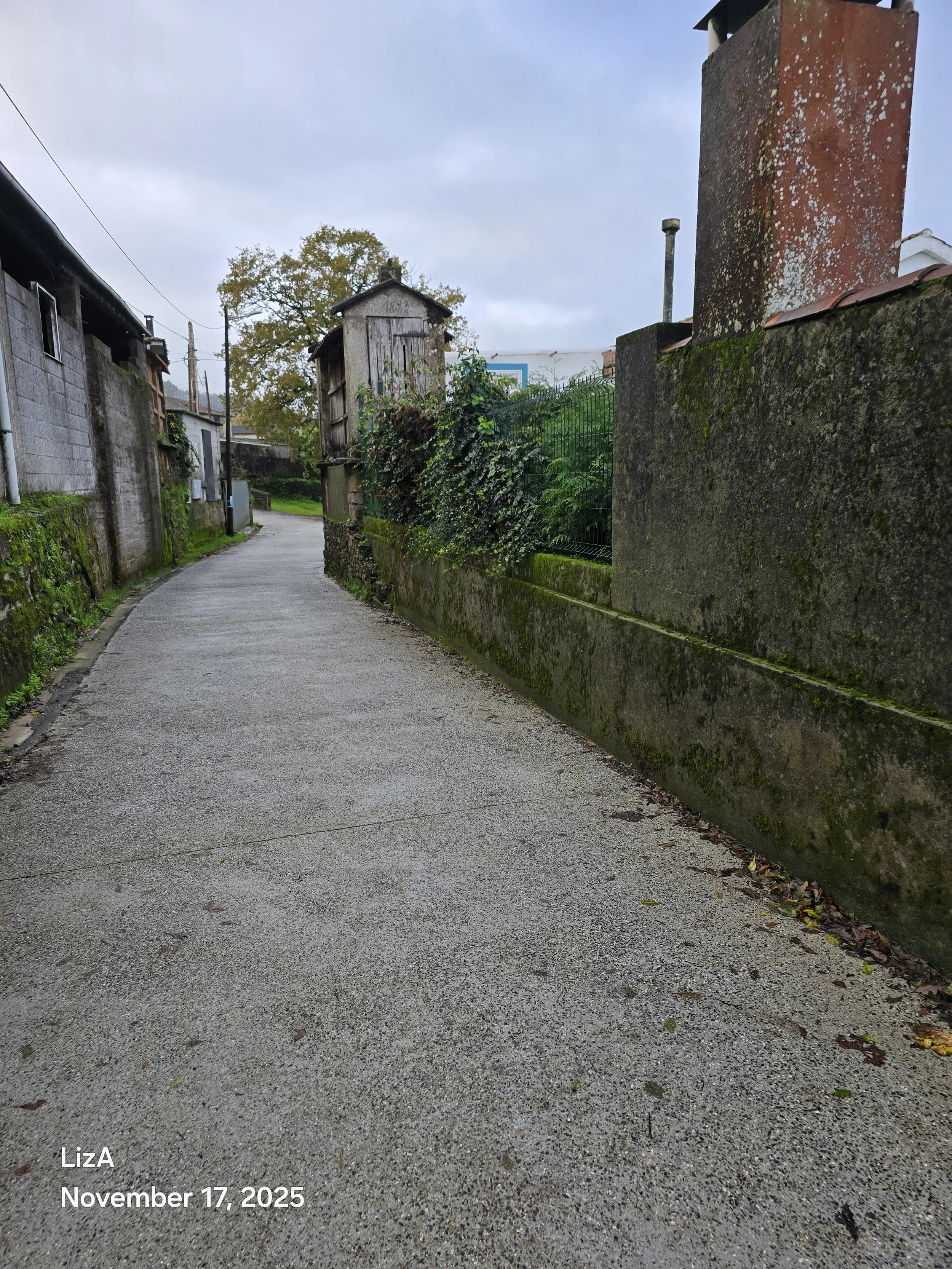
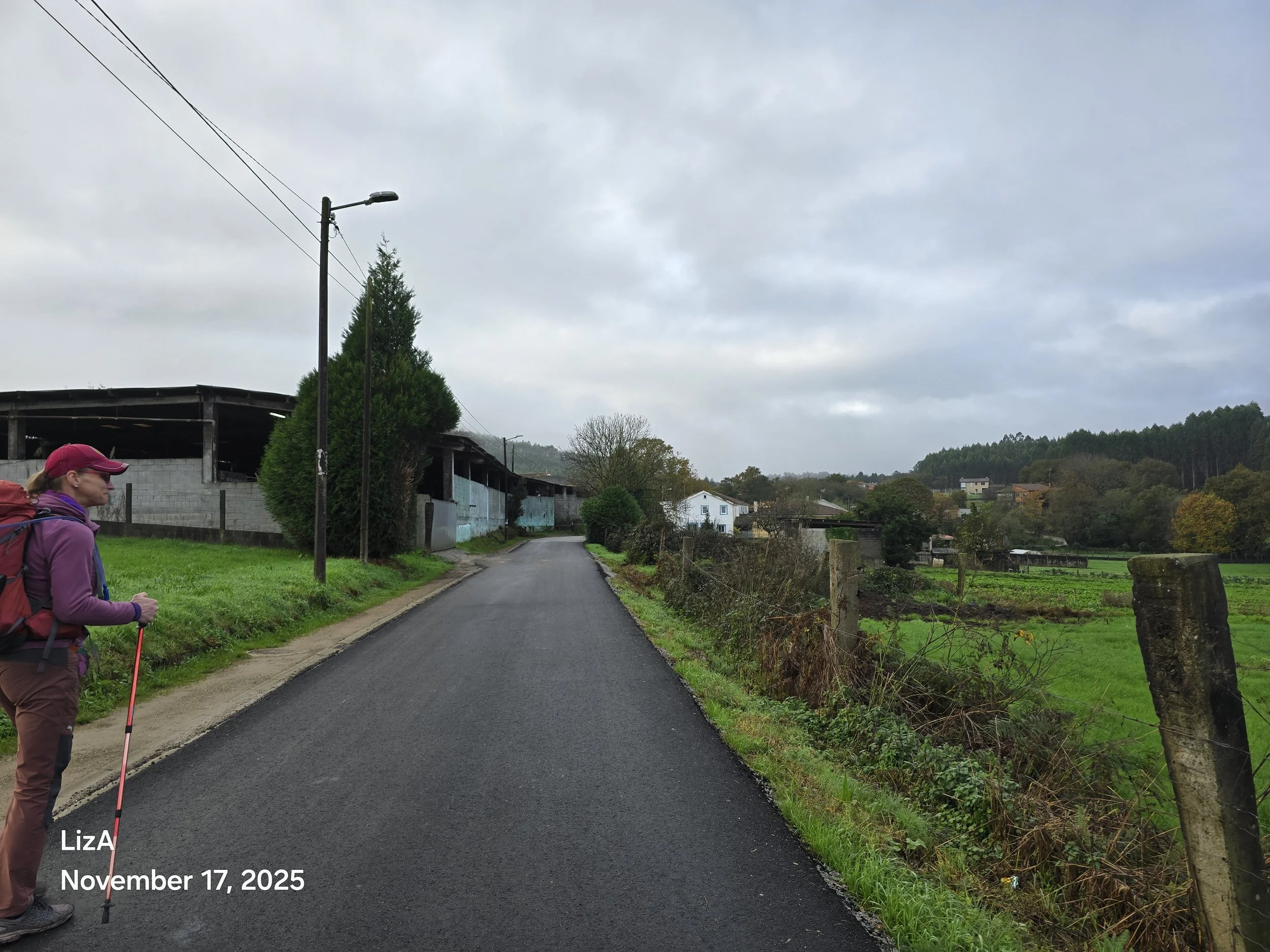

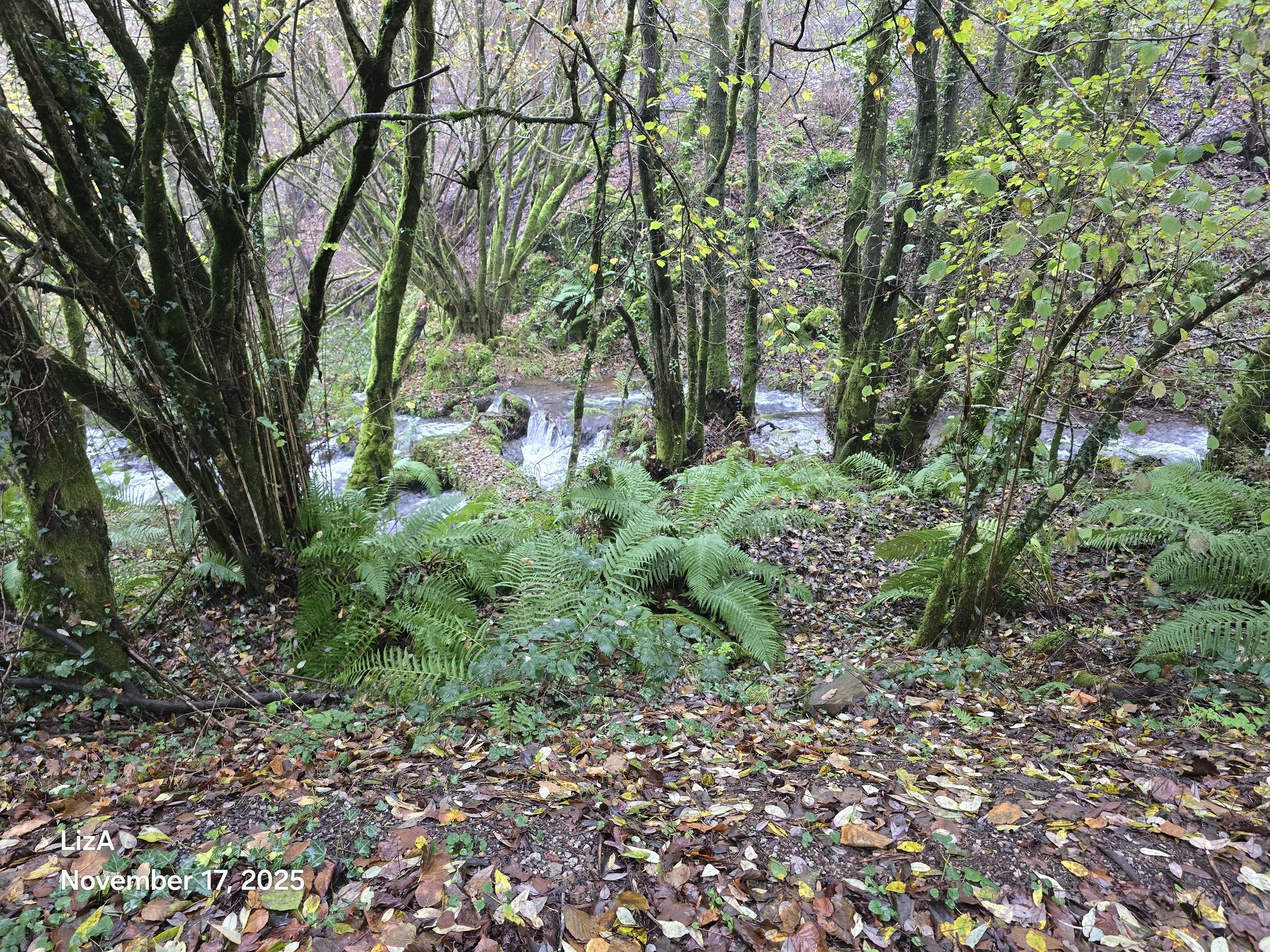
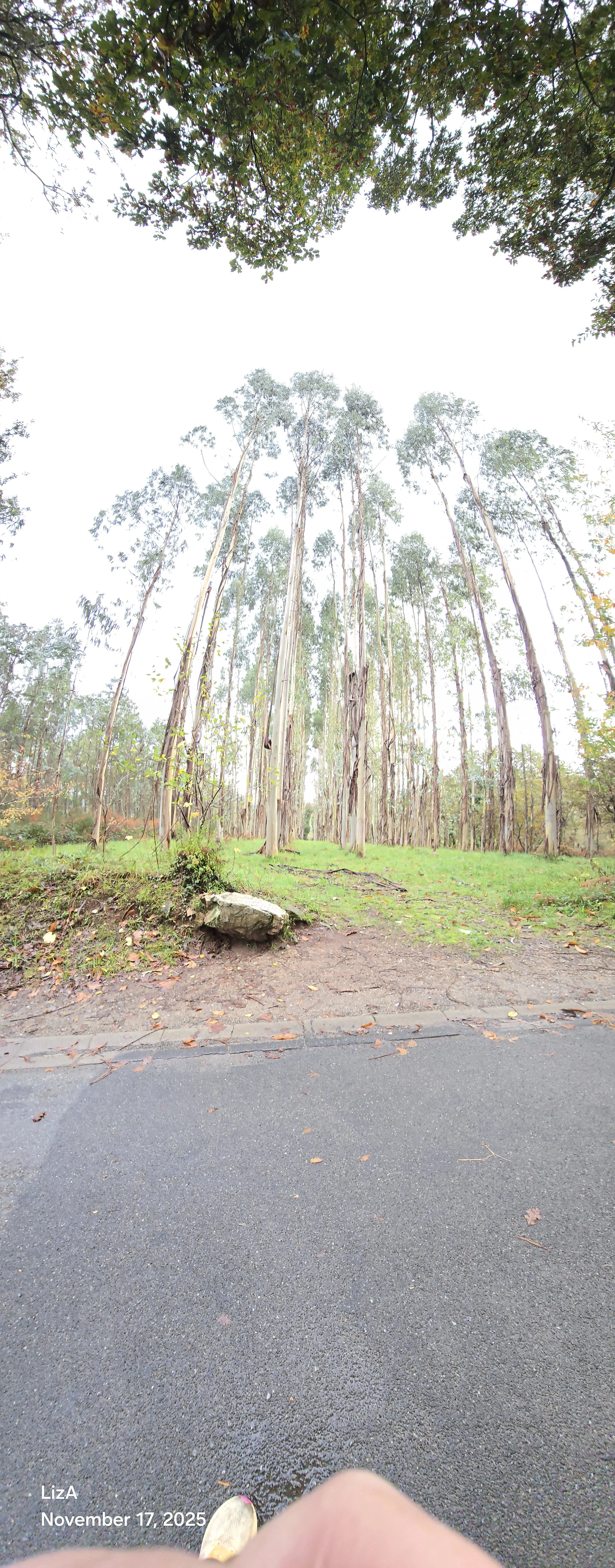
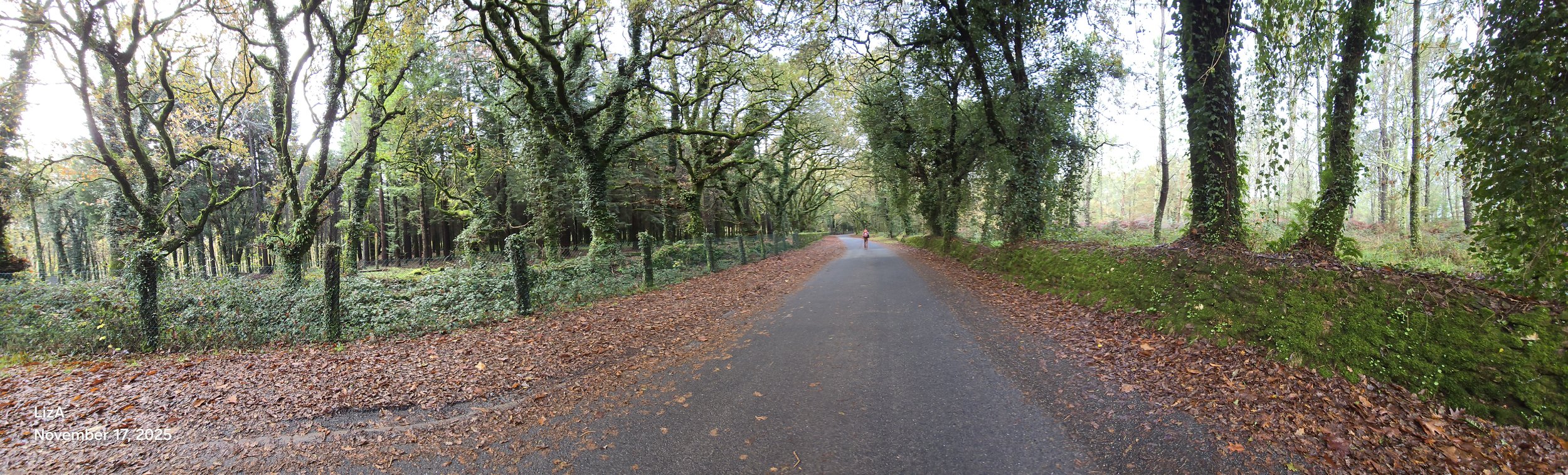
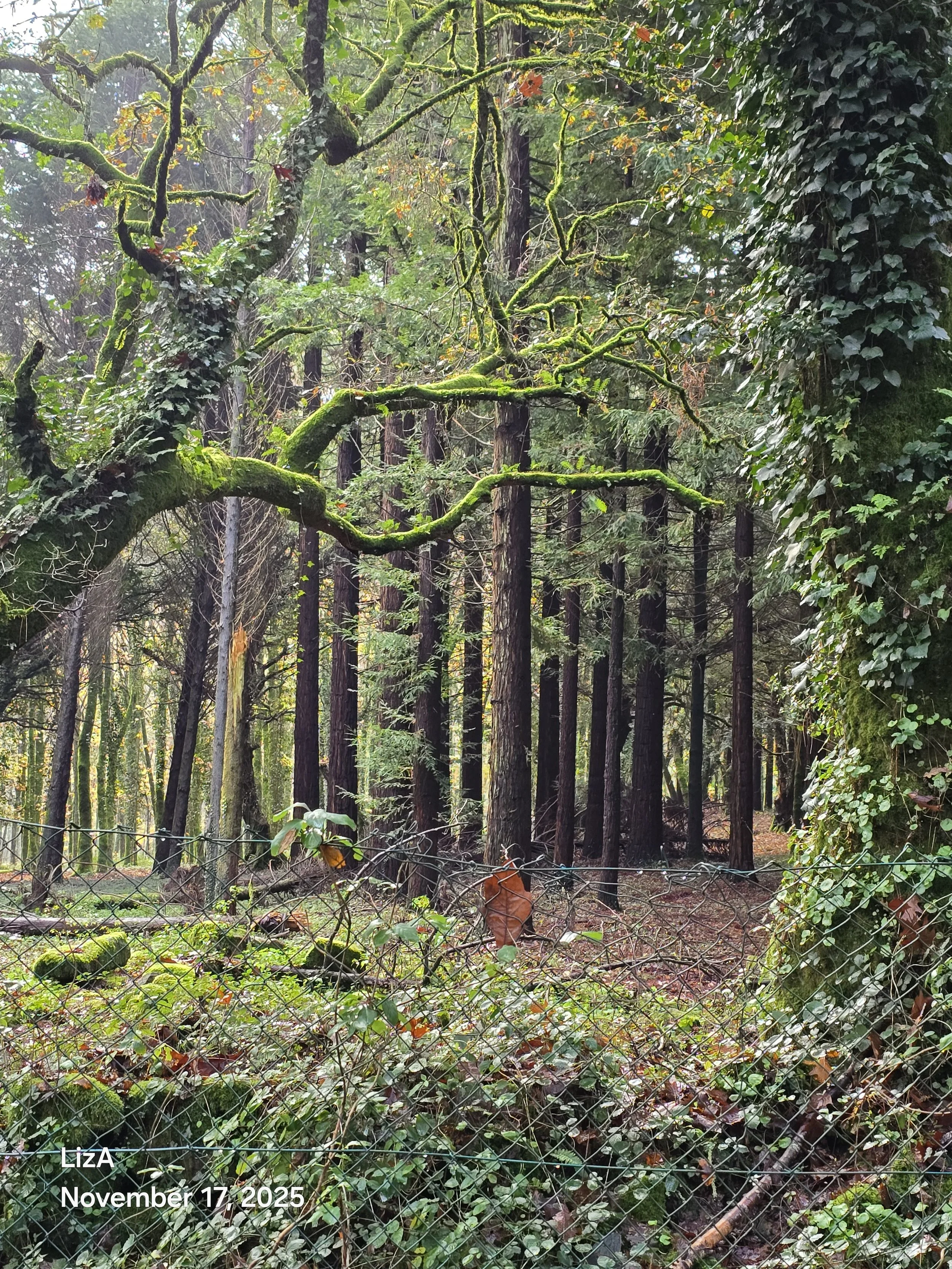
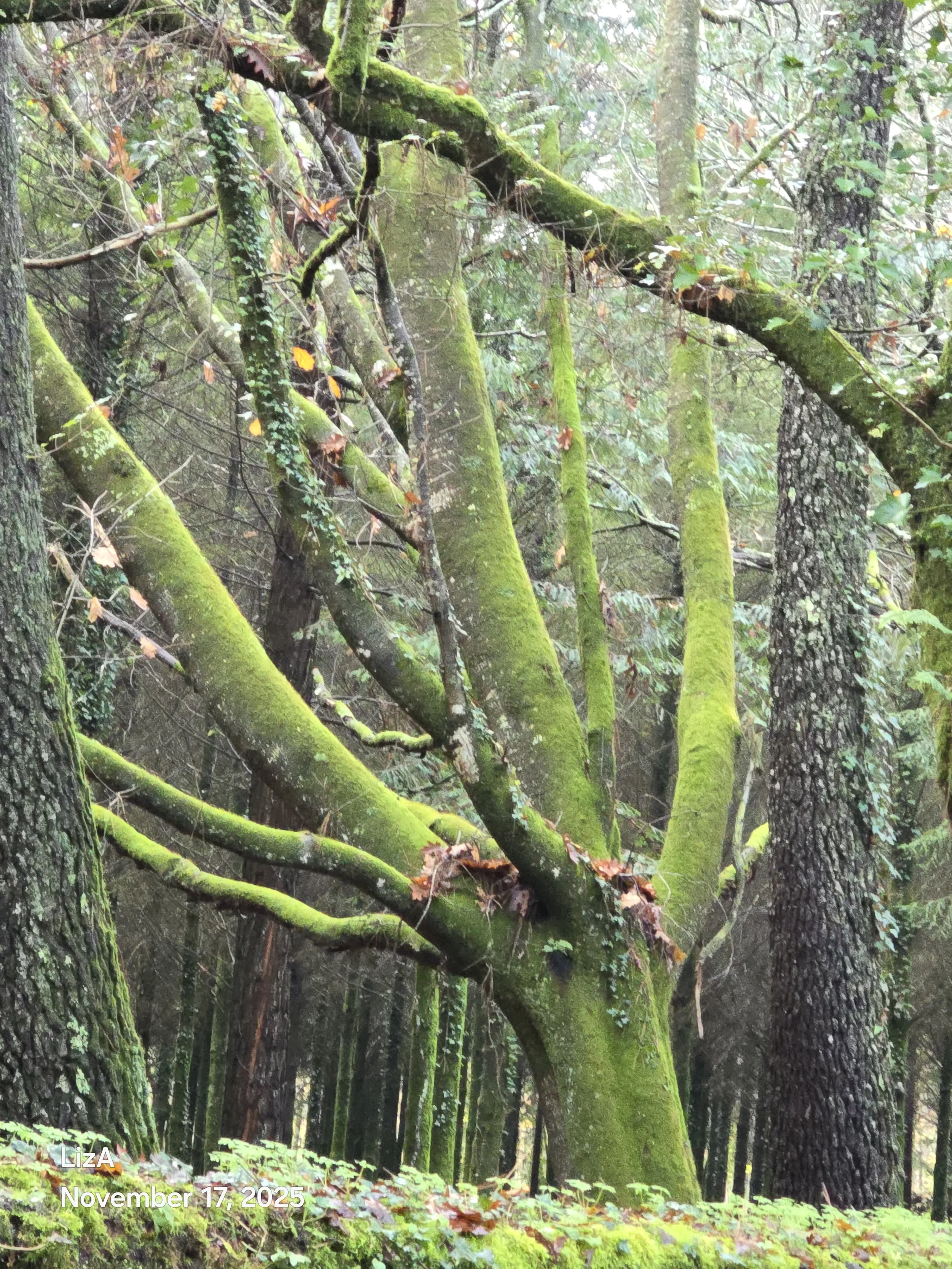
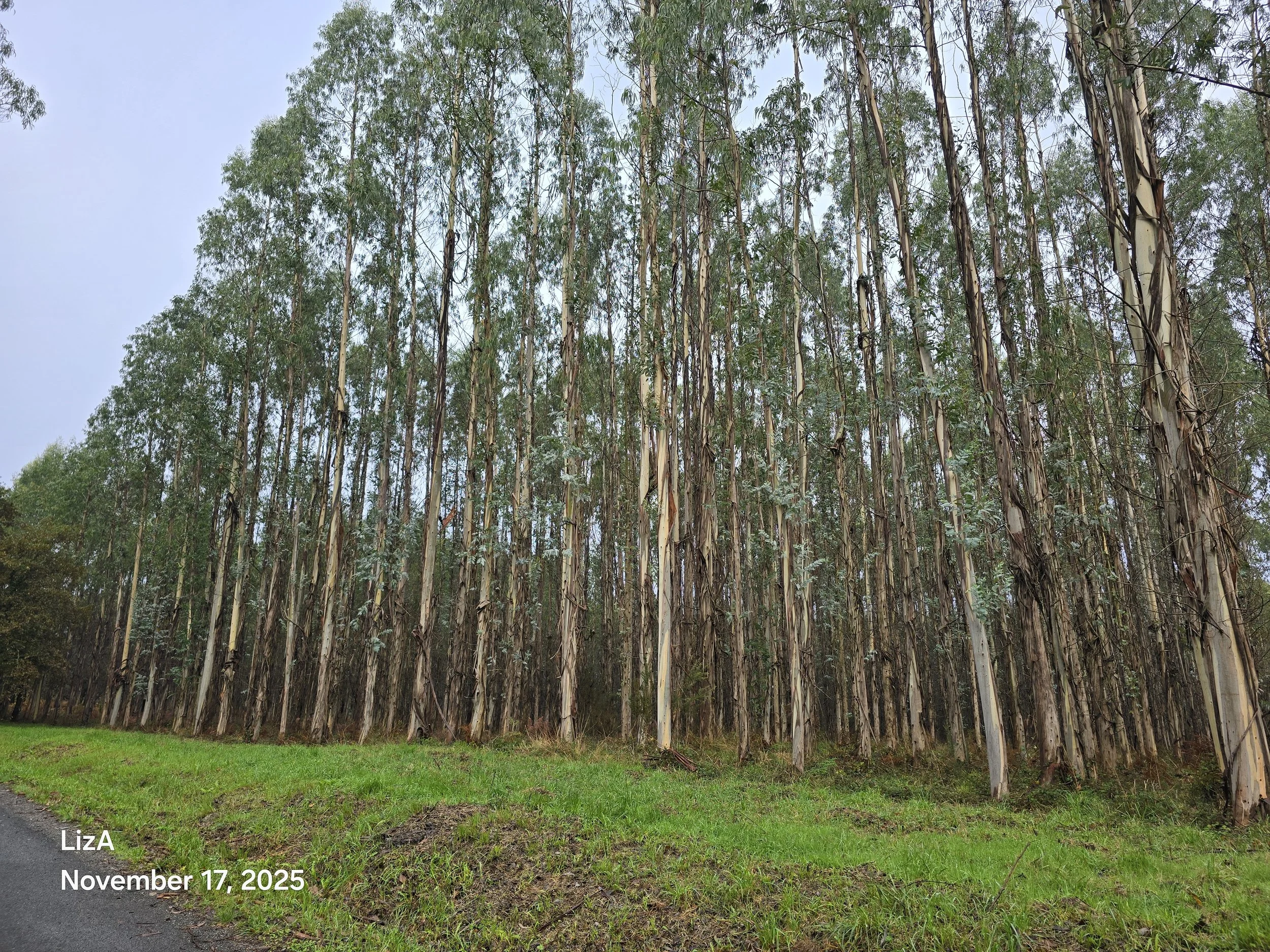
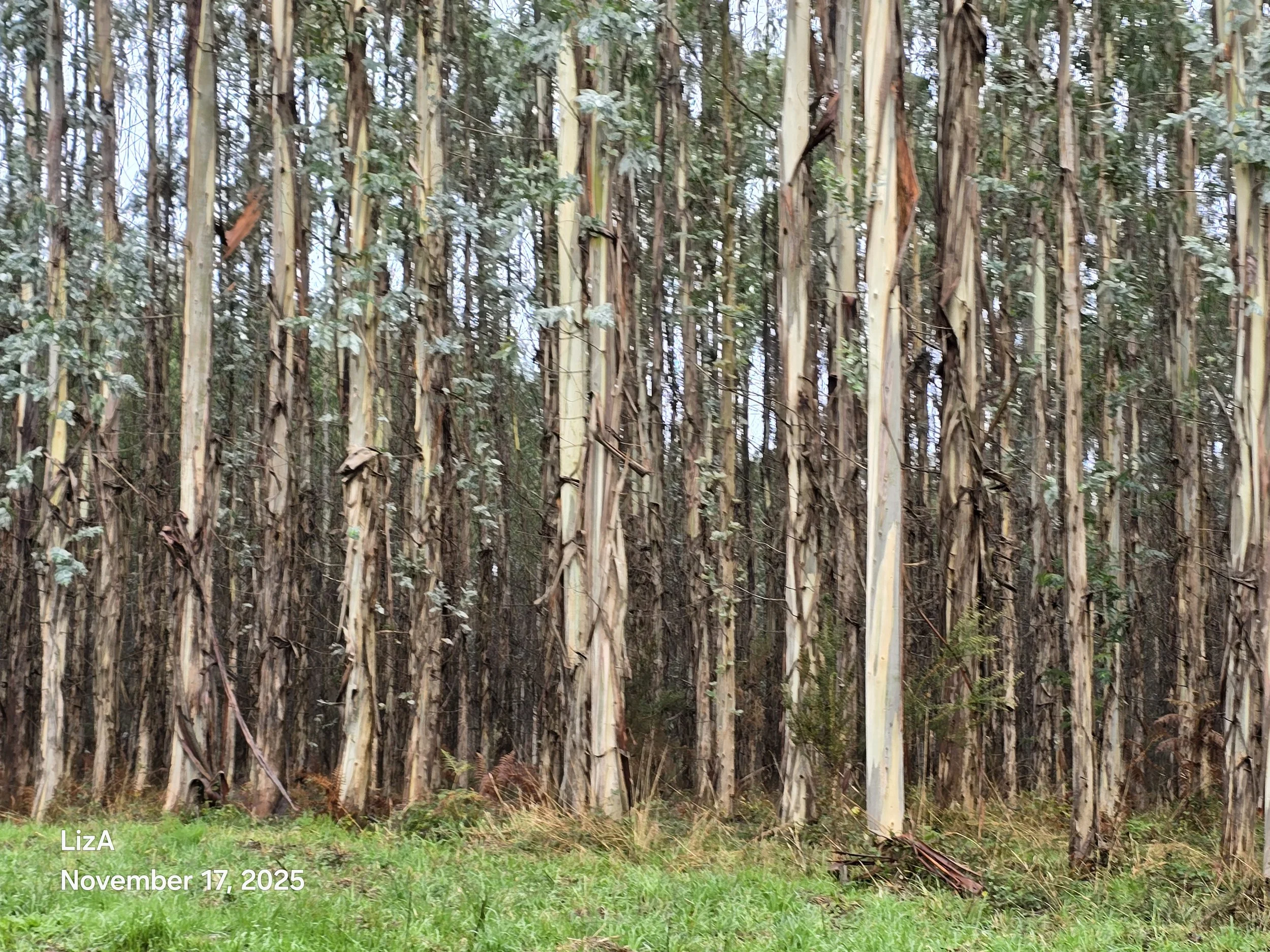
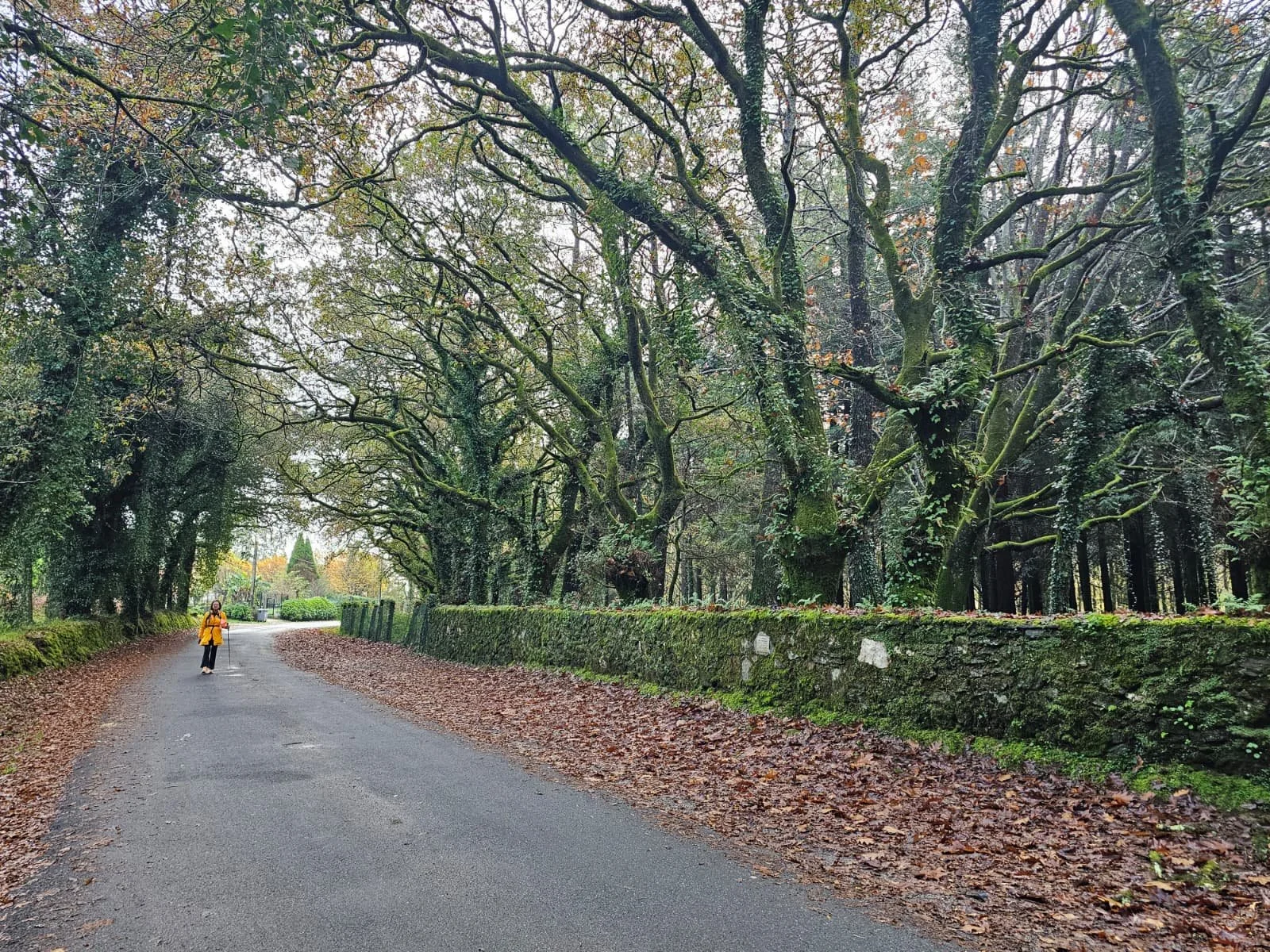
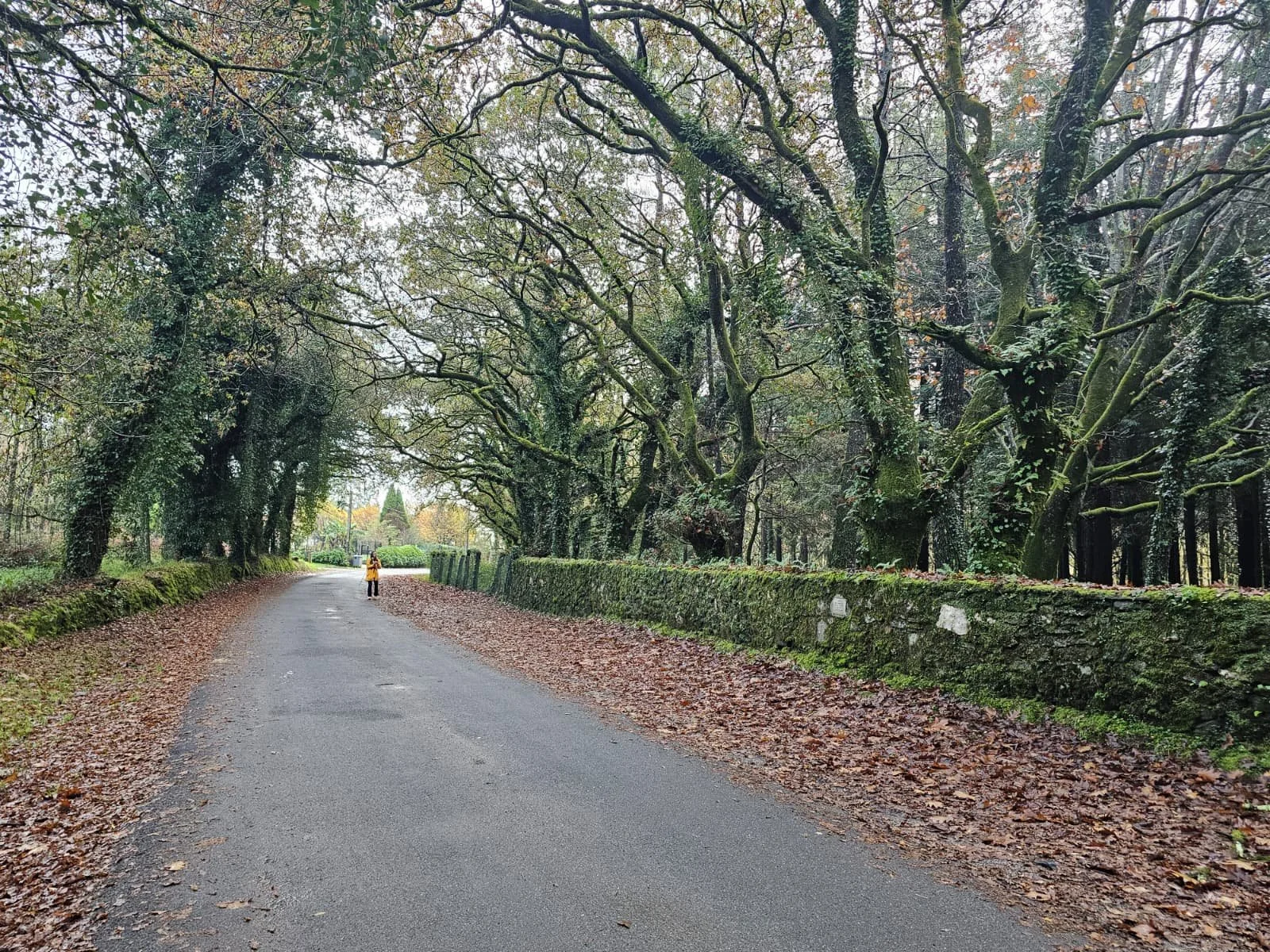
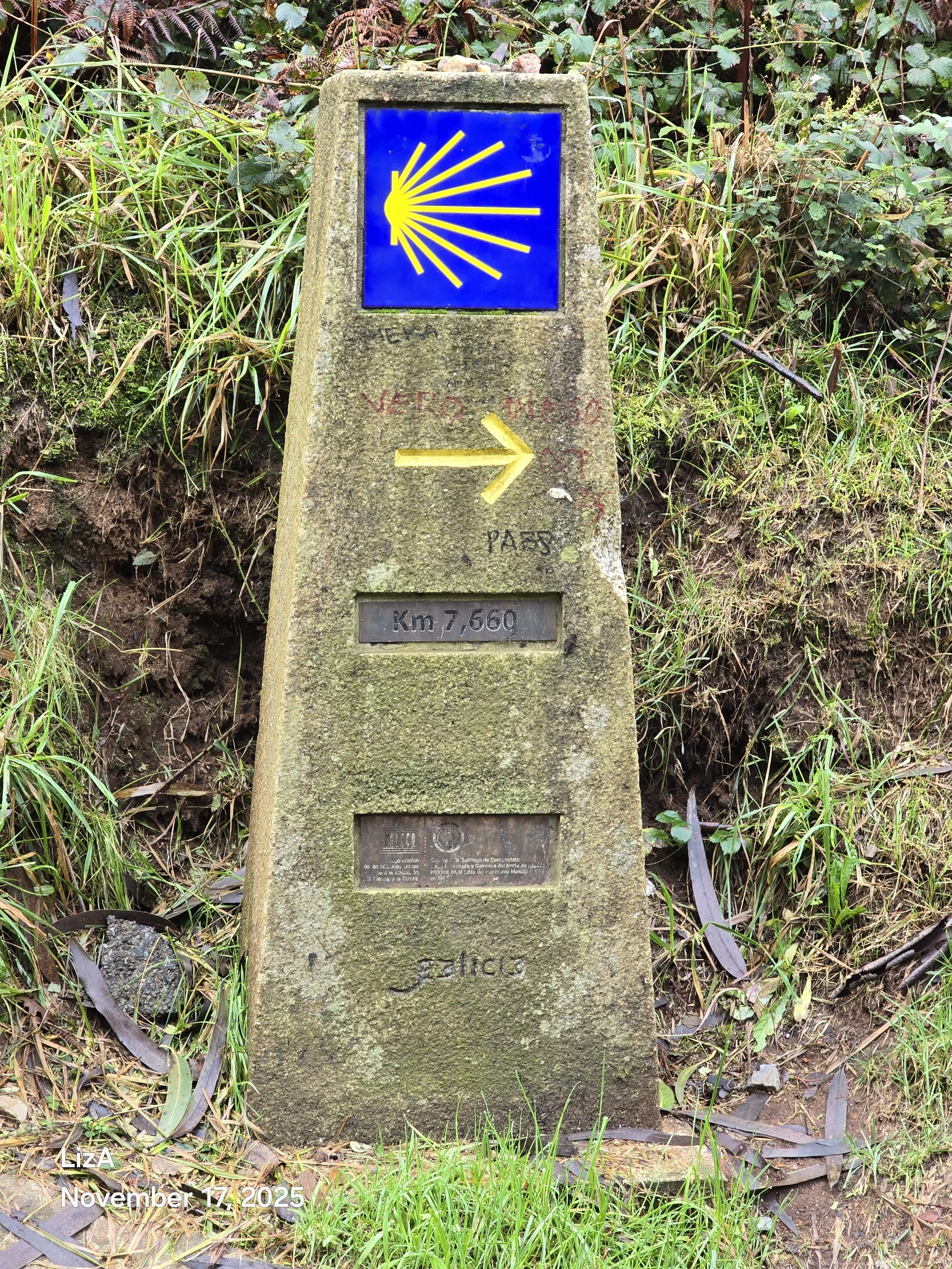
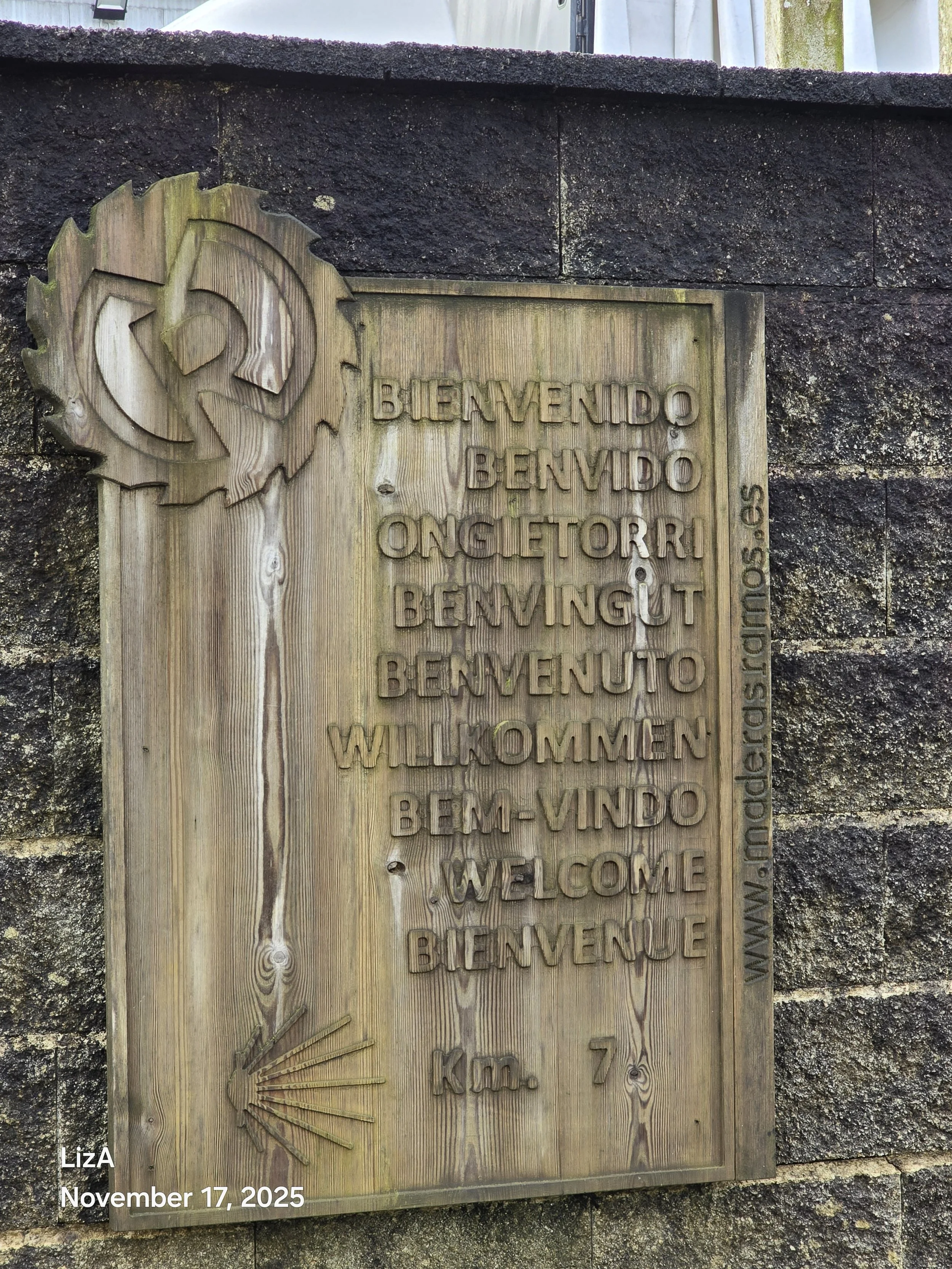
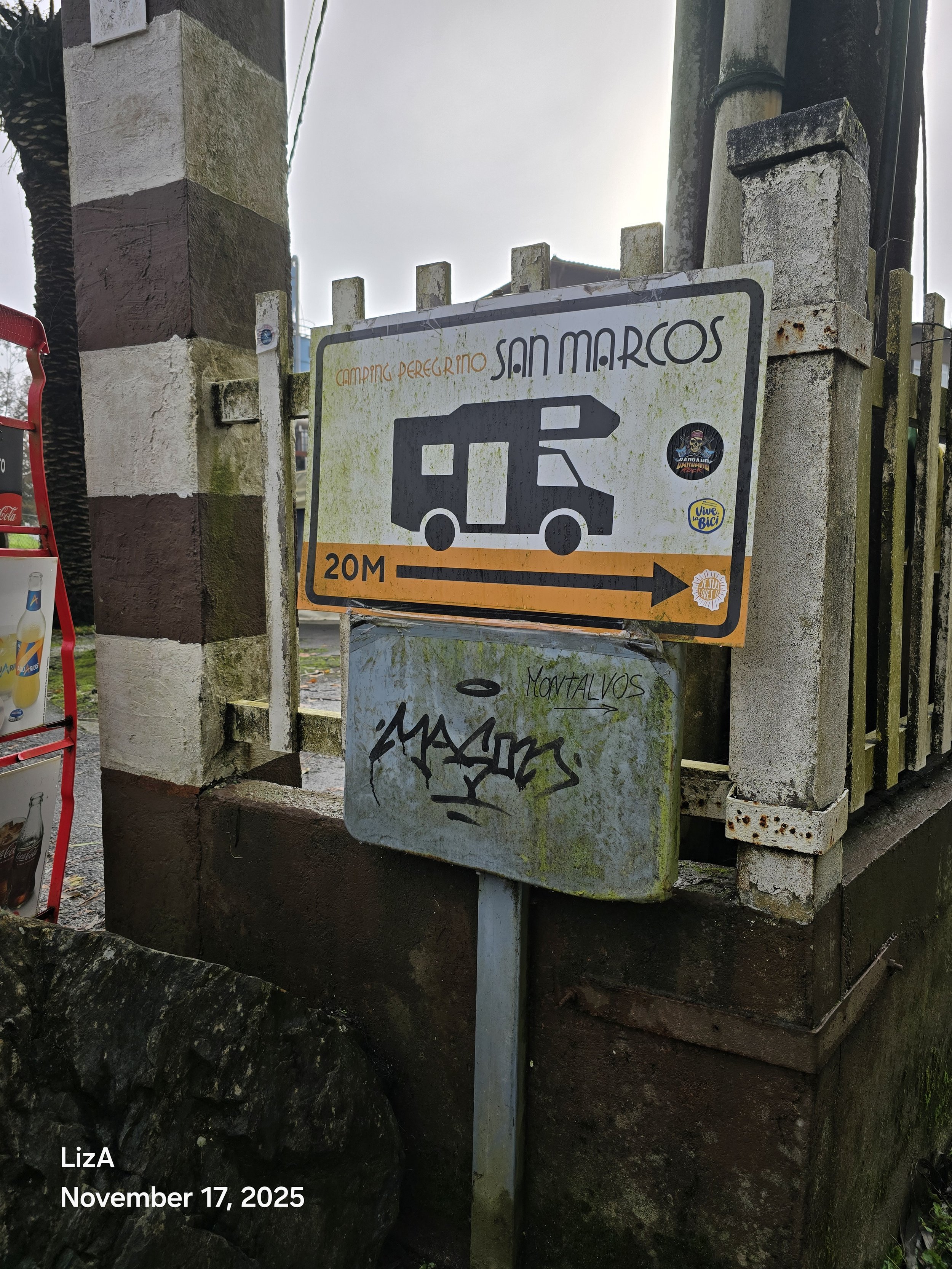
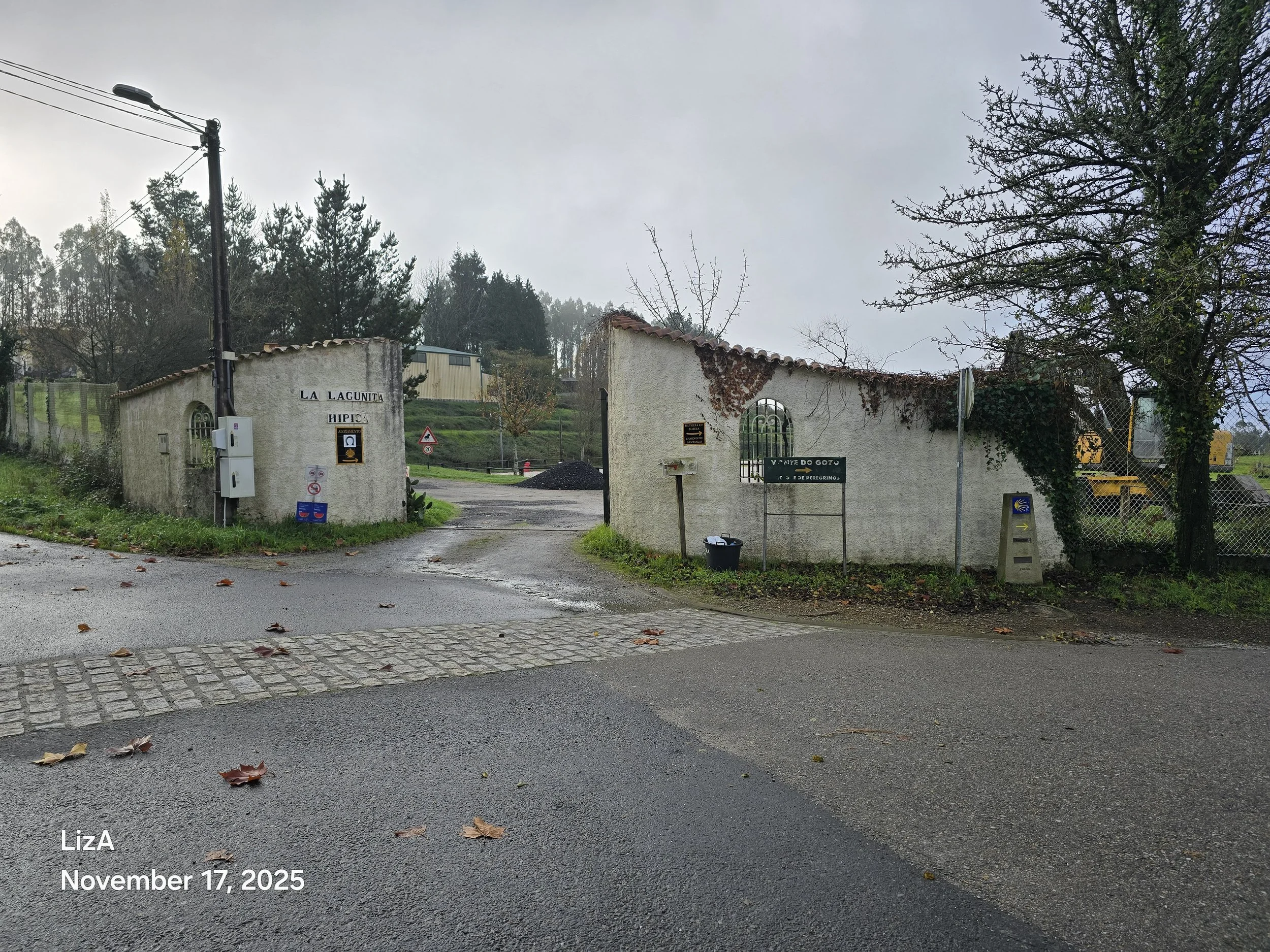
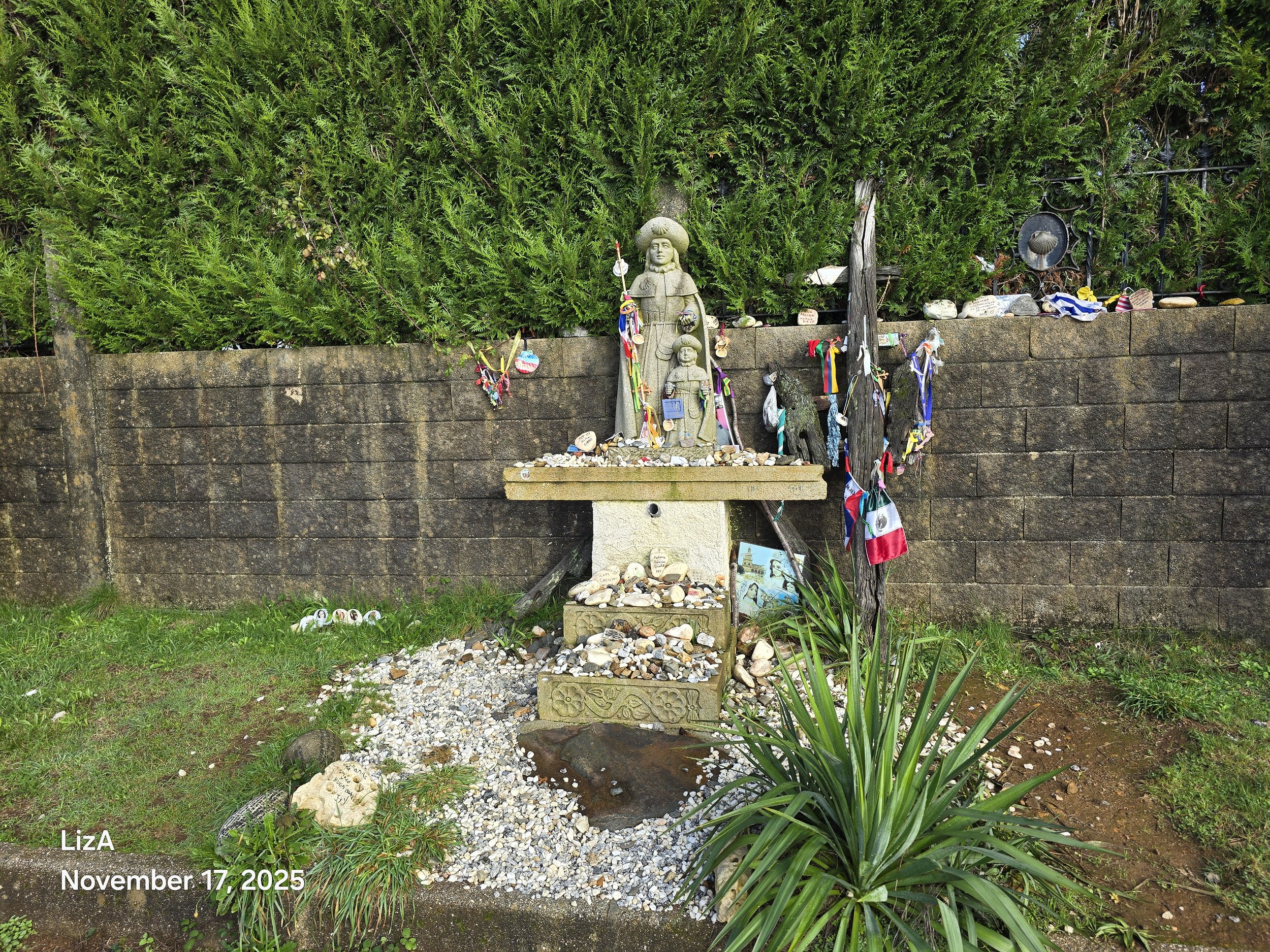
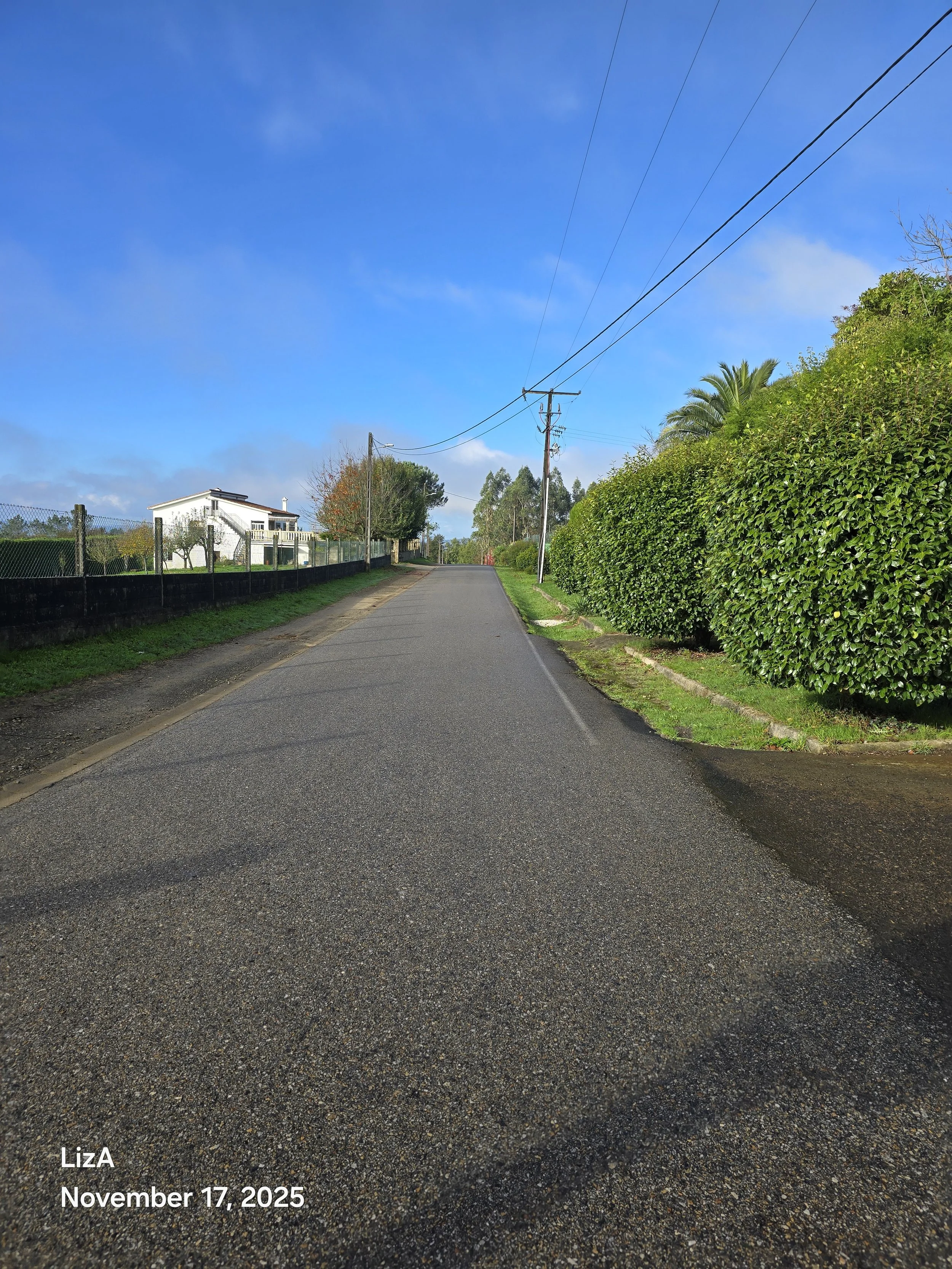
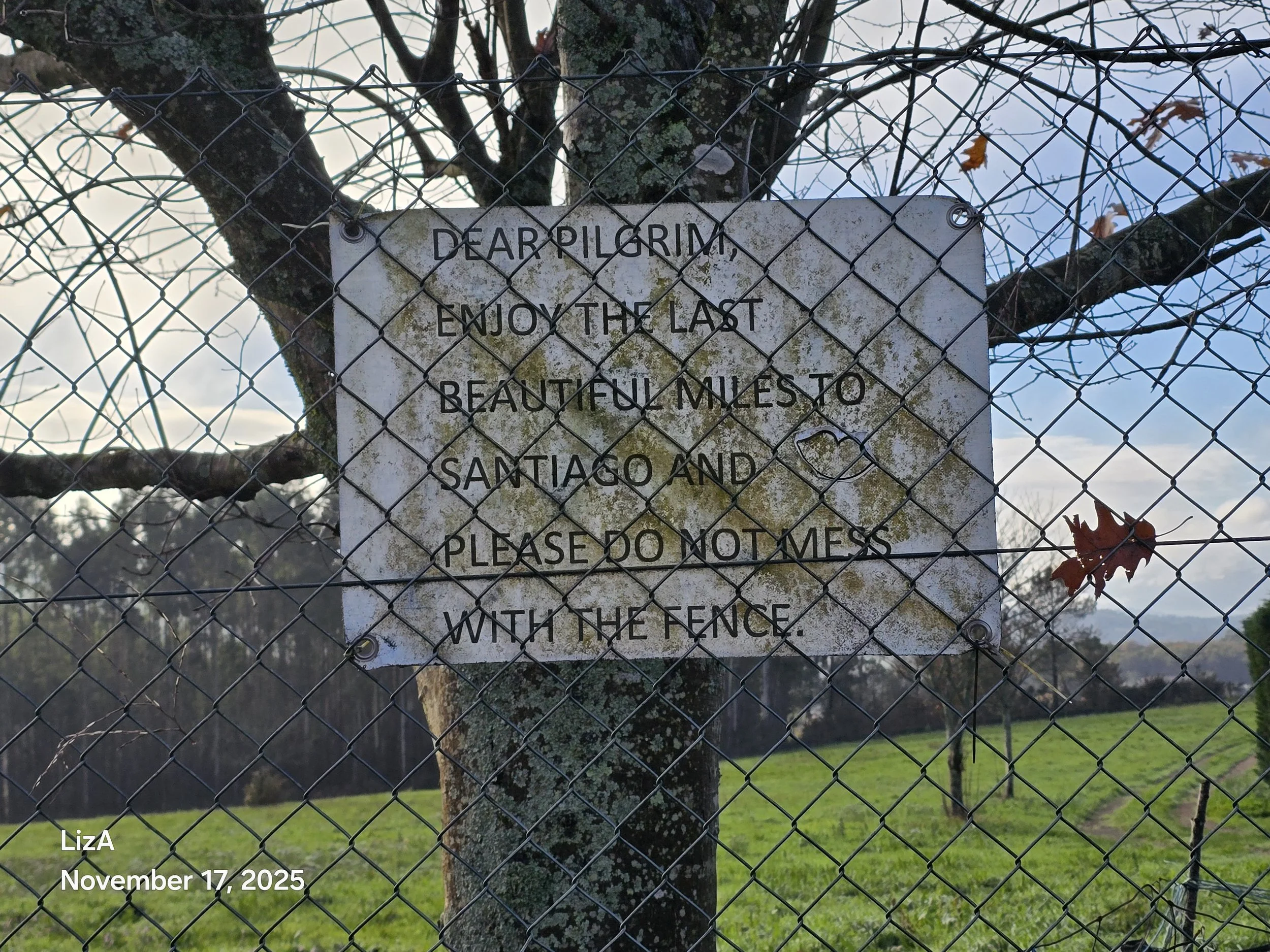
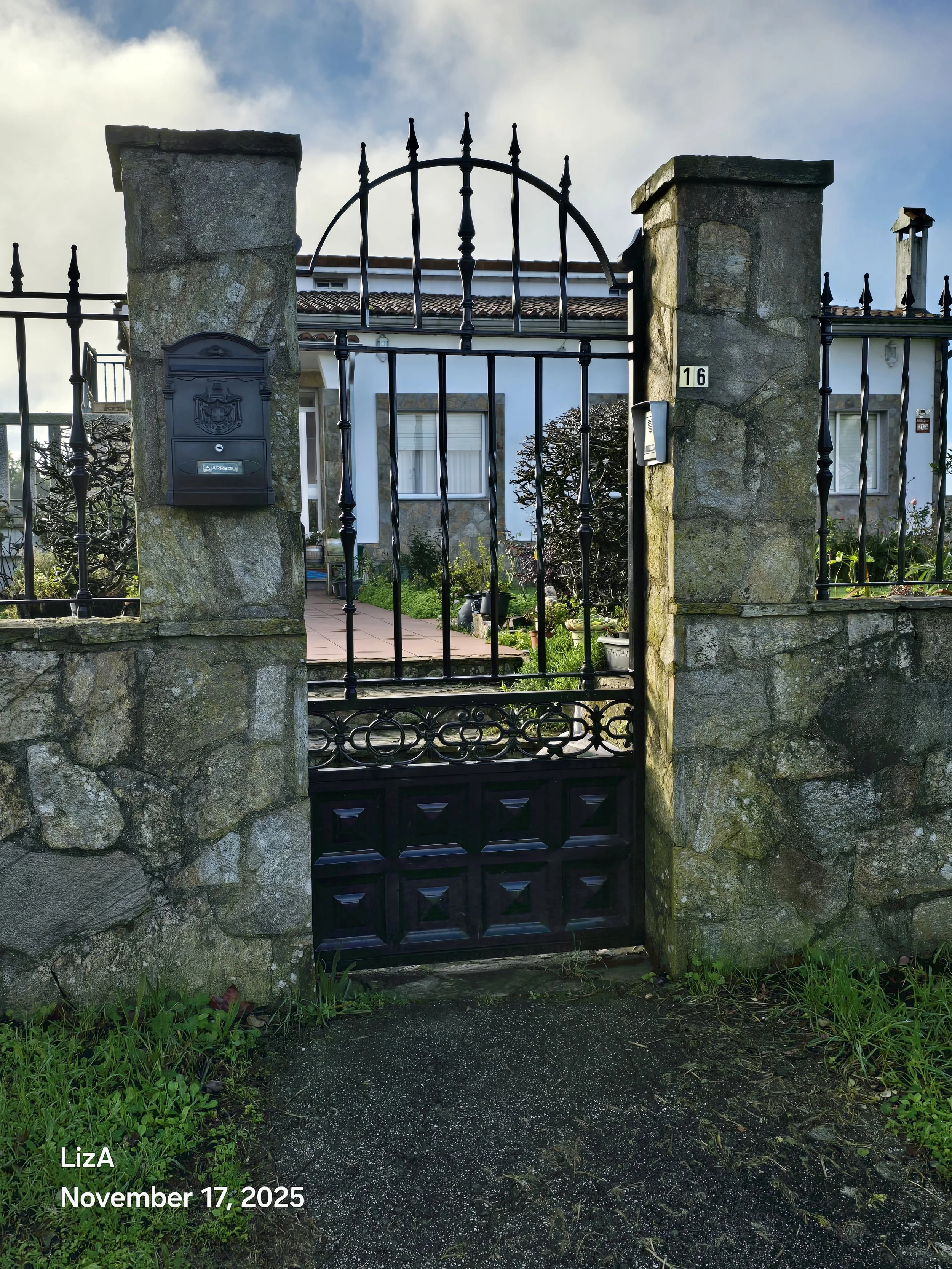
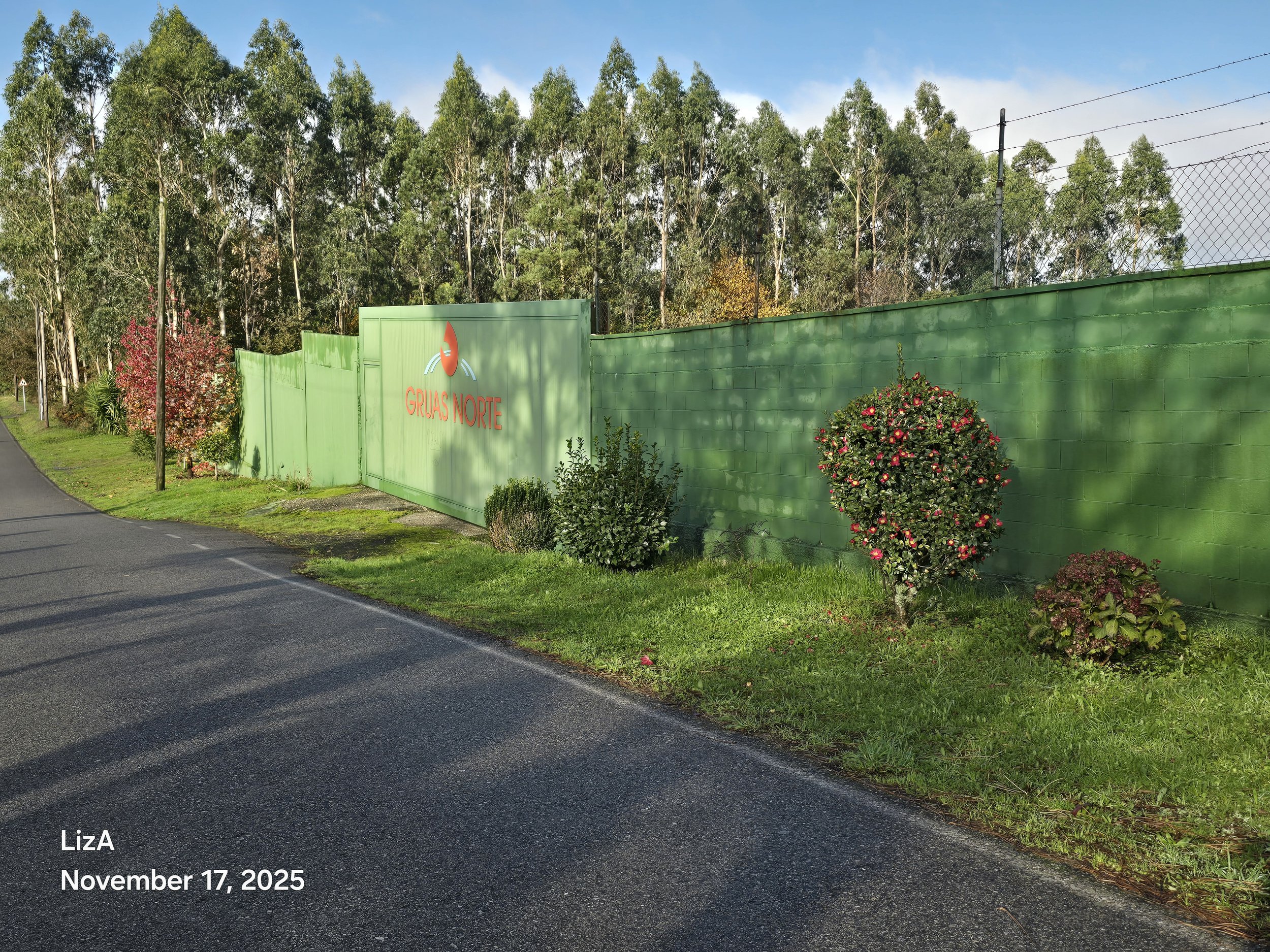
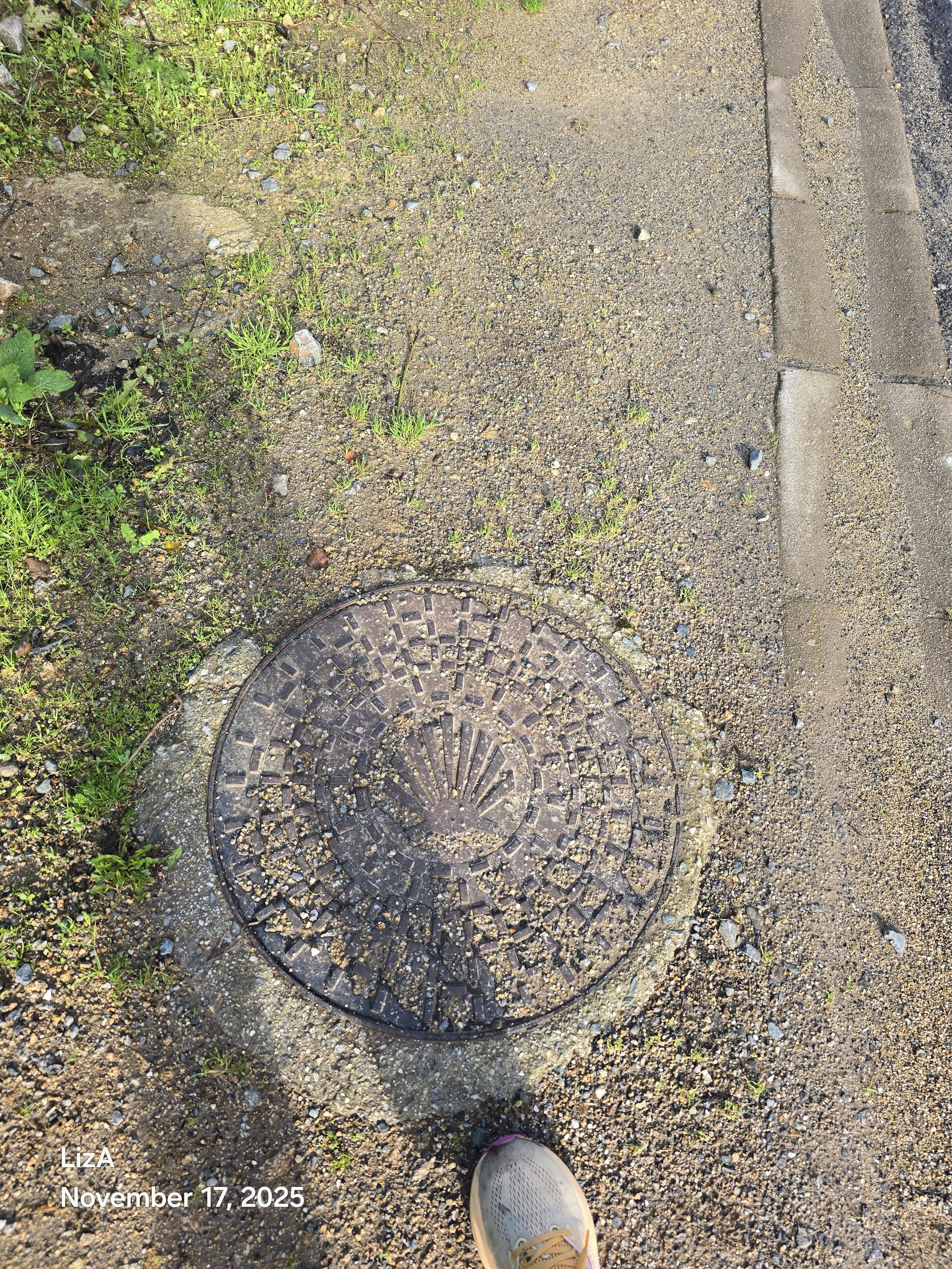
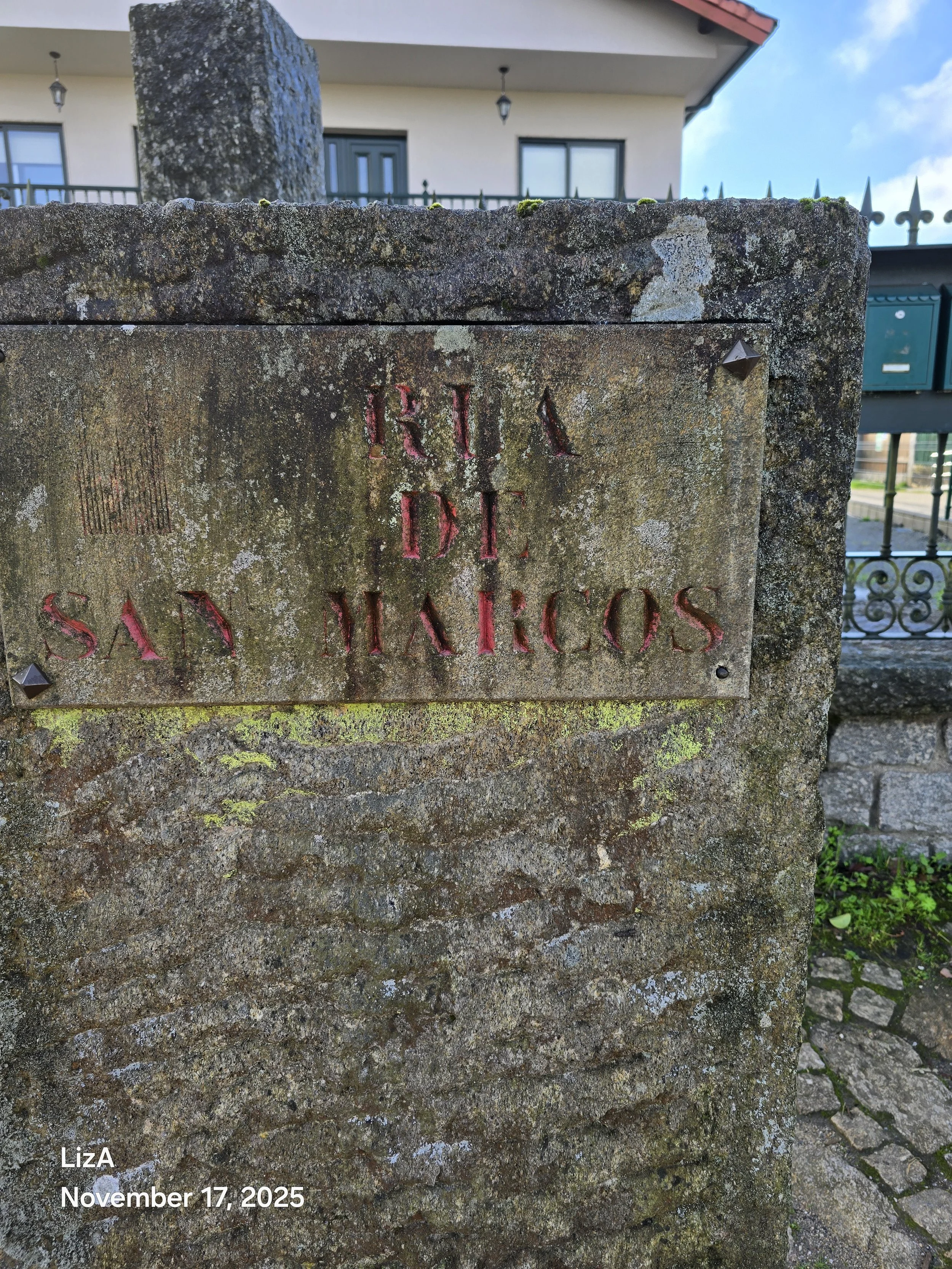
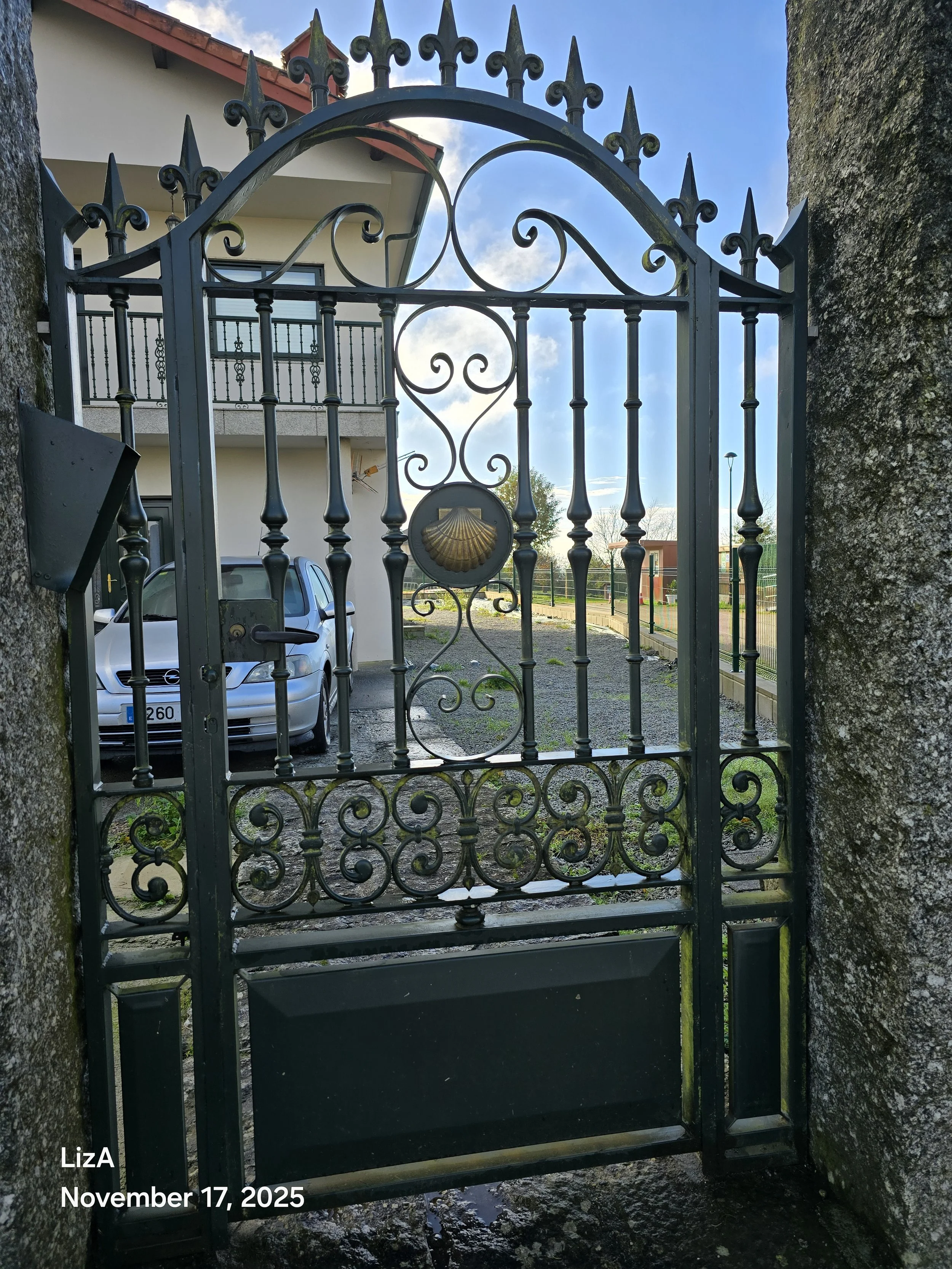
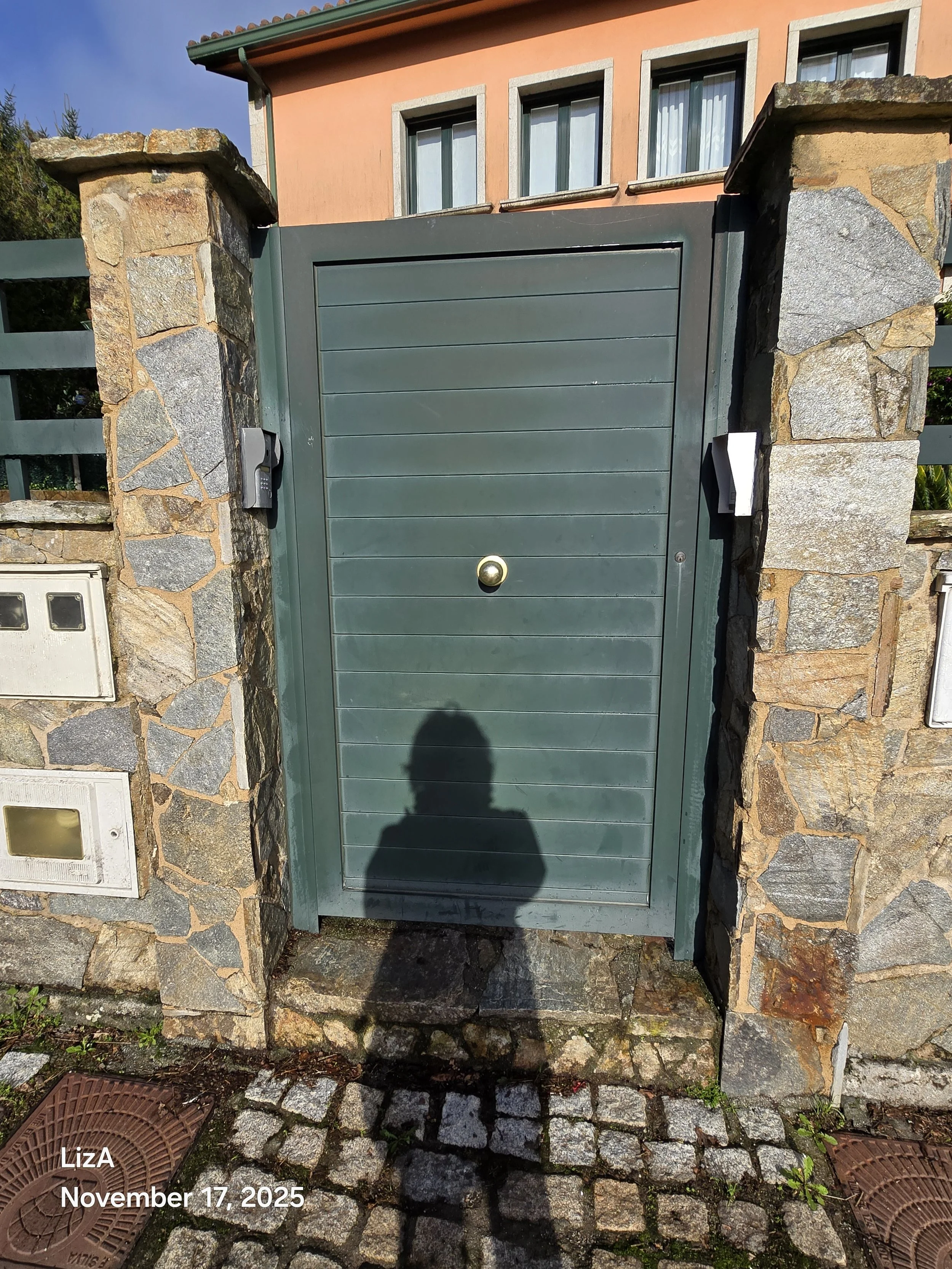
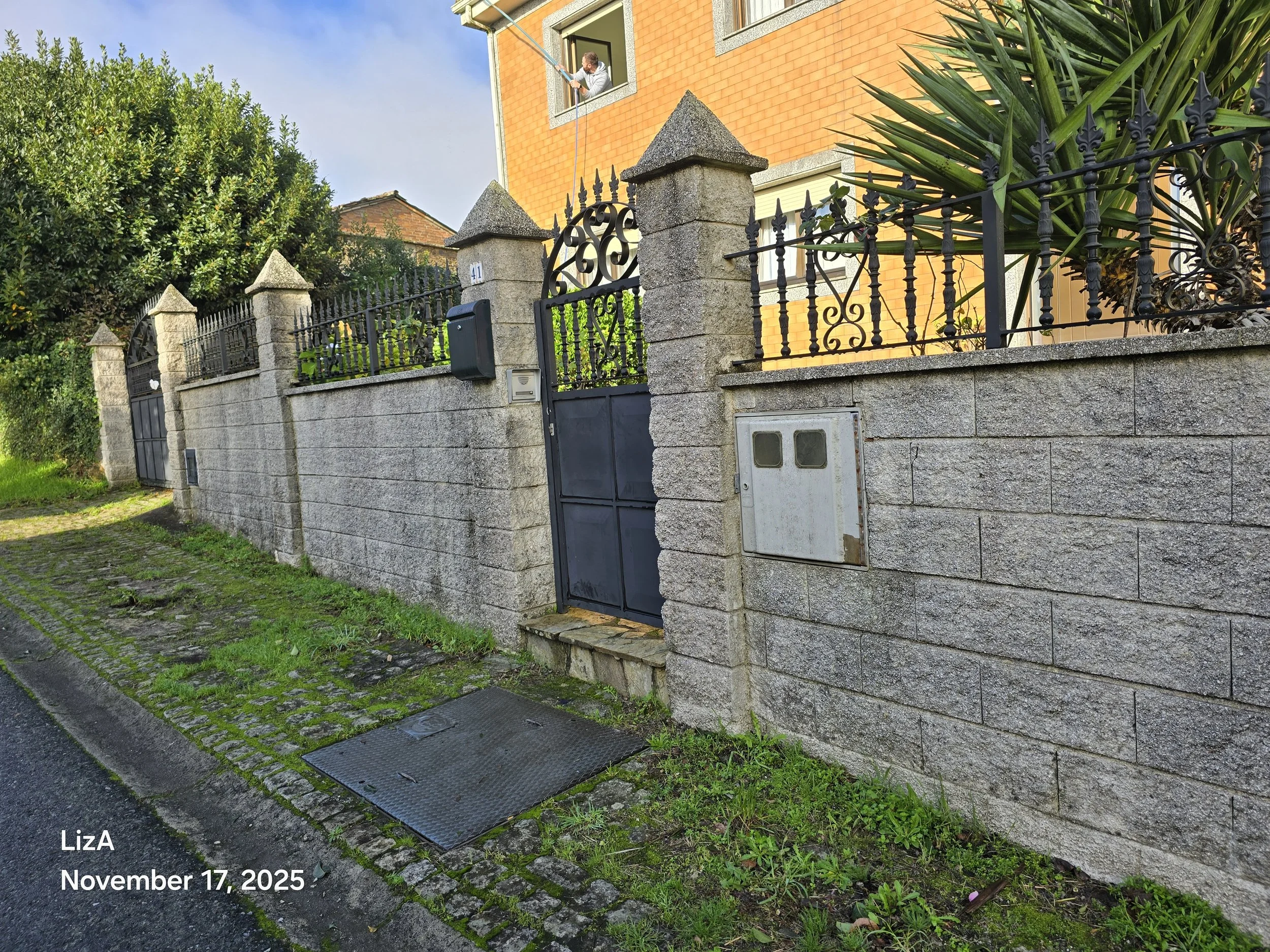
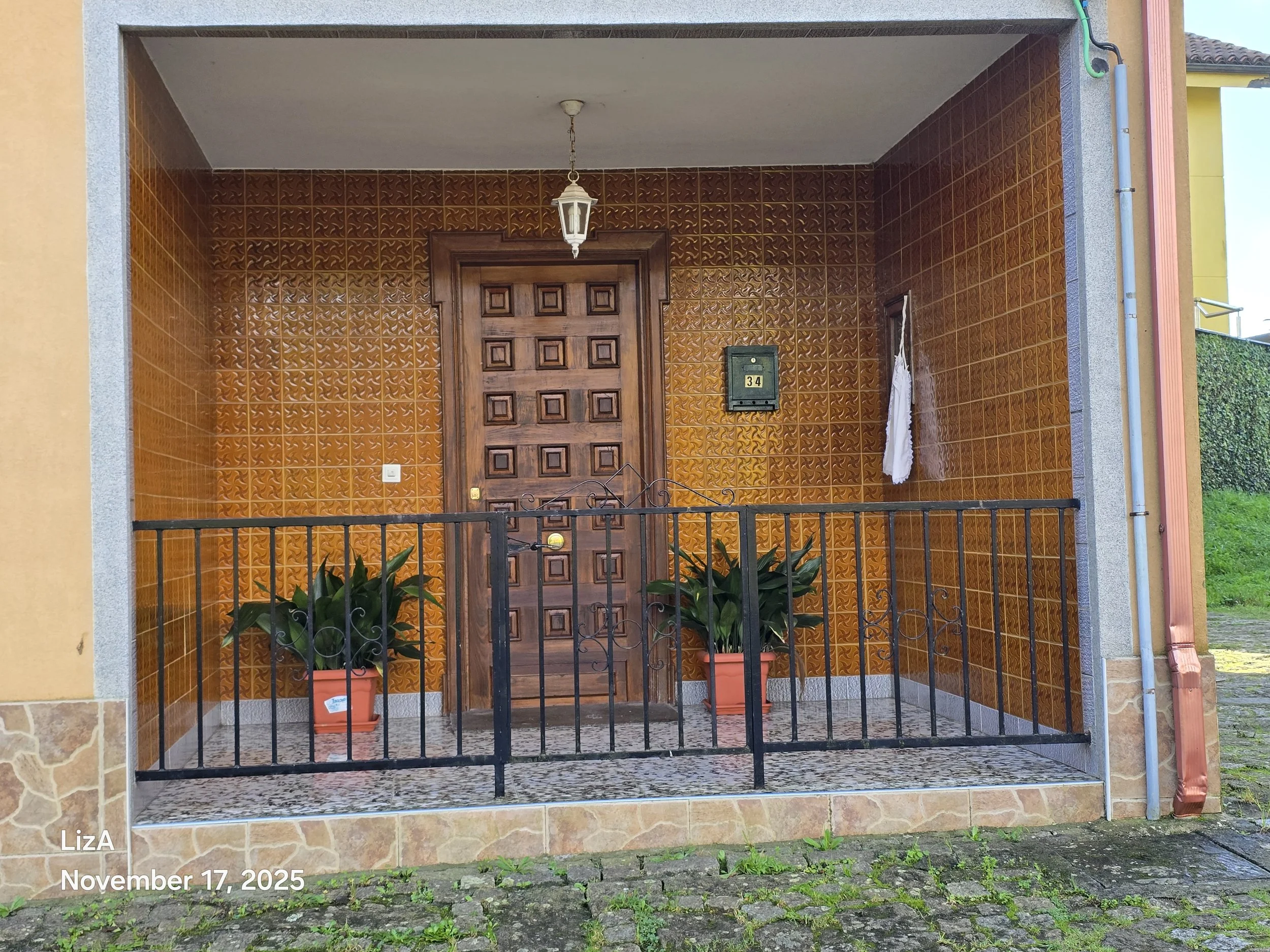
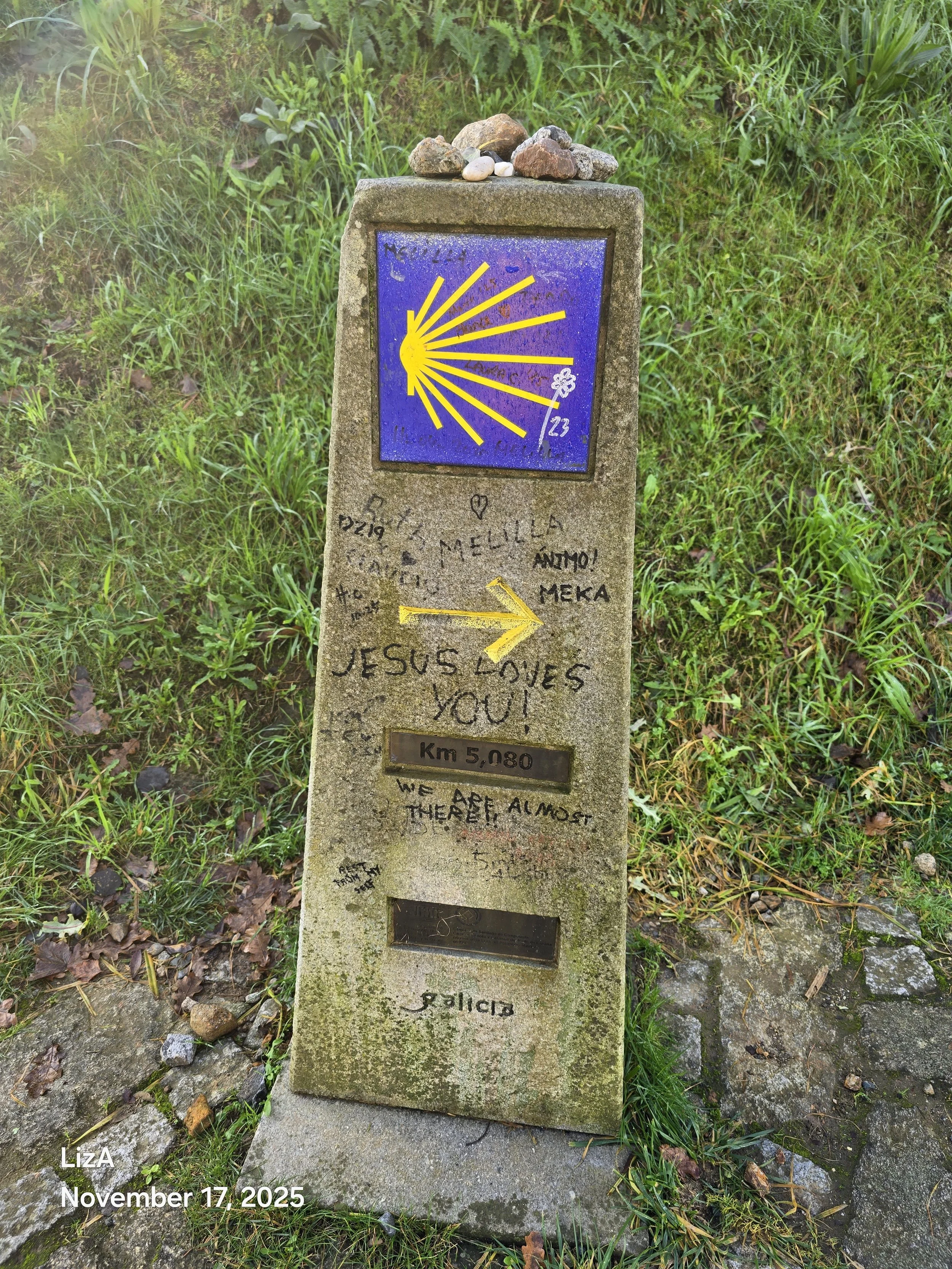
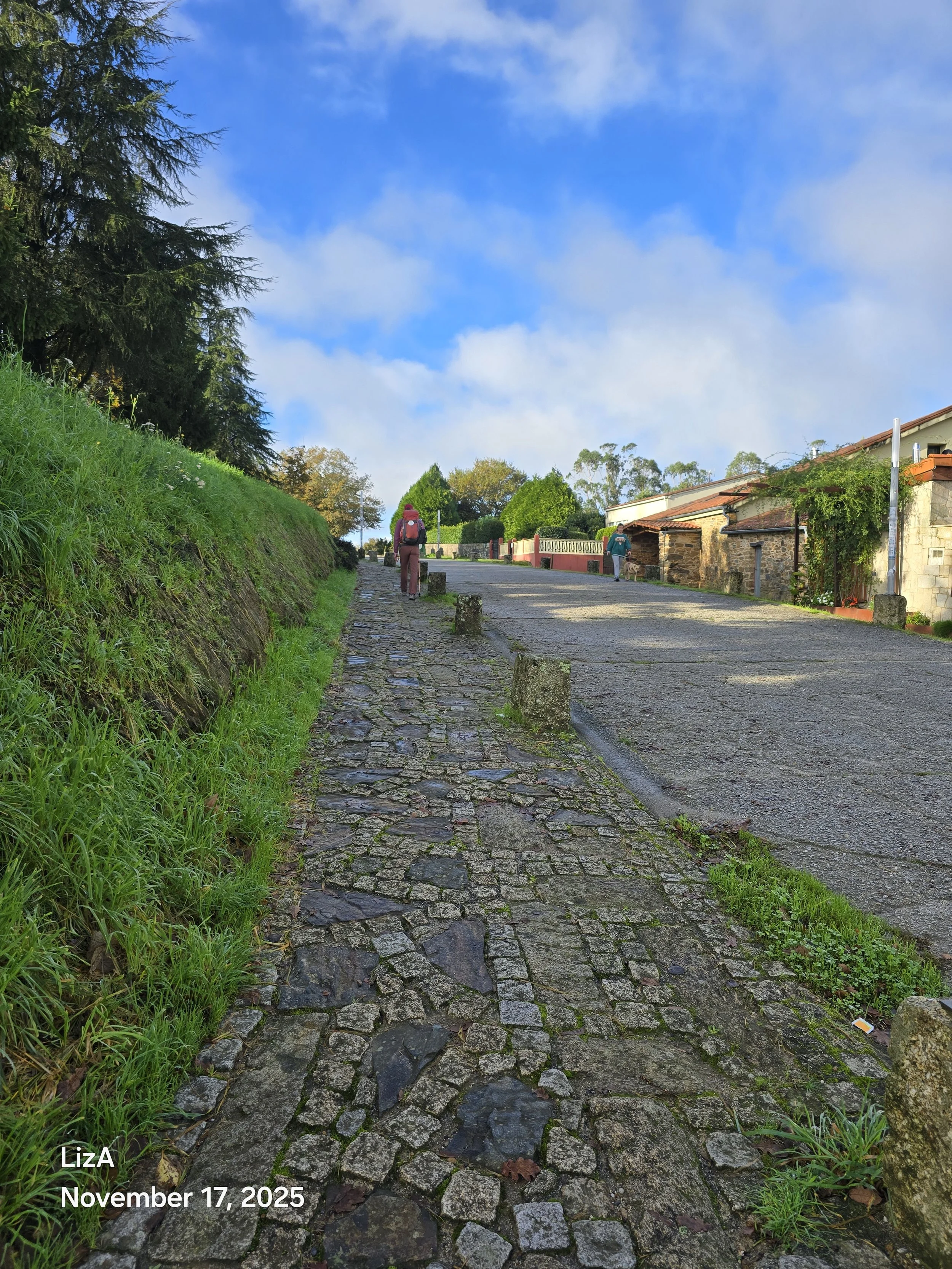
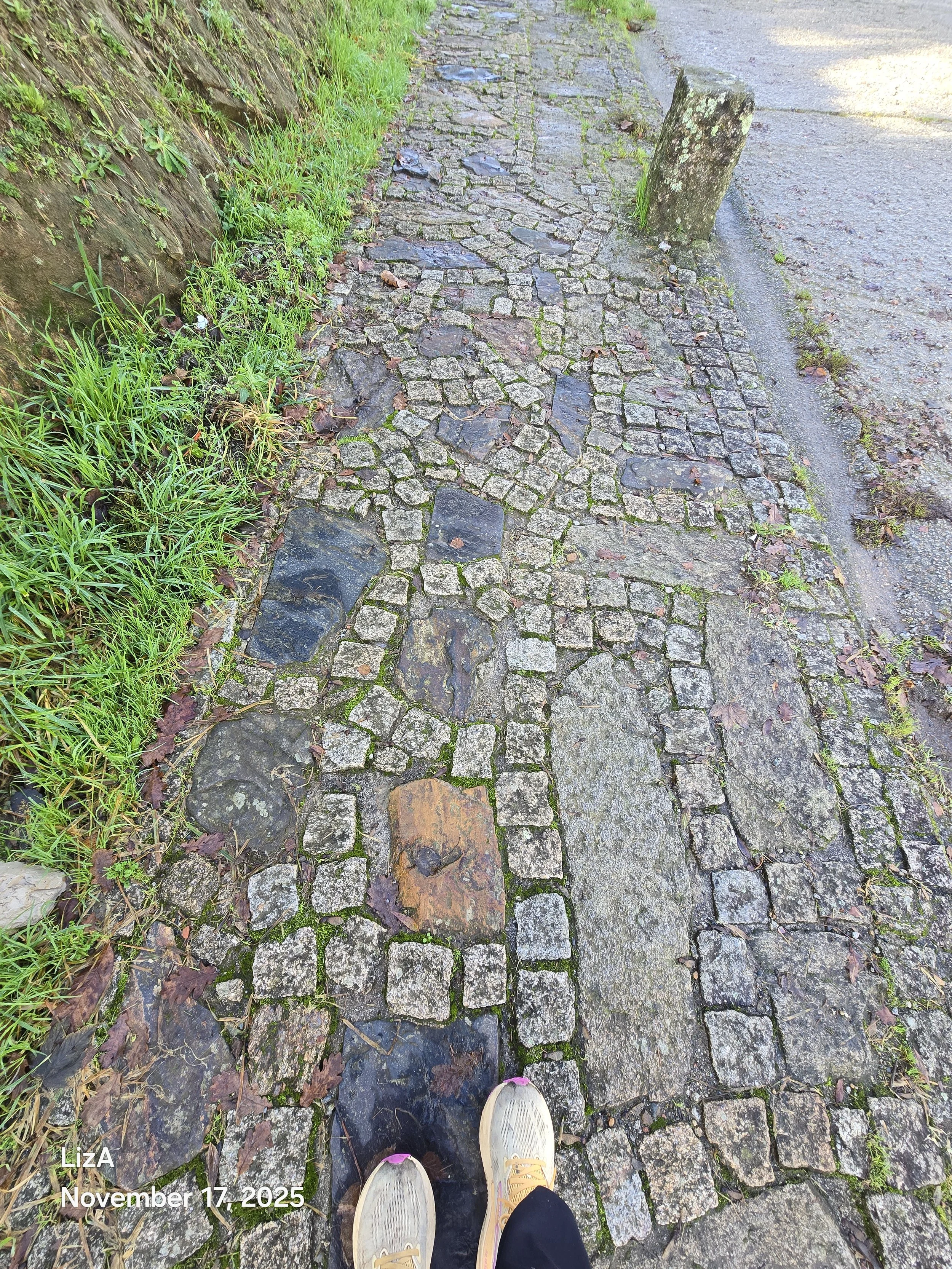
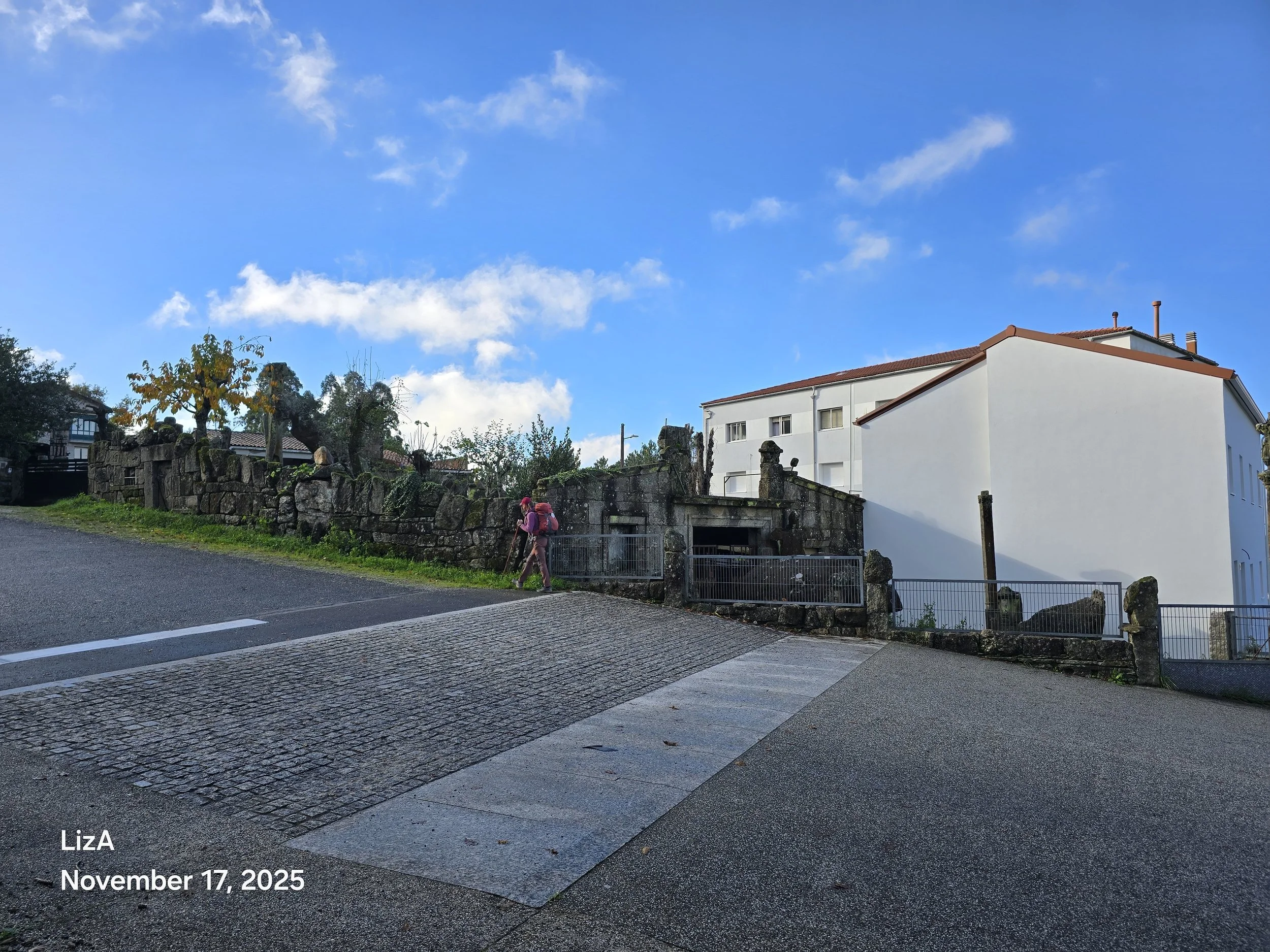
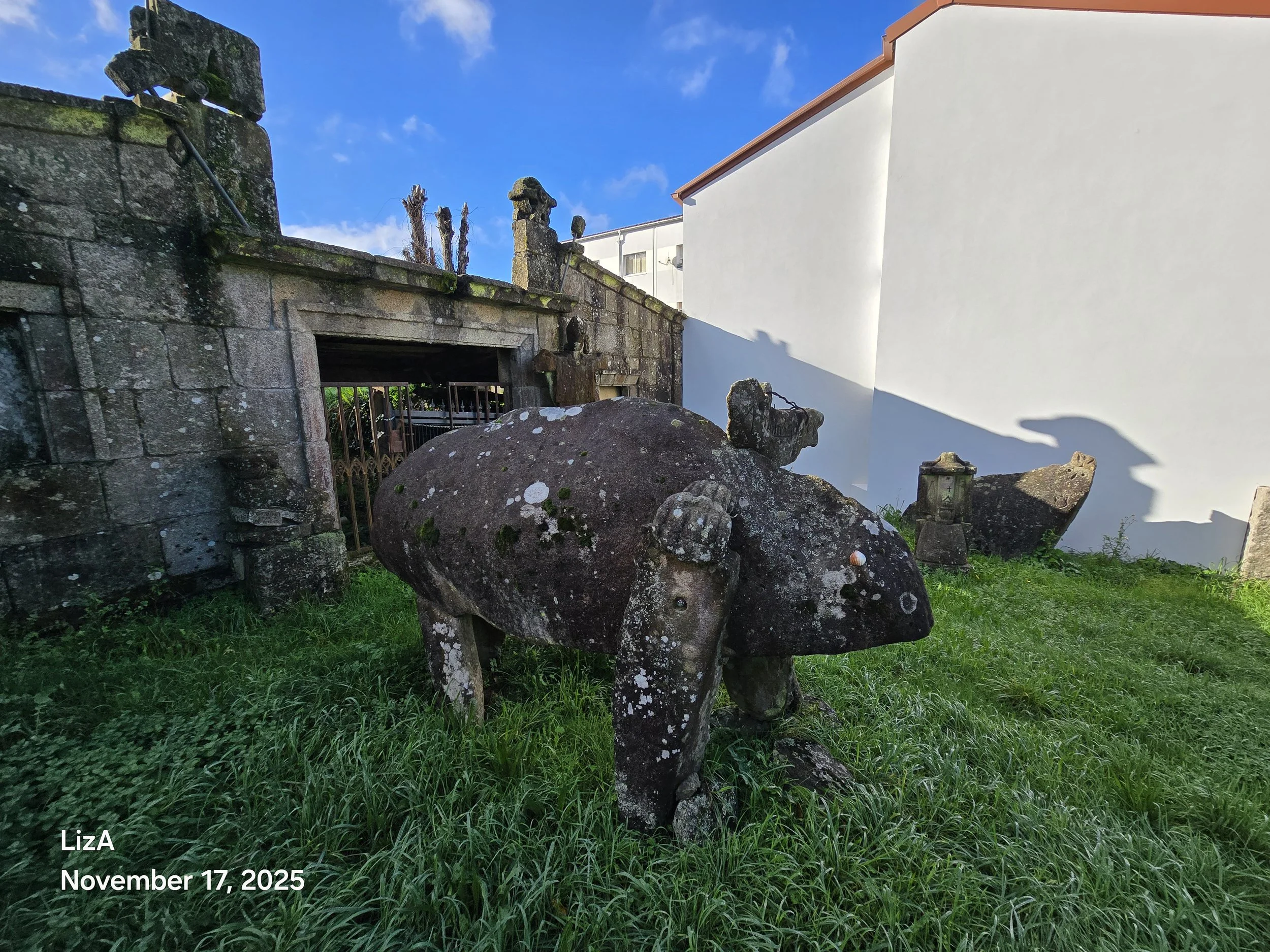
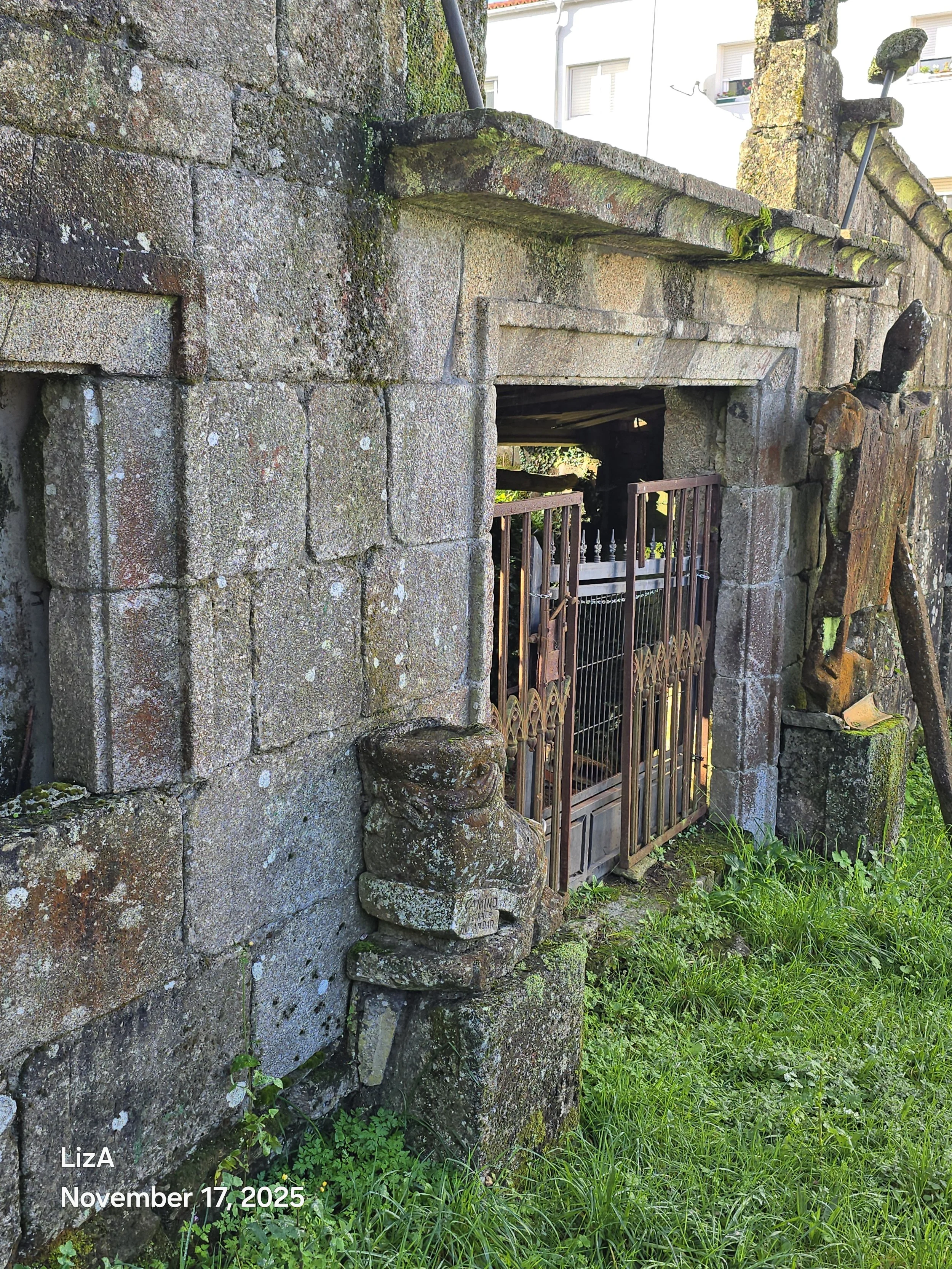
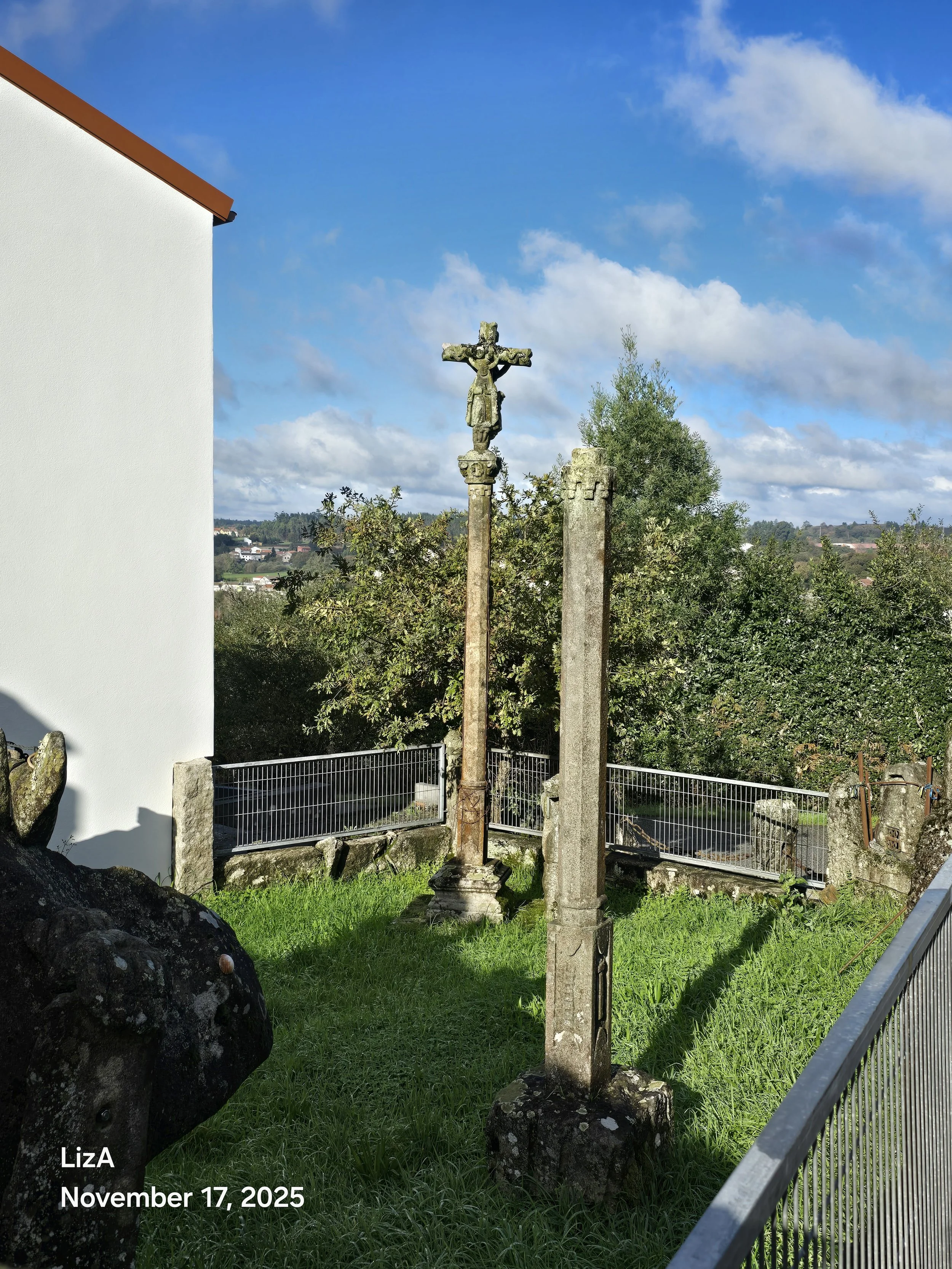
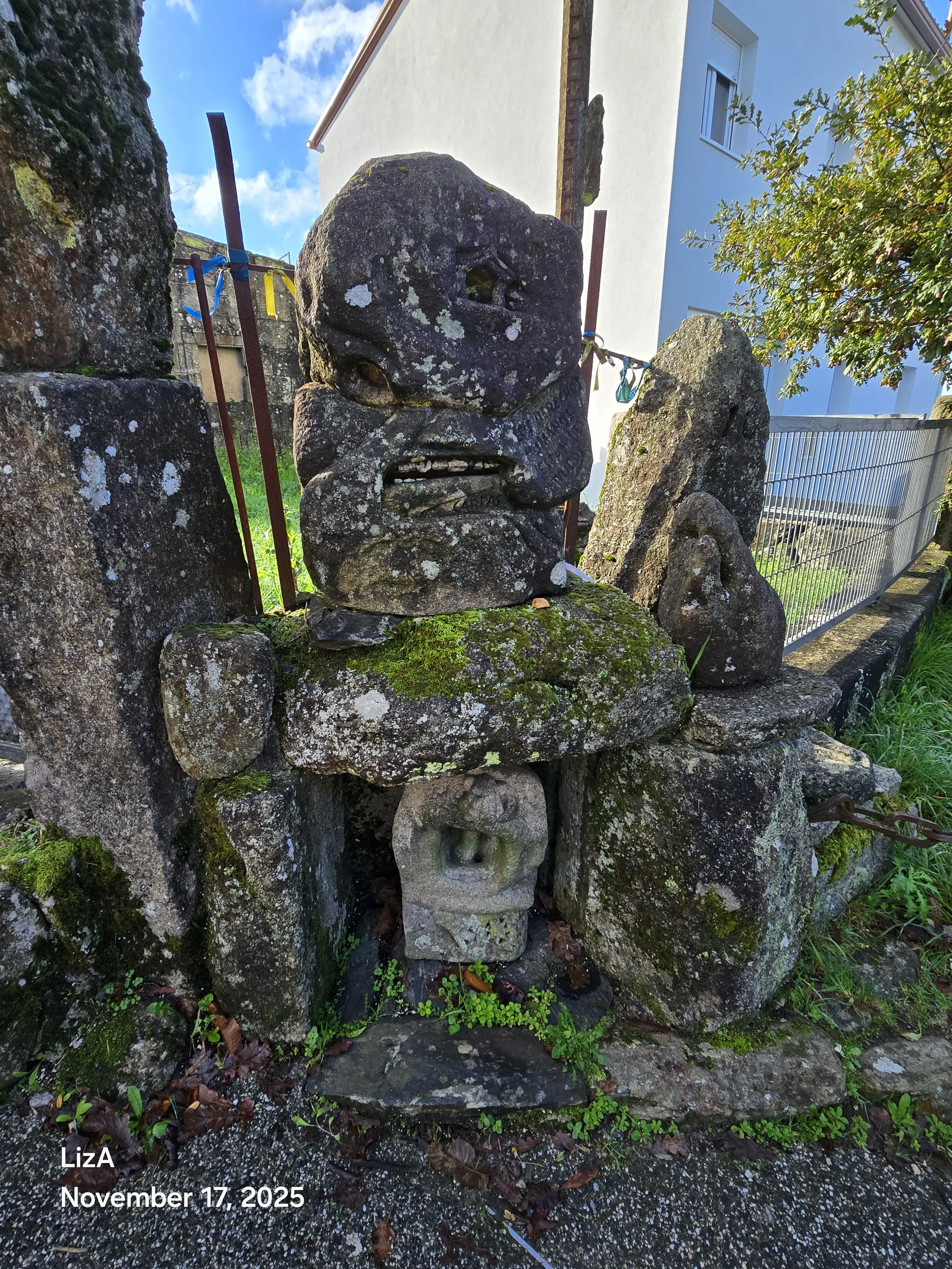
Not quite sure what this was.
Lots of things like with along the way.
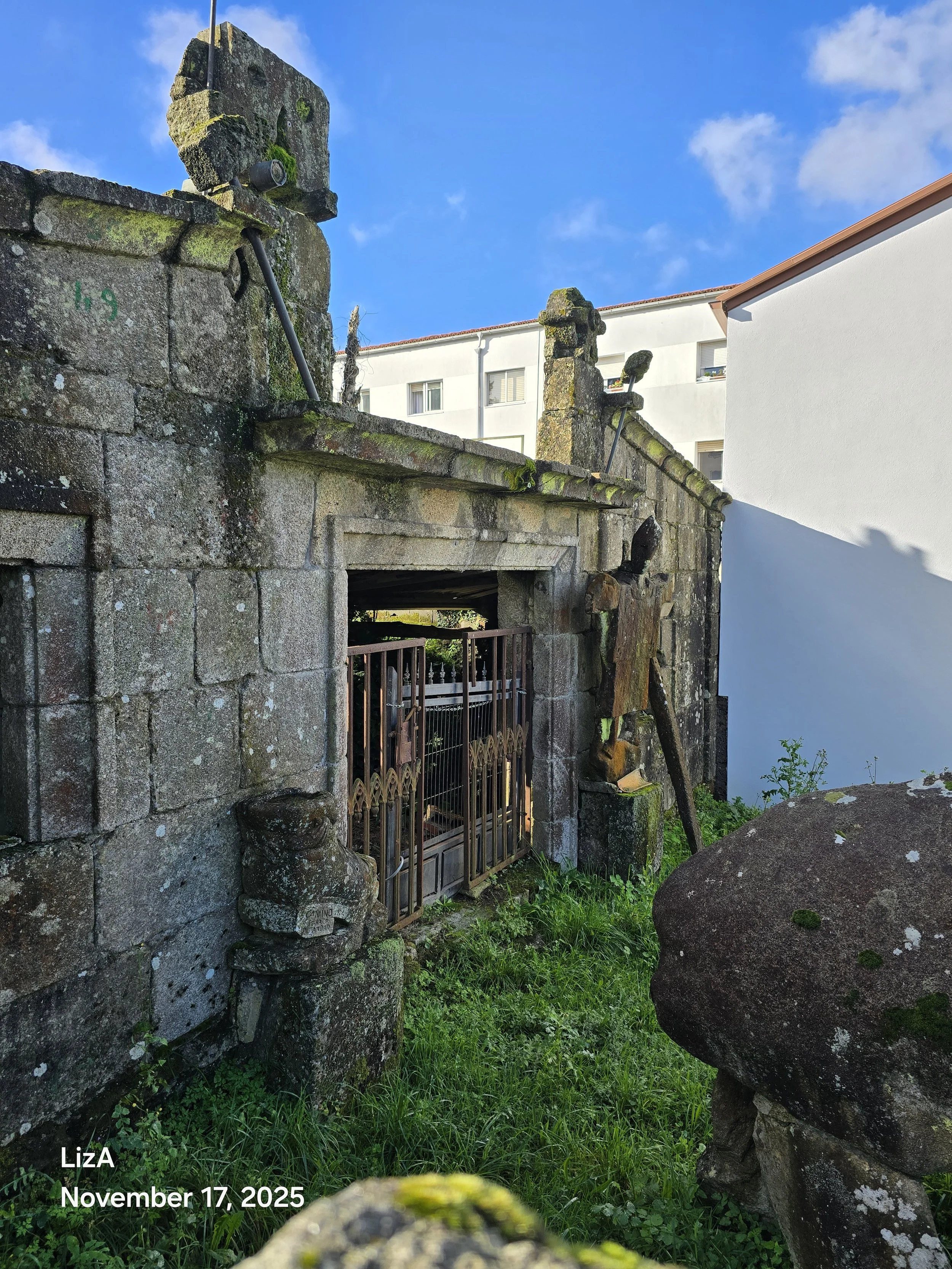
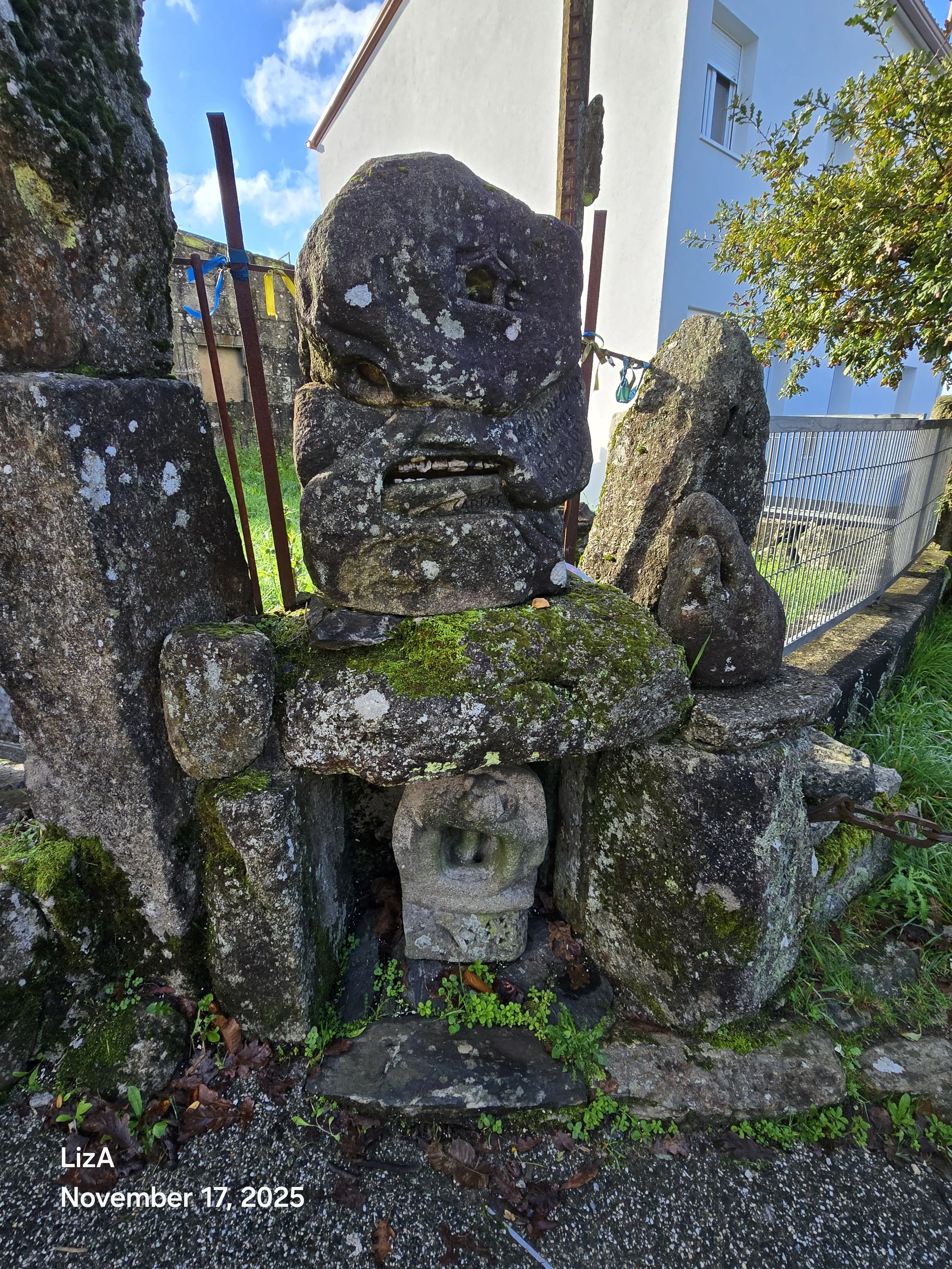
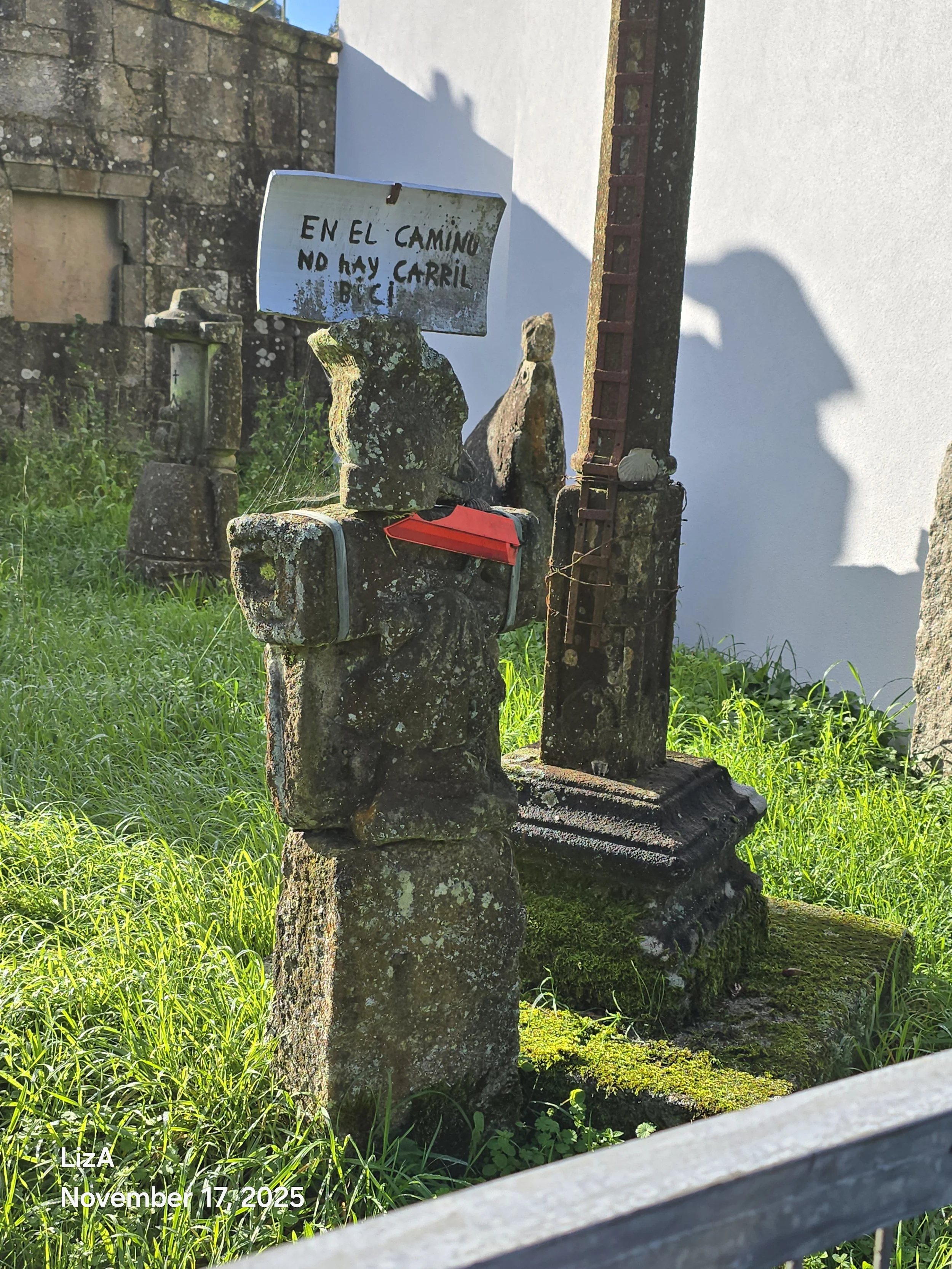
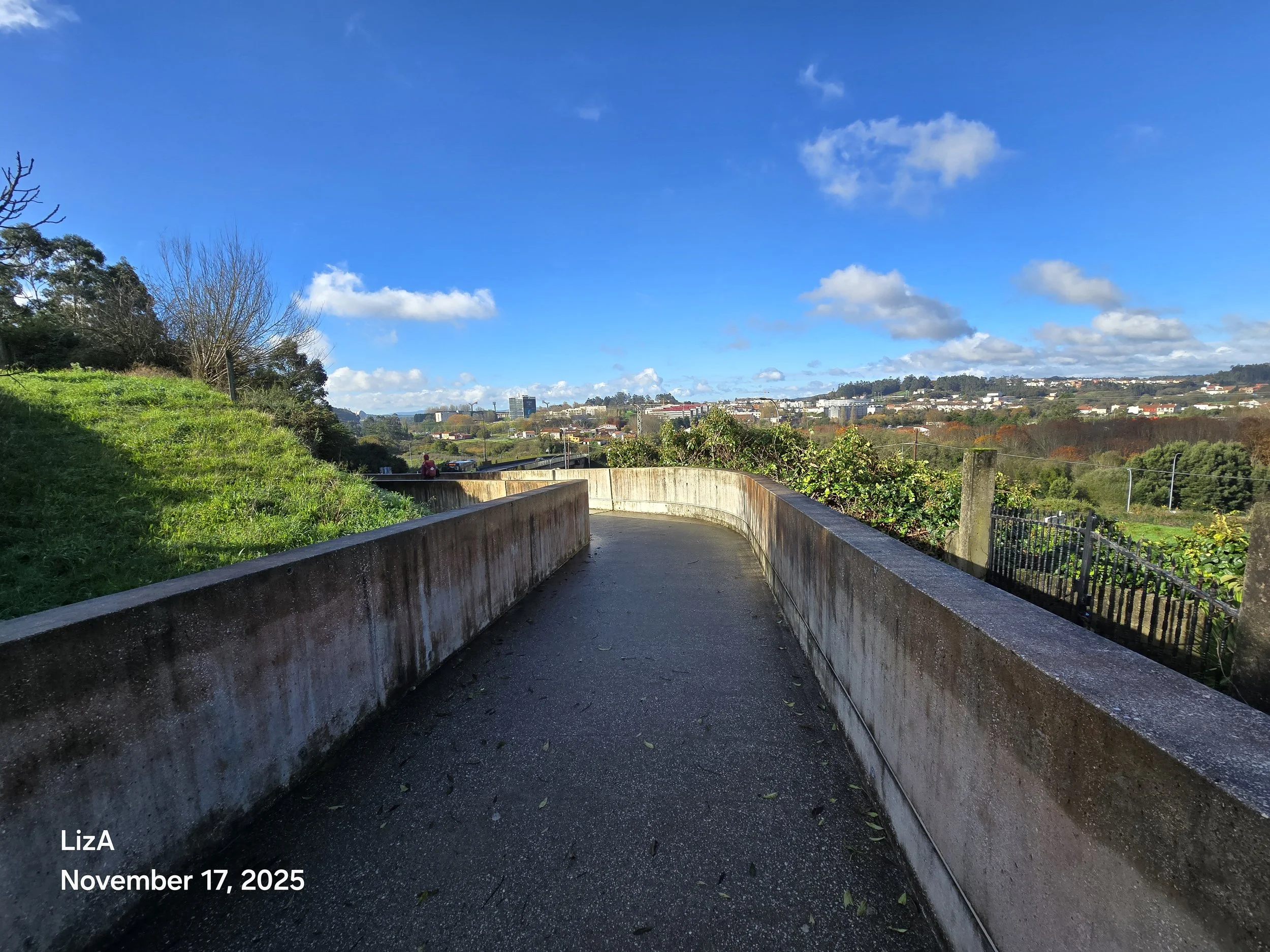
On our final descent
Less than 3 miles to go.